5 Steps To Scaling Your Business
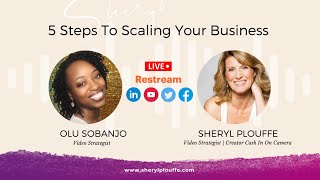
In this Cash In On Camera episode, host Sheryl Plouffe interviews video strategist Olu Sobanjo about how to scale a business. Olu defines scaling as moving from merely adding clients to a multiplication mindset where the business operates beyond the founder’s personal capacity. She outlines five concrete steps: (1) Think like a CEO – adopt strategic, decision‑making mindset; (2) Create a clear roadmap – avoid shiny‑object syndrome by mapping objectives and limits; (3) Identify the winning offer – focus on the no‑brainer product/service that drives the majority of results (80/20 rule); (4) Build relationships and community – leverage clients, team, and broader network as a growth engine; (5) Secure stages and partnerships – get on other people’s platforms and stages to amplify reach. Throughout the conversation, they discuss the importance of early team building, the pitfalls of lateral moves and shiny‑object chasing, and the power of short‑form video (live, Reels, Shorts) as a current marketing tactic. Olu also promotes her virtual summit “Scaling with Confidence,” inviting listeners to register at scalingwithconfidence.com/cheryl. The episode blends strategic advice with practical marketing tips for entrepreneurs seeking confident, sustainable growth.
Chapters
other words, growing your business to higher levels, make it bigger, make it grander. Well, then you're in the right place because today on Cash In On Camera, Olu Sobanjo is here and she is also— we have the same title. We both are video strategists, as it were, and we're going to talk about scaling your business. But the 5 steps that you really need to keep in mind as you embark to scale your business. So, Olu, so great to have you here on Cash In On Camera. I'm excited to be taking part in your event, which we're going to talk about coming up as well in this episode. But a lot of people like the idea of scaling, right? They hear this word scale, scale, but few really understand what that truly means. So what is it in your estimation? What does it really mean to scale your business?
Thank you. Thank you, Cheryl. It's such a pleasure to be here. First of all, thank you for having me. And yeah, so scaling is something that every single business owner wants to have in their business. They want to get to a stage where things begin to multiply, uh, you know, instead of, you know, we look at things from the addition point of view, and we could also look at the multiplication point of view, where you're not actually just adding one client after the other, but you actually have a stage in your business where things begin to multiply for you. And, uh, this is, this is the way I think of scaling, where you're not just doing things that you are capable of doing, but then the business begins to just scale, accelerate.
Yeah. And so I wonder if you, when you talk about scaling, are you talking about specifically the idea of going from a one-to-one, say, service-based business to going to a one-to-many approach?
So, so it depends, you know, there are different ways of looking at scaling. You could— if, if your strategy in your business is you want to only serve one-to-one, you could still scale on the one-to-one, you know, structure. But when it comes to scaling, I would want it, you know, for business owners out there to think of it from a point— from the perspective of This is what I am capable of doing by myself. And then versus this is what the business now begins to do without, you know, so to speak, me doing anything, right? And the business begins to, you know, just multiply and you start to see more resources, more connections that is way bigger than what you could have done yourself.
So, so you can still scale a one-to-one service-based business. But the key would be to really take into consideration your capacity, your own personal capacity, because you only have 24 hours in a day. So if you want to scale, then I hear that as meaning that we have to think about team, we have to think about support, because you need to take tasks off of your list. Otherwise, you will struggle with scaling.
Absolutely.
Yeah. And so how soon is too soon to start building a team?
So I would actually say you can start from the beginning of the business. Okay, you, you can start, you know, scaling, and you could start getting at the advanced once you have— and, and one of the very first steps that I have in, in scaling is once you already have a viable business, okay, you have a viable business, you have clients that you've helped, you've got some results for some people, and so you're not at the stage where you're trying to discover whether you're able to do this thing, right? Once you have that taken care of, then you're ready to scale because now you have a winning product, you have a winning offer that you can put some fire behind and actually see massive success come into the business. And that's where team building starts to come in, because now it's not just going to be based on your capacity, uh, but, but you can have other people help you in the business, you know, that makes the business even scale.
Yeah, I might have jumped the gun a little bit in terms of teeing you up for your 5 different, you know, steps to scaling your business, but what I heard you say is that once you have a winning offer, once you have a proof of concept and really a viable thing that you can go to market with, that would be Correct me if I'm wrong, but that would be one of the steps to scaling your business is identifying that winning offer. So I might have taken you a little bit out of your, uh, the structure of your 5 steps, but what is another step that we can really take into consideration when scaling?
Absolutely. Actually, you know, it's all of these steps are very important in building any— in scaling any business, right? You know, but, but the very first one that I actually want person, you know, to think about very well as you're thinking about your business is you need to actually think as the CEO in your business. Okay. And the way you think as the CEO is very different from the way you think as just a normal person that is passionately pursuing an idea. Okay. For most business owners that are online, you know, coaches, consultants, you're thinking, I'm just passionate about this. I want to help people. I want to do this. Right. You know, but You have to begin to think like the CEO in your business. And there are some, some, you know, things that you need to have in place in your thinking capacity as you begin to think as the CEO. The mindset and the, the way you're thinking, the decision-making, all of this is— you have to switch from being just a regular friend, sister, you know, neighbor to, to most of the people that are in your world to actually begin to think as the CEO and, and strategically deciding what's good and what's not, what can we do and what will, will we not do in the business. Even though sometimes you're still going to be the only person in the business that is running things, you still have to begin to think like the CEO.
And making difficult decisions is a part of that. It's just being able to have the strategy and being able to have the vision of where are we going with this, but making sometimes some difficult decisions that involve other people, especially if you're at that point where you've built a team. So I love that. So what is step number 2? If step number 1 is thinking like a CEO, what is step number 2?
So the step number 2 that I have, it would be to have a clear roadmap of what you're trying to do, right? You know, as the CEO, you know, Cheryl, you were just talking about, you know, difficult decisions and different things that you're going to be, you know, decision-making that is going to be involved in the business. And so once you begin to, you know, think like the CEO. You want to have a clear roadmap of what you're trying to achieve in the business, you know, with the business. And this is, this is where many, um, business owners, solopreneurs struggle, because there's a lot of shiny objects out there, you know, different strategies. Every single person that is talking out there has something fantastic that you need to be doing, right? You know, but, but then when we come back to the first idea, which is, you know, you have to think like, as the CEO, you have to, you know, have a clear roadmap of what you're trying to achieve, where we're going, what we're trying to, you know, at this stage of scaling the business, what, what's the results that we're trying to— what's the objective, what's, you know, all of that fits into having a clear roadmap of this is what we're able to do and this is what we're not going to be able to do, right? And then some of the times, obviously, you still can recalibrate and you can pivot, you can do all these things. But once you— if you don't have a clear roadmap of, you know, the strategy that you're trying to do, every nice strategy will just pull you away and what you're trying to do, you know, you're not going to be able to do that. You know, that's why a lot of times people go into business, you want to scale, but then you don't do the scaling until like 10 years, you know. In short, some, some— the statistics is so bad out there.
Well, we see so many examples of people, like you said, shiny object syndrome. And so they go, oh, there's the shiny thing, oh, there's the next shiny thing, and then they end up just doing that. And then they're busy, but it's not really resulting in any business, um, improvement or growth if that's the goal, right? They're just kind of like busy for the sake of being busy because they just keep— shiny object syndrome, you know, is still very apparent. And the other thing that I often see too is people just making like lateral moves. So it'd be like, let's say choosing the CRM would be a good example. It's like, okay, you choose a CRM and it does what you need it to do and it's great and everything. But then you go to a conference and somebody else is pitching a different CRM that does exactly the same thing, but you feel like you're missing out if you don't do the new one. Right? And then it's like you spend the next, you know, 6 months to 8 months toiling around in a lateral move when you could have just stuck with the one you had, which was doing just fine. Like, it's things like that that I see happen a lot with shiny object syndrome. So I totally, totally understand. Like, the, the clear roadmap is a key, key piece. What is step number 3?
Okay, so the step number 3 is, is actually the winning offer, you know, that I was talking about earlier on, where you, you actually analyze the system and the business that you have, and, and you look at, you know, because most of the times, if it depends on the kind of business that you have, you're not selling just one service or products, right? You know, you have a product that suddenly you just— sometimes you're not even talking about it and it's just growing like wildfire, right? You know, you need to— every single business owner needs to analyze their business and find what that winning offer is for them. Okay, this offer is usually the bit— is the, is the, uh, no-brainer kind of offer that when you bring it out there to your amazing clients, it doesn't hit the ground before it's, you know, it, it just blows up, right? You know, and so once you know what that is in your business, obviously connecting with your clients and knowing you know, making sure that they're getting the best results, they're, you know, giving you the great feedback and all that in the— with that offer. That is what you can put a lot— you know, you know, the 80/20 rule, right? You know, you can put a lot of efforts into scaling this particular offer and, uh, and, and just take it to the next level for the business.
Yeah, yeah, I love that. And then it's taking an account of everything that you do. And really looking at, okay, well, what's driving the most results for this business? Is it this offer or is it this offer? And the 80/20 rule is a great thing to look at. It's like, well, maybe there are some things that we no longer offer because they're not the things that are really driving most of the results. Um, yeah, I love that. And, um, what is number 4? What is step number 4 to scaling?
Beautiful. Now this step, actually, even though I put it in step number 4, is actually the foundation for everything. However, in the scaling process, it's, it's what's going to actually take things to the next level. And, and I call this the relationship building, right? Because once you're starting your business, you're, you're building— nobody builds a business on by their own, you know, on their own and without anybody, you know, involved, right? You need to have relationships. And most of the times when you're first starting just a handful of clients, right? You know, but, but then this clients, this happy clients turn into a community, okay? Your, your, you know, when you master the act of understanding the, the clients that you have feedbacks from them, the bad experience that they had with you, you know, and, and just refining things and refining things until you have the best experience for each of your clients, it multiplies the thing and gives them the opportunity to refer you to, to so many other people. But, but then it doesn't even just stop there. That's where team building— so because your network is your net worth, right? You know, because if you don't have— if, if you're just, you know, we're just looking at the relationship aspect of things, yes, but, but then it's divided into so many aspects, right? You know, your clients, your team, right? You know, the community around you that would spread the word. Some of them don't even need your product. All they need is just to know what you're doing, right? You know, they help spread your message, and, and that's what, um, is, is just very important for every single business owner out there. Yeah, no matter what the size of the business is.
Yeah, yeah, I 100% agree that it's often what we talk about when it comes to the work that we're doing as well, that the importance of having a network and a community of people that you can go to and rely on and, and who have access to the people that you want to have access to too, it's just so, so key. And if I think back on, on any level of, of success that, you know, I've been able to have even to this point, it's been mostly because of the relationships that I've built, and it's just so, so key. I love that, and it is the foundational piece, as you pointed out. It is. So what is step number 5 to scaling your business?
Okay, so step number 5, you actually alluded to it a little bit in, in what you just mentioned now, which is actually stages around the world, right? Yeah, stages, you know, because Right here, I'm hanging out with you on your stage, okay? And, uh, and you connect, you know, with people. Yes, you have your own direct connection with people, but then there are many other people around the world, online, offline, that have access to people that you need in your business. Now, having connections, strong connections with people that have stages like this is extremely important for any kind of business, for any business owner out there, uh, you know, your team members, you know, and, and all these people, they— once you have connections with people that have stages, you are able to scale your business. Now obviously, you know, we were talking earlier on about the strategies that you put in, in the roadmap and all that, which includes your systems and, and different tools and all this. But you see, having access to stages and connections, you know, it's just, it's just priceless.
Okay, I agree, I agree. Yeah, and, and this is the thing with stages is I've always thought too that really you want to have your, your own stage and then also be on other people's stages. Like, I think that's the perfect melding, if you will, of the whole concept around stages, but You're absolutely right. I mean, you don't build a business in isolation. You need to have connections. You need to get your word out. You need to really be able to rely on other people to get the word out for you. You're not doing this all by yourself. That is certain. If you want to scale your business, you're going to need a community around you and a group of people around you that can help you to get there. And I think painting this picture of these 5 steps is a great starting point to help people understand what's really required. But it goes beyond this conversation because you have an amazing event. I'm proud to be taking part in it. I'd love for you to tell us a little bit more about it.
Absolutely, Cheryl. Thank you so much. You know, it's amazing that, you know, just all of the concepts that I'm sharing today, I actually, you know, have been enjoying lots and lots of it from amazing speakers, amazing experts. That I have brought on to the virtual summit that I'm currently hosting right now, Scaling with Confidence. Because if you want to be able to actually scale your business, you need that confidence. You need, you know, expertise and wisdom and experiences from other people that have done the same thing. And Cheryl, you're one of those people that I'm actually— that I've been privileged to have on this show that we've been running this month. And Scaling with Confidence, you can go there, uh, you know, scalingwithconfidence.com. There's a link right there, slash Cheryl. You can use that one and come on and, and hear all these brilliant speakers. Brilliant, not just speakers, people that actually are doing fantastically well in their businesses, right? You know, these are people that just They just love to pour out. And the idea behind this Scaling with Confidence is I see a lot of business owners online that are struggling. And we're talking about the shiny object syndrome there earlier on. You want to do this business thing and you think, oh, maybe I should go this way. And then another fine idea comes up and just, you see all of these things happening. Hey, it's It's good to see you, Tricia, you know, and, uh, yeah, so you see all these fantastic ideas, right? But, but then you keep at it, you keep going, and years after you don't have anything to show for it. Now, this is one of the reasons why I, I wanted to put this together and say all of these people that are doing amazing work, you've been able to achieve this and more in your business. You already have $10K months. And consistently receiving, you know, many of the people that I'm interviewing even have multiples of that monthly happening in their businesses, you know. And so what exactly are they doing? Come and learn. Come and find out what others are doing. And Sheryl is one of those amazing people. So I'm really privileged and grateful.
I am so honored. I'm so honored. And I'm just really pleased that you've brought together the group of people that you have. To help others, you know, be able to pay it forward and help other people to grow and to scale their businesses, as you say, with confidence, because that's the key, right? We all want to be able to feel really confident in what we're doing and how we're doing it. These 5 steps, I think, are really key. And of course, highly encourage people to go to Scaling with Confidence. Here, I'll show it again, scalingwithconfidence.com/cheryl. Take part, join up, register, and you will not regret it. So, Olu, I want to ask you one last question before we go, and that is, we have a thing we call stop marketing like it's 1999. In other words, how are you marketing for the year we live in? What is something that's working for you personally to help you market? It might be something you've already covered in this talk, but is there something that's really working for you right now? Could be a tip, a tool, tactic or technique that you'd like to share with the audience?
Absolutely. Thank you. Thank you so much. You know, one thing that is really working right now for me is videos. Okay. And like you said earlier on, this is what we do, uh, but, but short-form content. So you go live. Okay. And, and, and I specifically say you go live and connect with your audience. Then you share your expertise, you communicate, clearly communicate your expertise through videos, live videos. And then once the video is done, you take small portions of that video that your ideal buyer needs to see. Then you put that in short-form content, in Reels, Shorts, you know, on different platforms. Once you do this, you have to literally turn off your calendar, okay? Or else you wouldn't have— this is exactly what I see happen in my business and in my client's business right now, you know. You just— every single person needs to take advantage of the reels that the algorithms are favoring that right now. So why not, right? Yeah, I agree. That's my— that's my—
that's awesome. Well, I know you and I both— both video strategists, both know the power of video, both agree on that, is that, you know, video is no longer a nice to have. It really is like you have to really have a video strategy. And depending on how you view your business, again, looking and thinking like a CEO, with whatever your goals are in mind, you're going to just have to take a look at video and understand what's the best strategy for us and for our company as you set out to scale. So, Olu, this has been fantastic. I'm honored to be part of your event coming up as well. And I really appreciate you coming on Cashing on Camera to share these tips with us.
Thank you so much for having me, Cheryl. I really enjoy being here.
More from Sheryl



From 'agreeable' to 'ruthless mentor' to 'strategic sparring partner' #substack #shorts







