Brand-Building Systems
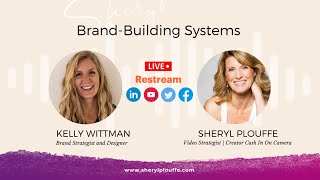
Brand strategist Kelly Witten explains how to build a brand system using a four-pillar framework (Who, What, Why, How) and a documented brand Bible that guides messaging, voice, and visuals. She emphasizes creating templates and automation for consistent communication while keeping the human connection that makes people trust you.
Chapters
Kelly Whitman is my guest today on Cash In On Camera. We're going to talk about brand building systems. You know me, I'm all about systems. I come from the broadcasting world, so I am someone who can dig deep into this idea around systems. And Kelly and I are going to talk about that from the brand building perspective today. So welcome to the show, Kelly.
Great to have you here. Thank you so much for having me, Sheryl. I'm excited to chat with you today.
Yeah, and it's funny, just before we came on live, we talked about where did we meet, and it was It was through a connection, right? Through an introduction, which is fantastic. And it's always great to meet new people. So let's dive in. I love that you call yourself unemployable. I think a lot of entrepreneurs can relate to this idea of being no longer employable in the traditional sense, because once you come to this side of things, it's hard to go back. Tell us why you feel that you're unemployable.
Yeah. I, I mean, even building off of what you just said, it's so hard to go back. I think about even the thoughts, you know, we've all probably had those burn it all down moments in our business when we're like, oh, I should just stop doing this and go back and get a quote unquote real job. And you know, that's about as far as I get whenever I have that, you know, thought that comes into my mind. And I think it's really just more of a combination of my stubbornness and my need to kind of what we're talking about today, just to have systems, proper systems. I also think what I've really loved about being a business owner and an entrepreneur is the accountability. You know, I get to take full accountability and responsibility for the outcomes in my business, which for some people, I think it might feel a little bit overwhelming. But for me, I love that. I love that it's on me and my future and my reaching that version of success that I'm going after. I have control over that and it's, it's in my hands. Of course I have support and that's all very important, but I just, I really love the freedom and the flexibility that I have built into my business and that I can control that. You know, it's something that I can, I can build in and do and I just, I love it. I love it. I'm, I never thought I'd be an entrepreneur, but it's, here we are and I, I don't envision going back.
I feel the same way. I love— I mean, it comes with its own set of stresses, but— or its own set of stress. But I feel like this independence and being able to, again, be your own boss, I'm okay with it. Like, I've learned to deal with the different aspects of what that entails, which brand building is a part of that. And that's what we're going to talk about. So I can totally relate to your, your idea around being unemployable. I mean, I often think about my life before. And I had a great career as a TV broadcaster. I enjoyed what I did. But I wouldn't be able to go back now that I've experienced what it's like on this side. But in order to have a really good experience on this side as an entrepreneur, as a coach, a consultant, maybe a high-ticket agency owner or something of that nature, you do have to be thinking about your brand. And let's talk about brand building. And specifically, we'll get into the systems. And I have some questions about systems as well. What do you, what say you about brand building in general that people need to know about in terms of its definition? You know, what is brand building truly?
Yeah. So I first think it would be supportive and helpful to talk about what is brand. And I define it as how people think, feel, and act in relation to your business. And the idea of brand building then and branding are the various elements that go into influencing those thoughts, those feelings, those actions. So when we think of, you know, branding and those different elements, it's like the logo, the fonts, the colors, the website, things that we normally would consider when we think of brand or the visuals. But I think a lot of times, especially when we're new, what gets overlooked is what happens behind the scenes. So what I would consider your internal brand, the things that, your audience and your community might not necessarily see outright, but they're so important and they play a pivotal role in building a brand that connects and that allows you to be perceived a certain way and really leads to those thoughts, those feelings, those actions that you're after and what you're, what you're going towards.
So Kelly, are you talking, when you say internal brand, are you talking about brand values?
Mm-hmm. Yes. And so when we think about, and when we work with clients on the internal brand, it's their strategy. So what is the communication for your brand? So things like, who is your ideal client? What are your offerings? Why does the work matter in the first place? How do you want your brand to be experienced? And then your brand personality. And we do personality development. So what's the voice? Um, what are the words and phrases? What is the personality? What is not the personality? How is the personality experienced? Experienced? What does it look like? What does it sound like? What actions does it take? And then we also think about the process, you know, what, what is from start to finish that process and that experience that someone has with your brand. So thinking through all of those internal, right? It's the stuff that doesn't necessarily that someone will see, but they see the outcome of it. So they can see the brand personality when they engage with you online. They might not see the ideation, the creation, or the development of it because that happens behind the scenes. But they see the execution and what happens externally on social media or on your website, etc.
And it's not to discount brand identity work, right? The phys— the, the outward-facing pretty stuff that we think about. The colors and the logo and, and the website and how it's designed. And I know you're a brand strategist and designer. It's not to discount that. But in order to get to that fun part, we have to do the part that is what you talked about here, right? This internal background stuff, foundational stuff, decision-making essentially that needs to be made in order to get to that place where you get to do the fun stuff. So, let's talk about systems. And I know you've mentioned a few things here like values and strategies, etc. What are the systems that we need to be thinking about in order to keep building the brand?
Yeah. I love that you mentioned this word of decision-making. It aligns and resonates so much with me and the work that we do with clients, because you're right, it is all about making decisions. And I think a lot of times, you know, as business owners, we jump right into, we often jump right into those external. So when we think about putting some systems in place for our brand and aligning with that internal work, I like to start with 4 main pillars for your brand, your who, what, why, and how. And I kind of touched on them a little bit, But the idea being, when you have clarity on who are you serving, who is that ideal client, that perfect for you person that if you could clone, you would. When you know who you're targeting, it will then help guide what those external visuals are. You know, the colors will align with hopefully ideally that ideal client, um, what you're offering. So really what is that transformation? You know, a lot of times as business owners, we can think about it from, oh, I'm, Giving them, you know, 5 coaching calls in the span of 6 months. It's like, yes, that's, that's what it is. But really, what is that transformation? Because that's what we connect with. And that's what our ideal client is looking for. They're most likely, they're not looking for 6 calls. They're looking for a specific transformation outcome, their version of success. Why does that matter in the first place? So that work that you're doing and the work that your brand and your business is doing, why should people care? Why do you care? So really getting to You know, Simon Sinek says, you know, it all starts with why. So it's getting really to that why. So you can build then that emotional connection with your right community. And then lastly, we have how do you want your brand to be experienced? So really thinking through when someone comes in contact with my brand, whether it's on social media or they're seeing, you know, a live stream or they're stumbling upon our website and engaging with our site that way, thinking about what are the thoughts and the feelings that you want them to feel and to have when they engage with your brand. And that's really the strong kind of core foundational brand system when we talk about that, of laying the foundation and making sure you have clarity on that to then guide those external brand elements that you mentioned, like the logo, the fonts, the colors.
Yeah, I love that. And these, these are important, right? These are foundational decisions that you need to make in order to start on the path of building your brand. Building that identity, that reputation. And as you said earlier, how people think, feel, and act about you and how you show up. So, if we were to talk about systems from a technical perspective and just starting with the, let's say, the who. You decide through the work that you would help people do, right? You really figure out the avatar. You really figure out the singular client and who that is. Are there systems that you would help or recommend that people put in place? And maybe it's just a— I don't know, maybe it is a statement about who that avatar is that's shared amongst your team, as an example, right? So that everyone is on the same page about who it is that we're actually looking to attract. Is that something you recommend or don't recommend?
100%. So I think that's another component that we often forget about in branding, especially as business owners. We know our brand and no one else is going to know our brand better than us. And that can be then the disconnect, especially as you're bringing on team. And that's why it's so important as we talk about having a brand system is getting it out of your head and onto paper so that you're actually being able to communicate it to someone else so that they can communicate on your behalf. You know, think about when you have a social media manager, if you're having someone who's writing an email for you, they need to know what your brand is all about so that it, that communication is consistent and cohesive regardless of who is doing the communication in the first place. So yes, 100%, get it out on paper and write it down. Um, and one of the deliverables that we give our clients is what I call the brand Bible and the brand playbook. And it's essentially what you're saying. We go through and really lay out, summarize these key points. So that our clients have this document that they can reference again and again. They can share with new team members, they can share with those stakeholders and people who are going to be communicating their brand on their behalf so that it is consistent and cohesive and that the audience isn't seeing any disconnect regardless of who's writing that email or engaging with them on social media or writing a website sales page copy. The goal is to have that consistency because that's where we really build that connection. So 100%. Even something as simple as just writing it into a Word or a Google Doc so that you have it out of your brain. You know, a lot of times it can make sense for us when it's in our head and we're just thinking about it, but then the actual— that action of taking it out of your head and having to formulate it into sentences or phrases can be a challenge, but it's so helpful because you're then defining what it is. You're making that decision so you have something to work from as your business moves forward and grows and pivots or changes and evolves.
I think too about words and just sort of hinted at that with copywriting. Words can obviously do so much to be able to convey a feeling, an emotion, a tone about your brand. And I often think about having, let's say, a document whereby it's like, here are the words we use and here are the words we do not use. Because you mentioned this earlier too, this idea of, let's say, voice or personality. It's as important to know what not to say as it is to know what you should say. And it's not every word in the vocabulary that's really going to be on brand for you.
Yes, I love that you're saying that. And it's so true that contrast really helps to articulate the part of— when we think about brand systems and the goal is to create boundaries and guidelines for you and your team to follow. So that you have that consistency in terms of your communication. So anything you can add to or take away from those boundaries, those guidelines is just going to be more supportive to have that communication. So one of the things that we love doing for our clients is exactly that. This is what our brand is all about. This is what we're not about. This is what we stand for. This is what we stand against. These are the words that we say. These are the phrases that we say. This is what we don't say. So having that contrast and really articulating and refining those boundaries goes a long way towards having that consistency and just defining this is what we're all about as a brand. And I think a lot of times, you know, it can be a little bit overwhelming as we hear of like, oh my gosh, there's so much that can go into it. Yes. But also these are things that will evolve and take shape as you get out there and take action on your business and your brand. It starts to, come together, the more visible that you get and you realize what feels good, what doesn't feel good, what feels aligned, what isn't aligned, and you can add to it. That's why we think about this from the perspective of, you know, your brand is constantly changing and constantly evolving. So having something like a document that's editable, right? We don't want something that's stagnant and that can't be easily changed because your brand will be changing and evolving right alongside your business. So we want to put up those systems in place that support that growth, which is why I just, I love that you're sharing, having that contrast. And there's a lot of things that can go into it, but the most important is to get started.
Yeah. And so, it sounds like what you're saying is a cloud-based way to be able to make those edits or those changes in real time so that everyone, let's say, on a team would see those changes represented as opposed to, 'Oh, I have a copy from 6 months ago. I have a copy from a year ago. I'm working from the wrong document.' It's having a way. And obviously, those technologies exist, so that's fantastic. And then, I think about emails, you know, emails and automation. What are your thoughts around systems around emails? Like, I mean, I've had many email marketing experts on the show who've talked about templates. You like that from a brand perspective because then what, things stay more consistent?
Yeah, absolutely. I mean, when you can, I think it's a part of, you know, two pieces for the positive here is that yes, from a perspective of consistency and the look and the feel and how it sounds, email templates are great, but also from the perspective of quantity, right? And consistency. Some, one, when we don't have, or if we don't have templates or we don't have any standards, we can then, it's a lot easier to procrastinate. But if we have something that's already built for us and that we just have to drop in some new words or we have a layout and a structure to follow, it's like the path of least resistance. You know, part of creating a brand that really connects with your right audience is that consistency in showing up. So it's not just how how you show up and the look and the feel and what it sounds like, but it's also that quantity of are you showing up when you say you will? So having those templates and having those systems in place, anything that you can either automate or templatize, I think is a really great bonus for making sure that you are meeting that expectation. You know, we think about every brand that you've come in contact with, you are perceiving them a certain way and then that builds an expectation. And when they continue to show up every Thursday, like they say, they are, they are again and again and again meeting that expectation. If it looks the same way every Thursday, they're meeting that expectation. And that's how you're building that trust and that relationship with your audience by continuing to show up in a way that looks the same. And then that's how they start to develop that relationship and knowing who your brand is. Um, I got an email from an organization that's local here to, um, the Twin Cities and the visual aesthetic was so off from what they normally were. I noticed that right away. It was just kind of like a, a little gut reaction of, oh, this doesn't look like them. Maybe someone changed. And that's the goal. I mean, that's the benefit of branding in the sense that when we show up consistently and we have those systems and structures in place, like templates, um, we start to build that relationship and expectation with our client. The downside, of course, is when something goes off, it's a lot easier to know. But that's the benefit of then having some things in place so that it does look the same, has the same feel as all of the other touchpoints and experiences that someone may have with your business. Yeah, I love that.
And it's a combination of all of those things. And you mentioned consistency, right? Like showing up every Thursday, if that's the cadence that you've chosen for your emails or for your content or whatever that is. But when you have systems in place, that help build your brand. Those systems can help you be more efficient so that you can stay more consistent, which allows you to get more touchpoints. So it's all interrelated. It's all interrelated.
Yeah, it's like one big catch-22.
Exactly. How do people get in touch with you, Kelly, if they're interested to know more about your work?
Yes, you can. Thanks for sharing it here, Sheryl. Head on over to our website at wittencompany.com. We do have a weekly newsletter called The Branded Chat that we send out every Friday. You can sign up for that on our website as well. Otherwise, if you're interested in doing some of this work and the internal and external branding, um, you can reach out to us via our website. I'd love to learn more about you and your business.
That's awesome. And the last thing I want to ask you is, I know you have experience with, you know, um, event management, fundraising, nonprofits, marketing, et cetera, before you started your business. Uh, but I'd love to know what you feel is today something that you're doing. It could be a tip, a tool, tactic, or technique that's really helping you to market yourself personally or with a company that's really working for, for today.
Kind of along these lines of what we've been talking about, right, of having these brand systems. You know, when we, we don't want to systemize too much that we take the personal out of it. So our, I, my goal with working with clients and even just sharing the content and showing up with our business is to help people build brands that connect. And that's really I would say my marketing tip is don't systematize yourself out of the personal, make that personal connection, make things feel human to human. Um, and whether that's through a one-on-one coffee chat with someone, inviting them to do maybe a free coaching call or just sending out personal emails, adding some personalization to your business and your brand can go a long way to building that connection with your audience. And that's really what I'm loving right now. It's, It's not necessarily streamlined and it's not necessarily scalable, but it is personal. I think we need to really get into this space that business is personal. There's nothing wrong with that. And not everything in our business has to be scalable to the nth degree. And just really making sure that we're doing that one-on-one connections and wanting to build a relationship, a genuine relationship with our audience.
Yeah, I, I 100% agree. And I think there's a lot of technology that helps us to still be able to scale and have that personal touch that is the middle ground of all of that. It's something we talk about around here in terms of profitable podcasting too, right? It's like, how can you still have that personal connection? Because no one, you know, people want to buy, but they don't want to be sold. So how do you, how do you get around that? And that's something that we're passionate about around here as well. So Kelly, this has been fantastic. Thank you for coming on and sharing your tips on brand building systems. We really appreciate your expertise today.
Thank you so much for having me. I really appreciate it.
More from Sheryl



From 'agreeable' to 'ruthless mentor' to 'strategic sparring partner' #substack #shorts







