Cash In On Camera LIVE!
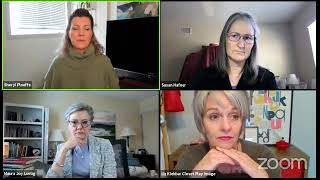
Sheryl Plouffe coaches Maura and Liz on building profitable online businesses for creators. They discuss real obstacles in growth, delivery, and operations: an image consultant struggling to define her ideal client, PayPal pricing failures, and when to hire a VA versus an online business manager.
Chapters
we started streaming here today that normally, we just learned something and we are going to share it with you right now. So, if you are watching the replay on YouTube or LinkedIn or Facebook or wherever, welcome. But normally every week for those who are registered for these free trainings, this free coaching every week, my team sends out these email reminders, like not too many, we hope, but like just, you know, occasional reminders, like leading up to Wednesday to say, hey, you know, in tomorrow's training or in an hour from now or in 15 minutes from now, we're doing the training. And we came on today and realized, I don't think those emails went out. So, you know, like things happen. So, my assistant normally does that. So, we'll have to ask what happened there. Could just be a technical thing. We don't know. But nonetheless, the, the interesting thing about that is that without that email going out to remind my audience, my list, that we do this training has led to a very small group of us actually being on. So it shows that that actually works, that having those— so this is something for me, for all of us to know and be reminded of. If you're emulating something like what I'm doing, which is doing a free call, or maybe it's a webinar you're doing, or some type of free training, sending out those reminders, especially if you're doing it on a weekly basis like I am, it's important to get people And here's why that's important, because people's lives are busy. That's really what it is. People's lives are really, really busy. So if you can send out those reminders 15 minutes before, half an hour before, whatever schedule you see fit, you're going to get more people onto your, onto your calls. So I'll look into what happened here today. It could be something technical happened. But nonetheless, it goes to show that it's powerful. So what I wanted to do today is there's Maura, is do something completely different. And I'm the first to admit, pardon me, that my plan for today was to do something else. And I actually really made this decision like 10 minutes ago. This is kind of how my brain works and how I roll. A lot of things that I do are really off the cuff and in the moment, and I think that's, listen, it's my choice. I guess I could do whatever I want on these trainings because it's my training. But I really wanted to dive into something that's been on my mind. And I think it's going to be helpful for you in the long run because what I wanted to do is jump in and ask questions of you today. I wanna get, I wanna use this as a focus group to really better understand where you're at, And what would serve you right now? You know, I would listen. I've been doing these trainings since June. I've been doing these free trainings ever since, you know, in the middle, you know, every Wednesday at 3 PM. I don't think I've missed one. I think I may have missed one. I think there was one, there was a technical error one week, but I've been here every week and I've been training and doing all kinds of teaching on a variety of different tactics and topics and what have you. But I think it's a good time now as we are in late February we're looking at the rest of 2021 in front of us. I want to know from you what would be the thing that would support you the most, and so I want to have a conversation around what that is because it's going to help inform the topics that I broach for you. Hi, Maura!
Hi, sorry, how are you? Pretty excited about something that's going on for me. If there's time, I'd love to tell you, but, uh, well, okay, I just got notified today that I've qualified, and I hadn't even applied for it, but that I've been invited to attend a 3-day workshop sponsored by the government on teaching people to be online facilitators.
What?
I am so thrilled because that ties in with everything that I'm learning with you as well, right? With all the videos and different things.
You get emojis, you get reactions for that. You get a thumbs up, you get a heart, you get everything for that.
Thank you. And so in terms of what you just asked, a couple of things. One is, I don't know about anybody else, I did not get a reminder about today's session, which I think is why there's so few of us on, but I had it already stored in my calendar, so I just went, and I've got your passcode memorized, so I just clicked on it and joined. So that's one thing. That's why you got smaller attendance today. But then the other thing, and do you remember what I suggested last week at the end? I was asking you to think in terms of a hands on workshop. Now, that may or may not be something that can be done in a half an hour format, but maybe it could be. Maybe you could just have the agreement, you could send out the instructions, everyone who's coming on, only come on if you've got your computer ready and the following as well. And because it's going to be, uh, down and dirty, we're going to spend a half an hour, it's going to be led, you're going to have something ready to, to Publish at the end.
It's interesting. So, Maura, you're going to have to watch the replay of this call because literally, like, 3 minutes ago, I explained that there was a technical issue and the emails didn't go out, which is why we have a smaller group. So, goes to show you that reminders do work for us all to know. Yes. And that's part of the reason why in my— I wanted to sort of shift today's attention from another tactic. I was going to talk about milestones for YouTube, and I can still talk about that if we have time at the end. I will.
But I really wanted to shift it because of, in part, part because of what you said last week.
You know, it got me thinking about this idea of like a workshop, and I haven't checked in with my assistant to see how many of you have emailed into that community@sherylplouffe.com email to ask about that. I'll check in with her later. But it was partly because of that. It occurred to me that there's so much more. It's always a question, I think, for any entrepreneur in terms of like, well, how do I deliver? What is the best format in which to deliver this value, right? It's like, should it be a workshop? Is it a webinar? Is it a free training? Is it a course? Is it— these are all the questions.
And Cheryl, I'm not suggesting you do it every week. I'm just saying that it would be nice to have workshops like that peppered into the other training and ideas that you continually come up with, because you do.
Yeah, yeah. I mean, the one thing that is constant is that there's no doubt that I'm a big believer in content. I am a big believer in organic content, in that we all need to be creators, that we live in the attention attention economy. Content is the currency. We all need to be creating content, otherwise we do not really exist in the digital space. So, you know, I really believe in that. We should all be doing it. I think it starts to become a question of in what format is that best going to serve my audience. And so each of you needs to be asking yourselves that of your audience. And so there are ways that we can do that. I could send out a survey, but I also have this group. So I really thought I would ask you today. Let me, let me, let me frame something for you first before I ask the question. I have a content— sorry, a project management tool that I use. It's called ClickUp. There are others, right? Some people use Asana, Trello. You may have heard of some of these project management tools. But nonetheless, we use one called ClickUp. And how I have it organized on the back end of my business is I have them organized in 3 different categories. And the categories are growth, delivery, and operations. And so under— and that's kind of the backend stuff, because really, when you think about your business, all of the functions of your business can fall under one of those three categories: growth, delivery, or operations. So I wanted to ask you, With regard to growth, growing your business. So this is more like the sales and marketing side of things. Where do you struggle? What is the part about the growth aspect of your business that is troubling you, is an obstacle, is a challenge? Because a lot of this information, I think, is really going to help to inform not only topics of conversation for future calls like these, but it could also inform potential workshops or give examples, trainings that I do. So sales and marketing growth, what's that?
Give examples, give examples in that category.
Like, um, messaging would be one, clarity, offers. Offers, I think, is a big, big one. I see a lot of people that I run into, maybe not necessarily in this group, and that's why I want to ask you, but in, in my travels and kind of talking to agencies and talking to other people and being part of other groups, that a lot of times people don't have their offers dialed in. So when people are not profitable or they're not making enough money, you start to dig in and you realize that they might not have any offers, or the offers they have are not aligned to their brand values. So there's like things that are not in alignment. And so I think there's this whole conversation around what is it that you offer. It's not really profitable for you to be creating all this content and getting out there organically growing if you want to grow a business without an offer. There has to be something, and that could be simple or it could be complex, right? It could be something you could trigger today, or it could be something you work on and build over time, like a course. Or a program. Like, Maura, for you, for example, like with your, your program that you've just launched with your women that you're working with, right? Um, it could be as simple as— and I've done videos on this on my YouTube channel— but like, it could be as simple as a calendar link with a Stripe account, and you could just charge for your time by the hour. That's an offer. At least it's something. But what I'm finding is I'm talking to more and more people, you come to find out that They either don't have any offers and then question why they're not profitable. Well, I can tell you why, because you don't have anything to sell. Or sometimes the problem with offers is they have something to sell, but they're trying to sell something that the people that they're trying to attract don't need or want. So there's a— you know what I mean? So this whole conversation around offers, I think, is really intriguing to me, and that, that does fall into the growth category.
Cheryl, there'd be another piece of that. It would be that they don't have the ladder in place with something at the low end, the low-hanging fruit, to be able to get people to enter into their system of building the relationship and gradually taking on more of their services.
Well, and see, here's what's interesting about that, Maura, too, is that when you're building your offers, it doesn't always have to be an ascension model. It doesn't always have to— ascension model is one type of model that you can use. But it is probably the most popular one. Like, it is probably the most popular one is that you start with something lower end and then kind of ascend people up into something more premium in time or whatever. But there are even models where you could right from the get-go— in fact, you know, I think I did this. I didn't start with any kind of low-end thing. I went direct to premium. Like, really, I did. Like, way back when my first thing that I ever sold, it was, uh, it was $1,800. It was the first thing I ever sold. I fell on the floor of my office and cried because I couldn't believe it happened. So it doesn't always have to be an Ascension model, but there is a conversation around offers. It's like, well, what is the best solution for you or for anyone based on what it is that you do? So that would be an example more of No, I get it.
I get it.
I can think of the context too. Like if I'm at an art show and I sell a painting, person doesn't have to start with a small painting. They can just go ahead and get a big one.
They're welcome to just go for the big one. Yeah, for sure. So I think that that's a growth piece. I think marketing is also part of that growth phase, right? So if we're looking at growth, delivery, and operations as functions of an online a profitable online business. In the growth category, it is marketing. It's, it's all content creation. It is messaging. It is, um, you know, knowing who it is that you're trying to attract. This is probably one of the fundamental things, and it takes time to find that clarity, I think, especially if you're kind of doing it on your own and you don't have guidance. It can be really challenging to know who is it that I'm really trying to attract. People in the marketing world call that the ideal customer avatar, right? The ICA. I feel that's a bit overused, but nonetheless, it is who is it we're trying to attract. So, those are all functions of the growth phase. Yeah. So, of those things that I just mentioned, and you can unmute yourself. We're in a small group here today, so I don't mind if you want to unmute yourself and have an open conversation around this. But what parts of that do you struggle with? Liz, I saw you kind of like you were kind of nodding your head there a little bit when I was mentioning a few things.
I was, especially when you were talking about finding your ideal client, because I mean, so I'm an image consultant, right? Everybody, people have this concept that image consultants are for rich people, politicians, and, you know, Hollywood types, right? That is the, that is kind of the perception that people have. And so when I would talk to people, they would be, oh, I need to introduce you to so-and-so. Because so-and-so lives out in this neighborhood and lives in the really expensive housing. You know, they've got the multimillion-dollar home or these other people over here who have the— but it turns out that that's not my ideal client. Yes, those people can afford my services, no problem, but they're not interested in making good decisions with their money because they have $1,500, $3,000 to make mistakes on in their wardrobe. They're perfectly happy to, oh, buy something, wear it once, go, oh, that doesn't really work, and give it to charity or give it away, right? They're not my client. My client is more careful with their money. My client tends to be an entrepreneur who is on a tight budget and wants to do— get the best bang for their buck and make, you know, and do exactly what they need without creating waste. And so, you know, at the beginning, not only was I mean, I shouldn't say that I was mistaken about my ideal client. I really knew that those people weren't so much my client, but it was really hard to express that to others who thought they knew my ideal client and wanted to help me and introduce me to my ideal client. I mean, I have a couple of people who live in those houses, but they have a very different value set.
It's interesting. Now, I'm going to ask you a question. Do you think you had— because you seem to be at a place now where you kind of understand that better and who it is. Did you know that when you first, first started your business, or did it take some time to find that sense of clarity around who, so that you could define that person who you really are?
It took a long time to define that person because I knew that there had to be a shared value system. That's a common experience. Yeah. It had to, there had to be a shared value system for me and for my clients. Yeah. Because if not, they're not gonna gel. They're not gonna be my people and they're not gonna hire me. So it's really about how do I— like, a lot of my messaging is about my values.
Everything is tied together. See, and that's the thing that it's like everything has to tie together. And so when you're first starting out, it can be challenging because you don't have— first of all, you don't have all the pieces. And secondly, you don't have the clarity to be able to tie the pieces together. And this thing does take time. And I'm always a proponent of saying that the more content you create and the more like, like live streams that you do, and the more talking and the more speaking that you do on your topic, that's actually what brings about the clarity. And so rather than waiting and going, okay, I'm just gonna wait until I'm clear, right? It doesn't happen. No, you gotta go out there.
Never happens.
It doesn't happen that way. So I think those are the things that I'm really quite intrigued by and maybe want to really dig into further in the rest of 2021. Now, it's interesting because to me, I think these are more related to online business in general. This isn't specific to video. Video is a part of that whole equation. But really, and maybe this is just my heart speaking, but I feel like the more I'm speaking, the more I'm talking to people in this group and others, I feel like it's an online business conversation that's happening. This is what seems to be bubbling up for me. And that's why I wanted to ask you and, and switch today's conversation from this tactic that I was going to teach into something more like a focus group for you today, because I think it's going to be more beneficial to you in the long run if you stick with me and you love these trainings. Like, I would like to maybe explore that and dig in further. I did a couple of lives not long ago, I don't know, maybe within the last month and a half or so, that were directed more toward online business as opposed to video strictly. It was—
and you guys reacted really well to it because you directed it right at Coaches and Consultants. And that's what most of us are. Yeah.
And so I guess it's been in my heart and I've been thinking a bit more about that.
So do you mind if I ask a question of Liz, actually, to continue what Liz was just saying? Liz, you may have already said this to me, and then— but I know a couple of Image Consultants, so I just want to make sure that it was you. Um, because, and it ties in with what Cheryl has been saying at the beginning of the call today around what growth really is, around, you know, identifying the niche and clarifying the message, and, and that often, um, we aren't aligned with our, our brand, um, yeah, brand values. And I was just thinking, for you as the image consultant, if I'm not mistaken, one of the things that you offer is you help that entrepreneur align their image with their brand. Yes, especially for the emerging, um, uh, entrepreneur, the person who's ready to launch, the person who's pivoted during COVID the person who's now got the book they're ready to promote, and they need an image consultant at that pivot point. Some like you who really can see into them and say, let's tweak this here and there so that when you show up on Zoom or in photos, you have more impact.
Yeah, yeah. And that's a piece, and a lot of it has to do with that branding piece. And I think, and that would be a really good thing for Cheryl to kind of bring up, like Because branding is, and branding and rebranding, it's like, it's a cyclical thing and it's always happening because the minute you show up anywhere, the minute you show up, make your first post on social media, you've begun your personal brand, right? Right. You've started to make that impression. But I find like when I'm talking to entrepreneurs and I ask them, you know, so who do you have helping with your brand? And they've got, well, I picked these colors and this, that, and the other thing. And it's like, oh, you know, and I'm like, Could, can we go back 3 steps? Because if you had chosen colors that make, like, for example, that make you look and feel amazing, and then that's going to do half of your heavy lifting because it already coordinates with you and we don't have to fit you into the mold. We can build the mold around you. Yeah. Like let's build the brand around you rather than making you fit into something that you think is a brand.
Cheryl, what was the name of the woman that you had on at that one-day workshop you did? And she came in, was it California or Phoenix?
Shelly.
Yeah, she taught how to, uh, show up on Zoom. And Liz, I think I mentioned her to you at one point.
Shelly Golden.
Yeah, yeah, that would be a great person for you to have a conversation with too, Liz, because she's kind of doing something similar but not the same as you.
And I can, I can hook you up, Liz. Just send me a message and I'll say—
that'd be great. Thank you.
So I think that that branding piece, again speaking about online business, it is crucial Branding is crucial, but I think there's this misconception around what brand really is. Brand is reputation. Brand is what people say about you when you're not in the room. Um, now there is something to be said for visual identity around brand, but you have to start with at least fundamental values so that you know how to build the visual brand around that. And that does tie into what Liz does. So it's all these conversations that are going through my head in terms of how I best help my audience to grow their business. Because I think that's for me, the clarity that I have for 2021 is like, okay, great. I've really dialed in on, I think, on my offers. I have the virtual video production. I've got some coaching that I offer, but I'm going to have these challenges.
Okay.
So boom, boom, and boom. That's fine. But at the core of why those things is growing an online business. And who is it for? Specifically for coaches and consultants, speakers and authors, people in the e-learning space, people who are in the advice industry and advice business who are packaging up their expertise and wisdom to sell. Perfect. Profit.
Perfect.
Yeah. And so I have that clarity now. But when I think back on my journey, which is what it is, my journey in all of this, I didn't have that clarity back then.
I don't know, you didn't have it a year ago even. Like, it's amazing.
I agree, I agree, Maura. I really feel like if I look back on that, like, late 2019 and early 2020 before COVID because I think COVID was, uh, the thing that actually brought me the clarity, interestingly enough, you know. And so, yeah, I agree with you. I don't think I was really in the same place a year ago that I am now, and I probably wouldn't have been willing, frankly, to have a conversation like this openly online broadcasting to all these platforms right now if I didn't have this, like, sense of clarity and knowing that I know I can help people. It's just more of, I think, for me, the delivery of that help. What is the best way for me to do that based on where people are struggling with online business? Because I think that the conversations in my mind right now is And my video strategy is definitely my forte. It is my expertise. But I'm also becoming more experienced and knowledgeable and expert in online business from the perspective of being someone who's done it themselves from the ground up. And so growth, delivery, and operations are the 3 categories. So growth growth. We talked about that brand, content, messaging, offers. All of that has to do— you have to have these fundamental things in place or you're stuck. And then the second part of that is then delivery. So, this is more in the space of how do you deliver the goods to the people who have purchased from you. So, this is like, this is more around digital offer, digital courses, the digital kind of landscape. Communication, emails, working with people.
How do you— Automation.
Automation, Zoom calls versus other type of calls. Like, there's so many different ways to deliver your services to people. And especially now in the virtual world, it's like, how do you do that virtually? Because we cannot be in it with people. And who knows when we will, you know? Delivery could be fulfillment events. You name it.
So I think there's a lot of fulfillment event. I'm not sure of that term.
That would be like, let's say my offer in the growth phase, right? Like I have my offer and the offer includes, like, for example, Maura, I often include private one-on-one calls as part of some of my offers that I've had, right? So it'd be like, hey, join me for this and you're going to get 3 private calls with me. So now I have to deliver. That would be fulfilling on that part of the offer. So it could be an event, it could be private calls. It's like, how do you deliver on the goods that you have promised a person?
Okay, so the workshop that you're promoting, the whatever.
Okay, yeah, it could be like I sell a ticket to, uh, I could have a workshop and I sell tickets to it. Well, now I got to deliver it.
That would be my retreat in France too.
That's your retreat in France. Yes, exactly. So, that piece in delivery also has to do with customer satisfaction. It has to do with timelines. It has to do with deadlines. It has to do with how do you deliver on the goods you've promised someone. This could also include now things like testimonials, getting testimonials from people so that that helps you with your marketing. That whole piece, I think, is in deliverables. Uh, sorry, in delivery, delivery of the good. Yeah, yeah. So are there any of those things that I just mentioned there in that space that you're kind of like, whoa, I'd like to learn more about that?
I always want to learn how to have help with everything. Okay, there's nothing you haven't said I couldn't use more help with.
Fair enough. Yeah, yeah.
I, and I struggle personally, I struggle with the logistics of delivery. It's like, okay, because I don't even— I mean, it's like, okay, I can do this and I can do this and I can do this, but there's got to be an easier way. Okay, so I need to automate this part. So I've automated this part, but how do I get from— how do I get from here to here?
And, you know, a lot of it is the boy with the thumb in the dike, you know, like, it does feel like that some days.
Well, and so I had a great example of that this weekend. I had— I got an email from a woman saying, I've tried now to buy your personal service consultation twice and it keeps sending me to a page not found. And I'm like, there goes my Saturday morning. You know, I thought I had a plan.
Technology.
I had a plan for Saturday morning, but then my plan became, okay, in the dike, finger in the dike, let's figure out how to fix it. And so my husband brought his laptop in, thank goodness. And we sat there and we tried various combinations and turning, toggling things here and there. We finally got it working. Meanwhile, you know, I said, may I send you a direct link to PayPal? You know, I'll invoice issue and you can just pay through PayPal because that's what I use anyway. But it was— and then the thing that broke my heart was whenever I opened up PayPal, I saw 65 other people who had not been able to make a purchase. Oh, since the last weekend in November.
And you just found out. Well, thank God you found out.
I did. Yeah. Yeah.
And thank goodness it wasn't another 4 down the road.
Right.
So I am thankful, but it was just—
that's painful, devastating. Right. Yeah.
I was like, I was worried.
You work so hard to market yourself and everything. And so, yeah, that's a really interesting thing. I think that piece around technology. And so now we start talking about, again, let's say one of your offers was, you know, you decided you want to have a membership site. I don't know, something like that. Well, now it's like, how do you deliver that membership site? So there's a piece of technology. You have to have technology in place to be able to legitimately have a membership site.
So what does that mean?
Yeah. So I think there's a whole piece. You got your growth piece at the top. In the middle part is the delivery of the goods that you have sold, whether services or products. And I think it is logistical. Yeah, very much so. Right.
Yeah.
It could also— I think the delivery part could also be outsourcing. Right. And getting help. Maybe it's an analysis of the delivery of the goods and services and realizing that you shouldn't be doing that stuff. You should be outsourcing. That's a whole other conversation. Outsourcing can be a good thing, but there's a lot of mindset changing that needs to happen in order for people to see the value of outsourcing.
And there's another piece, Cheryl, that has to go with that. When you reach that stage, you know you need to outsource, then you have to look at I'm not charging enough to be able to afford to outsource. And then that changes, like that pushes the question back at you. Well, oh my God, I have to double my prices. I don't think I can get away with that. I don't think I can maybe sell for such and such. There's so much this triggers when you realize you've got an octopus under yours, under you, and you need to bring it together in one spot. And how do I do that? Yeah.
Yeah. And it's a— I think a lot of it is mindset, but it's also understanding that it's like going back and they're all tied. All these things are tied together because in the delivery model, if you say to yourself, okay, well, I want to outsource or I should be outsourcing, am I charging enough? Well, now you got to go back to the drawing board, back to the offer level and analyze that and cut it down and go, okay, well, what are my costs, my cost of acquisition, my cost of the product, you know, and all these different things to crunch the numbers. To see whether in the delivery phase it's actually going to still be profitable for you. The last thing you want to do is have building an online business and doing all the marketing and everything else to find out that you can't be profitable under the way that you have crafted it. So I think there's a whole piece in that delivery section that's really crucial. And then the third— yeah, go ahead, Maura.
Thanks to you, I launched that beta coaching program and it's going extremely well. And then I'm lining up the next one. And also in terms of delivery, what I, I, you know, I didn't give the first one away for free. I charged $397. And now the next one, I'm bumping it up $200 to, you know, like $597 or whatever. And then my private coaching, I doubled the price of that in January and immediately got a new client. Yeah, go figure. And, and like, I know that, I mean, We Are Works, and it might— and you've given me the confidence to be able to do that. You're not the only one, but you've been a big piece of that in saying, Maura, you've been undercharging for what you deliver on right now. I, I'm at that stage where I need to bring all the threads together. I've got all these different systems out there, the course in one spot. I don't have a membership site because I don't have a proper affiliate link. Yada yada. The coaching's in different places. I need one spot and to be able to hire someone to bring it together for me. Yeah. Yeah. All right.
So I think I totally agree with everything you just said. And this, I think, is why we have overwhelm. Welcome to the land of overwhelm. Right. This is why we hear that people are overwhelmed. It's no doubt because it is. There's so many moving parts. But I do think that when you start to break it down into the— and that's why I have broken my own project management down into these 3 categories because prior to this, I had like 8 categories. And so it was confusing because I'm like, what are we working on? Now I break it down into— because it's really true, you can break down every function in your online business into 3, these 3 categories: growth, delivery, and then operations. In operations, this is more like team building. This is when you have people like—
do you— bye, Rose.
Bye, Rose. Thank you so much for being here. This is team building. This is things like project management. What are the best tools to use? That is creating SOPs or standard operating procedures for people on teams. It's communication, like we use Slack, you know, whatever that— there's a whole piece around how do you operate the business, CRMs, Do you need one? Should you have one? Which is the best one based on your— like, there's all kinds of different CRMs, technology. There's a whole piece around operations. And I think that operations also could be things like, things like speaking. We put my speaking engagements in operations only because I want my team members to manage that part of my business for me. So we put it in operations.
One could actually Is that me speaking or is that events?
Me when I'm speaking at events. It could be speaking on a livestream, an event, a podcast or whatever. If I want my team member to manage that on my behalf, we put it in Operations. If it's something I'm managing, I will likely put it in Growth and put it in my own private section. So, it's all these decisions and everyone's case could be different. Like, I mean, it doesn't mean that just because the way I do it means that you have to do it that way. But I think in operations, it has a lot to do with delegation, right? It's which parts need to be delegated to other people, and that becomes an op— at an operational level. I'm not saying I have it 100% dialed in. Like, I'm still learning as well. But I have learned so much through the process of working with some amazing people, being mentored by amazing people, coached by many— like, going through the process myself, learning the hard way, fixing things along the way. And then I get to a point now where I'm feeling so much better. I don't have it 100% dialed in, but every day I'm making progress and becoming more clear about what are the components of a successful online business. And I'm growing too. I, I just may be a couple of steps ahead of people who are in my audience and is it something I could teach, I guess is the question I'm asking.
You remember Allison Graham? Do you know Allison Graham? She, she's the one I took the course with on how to create my online course. And that was one of the things that she said, because people, they question whether they know enough to actually teach. And, uh, and, and she said, as long as you're two steps ahead, that's perfect.
Yeah, you don't need to be like— I'm the first to admit I don't think I have it 100% dialed in. Yeah, but I am— every time I, I encounter some challenge, you know, I'm, I'm a solutions person. I think that is driven from my journalism experience because we're trained to create stuff from nothing every single day on the deadline, right? So we're— this is like my world. I'm trained to be able to fix problems, find solutions, create something from nothing every single day to deadline. And that has proven to be a great skill set for me in online business because that is largely what it is. What I'm realizing now is that I could probably save people a lot of time, energy, and maybe even money by teaching some strategies on how to circumvent those pitfalls. And do it in the way that I have seen to be the most beneficial, right? And it's taken years, like really, like literally years to get to a point where I'm feeling like, oh, okay, this is actually working better now.
Cheryl, one of the things you could also do with everyone is be the Wizard of Oz that actually pulls back the curtain and shows, you know, the feet moving below the surface of the pond. With, um, yeah, because you, I know you have a team now working for you.
You've been starting to grow a team.
Yeah.
Yeah.
And you've evolved to that. And so there's two reasons to kind of reveal that in, in, in your own way, whatever way is right for you to reveal it. But two reasons is one, to show the goal of what can happen and how progress looks, you know, of ultimately as we evolve. That we have to expect these things to be necessary and integrate them as we get to certain stages. But the other is to also reveal the fact that, you know what, when we're comparing ourselves to you, you know, you're not doing it all by yourself anymore, that you do have this up so that we don't feel so small or inadequate by comparison, that we realize that we can get there. Uh, but don't compare, you know, here to here.
Yeah.
Not on the same level yet.
Yeah, yeah. And it doesn't take me— it's not really difficult for me to think back to a time when I didn't have anyone helping me because frankly it wasn't that long ago, right? So I can remember what that's like and I know what I recommend people do before they get to— because ultimately that's where you want to get to, is you want to get to a part where you're not feeling so stressed out and having to do everything. But it took— I mean, it's only— that's only really fairly recently, like within the last year.
Cheryl, I don't know whether you want to answer this question out in this group or just privately with me, but I'm curious about what the budget should be for an online business manager, someone to help me simplify my life, bring things together. It's not just someone who posts on social media for you. I mean, these are different levels of assistance, right?
No, no. So an online business manager is not someone who is like a social media marketing person. That's a totally different role.
Yeah, right.
And a virtual assistant is a totally different role. So just to kind of like lay the, the line for what it is, an online business manager is a person who is going to help you like manage the business, but also would be in charge of, um, hiring VAs and managing those VAs on your behalf. Um, that's a person who is going to confer with you to say, hey, you know what, we might need somebody else in this role to fill this role. Let me do the job description. Let me go and find that person.
What if you're not that big yet, though? You need them to possibly grow into that need.
Sometimes the better place to start would be to start with a VA. Mm-hmm. Right. I happened to have done it a little bit different. Like, I went to an online business manager who kind of was serving a little bit of both purposes in the beginning just to kind of get us going. And now we're at a point where we're looking to hire more like VAs that she will manage. But, but I recommend if you're like you're solo right now, one good thing would be to have a VA, one, one. But that person has to be— this is not a jack of all trades person. That's one of the biggest mistakes with, with hiring more virtual assistants. People go out and they try to find one VA who can do everything, and that is not— do not do that. You want to figure out what is the best area of my business that I need the help with and find a VA who really specializes in that thing to get that off your plate. So you might end up needing— over time, you could end up having 3 different VAs who all specialize in different things. And that's at a point where you could hire an Online Business Manager to manage those people who are doing the work for you. But you have to get to a point where you're really profitable in, or, or be willing to, um, to invest in that to get profitable.
What are some of the price points per hour, as an example, for the different levels?
Online Business Managers usually don't work by the hour.
So then maybe that's not what I need, but something that's a really high-level virtual assistant.
It runs the gamut, right? It really does. And it's like, it's interesting that you bring this up because this is something— virtual assistant help— this is the operations part that I was just mentioning. Like, digging into that is a whole field of study. And so, but the short answer, Maura, I think is, you know, you obviously, you get what you pay for. There are a lot of people who are like finding, you know, virtual assistants, let's say overseas, and there's nothing wrong with that, who are getting paid, you know, I don't know, $6 or $8 an hour. And sometimes that work, it can work, it could. But it depends on what it is that you're looking for. Sometimes people are like, well, I need a virtual assistant, but they have to be, you know, like $25 an hour, $30. It can, it can go as high as $100 an hour easily. Depending on what their specialty is. So I think it's a whole conversation around that because I've been interviewing people.
Yeah. And I've been having quotes, a couple of them around $25 an hour, and then this one girl at $75 an hour.
Yep, that's, that's pretty typical.
Okay, thank you.
Yeah, yeah, pretty typical. But online business managers are usually on retainer. They don't work like on an hourly thing. So, you know, you're looking at between $1,000 to $2,000 a month. Kind of a thing.
Okay, good to know. See, I didn't— this is great. Thank you.
Yeah, so I think that it's interesting, right? Because that whole conversation is something that it's good for me to hear from you about, like, oh, okay, I'm interested in that because that falls into that category. So, you know, I know this call was a little longer today, and I kind of changed the, the meaning of the, the meat of this, of this call today because I really felt like my heart was tugging on me to say, hey, ask your audience, go out and find out what they're challenged with. What are the struggles that they're facing? And this is helpful for me to understand better where you're at, because if my goal is to help you grow your online business, these are the things that— it's beyond video. Yeah. And that's what's interesting. It's a little, you know, getting into these topics are really the business building things. The video is part of the marketing, which is one aspect of building a business. You see what I'm saying? So that's where my mind is like, I'm okay, because last time I did some stuff on online business, you guys were— we really reacted to it really well, Maura, to the point where you— and I don't know if that was all because of me, I don't know, but it seemed timely. I had mentioned about, you know, the online thing and the beta, and then you took it, that concept, and ran with it. And then within, I don't know, it was like—
Build my course, the whole bit, now doing the second one, getting— yeah, no, it was just the perfect suggestion for me at the perfect moment.
Yeah. So I think it was partly that that kind of got me going, well, gee, that's good. I'm really glad you did that. But it's gotten me thinking a little bit more about the online business space.
And I've been like, I'll admit, I'm talking to my own assistants in my team about it too.
And they're, they're kind of leaning, Cheryl, you, you, you should maybe think about helping people, you know, beyond marketing, beyond video, and really on the business side of it, because I have learned so much. So interesting.
And that's interesting because you were saying video on the growth side, but it's also can be part of your delivery as well.
That's right.
So you have to be thinking, it's like, okay, is this video part of my delivery? Is it part of my growth? And I think that's one of those things that can be overwhelming. It's like, oh, I got to make videos. Well, what? Where? Okay, so which am I making? Am I making growth videos today? Am I making delivery videos?
Okay, ping.
Just even being able to break it down and think of it that way.
If I think about how I've even built a business, it has largely been on the back of video. So no matter what I end up doing, if I were to start teaching more about online business and kind of going into that, there's always going to be a heavy emphasis on video because that is what has helped me build business. So that is never going to go away.
There's always going to be a— Play to your strengths.
Mm-hmm. Yeah. Because it's part of my— that is part of what has been part of my growth has been video. Yeah. And audio, you know, and imagery. I mean, it's not just video. Like, there's an emphasis on video, but there are some other factors to it as well. I'm a big proponent of Canva. You've heard me talk about Canva, you know, Kajabi, these online business tools. Like, there's so much about technology that I've learned and have streamlined, and it's like, these are life-changing things. Oh yeah, life-changing stuff. And so it's been really, uh, interesting for me to kind of I guess I'm doing a little bit of introspection right now too, like on myself and just kind of thinking about these things. And it's helpful for me to get—
we all are, Cheryl. This is, this is good. I mean, we're on that wavelength, all of us. All of us, we're assessing what's working and what do we want to really focus on going forward this year. I mean, to my mind, this is going to be my best year ever.
Yeah, so exciting.
Just a lot of things are happening. I mean, like in different areas, right? The commercial modeling— I just spent all day in Toronto yesterday. They've asked me to come back for another full day next week. And, you know, and then I get, I get a call today telling me I just been nominated for this course that's all paid for by the government. Like, and then working with you the way we are, and then the clients, and I just like, a lot of really interesting stuff's happened just since January.
It's amazing. And yeah, and, and, and it's only, it's February 24th. I mean, like, so it's amazing. I'm so proud of, I'm so proud of you. I'm so proud of everyone who is putting in the work.
And really, you've attracted some great people around you, and we love this.
None of this is easy. I don't care what any of those, like, you know, online marketers who rent those Lamborghinis say. It isn't. It is not really easy, but it's totally worth it.
Cheryl, I'm gonna, I'm gonna run.
I know, I got to too. This went way longer than I expected. I totally, um, Appreciate all of your input, all of your insight, all of your questions. I'm noting all of this. This is great.
Thank you. And Susan, it was great to see you, even if Charlie was talking so much you couldn't unmute. I will be watching the message chat.
He has settled down a little bit.
I think he figured out that it's going to be a little bit— Mama's not going anywhere.
You were talking, so you didn't see the chat.
No, I did. I'm reading it now.
Oh, that's funny.
Yeah, my Charlie, my puppy Charlie, um, was barking up a storm. So I couldn't mute.
Yeah, yeah, that's exactly what it was. And he's finally settled down here.
So this has been very, very helpful.
Thank you. Well, listen, I appreciate you. Thank you so much for your input and questions because it's helping to inform me a little bit too in terms of direction. And, um, you know, I'll be, you know, next week we'll be back on track with our normal like training and I'll have like tactics and things for you, but it's just really helpful for me to hear from you what, what some of the challenges are that you're facing, and that's going to help inform me, I think, as well.
Okay, thank you so much, Cheryl.
Okay, you have a great rest of your day.
Yeah, goodbye, ladies.
Bye. Cheers.
More from Sheryl



From 'agreeable' to 'ruthless mentor' to 'strategic sparring partner' #substack #shorts







