Cash In On Camera LIVE!
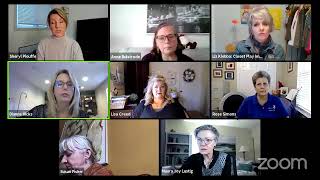
Sheryl Plouffe walks coaches and solopreneurs through launching digital products, from choosing a format (self-study course or beta coaching group) to picking tools like Kajabi and Zoom. Start with a minimum viable product, sell the concept before building it fully, and price your beta low to test the market with 5-7 people.
Chapters
And congrats.
Trying to stay busy. Can't be there.
Congrats.
Thank you. And my son's baby will be here next Wednesday.
I'm having a grandbaby in a week. So much going on. That's amazing. It's great to hear some good news, that's for sure. Welcome to Cash In On Camera Live every Wednesday at 3 PM Eastern time. I take time, about 30-ish minutes out of my schedule to to come in and share with you some tactics, some strategies, some ideas on how I can really help support you to grow your business. You know, I do mostly work with coaches, consultants, but some of you are speakers and authors, small business owners, mostly solopreneurs. And so if you're watching on LinkedIn, hello, nice to see you. You might be watching on YouTube or perhaps even Periscope. Periscope is actually going to be no more by about March. But if you're watching on Periscope, soon to be Twitter, YouTube Live. Welcome to the broadcast. And of course, on Facebook. How I am doing that right now is I'm using Restream.io, and I'll leave a link in the chat for those of you who are interested in it. But actually, I can even tell you it's Restream.io/join/cioc, which stands for Cash In On Camera, and what you can start a free account there. So, the idea is that we use Restream in order to take this broadcast and put it out to as all of the platforms that I want. I can do up to 30. So it's a really cool platform. If you're interested in more, reach out to us. We'd be happy to just get you set up with a free account. What we're talking about today in Cash In On Camera Live— and I would ask you too, if you could mute yourselves while I do this portion of the training. And then when we do the open Q&A, I'm actually going to open it up to questions. So Today we're talking digital products. And I, and I chose this topic strategically and specifically because we're at the beginning of the calendar year. This is a time of year when a lot of you are thinking about your goals for the year, right? You're thinking about your income goals. You're thinking about possibly thinking about some income, what do you call it, passive income, you know, thinking about, OK, well, what are some things that I could create or what are things that I could do to make money and maybe even passively make making money, right? Making money while you're sleeping kind of a thing. So, so today we're going to talk about digital products. And what I want to do for you is just share with you some of my own thoughts, ideas and experiences and hopefully help prevent you from going through some painful parts of this process because it can be painful. I've learned a lot of lessons, frankly, the hard way. And I hope that by sharing some of these ideas with you today, it's going to help you circumvent some of that for you. If you— I would love to know, in fact, if you're watching here on— if you're on Zoom with me right now, we're doing the interactive portion. I'd love for you to put in the chat what is a digital product that you— and maybe you don't have one yet. What is a digital product that you'd love to make? You know, have you given thought to something that you want to create that you think would provide you with that passive income? You know, I'm just giving an example. Could be an online course, right? So type in the chat, what is a digital product you'd love to make? Maybe you've given more thought to it than I know you have. Maybe you have a title. Maybe it just hasn't been created yet. So let me know. An online course, an online course. I'm seeing, okay, I have an online course. Okay, cool. So, you know, the thing with digital products is they are amazing. They are amazing because you can create them once and sell them over and over again. That's not really the beauty of it. It can do a lot of the heavy lifting for you. So let's talk formats first, and then I'm going to get into the strategy. There's really 3 kind of areas that I want to broach today for today's training, and one is the format of the digital product, the strategy, which is going to take up the most of our conversation today, and then thirdly, the technology. So with regard to format, if you are at the early stages, right, you're an offline authority, you're excellent at what you do, you're a coach or consultant, but you just might not have your online assets or your online presence dialed in yet. What I would recommend is that you're either going to look at an online course or you're going to look at a beta coaching program. OK, and from a digital product perspective, An online course is going to be more self-sufficient. It's going to be more standalone, typically something that is self-study. An online course is something that you've designed so that people go, you know, start at one step and go through the next step. You can have assessments as you go, little quizzes. You can have like one lesson lead to the next. You can have it built out in modules. There's a whole, um, structure that you can use to create your online course. But the other one is something that is, in my view, maybe the better place to start would be a beta program that can have some digital product components to it. So a beta program is something more like taking your expertise, taking what it is that you love to do and what you're great at, and teaching a select number of people how to do that thing. Okay, and then as an— as a component of that, there can be an online learning component, but it's like a hybrid. There's going to be live coaching and some self-study mashed together. I like to use Zoom for the purpose of, of the, um, online interactive coaching part, like kind of what we're doing right now. And you may well do the same. You know, even Restream, you know, which I'm using right now to multistream, you can even use that platform for up to 10 guests. So if you were going to launch a beta program, you could have— and you knew that you were going to have less than 10 people, which you likely will when you're first starting out, you could use even Restream instead of Zoom to do that coaching because you can still share your screen, which is pretty amazing. Okay, so really in terms of formats, I recommend either a beta program, being a hybrid of live and self-study, or an online course. The only thing I would caution you with an online course, especially if you're again starting out online or you don't have all those assets dialed in yet, or you've never created a course before, is to start with a minimum viable, minimum viable product. You do not want to spend 6 months creating the world's best, what you think is best, online course when you haven't sold it yet. That is the biggest thing that I can impart to you. You have to sell it first. I know that sounds weird and sounds contrary because you're like, yeah, but you got to make it first to sell it, right? No, not when you're first starting out. You have to sell it first. That's why I recommend that beta program version first, that format first, and then you graduate to taking that and building it out as a self-study course. Okay, um, so format-wise, that, that's what I would recommend. Um, when we get into the strategy behind that, that's when we start to talk about, okay, well, let's say I was going to do a beta program. I'm going to launch a beta program. What is it going to be about? You have to think about your ideal clients and what is the struggle they face.
Right?
Look to solve one problem. Look at, okay, here are my ideal people. I just need to solve one problem. One of the biggest mistakes I think people do is, is make is they, they try to solve all the problems of their ideal client with one course. I want you to think about breaking that out and going, okay, here's one singular problem they face. Let's create that one program that just helps them solve that problem. That one thing. Okay, so what is the problem that they face? And then you answer with, well, how do I help them solve that problem? Okay, that problem that you solve should be built out as a methodology. Ideally, as a methodology, maybe it's 3 steps, maybe it's 5 steps, maybe it's 7 steps to solving that problem with them and for them through the process of this beta program or eventually online course? What is your methodology? So that's literally like, that's just like sitting with a piece of paper, right, and going, okay, if I know I want to solve, if I know that this person needs to solve this problem, let's reverse engineer what are all the steps that need to happen before they get to that result. And go granular. Like, don't take for granted that they know any of this stuff. Even if you, you know, you might think, well, I think they already know that, but they might not know that. So keep— put that into your methodology. So break that out into a methodology. Um, price point. Price point for a digital product, it's totally up to you. But what I would recommend, especially again starting out, right, creating your first digital product or creating a new digital product, you want to sell it first. And keep in mind that when I say selling it, it might be for free. And now you're like, well, if I'm selling it, don't I charge for it? You might. But keep in mind, if somebody— let's say you have a 7-point methodology and it's a 7-step process that you have to take people through to solve that problem for them. And maybe it takes 7 weeks. Maybe it takes 7 weeks for you to, like, work with them and get them to solve that problem. And they have to spend 7 weeks. Maybe it's an hour each call for 7 weeks, that's an investment of their time. And guess what? Time is money. So, if you are looking to launch this digital product, you might consider actually doing it for the first time for free because you are, in essence, still selling it. You're selling someone on spending time with you, which is super valuable. One could even argue maybe more valuable than money. So, think about selling it either for free or a nominal charge. I would suggest anywhere from free to nominal upwards of $500 for a beta program. That's how I've done it, and it's worked really well for me. I remember one time I went to see Suzanne Evans. I had a half-day VIP with her in North Carolina. We worked together for 4 hours. She mapped out some stuff. I paid her a lot of money to do that. She had a bunch of stuff on a whiteboard. I, I got on the plane, and by the time I landed in Buffalo, I had sold my first beta program for $500 in the airport, right? Um, because what I had put together was exactly what I'm teaching you right now. So price point: free to nominal. And by nominal, I mean it like, like $97, maybe upwards of $500. You can start making the big bucks later after you've brought people through it, you've gotten results, you've gotten some testimonials, and then you can start maybe upping that. You're adding more to the course and it builds out over time. The, then the next thing is, okay, great, so how are you going to find those people? Where are those people that you're either going to sell it for free or sell it for a nominal fee or sell it for upwards of $500? How do you generate leads for said digital product? You're either— organically is likely the best choice rather than advertising, because people might not know who you are. Like, advertising is a whole other kind of ball of wax. But if we're looking at organic lead generation, what does that mean? Content. You gotta have content. You hear me talking about that all the time. It always comes down to content. You have to be in front of people constantly, consistently with content so that they know, like, and trust you. OK, and that could be live or that can be recorded content or maybe a combination of both. And that leads us to the third point, which is technology. There are a variety of places that you can host digital— like that you can host your courses, that you can have digital products on. I personally— you heard me talk about Kajabi. It's my, my platform of choice, no doubt. Changed my life. So that's the one I recommend. But there are others that you can also look at, like Thinkific, Teachable. What are some others that come to my mind? Those are the two that come to my mind. But my view is Kajabi is far and away the one to do because it's the all-in-one platform. They actually have— I don't know if I've got it here. Let me Let me see if I can bring this up. I want to mention this. There's no obligation here at all. And I put the link in the chat for those of you who are watching on Zoom right now. They have a challenge coming up. I have— I'm not running this challenge, but I've been mentioning it in my emails. They have this. And if you're watching this on a replay down the line, it may not be on or could be on right now. I don't know. You'll have to check in with them. But use the link that's below this video to see if you can still get it. But right now, if you're watching live, they're doing an income to— sorry, an Idea to Income Challenge. And if you click the link that I've provided for you under this video, you can join it. Reserve your spot by January 15th, 2021, and they're going to extend the Kajabi trial to 45 days, free trial, and they're going to work with you to turn your idea into income by helping you build, market, and sell a digital product. So if you're interested in that, by all means, click the link in the— around this video and join that Idea to Income Challenge. I think it's a great opportunity for those of you who many have said, I want an online course, I want a beta coaching program. That's what Kajabi will help you to do. OK, so let's open it up to questions. Let's see, online course, online course. I want to start Zoom calls for my real estate mentees. Yeah, absolutely, Diane. I think that's a great— like I said, Zoom is an awesome platform to do that. If you have fewer than 10 mentees, then you could even use a Restream to do that as well, which gives you more branding opportunities, which is nice, you know, in a coaching program to be able to have, you know, little graphics on the screen and things like that. That I can't really do in Zoom, but on Restream you can have little borders, you can have little things coming up on the top that say like you know, coaching program or Live with Sheryl or whatever the case may be. It has countdown clocks and things like that. Online course, promoting products, a beta coaching program. Yeah, Maura, awesome. Selling it first, that sounds scary for control freaks and perfectionists. Lisa, yes, it is scary because most of us think it's like, well, I have to have it created, otherwise how am I going to sell it? You actually want to enlist and enroll people into something first because it's the proof that you need that there's a market for it. Listen, I'm not saying you can't create a course, but what happens sometimes is people create the course that they think people want, not the course that they actually need or are willing to spend their time or money on. There's a big, big difference because we're so close to what we do that we think we know what they want. Sometimes we don't know what they want. You know, I've created— in the early stages for me, I was creating stuff, courses that I thought people wanted, and then it would be crickets. And I'd make the whole— I'd spend like 6 weeks recording videos and making the course and everything. I'm like, okay, great. And then I'd go out and I'd try to promote it, and people would be like, I don't want that. Oh, I thought you did. No, we want this. Oh, if I had only asked, I guess I would have known that. Or if I'd only Listen, I would have known that. You know, what happens when you sell it first is you quickly get a gauge of whether or not there's a market for it. You know, one of the big things you can do, one of the big tips, is go out and take a look at if it already exists. If it doesn't, that's a red flag. That's not a blue ocean necessarily, right? Um, if it doesn't, everything's already been done. It just hasn't ever been done by you.. So, if you can, you know, do a bit of research on courses and go on to Amazon and look for books on the topic, and if you don't see anything, it's probably a bad sign. Selling at first sounds scary. I have a question about free. So, Liz, I know you have to jump off soon, so jump on and ask your question.
Yeah, and I would second what you were saying, Cheryl, because I did a beta back in September of 2019, and I got over-involved and they wanted something much smaller and I had done something a lot bigger. And yeah, oops, lesson learned. So I'm getting ready to do another one here coming up in the spring. But my question about that refers back to the beta that I ran. So because it was a beta, I ran it for, I don't know, $31, I think.
Okay.
And there's that commitment level issue. And I'd love it if you could speak to that because like if you put $149 on something, you are more likely to follow through than if you only invest $15 or $20 or $50 or whatever. So do you have any suggestions on— not necessarily pricing, because obviously everybody's going to be creating something different here, but any suggestions on where to go to maybe figure out how to price it out? Or do you take your own, your own price points that you already have for regular products, and do you adapt that, or whatever?
I think it's more about taking a look at when you create it and say, what's the value of this? It doesn't— the value is different than the price. So if you make— let's say you're going to launch a beta program and the looking at the value of what the transformation is, or looking at the value of what is it worth to a person to solve this problem Okay, let's say it's worth $2,000 to that person to solve that problem, but you sell it for $500. When you're having conversations with people, that's how I would position it. I might even say something like, I would be upfront about selling a beta program upfront. I'd say, listen, I'm actually launching— this is a beta program. Like, I'll do that. I'll say, this is a beta program. The advantage for you to join me in the beta program is that you're not paying the $2,000 I'm going to charge for it in the future. You're paying $500 to still have, frankly, more of personal and live attention from me than will the people who eventually get the self-study course. So you're— it's really more about positioning it and say the value of this is $2,000. But I'm selling it to you right now for $500. You're still going to get the transformation. You're actually getting more because you're going to get my personal attention for the next 7 weeks. Does that help? Great question. That's how I would do it. Again, substitute your own numbers there. Maybe the value of what the transformation is that you provide is not $2,000. Maybe it's And again, we could get into a whole discussion about how do you determine the value. That's probably for another time, but— Oh, go there now, please do it. Okay. Yeah. How do you determine— I'll put that on the list, Maura. How do you determine the value? It has a lot— there are certain steps that you need to go to to figure that out. But yeah, let's just say $2,000 as an example, that if they solve that problem, it would be worth $2,000 to them. Then yeah, you know, and that also helps you to determine what that price point should be for that beta. But I just, in my own experience, I don't like to sell a beta program for more than $500. I just feel like, to your point, Liz, you know, what happens at $500 is it's enough of an investment that people take it seriously, right? So like, you know, $500, all right. Like, it's not so much that it's, It's, it's like a gigantic investment, but it's enough to make it like, okay, I've got some skin in the game here, kind of. So I like that price point for that reason. But you can certainly do things for $31, like lower price point. But if it's a 7-week coaching program and the value of that transformation is $2,000 and you're selling it for $31, I would question that. I would say that probably needs to be more like a a 97.
Cheryl, quick question. You're talking about a beta program being for a group. This isn't an individual. Now, what number do you think is the sweet spot for a group if you're trying to put it together?
For a beta, 5.
5 people?
5 people. I like 5, 6, 7-ish because it's— because keep in mind, there's going to be that it's a hybrid. There is a— you're teaching live And you do want to be thinking about getting those 6 or 7 people the best of you. And I think if you start bringing in like 25 people, it negates that. And so now, so I would try and keep that initial group smaller.
Because my course has 9 chapters, 9 lessons in it. So that could be a 9-week course and promoting it to 5 people and then just deciding on a price.
Okay, I think, I think if you're under 10, like, that would— I think, I think depending on what the course or the beta program is, I think 10 would be a doable number of people to mentor over the course of that time. I think, Maura, it might have more to do with your own coaching experience and ability too. If you've been doing coaching for a while and you know how to get people results and you're good at dealing with people, but if you're new, new and you've never mentored anyone before, then I would try to keep that group lower. Okay, thank you. Yeah, okay, any other questions? Is this helpful? Show of hands on the screen if it's helpful to have this conversation. Okay, cool.
One more point around the value. I mean, let's say we don't, we don't know what value to put on it. I mean, rather than picking a number out of a hat, Could it be turned around in the form of asking them questions, what would it be worth to you, and then naming results?
Yeah, I like that. Yeah, yeah, I like that. You know, because, um, I mean, I think that, I think that strategy, Maura, might be more conducive to when you're selling a higher ticket thing, right? That has more to— I think that's more of a sales conversation strategy for maybe a high ticket, anything like $2,000 or more. Type of strategy. I think when you're starting to do like you're going to sell like an online course, or more specifically, we're talking here about a beta program, I think you want to just pick your price and stick with it.
Wouldn't you think that depending on how long it took you to learn what you're going to be teaching, you know, that, that has value there?
Absolutely. Yeah. And that, that has to do with the conversation about how do you determine the value of said thing. I guess the difference, Diane, is just thinking about this from the beta program versus the program price point. The beta program is more just like, I'm trying to launch it. I'm trying to just get some people into it. I want to show results. I want to help work with people because you're also learning through the beta process yourself as a coach. You're learning a lot by working with them. And then later on, when you're ready to do it more in a self-study manner, you want to turn that into an online course, bona fide online course, or maybe continue to uplevel that coaching program. That's when you really start thinking about the premium pricing and the level of pricing and things like that and saying, okay, well, it took me 20 years to get good at this and I'm going to cut your learning curve down to 9 weeks. Right. There's huge value in that, obviously.
With Zoom, do you have a way to just record your Zoom calls so that you can go back and review it and see what you might have— should have said?
Yeah.
Missed out on and all. What about with this, this other one you're talking about?
Yeah, so, um, with, with Zoom, you can, you can record. There's actually on the bottom of the Zoom meeting platform, there's a record button. The only thing I would caution if you're going to use Zoom to do your beta program, again, talking about technology here, is that it's let's say your call is an hour, which is, you know, typical timeframe, like typical coaching calls are about an hour long. It takes up a lot of space in your recording capability with Zoom. At the Pro level, you only get so much storage. What I have found is I have the Pro level, but then I pay $40 a month extra for that extra recording space.
Okay.
Okay. So that's just something to keep in mind. If you're using Restream to— and I'll put the link in here, actually. If you're using Restream to conduct your coaching program, then I'm just trying to think here. Restream. I have to think about if you can actually record them. I don't know. See, I see. I don't think so. I, I think the advantage to Restream would be, um, the intimacy of it, the branding of it, like in terms of making the calls look pretty and branded, things like that. Uh, I don't know you'd have that recording capability.
Okay.
Yeah, so I would say Zoom would probably be better for the recording side of things. When you—
what?
I'm actually coaching right now. Is there something going on in like on TV that's crazy? Is there?
Yeah, the presidential— the people are storming the Capitol in the US right now.
Probably Washington.
Yeah. Yeah.
No, I figured they would go nutty.
My husband, he literally just called up and was like, are you watching this right now?
Oh my God, yeah, my husband's like, um, anyways, back to your point, can you, can you record Google Meet up, Cheryl? Do you know if you can do that or not?
I don't use Google Meet like very much. I think you can, but I don't know. I've used Zoom for so long, like I really have. So Diane, I would say Zoom is the way, um, to do— if you need, if recording's important, then Zoom might be the thing. Have that extra layer if you're going to be doing a lot of recording. And here's the other thing, if you want to— so you can take your Zoom, and there's actually a service within Zoom that you can have it transcribed. So you could, like, you can get your Zoom meetings transcribed. I think there's an extra cost for it.
Paul can understand my slang.
Do you know what I mean? Like, so if it was important for you to do the coaching call, um, record it and then have it transcribed in text so that you could read through what you said, then you can actually do that through Zoom. That's cool. Yeah.
So being a recipient like I am right now on your call, isn't there some program that I could record what I'm watching? Do you know the name of it?
Um, yes. So you can record The— so you were looking for a screen, screen capture device. Like, I use Camtasia to do that. So I could— I have Camtasia. And just reach out to me, Diane. I'll be happy to jump on a quick call and send you links. And, or even, um, you can even go to community@sherylplouffe.com or just go to my website under resources and you'll see a whole bunch of links to a bunch of things. Camtasia is one of them. Okay, it's a screen capture device. So you or software so you have it on your computer and then whatever you're seeing on the screen you would just record it. Yes.
I wonder if you can do that with Loom.
Um, I think you can actually. Yes, I think you can. So that's Loom, so loom.com. I, um, I don't, I don't use Loom that way, but I'm pretty sure you can screen capture. Yeah, so I hope that's helpful. Um, how are you recommending payment be processed? Okay, so Lisa, I would say— and then I'm gonna have to wrap it up because it's 3:30— but, um, I think when you're first starting, probably the easiest is PayPal. There are some people who are just like, oh, hey, PayPal, but honestly, most people are familiar with it, and it's not— and you can like you can invoice people, it's through email, like it's just, it's fairly easy to collect, uh, $97 or $500 by PayPal. It can, it's in my view probably the simplest way to kind of get going, just to get some money happening, right? Later on, and that's when, you know, you start talking about like if you join a Kajabi, you know, you can hook up your PayPal account to Kajabi, or you could upgrade to Stripe, you know. So that's when we start talking about payment processors, when you start doing it for, you know, for real, for long term. But when you're doing it as a beta program, I'd recommend PayPal. Um, I use Office 365, so I upload my Zoom recordings to their cloud for storage. That, that sounds like a good thing. And Restream could protect your property in the event someone records your— Yes. So, so, um, Sue, um, or— and Glenn, um, The thing with, I think, with Restream is if you're going to be doing maybe some coaching one-to-one or in a group and you're not going to record it and you do that, that's going to safeguard. It's not online, it's not accessible online. So that's kind of one of the advantages of it. PayPal does international currency really well. Awesome, Liz. Thank you for sharing that. OK, good to know.
While you're mentioning PayPal, I also have two PayPal identities. I have my personal and I have my professional PayPal.
Oh, good. I love that.
Get your business profile set up. And I have Stripe as well.
Yeah, I have both. I just, I use PayPal and Stripe. That's it. Yeah, mostly Stripe, but PayPal, I think, would be— it's just, it's known, right? It's like, you know, I buy— I don't have it, I'm not wearing it right now, but I bought a really cool Prince necklace recently from a guy in France, and he just, he was like, oh, it's whatever it was, and he just sent me a little invoice on PayPal, and I paid it on my phone. Like, it's just so easy, and he's in France, right? So I think that would be the way to go.
Cool.
Awesome. So is this helpful?
Oh, this is fabulous.
Oh, good, good, good.
This is out of the park today. Totally knocked it out.
Yay! Okay, so I'm going to, I'm going to put this in the chat again. FYI, um, the challenge, I'm not running it, but I just want you to know about it. I think it's an amazing opportunity for those of you who are ready to market, sell, market, launch, and sell your own digital product. Let Kajabi walk you through the process of doing that. It's so— like, they're amazing at that, and that's their wheelhouse. Let them do it, and it's for free. There's no charge, right? You get 45 days free trial. So, what's the worst thing that happens is you create a digital product that you can sell, and then later on, you can decide, am I Am I loving Kajabi or am I not? It's not a big deal, but you've gone through the process that they take you through and you've learned how to make a digital product.
What would the monthly budget for Kajabi be after that?
Generally speaking, it depends, depends which pro— about $200 a month. But that runs your entire business.
OK, that's what I needed to know. OK, thank you.
Yeah. So I think it's worth looking into. That's all I'm saying. I was amazed. Like, I, you know, I've seen other challenges. They used to do a thing called the 28-day, um, it was called the 28-day challenge, and I actually went through it myself because I wanted to see if it was something I wanted to, to tell you about. Amazing. I was like, this is so smart how they're doing this. I suspect this one will be the next level of that, right? And what's the worst thing that can happen? You get 45 days free trial, but you get them have them walk you through how to— because they're going to teach you the strategy behind how to create a digital product. Nothing bad can happen from that, in my opinion. So thank you, Rose. Thank you very much. So have a great rest of your day. I have to jump off.
You too. Have an incredible week, Cheryl. Love you.
Hopefully the world stays intact. Let's all hope. And I will see you next week. Same bat channel, same bat time. OK, bye.
Bye, everyone.
Bye.
More from Sheryl



From 'agreeable' to 'ruthless mentor' to 'strategic sparring partner' #substack #shorts







