Demystifying LinkedIn Outreach: Proven Tactics for Success
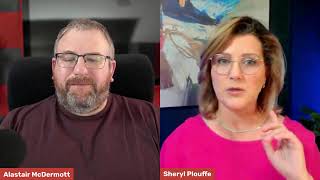
Sheryl Plouffe explains how coaches and consultants can build six or seven-figure businesses from podcasts by selling high-ticket programs ($3K to $100K) instead of relying on ad revenue. She walks through her "3 Ps" framework for choosing guests who become sales channels, and how to structure leveraged offers with group coaching, mentorship, and community platforms.
Questions this video answers
Start with the basics: know who you are, what your subject‑matter expertise is, and who you’re trying to attract. Be able to articulate this clearly.
The One Thing by Jay Papasan and Gary Keller, books by Alex Hormozi, David Fagan, and Dan Kennedy.
Visit CherylPlouffe.com to book a quick‑win 20‑minute call, see speaking engagements, and follow @CherylPlouffe on social platforms.
Chapters
and today my guest is Cheryl Plouffe from Cash In, from podcast. Sorry, can you, Cheryl, let me start again. Can you say the name of your podcast? Because I changed my tab.
No worries. I am the host of the Cash In On Camera podcast and I have a program called Scalable Business Accelerator. I'm so excited to be here with you, Alastair.
Awesome. And I'm delighted to be here with a veteran podcaster and live streamer. And clearly I'm a rookie. So we're here today Hey, we thought it would be fun to go live. We were gonna record this, but we thought it would be fun to go live and talk about some really interesting aspects, I think, of thinking about how people like experts, coaches, consultants can use content, particularly video. And the angle that we were taking on this, I think that we both agree that for those kinds of businesses, typically getting sponsorship is not the best way to maximize your revenue, right?
It's a way to get revenue in the long term, but it's not the way to maximize it, and certainly not the way to maximize it in the short and medium term. And that's what we'll dig in on in this episode, because I think it's really important to educate coaches, consultants, expert people, people who are in the knowledge industry, but really how to break down the math. Really just get out a calculator. In fact, I would even encourage you to do that while we're doing this episode, like get your phone and get the calculator out and start crunching some numbers with us, because I think you'll be surprised to see how this shakes down, especially if you've been thinking about it in the traditional sense of, I got to get an advertiser for my podcast, I need a sponsor for my podcast. That in and of itself is not the answer or solution to get you to the goal that you've probably set for yourself, which is in the multiple six figures or seven figures of revenue.
Yeah, absolutely. And I think that one of the things about podcasting, like I told you before, uh, before we went live, I didn't make any money from my podcast for quite a long time. I can't remember, it was definitely over 6 months. It could have been a year, I can't remember the exact numbers. But then I made a 5-figure sale based off of the podcast, and that immediately covered all of my costs up until that point. So the podcast was then paid for and then some. So I think that people, if you have an offering, and I think that's what's key for me, and that's why I was really interested to talk to you about this. If you have an offering, that is high ticket, that is high value, that you can present with your podcast, then that is what is actually going to monetize it in a way. And we say here in the title here, we say maximizing revenue, but that is what is going to actually make it much more profitable for you. So is that your philosophy as well?
100%. And this is not typically what's being taught. What's typically being taught is start a podcast, stick with it, be consistent, build your audience. But the truth is that building an audience takes time. It can take a year, it can take 2 years, 3 years or more to build a substantial enough audience in order to prove that you're getting the downloads and the numbers necessary to prove to an advertiser that it's worth it for them to sponsor your show.. And then when that happens in 3 years from now, as you've been doing podcast episodes maybe once a week or even more than once per week without any revenue coming in because you don't have the right strategy, you get very disappointed in 3 years because the advertiser says, okay, great, I'm interested. You know, you've proven to me that you have, you know, 10,000 downloads per episode or whatever that number that is. And there are calculators online that you can actually go and check this out. And they'll say, great. What? And then you say, well, great, this is what I'm— well, you know, what are we— what are you going to pay me? And the advertiser says, well, if it's a 30-second spot, I'll pay you $18 for every 1,000 downloads. So now you start doing the math and you go, okay, so that's $180. That's a far cry from the $500,000 or million-dollar revenue goal that you've set for yourself. So that's why the math doesn't add up, because— and if it's a 60-second ad, that's 60 seconds that you're taking out of your podcast to devote to that advertiser. They may be willing to pay, say, $25, maybe upwards of $40 on the very, very high end per mil, right? CPM. So it doesn't equate. And that's where I think a lot of podcasters— and when we talk about podcasting, Alastair, you and I both are proponents of video podcasting, right? That's what we're doing. We both do it. It's just we have to think about the math and have a better strategy to sell your own products and services.
Yeah, what I find really interesting about this, and this is something that I think a lot of people are getting information from the wrong place, because I think that if you're in the business-to-business, the B2B expertise space, the numbers are almost irrelevant. And what I mean by that is, there's an example that I use sometimes, which is, if I got 5 million people to listen to my podcast, would that be useful for me in terms of sales? And if I got 5 people to listen to the podcast instead, how would that be? And what if those 5 million people were all French teenagers? Well, I don't have anything for sale to French teenagers. And I have nothing against French teenagers, I just don't have anything that would be useful for them. But if those 5 people were all business leaders, experts, consultants, business owners, then I could have 4 sales or 5 sales from, from those 5 listeners. And that's what I think is really interesting in the B2B expertise kind of professional services space. The numbers are so wildly different from how people think about it in the business-to-consumer space, in the B2C space. And so you will see a lot of stuff online. That is B2C oriented because that's a much, in terms of numbers, that's a much bigger market. And so you see people talking about that and it just doesn't work the same. Like you probably will have less, if you have a consumer-oriented podcast, you're probably gonna have a lot more listeners than if you've got a business-oriented podcast. That's just the facts of it. And so I think that you have to approach it differently. That's just how I think about that. Do you think about that in the same way?
Yeah, I think it's a great point that you have to understand what kind of business that you're in. If you're in B2C, it's a different strategy. We happen to work in the B2B space. And so, in a business-to-business space, you're right. The numbers, you have to think about it differently. That we have the audience/listeners of the podcast. And it's not to say that creating a podcast that you don't create valuable content and put wonderful things out in front of the audience. The listeners. You do. You're going to still create quality content, put your thoughts out into the world, and edify your guests. But this is an interview podcast model that we're talking about. So if you really divide that up and you think about, okay, great, listeners, audience— that's not the focus though from a monetization perspective in the strategy that we're talking about today in maximizing revenue. It's about the guest. So with that, to your point, Alastair, you have the You really have the control over who do you invite as a guest on your show. And so now you can handpick and you can pick target— you can really targeted— in targeted guests, people that you specifically want to build relationships with and bring those people on as guests and have awesome conversations and valuable conversations to the benefit of what audience there is. And there's going to be an audience. But if we're looking to maximize the revenue, we want to be thinking strategically about who is— about the guests, because they are the conduit to what you need to grow your business. And it's 3 Ps, and I'll be happy to share with you what they are. The 3 Ps are: is that guest highly likely to become either a prospect, highly likely to become a partner— and I'll break these down in a minute— or highly likely to become a platform where you can speak? So if you focus on— now it's not to say that we're going out there and going, I gotta get something, it has to be all about me. It's still coming from a service mindset, is still coming from a goodwill mindset and, um, a reciprocal type of mindset, right? We still want to bring that energy toward this strategy because it's not a selfish strategy. But as the person who's inviting someone onto your show, think about that. Think about, is this person highly likely to bring me either to be leading me to a prospect, a partner, or a platform, because that's really where the monetization comes into play.
Yeah, and this, uh, this is something that's really interesting about podcasting because you can decide who to invite on as guests. You can decide not to have anybody as guests. You can decide to have your peers as guests. You can decide to have celebrities, you know, in your space, and you can decide to have potential clients on as well. And I do think that you, I mean, for me, the purpose of the podcast always has to be business-focused. The podcast has to serve your business, but ultimately for a podcast to be successful in doing that, it has to serve the audience. And so I think that if you are doing that, you do need to think about is this in service of the audience and making it valuable for them as well?
100%. Yeah, this is not just about a platform that serves just you and your guests. There still is. You're still putting out great content. You're still doing valuable content on topics that matter to an audience. And there is still the potential to monetize through the audience. But we're talking today specifically about maximizing revenue. And the maximizing the revenue is coming through your own high-ticket or premium-priced products and services, there could still be a stream of revenue that comes directly through the audience and through the listeners. But we have to understand that that isn't going to be the bulk of what brings you to your revenue goals.
Right. Okay. That's interesting. That's an interesting point because that is what I have found personally. That it is not coming directly from the listeners in that way. I have had outreach from listeners and because the services that I'm offering are usually high-value, high-ticket services, I only need a handful of leads every quarter from the podcast in order for all of the effort to pay for itself, which is nice. But I think that it is really important to have that And what you're talking about here is you're talking about if you don't already have a large audience, how can you make it work for you anyway? So I think that's interesting, yeah.
And Alistair, I mean, and that is the reality of people who are starting a podcast. They don't have an audience yet. Yeah. So that's what I meant by saying that in the short and medium term, it can be really challenging for a newer podcaster to get an advertiser. You have no audience. You can't get an advertiser because they're only advertising because you can prove that you have an audience. So it's a chicken and egg situation. So in the short and medium term, and frankly for the entire term of your podcast, think about the strategy of maximizing your revenue through your own products and services. So if you have, um, and I'm a big proponent of leveraged programs, so if you have a leveraged program ranging anywhere from, say, you know, $3K on the low end, $3K to $10K, and then you start getting into high ticket products and services, $25K or even $100K. So you start doing the math on that, and if your goal— let's say your goal is to earn 7 figures. Now, we— I happen to be the co-founder of the 7 Figure Podcaster Program. And so if you want to earn 7 figures with a business podcast, because we are talking about B2B here, with a business podcast, and you have a $100K offer, you need 10 people. 10. Not a million, 10. If you have a $25K high-ticket offer and you want to earn 7 figures, what is that, like 40? Yeah, 40 people, right? Um, and so you start crunching the numbers and you start realizing these are not gargantuan numbers that we're talking about. And this is why I feel like there's this transition, at least in my mind, from the social media hamster wheel that we've just come through in the last decade of post, post, post, and the dance and all kinds of crazy things so we can get people to follow us. It's not about the followers. You can have a million followers, faceless people following you on Instagram. Good for you. You need clients.
Yeah. So, let's actually dig into that because I'm interested in knowing a couple of things. So how you think about, 'cause I noticed you used the word leveraged about your program. So how you think about what a leveraged program is and then how you're actually getting those clients from that content. So how is the content actually creating the clients? So, and I understand there's a part there where It's the relationship, and I think that maybe we need to address that. But let's talk about the offer because I think that the offer is key. Because if you don't have the offer, nothing else will work. You have to have some sort of high ticket, relatively high ticket offer in place before you do this, or at least start to develop it when you start to do it.
Okay, so let's dig into that because it is important. You have to have an offer. How many times have I talked to people who are quote unquote, in business, only to find out there's no offer. So you have to have an offer to start with. Ideally though, you need a higher ticket offer. You need either a high ticket offer of $25K plus, or at least a premium-priced leveraged offer between $3K and $10K. At least have that, you know. And so let's just use the, the lower end of this for the sake of argument. A $3K leveraged program, not a course, a program. So in my mind, what that means is that it, it might have a course component to it. It might have tutorials that are self-study tutorials that may be part of the program, but the program is not just, hey, buy my thing and good luck to you and self-study. I just have never seen people get success with that because they're typically lower priced. People don't value them as much as they do when they've invested something a little bit higher in themselves. They're more committed to completing it if they've invested more. And aside from that, self-study is not the game. Uh, it's about actual transformation. And so what does it require? Actual transformation might require some tutorials that they have to go through. But it requires skill building, you know. Um, it also requires accountability. It also requires mentorship. And so when you bake those things into your leveraged offer, where you can do, let's say, a group format of coaching as part of a leveraged offer, you can still do one-to-one. You can still do one-to-one coaching in a group environment.. And so now it allows you to leverage your time and energy to serve more people and still help them get the transformation that they desire and that they've invested in getting. And I'm a big believer in return on investment. Like, you want to get a return on investment. This isn't just about educating yourself. Education information is a commodity. We can get that anywhere. It's really about the mentorship and the accountability and the skill building that actually helps people transform. So whether your program is priced at $3K or $10K, you know, there's that range that I think everyone should have something in that range. And then we start talking about higher ticket, which we can get to in a little bit, but I'm talking about $25K. Those things tend to be more, um, there might be some done-for-you services within that, that realm, you know, the $25K and the $100K especially. A lot of that will be done-for-you type services.
Yeah. And People listening to this, so first off, I think that everybody listening to this or watching this is already in the mindset that, you know, you need to raise your prices for yourself, but also because your clients are gonna, people, first of all, you'll be working with better quality clients, and people who pay more inevitably are far better to work with than people who pay less. That's just the way it works. Yeah. But it changes so many different things about your business once you start to charge more. And you can reduce, you work with less people, which means you've got more time. They're more committed to what they're doing, which means they're more likely to be successful. And the other thing is, if you make a big transformation for somebody, so let's say you 2x or 5x what they are already doing, then if they're starting off from a bigger position, then you're actually having more impact. If somebody has a $10,000 business and you 5x it, now they've got $50,000. If they've got a million-dollar business, now they've got $5 million. You are providing more value. So working, you know, increasing your prices gives you more time, lets you work with better clients, and means that you're actually able to provide more value because they're more bought in and, you know, you're not under time pressure or in that kind of scarcity mindset. So I think it's really important I know I'm harping on about the increase your prices thing, but I think that almost everybody listening to this or watching this can probably double their prices and it will have a positive impact on what you're doing. So I think that's really crucial. The other thing is, whatever that transformation is has to actually be valuable. You have to actually be solving a real problem that is valuable for people that they're willing to pay. I think Perry Marshall calls it, the bleeding neck. You have to, it's a nice image, but you have to find clients who have a bleeding neck, who have a problem that they really care about getting it solved. And I brought into my sales process, I don't know where I got this from, I got this from somebody where I would ask, is this an urgent problem? Can we put it off? And inevitably, if they said, no, it's not urgent, we could leave it for 6 months, then you probably don't wanna work with that client because it's not like, you want the ones who are totally motivated because they're the ones who are going to actually get the value from whatever you're doing. So, yeah, so can you dig a bit more into that Leverage program? 'Cause I'd like to get into the nuts and bolts of what that actually looks like. Maybe like, could you give maybe an example of what that would look like and how you would build it out or think about it?
Sure, I mean, I'll give you a real life example. So right now I'm teaching a thing called the YouTube Masterclass. And so I have students of my Scalable Business Accelerator who are also taking YouTube Masterclass, and I've also sold it as a separate leverage program to other people outside of my mentorship program who might be just interested in YouTube itself. So this YouTube Masterclass is a, is a, a 4-part framework, and that's one of the tenets I believe of having a, a leveraged offer of this nature is that you wanna have a method. There has to be a framework or a method to base this, base this on, a skeleton, if you will. Now, I happen to be a big proponent of Kajabi. I love Kajabi as a platform for building out these types of leveraged offers because it's an all-in-one marketing platform. And there are others out there, but I've been using it for years and love it and have no reason or cause to move to other platforms. But there are other ones out there. And so what I do is I have a tutorial-based aspect to the program that— and there's a reason behind it. It's not just because— well, the reason is because it's video-based and I want people to be able to go watch the tutorials and speed them up and play back at 2 times the speed if they want to go through it faster, or if they want to be able to review portions of it as opposed to it being taught live. They can go through and, I need to watch that again, let me rewind that. Oh, I see what she's doing. Oh, okay. Because it's demonstrative and I'm showing my screen screen sharing, etc. So there is a tutorial-based aspect to it. And then I supplement that with weekly calls, weekly group calls, coaching calls where each person gets one-on-one attention. And it's mastermind-y in the sense that I encourage everyone to think about not just, you know, does this apply to me, but how does it apply to me? Because chances are very high that as each person has a specific issue, it applies to all people in the group. So we record those calls and then those are added in the tutorial, uh, tutorials for them to review at their leisure. So those are the main aspects of it. I also give people access to me to ask questions in a Telegram group. It could be Slack, it could be Telegram, some type of messaging platform, not social media, but that is independent of social media, and to be able to text me and ask me questions 24/7. And they have access to me for a specific amount of time in in order to do that. Well, that's the premise of it. And you can— it depends on what your offer development is. And that's one of the things I teach as well. But you want to be thinking about transformation. What is it going to take to get them from point A to point B and the steps, the milestones that need to happen in between? And that's how you base— that's how you build out that program.
Very cool. I think that one thing you mentioned there is particularly important. Is the development of some kind of framework or methodology or process. I think having something with your own branding, so it's your signature system, that differentiates you. And I think that it's important as well because then people understand, okay, she's not winging it, he's not winging it, he actually has a process that he goes through. And So it gives them reassurance as well that there's, you know, for me, like I talk to people about this, it doesn't really matter what the process is so long as there is a process underlying there. Now obviously you want the process to be good, but I think it's really important that you have some kind of signature process and branding and IP people will tell you that, you know, having that trademarked is a good thing to do. And, you know, because then you've got your signature unique process that only you have. It's your secret sauce, like the old McDonald's burger sauce, you know, this is our secret sauce. And it becomes your secret sauce that nobody else can provide. And it also gives the reassurance that you've got that. So I think that is a particularly key ingredient. And it took me quite a long time to figure that part out.
Yeah, I think that is an important part. And, you know, listen, you might not have it dial in perfectly when you're first starting. In fact, I would even argue mine right now, it doesn't have the sexiest name. I call it the 4P framework. I mean, it's just, you know, it's pretty basic, but it still serves a purpose to give a framework to be able to say, these are the steps that we're going to go through so that as your students are going through your leveraged program, that they understand what stage they're at. And so that they can build upon that. They go, okay, I'm in this stage right now that I'm really, I'm doing this so I can get to the next stage. And they see progress as they go through the method. And I think that's really important. Now, when it comes to how are you actually selling it, which I think was the second part of your question, how are you then selling, let's say, that leveraged offer? And we just gave one example of what that might be at a $3K level, $10K level. But doesn't matter if it's $3K, $10K, $25K, or $100K. The— your offer needs to be sold. You need to generate leads, qualified leads, for that particular thing that you do. And that's where video, video podcasting, YouTube, all of these things come into play in addition to speaking. Like, at the core of a podcast, a video podcast, what is it really? It's a method, it's a way to speak. What is YouTube? It's you speaking on camera. It's you sharing your expertise, your insights, your knowledge, your stories through YouTube, right? At the core of it, it really is about your visibility and you getting up there and speaking about and positioning yourself as an authority, right? Authority at what you do. And so at the core of it, it's getting out there and being seen and sharing those messages building that thought leadership so that people come to know you for that thing.
Yeah, absolutely. And so obviously, I'm all about authority. And I think that it's, I think that it's important, because it's not just about creating, you know, a kind of a glut of authority-building content. But you do have to be strategic about creating the content that is actually going to result in sales. Because it's very easy to create a lot of content around a topic that you're very passionate about that doesn't result in sales. And so, I'd be interested to get your perspective on that.
Well, I think it comes back to what I said earlier. I don't know that it's— it's not always direct sales. It's either prospects, partners, or platforms. So, let me break that down. It can happen where you do a video podcast, either you host or you're a guest on someone else's. You're visible. You're out there. Sharing your expertise, and it results in a client right away. A prospect reaches out and says, you're my person, uh, something you said really resonated with me, let's go and let's do this. And you get on a call and it leads to a sale. That has happened. Um, it's happened to me also where people see videos specifically on YouTube from 3 years ago and they just happen to fall on it now and they're like, you're my person, let's talk, and let's do— and it leads to a sale. So it can lead to a sale immediately, prospects. The second one is, uh, partners. By partners, I mean collaborations, joint ventures, um, affiliate relationships, commission-based relationships, promotion partners, strategic alliances. Those types of partnerships are so valuable. I might even argue maybe even more valuable than direct prospect lead, like direct prospects, because partners are long-term. The other thing is platforms. So this is where you think about if it's— it could be, and it could be all three, but platforms are places where you can speak. Now, in the premise of, let's say, a video podcast, your guest might have a platform of their own that you can speak on. But they might also know of someone or have access to someone who has a platform that you'd be ideal for and is willing to make that introduction. So sometimes it's not one degree, it could be two degrees or maybe more degrees of separation, but it's a connection nonetheless. So this idea of thinking about it not just as I gotta get a sale right now— it's prospects, it's partners and platforms this creates a flywheel effect of momentum in your business that really can help you to scale and grow quickly.
Yeah, that's a great point. And I was just thinking about relationships there as you said that, because I think that's the underlying thing there. And relationships, like podcasting is incredible for building relationships. And that's the thing that underpins whether you're bringing on a potential client, or you're bringing on a celebrity in your field, or you're bringing on a peer, you're developing a relationship with somebody in a way because you get to talk to them for an hour or whatever length of time it is. And that means you get to know somebody new and you get to explore, is there an opportunity there for a strategic partnership like you're talking about? So that is really crucial., and that's something that I left out when I was talking about content, creating content strategically, and I think that you can, but I think that it's really important as well to talk about the relationship that is actually getting created here. And like, we talked, we got to know each other before we got on here because we had a chat in the green room, and I'm sure that you got to know a bit about me and the way that I work by just seeing when I did a screen share and you saw some of the behind the scenes, you know what tools I use. All of those little bits and pieces go into the fact that you also use the same service as me for the live broadcast, Restream. We connected over that. All of those seemingly minute details are actually things that help to build a relationship. I know I'm getting a bit meta here, But I think that those things then feed into, well, let's have a chat later and see, is there an opportunity to work together in terms of one of these strategic partnerships? And I'm sure that we will have that conversation at some point. But I think that that is really key. And I do think that the content that we create, I think we have to get a bit more strategic about the way that we're approaching it. But I also think that what the point that you're making here about the relationships in terms of prospects, partners, and platforms, I think that's really crucial as well. Is there a fourth P that I'm missing, by the way? Prospect, partner, platform.
Well, I mean, I think at the end of the day, what does that all lead to? Profits. To continue the analogy, to continue the Ps, I think it really is about profits. Yeah. And why? Okay, profits because profits allows you to do your best work. It gives you the freedom to be able to do what you probably have felt is your calling, and that's why you got into coaching or why you got into consulting or why you got into mentorship and got into this space, is because you feel likely a calling within yourself to do this type of work. And it's— is it a hobby or is it a business? You need profits if it's a business.. And the benefit of that is now you can, you can, you can relax, right? You can be in a place where you can do your best work and not have all the stress hanging over you because you don't have profits. You can also be more philanthropic. You can give back to your community or to causes that are important to you. So I think it's really key and important. And to your point, Alasdair, about the relationship building, The thing that I love about podcasting in particular, as opposed to— it's a little bit different than YouTube, but with podcasting, really what this is, is it is a relationship-building machine. Because you and I just— we've just, you know, we're 32 minutes into this episode. This is a high-touch relationship-building event that's happening right now because we're talking to each other. We've just spent 32 minutes or more in the green room talking to each other. That's a high-touch activity that helps to build a relationship. Not to mention that if you have a podcast, let's say a pre-interview call of 15 minutes, this would be the second high-touch touchpoint. And then if we have another call after this to say, hey, I would love to know more about your work, let me, you know, let's dig in a little deeper, it's a third touchpoint. Touchpoints are what build relationships. Guess what? You're in a relationship. And so people say, well, how do I meet new people? I think podcasting is one of the best ways you can do that.
Yeah, I'm 100% with you on that. I wrote about this in the introduction to my book, which is called 33 Ways Not to Screw Up Your Business Podcast. And the reason that book came about is because I interviewed Ann Janser on this podcast, and Ann is an author, and she said, hey, I should introduce you to my to my publisher, Melissa. And so I had Melissa Wilson come on the podcast and I interviewed her and she said in the green room at the end, she said, hey, you know, you should write a book for me for my series, 33 Ways Not to Screw Up. And she said, so I said, well, what would that be about? And she said, well, you know all about podcasting. Do you want to write one about podcasting? And so I now have a published book about business podcasting because of those relationships. And it wasn't just a one step. It was that two-step process of Anne saying, hey, I'll introduce you to Melissa. And, you know, and that all came about and that would not— like, I never would have written that book without having that relationship.
Isn't that wonderful? I mean, that's a really great example of what this is. And I think that, Alastair, one of the things that's happening, I think, in social media and kind of in the more front-facing, front of the house, to use a hospitality term, front of the house online, is that we're only seeing the front of the house. We're only seeing the con— Business is happening in the back of the house. Yeah, business is happening in the calls you don't see on Facebook. Business is happening on the calls that likely you and I are going to have after this front of the house event, which is our visible platform of this conversation. The business is happening in the back of the house. And people, coaches, consultants, experts are thinking that, oh, is it they're trying to sell on social media. It's not social media. It's not selling media. It's social media. Be social. But have a strategy for what is your back of the house strategy because that's where the business is happening.
Yeah. And for me, to circle back to what we're saying here, it's about when you are going in to create your content and create your show, whatever format and platform you choose for that is that you do at least start to think about what is your leveraged offer, what is going to be some sort of highly profitable program that you can have as an offering, which will be— it may not be something that you sell directly on the podcast, but it's something that you will be selling through the podcast, if that's a good way to put it. In that back room, possibly, and in those relationships to people who contact you and who subscribe and then subscribe to your email list and then reply to one of your autoresponders. And, and that's where you have those conversations with those people. But I think that if you go into it thinking, I'm going to start a business podcast and I'm going to grow a big audience and I'm going to get sponsored, I think that is— I've— that's the slow road. And it could be a painful road.
So, and the reason, and it is a painful road. I talk to people all the time who started a business podcast and then they had no strategy for how they were going to monetize it the way that we're talking about in the short and medium term. And they get frustrated because they're being consistent because they've been told to be consistent. First of all, I think that their production methods are probably off-kilter and it's taking them way too long to be producing the episodes. So that's another sort of aspect of this is the actual production and how it's coming to fruition. But aside from that, there's no strategy for how to monetize it in the short term, in the immediate term. They get frustrated, they pod fade, right? They fade out. They just go, okay, I'm not seeing any ROI, I don't understand. Some people are even paying people to do their podcast and they go, I'm putting out the money but I'm not getting anything in return. And then they just give up. And they're giving up because they don't have a proper strategy to sell their own premium and high-ticket products and services.
Yeah, and the— what you're talking about there, like, in the production phase, and I was just talking to, um, I had a coaching call last night about this, which is actually going to be a podcast episode, uh, and talk about repurposing there, um, but it was about, uh, podcast production. Like, one of the things I think that is key is to reduce friction as much as possible, to make it easy for yourself. So that is, um, So deleting things, unnecessary steps you don't need to do. So maybe editing. We're broadcasting live here and recording that. So we are removing the editing step and then delegating or automating everything possible. So, you know, Zapier can do a lot of the publishing and production stuff for you. And like I have show notes automatically generated. This automatically gets leveled in terms of the sound leveling and it gets put up onto Google Drive. And, you know, there's— the show notes aren't automatically generated 100%, but we do use tools to help us generate those show notes and even to brainstorm titles for this because we wrote the title for this just before we went live. We did. And we use tools to do that. And there's lots of these tools that you can use to make your life easier. And I think that you should. You know, to take away that friction.
I am a huge fan of the editless podcast as much as possible. Listen, if you're doing a business podcast, you're doing it because you want to grow your business. You didn't, you're not creating this because you want to become a professional editor. And there's a difference. Like if your business is not editing, then you ought not to be editing. You got to find ways to be efficient. 100%.
Yeah. I just want to shout out to Cody Landry, who is watching on Facebook. Hey Cody, thank you. He says great content. And he's sharing this to a few people, so he's enjoying it.
Thanks, buddy.
I know that we're tight on time, so I want to wrap up. I have some questions that I usually ask. The first question is, what would you say to somebody, what would be your number one tip to give to somebody who wants to build their authority?
Know that you need the basics. You need to have the basics nailed down. So, you have to know who you are, what you're a subject matter expert at, and who it is you're trying to attract. You'd be surprised how many people don't have those foundations set in place. So, I think that's really where it has to start is just, it's really a self-awareness. Who are you? How do you want to show up? Who do you want to be known as? What is your subject matter expertise? Can you eloquently and succinctly express that? And who is it you're trying to attract.
Yeah, brilliant. Yeah, absolutely foundational and absolutely necessary. I do like to ask about books. Is there a business book or some other kind of resource that has been useful for you in your journey?
There are so many. I have a lot of books. I like The One Thing. I like The One Thing by Jay Papasan and Gary Keller.
I think it is cool.
And I also— Alex Hormozi, a big fan of of him, David Fagan. It's just numerous different books that I'm a fan of. I love that. Most of the books that I actually have, I actually listen to books more than I actually physically read them that are on my bookshelf. But there are so many. I love Dan Kennedy's work. Just so many.
Cool. Is there a fiction book that you really like, or are you more into movies, TV?
No, more into movies and TV. I'm a big Prince fan, so if you were to ask me my favorite movie, I'm gonna tell you it's a Prince movie that got panned. Okay, it got panned, but I love it. It's called Under the Cherry Moon. If you're a Prince fan, then you get it. If you're not, then you go, I don't understand that. But yes, I'm a huge Prince fan. I've been since I was 12. And so music and movies Cool. Is where it's at.
Cheryl, where can people find you if they want to learn more?
Yeah, if they go to CherylPlouffe.com, you'll be able to see a button to book a call with me. You'll see my signature card there. And typically, I'm on that signature card. I mean, I keep— you can book a call with me, a quick win call to do some quick analysis of a cash injection for yourself and for your business over 20 minutes. There are some questions that you have to answer in order to qualify for that call. But it's a 20-minute call. It's a quick win call. You'll also find there resources, where I'm speaking next, if I'm going to be speaking on a summit or something of that nature, I put that all on my signature card. And that's linked up on all the social platforms @CherylPlouffe as well.
Awesome. And I will put all of those links in the show notes. Well, Cheryl, thank you so much for being with us today. I really appreciate it. I'm letting you out just after the top of the hour. Sorry for keeping you over.
No worries.
This has been fun. It's been great. Yeah. So, thank you so much for coming on. Thank you.
More from Sheryl



From 'agreeable' to 'ruthless mentor' to 'strategic sparring partner' #substack #shorts







