How To Find Your Brand Essence
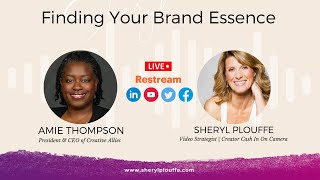
Amy Thompson, CEO of Creative Allies, explains how to find your brand essence: identify your passions, uncover your unique strengths, and turn them into an authentic narrative. She warns against waiting for perfection before marketing and says the founder must be the primary salesperson.
Chapters
We have to take account of what kind of representation or reputation that we're putting out into the marketplace. In other words, our brand, whether that be our company brand or our personal brand. It's important to really have an understanding around brand. And so I'm excited today to have Amy Thompson, who is the president and CEO of Creative Allies, on the show today. She reached out and wanted to be on the show to talk about brand essence. And I'm excited, Amy, because you have an amazing roster of clients that you've worked with. I know you're really specialists at Creative Allies around fan engagement. You've worked with people like Selena Gomez and Twenty One Pilots, Kendrick Lamar, Eminem. You have a very impressive roster of clients that you've worked with in your multicultural marketing agency. So thank you for being on the show today, and let's dive into this conversation around brand essence. I think it's so important to understand what it is. And I want to learn what the difference is between, first of all, brand essence and maybe brand voice, which we've often heard about.
Yeah, sure. Well, thank you so much for having me. I'm really excited to join you and your audience today. And for me, I feel that brand voice is definitely something we hear a lot about, but that to me is really focused on your company. Or your organization. And I feel that your brand essence is actually about you. And one of the things that I learned in running a business— I have— I'm new to being a CEO, so this is my fourth year— is that your brand is equally as important as your company's brand when you have a smaller business. We've all heard that phrase that people do business with people they trust, people they know, people they like. And that is so important. And in a lot of cases, people will make their decision whether or not to work with you based on your reputation, your brand, and then they will go to your company brand. And so understanding how to create and develop that brand essence is important because you have to stand out as well, who you are, who you can help, and what you bring to the table, just as much as knowing that brand voice for your company. So I think the both of them are very important, but I think a lot of times we, we miss out on focusing on that personal brand and that brand essence.
So if the focus really is first and foremost the personal brand, or really the essence of you, how do we go about determining what that, that essence is? Is it an adjective that we use to describe ourselves, or how do we pin down what the essence of our personal brand really is.
Yeah. So I like to find out from people, you know, what are you passionate about? What are you trying to accomplish through your business? For me, for example, I love to help people. And so it doesn't actually matter if I run a marketing company, I work at a nonprofit, whatever I'm doing, whatever business I'm in, that's really my goal, is to figure out how can I help people identify what they need or what their challenge is, and how can I help them find a solution for for it. And that carries over into my company and what we do as a company. But for me, that's where I get personal satisfaction. So when I'm working with clients, I'm usually asking that question, well, what brings you joy? What, what do you find really fulfilling about what you do, whether you're with the current company or not? And a lot of times that can help you get at what that— what the core is of why you do what you do and who you are. And so to me, that's one of the first steps to take in trying to define that personal brand or that brand essence for yourself.
So if the brand essence is something like wanting to help people, which is, I think, often the case with coaches and consultants, people who are in service-based industries, they all, I think, predominantly have gotten into it because they do want to help people. But is that still too broad of a definition from a brand essence perspective, or do we need to go deeper? As I heard you sort of say, we've got to kind of go deep and find out the why of why you're doing what you do.
Exactly.
How important is it to dig deeper?
Yeah, I think it's very important. That first step is really understanding what drives you, what's your passion. But then you can kind of look through people that you have worked with and people that you have helped and what are you doing to make that happen. So, for example, are you a problem solver or are you a certain marketing tactic that you're really great at? You talk about video marketing. Is there something really specific where you have kind of that thing that you're better than everyone else at? A lot of times you hear that too. What is that thing that you bring to the table? What's your secret sauce where very few people can replicate what you do? So I do think the first step is identifying what you're passionate about and then to go a next layer or to go one level down is to see what do you excel at? What are you excellent at that there are very few other people that can do? What you do, and that's what makes you special. And then that would be able to be translated into what your, what your company can do.
I think in the small business space and the entrepreneurial space, it sounds easy at the surface to be able to say, hey, you know, why are you, you know, what's the core of why you're doing what you do? But that question is hard to answer, especially for people who are self-described multi-passionate people. Right. They do a lot of different things. And I think that's true of most people in business, like that you have a lot of skill sets, but then trying to really narrow in on which of the things is the essence of me. So work on me, Amy, please. I think this is something I've struggled with as well, because pat myself on the back. I'm good at a lot of things, but that isn't to say that I need to lead with all the things I'm good at.
Right, right.
And so if I think about myself, yes, I'm in video marketing. One of the things that I like to do is this kind of thing, right? I like to interview people so that I can— one of the services is that I interview people and then we make videos from their answers to my questions. So, you know, we— that, that whole process. So if interviewing, for example, was something that I'm passionate about and that is a big part of my business, is that my essence?
I don't think so, because the way I view it would be, well, a lot of people can interview, like you said before, right? A lot of people like to help people, but you take the interview and then you're able to put that information into, let's say, a video package or into some type of content to help that person grow their brand. That's the step that most people can't do. So anyone can get a camera out and ask a few questions,. But how do you translate the answers to those questions into something powerful and meaningful that would resonate with that person's audience? And so it's like that next step that you would take to where you start out with something that sounds very basic. Okay, in person who interviews, you ask questions. Great, right? It doesn't sound that complicated, but it's taking that and translating it into appropriate content. How do you distribute that content? How long should that content be? Like, all of those things, from the answers to their questions. That's what sets you apart. That's what makes you different. And that's probably what not everyone can do just because they can ask a few questions.
Yeah.
Yeah.
No, that's a great example. So in the process, especially for women in leadership, which I know is one of the things you're passionate about, in the process of helping someone to determine what their brand essence is, how long of a process is that?
Well, I think it's probably a little bit longer than one would like. Because one of the things that I find, and I certainly found this with, with me, is as you're running a business, for example, you start to learn more about yourself than you would have ever thought. And a lot of times we think we know about us, and then we're, you know, faced with a challenge, or we're working on a project that's a little bit different than what we're used to, and we start to recognize certain strengths that we didn't even think we had, or certain ways of doing things that we didn't know, you know, that we could do. And so I think it's actually kind of like a process in a way, because it really takes you knowing yourself very, very well. And that on the surface, I think, sounds so easy, but I don't think most of us really spend enough time just being introspective and really studying ourselves. It sounds a little bit crazy, but studying ourselves so that we know what is that area that we're just better, we're special, What is that area that really sets us apart? And I do think that takes time. I think the first step of what you're passionate about, even the next step of why you're a little bit better than someone else, those might be a little bit quicker. But really getting into that core, I think, is something you just learn about yourself. You can learn about yourself over time after you've worked with a lot of clients and you've spent time running your business or doing your role if you're not a business owner.
Yeah, I mean, that process, it's really self-awareness. Yes. And we hear Gary Vaynerchuk talk a lot about self-awareness. I've been I've been listening to a lot of Steve Harvey clips lately, his motivational clips, where he talks about find your gift. Every single person has a gift that they have been given. That's what I'm hearing you say is if we can help ourselves to identify our gift, and that could take a month, it could take a lifetime.
Right.
People who've built their entire businesses on helping people figure themselves out. Right. And so it could be a process and maybe it's a journey. I think that's true. If that's true, Amy, if it's a journey of self-awareness, right, it could take a lifetime to really figure it out. Obviously, you and I both don't want to see people kind of waiting on the sidelines until they figure themselves out before they actually start going out and doing it. So how can someone kind of get started to market themselves? Since we're both in marketing, you know, how do people get out there and market themselves if they maybe haven't 100% figured out their gift or their essence yet? Should they start or what's the process?
I think absolutely go ahead and start because one of the things that is very appealing to audiences is authenticity. And when people can follow along with you on your journey, it's helpful to them. It can be helpful to you. So I definitely wouldn't— like most things, don't wait until it's perfect or don't wait until you think it's completely finished before you hit go. Just, you know, try your best to continually learn about yourself and how that impacts your business. And then you'll find yourself— like I mentioned, this is year 4 for me, and I'm not going to say I'm a completely different person, but I certainly am different. I'm certainly focused on different things and different parts of myself that I just didn't realize were a strength or a differentiator with me. And so you'll start to see and make sure you slow down to see it, yourself changing and growing. And I think it is a process, it is a journey. And so people should absolutely start working on that now. But don't be afraid to share what you're learning with other people.
You mentioned that you're in year 4 of being a CEO. And so congrats.
It's amazing. Thank you.
What was it? This show is called Cash In On Camera. And so it's really about marketing, but how we can really grow our businesses by putting ourselves out there and being seen. So what was that process like for you?
Yeah, it was a challenge. I would say I'm definitely more of a behind-the-scenes person. Even doing something like this, I would have laughed at anybody who would have thought I'd do something like this. And now I'm trying to do this as much as I can. Right. But I would say one piece of advice that I received early on that was so important was around business development.. And I'll talk just for a second about that. And one of the things that I was told from one of my advisors, he said, you're going to have to learn how to do business development. You're going to have to learn how to do sales. And I'm like, oh, I can hire somebody to do that. No, no one can sell you and your company better than yourself. And I fought it for probably a year and a half, 2 years. But what I realized when I hired and things didn't work out with other people, is that it's absolutely right. You know your business best, you know how to talk about your business best. But in the process of talking about your business, you're actually learning about the client, the prospective client, but you're also learning about yourself. How do I message things? How do I describe how we can help people? And so that process of being out in front, it is so necessary for a person in leadership or someone that runs a business. And it's almost a requirement in a sense that you need to get comfortable with that, with sharing your experiences, sharing your journey, sharing your story, because that is really what people connect with. And when people can connect with you, they want to know more, and then they possibly want to work with you. And so it was certainly a struggle in the beginning, only because I was fighting it, not because it was hard to do, just because I was fighting it.
Yeah, it was resistance, right? Right. Yeah.
And now it's natural. It's part of my day. It's a part of what I would love to do more is just being out there talking about— not talking about me, but talking about my business.
Yeah, I love that. One of the segments that we do on the show is called Stop Marketing Like It's 1999, which is my ode to Prince.
Yeah, me too. So it's perfect.
Awesome. What is a tip, a tool, a tactic, or technique that's really working to help creative allies market themselves or for you to market yourself as Thompson out in the world? What is something that's really working for you right now?
Yeah. One thing I wanted to share that would be kind of an opposite way of thinking back in the day, so to speak, is a lot of times we're trained. If you're trained in marketing on how do you, how do you talk about what you do? How do you put your elevator pitch together? How do you define what your product is?, and we were very focused on talking about ourselves. And what I have learned to change is make the conversation about who you're speaking to. What problem can I solve for you? How can I help you grow your business? And that just change in conversation and how you lead those conversations and asking questions, it makes a huge difference. People want to know that you care about their success, not that you just want to sell them something or just talk about yourself. And I think that to me is a big change of what we learn in school when it comes to marketing, product and price and promotion and all those basic things. And we don't actually just learn how to talk to— I know.
It's the human side of it.
Right? Absolutely. Yeah. So that would be the advice I would share that those days of just focusing solely on tactics, and your marketing plan and your strategy and all of those great words, and just taking a step back and focusing on getting to know the person you're talking to and understanding what their needs are and what problems they have or challenges they face and how can you help them? How can you give them some ideas on how they can grow their business? And it's really weird, but, you know, in exchange, you end up growing yourself and growing your business because you're helping other people do that. So that's So that's been something I've learned that I've enjoyed learning.
I love that. It comes full circle. This conversation comes full circle back to the beginning where you said you really fashioned yourself as being a helper. Right. And I think that is something that if we were to do more of, right, lead by just helping people and a miraculous thing happens. All of a sudden people start to care about what it is that you do and how you can help.
That's right.
I love that. Tell us about your website and how people can get in touch.
Sure. So our website is creativeallies.com and And what you're showing here is a list of some of our clients. We have had the fortune of working with some really great customers, big names that you see, but we also work with small companies and nonprofits. So some of the logos you might not recognize. And so that's exciting for me to be able to work with such a variety. Our company started out in the entertainment space, so you will see a lot of that, but we now, um, focus very heavily on the small business space. So we try to take those lessons and learnings from that industry and bring that over to the small businesses and folks that maybe don't have the budgets of some of the bigger companies, but figuring out how we can take a small budget and stretch it as far as possible because we do believe that everybody should have great marketing and it shouldn't be defined just by the budget that you have or the knowledge that you have.
Yeah, I love that. So creativeallies.com is the website. Amy, I'm so glad you reached out to me to be on Cash In On Camera. It's It's been a pleasure having this conversation. I've learned a thing or two, of course, as well. I always do from my guests, and I really appreciate you spending time with me today.
Thank you so much for having me. I appreciate it.
More from Sheryl



From 'agreeable' to 'ruthless mentor' to 'strategic sparring partner' #substack #shorts







