How To Get Media Exposure
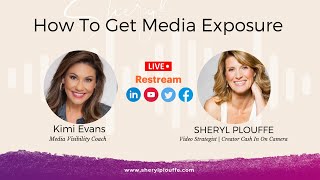
Kimmy Evans explains how to pitch yourself to news and lifestyle shows. Monitor news cycles for relevant angles, tailor pitches to each show's format, and lead with how you can serve their audience, not yourself. Producers want flexibility, data, and multiple story options in a concise email.
Chapters
business, it's really important to be thinking about content. It's also equally important to think about public relations, to think about exposure, to think about press and media. And no one is better to speak on this subject than Kimmy Evans, who is a really a media visibility coach. And she's a friend of mine, and we both go way back in the television industry. So we both come to this topic with a multitude of years, maybe collectively, Kimmy, more than we want to admit. But nonetheless, so excited to have you on today to talk about how and why media exposure should be paramount for business owners. And so, welcome to the discussion today on Cashing on Camera. Let's start with benefits. Let's start. Why would a business owner need to consider media exposure?
Yeah, well, first off, I do want to say thank you so much for having me, and it's such a joy to be here with you. I'm super excited about this, especially the way you do this where you broadcast everywhere at one time. It's very fascinating to me. But yes, the benefits of getting exposure, I mean, especially in this day and age where it's not that people just go to one TV station and they get all of their content, they get all of their news. We have so So many different sources for news and social media becomes that as well. Right. So there's media that we're typically used to, television type media. And then now we have social media. We've got Twitter, we've got all the things. And so people are getting their information everywhere. And what does that mean? It means we also need to be everywhere, which is pretty much what you're doing here by broadcasting everywhere at once. And this is actually my very first time being on this sort of thing where it's being broadcast to so many different platforms at one time. So, this is fun. This is very exciting. Yeah, ultimately, you got to be visible.
You do. You have to be visible. And there are, I think, if we think about earned media, owned media, and paid media, there's just different strategies that are involved with each of those different kinds of media. And I suppose that for the purpose of this conversation, we're really focusing in on that earned media type of approach. So, how can a business go about earning some of that exposure on, you know, that you worked for ABC and you worked for a variety of different other broadcasters in the course of your career. But how does even on a local level a business get on, you know, the ABC Morning Show or, you know, whatever it might be in their local area or regional area? What are some tips that you could share with how they could get that exposure out there?
Yeah, you know, and it's interesting, especially for local businesses, because if you're a real estate agent in the local area, you have a restaurant, you know, you're a therapist, all those things. If you're working with your local community primarily, it's vital to get that local exposure. And that is especially when the local media, the local news stations come in really handy. And I would say the benefit obviously is that people know about you because they're watching the local news. And the way to get on is tricky for some, but once you unlock that you know, unlock the lock and you have the right key, it becomes so easy. And the goal is to become the go-to person. So the example I often use, and it's a little bit dark, but the example I use is, you know, when there's something tragic that happens in the community, right? Whether it's a school shooting or, you know, something horrible happens in the community, who's the first person that you're going to see on the morning news the following day, it's typically a psychologist, a therapist, and they might be talking to the parents about how to speak to your children about this tragedy that they're gonna hear about when they go to school and getting the kids comfortable and how to deal with that. And so I always tell people, you really wanna watch the news cycle and see what's going on with the news and keep your finger on the pulse because there are things that are happening every moment. That you can tap into. And then there are things that are a little farther out, for instance, holiday events, holiday things, you know. And then you've got all the other things, the day of or month of. So for instance, it could be Breast Cancer Awareness Month, it could be Suicide Prevention Month, all of those types of things. And then there are different ways to tie in your message to those months, days, weeks, you know, the calendar type events. And so there are so many different opportunities. And then it comes to pitching yourself and having a strategy.
And so really what it is, is looking at your business and saying to yourself, how can I be relevant to what is maybe going on currently in the news? And second to that, how can I make myself relevant to regular events that happen that we can foresee are coming down the line? We know that Mother's Day, Valentine's Day, whatever those things are, you know, obviously the most obvious one we could use is probably, you know, flower shops and Valentine's Day. But I would encourage people, and maybe you do too, Kimmy, to think about how we can expand that thinking to beyond what's—
yeah, exactly.
Yeah, an example of something maybe less obvious on how, you know, someone could be relevant to what's going on in their community or on the calendar.
Yeah, you know, there are so many examples. So let's take Valentine's Day, because like you said, you've got your go-tos, right? You've got the flower shop, the chocolate place, you know, all candies. But what about a dating coach, right? That could be a big thing. So Valentine's Day, along with holidays, we think of them as celebratory things, perhaps. But there are a lot of people who think of certain events as depressing. You know, suicide rates go up during the holidays. And so things like that, like the way we are trained to view the holidays— oh, cinnamon and apple pie and the loveliness. May be the case for a lot of people, but there are also a lot of people where they might be living on the streets. They might be single, they might be alone, they might be separated from their families, they might not have families, and it's the most depressing time. So that would be an opportunity for, let's just say, like a therapist, excuse me, to come in and talk about how to care for people like that and what we can do as a community. To serve those people and reach out and maybe just encouraging, you know, the community to, hey, you know, invite someone over, whatever it might be. So there are things like that too. So there's always more than one way to look at an event, right? And it's just sort of being mindful of that.
Yeah, and I think here's an interesting point that I want to make just based on the examples that you've given so far, is that you've been talking a little bit more from the standpoint of news being kind of on the somber side or the counterbalance to the happy. It's like, and we have to think about that I think from the perspective of when we think of news, like just think about your local news channel, your local news station. It's not all happy news. That's why it's news, right? So, it's important to be thinking about that part of it and how you can relate or be relevant to stories and events that are less than than happy. Yeah, the majority of what is on the news. And so finding a way, maybe you can in some way turn it around to be a happier story from something that came from tragedy. But more often than not, if you're trying to get onto, you know, a local cable, you know, local channel, you're probably going to have to find a way to kind of weave in there on a more negative story.
Yeah, and you know, there's a reason they say if it bleeds, it leads. Because if you turn on your local news, they're going to start with all the horrible things that are going on. You know, there's the breaking news and then there's the horrible things, and they're more likely to cover the double homicide rather than, you know, something fun and light in the cupcake store that just opened up down the street, right? Um, but we also do get to focus on these lively fun shows or these lively fun events as well, and that's where we tie it all together, you know, because there are— so there's a newscast format and a show format. So you'll know the difference when you're watching the news. If it's just a newscast and all, and they're pretty buttoned up, and you know, you don't have any guests in the studio or hardly ever, versus the shows where it's more like a lifestyle show. Now those are the shows that want you to come in and say, hey, here are the latest and greatest things to get your dad for Father's Day. And you know, you kind of have all of your cooking segments and that sort of thing. So depending on your city, on the city that you live in, depending on the market, depending on the news market, the types of shows they have, you can absolutely tailor, um, your message to that specific newscast. And so it's always important to know what they do and who they serve and how you can serve their audience, because the audience is going to be a little bit different, you know, uh, per show and her channel, all of the things. Yeah.
And I like that you made that distinction between news and then shows because it's important that a business owner understand that from the news side of it, from the media organization side of it, they do compartmentalize. They treat each in a different way because one is more entertainment-focused and the other one is more factual. And supposed to be unbiased approach to presenting the facts. And so, from a business perspective, most business owners would probably be more comfortable going toward the show format, right? Lifestyle programming, the morning show, those types of things. And so, it brings up the topic and I think you were kind of going there, Kimmy, with the approach, right? It's the pitch. How do you get on, let's say, your local morning show? You know, I think it's always about how you position what's in it for them, right? Where the mistake often happens is that people go in and they go, um, you know, they make an assumption that, you know, hey, I'm, I'm local, I deserve to be on this show, or my— the thing that I do is so important that why wouldn't you have me on my— on your show? And it's not that way at all. So I'd love it from your perspective, how can a business pitch to get on, say, a local morning show?
Well, and let me give an example because I would have people pitch me all day, every day. And keep in mind, a lot of these news stations get thousands of emails every single day. And there are producers, booking producers, you've got the assignment desk, the people who are making decisions, the people who are trying to find, uh, somebody to interview, somebody to bring on the show because they have to fill time slots all day, every day. So I think of them as event producers where they have to get all these, like, the dancers and the fire twirlers and the chefs and the caterers and the, you know, the support staff. Think of putting a wedding on every single day and all the moving parts that go with that. That's the sort of thing that they are doing. So what they are not looking for is someone to show up to the wedding and say, hey, look at all these watches I'm selling. Which one of my watches do you want to buy? They're not interested in purchasing what you are selling. They're interested in having people show up and say, hey, okay, yes, I can accommodate with 300 chairs or 75 tables, and here's the selection of napkins we have. And so it's all about, well, what is it they need? And then come to them with what they need and make their life easier. And the way you could make their life easier is by understanding their audience, understanding what's happening in the news cycle and the calendar, And then just being relevant and offering a service. 'Cause when you go on the shows, you're not there to pitch yourself. And that's the mistake a lot of people make is, oh, well, I wanna come on and I wanna, you know, do this. And I wanna show people my new fitness studio and teach them the workouts. And I can teach them how to do, you know, 25 pushups in 30 seconds. And it's like, and then how is that serving the audience? So a lot of businesses get into self-promotion mode. What they don't realize is as long as they're there to serve, there's a good chance they'll be asked back. And you want to be the person that gets asked back. And in order to be asked on the show over and over and over again, be the go-to person, you want to be flexible. So you want to have something that you can pitch for today and then next week. And how do you shift that around? So maybe you do have a bakery, but maybe it's like, gluten-free, you know, health day or something, and then there's a vegan day, and then there's sugar day, and then there's donut day, and then so there's all the different days. And then there's the nonprofit that you've partnered with, and then there's, you know, donation to the homeless shelter that you do, and on and on and on. So there are different angles, and it's about finding that angle that's going to serve that audience at that time. During the holidays, they're certainly gonna want to interview the people who have something to give away and the people who are serving their communities because it's about generosity. And that's also the time when they wanna tug on the heartstrings a little bit more than other times. So understanding that is important.
Yeah, and it's interesting because you said, you know, about emotion. Anything that you can bring to the table that's going to trigger some type of emotional response from the audience is really going to benefit you. So these are all the considerations that you have to keep in mind if you're going to pitch yourself to the media. So, there's this whole piece around, well, what will the topic be and the exploration of what that is. But then, there's also to that point, the pitch. How do you get on? And you're right. To become the go-to person for that morning show, it's challenging to get your foot in the door to become a go-to person. But once you're in there and you do a good job, and you provide value to the audience, you will get— you'll be in the Rolodex, to use an old-fashioned term.
Yeah, maybe we should explain what a Rolodex is to some people.
Exactly. And I think back to my news producing days and also news managerial days. The people that came to us with pitches were the people— the ones that we accepted were the ones who did not come with a promotional mindset.. There were people that came with a service mindset. Yes. Really, really key distinction. And it's subtle.
Very subtle.
And you know what? A producer, someone who's booking, or an assignment desk or whatever, they know that there's something in it for you already. So don't worry.
They got that.
They already know that you're going to be getting something by your appearance on the show.
They've got you covered.
Point that out.
Right. Just by a person being there, just by your business or you showing up and being Now you're— that part is done. Like, you're, you're already promoted. So now let's focus on how you serve, you know, and it's all about that serving and also knowing the right people to reach out to and doing it gracefully too. And I, you know, people always ask me, how often should I pitch? And I say, you can pitch to them once a week if you want to via email. You can still send the emails in, you can still make the phone calls. You don't want to overdo it, but what you always want to do is be adding value. And anytime somebody pitches, I always recommend at least put in about 3 different options of different topics you can cover to serve their audience. Hey, you know, I know you have a lot of time slots to fill and you're looking for people during this holiday season and different topics and whatever. I have a couple of suggestions or, you know, some thoughts. Let me know if any of these resonate with you, and then you can outline them. And don't overdo it because the emails that would come into the newsrooms would be So long because people think I have to really pour my heart into this and put every little detail. And it's like, oh no, they're trying to get through the 1,000 emails. So how is yours gonna stand out? So, you know, they might read the first line, the first sentence, maybe the last sentence. I always say put data in there, facts, numbers, you know, percentages, things like that. They love that sort of thing. They love the numbers, the data. So stick that in the middle somewhere too. And then if you have more to add, I always recommend putting a link at the bottom saying, here are some more ideas I have, or here's my website, or here's whatever else it might be. And then you could add the links in at the bottom. So if you have 30 ideas, they could click on that link, they could go to the site that you have dedicated for your pitches, and they could check out all the different topics that you can cover. But be flexible and be like a chameleon, somebody who can adapt to whatever is going on. In that community at the time.
Because that is the name of the game. That is media. It is a chameleon-like environment. So you want to meld into that. You want to become one of them, right? You can get into that mentality and have the right strategies, then you are going to win. And it's interesting, Kimmy, because, you know, let's say you, you pitch something. It might not— that might not be the idea that gets in, but it might be that subsidiary thing that you kind of put off at the back. You're like, well, maybe. And then that's the one that they want, right? So you don't know what they also have in the works at that organization. You don't know what's also in the works that could complement what you're talking about. I think we could go on and on, Kimi. I know this is only scratching the surface.
Right.
Yes, just scratching the surface. However, you've given some great tips and I appreciate you coming on. One thing that we do on Cashing on Camera as a fun little segment is we call it Stop Marketing Like It's 1999. So I would love to know from you, as someone who is the creator of Maximize Your Message, which I've had the pleasure of speaking on, um, obviously Kimmy Evans Media as well, you know, what is a tip, tool, tactic, or technique that's working for you to help you to promote yourself?
Well, it's interesting you say that because I actually get sought out for promotion techniques on Instagram. And it's funny because I never saw myself as a social media person, but I used to do social media for one of the TV stations. Like they put me in charge of the social media for their stations. So yeah. So take a look at that, that hit, I guess that's my Instagram. So if you look at my Instagram, it's majority, majority is my dog. The majority is just my life. And so it's not really branding like, hey, here's my business, you know? And of course I'll add more of that in. But what I tell people is when you are promoting, I am, a generous promoter of other people. I will promote anybody and everyone because I want them to feel the love. But one of the things I realized is you just keep it real on Instagram, you know, and obviously there's Instagram Reels, but when you just keep it real and you show the stuff that's authentic and, you know, like for instance, if I went on TV and, you know, those early mornings, you know, when you're getting up at 2 in the morning and trying to get your hair and makeup done. And sometimes I'd go on air at, say, 4 AM. One side of my hair is curled, the other side was not. And maybe one eyelash was on, the other one was not. And the anchors would call me out like, did you— do you just have one side of your hair curled? I'm like, yes, I'm in the process of getting ready like everybody else this morning. So we're all in it together, guys. We're all in it together.
I can so relate to that because I'm thinking back now to you know, morning briefings and being kind of half-baked in the sense of like kind of being sitting there learning about the meteorology of the day and trying to figure out what we're doing. And you know, it's kind of like a chameleon of sorts, kind of like to use a Prince reference, like the Batman video. You know, he's like half one thing and half the other. But yeah, it's so true. It's so true. But I love what you said about being real. And a lot of videos that you share too, or like that behind the scenes. People love that kind of stuff.
Yeah. You know, people like the messy, and that's why they always say turn your mess into your message, because they like— they— nobody can relate to perfection. Like nobody. Like, I don't know a single person who could look at somebody's social media where everything is like perfectly done in the perfect home with the perfect baked goods and everything and the perfect outfit, hair and makeup, and say, I can relate to that. No, nobody can relate to that. No one. What we relate to is real stuff, the struggles, the real things that go on in life. Because I say Facebook is fakebook and Instagram is Insta-scam. So if we all keep in mind that everybody's only putting out their highlight reels on social media and take a step back and realize, okay, that's not real life, like we know it in our heads, but we need to really understand that. You know, then we can say, ah, that person is putting their real stuff out there as well. And it's okay to put your, you know, lovely little selfie, go ahead and do that. But, um, but when you put the real stuff, that's when people connect with you because now they can relate to you. So until you have that connection, then there's no trust. And if there's no trust, why would they ever buy anything from you? Why would they ever want to work with you? So I find that it is so much more valuable just to be real. About the messy stuff. And, and then that kind of makes a person a little more endearing to another person. But in terms of promoting and how to market, I do— I am learning to use more Instagram Reels and put it to music and all of those things. But I realized that what I do when I promote a lot of the events I speak at is I will go to their pages and pull stuff that's on their social media pages and then make a little video and then promote that way because obviously video is the way to go. But the, you know, when we do these kinds of talks or summits and events and speaking engagements, a lot of times the promotional materials are given to us. So I often will take that. But then a lot of times if there are, say, multiple speakers, I'll take all of those, all of the people, all the people that are speaking, all the speakers, and maybe snippets from their social media and then make my own little video out of it. So I like that, become my own little producer. Although I've got to say, I do like 1999, you know, so there are beautiful things about 1999. I do want to just print out a flyer and then staple it to a tree. Like, I'm still down with that. So maybe we could try going old school and see how that works.
Who knows, maybe as we start moving into the metaverse —what that entails. There will be like this rebellion going back to old school stapling flyers to trees.
Yeah, that would be really fun to see. And then we could all bring out our flip phones and see how that works for us. Exactly.
Right. Kimmy, this is so much fun. And you know what? We could probably go on for a long time about media exposure. I'd love to have you back. I would love to come back. Yeah. We can really dig in. To strategies around the pitching, you know, and really kind of like how to send an email.
What should the email be?
We hinted at it today. Be short, be brief. But there's a lot more to unpack on how you can really make inroads. And so maybe that would be a great next topic too. That would be great.
And I am doing an event next week. It's called Maximize— it's on maximizeyourmessage.live. And so for your audience, if they would like to join, so the people watching today, if you'd like to join, it'll be free just for you. Um, but you're welcome to come join me where I'll be doing a workshop to dig in a little bit more and then, you know, teaching you how to do a media bio and all of those things and how to pitch. But I would love to come back on your show because this is the sort of thing I feel like a lot of people need. It's the thing they need that they don't realize they need because it builds credibility when you're on TV. If you have the 'as seen on' ABC, NBC, CBS, Fox, all the things, it really helps your business with credibility. You could use it for your marketing and on and on.
I love it. MaximizeYourMessage.live is where to go. And connect with Kimmy on Instagram. Yeah, you know, you have a great account with a lot of followers, and I being one of them. And I thank you so much for being on Cashing on Camera today, Kimmy. I think for our next conversation, yeah, that would be really great.
All right, thank you so much for having me. You're
More from Sheryl



From 'agreeable' to 'ruthless mentor' to 'strategic sparring partner' #substack #shorts







