How to Promote Yourself Like a Media Company
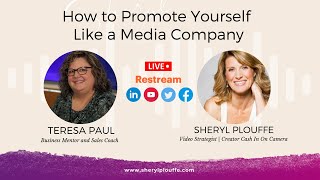
Theresa Paul, a former TV sales pro turned entrepreneur, explains how to market a solo business like a media company. She spends 80% of her time on promotion, creates varied content across multiple platforms, and moves prospects from cold leads to warm relationships through consistent nurturing. Vulnerability and showing up on camera matter more than perfection.
Chapters
If you're a coach, consultant, entrepreneur, or expert, you will want to pay attention to this episode with Theresa Paul today because we're going to dive into how to promote yourself like a media company. And Theresa and I both come from some professional experience that really ties well into this topic because we both have experience many, many years, maybe more than we want to share, right, Theresa? Years of experience in broadcast media. So I kind of want to start there. You spent 30+ years in sales and marketing in a variety of different broadcast mediums, namely television, radio, newspaper. I think the TV job was the one that you had most recently as of about what, a year ago when you left KTV11 in Colorado Springs.
Yes.
So, tell me a little bit about that transition and how that went for you.
So, I think it was sort of spurred by COVID. Right. I was an outside salesperson, which meant I got in my car and I drove to different businesses on a daily basis, showed up with my little laptop and talked about how to grow their business through marketing on KKTV. And then one day they said, don't go out of your house.
Right. So then you're like, but my job is going outside.
Right. And so an immediate pivot happened. Right. And so of course we all got on Zoom. But, but there was an underlying factor that I couldn't promote people coming to their business because people weren't allowed to come to their business. Right. What did we talk about? Right. Right. Unless they had an online presence, it was, it was a no-go until we knew what was going on. Right. It was an indefinite no. And so I worked that for the rest of 2020 and tried to, you know, really make that work and, and dealing with different personalities and different judgment levels about COVID and who who should go when, where, all of that stuff just really was overwhelming. And so, um, I, you know, I had been thinking about getting out, and it seemed like this was the thing to say, you know what, let me just, let me just do something on my own, right? Because the company I worked for, they were stressing out, you know, the money wasn't coming in, people weren't getting— everything was going on. And so I just one day, you know, I don't know if it was wisdom or stupidity, but I just said, okay, I'm gonna quit. I'm gonna go online. How hard could that be, right?
And here you are. And you know, it's so interesting to me that I think we both would agree, you know, broadcast industry has been changing for many, many years, long before COVID because social media was really one of the things that started to change things radically in terms of the business model around broadcasting. And so, a lot of people, maybe colleagues of ours, got caught up in all of that. Whether it be through, you know, downsizing or restructuring and things of that nature. So I'm really glad that you're on this side now, that you're on the entrepreneurial side, uh, because it's, it's a lot of fun over here. And I'm sure that you have, um, you know, experienced a lot in, in the time that you've been away from broadcast TV. But I want to hear your perspective. I have my own, but I want to hear your perspective on the similarities between broadcast media and how today entrepreneurs need to really think of themselves as what I would describe as mini media companies.
Sure, sure. Look, you know, marketing is marketing. You need to reach the right people with the right message at the right time. Doesn't matter if you're doing broadcasting or newspaper or bus benches, right? You have to pick a good strategy. And so having a marketing plan is critical. Right? Just winging it doesn't work. What happens is you try this and then you try this and you try this and you try this. Well, marketing is about, I'm going to try this and I'm going to stick with it till it works. And that's how you build your exposure in a marketplace. And so, um, you have to pick, pick what you want to do, pick how you're going to present yourself, and just go with it like full force. And you almost have to do it without expectation, because if you, if you do one post and you say, I hope people, you know, comment on it, then you're dead in the water. You just have to post and post and post or video or whatever it is. You have to be consistent. And that's what, that's what even big companies do. You still see the big motor companies with car companies with commercials. You still see the McDonald's and the burger. You still see all of that even after years and years and years of exposure. Why? Because if they don't, people would stop going.
You bring up a really great point. The piece around consistency obviously is something we talk a lot about here on Cashing On Camera. It's something that we've been talking about for years. And you're right. We have these huge, huge companies whether it be McDonald's or media companies. It doesn't matter. They are still out there day in and day out putting their brand in front of people on a consistent basis. Yet somehow, entrepreneurs, solopreneurs think that they can just make 3 posts on a YouTube channel or make 3 videos on a YouTube channel and then wonder why they don't have you know, 100,000 people flooding them with inquiries, right? Why is there such a disconnect?
Um, I think that, I think that entrepreneurs don't understand the basics of marketing and the cold, warm, and hot leads, right? Most of us go for the low-hanging fruit. We want the ones that are primed and ready to buy, and then we move on to the next ones. Well, if everybody's going for the low-hanging fruit, there's not enough to go around. Right? If you build a strategy that says, no, I'm going to go find a cold lead, I'm going to get to know them, warm them up, and move them in— that's how you make your money, right? That's how you get your business, and that's how it's sustainable instead of just grabbing at whatever is ready to buy. And so the strategy has to be, how do I make friends with my next best client? Yeah, that's it. And moving through the cycle.
When I was on television, you know, and I was in it for 25 years, and Many of those years were spent on national television broadcasting. And I've always said that it's surprising— it's not really surprising to me, but sometimes surprising to other people— just how much of a similarity there is between television broadcasting and how we have to think of ourselves as mini media companies today. Because the concept is really the same. It is create content, build an audience that wants more, that wants to continue to come back for more, and then monetize that. But yet somehow, sometimes people, entrepreneurs will think, well gee, you know, I don't need to be consistent. I should just be able to just make 3 ads and run some money to it and that's the end of it. But that's just not the world that we live in today. You know, we live in a very different world. So, let's talk about how people can promote themselves like many media companies. We talked about consistency and that is It's not 3 videos. It's not even 5. It's being committed to doing it week in and week out for possibly years, if not the duration of your entire company's existence. What are some other things, Theresa, that people need to do to start promoting themselves as media companies?
Well, they need to make promotion a priority. If you're just starting out, 80% of your time should be devoted to the marketing and promoting yourself. Right? As you get clients, you can— that gap gets smaller, but you always have to do it. So have a plan. Have a plan that you can tweak as you go, that you can pivot as you go, but make sure you have a plan and then stick to it. Look, it's not the sexy stuff. It's not the fun stuff. It's not the stuff that you get up in the morning and go, yay, I get to friend some more strangers today. But it's the stuff that every business does no matter what they're doing to build their business so they can get to the fun stuff, right?
You use Facebook, I think, as one of your main mediums. In fact, I think that's how we got connected. It is. It is. Isn't that fascinating? That's so really— I want— if you're listening to this right now, you're listening on, you know, YouTube, Facebook, Twitter, LinkedIn, on any of my channels, or you're listening to this on the audio podcast right now, pay close attention. Theresa reached out to me in really what was, I guess, a cold outreach, we could call it. And we just started having a conversation, chit-chat, chit-chat, was like, hey, you know what, you sound interesting, let's get on the phone. We talked about— just wanted to meet each other. And then in that conversation, I discovered that we had a lot of similarity. And then I invited her on the show, and now she's here talking about this. And this will reach my whole audience. And I have, I don't know, maybe 30,000 people who follow me on social media. Right. So, just to show you that that's kind of how this works. But it has to start and stems from your willingness to put yourself out there and do the things that, as you just mentioned, might not seem as sexy at the outset.
Right. And this isn't an anomaly. I've been on 8 different podcasts in the last 3 months. I've trained in front of 2 brand new groups of people. I've collaborated with several people. I'm working on dual workshops with other people. Part of it is, yeah, posting and getting to know people one-on-one. But when you can get in front of other people's audiences, help them out, right? And then people get interested in you. You know, that's how I filled my last workshop. I did a training 3 days before my workshop, and they were just enamored. And so they're like, yes, sign me up.
There's so much to unpack here because really this is about the willingness and getting yourself out there, which a lot of people are hesitant to do. So let's kind of go back a little bit. The name of the show is Cashing on Camera, where we really talking about how do you make money and grow your business by being visible. How challenging was it for you to transition from being, you know, behind the scenes in television to now being in front of the camera for your own business?
It was very difficult. I'm one of those people, I don't like my picture taken because I don't want to be looking like that forever. I'm not the kind of person that jumps on front, but I realized that it needed to be done. And so even though I'm a little shy and introverted, I had this one, one other trait that moved me along, and I'm stubborn, right? I'm stubborn. I will do whatever it takes. And so I just took a deep breath and I just jumped in. It's still hard for me to do lives. I still have to get pumped up and psych myself up, but now I can do Zooms, no problem. I even love podcasts. Like, you can call me tomorrow and say, do you want to jump on a podcast? Here's the thing, I'm always camera ready. I'm always ready to jump in. I know what I'm talking about, so I don't have to prep. But I had to get there. It took 30 years to get there. And so I take that confidence that I built and I just, I bring it forward knowing that if you don't like me and you go away, that's okay. And if you do like me and you want more, then you can move forward and that's okay.
There's so much psychology that comes into play here when you're trying to promote yourself like a, like a media company because, you know, you have to be willing and, and get out there and sometimes do the things that scare you a little bit. I'm so glad that you did, you know, because I'm glad to, to know you, and we're obviously getting to know each other even better and have so much in common. So you, um, say 80% of the time you should be promoting yourself. What are we doing the other 20% of the time?
You know, the other 20% of the time is administrative because you can never get away from that. And hopefully you're starting to book those discovery calls and you're starting to do things that move it forward. So I say Promoting is up until, you know, I speak to somebody on the phone for the first time, then it starts the sales process, right? So I kind of have a hard stop there. And so what you want to do is fill more of your sales pipeline and less of your marketing. And unless suddenly you don't have as many sales and then you pump up your marketing again, it really is just a moving target that you have to feel in your business and know when it's happening so that you don't get to the end of the month and go, oh my gosh, I have no one else to talk to. I have to start over. That's the worst place to be.
Yeah. So, let's talk content because content is obviously very important. We're doing a broadcast right now, which is live. It is multi-streamed on multiple platforms at the same time in video format. And then, I'm a big proponent of repurposing. So, we'll be repurposing this to an audio podcast, which gives us, in my opinion, the best ability to be omnipresent in the marketplace, right? The state of constantly being encountered online is one of the key tenets of really discoverability today, in my opinion. So let's talk about content and what are your thoughts and your philosophy around the amount of content, the type of content, and what people ought to be doing if they're really gonna be acting like a media company?
So you have to have varied content, right? Because people wanna know the depths of who you are. But number one, and this is what I learned coming onto the online world, you have to be vulnerable. You have to be willing to say, look, I didn't do this right in the beginning, or I really struggled, or whatever it is. You have to be vulnerable because people want to do business with people, right? It wasn't like that in the outside world. Everything was professional. You hid your insecurities and you moved forward with complete confidence. But online, people don't appreciate that. They want to know that you're a real person, you've had a real life, you have real struggles. And so I— when I connect with people, I connect with them on the thing that I know I can connect on. Like, ours was broadcast television. Like, not very many people are in this business from that industry. And so it was a great connecting point. But you have to be willing to be a person first.
Yeah, I think back to when I really started getting into this, which was around 2013, I had always been, quote unquote, the talent, right? The on-camera talent, and didn't have as much experience on the production side, especially with regard to editing videos, like, from top to bottom.. And some of my first videos were terrible, terrible. Like, I look like a Smurf. Like, I was blue. And I put it out there anyway, Tracee, because I knew it was all part of the process. We have to start somewhere. You've got to be willing, you know. So vulnerability, I think, is one of the important things to keep in mind. So what about formats? You know, I'm a big proponent of video. How do you feel about it?
You know, so I have mixed feelings with video, obviously. I'm just stepping into my own. But I've known for many, many, many years the video is king, right? That's how we consume. It's how we've consumed for years via television. And so if you want to catch somebody's attention, right, you've got sight, sound, motion, and emotion. It's the only medium where you can get all of that. So my advice, if you want to grow your business at a much quicker pace, make friends with video for sure.
Yeah, I agree. And so what are some other formats that you're exploring? I mean, I know you have a website that is a newer website because, you know, you— and you, I think, have video on it or don't have video on it?
I don't have video on it yet, but, but that is a great place to put video because, again, many, many people want to see you and experience you before they even contact you. It's a different world than it was 20 years ago, right? They can research you before they ever make contact with you, which is a plus, because then if they like what they see and they come you, you're one step ahead of the game, right? Um, and so yes, I do need to put video on my website for sure.
Yeah. And I, you know, listen, it's everything, everything in its due time too. You know, Rome isn't built in a day. And so you're going, you're going through that process of doing that. But you just— I'm just so impressed. I'm just so impressed with your, um, your willingness to put yourself out there, A, but also the fact that you've transitioned from an industry that I'm all too familiar with, and that you're out on your own and you've joined us on this side. It's a lot of fun over here, and I'm just really thrilled. So Teresa, one of the things that, um, we do here on Cash In On Camera is we have a segment called Stop Marketing Like It's $19.99. I'm a big Prince fan, if you haven't noticed, and my mug might give it away.
So Raspberry Meringue, my ultimate—
that's right, exactly. What is a tip tool, tactic, or technique that works to help you promote yourself?
So, you know, I was marketing in 1999, so I know what a difference it's made. And I don't think that people realize, back in the '90s, you marketed by groups of people, right? If you wanted women, that's how you marketed. Today, you can market your exact client on social media, and it is a dream. It is like the golden goose, and I don't think people realize it and take advantage of it. Because in TV it's broadcast, right? We talk to everybody and we hope that somebody in the audience matches our best client, right? Not anymore. You don't have to waste all that money. You can really go and find them. And so if you don't have a strategy to do that, you definitely need to get one because that's where the gold is. Doesn't cost you any money. It costs you time for sure, but that really is the single best thing that's ever happened, is to be able to target so specifically.
Yeah, I love it. Tell us where we can reach you. Tell us about your website and how we can reach you.
Right. So my website is virtualmarketingandsales.com. So you can reach me there and you can get a little bit more information. And I'm on Facebook too, just under Theresa Paul. So you can find me there. Awesome. Yeah.
Thank you so much. This has been a really fun conversation. We'll have to have you back sometime to explore various aspects of sales, especially sales. I mean, that's something I know you do. Help people with high-ticket sales and how to do that. So maybe that will be our next conversation.
That'd be great. I would love to.
All right, thank you so much, Teresa, for being on.
You're welcome.
More from Sheryl



From 'agreeable' to 'ruthless mentor' to 'strategic sparring partner' #substack #shorts







