How to Reinvent Yourself After an Unexpected Career Disruption
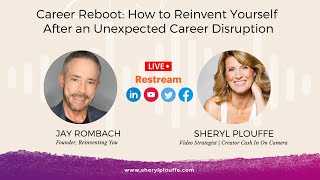
Career coach Jay Rombach explains why job loss feels like a personal crisis and introduces his "Reflect, Refocus, Reinvent" framework for deeper career change. He argues that real reinvention starts with internal work—uncovering limiting beliefs and recalibrating your values—before you chase the next position.
Chapters
experienced, um, an unexpected career disruption, you know how unsettling that is on all levels of your life. It really— it changes your whole perspective about your professional career and future, and it can be very unsettling. So today we have Jay Rombach here to talk about how to reinvent yourself after a career disruption. Where— here's what's interesting, Jay, as I you know, set this up to have you on the show today, a lot of people were liking and I think commenting and saying, you know, I got the sense that there was a lot of interest in this topic. Good. Maybe not surprising because I think a lot of people have undergone this, right? They've gone through this. I personally have too. Back in 2013, I experienced a career disruption. You yourself, after 30 years in the human resources industry, experienced a career disruption, right? You're seeing— so my husband did too. Like, it's happening so, so much because the world is changing. So I would love for you to kind of help us understand why, whether it's downsizing or eliminating a job or letting go or whatever the thing is that's happening, why is it so jarring on people?
Yeah, I mean, it's because we identify so much with our job. I mean, the reality is we spend most of our waking hours right at a traditional job and company. And, you know, whether we intend to or not, we identify with the company we work for, the job that we do. And a lot of times it's just— we internalize that and we take it home with us, and we— that's what we live. And so what happens is, is when we lose a job or if our careers change, the career that we had once had, either something that we lost interest in or was changed with the evolution of business. It's something that's disruptive to us. We don't know how to deal with it. I'm generalizing, right? We don't know how to, to deal with it because that's our identity. We're left a lot with, what do I do now? And, and what's happened is, your point is much more pervasive in the last couple years. You know, we've read about the Great Resignation, we've read about the millions of people that have left the workforce, and some are coming back, which is great. A lot are not, and they're finding their way and what to do next. And so that is where I've come up with my business of Reinventing You to try to help.
Yeah, I love that. And the idea of reinvention, it goes beyond just finding the next job or starting a business. There's a whole layer that you work on before we ever even have that conversation about what's next. I'd love for you to help us understand what is that layer that is often overlooked.
Sure. No, thank you for that. I mean, listen, most people— again, I'm generalizing— but most people, when they lose their job or have a disruption, what do they do? They go get another job. They look for that validation, that identity. And then they try to hang on to what they've always had. And so it's called like a default future. We have a plan, we're kind of in this thing from when we went to college or studied, got into a profession, and that's our trail. So a lot of what we don't know and professionals don't know is anything other than to get the next job. What I'm proposing is reinvention is much deeper than that. As we get to a point where you actually lose a career you thought or you were once happy in and that you thought you were going to retire in or at a job and that changes, I believe this is a perfect time to take a step back and reflect and to look internally. What I propose in the reinvention is reinventing you, then the work is the outcome. The work that is right for you, the work that uses your skill set, the work that inspires you. Once you've come and, and, and actually cleaned out part of your story from the past that no longer serves you, so you can then start building the story of, you know what, this is utilizing the best of who I can be and what I can do. That's the layer you're talking about, and that's the layer that most people, I believe, miss. And that's where the opportunity is. To really take a look internally. But it takes courage and it takes humility, right? So, uh, but that's— I believe that's really, really important.
I think when you have been in an industry for a very long time, as you have, as I have, um, as my husband has, you know, you've been in an industry for so long, I think it's— I would suggest natural for you to start taking on the identity of something different, and you lose a sense of who you really are inside yourself, the things that you're truly passionate about. Because all of a sudden, your job becomes everything. You hinted at that at the beginning of this interview, just the number and the sheer number of hours that we spend at work. I think it's a natural thing to say, you know, we take on a different identity. So, if we have to then explore internally and reconnect with who we truly are and our passions and the things that we've maybe pushed down for many, many years, What is the process of discovering those things? Maybe it's a passion for art and you haven't picked up a paintbrush in 20 years, but internally, you maybe you are an artist at heart, but you've lost track of that. I'm using that as an example. But is that kind of how it works? It's like really digging deep inside of yourself.
Yeah. I mean, it's, you know, this is where things, you know, concepts like self-compassion come in and really learning how to deal with your inner critic and learning how to uncover belief systems and expectations that you have grown to become natural over time because it's ingrained in you. It's ingrained in your life. We all know that we grew up with the influences we had and from our family life, our teachers, our friends. It's no different than the workplace. We don't know. It's internal. We don't know we're in this this hamster wheel that becomes us. And what happens is a lot of time our health and well-being is sacrificed. Our family and people we should be connecting with sometimes get sacrificed in worst-case scenarios. So in the model of Reinventing You, it starts with reflection, to answer your question, and to take a step back and reflect. And I've mentioned it before and I'll mention it again, it takes courage. It takes humility, but it takes a real willingness to say, you know what? I'm open-minded and I know that the story that I have been living, there's parts of it that don't serve me anymore. I want to get to the point where I'm happy, I'm inspired in my work, I'm utilizing whether it be art, the skills that I really have. What really changes, Cheryl, is that instead of the narrative being your future depends on that next job, in that next company you go to. The future depends on you, and that's the way it should be. Not to say, you know, the corporate environment, you go back into a job, is right for you.
Great, great. Yeah, and it could be, it could be that you go back into that environment, but the difference being that you've done the work that you're describing here to identify if that really is the path that you should be following based on the discovery of, like you said, you know, finding the courage and humility to be able to reflect on the past and where you want to go in the future. And sometimes I think it can be difficult to find that humility because we might be afraid of what we're going to uncover.
Oh, absolutely. We've lived this way our whole life. And to have the willingness to change and be open-minded to say, you know what, this is the way I've worked and why maybe I've hit the ceiling on some of my promotions and maybe why I did lose my job. You know what? Maybe I need to rethink that. Maybe that wasn't— maybe that shouldn't be the belief that I have in the future. It takes introspection. It takes good guidance. It takes activities, some really active learning on that. But it is humility, right? And so in other words, a lot of times we have this default future, which I've talked about before. It's kind of like we have an expectation of how we're supposed to go forward because of our past. That's just human nature. I'm in this machine of, I got to get my next job, I got to get my next title, I got to get all this stuff. Listen, those days, a lot of them have just gone by the wayside. The world of work has changed. Now there's no reason why an individual can't identify the skills that are best for them and then utilize it and find work that's fulfilling for them. And you got all the, you know, just the baby boomers, the women that have left the workforce in just massive numbers. Many, some go back, or some are like, I don't want to go back. I have now this in my life, so what do I do? You know, I've always been identified with this company, with this job. And this is where reflection comes in. And then the model is, after you reflect, find out what you need to let go of to really start building that future, then you go in and really recalibrate on your strengths and capabilities. Because what I say is, is that the best of who you've been from a performance standpoint and the skills and the strengths that you have don't change because of your circumstances. And a lot of people intertwine them, and that's a shame. Your circumstances are here, but the skills and the strengths that you bring still remain. So we get recalibrated on those. And then we reinvent you, which is the last step. So it's reflect, refocus, reinvent. And the reinvent is being the best person you can be. Because I truly believe that once you become the right, the best person you can be utilizing the skills and the type of work environment and the type of work that you really, really, that really inspires you, then the outcome takes care of itself, whatever that is.
One of the things that I know you help people to do through this process, you said reflect, refocus, and reinvent. And then, once that layer, we've done the work to go deep and figure that part out, the result could be that they decide, yes, it is a corporate path. I do want to find another job and move in that direction. And then, it could also be they start their own business maybe. And it could be a path that they previously would never have thought to do. They don't know anything about starting their own business. They've always been an employee, which You, as someone with 30 years of HR experience, better understand the employee mindset than most. So how challenging is it for someone to let go of that kind of mindset? I've done this a certain way for 30 years and now let's say I want to go on an entrepreneurial path. Yeah, that's a very—
you said the right word, Cheryl. It's mindset. I know that word is kind of being overused a little bit now, but really it is mindset, what's called a growth mindset, right? Which is continually learning. Taking what you do best and continue to get better, right? Because the day you stop learning is you get stagnant and you just kind of like, you just, the world passes you by, right? Yeah. So, so it really is that is what you can continue to learn that's right for you, that inspires you. You know, there's so many people that just get in a career and that they, you know, they look up and say, God, I, I don't want to do this anymore. You know, this is, and it's a shame, but so many of us get caught up into that now that the world of work is kind of, you know, turned upside down. It's, you know, but it is work. And so what I'm suggesting is you do the internal work first. And then the change, which is a one-time event, whether that be a new job, a new vocation, a new business, whatever that is for you, that takes care of itself, because you're dictating that instead of a job description from a recruiter or LinkedIn. That may be the right way to go. But it's based on what you feel is right for you. Right? Instead of just being in this default mindset that, okay, I got to get the next job, I got to get the next job.
Yeah. Yeah. And I think so much of it, exactly what you said before, it comes back to we identify so much with the work that we do in the world. But the, the idea of work has changed so much. There's so much opportunity to start something new, do something different. It doesn't have to be the path that, you know, people of our age kind of grew up, it's like, oh, you know, there's the path that we follow as employees. We can't— you have your own business, I have my own business. Like, I never really— I guess I had an entrepreneurial spirit in me from a younger age, but I never actioned it. I just thought, no, that's just something that other people do. I'm going to be an employee, and I followed that path. Um, I'd love to know from you, like, What is the story behind your reinvention? Are you willing to share?
Yeah, I mean, it's just, you know, you, you get to a point where, you know, it was 30+ years, you know, and, you know, you get, you get comfortable, you still do the work, because you enjoy the people you work with, you enjoy the company that you work with. But then you kind of get caught again in that default future where You look at the work that you're doing and it's much different than the work that you did 10 years previous, right? Yeah. And so, and then things change, you know, jobs change. And then of course that craziness of, of the pandemic, you don't need, need me to go that path, but it certainly has turned everything upside down, the world of work. And now we've got this mix of hybrid and office and remote and freelancers and all that kind of stuff. It really has changed, you know? And so my story is that you have options. You look at, I only teach what I do myself. What's worked, and not only on my own story, but also my experience as a human resource executive and helping people in career management. That is, you can look internally and you can decide that says, you know what, doing work this way or my belief system this way, just doesn't, doesn't work in the new world of work or in the work that I desire to do, right? So you do have options. And, you know, I choose to offer a service to a broader audience when I know there's a need of individuals like us, right, that have gone through the, the changes. It is really, really unfortunately very common And for people that don't have the tools and the know-how, it's very difficult. It's very personally taxing. It taxes our well-being, our physical, mental well-being. It's the real deal and it's painful, right? But there's ways again to say, okay, I'm not gonna just save myself by going to the other job. I do have options. Let's look at what's— I need to clear out of my past so I can make way for what I can do in the future that best utilizes my skills. That's what's important. And I chose this route because I can utilize my skills in a way that I think influences others, hopefully in a very good way, based on my know-how and my experience and my desire to help.
That's what I love about this conversation, because if you have— again, if you have a career rather than a job, if you really consider it to be a career, tends to be kind of more of a longer-term type of tenure that you've had in that position. You may be rose through the ranks and such. If that's true, then that means that you have gained just an untold experience, knowledge, wisdom, know-how, you know, in that position. And all of that is so valuable but can be transformed and reinvented into something new. And so, I love that. I think that's something that a lot of people now are seeking and wanting to do is to say, okay, I just spent 30 years in this whatever industry, how can I leverage that now into something of my own? I know that was my impetus back in 2013. You know, I was managing a news department. That job got eliminated one afternoon on a Friday at noon, right?
Okay.
Oh wow.
Okay.
Um, wow. So I went back and I spent the next 4 years back in the position that, that I had been in previously to that promotion, which was okay, except that I really spent the majority of that 4 years looking for maybe an opportunity to carve something out of my own. So I really could have used you back then, Jay.
Yeah, thank you. I listen, I— it is a new world, and it does take— we've said it before— it takes courage, but the courage to take one step forward in the work that you want to do and believe it's right for you. That maybe you don't know what the future is going to be. You have the courage to put the default future aside and say, you know what, I believe in myself, I believe in what I can do. I know it, I've gone through the— I've validated what my strengths are. I'm going to take that step and then trust myself that I'm going to figure it out along the way. We've got friends, we've got colleagues that we've developed over years. We've got guidance that is available, whether it's myself or others that are there to help. But it's taking that step forward and not just automatically going back to the default of your past and just going back into the machine. Because that— I don't think that's doing a service to you. Again, you can go back to a career that's very helpful and right for people that like that kind of structure and like the organizational thing, but do it on your terms.
Yeah, I love it. Reflect, refocus, and reinvent. Basis of the work that you do at ReinventU. And so I'd love for you to share how people can get in touch with you. What website? Where do they go to learn more?
Okay, great. Thank you. It's www.reinventingyou.biz, not .com, .biz. And you go on there and I offer, you know, you can book your own 15-minute call for free just to see if the Reinventing You methodology might work for you. But, you know, it's just somebody that needs and is open to doing the work and, and exploring really reinvention at this stage of your career. So go to the website, you know, take a look, um, and then I'll have an increasing presence as the— as my business, um, evolves on, on social media, certainly. Um, and, uh, but that, that's the website's the fastest way and best way.
Awesome, Jay. The last thing I'm going to ask you, we have a segment called Stop Marketing Like It's 1999, and I would love to know what is something that you have found to be personally working for you as you've been reinventing yourself and starting this business? And what is something that's really working for you today?
Yeah, well, I, I, I started with a very clear concept of I was going to be a content marketer. In other words, I was going to have presence all over social media. I happen to have a big presence personally as a, as a following, uh, and that's what I was going to do. I was going to post content. But what happened is, as evolved, as evolved, and I learned To answer your question, the tip that really, really matters to me is the connection and to be able to talk to people that are going through it, that are going through change, that are looking for someone to turn to, a hand to grab them and help them up. Right. And so I believe the marketing tactic that works for me is to switch from being the content all over social media. We'll do some of that. But it's really going to be connections, right? And to get the word out and show shows like this, webinars and things, my individual coaching, some group programs as we evolve over time, just to get the word out so people can like lean in and say, you know what, there is another way. There is another way. I have some years left in the tank and I want to give back and I want to do the best work. And you know what, I'm gonna, I'm gonna try to just be courageous enough to think of something different and give it a go.
I think that's a great tip. And you know, it is about connections and getting out there. Really, it's the premise of the show, right? Cash In On Camera is how do you grow your business by putting yourself out there, being seen, talking, speaking, marketing, uh, in a variety of different explanations or ideas around how that can be done. But at the core of it, it is always about connection. So I appreciate that very much. Jay, thank you so much for being on Cash In On Camera. I've thoroughly enjoyed this conversation.
You're very welcome. And thank you for having me.
More from Sheryl



From 'agreeable' to 'ruthless mentor' to 'strategic sparring partner' #substack #shorts







