How To Stand Out As A Leader In Your Industry
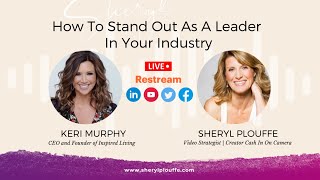
In this interview, host Sheryl Plouffe talks with media expert and business mentor Carrie Murphy about how entrepreneurs can become recognized industry leaders through authority marketing and video. They discuss the post‑pandemic challenges of cutting through the noise, the importance of positioning oneself as a guide rather than a hero, and the need to build genuine relationships over vanity metrics. Murphy outlines a content strategy built around five core video types—positioning, personality, product, promotional, and social proof—combined with a 75/25 service‑to‑sales ratio. They stress consistent, emotionally‑connected messaging (the “4 C’s”) to recession‑proof a business, and the value of converting social followers into owned email lists. Practical production tips include batching video shoots, hiring virtual assistants or contractors, and delegating non‑core tasks. The conversation also covers storytelling balance (sharing enough to connect without oversharing), the rise of micro‑influencers, and the blend of high‑tech tools with grassroots, human‑focused outreach. Finally, Murphy promotes her Inspired Living brand, offering free resources, coaching, and a guide for video equipment.
Chapters
build your business to 6 figures, multiple 6 figures, 7 figures and beyond, you will need to be seen as an industry leader in your niche. And the perfect person to speak to us today about that is Carrie Murphy. She is a speaker, she's a media expert, a business mentor, and someone who we have a lot in, in common, Carrie, because we both come from television. So we see the world of entrepreneurship, and I think authority marketing, so to speak, through that lens. So great to have you here on Cash In On Camera today. I love what you're doing. You're helping entrepreneurs step in front of the camera with confidence so that they can build their businesses. What challenges do you think entrepreneurs are facing today, now that we're post-pandemic, as far as authority marketing and building themselves up as experts online?
Oh, there's so many things, but I feel like the main challenge entrepreneurs are having right now is really carving out their space in the interwebs, right? Everyone has figured out that video is the number one marketing tool. It's funny, Cheryl, I've been teaching this for over 10 years and then the pandemic hits and all my clients are like, oh my gosh, I really should start using video. And I think it really comes down to positioning. Like how do you rise above the noise? How do you become that go-to sought-after expert in your industry? How do you put a message out there that people actually are going to listen to? Because we live in an ADDDDDD society. We're pulled a million different directions. So I think that is the number one challenge right now is really carving out your lane. How do you create that niche? Just not in your messaging, but on your platforms.
Speaking of platforms, we're seeing a lot of changes right now in the social media space. We're seeing, you know, Silicon Valley, they're talking about all these different layoffs that are happening as of us doing this live stream, you know, and Meta, Twitter, Salesforce layoffs. And they're saying that this is possibly the end of the 20-year boom that those companies have been experiencing. So I'm going to speak specifically to social media. It's a really— has been an important place and an important distribution network for you and me and many other people to get their message out. But with these challenges that we're being faced with, how can an entrepreneur rise above the noise and to really stand out in social media specifically?
Yeah, that's going to be interesting to see what happens. My gut is social media is not going anywhere. If anything, there's just going to be more platforms that continue to come up and challenge us, right, to gain our attention, to gain that piece of market share. Everyone's been talking about this looming recession. I think we're just in it. And so the number one thing you can do to recession-proof your business is to be consistent with that messaging. And you know, those are those 4 C's I talk about, Cheryl, like establishing emotional connection, not just being a talking head, but no matter what platform you are on, remember that it is all about relationship building. It's not just about being trendy or doing reels or building your TikTok. I mean, we get so wrapped up in trends and I think to really recession-proof your business and to become that category of one, It is getting known for that one thing, really becoming a specialist and using your platforms to not only educate and inspire, but to build relationships. Because if you build relationships, no matter what happens to the platform, they're going to follow you. And of course, as entrepreneurs, like we understand we don't own social media. Uh, the only piece of real estate we own online is our website. So to have a really clear marketing strategy of how you're converting people from social, into your email, into your list, and nurturing them like you would a new friend. And I think we forget that sometimes, that at the end of the day, business is about relationships, and social media is just one of the many ways we establish that relationship.
I agree. I agree with you. I think it is really all about relationships and the way that the, you know, that the web is evolving and that we're moving toward, you know, this Web3 space. Space, albeit we're at the earliest stages of that evolution. It is going to be ever more important for us to build relationships and have a database, and it's really about networking and having access to people in your network that would allow you then to be able to reach other people and have access to other people. Um, I think you're right about the social media not going away, but I think that there's going to be this like this move away from this concept of vanity metrics, meaning that having, let's say, a million followers on Instagram, faceless people who you don't know and they don't really know you very well. I don't know that that is going to be as important as having, say, 1,000 true fans.
For sure. I mean, we're seeing— Yeah, absolutely. I mean, we're seeing the trend of micro-influencers. That's where brands and sponsors are putting their money. And they're also, they're not, They're not stupid, right? They're looking at analytics. They're looking at engagement. Just because you have a million followers doesn't mean that you have great engagement on your page either. So I do think that companies and, um, and buyers are more conscious and the micro influencer, the person that has 1,000 raving fans that are engaged and active, like that's going to get you further. So that's the great news, right? I remember I interviewed Shaw Wasman and she talked about sanity. Versus vanity metrics, like same thing we're talking about, and really making sure that we're tracking the right things. And as business owners and entrepreneurs, our numbers, understanding our numbers and our analytics is super important.
So there's a lot of competition, obviously, in the digital world, and your specialty is really helping people to build businesses and use video and understanding media and how that plays in. What is your view on how we ought to be positioning ourselves? Are we Should we go out there as the guide or should we go out there as the hero?
Ah, it's such a good question. Always the guide. Always the guide. So here's the thing, that when you position yourself as the hero, look at me, look at how successful I am, look at how far I've come, I'm at the top of the mountain, don't you wish you could join me? People will admire that. They might be jealous of it. They might be envious, right? All of those emotional triggers that people have. But they won't choose to work with you because it's not relatable. They don't see themselves in your journey. They don't see themselves at the top of the mountain with all the glorious things that you have accomplished over your life. So this is where understanding when it comes to building a very successful brand, you always want to show up as the guide. You want to be 2 to 3 steps ahead. It's like when you're going on this journey, like I'm not going to go climb Mount Everest, but if I was going to, I wouldn't want my guide to be at the top of the mountain waving at me saying, hey Carrie, hope you make it up here. Right? You want the person on the mountain with you a couple steps ahead saying, hey, watch out for that. Don't fall here. I just made that mistake. Don't do that. Come around this way. And when you think about your business from that perspective, first of all, the fear of showing up starts to dissipate because people don't want perfect. They don't want you to have it all together. They really, like, people want to do business with real people. Think about Brené Brown, Sarah Blakely, Mel Robbins, right? Mel Roberts. Mel Robbins. Thank you. There are so many people that are so— Glennon Doyle, like they're so raw and authentic. And that's what people love to connect with. And so to remember that, yes, you want to show up as an expert. Yes, you want to have your stuff together. Yes, you want to be a credible resource, but you also want to be a real person. And so be the guide, not the hero.
Carrie, sometimes I think that entrepreneurs go out and they hear advice where they're told, share your story, and then they end up going a little too far. I'd love to get your opinion on this. Sometimes I see people who go out and they air all of their dirty laundry, and they think that that's vulnerability. They think that they're building connection, they're sharing their story, when in fact it's almost like a therapy session. You feel like you're in the middle of a therapy session. How do we know, or how— what advice can you give to help an emerging entrepreneur understand where that line is. There is a line that you don't wanna cross.
Yes. When it comes, you know, you hear the mess is in the message or the message is in the mess. And, you know, really understanding that yes, part of your story is really important to share 'cause it's the only thing that makes you different, right? Your story is the only unique differentiator. Maybe your training, maybe the way that you do things, but it's your story that's going to create that rapport. But do we need to hear, The whole story. So, so much of what I teach is that WIFM, you know, what's in it for me. And that's what people care about when it comes to your video. Like, please don't start it about you. Start it with what's in it for me, right? Connecting with me emotionally. And where is the scene of your story, the chapter of your book that opens up possibility, that teaches something, that is a great metaphor or analogy for what you want your right fit client to see, to believe, to inspire, to pursue. And it's not all the things. And quite frankly, we don't need to know all the dirty laundry, like every skeleton in the closet. We need to know what is important for us to relate to you by. Does that make sense? So it's understanding what scene, because we're all like, we're a running movie every day, right? Our stories and our lives are constantly, you know, there's ups and downs and all the things that happen throughout our lives. So figuring out, I have clients literally right Write out stories and then write out state elicitation. What state do you want your right fit client to be in when they hear that story? Where are you leaving them? What's the journey you're taking them on? Because story is super powerful, but you have to understand, like you said, Cheryl, what piece of the story makes sense for where my right fit client is right now in their own client journey?
Yes. Intent and being really really understanding what is the intent of this piece of content that I'm about to do or recording this video. What is it? Why am I doing this? And I think sometimes I see people, it's just a stream of consciousness. There really isn't any thought or intent put behind it. It's just going through the motions because they've heard that they have to be going through the motions. What we're talking about here is strategy. It's really taking a step back and saying, what is my strategy for doing any said thing in my business? Not just content.
Absolutely.
It could be the offers that you have, all of the different things that you do in your business. I want to go back in time a little bit. You have a team now, obviously super successful, but you have a team now. I'm guessing that when you started, you didn't have a team.
No, I did not.
Okay, let's go back in time and I want to talk to, again, people who don't have teams right now. They need to be, again, standing out as a leader in their industry. What are some tips that you can give to them to help them do it properly, to do it with intent, and to do it so that they're successful when they don't have the team behind them yet?
Yeah, I would say if you're starting out and you don't have a team yet, to really focus on like your best and highest use. And I remember one of my mentors saying that early on to me. I lost a business back in 2008 in the first recession. So I really understand how so many people right now might be feeling at a loss or how do I start over or what do I need to do to grow grow my business. And when I go back, even now with the team that I have, like, what is my zone of genius? What is my best and highest use? And even though I did not have employees, I did have virtual assistants. I did have people that helped me. I built my business on contractors. So you might not have a team of employees, but that doesn't mean you shouldn't have a team. And I would say the sooner you understand the importance of hiring team and really delegating those things that you should not be spending your time doing— as a startup entrepreneur, your job is to be forward-facing, to be visible, to be in front of your right fit client, to be facilitating the products and services that you offer. So why are you doing all the other things? For example, video production, maybe posting to your social, although most people hire that out too soon. Contracts, emails. So I'm a big fan, even when you're starting out, to have a part-time virtual assistant because there's only so much time in the day. And as a startup, your job is to be in front of people and getting them to work with you.
Yes, yes. Getting people to work with you. I mean, that's ultimately the whole goal.
That's the goal. Yes.
And when we think about video or content, social media, the things that you're expert at, the things I'm passionate about as well. And it's really looking at it as, is this a hobby or is this a business? Because if it's a hobby, fine, do whatever you want. But if it's a business, then there really does need to be more thought put behind that. What do you think is the biggest challenge that entrepreneurs are facing in terms of understanding what the content strategy should be? Because you do subscribe to this idea of having 5 different— I think there are 5 different types of videos that you share with your students. Do people need all 5 of those types of videos, or can they really start with one type of video and just really get good at that for the next 6 months? And then move on to the next type of video in their content strategy?
Yeah. I think to break down basic content strategy, it's that 75/25, 80/20 rule where you want to show up and be of service 75% of the time. You want to show up and give. And then the other 25% of the time you're saying, buy my thing, sign up for this, work with me. So if we're just going to go back to like basics, without looking at, oh my gosh, do I need a whole content calendar? And what am I doing? Like, just show up and serve and then know where your right fit client is at and have things to offer him or her that makes sense for them to take the next step. Now, if we're going to dive a little deeper, the 5 types of videos that I teach are positioning. That's the video on the homepage of your website. I think you're banana wannas if you don't have that, because your website will convert at over 80% better if you have that video up there. So Positioning, be that authority. Let people know why they're on your site and how you help them. Personality videos, I think, are the heartbeat to your brand. People want to get to know you, the behind the scenes, the, hey guys, this is what I'm working on today. I just got done working with this amazing client. That I would say, if there's one video, it is the personality video infused with content, like teaching me something. And we consider those product videos. Now I teach my clients a shortcut, Cheryl, where it's one production day a month. If you do one production day a month and you shoot 4 3 to 5 minute videos that teach me something, right? And you put those out on a regular basis on your YouTube channel, on your social media channels, you will start carving out your market share. So it's consistent messaging over time. No matter what you do, video is a muscle. It takes years to build a brand. I say 3 to 5 years to become that go-to expert. So start today. Don't worry about being perfect, but that positioning, personality, product videos, which is the content type videos, those video blogs. And then we have promotional videos. We would not be a multi-seven-figure business if I didn't promote what I do through video. There's no way. And then the last one is social proof, having other people talk about your products and services because that's really powerful. So do you have to do all 5? No. Um, is it beneficial to weave all of them into your content?
1000%. Inspired Living TV, Inspired Living, the company, the brand that you've built, obviously is designed with— again, it has a lot of intent behind it. You're there to help entrepreneurs get to 7 figures and beyond. I'd love for you to share how people can learn more about the work that you do. Tell us about your website and what people should do. Where should they navigate? Because there's a lot on your website.
There is. I would say the best thing to do is, you know, to book a session with one of the coaches. They are such amazing women. And yes, our mission is to help more women break 7 figures, but really it's to distribute, distribute wealth among female entrepreneurs. Only 12% of female entrepreneurs make over 6 figures. So our passion is illuminating women's voices and women's brands around the world. That's what we want to do. So download that Be Studio Ready Guide. Everyone asks me, Carrie, what type of equipment do I need? How do I get started? And we break it all down for you. So that is an amazing free resource on the website. And then our blog on our website has so much free content. My team is always telling me, Carrie, you should have a membership for just your video blogs because the content you share is so good. So I don't hold anything back. Like you said, there's a lot on the website. But there's a lot of information for you to really understand how to show up powerfully online and off to build that inspired life that you want for yourself.
I was binge watching some of your videos on YouTube and everything you said. Yes, yes, Carrie, tell us, preach it. Yes, it's so good. And I'm with you 100% on everything that you talk about. You just mentioned batch recording. Again, I'm a fan of that as well. I think that's a super efficient way to do things.
It's a must in my life.
I think, you know, as someone, you have a television background, so do I. You know, I think that we learn these things on the job. You know, we learn about efficiencies. We learn about systems. We learn about batching because we're in that industry. And then, we take those best practices into what we do today. But for people who've never had that experience, that rich experience of being on that side of things, They don't know that you don't have to reinvent the wheel. You're not setting up your whole entire system every single day. You're being efficient. You're being smart with your time so that you can serve more people at the end of the day. That's really what it is.
Yes, ma'am.
We have a little, we have a little segment called Stop Marketing Like It's $19.99. So what is it? A tip, a tool, tactic, or technique that's helping you to, to market yourself personally or to market Inspired Living? What's something that you can share with the audience today?
Well, of course I'm gonna talk about video. I think video is the most powerful thing that we have access to. Like, you and I have been on television. I had to audition growing up to be on camera. I mean, we have billion-dollar assets at our fingertips every single day to get in front of our right fit audience. It's amazing what we have access to, and yet so many people, um, are overwhelmed by it. So first of all, don't get overwhelmed. Take a big deep breath and just commit to showing up. I think that is what— it's so simple and it is what most people are not doing, which is showing up consistently, being of service, being themselves, knowing who they're talking to. So I will say when we do video, when we do challenges, masterclasses consistently, and that's just it. I think people try one thing, they didn't get the result, they didn't get the million-dollar launch they wanted. And then they like, I'm out. Like, no, no, no, no, no, no, no. We have done launches, online masterclasses and challenges. Like every 8 weeks, like we're building that muscle. And the more we do it, the more people we welcome into the Inspired Living family. So number 1, be consistent on video. Number, number 1. And get out there and teach and train and be of service. But I kind of want to go back to 1999 for a minute because what I'm also finding, Cheryl, is that grassroots marketing, like going back to basics, going back to mailing things, Picking up the phone and calling people, building relationships with people. It's such a digital landscape that people forgot about this thing called human connection. And so in some ways, I'm like, yes, take advantage of everything that we have in 2022 and 2023. But sometimes you need to go back to 1999 because what worked then continues to work now if you use it right.
This, as you said, this is the studio in your hand.
It's unbelievable.
You can run your business with this device. Yeah, it's revolutionary, obviously, and there's so much we can do. But I do agree with you that going back to basics in some ways is, is really important. Connections, talking to people, having conversations— these are not new concepts. These are, you know, we need to go back to some degree of integrating a lot of those things, and we can't automate everything. Not everything needs to be through technology. It doesn't have to be complicated. So, I like that we're bridging that idea between the technology but also going back to basics.
Yes, ma'am. Yeah. Don't put all your eggs in one basket. I know.
So fun. I love this. Thank you so much for coming on the show and sharing your expertise. And obviously, we want to invite people to go to inspiredliving.tv. So many resources there. Obviously, you have your ways to help people and resources that you provide as well. But we really, really appreciate you coming on and sharing this. I think you've given us some food for thought on how to stand out as a leader in our industries. And really, social media is not going anywhere. We do still need to be using it, but use it with intent. Have a strategy before you just kind of go out there and just start turning on your camera and doing your video. Do it with a strategy in mind.
For sure. Thank you so much. Thank you so much. Thank you.
More from Sheryl



From 'agreeable' to 'ruthless mentor' to 'strategic sparring partner' #substack #shorts







