Live with Restream
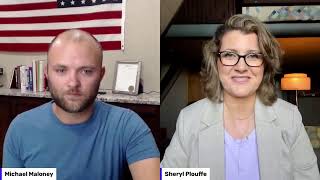
Cheryl Plouffe shares four ways to monetize a podcast: attracting clients, generating referrals, securing speaking engagements, and booking high-profile guests. She runs her show in about an hour a week using Restream and automated scheduling, prioritizing value and relationships over production perfection.
Chapters
Today we have the wonderful Cheryl Plouffe with us. Cheryl, how are you today?
I'm so great. It's so great to connect with you. Last time I saw you, we were in Las Vegas. First time we ever met, we became fast friends. I'm excited to be here.
Yeah, well, thank you so much for coming today. I'm really excited to learn a lot from you and just hear about what you've done with your career as a public speaker. And yeah, I think there's going to be a lot of great nuggets for our listeners today. Whether you're watching it live or watching it again on the replay, thank you so much for tuning in today. Um, maybe you are new to this podcast, or maybe you've listened to a few of them, but the whole purpose of my podcast, The Michael Maloney Show, is to help motivate and inspire people to step out on their own and just grab life by the you-know-what and just go for it. And heck yeah. And so I'm trying— I'm getting a lot of these badass people like Cheryl on here to just ask them about how how they do what they do. Um, and it's really exciting because I myself am learning a lot, and then in the same time I'm able to share some things with the listeners. So Cheryl, thank you so much for coming today. Um, like you briefly talked on, you and I met, um, not too long ago, maybe probably about a month and a half ago in Las Vegas at David Fagan's Top Talent Conference. Uh, what a phenomenal event. I mean, that was my first time ever going to that hotel and area. I mean, just, it brings me back to like Greece.
Yes, beautiful, very beautiful. It was the, uh, the Lake, uh, Las Vegas Hilton Resort, and it was the first time I'd been to Lake Las Vegas. Amazing, great event, great venue, but more importantly, great connections. That's where we met, met a lot of amazing people. David Fagan, Isabel Fagan brought us all together there for the publicity and publishing conference. And I mean, there were— I think there were just so many epiphanies, I think, that came about as a result of that event. But here we are now, what, several weeks later or maybe a month or so later, and we're connecting. And I think that's really what it is. You know, David talked a lot about this on stage at that event about access being one of the key things that we ought to be focusing on in our businesses. Here's an example of that, right, is that this is coming to fruition as a result. But I think that the possible— the profitable podcasting, if I could get it out, is really all about access as well. And I'm happy to share insights, information, ideas around how and what that is.
Yeah. And like you just kind of touched on during this episode here, Sheryl's going to share 4 ways to make a podcast profitable. So I'm really excited about that. But just going back to what you were talking about just a second ago about access and networking and all the beautiful things that come from that. A lot of times I catch myself saying at these events that I've met you at, Cheryl, to people, you don't know what possibilities come from going to these events. They're literally unfathomable. Like, I wouldn't be talking to you, obviously, if I hadn't gone to that event. And the event that I was at where I met you was preceding like 4 or 5 other events that David was also involved with, that I met all sorts of other people that have also already been on the podcast. And who, who are— who I'm literally like buying properties with. And like, it's just crazy how it works out that way. And it's just, you open yourself open to the universe, and, and I'm a big believer in doing that. And kudos to you, and kudos to me for going to those. I mean, it's amazing. It's, it's really phenomenal. And to anyone listening, if you ever want to know more about some potential events that you can go to, please reach out to either one of us. We'll be happy to let you know about them, um, because they've done great things for me, and, and I'm sure Cheryl can agree that, uh, we're all about giving back. Um, but Cheryl, let's dive right into it. So, um, and just so the listeners know, Cheryl has kind of inspired me to go with the Editless Podcast style. That's what we're doing now, where it's live, uh, just right off the hip. We just roll with it, no edits. Um, obviously what we put on Spotify we might edit a little bit, but what everyone's seeing right now is live and as it is. So, um, thank you for inspiring me to do that. And I think that might be part of what you're talking about in your today. But before I give away too many nuggets, can you just please start and let me know how we can make a podcast profitable?
Yeah, absolutely. I'll talk about the concept of profitable podcasting. I do want to congratulate you. I was so happy when I saw that you were promoting the Michael Maloney Show, and I thought, I wonder if I had— did I have even a little kind of impact on Michael to do this? If I did, I'm so glad. Um, because, you know, this is just phenomenal that you've just jumped right in, you know, just started to do it. So profitable podcasting is the concept of, of access, and it's access to your network. It's building relationships, it's building opportunities, business opportunities for yourself and for others. It's really building win-win relationships, and it's not so much predicated on a hope strategy of waiting and hoping that an audience alone builds your podcast. That will happen. You can build an audience around your podcast, definitely. But if you want profitability and you want it fast, then the best way is to think about the business relationships, the networking, the database, the list of people that you could build around you know, your topic or other topics. So it's really about generating either clients, referrals, or speaking engagements. An audience, right? And so an audience takes time to build. That's one of the problems and frustrations that people have with traditional podcasting. One, they're doing audio only. I'm a proponent of video first and repurposing to audio, which you are doing, which I'm so happy to see that you're doing. And that's what I teach my students as well. So video first, because then you get the best of both worlds. But aside from that, most people are starting a podcast, they're doing an audio only, but they're doing it, uh, with a very heavy post-production process, meaning that they're spending hours and hours per episode. Sometimes I, I talk to people all the time, 4, 5, 6, maybe 8 hours per episode. Wow. So that's difficult for a solopreneur or a small business owner, a coach, a consultant with a small team to be able to manage that and also do income-generating activities.
So that was me to a T, Cheryl. I mean, I, I was doing that. I was literally recording on basically Spotify. I was sending it to my good friend who does editing, and he's still on my team, but it would just take so long. And in fact, it kind of stopped me from being successful and continuing with the podcast because like you said, it It takes so much more time. And that's why when you said the Edilus podcast, I'm like, ears open, like, what is this all about? And it's working out great so far. I actually have 2 more interviews next week already. So it's just fantastic. But not to get you off tangent, but yeah, it's working out really well. So I definitely see the value in that.
I love to hear that because that's the whole point. We have technology, we have tools, affordable tools at our disposal. We're both using, you know, we both use and love Restream. But yeah, there are some other tools in our system as well that we bring together in order to create a system that keeps it so that you can produce your show in an hour a week. And, um, and we do that through an editless podcast system. So just to lay the premise down of what is profitable podcasting, it's about access, it's about building your network and relationships and business opportunities and connections, as opposed to strictly about the content. Sure, the content is good. Those are table stakes. Is that what that's called? Table stakes? Is that what we call that now? That's the norm. The norm, right, is that you're going to have good content. Of course you're going to have good content, but it's not just about the content. It's more so about the connections that you're building.
So is it about— it's about realizing that the theory behind it, it's not about getting content out necessarily, which is like you said, is still important. That's going to attract the right people to you. But it's more about having a vehicle out in the, in the world, gaining people's attention towards what you do in your life to like bring leads in essentially. Is that kind of—
it could definitely generate leads. Yeah. And what we'll, I'll talk about the 4 different ways that you can monetize a podcast. And I talk a lot about, you know, more about this on my Profitable Podcast Method .com website. But I'll definitely touch on the 4 methods here. And yes, you're right, it can be generating leads. It can be again clients, referrals, speaking engagements. And the idea behind it too is a lot of it has to do with production. How can you make this a sustainable thing that you're able to rinse and repeat without you breaking a sweat? And you said You were caught up in all the editing and all of that too. I was too back in 2017 when I ventured the first time to start a podcast. I was doing it in different ways because some of the tools that we're using here today did not exist then. Oh yeah, this is the thing, you have to be on top of all the different changes that are going on with technology and tools. Things are changing every 6 months, so if you're not aware that these tools exist then you're kind of, you know, you, you're, you're, um, you don't know. You don't know what you don't know. So here we are, we have these tools available to us to stream. For example, right now, if, uh, for those who are watching the, the video, you are streaming out to all your platforms. I've paired my platforms as well to this broadcast. So we're right now, this is going out to probably around 10, 10 different channels on social media in one video.
That's absolutely phenomenal. And other than the subscription fee and the amount of time and effort that I put into doing the logo and all that, there's really not that much more into it. It's just, it's not that much of an overhead deal, you know what I mean?
Great. Yeah, so I can dive in, Michael, if you want. I can dive into 4 methods. And so I kind of hinted at it, right? The first monetization piece is really around clients. You can. And here's the thing, often people with a, say they have a podcast or they have a show, they might not be elegantly promoting their own products and services on their own show. So often I talk to people who say, okay, I want to start a show and then I want to build it so I can get sponsors and advertisers. Okay, my next question is, why don't you promote your own products and services on your own show? It's your show. You get to do whatever you want on your own show. And, and it's amazing to me how many people go, oh, I never thought about that. Why am I not doing that?
You know, now that you say that, I mean, and I might be a little bit of a rarity because my business is local to where I live. Granted, I'm sure a lot of my first listeners will be from local because they'll hear about it, I guess. But so I can see both sides to that. I mean, yeah, if it's like a business like where you're like developing apps or websites or something where you can work remotely for sure. Um, but for me, do you see where I'm saying? Like, I struggle with that because it's like, how much— because I— for the listeners that don't know, I own a construction landscaping company here in Iowa. So it's like, where do I draw the line, you know what I mean? And, and I might be getting you off tangent here, I'm sorry, but no, no, no, it's a valid thing.
I mean, when I say elegantly, I mean elegantly promoting it. This is not about blatant bash you over the head, you better buy my stuff or else. It's not about that, but it's about how can you elegantly— maybe you're planting a seed within the, your episode, maybe you actually have produced some type of very short little mention of a product or service, or maybe you're generating leads or trying to get people on calls, whatever type of business that you're in.
Okay.
Yeah, I think there's definitely an opportunity for people to promote their own products and services elegantly on their own podcast. And, and who's to say why can't you do that? There's no podcasting police that come after you and say you can't do that. You absolutely can do that if you wanted to. That— what does that do? Well, it could lead to clients, right? Not only that, but from the client perspective, I have had people, guests who've been on my show, who become clients because I've either said something during the the course of the conversation or through the interview that made them go, oh, I should probably have a call with her after. And then we get on a call, it's a fit, and then we work together, you know.
So it's great because we're having a conversation, so it's, it's, it's, uh, organic, you know. It's like I'm not trying to get anything out of you, Cheryl. So yeah, I see what you mean. I mean, yeah, it's very organic. I tell people all the time that are like looking for to get ahead in life or to find a better job or to, you Maybe they might be in college and they're going to be in the workforce in the future years. I'm like, now is the time to go out and job shadow and just go and say, hey, can I go out to lunch? Because like, let's say you call, like let's say you wanna be a physical therapist. Well, you could call around to some different doctor's offices and say, hi, I'm in college, I'm currently studying to become a physical therapist, please let me come and job shadow. I would like to learn more about what you do and how you do it. And what that does in my opinion is it creates a, like I said, an organic opportunity to go in and just, you're not trying to get anything out of them other than experience, they're gonna say, wow, this person is out to like win it. They're trying to learn how to like, learn how to become what I wanna be or what I'm doing someday. They're trying to do the right things. And later on, when you send them your job resume, the chances of them like actually wanting to hire you are way higher. So it's kind of like creating your own luck. I'm a huge believer in creating your own luck.
Well, I think creating your own luck is, about— well, I believe reciprocity is the way to do that. When you have, let's say, a podcast platform where you invite guests to come on your show, what are you doing? You're not selling them anything. You're giving them an opportunity. You're giving without asking for anything in return. So guess what? You're starting your relationship off on a pretty good foot, aren't you? As opposed to banging somebody over the head with an advertisement of buy my stuff. People, people don't want— people want to buy, but they don't want to be sold to, right? So that's the truth, right? People want to buy. They have— they need— we need to buy things and move. And, and, but people don't want to be sold. So I think that when you have a podcast platform such as you do now, and such as I do, and what I teach is that, you know, now you're building everything. You're building your relationship on reciprocity. And you're not expecting anything in return. But the nice thing about it is that you can get something in return later on, potentially acknowledging that there's value in it. Be a client, you know. So I think getting clients or customers is a way. So that's one way to monetize your podcast, and you can do it elegantly on your own show. You can promote your own products and services. You can also the guests themselves might even become the client, right? And so those are definitely ways that you can do that. We teach a Power Partner Talk method so that you can, you know, know how to conduct those calls after the fact and be able to see if there's any, you know, business opportunity or potential there. But yeah, so clients number one, and that you can generate that built on reciprocity. The second way that you can generate income and be profitable with your podcast is through referrals. When I think back on any level of success that I've had as an entrepreneur, if I really worked— and I actually had a coach at one point do this. I went to North Carolina, we mapped it out, we had the whiteboard, and she's like, okay, write down where do all your customers— where have all the customers you're working with right now come from? Where are they coming from? Okay, so I go to the board with the marker and I start writing it down. And it's not until you stand back and you look at it that you go, oh, that's interesting, because word of mouth do that. And all of a sudden you look and you go, the majority of them come from referrals. Interesting. But until you do that exercise, you don't know because you're so in the weeds in everything that you're doing, you don't even know where your clients are coming from. Right? So referrals is really an important thing. More often than not, when I talk to people and I say, what is your current lead generation strategy, referrals is on the list. So people know the importance of referrals.
So go ahead, go deeper into referrals then. So are you— are you— do you mean like people are like, hey, you should listen to this podcast, or what?
You know what I mean? Yeah, it could be referrals, could be people sharing your episode out with their network. I mean, that's a form of referrals. Like, I'm referring you to listen or follow this podcast. Yeah, I guess that is a form of referrals. I think that I'm speaking more from the perspective of, hey, so-and-so, I was just on this podcast with Michael Maloney, and I don't know if you know, but he helps people reach their highest potential because he works with high-level people, and you need to connect. Right. It's gonna be an email introduction. Uh, you know, LinkedIn is a real popular place for introductions. I just got like 4 intros this week, right? So referrals is really a key, key piece. But how does that correlate to podcasting? When you have your own platform, you have a podcast, you bring on a guest, that guest has a good experience, they have a good feeling about you, they've gotten, just gotten to know you for 20, 30 minutes or whatever. And they're walking away with a better understanding of who you are, a positive feeling in their head and heart about you and their soul, right? And then they start thinking, that was so cool. I wonder, I know people who she or he should be connected to. I'm going to pay it forward. They just gave me an opportunity to talk about what I love on their platform. Now I feel the need to give back. Built on reciprocity.
Seriously.
Wow.
Yeah, it's just another way to look at it. I never even considered it like that. You know, we're literally creating something that you and I can go out and share, and it's so easy to do. I mean, phenomenal. All right. So there's 1 and 2. I'm curious what number 3 and 4 are.
Okay. So number 3 is to be profitable with the podcast, you know, speaking engagements. Speaking begets more speaking. So if you have a platform where you are, you know, you're giving someone else an opportunity to share their message, to share what's important to them, and that person has a platform of their own, this happens a lot where people will say, you know, Cheryl, thank you for coming on. I have a, I have a show as well. Would you come on mine? You came online, so what can I do on yours, right? It's a give and take. It's a back and forth. It's like, yeah. So I think you can use your podcast to open yourself up to the potential of more speaking opportunities, which we all know we need, which we all want to do. When you have invited someone on your podcast first without expecting anything in return, if they have a platform, 9 times out of 10, without you even asking, right? Although I do expect that you ask, but if you didn't ask, they'll come back and say, hey, I have a show too. Can you come on mine and talk? Absolutely.
So which for any podcasters out there, learn from Cheryl right now. Make sure. And I'm going to write this down too. I'll make sure to ask everyone that I have on my show, which in fact, Cheryl, I'll ask you later. Can I be on your podcast?
You know, I mean, absolutely.
So simple. But what a great practice to enact.
Well, listen, I mean, the truth is that the truth is that When you want something in life, you have to ask. Mm-hmm. Right. A lot of people are hesitant to ask for the things that they want. And, and I— this is something we, you know, we teach in Power Partner Talk is that you want to go and ask, you know, maybe that person— we also do one of the little advanced tips that we do, though, Michael, is in the process of gathering information about our guests who are going to come on the show, we also ask— we have a little form with a few questions. And we're asking them if they have their own podcast, if they have a speaking platform. We're gathering that information before they ever show up on the show. So I know before that guest comes on that they— if whether they do or don't already have their own platform where I could potentially speak.
So is that through like their— your scheduling app or however that works, or do you like email it to them, or how's that work?
No, we, we build it out through, uh, an automated system using a few tech tools. So, okay, yeah, we're building a form and it might be too advanced for this conversation, but it's a simple form and we ask our guests to tell us, do you have a speaking platform that Cheryl could potentially contribute to? So I know before they come on the show whether they do or they don't. Well, but speaking of— really? Yeah, you want to ask. You do want to ask. I think you want to also gather that information and data for future reference. And it's amazing how many people will— guests themselves will say, hey, come on my show. Or they enjoyed their experience so much that they know someone— again, talking about access— they know someone who has a podcast that you'd be perfect for. And then guess what they do? They refer you to that person.
Yeah, that's money. And like you said, the more you talk, the more talking— speaking opportunities you get. And that's, that's what we're after, more opportunities to get out in the world and share our message. So, um, great. What's your fourth reason or fourth way?
I'm sorry. So the fourth one is kind of like a bonus, uh, thing. And that is that if you bring— and we're proponents of bringing on big names, right? And big names that, you know, what does that mean? It could be high-end influencer guru type people who have gigantic email lists, You'd be surprised that even people who are uber successful will be willing to come on smaller shows or shows that are beginning if you only ask, because chances are pretty high if they're uber successful, it's not about money anymore for them. It's about impact. It's about messaging. And they're less concerned about how many viewers and blah, blah, blah. They're like, hey, listen, I know that if I come and spend 20 minutes on this podcast, it's going to reach somebody. Right? So don't be afraid to go for big names. When you do go for big names and you bring them onto your show, these are people whose names are being searched online, right? People go on Google, people go on YouTube, people are looking for their content. And if you are bringing those big names onto your show and that person's like being searched guess what? Your content could surface amongst those search results. So now the people who are searching for information about, you know, John Doe, whoever, right? Um, they, they, they— sure, that content surfaces along with other pieces of content, but now all of a sudden your podcast shows up and people go, oh, okay, I'm here to see John Doe, but who's this Michael Maloney? This is interesting. Oh, he has a show about blank. Doesn't cost you anything to be found. So really the fourth monetization piece is around discoverability. It's how can you get discovered by other people by virtue of the searchability of the name of the person who you brought on your show? Wow.
Yeah, that's another great way right there. I see once again, I never thought about that. I mean, obviously, yeah, I get like a Joe Rogan or someone, you know, athlete that everyone knows on your podcast and It's going to draw some attention, but I didn't even think about like the keywords and the internet and like how quick it could make something go viral. It truly could. Um, that's really powerful. So that— I love everything you had to say. Thank you so much for sharing that. And I, and I'm, I'm— I know for a fact the listeners got a lot from that. But Cheryl, you have a fantastic, phenomenal career in public speaking, and I just kind of want to dive into that a little bit and just kind of question you about some of the things that you've had to go through and maybe some of the exciting things about your career. Um, and just so that I don't botch explaining how you do or what, what you've done, can you please explain like the network that you've, that you've been on and, and how you go about what it's all been, please?
Sure. I started hosting a news magazine program when I was 18 years old, and from there I ended up working in cable television trying to climb my way up the ranks. Eventually made my way to national television. I worked for The Weather Network in Canada, which is one of the 50 top managed brands in the country. You know, huge. I don't know if you know anything about, you know, weather viewing habits in Canada. It's like an obsession. So, so, you know, it's a pretty popular channel for a lot of people. And, and so I worked there for 17 years in various capacities, mostly on air. As a weather— CMOS-endorsed weathercaster. I also was in management and leadership positions there. I also taught college. So I used to teach journalism students about television performance before they were set off into the world to start their careers.
And what got you— because I'm sure your education allowed you to teach in college, so I'm sure you're, you know, you're eligible. But what got you into news in the first place? Like, most people are afraid of public speaking, so they don't just say, all right, I'm gonna go get on the news. You know, I mean, kudos to you for that.
Amazing. You know, uh, it's funny because I think really the story— and I wrote about this in a chapter of a book that I'm in— but I talk about saying yes. And when I was 15 years old, I grew up in a— from a— in a broken home, um, you know. And for really my whole teenage years, my mom single mother, social assistance, 4 children, you know, um, tough times. And so I think, I don't know why, but around the age of 15, something inside of me snapped, and I knew that I was going to have to do something different if I wanted to carve out a different path for myself. And I was painfully shy as a child. I used to cry if the teacher called on me in class.
Really? Yes, I never would have guessed that.
Never. Painfully shy. Yes. And so when I was 15, I started to find interest in things like pageantry, modeling, you know, uh, things of that nature that were out of character for me. I don't know where that came from. Who knows?
I'm a big believer in, you know, the big force.
Something happened. And I started to get this nudge to start going in that direction. So that's what I did. I was modeling in local fashion shows and pageantry and things of that nature, and then found myself volunteering at the local cable TV station, not as an on-air person, but as literally somebody pulling cables in the studio. And then one day, one day, somebody tapped me on the shoulder and said, hey, Cheryl, do you want to try hosting this show that we need to host for?
Oh, really?
Hey, you want to try it?
Sure. 3 o'clock, we're still alive.
Wow. Sure.
And how old were you?
18.
18. Okay. Wow.
Yeah. So what happened was, and at that time doing pageantry, I was also doing Toastmasters, learning about public speaking, getting up on stages, very out of character for me, doing all these things. I ended up winning the pageant. So I now am traveling the province, going to events and speaking at podiums and on stages with a crown and a sash and the whole bit.
So can you remember a time— I'm sorry, go ahead, finish. I thought you were going— I'm sorry, I looked away. I was just gonna say, can you remember a time— because like, I, I think I'm basically where you were then. Like, it's still— I, I feel a calling to get on stage and to get in front of people, but it is nerve-wracking, and I'm not great at it yet. So it's— it is more nerve-wracking, right? But can you remember a time like when you were like, oh wow, this is overwhelming, like, I don't know if this is for me, but then you like were just like, I gotta do it? Like, did you have just like this inner feeling that you just had to keep pushing on, or were you just young and just rolling with the punches, or what was it?
No, I did have an inner feeling that this was my calling somehow, that I was enjoying it, I was developing a skill set around it, I was— I'm actually kind of good at this, and those were revelations that kept me going. I didn't know that— I didn't know what the path ahead would be, but I just knew that this ex— this was exciting, this was different, this was a whole different world for me than where I came from. And I loved it, so I just kept pursuing it, one foot in front of the other, you know. I ended up— I got a— I did a local television commercial at that, around that age, you know, in a, in a studio, like in an AV place, like, uh, you know, place that still sells stereos and radios and that kind of thing. Yeah. And, uh, you know, and the TV crew was there and they were doing this commercial. I mean, this great photo shoots and all these crazy things. It was like, who am I? What? You probably liked it.
Like, you know, when you get up on stage and you're inspiring people, or like, you're just like nervous and you get up there and you do it and you just feel good about it. Like, was it that feeling that you were just like, I like this? Like, I like being uncomfortable?
Yes, I think it was, um, a realization that I was facing head-on a lot of fears that I had and finding some success with it, which was helping to spur me on to continue to do that. So it was like sense of accomplishment, I think, is really what it was. It was more of a sense of accomplishment every time I would do something that scared me and I got some type of minor win from it, whether it be, you know, just a feeling. A win for me was just feeling a certain way. About myself, because frankly, at that time I had pretty low self-esteem. I was confident, but I had low self-esteem.
So what would you say about your self-esteem level right now? I mean, what would you rate it on a scale of 1 to 10?
Today I would say, oh, I'm probably an 8 or like a 9. I'm pretty good.
Yeah, that's freaking awesome, Carol, and I'm proud of you for being able to say that. You know, I'm going to be transparent. I, I would say I'm probably around a 6 or 7 or 8. You know, there's times where I'm there's just so much going on. I'm spread thin that I get torn down a few times, and it's— I'm still working on that, but that's, that's fine.
Um, yeah, I think it's just, you know, you have to just keep putting one foot in front of the other. And, and I just kept doing that, and it just became a pattern in my life where when I started to see something that was scary to me, in my mind it was like, that's probably the thing you should be doing. And then I would do it, and then a great result would come. You know, the first time I went on national television— my husband is somewhere in this cottage right now— he will tell you that I was sick. I had given myself an ulcer, okay? It's no lie. I gave myself an ulcer because I knew for a week prior to when my first debut on national television was going to be, I was terrified. I was like, there's no way I can do this. I can't do this. Who am I? All those things. My first night was a Saturday night at 11 PM. They put me on the late show. Thank you. Because it was the least number of people. They didn't put me on prime time, thankfully. Yeah, the Friday, so the day before, I was so ill I thought I had the flu. And I said to my, my now husband, right, because I don't think we were married at that time, He said, um, I told him, I said, I can't do it, I have the flu, I can't work tomorrow, I'm going to call in. And he's like, you don't have the flu, you don't have the flu. He knew because he's a broadcaster himself, he's been there almost 40 years, right? He's like, he knew exactly what it was. And he said, you're gonna be fine, you're gonna go in there tomorrow and you're going to do the thing that you've been working so hard at since you were 18. And this is like, you know, I don't know what age I was, 28 or 30 or so. You're going to go in and you're going to do it. And I did it. You did it.
And the next day, that goes to show right there, leadership. Sorry, next week you did what now?
I'm sorry. Well, you know, the next week I went back and I kept going back. And then really within a few months, I was promoted to hosting one of the top-rated morning shows in Toronto.
Wow, that's phenomenal. And so, so since then, you've still been doing news and then now you're helping people create their own podcast. Am I right there? Yeah.
Great. Yeah. Yeah. I mean, I think what happened, you know, often I think, Michael, in life, you know, you solve your own problem, you find a way to solve your own problem, and then all of a sudden you almost stumble upon something that other people are interested in. And that's really what happened for me. I had to solve my own problem. I put together, you know, I put, I don't know, maybe 3 or 4 months of work into figuring out how am I going to make the system, what tools and experimenting and trying and all these things. Eventually came to really figure out a great system. And then people started asking me, how are you doing this? What tools? How, you know, and then people wanted to pay me to teach them the process. So I started to do that. And here we are now. And Profitable Podcast Method is a thing. I have a podcast. Yeah. Profitablepodcastmethod.com.
Okay. Profitablepodcastmethod.com for anyone listening. Um, please, please reach out to Cheryl. She's great and she, she's such a giver. Every conversation I have with you, you're just— you give so much nuggets. And, and by the way, for anyone listening, I'm sure you've already noticed, but isn't it amazing how Cheryl talks? You can tell she has so much experience on live television. It's just phenomenal with the way you pronounce words and the way your voice fluctuates tonality and everything. I mean, I work constantly on me because I'm so monotone, you know, it's just everything's the same. And so I have to constantly think about trying to get more excited. And you're just great. You don't have to move your body to change your voice. And I admire that so much. And Cheryl, we're going to be friends for a long time, until the day I die. And so thank you so much for everything you brought today. I guess I just want to pick your brain for one more quick question.
Go!
For anyone listening, anyone who's trying to become a public speaker, what would be just one thing you would want them to remember? Like when they go about what they're trying to do?
I think it's basically what you just said, you know, about you might have some trepidation or you might look at yourself and go, "I don't— gee, I know I'm not really— I don't have the intonation and maybe I need to change my inflection." And, you know, it's trying to perfect it. What's more important is what is the message that you're communicating. So I don't think that you know, today you necessarily have to have had broadcast quality experience, you know, for 25 years to do what is in your heart, which is to get out there and talk about a topic that you're interested in. You know, there's a beauty— there's a beauty influencer who I like, and she's on Instagram. She often shows up in my phone. Her name is Mikayla, and she's from Boston. She has a very heavy Bostonian accent. And so, you know, instead of saying part, she'd say part, right? Like, it's very, uh, you know. And she could have said to herself, oh, I couldn't possibly be a beauty influencer because of my accent, and who's going to listen to me and everything. And maybe she did have those thoughts, I don't know, but she did it anyway. She's one of the most popular. She has— brands are coming and sending us 55 packages of of makeup unsolicited, right? I mean, she's, she's got palettes of makeup that are named after her, and all these eyeglasses, and all these opportunities are coming her way because she was willing, because she was willing to get out there regardless of— didn't have the perfect broadcasting quality voice, but got out there and did it anyway and talked about what's important to her, which is makeup. What is important to you? And do you want to get out there and speak about that thing? It's not about perfection. Those days are gone. We're moving away from the perfection. We're moving toward a place where it's about value. What kind of value are you bringing to your topic?
What kind of value are you bringing to your topic? All right, that's gold. Be yourself, people. Don't be afraid to start a podcast. I'm not the best at it, but I'm doing it and I'm going to become a lot better at it, right? Just like Cheryl. She was at one day she walked into the newscaster office and she'd never been on the news. And then now she's had over 10,000 hours on live television. So it just all starts with starting. So, hey, thanks again, everyone, for listening. Cheryl, your social media tag is @CherylPlouffe, just the way her name is spelled. S-H-E-R-E-R-Y-L-P-L-O-U-F-F-E. Correct. Cheryl, once again, thank you so much for visiting with us today. If you could please say your website one more time for the listeners.
Sure, it's profitablepodcastmethod.com. There's a 20-minute video there that you can listen to at your convenience, and you'll learn about the Profitable Podcast Method. And there is an opportunity to get on a call with me if you want to discuss it and see if it's a fit for you. But I think it really lays down the idea and the theory behind it and how you can interview thought leaders and turn them into clients, referrals, and speaking engagements.
Amen. And what a— what better way to give back to the world and inspire people through conversation, right? So hey, thanks again everyone for watching. Again, this is Michael Maloney with The Michael Maloney Show. We're all about giving back and inspiring people. So if you yourself would like to come on the podcast, or if you know someone that might be worth interviewing, please send them my way. Uh, Cheryl, once again, I hope you have a great day, and thank you so much for being on my show.
Thanks for having me, Michael.
You bet. Bye.
More from Sheryl



From 'agreeable' to 'ruthless mentor' to 'strategic sparring partner' #substack #shorts







