Making Money As A Consultant
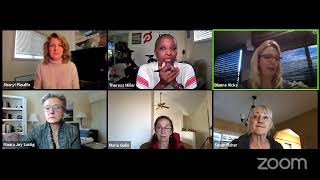
Sheryl Plouffe explains how coaches and consultants can build paying practices by positioning themselves as experts through video content and one-on-one calls. Consulting means diagnosing problems and prescribing solutions, not just facilitating discovery. Start with a price like $247 per hour, use Calendly and Zoom to manage clients, and prove your expertise through real results before raising rates.
Chapters
Exciting.
Well, if you have to run, I totally understand.
Let me in.
So that's great.
We were just here at the phone waiting.
So that's why I'm excited to have you here. So welcome to Cash In On Camera Live. This is— I'm Sheryl Plouffe, video strategist, and I help coaches and consultants, people who are offline authorities, to build their business online. I like to do that mostly through video. Of course, video is a part of the overall content marketing world and how we get our message out to more people. So I am the founder of Cash In On Camera, and this is the live training that I do every Wednesday at 3:00 PM Eastern time. And so if you're watching and I'm using Restream today to go live on a multitude of platforms all at the same time, you can find out more about Restream at restream.com/join/cioc, which stands for Cash In On Camera, and This is a topic that I hope you will enjoy because it has to do with making money. So if you like to make money, you're in the right place. We're talking today about making money as a consultant. So last week we kind of dove into some, some coaching consulting type topics. Today I really want to specifically focus on consulting. And in order for us to have a conversation about consulting, I think it's important to look at You know, what is the difference between coaching and consulting? And then we're going to dive a little bit further into the consulting side, and then I'll open it up to Q&A for you today. So, so if you're watching on LinkedIn, welcome. You're watching on YouTube, you're watching on Facebook, on the group or the page, uh, that's how we're broadcasting this Zoom meeting out to, to all of you through Restream. If you want to be part of the interactive portion, which is this portion here in the Zoom meeting, Just reach out to community@sherylplouffe.com and we can set you up with how to get registered for free. OK, so you can text me, contact me on social media. I'd be happy to get you set up. So let's talk about coaching versus consulting. First of all, I'd like for you to, if you're watching on whatever platform, type into the chat or type into the comments, you know, are you a coach? Are you a consultant or do you think you are both? Knowing what you know right now about who you are and what you do and how you serve your people and what your expertise is, do you feel like you're a coach? Do you feel like you're a consultant? Just type the words in. Or do you feel like you're both? So let me know if you're watching. I'm a mentor, Diane says. Cool. So are you a coach, a consultant, or both? Diane says she really considers herself to be more of a mentor. That's great. You know, you might say, you know what, I feel like I'm just more of like a teacher. You know, you can put that in the comments. How do you, how do you describe yourself? Okay, and as you do that, let me just kind of lay out the foundation of really the difference between, and here's the thing, between coach and consultant, they do tend to blur. You know, there is, there is some overlap, I think, in some cases. So a coach is a person who is going to work with a client to help pull out the best from that client. In many cases, the coach is a person who's going to work with a client to get them to almost come to their own answer, helping to extract their own answer from themselves, right? A coach is someone who encourages the client to, you know, do their best and to come up with their own aha moments and answers for themselves in many cases. So I guess how I would describe that too would be a coach would be more like a cheerleader, you know, kind of role. A consultant, on the other hand, is someone who is going to diagnose a problem and then make the recommendations for the solution to that problem. So a consultant is someone who identifies you know, what a problem is and then the tasks that need to be performed to reach a specific goal. So, it's more like a roadmap. A consultant is a person who's going to map it out and say, here is what I'm identifying. I'm using my wisdom. I'm using my experience and my expertise to determine here's the problem and here's the roadmap to reach the goals that you set out. It's more about telling them what to do. A consultant is a person who's going to tell them what to do and map it out. It's, here's the process, here's the method that you should take in order to get to said result. So, it was really the differences between coaches and consultants. And again, they can sort of overlap depending on who you are, um, and what your offers are. So, let's talk today though about making money as a consultant. So, we're talking more about this person who's going to help diagnose a problem and give people, um, the recommended solution to that problem. So, When you are a— so how do you make money as a consultant? Well, you know, I think that the foundation of it is you have to be able to— you have to have a skill. You know, I think what happens right now in this world of e-learning and coaching and consulting, there are a lot of people who see that as a bright future for themselves. They're like, I'd love to get into that coaching and consulting space. I could work from home. I could make my own hours. I could be financially free and independent. And that's all great. And that's all possible. But sometimes Oftentimes, what I see is people who want to be consultants for something that they don't have expertise in. They want to be a consultant for something that they aren't able to get people results from. So, just let's back up the, the car for a minute and make sure that if you're going to set out to become and get paid as a consultant, that you can actually help people with the problems that they face. Do you have that expertise? Do you have that experience? Do you have that wisdom? Are you able to get people results? Can you move the needle for those people? OK, so that's thing one. Let's just presume that that's the case and that you have that. Maybe you're in a professional career and you want to transition to doing some— being a consultant of your own. Great. So how do you make money as a consultant? Well, I think you have to be skilled. And I think you also have to be positioned as that expert. You need to be positioned as an authority in that particular space. So the next question is, well then, how? How do I position myself as an expert and authority in that space? And that, again, coming full circle to the world that I live in, which is visibility. Online visibility is the way right now to position yourself as an authority leader expert. It's also the way that you can generate leads for said consultancy. That is either to be or maybe is, has already existed for some time. If you're struggling with leads, you have to take a step back and look at, well, how much visibility do I have? Like, do I have none? Well, that might be the reason why you have no clients. But if you are, um, looking to start a consultancy, right now is the time to start that visibility, to start the campaign, to position yourself as an authority leader in that space. So, it's really about visibility. Of course, I happen to specialize in the video side of that visibility, but it could be, again, visibility through— maybe for you it's a podcast. Maybe your clients are not the people who would consume video. Maybe it's strictly a podcast audience. Well, fine. Then, I'm obviously not the person who you're going to come to for help on launching the podcast, even though I can give suggestions on how to repurpose a video to a podcast, but no matter what, it does require creating content. Content is the foundation of that visibility in the day and age that we live in right now, the digital age. So again, question: Am I creating content? Am I getting my message heard? Do I have a message? What is my point of view? Do I have something to share? And am I willing to put myself out there to share it? So that's how you position yourself as an authority and get the necessary attention on you and your ideas. And so that people go, hmm, I might want to hire that person as a consultant. That's how you could generate leads. It's also the way that you can get on more stages. Virtual stages is the way that we're doing it now and likely will for some time. But that visibility also helps you get on other stages, on virtual stages of other people who, again, put you in front of their audiences. So, when asking the question about how do I make money as a consultant, the first thing is you have to be willing to be seen by people so that they come to know, like, and trust you. If that's the case and you're like committed to it and you're doing it and it's like, you know, this is a long-term thing. This isn't just, oh, make a couple of, you know, be visible for a month and hope that your whole, your calendar will be booked up for the next year. That's really not how it works. It's about that consistent dedication, commitment to creating content over time that will help to bring in people to who you, you know, to your services. And that's really what I recommend if you are looking to make money as a consultant, that you're going to create a service. You're going to create a service for people, and that's to consult with them. So the question then is, well, okay, how do I consult? What, what tools do I need to consult? My view personally is that video is a great way to do a consult call. You can do it on the phone. There's no harm in that. I've done many consultations, like, on the phone. But again, my wheelhouse is video, and I'll tell you why I think it's an advantage to doing those consults on a video is that it is definitely more of a connection. Just like how I'm doing the Zoom right now, if I was just doing this on audio only, we'd be eliminating a whole layer of connectivity. And the same is true for you and your consulting call. When we talk about consulting versus coaching too, you know, I think coaching is more conducive to this group dynamic that we talked about last week. I think consulting typically is going to be more that private one-on-one type of model. You know, you can consult with a group of people, certainly. You can consult with a group, a company, or whatever.. But if you are, you know, in early stages, maybe you are an expert, a fitness expert or something like that. I could see that being a case where you might launch a consultant, you know, like a consulting call that's private with someone and you actually go in and you diagnose their problem and give them the solution and the plan that they need to follow in order to reach their goals. So, so making money as a consultant, I think, is Being positioned as an expert, being visible. I'd like to see you using video to do that and that it be part of your overall content strategy in order to get the necessary visibility, trust, know, like, and trust factor going. And then I think it is about launching that on a, maybe on a per-call basis. And here's the really cool thing, and I did a YouTube video, I'll link to it around this video here, but The YouTube video that I did not too long ago talks in depth about how you can really launch your consultancy with Calendly and with Zoom. And you literally can do it today. That's what's amazing. Like, you can actually launch your consultancy today if you haven't already. What do you need to do? Name your price. What, what, what is the value of an hour, let's say, with you? What results and transformation do you provide people? And could you, could you go out there and stake your claim and say, you know, like, okay, here's what I do. So for example, I do— I have a one-on-one consult call that people can book, and many have. Um, I charge $247 US for 60 minutes. I might up that in the future, but right now I'm happy with, with that price point. It, I think, is— it's enough that it positions me as a more like maybe premium type. I'm not charging $50 an hour, but $247. Um, but it's not so much that it's alienating a certain number of people who are really watching their dollars right now. So I think it's a good balance between— I might up it to like $350-ish, you know, somewhere in there. In the near, in the near future. I've charged as much as $600 an hour for my time. So, that's kind of the ballpark that I'm in. But what's the ballpark that you're in? I would caution you not to go too low, especially if you do get people results and you know that you can diagnose their problem and map out the solution for them. Don't undersell yourself. Don't undersell yourself. Okay, so let's open it up to Q&A. I'd love to take your questions on this. We've talked about the difference between coaches and consultants. How do you make money as a consultant? You need to be visible. You've got to earn know, like, and trust. You have to have visibility so people know who you are and that you offer this and that you're an expert in this specific area. And you could even launch a private one-on-one call using some simple tools online. I have a whole video on it on my YouTube channel to help you walk through that. What questions do you have about making money as a consultant?
I love the distinction you just made between coaching and consulting, and thanks to what you said in the group last week, I went ahead and launched my beta coaching program. Thank you. And so I've been working very hard to promote it, to learn how to do that properly, learning how to use LinkedIn and different platforms. I had 2 women immediately sign up, so I only— and it's a small group, so I've only got a few spots left. And I'm having so much fun. Thank you, Teresa, you're doll. And so one of the big things though that you just said about the distinction between consultant and coach, and what I realize is I do both depending on what's called for in the moment. It's sometimes it's more putting the business hat on because of my years, my decades of experience in that realm, or it's shifting over more to the empathetic coach and being the cheerleader and saying, here's what I see as possible for you. So, it's just, you know, so thank you, Cheryl, because you do such a beautiful job of that yourself as well.
I feel like I do both as well, you know, and I do, like I said at the beginning, it's like there's, they do kind of merge in some cases, and sometimes you do put on your coaching hat because you know that in that moment that person needs, what they need to do is to come up with their own solution to their own problem because you know, you know that it's within them, and so you know that they know the answer, they just need to have someone there to pull it out of them. That's coaching.
That's right. Yeah, holding them capable as well as accountable. You also made another really good point, and that was having earned the right. You know, there's wannabe coaches, there's wannabe consultants. Hey, I have that mug. You got that at Winners?
I did. Go Winners!
I love it. Only I put red wine in it.
Mine's white. No, I'm kidding. I never, I never drink in video.
I never drink in live stream, or at least not in a way that people would know. Oh, I love that we have a small group today. It's just so good. So what was I saying? So it was about earning the right, and you kind of alluded to that, is that some people will put their shingle out and promote themselves in a certain way when in fact they don't have substance. And, uh, but then that's very quickly identified by a new client, and then they feel burned, they feel resentful. So it's that, you know, and that doesn't mean you can't put your shingle out. It just means you need to back up and say, okay, how much of what I ultimately want to teach am I qualified for? And then do I need to bring in other experts to help in that arena that I may not be as strong in? So that it's an opportunity to collaborate even. So it's not a no, it's always yes and.
And what I think is happening too, the allure of coaching and consulting is so strong because especially in an economy economy and a world that we live in now, a lot of people are at home and they're trying to find new ways to reinvent themselves. And so, the allure of being a coach or consultant is very, very high. And we've seen the e-learning space explode in the last, you know, 7 years or so, and it's continuing to explode. And so, I think a lot of people, like you say, they put their shingle out before, either before they're ready or sometimes they're working 10 years ahead of themselves. They're looking at, okay, I eventually want to be this person, but I'm not willing to consult or coach people on the thing that I'm actually an expert at at this moment in time. They're trying to work 10 years ahead of themselves. So let's say, you know, so let me use myself as an example. You know, I feel like, OK, when I first started, I know a lot about video. I know a lot about that world because that's the world I came from. So that was my level of expertise. That's kind of where I started. I'm, I'm now, now that I have built a business, I have experience about building a business. So now I feel more ready to coach or consult on these things because I've actually done, I've actually built a business. But before I built the business, I was really an expert on video. I knew everything there was to know about making video and getting visibility. I was not prepared at that time to teach about online business. Until I built my online business. Right now I'm prepared to teach that in addition to that. And it builds on itself. Well, what happens a lot of times is you have a person who has the expertise. They're trying to teach this when their expertise is over here. And that's a big mistake because then you have your— you're out of your element. You're not in the pocket. So it's important to stick with what you are good at.
And a point to that, too, though, Cheryl, is this. No, we don't have to be perfect. Because I mean, I've watched you grow, you've watched me grow, is that you're stepping into the arena and, you know, you're not charging full price for something. I mean, I don't mean you, I mean, I'm not charging as much as I will ultimately for something because I'm also saying beta program. And so I'm learning as I'm going. But the worst thing that people do is never hang the shingle up because they don't feel qualified. But yet you can start somewhere and ask for forgiveness, not permission. Okay. Oh, and there's one— no, don't, don't let me finish my thought. Hold on. Okay. There was one more piece to this. And is I've become so clear on my avatar, on my ideal client. As a result of doing this work that I do is I've come to realize that the woman I work with is already successful. She's not the one that's struggling, she's the one that's arrived and is now in overwhelm.
It's great.
I'm loving it, just loving it.
Yeah, you cannot have clarity about your avatar, your ideal client you can't have clear unless you're willing to actually start. And yeah, I agree with you, Maura. You do not want to be stuck in perfectionism and in overwhelm and never starting and never willing to put out the shingle. If you have— and this is why I said at the beginning, like, if you have experience, if you have professional experience from having spent time in a corporate job for 10 years or whatever, you have experience, you have knowledge and wisdom on something. Teach on that thing. You're absolutely capable to teach on that thing. Just don't get ahead of yourself and do it. Don't be afraid, you know, start with one client, start with one, one person that you can have experience consulting. And to your point, Maura, it might be maybe you find your ideal person or who you think is your ideal person right now and just offer to consult them on a problem without charging, maybe for your very first one. Maybe then you graduate and you get feedback from that person. You can hang your shingle today on Calendly, connect your Stripe account to it, charge $50 if you wanted to. I would caution you though not to go too low and promote that. So like, if you're gonna— because what happens is if you position yourself as someone whose time is $50 an hour, you're kind of pigeonholing yourself into that arena, and so that can hurt your positioning. But if it's done on a private basis, maybe you're just trying to start this up, right? Let's say I'm a new— I'm just— I mean, maybe I'm still in corporate, maybe I'm still in corporate and I want to graduate and I want to get out of there and I want to start my consultancy. I might just quietly reach out to some people that I know on Facebook and say, hey, listen, I'm thinking about doing this. I'm looking for some people who I can consult with on said problem to get said result. Would you be interested in doing it? You can charge nominal, free to nominal for that. Keep it quiet. So you're not publicly saying, hey, I'm $50 an hour. You're just telling that one person, I'll do it for you for $50 because I want to get experience. Tell them that. I want to get some experience with it.
You said something last week that was also very important. I hope everybody was on last week that's here today. One of the other things you said was about, in some cases, like really just what they're giving you is their time. And so like that is worth more than the money even. So that if you have people that are willing to show up, like you've been creating here with the group, right? We may not be paying for the privilege of attending, but we are paying in other ways. And, and so I thought long about that. And so then I didn't feel so bad about— badly about what I'm charging for my course, which is— I mean, it's $400. $1,000, and it's worth so much more than that. But I was able to quickly go, okay, yep, this one, this one's that price, and it'll be more the next time, and let it go. There was just complete release around it. So thank you for that. You just, you give so many nuggets.
Well, I'd love to know, I actually would love, this is great, I would like to open up to questions. If anybody else has questions, please fire away. But one thing I do want to know, no, no, One thing I do want to know is, you know, if you haven't noticed, you know, the last couple of topics on these lives has been more about coaching and consulting. It's been more about online business. I'd love to know your feedback if you enjoy that. Did you have— I mean, video ties into it. Video ties into like, how do you promote yourself as? But frankly, these topics are more online business related. If you can show a reaction on the screen or let me know in the chat if you like these topics. It'll help give me direction as to whether or not I should do more of this online business type of topics, you know, for the live. But so let me know your feedback. I'd love to know. And then I'll keep opening up to questions. You love it. You love it.
I'm a mentor coach for agents, and I have a request for a topic in the future.
Okay, fire away.
It's around vulnerability. Yeah, because I'm getting that kind of feedback from different things I've done, my posting, and saying like private messaging, saying, "I love that you were vulnerable," and that is the hardest thing in the world for me to do.
It's so hard.
Oh, and so I struggle with that. How do you find the message in the mess? How do you know how much to share or how much is just making you look like a wuss?
Yeah, that's a great topic. I struggle with that as well, so I'll note that for sure, Maureen. I think it's a great topic. Well, I want to be mindful of time too, and I am going to try to keep these third— these calls to 30 minutes on Wednesdays, because in the past, in 2020, I had a tendency to go for like 40 minutes, 45 minutes. I will talk all day if you let me. So are there any final questions about this idea between how to make money as a consultant? And I would encourage you, and I will put the link below this video to the YouTube video that I did on the Calendly and Zoom and the Stripe and how you technically can launch that today. I'll link to it. But are there any other questions about I've got to make money as a consultant. Diane?
Yeah, in the chat I had put, okay, I'm a mentor coach for my agents that's under me, and I don't have a team, but they're under me. I sponsored them. And but I want to be a consultant for the buyers and sellers where I can make the money by winning their trust to use me as their agent. So I'm not really— I was trying to read what I wrote. I'm not really going out there like she is and like you do and save for X amount of dollars, you're going to learn how to do this. But I do want to have the same presence that you have online so that when people learn to trust me and love and like me, that my name will get out there and I will get more listings and more buyers. But especially more listings.
So let's talk. Yeah, yeah. And so really, Diane, I think the question is, how visible do I need to be? Like, how much? What does that look like? I actually have some notes I'll share with you. I wrote down here that I feel like when you are setting out to position yourself as an authority expert, you want to make money as a consultant, you're trying to bring in, you know, people to your audience. You want to be thinking of content from a daily perspective, a weekly perspective, at minimum. So I wouldn't— I would not let a week go by where I did not make some content. That, that's, that's the thing. So ask yourself right now, it's like, am I letting more than a week go by without creating content? If the answer to that question is yes, then you have a problem because people have forgotten about you.
Okay, if there's a lot of things that people, when they're thinking about just in back of their mind, they're thinking about buying a house, there's a lot of things that's going on in their mind. And honestly, you can go to Pinterest and see questions that, you know, top 5 things to do to your house to get it ready to sell, stuff like that. Just to get people's attention. And what do you think about putting captions on it? Because a lot of times people are laying in bed and they really can't turn on the video to wake up their spouse, but they read it.
I have, I have videos on my YouTube channel about that. And yes, you do. In certain cases, you want to be thinking about captions. You definitely want to be thinking about captions. That's more advanced. But I think at the core of it, Diane, it's really about what kind of content am I creating and am I creating enough of it? Am I consistent enough with it? And that could be live, it could be recorded, it could be both. We know what— in terms of what is the strategy to do it. Again, to bring this full circle, you know, that is something that I would do on my own consulting calls that I have with clients, right? And so people can book time with me at my link to say, hey, Cheryl, help me diagnose my problem and come up with a solution to fix it. But you have to be thinking daily content. I think live video is a great way to keep up on, like, the daily, hey, I'm in your face, look at me over here, don't forget about me, I'm over here, keeping your name and face front and center and top of mind with people so that when they're ready, you're there. You want to be the person who's in their feed. OK, and there's a whole— and that would be a whole other training. But nonetheless, I think daily content as much as you can do. And then weekly, you need to be creating a piece of content every week at minimum. So for me, that's my YouTube channel. I also do this as a— so I actually do two pieces of content every week minimum. I do this Q&A. I also do a YouTube video. Yeah, and even thinking about integrating a live show on Tuesdays. So, I'm crazy that way though. So, but you should be at minimum doing content every week, and if you can sprinkle in some live daily stuff, so keep yourself top of mind, that could be Instagram Stories. I wrote my notes here. It could be Facebook Live, it could be Instagram Stories. If your audience is on TikTok or Snapchat, maybe it could be Instagram Live. You know, those are some platforms that on a daily basis just require quick— it could be YouTube Shorts, right? Um, these fast, quick little videos that you can make.
I have just really quick— I know you're ready to go, and by the way, I just got the text, she's at 10 and she's pushing. My grandbaby's coming.
Oh, congrats!
But, um, I, um Oh gosh, it just threw me off. I have a Facebook group that's called Best Things to Do in Hall County, Georgia. I was voted for 3 years running Best of Hall County Real Estate Agent, and I've got this group and I thought about using it because I've got right at 3,000 members on that.
Great.
So do you suggest doing something like that on there? Thank you, Theresa. You're such a—
Yes. Yes, resounding yes.
Okay, great.
Yeah, I'll do that.
Yeah, you need to re-engage those people and create content for them. And you know what? Listen, it's not just about the content, Diane. Content is just the modality. It's just the forum. It's just the catalyst to doing the ultimate thing, which is to connect with them.
Okay.
Right? That's why you're creating content, why I'm suggesting you create content, is to connect with them and share your expertise and wisdom and position yourself as an expert. And help them with a problem. Help them, just help them. Okay, be of service.
Thank you.
You're welcome. So I hope that helps. Again, pricing I think is one of those things that can get a little tricky in terms of what do I charge per hour, but I've given you some foundations for how you might want to do that as a beginner. Maybe you just quietly launch your consultancy on a one-to-one just with some people. Like, just get it launched, get a few people under your belt Help them with some problems. And then, then you have the confidence to say, okay, wait a minute, I've gotten some good feedback from the few people that I reached out to who either charged nothing or a nominal fee to, um, and they've given me feedback that the value of that call was X. Okay, I'm feeling pretty good. I think I could maybe charge $197. I could charge $200 an hour, maybe. I think you run— I think it's challenging if you go— if you launch it publicly too low, then you're kind of positioning yourself at, you know, it doesn't help to position you as, um, as a premium. You know, maybe not everyone wants to be positioned that way, but I think it's just challenging. I think it just gets more challenging to create a real burgeoning business when you're charging $50 an hour for your time. You know. So just, just be careful of that. But I think overall it's a good, good place to start. So, um, all right, so let me read this. I'm going to just save the chat so I can come back and read this after.
Just asking if the ladies like doing referrals back and forth and just throwing the idea out.
Okay, great. Um, I haven't actually had a chance. Let me read that after.
And then I threw in my LinkedIn page.
Okay, good, good, good, good. No, that's great. Now these— and these, uh, things in the chat only appear on this Zoom, not on all the other broadcasts that— right, right.
Okay, cool.
So ladies who are here on the Zoom, if you want to save the chat, on the bottom right-hand side there's 3 little dots. If you click that, it'll say save chat, and you can save the document— the chat here. And you'll have that information that was shared. Thank you very much, ladies. It's 3:34. Let's adjourn. But I like the idea of vulnerability, Maura. Maybe that's a great topic for another time. And I hope that this has been helpful for you to just expand your definition of coach versus consultant and that you can make money as a consultant, even as a beginner. And I hope to see you here next week at 3:00 PM.
Thank you so much.
You're welcome. Have a great day.
Have a great week.
Bye, everyone.
Bye. Bye.
More from Sheryl



From 'agreeable' to 'ruthless mentor' to 'strategic sparring partner' #substack #shorts







