Music & Marketing: What You Need To Know
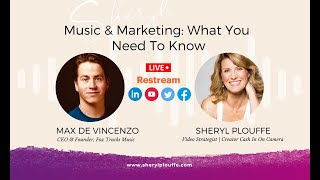
In this interview, host Sheryl Plouffe and music branding expert Max De Vincenzo discuss how music functions as a powerful tool for branding and marketing. They explore why music evokes strong emotions, using examples from TV commercials and the Cola Wars, and explain how music serves as a bridge between visual content and audience feeling. Max contrasts custom‑made music with stock or royalty‑free tracks, likening the latter to generic stock photos that fail to reinforce personal brand identity. They examine how a creator’s personal music preferences—illustrated by Sheryl’s love for Prince—can inform custom sound design that both reflects the host and resonates with listeners. The conversation highlights overlooked opportunities for music in video content, website landing pages, smart‑speaker ads, and podcasts. They also discuss the concept of audio stingers or sonic branding, citing Gary Vaynerchuk and MasterCard as examples of instantly recognizable short sounds. Max outlines common pitfalls when creators DIY their music, such as choosing generic stock tracks that don’t align with brand personality. He then details Fox Tracks Music’s custom music process, from brand‑personality interviews to delivering three demo tracks, and emphasizes that all compositions feature live studio musicians rather than purely programmed MIDI. Finally, Max shares a marketing tip: get personal by putting your face and voice into the brand to build authentic connections. The interview concludes with a call‑to‑action for listeners to schedule a consultation via foxtracksmusic.com/cioc.
Chapters
tool to help you in your business. And today we're going to talk about music and marketing, what you need to know about how you can utilize this tool. So Max De Vincenzo is here with us today to talk about music, and, and it's such an interesting topic because I think it's often overlooked, maybe underutilized. So tell us a little bit, Max, about your viewpoint on music in general in marketing and how you kind of see this as a tool that people could be using more?
Yeah, absolutely. So we were talking a little bit before we started recording, but I kind of see music as a cool tool for branding and for marketing as well. The way I look at those two things is marketing is getting your message to somebody. It's telling somebody, hey, my product is over here. And then branding is everything else in the experience. So if I am going to a coffee shop, I just saw a sign for it and I'm going to drive over there, the branding A piece of that is everything from the outside of the shop to the, the coffee cups themselves, the people who are hanging out in the coffee shop. And so the music component gets tied into that because music is something that can create an emotional connection for people. So the same way that you get an emotional connection to the coffee shop, music can create an emotional connection for anybody to listen to your podcast or, um, perusing your website or watching any video content that you put out.
So is— I mean, you're right, music definitely evokes some type of emotion within us. And just look at TV commercials, right? Any kind of, you know, TV commercials. My husband and I often comment, we'll see a TV commercial and the music that they've chosen for the commercial hearkens back to an era that we like, the '80s for example, or the '70s, and it makes you feel some kind of way. And now you have a different maybe affinity for that brand because it has tugged on your heartstrings without you even really knowing it. Exactly. I want to just unpack that a little bit. Why does it work so well for us emotionally?
Oh man, that is such a good question. And it's really funny you're bringing this up. We were watching a documentary on the cola wars yesterday, you know, Pepsi versus Coca-Cola in the '90s. And their ads were so good. They were so intense and they were so good at creating really intense brand image that was Pepsi is cooler than Coca-Cola. Right. And so when you are doing those kind of commercials, what's really important is how the audience is relating to you and your product. And so that's all branding. And the way that music comes into play is that music is the bridge between what you're watching and what you're feeling. And that's how they use it in films. And you mentioned TV commercials. And film composers and film directors are experts at that. You're watching a movie and maybe the scene is foreshadowing a little bit, there's a piece of music for that. Maybe the scene is supposed to be really happy, there's a piece of music for that, that you kind of undeniably feel something when you listen to it. And so it's kind of just a potent emotion that you can put into your digital marketing.
So I guess that music—
Videos, podcasts, anything.
I guess that we then as human beings are just wired to viscerally react or have some type of, of feeling about music without us even really knowing it. Maybe it has something to do with just the way that our brains are wired. But what you do now is you're creating custom music for people, whether it be for their brands and especially for their podcasts. Obviously you're here on Cash In On Camera. This is a podcast that is done as a video and then also in an audio format. We do use a little bit of music on the audio side, but it isn't customized, admittedly. What is the advantage of having customized music versus music that's available or like royalty-free type music?
Yeah, that's a great question. Um, I compare it to stock photos. In kind of sort of the same category there. You can get away with using stock photos. They will kind of describe what you're going for, but they do nothing for you in terms of your personal brand. And we know that what we're doing is very personal, especially if we're on video or if we're talking, you know, people listen to our voice, it becomes part of our personal brand. You know, people listen to that. And so if you can, what you want to do is use music that also reflects you and your personal brand. Something that ties into who you are as a person, your mission, and what kinds of emotions you want people to feel when they're listening to your podcast. So stock music is checking the box. It's, oh, I'm filling this blank. I'm putting a picture here, you know, I'm putting a stock photo here, but it isn't really doing anything for your brand and especially not doing anything for what people feel when they're listening to your podcast or engaging with your brand. And that's everything that goes into branding is what is the association? What do I want people to feel? So custom music allows you to say, oh, I want people to feel excited when the episode starts and then maybe a little bit melancholy when it ends, right? There's these cues that you can get into and they do the same thing in TV shows and in films. And so it's just a really cool tool to utilize in your podcast as well. So it's more personal to answer your question.
More personal. Yeah, that's a great way of explaining it. And it's no surprise to people who know me and I know you're new to me and you don't know me too, too well yet, but we're getting to know each other. The thing you have to know about me is I'm a huge Prince fan, unapologetically huge Prince fan, okay? And so part— I feel, um, an affinity to his music for lots of, again, emotional reasons. I feel like he has had— he's like the soundtrack of my life in many ways. So I don't admittedly use any music right now on the podcast from the video side of things, and maybe there's an opportunity for me to do that. I'd love to get your opinion on on that. Would I— because I'm a big Prince fan— would I want to gravitate toward, say, Prince-sounding music just because I personally have a connection to it and it means something to me? Or is it better for me to have a different kind of music because it's again meant to be a branding element? Maybe it has nothing to do with Prince and doesn't sound anything like—
sure, sure, that's such a great question. Um, So I think that there's two approaches to this. You can kind of approach it from the viewpoint of what do I want my patrons to feel when they're listening to music? Do I want to create music that is for them or do I want to create music that represents me? Ideally, the person that you're attracting for your podcast is there because they like you, right? And so to answer your question, you would want to do music that is based on Prince. Because even just you saying that, saying like, oh, I'm a Prince fan, immediately I have a little bit of information about who you are, what you like, what makes you tick, and now I have a connection. So I think that's the most important thing in marketing is just these personal connections, because there are a million people out there, million different businesses, and people still go through referrals because they want to know that they can trust the person that they're getting in touch with. So they'll ask a friend and The friend will say, oh, you're gonna want to go to this person. And as soon as they have that trust point, that connection, they go to that person rather than scouring the internet and searching for different things. And everybody comes up, it's like you have to have something that makes you stand out and best showcases who you are and the good parts of you so that you can attract the right audience. So yeah, if I were to do music for your podcast, I think I would start with Prince.
Sold. Yep. I love that. It's wonderful. So, What are some missed opportunities when it comes to music? Maybe again, we've talked mostly through the lens here of podcasts, but obviously there are lots of different assets in marketing and branding that entrepreneurs could be creating. What are some big missed opportunities where music could play into it that are just being overlooked?
Yeah, two big ones came to mind. The first one is any kind of video content. You know, because half of all video is the audio. So there's tons of opportunities there, you know, Instagram posts, YouTube advertising, any of that stuff. And then the other thing that I'm really curious about is using music on websites. And I've heard of people putting music in their landing page, right when the person is about to hit that purchase button or that buy button, and it's, and it's just filled with confidence and swagger and all these really good feelings that you want the person to feel. When they're about to commit to whatever program or product that you're selling. So I think that's another really cool missed opportunity. Plus, you know, we have an Amazon Echo in our house that listens to everything probably, but is always talking to us. And that's an object that is 100% audio. And I'm sure that there are going to be opportunities down the road for advertising to come up on these, you know, home speakers. And again, podcasts, you know, because they're just 100% audio. So lots of different opportunities there.
I'm not sure if you're familiar with Gary Vaynerchuk. Do you know him?
Yeah, I know the name.
So he does this thing where nearly all of his videos have a little ding. Like a little— I don't know what the technical sound is for that. You know Gary Vee?
Yeah, of course.
And it's like that little sound at the start. There's probably a technical name in the music world about what that's called. But What about using that kind of a thing, right? Just that, that sound, it takes less than a second. I think it's very, very short, but it's an audible branding element that as soon as I hear it, I know it's Gary Vee. I can just associate myself. I associate him with that sound.
Right, right. MasterCard does it. You know, they have audio branding for when you go to the register and you tap your card. Has a specific sound. It's like, oh, that's the MasterCard sound. It's a cue, or they call them stingers in film industry, TV industry, but it's just a very quick sound. And at the psychology level of it, it's kind of Pavlovian, it's programming a little bit, but at a more pleasant level, it's just branding, it's association. So, oh, I'm doing this thing and I want the person to feel something good. I'm gonna give them a cue that says, hey, you just did something really good, or you're watching a Gary Vee video, bing, you know, and it just gives them an associative memory with Gary Vee. Gary Vee equals the sound. So every time that sound comes up, immediately the entire brand world of Gary Vee gets scooped up into that sound and you're there immediately.
Yeah, it's so true. Every time I hear it, I just know that It's him and it's very recognizable. And I think that would be maybe again, a huge opportunity for us all collectively to think about music in a different way as far as our marketing is concerned, or as you put it earlier, and maybe I'll have to retitle this video and this podcast episode now, cuz we called it Music and Marketing. But what I'm getting from you from this conversation is it's really about music and branding. And that, that's really where the connection is. What are some, what are some mistakes that could be made with music if people are doing it again, they, they're trying to go on their own and they're doing it without any kind of professional advice or strategy like the one that you provide and the services you provide. But if they're on their own and they're making some mistakes, what are some common mistakes that you see with music?
Oh, I just So many times I see people scouring the stock music sites and finding something that's close enough and then going with it. And you know, it just ends up leaving them with a bad taste in their mouth when they're listening to their podcast or editing their own podcast. So of course my advice would be to come to somebody like me and find some custom music, something that feels authentic to you. But if you're going to go a different route, I would just say find something that actually resonates with you and spend, you know, if it's possible to find it, spend a little bit extra time and find something that isn't just checking the box because it really is trying to find a photo of yourself in a list of stock photos though, right? So it's in some ways impossible to find the exact right thing. Yeah, I think that's the best advice I can give.
I love it. I love it. So tell us a little bit about the work that you do at Fox Tracks Music. Tell us a little bit about the services and things that you're doing there to help people with the custom music branding.
Yeah, so we do all kinds of custom music. Last year we actually did the theme for a SiriusXM podcast, which was very fun, very exciting. It was about Comic-Con and the history of Comic-Con San Diego. So it's, it's all kinds of custom music and branded music, and so The kind of the way the process works is we will interview a person looking for custom music, um, find out about what they're looking for, what kind of sound, who they are, their personality, um, and then into some of the more viscous emotional questions, you know, like what, what color is your brand, what animal does your brand feel like, um, and then from there we'll create 3 demo tracks and send them over and the client is able to listen to those 3 tracks and just very visceral response, like, oh, which one of those resonates best with me? Using kind of similar sound palette or different sonic textures, sound textures that the person gives us inspiration for, they get to choose one of those three and then we go from there. And the other cool thing about Fox Tracks, I just want to mention, is that we have a network of studio musicians. So all the music that we do has actual human beings on it. You know, there's actually somebody playing the drums, actually somebody playing the bass, somebody playing guitar. And that's something that you can't really get with stock music or programmed music, as it's called, or MIDI music. So that's part of the process. That's what it looks like.
I love that. And what I think is so interesting is having an award-winning music producer like yourself, you know, who's actually bridging the gap between the actual music itself and then again, how we're utilizing it for business. Purposes, branding and marketing. And, and that's a real specialized, I think, thing because, you know, you really have to know what you're doing in order for it to, to, to really resonate with what that business owner is trying to do. You actually created— and I just want to commend you on this— you created a special page for our Cashing on Camera audience.
Oh, it was no thing.
Yes, tell me about that.
Oh, so, um, for anybody listening to this podcast, if they would like to learn a little bit more about how they could improve their podcast audio, whether that's the recording side of things or looking at the possibility of custom music for it, you can go to this link and schedule a call with me. The link is foxtracksmusic.com/cioc, as in cash in on camera. So foxtracksmusic.com/cioc.
Max, this is so great. Thank you so much. I really appreciate you, uh, doing that. And the last thing I want to ask you is, and it is along the lines of being a Prince fan, we want to encourage our audience of viewers and listeners to stop marketing like it's 1999. So what is a tip, tool, tactic, or technique that's helping you to market yourself or Foxtrot's music right now?
Yeah, the one thing that I would give to people is to get personal. Get personal. You know, market in a way that you can actually connect with the person that you're going to be working with. You know, get your face there, get your voice there, actually make a connection with the person. Um, and that will bring you lots of success finding clients that you relate to and that you actually want to interact with and work with. And that's the goal.
That is the goal. Max, thank you so much for coming on. This has been fantastic. I think you've given us a lot of food for thought around music and marketing, but even more importantly, music and branding, which is the lesson that I learned from this episode. So really appreciate you coming on the show today. Thanks so much for your insights.
Thank you so much for having me.
I
More from Sheryl



From 'agreeable' to 'ruthless mentor' to 'strategic sparring partner' #substack #shorts







