The Key to Building a Legendary Brand with Amber Griffiths
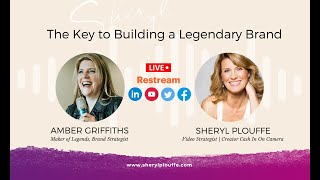
Branding expert Amber Griffiths says the singular key to a legendary brand is delivering an unforgettable experience that makes people feel something unique. She emphasizes evolving your ideal client as your business grows and warns that clinging to a stale audience can kill a brand. A wealth mindset amplifies impact.
Chapters
As you grow your business, you want to carve out a place for yourself with your brand in the marketplace. And one of the places that you might want to go with your business is to be seen as really a kind of a legend in your brand and a legend in your industry. And so today we have Amber Griffiths with us, and she's going to help us all better understand how we can become really a legend using our brand and how we can get ourselves out there to grow our businesses. So great to have you here, Amber. I love the work that you do. You've been at this for, I think, over 20 years. How did this all begin for you? What's your journey to getting to the point today where you are the maker of legends?
Oh my goodness. First of all, Cheryl, thank you so much. I am just thrilled to be here. This, obviously, this topic lights me up like nobody's business. From being— I thought for sure I was going to be an English professor, and then I was going to be a pharmacist. And then I realized that I don't like those things. I like people. I like stories. I want to hear all about where, where you've been and where you want to go. And so I jumped into marketing and branding, and that's where I got my degrees. And after being in corporate for so long, I kept thinking, oh my goodness, there's more. There's— I mean, it was a real estate company. It was huge, and it was fun. It was great, but it wasn't It wasn't enough. There's this— and I know every entrepreneur has heard this voice of, there's more, there's more, go get it, there's more. And so that's what I did. I finally jumped. I said, this is where I really want to be. This is what I need to do. And the further along in my career that I have gone, the more I've been speaking around the world and meeting all these different people and cultures and hearing those stories. There are so many people who are creating something greater than themselves.. And sometimes that's a huge social movement. Sometimes it's, I want to create, you know, financial legacy. I want to make sure that my family's better off than I was. Whatever that is, that is legend. And to be able to get out there and share your message and share your voice the way you want to do it, it's imperative. The world is craving that. So that's what I get to do every day. And I just, I love it. I just love it.
What is your philosophy around abundance and wealth and how does that pertain to the building of a brand? Because I think sometimes we have people that I know this morning even I was talking to someone within my own group who struggled with that in the past. She's since done a lot of mindset work on herself but had this belief in the past that in order to stay in integrity with her faith-based business, for example, that abundance and making money didn't have a place in there. And she has had to do that work to really get to that place where she understood that, no, I can actually make more of an impact on people if I am abundant, if I do make money, and that it's okay to do that. I deserve to do that. So I'd love to just dive into that as it pertains to branding. Do you run into people or situations where people have that, that conundrum or that belief that they don't deserve to do that and make money?
Oh, absolutely. Even those who are running for-profit businesses are like, well, but I shouldn't charge that high. I shouldn't. I have enough to make, to put food on my table. I shouldn't raise my prices. And there's a couple different things that I maintain forever. And one is that good people do great things with money. I mean, like, amazing things with money. So Go out there and do it. Make the money, let it— and your people get to invest in you. If everything is free, if everything is $5, nothing wrong with a $5 item, but if you don't assign a certain value to it, that's not necessarily just about your revenue. That is what they get to invest in themselves. That's their own pride, that's their own lifestyle, that's what they are creating for themselves. As for competition and creating that kind of a thing, um, when I was 16, I I had this t-shirt that I thought was very funny, and it said, "I am not afraid of the competition, I just don't see any." And I thought, "Haha, I'm so snarky, isn't that great?" I didn't realize it was going to become my lifelong mantra. And yet, especially when you are super clear about who you are and who you serve and the way you do it, when your brand reflects that, there isn't competition. You can get up and say the exact same words as someone else, in front of the exact same audience. And your presence, your energy, who you really are at the core makes it a completely different experience for the audience. There's no competition when you can be who you really are.
I think there's definitely a place for that level of authenticity in how you show up in the world and how you present your offers and you do your marketing and even your sales. I mean, I think there's always ways to inject yourself in that. But you hinted at something I think very paramount in the development of your brand. And that is understanding who it is you want to serve.
Right.
This is foundational and is often overlooked, missed, or people just didn't— don't do the work or they don't get it. And then all of the subsequent things that they do, the speaking engagements and all these things, don't land as well as they could had they taken a step back and asked themselves, who is it that I want to serve? I'd love for you to share with us the importance of really better understanding who it is that we serve and how granular do we need to be?
Oh, wow. I love this conversation. Oh my goodness. I, I think you're absolutely right. It's incredibly common whether you are new or you've been doing this for 20, 30 years to get to the point where you're like, no, but really everyone could use this. Everyone can benefit from my service or my product. And I tell you this, probably, maybe doesn't make them your ideal audience, doesn't make them your ideal client. Ideal— a valid credit card does not make them your ideal audience. It's definitely a requirement, but that doesn't mean it's going to be the, the best benefit for you and for them. Because again, that same message coming from two different people lands differently. It's going to resonate differently. So when you talk about an ideal client, I'm not a huge fan of get the picture out of the magazine and put it up on, on your computer so you can see it. I mean, I remember being taught that 20 years ago. I know that's part of it. But I like to dive in a little different than the demographics of that. It's female and it's 35 to 65 and those kinds of things. I get into a little bit of the psychographics, what drives them, what excites them, what are they doing. And then I really like to dive into the legend graphics. What are they creating? Where are they in their business and what do they actually need? What is that piece that they are missing that you precisely fill? And that— so it's not when you say granular, I don't need people named Heidi, but I want those people who are so excited about what they're doing, they will move heaven and earth to make sure that message gets out there. That's my ideal client. That's one thing about my ideal client. I don't want to have to be excited for them because what happens is I am more excited than they are, and then it's not fun for me anymore. And within my business, it has to bring me joy and money, or I'm not doing it. So I can be happy for you and I'm going to be excited for you. We are going to roll up our sleeves and do this together. You get to be that excited. So think about your perfect, like, if you had to spend 10 hours in a day with this person, what lights them up? What kind of food do they like? What kind of music do they like? What is going to, what is in their way from getting them where they say they want to be? That's, that's the kind of granular identification I would say, whether that's a one-on-one client or a full audience of people. Group, it doesn't matter. Get that specific about what they need.
Sometimes when people are starting their businesses, they are on a journey, they're on a path, and we have to start somewhere. Maybe they do that work, maybe they get a clear understanding of who that avatar or that ICA is starting out, but then they decide later on, or they discover actually It was a great place to start, but I'm seeing now after having worked with this group of people that this isn't the ideal client for me anymore. Maybe after a certain period of time, or they've worked with them and they don't really feel it anymore. At what point can we pivot? And how dangerous is it to pivot the actual client that you wanna serve when you're building a brand?
It is more dangerous to sit with what you chose than it is to change. It just— it— that is the easiest way to run your business right into the ground, whether that's because of lack of cash flow or your 'I want this so badly it hurts' dies, whatever that is. I am all about changing and growing, and your brand gets to change with you. Of course your ideal client is going to change. I mean, think of where you were 5 years ago. The person that you love to work with and that totally lit you up. I really hope for each one of you that you have moved beyond that. And it's not a judgment, it's just, this was perfect for where I was, and now I am here, and I will collect people here, and I will create change here. I mean, when I first left corporate, I had been working in this very man-driven world, and I thought, I know I'm gonna have my logos gonna be straight lines and dark blues and grays, and I just want to work with men because girls can be so catty, blah blah blah. And then that worked for about 6 months. And then I went, oh my word, I just miss my girls. Where are my women? The people that I really want to work with. And if you look at my logo now, it looks nothing like corporate, cold, you know, very blue, professional. Yeah, no. So I, I really do, especially as you are growing your business and you're changing what you're offering, you're changing the things that excite you. Let those ideal clients change with you. Let them grow with you. It's how business works.
You talk about brand being a living entity. Can you explain what that means?
I would love to. I would love to. Your brand is not your logo font colors, and I know a lot of people, that's, that's very foundational. It's fundamental. You have to have those chosen, but your brand is not something that you get done. And put in a box and put a bow on it and put on the shelf and hope like crazy it still fits next year. Your brand, because your brand also includes who you are and who your audience is and how you serve them and what you do for them, and it includes all the aspects of the relationships you have with your money, your content, your people, your time— those things shift. They get to grow. Your vocabulary changes. The things that I would have talked about in the '90s I don't get to talk about that same way. They don't make sense to people now. So let all of that grow with you. That's the greatest thing is the only thing you can do wrong when you're doing your brand is to do it according to somebody else's stuff, is to not do it your way, not do it the way that lights you up and brings in your ideal client and creates the lifestyle and the life that you want to have. So if you, if you put it in a suffocating box, that's exactly how it's going to come through. It's going to sound generic. It's going to sound vague and sterile and not like you at all. But if you allow that to breathe and say, wow, I know this is how I talked about this 6 months ago. When your brand is aligned with your core values, those don't shift on a dime. Those are the things that, like, my value of this, my value of humor is different, shows up differently now than it did 30 years ago when I was 18. It's just different. My value hasn't changed, but the reflection of it has. And that's how your brand gets to live and breathe with you. And when you are speaking to one person or a million, when you can let all of that come up and show up for you, they just want to breathe that in. They're just like, I just love it, whatever it is you're saying. I feel good. This is transformative. This is awesome. So it really is not a static thing.
Amber, I see a lot of people who are online, let's say early stages, and they are creating content. Maybe they're going live on Facebook. I don't know, they're speaking. And sometimes I see people who are really kind of airing their laundry out publicly, and you get this sort of sense that this is a therapy session for them. You know what I'm—
you're smiling, so you know what I'm talking about right now.
How dangerous is that for people that are building a brand that's really going to stand the test of time?
You know, I am all about sharing who you are and being vulnerable and raw and completely like beyond authentic. It's how people feel seen is when you allow them to see who you are. Usually when I'm, when I'm speaking to clients, when I'm talking to people, I'm all about stories. But you have to ask yourself why you are sharing that story, because if it's still so raw that you are just going to go out and bleed all over the audience or bleed all over your potential client, they are not going to hire you. They do not want to rebook you. They want to get a blanket and make sure you're okay and get you a therapist. It completely defeats the purpose. So if you're showing up saying, this is how terrible this is and this is how horrible this is, your ideal client's going to go not so much, wow, she doesn't know her stuff, but a, I can't have that kind of energy around me. I'm growing. I want to get going and do big things. To have someone who is stuck in the minutia and wants that to define how they're showing up, it's not attractive to anybody who is still growing. So ask yourself why you're sharing this. Do you just need to complain? Awesome. It's a different Facebook thing. Get it off your business page. Get it off your stuff. Find a therapist, call your mother, whatever that is. Get that person that will bring you tater tots and y'all can just cry about it. That's what you do with that kind of thing. But to show who you really are because it reflects your values and because you know it will move your audience, That's different. That's key. Yeah.
And there's a certain way to do that. That is a fine line. And we see a lot of people who are oversharing. There's a commercial, I can't remember what the product is right now, where she says, you're oversharing.
Yes. And that's exactly what it is.
Sometimes a little bit too much. You need to pull back a little bit.
Right.
But I think that's indicative of the fact that people don't necessarily have a strategy or they don't know the key to building the brand, right? So I want to give you the opportunity here to share with us what is the key, because the title of this episode is The Singular Key. What is that one thing, Amber, that we ought to really understand as we're building our brand and becoming a legend?
The key is delivering the experience. Period. If you have great content, I'm so happy for you. And if that's all you have, your people can go Google that, right? There's no reason for them to hire you. There's no reason for them to book you on their stage, get you on their podcast, none of that. What you— how you show up and make them feel, what they remember, that's what makes you unforgettable. That's what separates you. You and the experience they have with you is the main differentiator. So that's what I would say with everything else that goes into that, that unique, marvelous, fabulous experience that you deliver for your people. That is the key to a legend brand.
And that's a great place to keep it because this has been fantastic. I love the tips that you've shared with us today. It is so much about experiences. It's that feeling that you give people. And through your behaviors and through how you set things up and how you position things, those can all have impact on the experience that you give people. It could even be through your content that you give people an experience. But at the end of the day, it isn't about the content per se. What I'm hearing you say is it's about the experience that you lead people to having with you. And that could be through different modalities and different types of media, or it could be in person, online, on a phone, on a Zoom, who knows. At an event, whatever that is.
Precisely.
Those touch points are really, really paramount. And I think that's a great tip to leave. Amber, what is something that is helping you to market yourself, market your company that's really working, that's dialed in, and that's really working for you today?
I would say that one of the things that most people miss is they forget when they're showing up, if that's on a podcast, a stage, on social media, they don't put enough, if any, very focused attention on their persona, on how they are being seen, on how they wanna show up. So even if they are, I think I kinda wanna be the expert, maybe I'm the guru, and we're all very fluid, there's like 10 different archetypes or personas that can show up, and we are very fluid in them. But without being very intentional about making sure that we are showing up in absolute alignment with who we are at the core, knowing what our audience needs and being able to leverage that, that is the key between I'm on a lot of stuff and I do a lot of stuff and I do all the things and I'm creating a massive change in the world. I'm creating a profitable business that I can impact so many more people. So really take a minute and just figure out who you are, figure out who you wanna be, how you wanna show up. If you're the best friend where it's nice and warm and fuzzy, and then you shift into the education where it's like, no, really, here's what you've got to go do, and I will love you, but you've got to go do the stuff. So decide how you want to be seen and focus on that so that you can intentionally leverage that.
Fantastic. Where do you want to leave people or lead people to, to learn more about the work that you do?
You can come see me at the Welcome to Legend. It's the speakers, coaches, and influencers for Profit and Impact community. It is so magnificent. The people in here are just amazing, and it's tons of tips and conversations and opportunities, and I would just love to see each one of you there.
Fantastic. On Facebook. Thank you so much, Amber. This has been great. Love that you came on and shared this tip, but I'm really going to— I think that this piece around experience is the thing that really can help move the needle for so many people today. So we really appreciate you being on the show. Thank you.
My pleasure. Thank you so much.
And for those of you who are watching Cash In On Camera right now on video, you can connect with me by taking a picture of the QR code on your screen. That will bring you to my signature card, and on that I keep up to date all the speaking engagements that I have, the resources that I make available, all All of my social platforms are linked there as well. So if you are listening to the show right now on the audio podcast, you can find me on social media @SherylPlouffe. And that same signature card is linked in the bio so you can find out where I'm at and what resources are available to help you scale your business. Thank you so much for being here today and being part of Cash In On Camera. Share this with someone in your network to help us get the word out about how people can really scale their businesses with proper marketing strategies for the year that we live in. Thank you so much for being here, and I'll see you in the next episode.
More from Sheryl



From 'agreeable' to 'ruthless mentor' to 'strategic sparring partner' #substack #shorts







