TV Tips For Markerting Videos
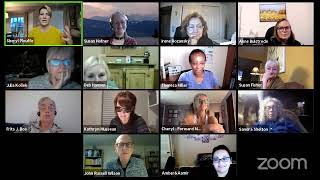
Sheryl Plouffe walks through YouTube channel basics for marketers: why it matters for brand visibility, the non-negotiable commitment to weekly uploads, and the skills you need (editing, captions, music licensing). She covers monetization paths from YouTube Partner Program to Patreon and speaking gigs, and warns that perfectionism kills channels faster than bad production.
Chapters
get this party started, as they say. Um, preparing to livestream the meeting. Okay, it's taking a little longer than it normally does. I'm using Restream today to share this Zoom meeting out to Facebook page— or sorry, Facebook group, LinkedIn, Periscope, YouTube all at the same time. I'm just waiting to see if it's gonna take here. If it doesn't, then I'll just share it over to Facebook.
Yeah, I just got a message saying you've gone live.
Okay, good. Okay, maybe we are already. Is it— it's just showing me on the screen that it says, um, I'm gonna trust that it's going live. So, um, Welcome, welcome to Cash In On Camera Live, our Wednesday weekly rendezvous, as they say. And every week at 3:00 PM Eastern time, we have this time together where we can talk about anything. Let's talk about YouTube. Let's talk about how to grow a YouTube channel. Before we get started on that topic, I would ask you to mute yourselves. You can unmute yourselves after and ask questions, by all means. If you're watching the replay on Facebook, Facebook, Periscope, LinkedIn, YouTube, welcome. I will come in the Zoom meeting proper, then you can post your questions in the chat. Susan has already posted a question here about recent changes to copyrighted— looks like copyrighted material. Thank you, Susan, for sharing that with me and sending it to me. But I can speak to the monetization question that you've asked. I'll lay out, you know, How to grow a channel. Why even bother? So why, why grow a YouTube channel? Before I give you why you should think about growing a YouTube channel and why you may want to screen and unmute yourselves, what are some thoughts that you have about why you would want to grow a YouTube? Who wants to go? Susan, unmute yourself. Uh, your videos, um, to, uh, expand expand your personal brand awareness to an audience that's larger than you could ever do in a YouTube. Like, your YouTubes have— Well, I don't know about a gazillion, but it's growing. You know, it's a bother. Julia? It does establish you as an expert, and I'm— and I think more and more people— what is your philosophy? What are your ideas? Really what, what it is is, like you said, expert positioning, and it's also thought leadership. It's, it's, are you a leader? Are you— why you'd want to grow a YouTube channel?
I have a thought, and you can tell me whether I'm right or not. People do Google searches for, come up pretty high in the algorithms.
Yeah.
And so there's that brand recognition, there's the possibility perhaps, but I'd say that's the lowest thing on the list. Uh, that's really late across multiple platforms because YouTube links can be put into different things that you send out instead of just the little boards that you might create.
Yeah.
There's a number of reasons.
There's a number of reasons. Yeah.
Links is a one, but it's taken off beyond our wildest dreams. So Kathleen and I are turning it into a business in its own right and We are now being approached by PR. So for us, it's a separate business to our other business activities.
Awesome. Thank you for sharing. Yes, yes, yes, yes, yes, yes. Those are all reasons to channel. And so this is the part where I'm going to kind of the— I don't want to be a Debbie Downer, but here's where I'm going to lay down the framework of this, right? To do all those things is awesome with a set of challenges, right? It comes with its own set of challenges. And that thing I see a lot, I'm going to talk to people, I've been talking to people for years, right? Whether it's, you know, on a Zoom call or on a phone call. And often I'll say, you know, oh, um, do you have a YouTube channel? And, and, but I haven't posted on it in forever, right? So they have a channel, but they haven't posted on it forever. And then I'll say, and I'll dig, you know, I'll be like, okay, so, you know, what's going— well, you know, I started a YouTube channel years ago and I had good intentions, but after about a month I fell off and never caught back up. Can anyone relate to that, either yourself or you know someone who started the channel and then it just kind of went dormant, right? We have great intention but it goes dormant for a variety of reasons. The number one reason that I hear is life gets in the way, right? And it does. Life totally gets in the way. So, so I hear that a lot where people have good intentions and, and they don't, um, they start the channel but then it doesn't kind of keep going. Part of the reason why is I think there may be a misconception that if you build it, they will come. I think there's also a misconception that you build a YouTube or you start a YouTube channel and you make, I don't know, 5 videos, you know, and that each of those first 5 videos on a channel should get, oh gosh, I mean, say other people doing it, so I should be able to get 50,000 views on that video, right? Because my topic's awesome, because I know my stuff and all that. And so, I think sometimes there's the unrealistic expectation expectations when it comes to YouTube channels in general. So, thing one to understand about growing a YouTube channel is that it is— and you've heard me say this before, this is not new— it is all about commitment, absolutely about commitment. And that means— and so let's just talk about what that really means. What does it mean to— it's— I could say, well, I'm committed. If I ask all of you, you're all committed, right? If I said Irene, you committed, right? Kath, Kath did, right? Luana, you're all, you're all committed to what you're— yes, but it's, are you committed when it's midnight the night before you're supposed to go and it isn't— that you don't have a video yet. That's when the commitment really hits home. It's like, oh, off the hook. It's exactly the same principle. You know, I think about the, the Go Live Challenges that we're starting with these, these live stream challenges that we're beginning. Hey, by the way, we're also accepting enrollment for the December Go Live Challenge. So if you're interested, I'll put the link again in the chat. But same kind of thing. Videos do not fall from the sky. And so it is all on you to be committed to the process. If you're doing the Go Live Challenge, it's saying I'm committed to doing my one video for one minute every day for 30 consecutive days. Listen, give yourself, you know, you can give yourself a little bit of grace, but it's all about that commitment. Like, you have to be— if you're going to commit to the YouTube channel, it's about saying, okay, I'm committed to doing this minimum once per week, minimum. It's— if you can go more than that, great. But there does— sometimes people say, okay, I'm gonna do a daily video on YouTube. It's really— that's hard to do. But you, you need to be at minimum once per week. And it's, it's in those moments when life happens, business happens, and are you still committed? So that ties into my second point, which is in order to stay committed and to be able to make it happen no matter what, no matter when life happens, when business happens, when unforeseen things happen, which is really the whole story of 2020, The second thing is you have to have the skills. You got— if, if you're going to do it yourself, I'm talking about this from the perspective of a DIY, do it, you know, yourself type of perspective. Um, some people don't want to do it themselves, and they— some, some people hire us to make their videos for them every week, right? But if you're doing it DIY, then it's about getting the skills. I'm just going through my notes here. Getting the skills so that you can stay committed to what you said you were committed to, which is creating a weekly video. So what does that mean? What does having the skills mean? It means that if you're going to DIY it, you've got to know how to edit videos. You got to know how to edit videos. Uh, there are different ways, of course, to, to do that. Um, You know, I teach how to make videos on a smartphone. I teach how to make videos on a desktop, and there are various tools that I use and recommend for that. For those who are in my Cash In On YouTube beta program, right now we're doing a 12-week weekly training. I know some of you here are in that beta program right now. We're on week 10 of 12, I think, so we're just about to round it out. And you know that we've been going— it's been 12 weeks of hour-long sessions to go through all the stuff that's required from setting up the channel and understanding your value proposition, really, which is one of the other points that I want to make today. So getting committed minimum weekly, having the skills, editing, also having the skills to create some of the other elements that you may need in the production of those videos. So, for example, It could be that, you know, do you have music? Where are you going to get your music? You know, you can use the music library in YouTube. You could also, uh, get a license to something like Epidemic Sound, which is what I do. I like Epidemic Sound, something that I've invested in this year, and I love it because the music doesn't sound so elevator-ish, if that's a word. Um, and so do you have the, the, the elements that you need to assemble this video, including the recording, you know, your piece, on-camera piece. Maybe it's a screen capture, maybe you need to be recording your screen and you're marrying all those things together in your editing software. Are you adding music? What about images? What about B-roll? B-roll is the complementary video or photos that can be layered on top of your your main video, your A-roll, you put B-roll on top, which, which helps to support visually what it is that the person, the narrator, is saying. Do you have those images? Where are you getting those images? Um, or, or even video, you know, do you have— if you want to edit an end screen into your video for YouTube at the end, so that's the, the piece where you probably have seen these, where you watch a video on YouTube, it gets to the end. If you've watched mine, you see it at the very end, uh, within the last 20 seconds of a video, the graphic comes up and then there's like little squares or circles say subscribe to Cheryl here and here's the next videos to watch. And then a little— then I'm pushed up into the corner. So that all has to be edited into the production. So getting the skills, there are quite a few skills that you need to have in order to assemble all these pieces together. And then, like I said, the, the other thing is to understand, you know, your value proposition. How do you grow a YouTube channel? You have to know who you are and what you represent. It's interesting to me, sometimes— not sometimes, actually quite often— I will talk to people, and when we dig in a little bit deeper, come to recognize that there's not enough clarity about what industry they're even in. It's, it's, it's interesting to me sometimes. Like, I'll dig in a little bit and find out that that person— it's like, oh, so what do you do exactly? You know, so if that person can't express to me on a phone call or on a Zoom call who, who they are and what they do, you can imagine what kind of hodgepodge that YouTube channel will be. I'm not saying you have to have absolute 100% clarity, because I do believe you get— you, you become more clear through the process of creating video. But you have to have some idea, some baseline understanding of who you are and what you do. And a lot of people are missing that. So understanding your value proposition, why should people— why would people subscribe to your channel? And then the last part here is how do you grow a YouTube channel? It's It's, it's not only knowing how to speak about your topic, but speaking about your topic. It amazes me how many people don't speak about their business or speak about their topic. Shouldn't say speak about their business, speak about their topic. Speak about their topic. And, and by that I mean, are you speaking about your topic on your own channels or other people's channels? Are you going out and saying, you know, reaching out to people and saying, hey, listen, I know you have a live stream, um, I, I see you do Facebook Lives, I'd love to come on and talk about my topic to your audience? Like, are you speaking in general, speaking about your topic, you know? And, and I think that speaking, really, video is a form of speaking. It's just that you're speaking to an inanimate object, but at the foundation of it is speaking about your topic. So, for example, this live call that I'm doing right now with, you know, 19 of you on, so welcome and so glad that you're here live and maybe watching the broadcasts on other platforms as well. I'm speaking about my topic. This is an example, a real-life example of me bringing you together so I can speak about my topic. And it's through the process of speaking about what I love to do and what I'm passionate about, what I'm expert at, that helps me to develop that muscle so that when I go to create a video, I am not having to start from scratch. Like, I don't— it's— it very, very rarely do— am I really stuck for something to talk about. There's, there's more than enough to talk about in my, in my world. So, um, I'm just looking at the, at the questions in the chat. Um, and Susan, you had asked about the monetization, and I think Both Susans had mentioned monetization. I actually have a video on my channel that is how to monetize without 1,000 subscribers and 4,000 hours of watch time. So you can find that on my YouTube channel. Go and just, you know, you can, you can find it there and watch the whole, the whole thing. But, um, but being able to monetize your channel You know, you'd have to kind of really look at that and go, is, um, are you looking to monetize from YouTube? Like, being a partner program, you know, being part of the YouTube Partner Program means that you're getting paid by YouTube for them to run ads on your content. I've actually— it's interesting, I went back into my own analytics recently. Someone asked me, how much money have you made through YouTube paying you by just through the monetization of your actual videos? And I was like, I don't know. Okay, so I went back in and I've actually made over $10,000. Nice. So that's not bad, right? But, you know, is— but is that your— is that your model to grow your business? For me, it isn't. You know, it's, it's more about the other things we talked about earlier. The brand awareness, the expert positioning, Google search. Maura, that's a great point. When you have a YouTube channel, you're found in Google search. You're really essentially setting yourself up to, to gain tens of thousands of dollars of free traffic, which is amazing. Having the ability to then really— you're using video, YouTube as a host, a free host to get those links and be able to share them, your content with others is a great way as well. And also speaking opportunities. I get so many speaking opportunities from people finding me on YouTube, and that to me is super valuable. So, so all that to say that YouTube's awesome. Um, for those of you who have been partaking in my 6-month publishing plan that I've just recently shared, I actually want to show you something. Um, if I'm sharing this, I'll just show you. So this is the— if you don't yet have this, let me know and, and we can send it to you. But I— what I did was I created a 13-page, 6-month publishing plan. So this is like, if I lost everything and had to start over, this— these are the things that I would do and the order in which I would do it, the decisions and choices I would make. Um, on and on and on, different philosophies that I have and ideas around how to to do that and assets to create. But at the very end of it, I talk here about what is the timeline to follow. And when it comes to YouTube, for those of you who are questioning, you know, it's like, when's the right time? Should I be doing YouTube channel? Here's just my, my belief that in the world, this pandemic, post-pandemic, or now current pandemic, still ongoing, uh, world we live in, I like to see people going live for a period of time before they start embarking on YouTube channels and recorded videos and editing videos. If you're not 100% committed, right, you can do this in any order you want. But what I'm saying here in the 6-month publishing plan is, hmm, is it better to go live and do live, live, live, live, live for a good period of time to Note to people, speak about your topic, get some content out there, um, start really building that muscle, and then think about, okay, and then at some point you're going to say, okay, now I'm ready to not only just livestream, but I'm at ready to and willing now to add the recorded video in. The reason why I'm suggesting this as we move into 2021 is that, and to my point earlier, you have to have the skills and skills take time to gain and learn. It isn't something that you can necessarily— because you have to practice it. You've got to be committed. You've got to keep doing it. Like, I'm a self-taught editor myself, but it took me a— it took me time. It took effort and time to do that. And if you're feeling like, I don't have the time, then you should start with live and think about the YouTube stuff at a point when, okay, I've got the live stream stuff down. I'm able to create content without editing. Necessarily. Now I'm willing to start looking at this whole YouTube channel stuff and saying, okay, do I build upon the skills I've already learned? Okay, so let's get into some Q&A. I will, uh, also look in the chat here. So Susan, um, thank you for sending me that email. I will read through any developments that YouTube has sent out, so I appreciate that. I don't know if I was able to answer your question about the monetization, but I would say if you go to my channel, there is a YouTube video there. It said— it's called How Do You Monetize with Less Than 1,000 Subscribers and Less Than 4,000 Hours of Watch Time. That'll give you some sense of what my belief is around that. Um, YouTube's, uh, right to monetize— YouTube has the right to monetize all content on the platform, and ads may appear on videos from channels not in the YouTube Partner Program. Oh, interesting. Okay, yep. Well, listen, at the end of the day, it's their platform, so what can we say about it? Nothing. They, they have the keys to the castle, right? So no matter what, even if I disagreed with this, I, I can choose— what can I do about it? I could not have a YouTube channel, I guess, right? So, um, But yeah, that's interesting. I'm going to look into that. Another benefit for YouTube channel is providing encouragement to others on the same life path as ourselves. Absolutely. Yeah. Commitment. Nothing will get in the way of achieving our stated goal. Yeah, I agree. What's involved with being in the YouTube Partner Program? That video that I mentioned will answer that. So the requirements— there's no cost. It's more about you have to have a minimum of 1,000 subscribers to be eligible plus 4,000 hours of watch time on your channel in the last 12 months in order to be eligible for the partner program. Usually takes— once you reach that, that, uh, those requirements, it can take up to a month for them to grant you that feature so that you can start monetizing. Uh, yes, I would like the 6-month plan. Is this where we ask you for it? Sandra, if you can just send me an email or a text, I'll just— I'll send it to you. I'll send it to you because I think you're already on my general email list. If you're already on my list, I'll just send you the PDF and you can read through it. So get in touch. Um, Irene, yes, I'd like a copy. Irene, same thing, I thought I'd send it to you, but, but if you message me, I'll make sure you get it. Uh, Luana, okay, um Oh, I see a private message. I'll get back to you, Luana, about that. I'm interested in a copy. Fritz says that. Maura says this. Um, and then Julia, is there an optimum length for YouTube clip? No, you know, um, Julia, it is all about the com— the value you provide. Like, I have a video that's less than 2 minutes long that was picked up by the Daily Mail Online UK and included in some of their publications. And, um, The video is a minute 45, you know, and it has like, I don't even know, I haven't checked lately. Maybe think that in order to expand those, um, to reach the 4,000 hours of watch time, there sometimes they go, oh well, I'm just going to make my videos longer. You see what I'm saying? I don't really advise that because it's, it's people, yeah, okay, so you made your video longer and you filled it with a bunch of stuff that was redundant or went over the same points over and over again and 12 minutes long, but your retention's really going to be sucky. So what's, what's better? I think it's better just to say, hey, I'm going to create valuable content. It's going to take as long as it takes for me to share this, these things that I want to share, and be that as it may. Okay, captioning. Julia, yes, you know, captioning is a really, really key thing. On not even just a YouTube thing, I think it's increasingly becoming— it's always been valuable, it's been valuable for many years, but a lot of people consume content without the sound on. So having those captions is, is a key thing. And there are different ways, like on YouTube, on Facebook, when you upload content to those platforms, there are automatic closed captioning features on those channels that will do it for you. The problem is they're not perfect. They're not even close to perfect. So, you're going to have to go through with a fine-tooth comb and edit those automated, auto-generated captions unless you use a third-party service like Rev.com or Temi.com or something like that, which are 98% accurate. So there's different— actually, captioning may be a really good topic for another training, like just to really dig in specifically to captioning, because there's different ways to do it. Are you layering the subtitles on top, or are you actually embedding and burning those captions into the actual video file? Are some questions I, you know, would present there. Okay, any other questions? YouTube. Okay, Amber. Oh, sorry, Amber, I thought you saw you on mute. Okay, so no, no other questions about YouTube? Everybody's good? Okay, so I think at the end of the day, YouTube is very valuable. It can be really valuable so long as you are ready to be committed, uh, you are— in order to be committed, you have the skills. If you're in a place right now where you're going, okay, I don't know, like, 2021, where should I start? Like, if you're in that place where you're like, I don't know, like, should I start with a YouTube channel? Like, I don't know if I don't have the skills. This is where I would say, hmm, maybe the thing to do would be to start with let's just get up and get up and running and get some videos out there. And maybe that does not include editing and video production and all the skills that are required in order to do that. Maybe, I don't know, maybe, you know, if that's the case, you know, then you could be starting with live videos, getting your feet wet, getting out there and speaking more, getting that content up there and out there. Quicker and faster and then reevaluate the YouTube channel stuff with the commitment and the skills and the value proposition and the rest of it after you've gotten that content out there live. Do I see— show of hands on the screen, who— how would I ask this question? Show of hands on the screen, how many of you know you need more content online? I'm just kind of curious. Okay, so quite a few. And how many of you, show of hands on the screen, feel like editing will be a bottleneck for you? Some. Yeah, yeah. So if that's the case, then, you know, the live stuff, the live may be a good solution to just get going. Here's the problem we're going to run into in 2021. The problem we're going to run into is that COVID is not going anywhere yet. It like, you know, when it started, I kind of thought, okay, by fall, you know, things will be back to normal by fall. And it became very clear around summer, September, uh, that it was like, okay, that is not the case. And now we look at the numbers and where we're going. This is not— even though vaccines and we were hearing some good news, right? And that's good. But I think that we need to We all need collectively to be prepared that 2021 may be similar to where we're at now. So if that's the case, what is your plan to make content? If all of you have agreed, I need to have more content out there, because you know the value of creating content and getting it out there, then the question has to be, what is your plan to get it out there? Is it going to be learning how to edit, which you can totally do, right? You can do that. Or is it going to be to livestream, right, to get things going? If any of— if— okay, so let me just make sure I'm answering questions. Um, okay, so Susan, for future, do you use Camtasia for closed captioning? No. Um, can't— I did— I have used Camtasia to do closed captioning. In fact, Way back, I didn't know any better. I went in and I'd listen and then I'd type, and then I'd listen and then I'd type, and I'd listen, and that took hours, hours of time. No, you don't have to do it that way. So, but I do use Camtasia, and I think next week maybe closed captioning would be a good topic. We could talk about that. How many, show of hands on the screen, who'd like to do that next week? And talk about closed captioning. Okay, good number. Um, can you still add your live videos to your channel, or should you wait till you have it looking more professional? You mean adding these type of live videos to a YouTube channel, Julia? Is that what you mean? Can you unmute yourself and ask? Like, if I just started talking in my phone, for example, Okay, and would it be a good idea to add those to just get my YouTube channel started to fill, or should I wait till it looks more professional? Um, yeah, I, I have some live streams that are now on my YouTube channel, but I'm not sure that I would start there. I'm not sure I would start with— you, you could, I'm not— technically you can, but But what I'm suggesting is that I think it would be better to start the YouTube channel off with prerecorded content and then look at adding in the live concept later. You don't have to do it that you technically can do it. But I think from a— unless the only reason, the only way I would say yes, I think it would work is if you are really skilled at speaking about your topic and that you could produce your content live. As if it were live to tape. In other words, that you're creating the content and you're, you're, you're able to do production on the fly. That is really advanced. Most people would not be able to pull that off in the beginning stages. Yeah, so let's see. Um, perfectionism is the key gremlins for editing. Yes. Susan, no doubt. No problem, Peter. Thanks for being here. Don't you need to have a product or service package to offer to your YouTube audience, Doug? Isn't this the main purpose to attract viewers? Yeah, Doug, I think it's interesting because sometimes people say, well, I'm not— I have nothing to sell yet, so I'm not going to start making content. I would, I would say, you know, if you have a message to share, there's nothing stopping you from building your audience now based on the message that you're sharing, even though your product or service might not be finalized yet. Like, to my way of thinking, I think start your building your audience as soon as possible. Start building your audience as soon as possible around a value proposition around messaging. Like, it's like, what is the value of people listening to you and what kind of expertise can you share or advice that you can share with them, even if your product or service doesn't have the final, um, touches on it. So I think personally, I believe there's no time like the present. Like, you needed to start your building your audience like yesterday, you know. Um, so, so I think that that's the case there. Of course, if you want to make money and you're not relying on YouTube's partner program to make that money And you need to— then you're going to need your own products and services to sell, otherwise you will not be able to monetize, right? So that could be, you know, for example, I use Kajabi. I'm a big, big fan of Kajabi, but, you know, it allows you to create. And if you're interested, Doug, I do have a link that I could share with you. They do a 28-day free training, Kajabi does, that takes you through creating your first product. That to monetize, like to start monetizing. So if you're interested in that link, I can send it to you. But yes, um, you know, when you're really analyzing your monetization plan, then clearly, I mean, you can't monetize if you have nothing to sell. But, uh, but yes, the time to start building your audience was yesterday. Oh good, Maura, glad, glad you were here. Irene, uh, you've seen my 15-minute, um, parties for Arbonne? Yes. Could I and should I save and upload those on specific topics on YouTube? Yeah, Irene, I think you could. I think you could, so long as, again, you know, there's value to the audience and that it's not, you know, and I have seen it. I don't think it's a— I'm not saying it is a sales pitch, you know, a big pitch fest, you know, type of thing. But for anyone else who's watching on this platform or others, if you're watching on YouTube or LinkedIn or Facebook right now, and I am restreaming this using Restream.io, by the way, If you're watching on any of those channels, you know, don't make your content a pitch fest. You know, it has to be value-driven content. Can you have a call to action that drives people to either subscribe to your channel or like your page or maybe even buy something? Sure. Or join your list? Of course. But the essence of the videos, from the perspective of what I'm talking about today, this is content marketing. This is Marketing, you know, where you're creating content that's attracting an audience and you're building your know, like, and trust factor with them. So, Irene, it could be something too where maybe those 15-minute parties that you do, and if you do them on Facebook, if memory serves me, yes, you do them on Facebook. It could be a case where you download them and then you edit them. You only take out a little portion of it and take out the extraneous, like, you know, all that kind of stuff that goes on. And if there's like a teaching segment that you do in the party, then that teaching segment could be the essence of a video. But again, you have to edit, and you have to have the skill set to edit. So that's what I would do. Example, in fact, um, I might even have it up here. Let me share with you. So the video that I did— when did I do this? Um, is it here? Uh, here, you know. So this section here— oh, it might not show. Um, you know, there's a section in here that I took for this video that I made, and it was a section from a training, like just one little tiny section that I just edited down and made a YouTube video from it, but I have the skills. So again, you know, that's where— that's, that's where that lies. Um, okay, Cheryl, I will give you the— I'll send you the link, um, because, um, it's actually— okay, so Cheryl, um, Doug. Okay, um, let's see here. Another future subtopic for monetizing: Patreon. Yes, and other tools like it. I see this frequently on YouTube videos. Yeah, Patreon. I don't use it, but I know of it. And then, um, Irene, I use Camtasia for desktop editing, and then I use a variety of different, uh, video editing apps on my phone like InShot or VideoShop. I also like Mojo, which I don't tend to use a lot, but I think it's a cool tool if I'm doing it on my phone. Okay, great, great questions. Oh, lots of questions. Great. So the thing I will leave you with today, and I am just going to go back to the top here, is I will let you know, and this is, this is for anyone who has already done a challenge with me and hasn't done all 30 days. And you know who you are. And it is OK because you can redo the challenge. OK. The enrollment for the December Go Live Challenge is up. So if you are interested and are you like, I need to do this and they need to do it now. Join us in the December Challenge. The link is in the chat. It's $17, so very affordable. Join us, and what we do is we give you prompts every day by email. I'm also adding another layer into it. I just discovered this morning, I got so excited, I'm able to also send you text messages every day of the challenge. So you're going to get the— you're going to get— yeah, you're going to get some reminders from me through the throughout the 30 days, okay? All right? You're gonna, and you're gonna like it. You're gonna like it. You're gonna get them on email. You're gonna get them on text. And for 30 days of indoctrination and going live, going live, going live for 30 days. Trust me when I say, if you do this, it could transform your mentality around content, around video. And I feel very strongly that this is going to be the way to get most of you to start doing your videos. Katherine, you've done it. Susan is— I think Susan's still here. You've done it. Who else has done it? Cheryl. Cheryl, I think you did. You did. It's okay. You did some of them. You should do it again. Like, listen, this is kind of the whole point of it being a challenge. It is challenging. So if you didn't do them, it's okay. Dust yourself off and be like, okay, I'm going to try it again. But join us again. You should do it again. Amber, same thing, right? You guys are smiling. I am glad you have a smile on your face, but do it again. You know, there is no harm. Do it again and just get back up on the horse and keep going. Just keep pushing. We would love to have you in the next one. OK. Ann says she just finished a 14-day challenge. Awesome. And it was great. Made you work. Yeah, it is a momentum builder. And then the other thing I will say just to end today's call, we're going a little late here, but if we also have an 8-week coaching program starting on December 3rd. Some of you, Catherine, I know you're in, Cheryl, you're in as well. So excited to be working with you in December and January. I can't remember who all now because I can't see everybody on the screen, but if you're interested in joining, we have— I don't even know, maybe Otrisa's joining us as well. I think we have maybe 6 people so far who are joining us for the 8-week coaching program. And if you're interested in that, just send me a message. We'd want— I'd want to get on a call and just see if it's the right fit for you based on your goals and kind of where you're going in 2021. So we would set that up on Zoom or something like that, quick 15-minute call just to give you the lowdown on that. So if you're interested, just message me and we can make that happen. But other than that, I hope you have a great rest of your day. Thank you so much. Listen, you know, YouTube is very powerful, but just understand, don't start just making it— make— don't— there's no point in making a channel if you're not ready to commit, if you don't have the skills yet and you don't have the time to put into it to make it happen. The last thing I want you to do is start a channel and then go dormant, because that doesn't do you any good. Okay, so maybe it's worth looking at another way around and say, Maybe I need to start with live and then I'll graduate to getting to the edited stuff later. You're very welcome. Thank you so much for joining me today. Next week, let's talk about captioning. Yes? Yes? Is everybody yes? Okay, cool. We will do that. We will do that. We will do captioning next week. Thank you so much for being here. And if you know anyone in your network who should be at this training, please let them know and they can register and we'd love to see them here. Bye now. Cheers.
More from Sheryl



From 'agreeable' to 'ruthless mentor' to 'strategic sparring partner' #substack #shorts







