EP 8 - ICF Coaching Credential Levels: ACC, PCC, MCC 🏆
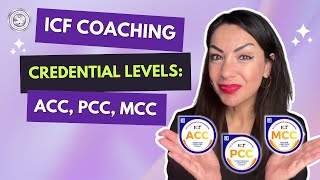
Dr. Shiny Unsal breaks down the three ICF coaching credentials: ACC, PCC, and MCC. Each level requires more education hours, mentor-coaching, and paid client experience. She advises against the portfolio application path and highlights how the Academy of Neuroshine Technology supports coaches through the credentialing process.
Chapters
Welcome to the Shiny Minds Show with Dr Shiny, where science meets spirituality. And today we are going to talk about the ICF coaching credential levels: ACC, PCC, and MCC. If you're ready, let's begin. Are you ready to shine? Come on, it's the shiny one. You got this. As an ICF Master Storyteller 5 coach, and actually a coach educator winning a prestigious award like the ICF's Impact Awards as a distinguished coach educator, I get this question a lot. Shiny, what are those letters? ACC, PCC, MCC, what are they? Why do I need that? If I am a coach, why should I care about those letters? And I totally understand that question. And I decided to do a full episode on this one. So if you are a coach or if you want to become a coach, this episode is going to answer all your questions. In case you are wondering, ACCP, CCMCC, which level is the right level for me? Why should I care about these ICF coaching credentials and where do I begin? So I have answers for you and I am going to start from the scratch. I am going to explain to you what ICF is first, okay? So let's go from the big bang. ICF stands for International Coaching Federation. This federation is like the organization that regulates all the standards, all the coaching skills, and all the coaching industry overall. Why? Because you don't necessarily go to a school, study, get a diploma to start your coaching business. You don't necessarily go to the state and get your licensing to do coaching with people. Coaching is still this self-regulated industry. And because of that, we do have the International Coaching Federation, which was founded in 1995. They just are celebrating, actually, the 30th year. We are celebrating the 30th year because I am a part of it. And this institution, the International Coaching Federation, has been so incredibly transformational for me. For my graduates, my students, coaches, my graduate coaches all over the world, and also the clients that we serve. Why? If you ever hired a coach or if you're a coach yourself, you're going to appreciate this. You need standards. You need regulations. You need ethical practice. You need to rely on this profession in a way that makes you feel comfortable, safe, seen, heard, appreciated, valued. And because coaching profession is not regulated, people are super easy to introduce themselves as a coach, which is totally understandable because, again, it's not regulated. And what may go wrong with that is if we don't have the same language, the same terminology, then it might confuse the rest of the society. Perhaps you're working with a coach and then your coach is giving you homework and telling you what to do. And then you go to your coach because you're seeking advice. That's where it gets tangled up because that's not coaching. So let me also give you the ICF's definition of coaching so that we also cover that before we talk about the coaching credential levels, all right? So here is the ICF's definition of coaching: partnering up with clients in a thought-provoking and creative process which inspires them to maximize their own personal and professional potential. So this process is supposed to Inspire the client to maximize their own potential. Do you hear the difference? So it's a process of inspiration. It's not a process of execution, or it's not a process of fixing clients' problems or telling people what to do. It's literally, hey, let me actually demonstrate my ICF gold standard coaching skills in a way that you feel so inspired, and then you go take your own action and hold yourself accountable, solve your own problems because you have all the resources. You have all the power within. That's how we look at coaching, and that's how we look at human beings. We believe within the world of International Coaching Federation— I can just speak on my behalf. There are so many other coaching schools out there. I hear from my own students switching schools. They are trying to impose their own political religious views. And this is not happening with the Academy of Neuroshine Technology. As a parenthesis over here, with us, we believe in the quality, high quality of humanness, human being. And we look at the human in you. Yes, you do have professional background. Yes, you do have experience. Yes, you do have your ethnicity and your location, your goals, and, and depending on where you are in your life and your age and your gender. No, no, no, we don't look at those. We look at you at a deep soul level. Even we want to work with quality yummy people that they value themselves, they want to become their better self. They want to contribute to the world. They want to make a difference. They want to represent high frequency values like love, compassion, contribution, authenticity, freedom. And we do this so that we sort of remind everybody who, who they are, who we are. And that is the process of inspiration. And at the end of the day, what happens? Our graduates are super happy to go back to the core of who they are and maximize their own potential aligned with their own truths. All right? That was the little introduction to the definition of coaching with ICF and also with the Academy of Neuroshine Technology. All right? So now let's talk about 3 levels of coaching credentials. There are ACC, PCC, and MCC levels, and I'm gonna start with the first one, ACC. ACC stands for Associate Certified Coach, meaning you are welcome to the world of International Coaching Federation as an associate. Okay, so that's the entry level. Think of it that way. And I just used an analogy with somebody on, on the call today. Think of ACC as your bachelor's degree into the world of coaching. And PCC is master's level. And MCC, what I have, is the PhD level in coaching. All right. So you need ACC first and then PCC and then MCC. ACC requirements are obviously easier. It only requires you to have 60 hours of coaching education with 10 hours with a mentor coach, and 3 hours of those 10 mentor coaching hours are supposed to be one-on-one with your mentor coach so that you can actually get individual customized feedback about your coaching performance, your coaching skills. And apart from those 60 hours of coaching education, including the mentor coaching hours, you also need to collect 100 hours of coaching experience, which in my language is your internship. Out of this 100 hours of coaching experience, you can do the first 25 hours as a pro bono, like a free trial. Coaching session. All right. So the first 25 hours, you can coach anybody around you just as a test. You are building your skill set, right? So your friends, your parents, your pets. I'm kidding. Not your pet. So you can collect those 25 hours with whoever you want to practice without getting paid. But the remaining 75 hours are supposed to be paid hours. And what paid means, let me also clarify here with my language, with my understanding, exchange of services. Because you are adding value. You are contributing to somebody, to their life as a life coach, executive coach, business coach, marketing coach, whatever the coach that you're going to become as you choose your niche. In my world, you do that in the coaching business school month. When you choose the niche, then you add value. So your 1 hour of added value can be replaced with another hour of added value. Perhaps you work with somebody else and then they take care of your social media, for example, for 1 hour. It's considered one paid hour. So that becomes a way for you to start coaching and collecting those coaching experience hours. All right. And you also need, as part of your ACC requirements, you also need your passing score. Passing score from what? Passing score from your performance evaluation. So ICF wants you to really understand the world of coaching with the ICF core competencies. And based on their requirements, we as coaching educators go through a rigorous training, development, and obviously criteria to get our approval from the ICF to train you as coaches. So as part of our training to become a coach educator, we also learn how to mentor you. We also learn how to do performance evaluation for you starting from the PCC level. So as I hold MCC, I can actually certify ACC, PCC, MCC, right? So it doesn't matter. Anybody who holds a PCC credential and who goes through the ICF's mentor coaching training, then markers training, they call it, then they can also do mentor coaching for you. And those PCC and MCC holders, and then there's also an exception for ACC holders if they have renewed their credential because you need to stay with your credential 3 years before you renew it. So ICF looks at it as experience. So, oh, okay, so they have been coaching for 3 years, so they do have experience. So that's an exception. So put the exception on the side and then look at the PCC and MCC holders as your mentor coach. They are supposed to give you a performance evaluation. Written performance evaluation telling you clearly that you passed. And that passing score is something that ICF also needs to confirm that you actually go with the gold standard coaching skills. And I provide that as part of my one-on-one mentor coaching hours. Okay. We do this at the Academy of Neuroshine Technology as part of your one-on-one mentor coaching with our mentor coaches. That way, you actually go through 3 different coaching session evaluation sessions, and we give you custom feedback based on how you did each time. Each time you send us a coaching session recording, we evaluate it, and then we give you a written report about it. What you have done well, what you can improve. So that is what ICF wants at all levels. But for ACC, I am still talking about ACC requirements. This requirement, performance evaluation requirement, is also part of your eligibility criteria in the eyes of ICF. And then the last thing you're going to need is passing the ICF's credentialing exam. So they have an ACC level exam and a PCC level exam. So if you are going towards your ACC, then you just need to pass the ACC exam. And that one is like going to be super easy, like a piece of cake, especially when you join us at the Academy of Neuroshine Technology. Just the digital library that you study and you have access to For a Lifetime is going to prepare you to the ICF credentialing exam with the quizzes that I prepared for you. So that is something that you want to know about ACC. And now I just want to summarize what you need for the ACC level because we covered a lot. Okay. And then I gave you a ton of detailed information. So number 1, minimum 60 hours of coaching education. Inside this 60 hours of coaching education, you need 10 hours of mentor coaching. Inside this 10 hours of mentor coaching, you need 3 hours minimum one-on-one. You need 100 hours of coaching experience. Inside this 100 hours, 75 hours must be paid. You need to get a passing score from your performance evaluation, and then you also need to pass your credentialing exam. That's it. Those are the criteria. Those are the eligibility requirements for the ICF Associate Certified Coach credential. All right, that's in the pocket. Now let's talk about your PCC level. What is PCC? PCC stands for Professional Certified Coach. PCC level, as your master's degree in coaching, is going to require 125 hours of coaching education, including those 10 hours, again, like ACC requires, 3 hours one-on-one, remaining can be in a group setting. But you need those 10 hours regardless. You're going for ACC or PCC, you need it and the pocket. And you still need your performance evaluation at the PCC level this time because, you know, each level has their own requirements, their own skill sets. So this one is going to require you to pass at the PCC level. And then you are going to collect this time 500 hours of coaching experience. Yep, ACC only needed 100 hours. PCC is gonna require 500 hours from you. And out of this 500 hours, 50 hours can be free, and the remaining 450 needs to be paid hours, okay? And last but not least, you also need to pass the ICF PCC credentialing exam, which is again going to be a piece of cake because when you join us at the Academy of Neuroshine Technology, we are going to take care of you. We're going to help you, support you. We're going to prepare you and you are going to be so ready to take care of that. Which happened so many times. And now let's talk about the MCC level. What is MCC? MCC stands for Master Certified Coach. This is what I have on my wall, as you can see if you are watching this on YouTube. If you're not watching this, if you're just listening to the podcast, I encourage you to go to YouTube and click on the YouTube show and look at the wall. Because my wall is super entertaining, my wall of fame. Okay, so MCC is gonna require 200 hours of coaching education. Yeah, this time we are raising the bar super high. And out of those 200 hours, obviously you still need your additional MCC-level mentor coaching. So you have done already your mentor coaching for ACC or PCC, right? So this level is going to require you to get your MCC-level mentor coaching. And as part of your MCC eligibility requirements, you do need this time 2,500 hours of coaching experience. Think of it like the 10,000-hour mark that we know in personal development. You really need Coaching to be embedded into who you are. And coaching mindset is how you operate, is how you show up in the world. So that's why it's almost like 2,500 hours of coaching experience is going to require you somewhere minimum 3 years, but it's usually more than 5 years. I received it after 8 years. It actually took more than a decade for me. But again, depends on how frequently you coach, how fast you collect, depends on all that. You only need to collect those 2,500 hours and keep track of it. And you're not going to actually submit your coaching log to the ICF because of the international regulations, especially European GDPR rules. But you still need to keep them because ICF reserves its right to come back and audit your books. You really need to have ethical practice in place because, again, that's the gold standard. If you don't have that, then you're not at the ICF level. You're not at the global level. So after 2,500 hours of coaching experience, MCC level still needs the performance evaluation. At the MCC level and still passing the credentialing exam. So those are the requirements. There are more details into it. So as you see, the requirements for ACC, PCC, MCC, the items are the same, but the amount of education hours and the amount of coaching experience hours are what makes the difference between the ACC, PCC, and MCC levels. And now I also want to talk about the different paths that you can take to receive your ICF coaching credentials, which is very important. If nobody tells you that, you may actually experience the biggest pain of your life. Of course, I'm exaggerating. It was super painful for me. It might be really, really painful for your coaching journey. And here is the difference. When you go to ICF's website, you're going to see these terms: Level 1, Level 2, Level 3, and Portfolio. There are some other acronyms like ACTP, ACTH. You don't even worry about those things. Like, don't even, because they are the old terminology, okay? The, in the new way after ICF went through its own evolution, now within the year of 2025, I want to talk to you about Level 1, Level 2, Level 3, and CCE and the portfolio paths as an option for you. So Level 1 gets you only the ACC, Associate Credential. Okay, that's what Level 1 is about. Level 2 can get you both ACC and PCC, meaning you can actually receive your ACC when you collect your 100 hours. Okay, and you can put it in the pocket, but because you already took care of your other requirements, when you hit 500 hours of experience, you might as well go apply for your PCC too. So that is what's available with Level 2, and Level 3 is something that you're going to need to do after you get your PCC because MCC requires the previously held PCC credential. So if you did not have PCC before, you cannot start from scratch and go apply to MCC right away. You need to follow the steps, the layers, the levels. So you need to follow the levels. You can actually go from zero to PCC. It's possible with Level 2, and some people do that. So if that's something that you want to do, then we can help you. You, you might go to my website, shinyunsal.com. When you go to my website, you're going to see you can actually put your email and download your free PDF guide showing you the path and showing you how in 3 steps you can become a coach while avoiding 5 mindset problems, which are super important problems. So go to my website and then you will see how you can follow those different paths. Okay, so now let me talk about the portfolio paths. This is something I do not recommend. Okay, the portfolio path is something you need to prove to ICF as you apply to them. Hey, I have done this type of a training and I have also done this training and then I have also done this training and then I worked with this mentor coach. And I believe I also have this requirement done. Like, you know, it's a portfolio. You put things together and then you try. ICF is very, very strict about their standards. So this is never guaranteed that you may get the approval. That's why I'm not actually recommending anyone to go with the portfolio path. I have done that. That's why it took me 2 and a half years. I couldn't pass. I couldn't have my mentor coach supporting me, telling me the differences between ACC, PCC, and MCC. I didn't know that as I was applying for my MCC, so I kept getting failed, failed, failed results from my CFA. And every time I had to reapply, I had to wait another 14 weeks. I have to pay and then wait 14 weeks, get another no, get another session, the recording, send it again, pay again, wait again. You don't want to go through this pain, do you? I believe you don't. So that's why I never ever recommend anybody to choose the portfolio path. And then portfolio paths might include a coaching education that has the CCE logo, the CCE program, Continuing Coaching Education. That is not the same with the Level 1 or Level 2 or the Level 3 approval from the ICF. That is an easy approval from the ICF. Okay. So you don't want to go with a CCE level program if you really want your ICF coaching credential because they are designed to give you continuing coaching education hours, continuing coaching education units, not to turn you into a coach from scratch. That's what Level 1 does. And then that's also what Level 2 does. I have those approvals. When you go to my website again, shinyunsal.com, you're going to see the green bar at the top. Click on it and then you're going to land on my landing page showing you exactly what you can get with Level 1 or Level 2. Level 1 is ACC, Level 2 is ACC and PCC. Again, when you receive your PCC, only after then you can go to your MCC. So those are what I wanted to share with you today. I know they are super technical. There are a lot of things that I needed to list for you, So, but hey, this is important. We want to do a better job in the world. We really want to be excellent, do excellent job, right? We want to raise the bar. We want to be the gold standard in the world for coaching because that's such an important job. That's an important business that we do. So that's why I hope this was a super educational video for you. So I would love to ask you this coaching question as we are wrapping up. So my dear shiny mind, if you were a client who is looking to hire a coach, would you go with somebody who doesn't have the global ICF credential, or would you like to work with somebody who has done the work and went through a rigorous training and the global credentialing program and separated themselves from the crowd as an ICF credentialed coach? Which one would you hire? I, I'm really curious which one you would hire, because that is going to give you the answer. If you're a coach, if you are going to be a coach, if you are thinking about becoming a coach, if you are thinking about hiring a coach, You need this answer. And if you want to be a coach, please join us. Come to my world, shinyunsal.com. Again, download the guide and just let me know if you are aligned, if you, if your heart feels aligned to join us in our next cohorts. We would love to have you because for us, this is more than a business. This is more than something that we do. This is something that we are. We believe coaching is a mindset. Coaching is a lifestyle. Coaching is the tool for us to become better human beings. Coaching is the way to deepen and open our heart to love more, to make this world a better place. So I hope you liked this video. If you did, Please put a like on it, share it with your friends who, who are considering to become a coach or who are coaches without their ISTF credentials. Let's make it a bigger impact together and subscribe to my channel so that you and I, we can make this world a better place together. Thank you for watching, my dear shiny minds. Until next time, keep your Keep your light shining. Shiny one, shiny one, shiny one. Oh my gosh, the song is all about me. Shiny one, shiny one, shiny one. No, it's all about you. You got this.
More from Dr

EP 94 - The Metaphysical Science of Consciousness, Manifestation & Neuro-Shine Technology®




EP 92 - My 5 Take-Aways From Peter Diamandis & Neil deGrasse Tyson In The XPrize Moonshot Conference


When you say "I don't know" you might actually be demonstrating the freeze response of your amygdala


