Shunya One Ep. 64: Shreyas Srinivasan: The Radio Verve Story / Events and Ticketing / Dynamic..
This is a YouTube video titled "Shunya One Ep. 64: Shreyas Srinivasan: The Radio Verve Story / Events and Ticketing / Dynamic.." published in July 2018. It features a conversational podcast-style interview with Shreyas Srinivasan, founder and CEO of Insider.in, discussing his journey from tech and independent music to building a digital event ticketing platform. The discussion covers topics such as the challenges of event ticketing in India, the integration of offline and online operations, dynamic pricing, and the evolving entertainment and sports ticketing market. The conversation includes multiple hosts and Shreyas Srinivasan as a key participant, providing insights into the startup's growth, technology choices, and industry dynamics.
Ivm.
Hey, it's been another great week on ivm. If you aren't following us on social media, please do. We're IVM podcasts on Facebook, Twitter and Instagram. On Cyrus says. This week we have Satyanshu Singh, filmmaker, writer and head of content development for AIB First Draft. His journey from doctor to writer is a fascinating one. On the scene and the unseen Amit is joined by Pranay Kotastane and Hamsini to decode Pakistan's experiences with democracy. On Keeping It Queer. This week, Naveen speaks to Parmesh Nahani, author and head of the Godrej India culture lab. Hustle Science marks the season finale with fitness YouTuber Abhinav Mahajan. And on Geek Fruit, Tejas and Jishnu give you the greatest hits from this year's San Diego Comic Con. It's time for you to catch the third story from Croc Tales with Anand Sivakumaran. This one is called Freddy Ki Fi at Hoga e Flat. And now onto your shows. Welcome to episode 64 of Shoonya 1. We have a surprise guest for the introduction. Sheila Ditya. You're back.
Yes, I'm back.
Welcome, welcome.
I am happy to be doing intros again.
Yes, I know. So we have a great conversation coming up with Shreyas.
Yes, it's a lot of fun and I mean of course, if you've not heard of Insider in already, I'm pretty sure you'll have an interesting listen on how the story's been the last few weeks I have been missing also have been fun episodes.
Yes, they have.
And we've had what two.
We had Vikram and before Vikram we had Sanjay Nath.
Correct. We had two VCs and investors back to back. So a little change from our usual founder audience. But we've got some interesting comments.
Yeah. So we did the Slack channel. We did a Slack poll. Vikram Chatra mentioned about his concept to the five minute bank where bank procedures shouldn't take more than five minutes. What is the longest you've ever waited at a bank? What is the longest you ever waited at a bank?
An hour. I've been to the bank like five times in my life.
Really? Yeah.
I've never. I hate going to the bank.
You're a lucky, lucky guy.
I have no idea when I asked, right.
I spent four and a half hours at the bank once dematting shares.
How much money were you?
I was dematting shares.
I had.
No, I. I just had certificates after certificates and they didn't. Half of them weren't getting dematted. So I spent four and a half hours that day over there at the bank. That was fun. But apparently Kaushik Tirthapa is the luckiest man ever because he is the longest he's ever waited a bank is 15 minutes. I haven't.
He's the only ATM line dude.
But he has waited for 15 minutes. Besides that, we had a couple of people who waited for more than half an hour, but most people have waited for more than an hour, which I think is normal. Wow. Yeah.
So, yes, abolish banks, please.
Or at least don't make us go to them. Right, but. All right, cool. I think let's get on with it.
Yeah. Onward with our show. And before we get into introducing, I think you guys have all probably seen his famous billboards all over the city and all over other cities.
I. I think he might be the first person in our office who has billboards of his own.
Yeah, exactly. So we got a star, we got an absolute celebrity with us today. And if you have seen those billboards, it's very likely that you got a job because of him too. So. So without further ado, onwards with our show.
Foreign.
Welcome to the show. This is Shoonya 1, episode 64. Today we have with us Shreya Srinivasan, the founder and CEO@insider.in what's up, Shreyas?
All good, man. How are you?
I'm good. Thank you for making it. After pestering you for months and months, you're finally here.
Yeah. You know what's the trait of a good entrepreneur, right? Yes, persistence. And I'm talking about you, not me.
And Hustle. Yeah, both and Hustle, apparently. But I've actually convinced you to come over after you finished work and a nice long vacation. So you took your time.
You know that thing they say about good things.
Of course, of course. But thanks so much for being here.
Thank you.
I would actually love for you to, you know, do a little more of an elaborate introduction, a little more background on how you came to arrive at what Insider is today. And of course, just before we went on the mic, you were talking about how you can date someone's age from the first Linux kernel they compiled. So which one was that? Or how far along does your journey with tech go?
Quite a long time ago, I think. I got involved in tech and independent music way back in 2004 when I just got out of college. I have a friend by the name of Gaurav already, also a good candidate for the show, manages Raghudikshit project and used to play music back in college. Right. So he was the cool guy in our group and Gaurav introduced us to a bunch of independent musicians in Bangalore. And we thought a lot of them played really good music but nobody knew about them. Right. And being the geek or the tech guy in that team, I know very.
Well how that is.
Yeah, but Garo's fairly tech savvy too. So we kind of decided sometime in late 2004, early 2005 that we'll do something about it. So we launched online radio station called RadioWorb. I'd already done a fair amount of open source work, so was involved in open source through college, through a college Linux users group and so on and so forth. So we decided to launch a radio channel, online radio channel called RadioWorb which was possibly India's first attempt to put only independent music on online radio station. I mean you're talking about like this is I think the biggest, I don't even remember what the biggest online radio station was that time like Dreamcast was still alive, just becoming Yahoo Radio. And I don't think Ghana saw and none of them ever existed. This is a long time ago. So we start playing it and like it's. It's one of the multiple times you discover serendipity in life. The first week we launched the station, there were six people on the show when we. And it was a live radio show, right. We could identify every one of them easily because they were my friend, his girlfriend, my mom. Like in between the show you could hear my mom yell in the background saying hey, but dinner's ready, come down and eat. So it started there, but soon we discovered there's a huge number of people who were into independent music in India but didn't have a place to listen to it. This is again pre YouTube. So rich multimedia was just about starting on the Internet. And within the first three, four months we used to have 20, 30,000 people listening to the radio station. Yeah, it was a huge number.
That's an expensive number too, isn't it?
No, it wasn't. Sure, like 64kbps streams weren't that expensive. And then I had written like an open source wrapper around it which allowed, which allowed you to like make playlists, play playlists, schedule stuff, record all sorts of stuff. And that allowed me to like meet a lot of other people within the indie music circuit in India. And I continue to do a lot of open source work with a conference I used to organize called fast.in, in Bangalore. So as, as this journey kind of unfolded, we tried to make radio a business. We failed miserably. We didn't know anything about a business. Funny enough, like we didn't know what an agency was. Like I remember 2006, somebody said, oh, you could be an agency, like what's an agen? And we tried with RadioWorb. We couldn't really figure out how to monetize it. So we said, okay, we're going to continue doing this on the side because we were famous because of it. We were famous then when you could.
Be Internet famous, when you could be relatively famous.
Like I remember I was the first Shreyas on Google Search. If you searched back then, I don't think I am anymore. So RadioWorb was going along. Year on year 2008, 2009, I met a guy called Vijay Nair. Vijay used to manage a bunch of bands. We used to play on radioworb. We used to play radioworb. We used to play Pentagram. Vijay used to manage Pentagram. Vijay started managing Raghudikshit Project. Right. And we met Vijay and Vijay said, oh, we could do all these things together. I have like this big business about managing artists, but we could do technology together. And you already have access to all these artists. And I was like, oh, sounds great. Quit my job. 2010, joined OML. We formed a company called OML Digital, which was the digital arm of OML and said, okay. We started a platform called NH7. Said, there's going to be a platform which is both real on ground with a music festival and online with nh7.in which promotes independent music in India. And that's how it got started. Then along the way, we tripped into stand up comedy. We found a small group called aib. They did a small thing called the Roast or the Knockout. That resulted in us meeting more stand up comedians, that resulted in us doing more shows. So sometime in 2013, we started thinking, we worked with pretty much. Ticketing was a no business in 2010. Right. Typically if a festival sold a thousand tickets, a festival would be amazing. And it used to be a split where sponsorship used to be 70%, FNB at the event used to be 20%. And ticketing used to be 10% of the revenue. Yeah, of the revenue. So no one cared about it. Right. But we saw a gradual change between 2010 and 201415 where we started doing a lot more shows. A lot of Comedy shows like AIB went from selling 10,000 tickets one year to 100,000 tickets the next year. Right. And it was insane. And then we started working with a lot of people and we realized to really push this forward, we needed to do a bunch of things with the product and the data and the analytics to be able to really understand what's going on. It wasn't still like shows were selling out. It's not Europe or America. But the trend was very consistent and we wanted to reward our users. We wanted to figure out how to really get to build a community so that more events could predict how many tickets to sell, what is the right price, what are the right cities to go to, how to really build a community around events. So that's when we started working on an idea which, which was called. I mean the, the origin of Insider is the name is called. Was supposed to be NH7 insider. Right. Like, and then once we started figuring out what to do, we realized, okay, we need a platform first to be able to do all of these things we want to do. Right. We couldn't do it on some other platform. And that's, that's how insider.in was born. So it is mid-2014 was when we launched Insider. We aimed for it to be for OML shows. We never intended it to be for everyone else. And we started working on it and we started getting a few internal inquiries. And the first year we did 600 events on Insider and 450500 of them were OML events. The next year was we started getting a lot more inquiries and we want to list and it became three and a half thousand events. And last year was ten and a half thousand events. So yeah, I mean I'm hoping this year will be 25,000 events. But that's the journey. I think everything we've done so far, I think the advantage we have had is the perspective of being organizers first. Right. I was the organizers sitting and worrying about how many people are going to come on the last day to buy a ticket because you're looking at an empty event. And nothing's more disheartening than an empty event. So yeah, that's been my journey. Insiders. In the last one year we did a day, we raised some money from paytm, PAYTM came in as an investor and PAYTM owns majority interest in Insider now. So yeah, Insider, there's paytm, there's oml, there's me and there's a management team and yeah, wow, we're going along.
Nice, nice. And of course, I mean I've actually had the fun privilege of seeing bits and pieces of this journey along the way and I really know you guys. Obviously you and Vijay have been like, passionate about both the music scene, like you said, as well as making, you know, on ground experiences work. And of course, Insider is a digital manifestation of the best seamless sort of experience you can have from, you know, for any community. And of course, you're doing more and more things which I want to get into a few of them. But coming back to the reason behind why creating a tech product so focused in one this dimension, of course, the supply chain exists for you, since you also do the last mile bit and so on. What do you think has been the biggest reason for this? For you to build it yourself? I mean, there are platforms which existed, correct? Like, what were the biggest gaps you saw which led to, you know, making this move in this direction?
I think a part is perspective. We have a very unique perspective. A part is hubris. The hubris that somehow I can do it better than anyone else. I think both are extremely required if you're foolish enough to do it. Right. Because if you don't have the hubris that somehow I can do this better than anyone else, it's not worth your time. So, yeah, I think both those things actually, we felt like we were uniquely positioned to understand the problem and we were the best people to build it. And obviously, having compiled Linux kernel so long ago, I rate myself as a rather accomplished technologist. Yes, the verdict on that is yet to be out, but my team's consistently rewritten every piece of code so they might have different opinions about it.
That's a good team. That's a good team that you're building out of Bombay. Yeah, yeah, nice. It's one of our recurring themes. We try to see it's building a.
Team out of Bombay. No, actually, funnily enough, we have never focused on building a team out of Bombay. We have about five, six people out of Bangalore and Delhi now. Like we have just said, wherever you are, it doesn't matter if you. If, like, we'll fly down whenever you want to come. Just the opportunity cost of like finding someone is just so damn high. We just go wherever you are. If you're in Nepal, fine, you're in Nepal.
Code from there.
Yeah. Code from there.
Commit from Nepal.
Yeah, yeah, yeah. And. And it's one of the few really kind of professions or kind of jobs which work well remotely. Right. Because trust is almost built by work you do because everyone can see it.
You still gotta have challenges, right? Not being able to talk to people on a fairly regular basis. There have got to be Challenges working like that.
Yeah, of course it's worth it. Well, I mean, it's a trade off. If I could do it to have everyone in Bombay, I would. I mean, it's definitely better that way. But the truth is you can't. Right. And the truth is like we were talking about, there's so much competition for tech talent in India that you're competing with pretty much any. I mean, it doesn't matter how much money you have, right. Like you could have all the money in the world and you could either spoil your culture by paying people so much that have zero ownership on it.
Right.
Or you could just try to outbid everyone and just lose. So it's, it's very important to almost wait for the right kind of people who want to work with you.
Right.
Versus people you want to work with. I don't know if that makes sense, but like it's always a journey to find people who want to work with Insider. Right? Because they are the best kind of people to work with. They're committed to it. They stick around. They don't just see it as it's.
Not just a paycheck.
It's not just a paycheck. Yeah, yeah.
And of course I think to that point you guys have actually sort of held up that cool quotient of being an awesome place to work because of your, of course, OML culture. And then that, you know, obviously seeped into the culture at Insider from a digital perspective as well. And you guys have held that like for all these years. I think a lot of people have loved working with you over the years and that must have helped, I hope, to bring in folks who are techies as well as passionate about maybe music or passionate about the, you know, entertainment scene in general.
Yeah, absolutely. And I think it goes back to that perspective again. Like, I think we have a very nuanced, well rounded perspective. I find that lacking in a lot of places in India where they tend to be fairly unidimensional tech startups, just about tech. But we are blessed that we have fairly rounded culture that helps bringing in people who are multi dimensional into the company because they find it as a place they connect to. So my new head of VP of tech played guitar and played in a band in college so he could go work for anyone else. But he's like, okay, cool, I'll meet Tulika. If you met, my head of marketing used to be a singer. So yeah, we get fairly round.
Chuck works with you guys, right?
Chuck works at, He's a stand up.
Comic Host of the excellent IBM show simplified. Sorry.
Great plug. Great plug. Could only happen if I was on the show.
Yes, well, I try and plug as much as I can, but you're right, this is a unique circumstance.
So I should plug it in.
Very cool. And of course, now that you have built this. Right, of course, for whatever reasons you chose to build it, when you started off, you obviously looked at, okay, solving your own problem, like from an OML perspective, solving the problem of doing this right in the right way. Now you've obviously raised money, you're going bigger and growing insanely. Do you see Insider going after filling this unique void in the digital event ticketing and whatever else other solution space you guys are going after?
I don't think there's a void, first of all. I mean we like, it should never exist. It's all in our head.
This is a great investor pitch. Someone should listen to this podcast.
I go back to that. The Ford quote. Right. If you ask people what they want, they want faster horses, horse carriages. It kind of comes from. There's no word. It's a lot about connecting with what some people might like and we struggle with it, like most startups do. What else could we do? How else could we do it? Do we go deeper, do we go wider? Do we add new things? Do we just do what we do really well? Do we go to new countries, do we just explore India more closely? And I haven't found the best answer for it, but we've done a lot of things tangentially, which at least are indicators. And it's fairly early in our journey. Right. Like we are a standalone independent company for 12 months now. That's a pretty short while. So we are just exploring to get what we do and be really, really good at it. For instance, this is the first year we did sports and one of the company mandates, I don't know, we follow this new thing called OKRs, objective key responsibilities. The Google one. Yeah. And one of the things everyone agrees on in the company is like, we should be the best sports ticket buying experience in the country. Right. And then it's easy to rally with it, like, what else do you need? What do you need to do with it? And so on and so forth. So yeah, I think we'll do new stuff when we have a bunch of new stuff underway, but it's going to connect with what we feel our audience connects to. I mean, I said connectwise in that sentence, but you know what I mean?
Nice. Yeah, but of course. And interesting segue to what you did with sports. Right. I mean, that itself, of course, as an entertainment vertical, it's been one of the biggest, most sought after. How did you guys obviously plan to make a dent in that space? And can you tell us about some stuff you did uniquely there?
Yeah, I think there's a few things really interesting with sports. One, the demand already exists, right? A big challenge on a lot of other segments, music, theater, comedy, is you have to generate demand, you have to generate buzz or sports is a lot about servicing demand. So efficiency is really important, right. How quickly can you get people into the stadium? That becomes really important. So we worked a lot on that efficiency part. Second, being able to give intelligent analysis and data to sports to the stadium owners of the franchisees is really important. The stakeholders involved, Right. So we launched a fan club software which allows people to see who are the most loyal fans. How do you reward them? Make sure that they can see who are the people who kind of rally around the team throughout the year. That was really interesting. We are working on a dynamic pricing model which, again, in India, pretty much every IPL team sells out. Right. So your ability to dynamically raise prices and be able to target that demand allows you to generate 10%, 15% more revenue. So I think there's a lot of things to do. Obviously, first year, we're almost catching up. I mean, we're catching up with competition, which has been there for a decade, and moving small things here and there, which we could.
Yeah, awesome, man. On that note, I think we're going to take a quick break, come back and deep dive into a few of these interesting aspects of event ticketing and more.
Hi, I'm Vishal Gondal, an entrepreneur. I've had the chance to meet and understand how some of the super achievers have hacked their way to success and they have done spectacular innovations. Now I take a closer look at these people's lives to find out what lies beneath the force. Only on the Vishal Gondal show episodes out fortnightly on Wednesdays on the IBM website app or your favorite podcasting platform.
All right, welcome back. Coming back to our conversation, the real conversation, not the one we were having on the break about poker and insider coupons, we leave that for another time.
Leave that to people's imagination.
Yes. But coming back to the business of insider, right, and a little more about the other offline aspects of this online ticketing platform that you guys have built and the fact that however much you may have thought that you're building a digital tool, you're actually still doing the entire gamut of services, which means delivery online buying experience to actual offline delivery. And funnily enough, even the rest of the players in this space have all had to do that. I mean it's just that there is such a big part of this offline operation that you have to manage and hence control user experience at. How has that been given the fact that you're literally running two different kinds of companies within your organization and also dealing with the regulatory framework around events and all of these new types of things that you guys are getting into and maybe even dynamic pricing a little bit.
Yeah. So just to give everyone listening a bit of idea, we recently did the knockouts and the eliminators at, at IPL at Eden Gardens. The capacity is 68,500. Typically on the day of the match we have 400 people working for us at the stadium.
Wow.
Right? There are 400 people manning entry and the ticket checking process across all the entry like 2010, 12 different entry points of the stadium. And that's a huge part of our business. And funny enough, it's probably whenever I meet people they say, hey, that's the moat in your business. Right. That's difficult to copy.
Yeah, I think it is.
Right?
I don't know. But it's funny. And it's not so different because it's very tech enabled. A lot of them do use technology we build to be able to get people into the stadium to align them to go sit in their seats. But it is a very different culture of a team. That team hasn't slept for three days before they went. That team has to deal with cops coming to the box office and threatening them unless they give tickets. That team, like in Goa, we work with FC Goa, the football team and Govinds are super passionate about football. So if tickets do sell out, they decide to pelt us with stones. Yeah, absolutely.
In happiness.
No. Who pelts stones in happiness?
I don't know, man. Tickets selling out.
What kind of relationships are you in?
Ticket selling out is a great thing. Why would you get pelted?
Because they can't get tickets to go.
They can't get tickets to go.
Oh my God. Reserve them. You have to have like. Do you have backdoor software which says reserve for, you know, like, do you block tickets?
That's how you go to jail. No, we don't have any such thing. I would like to categorically state that on record. But. But yeah, like India is extremely, extremely interesting. Interesting market. And, and I tell you like some of the things which we experience is surreal, right? I tell you, we organize, we ticketed the India, Sri Lanka test match. And the prices for the test match are much cheaper than the other matches. The price starts at 99 rupees and goes up to 500 rupees. And the same day you'll see a guy come in a BMW and pick up his tickets. And then there is either an auto driver or literally a cart pusher standing in line and a ticket. And the perceptions of sports as entertainment in their eyes is so different, right? Like for the card puller, he's been disenfranchised all his life. He suddenly thinks, I have this one app where I can buy on my phone. He is the guy who'll stand two hours in a queue and say thank you, right? Because he's never had this opportunity in his life before. And then you have someone who's so used to the comfort on having anything, if he stands 20 minutes in a que, right, he's raving mad, right? And he's like, how dare you make me stand in a queue for 20 minutes. What is wrong with you guys?
This is terrible service.
And you see that whole spectrum of people because sports kind of reaches out to everyone and connects with everyone. So big challenge has been doing the last mile really, really well. For IPL, our system managed to ship through blued out about 120,000 tickets. Literally 120,000 parcels. Not even tickets. Right. And just like building that whole backend to be able to track that. So people get like a push notification. You can track where it is, all of that. It's very molded. We don't see it as digital, non digital. We see it as if you're going to play in this industry, you got to be able to deliver this. Right.
But that's something generally. I mean, like again, if we think about a lot of the people who we've had on the show just generally, and other entrepreneurs we meet, most people like to stay away from the icky stuff, Right. I mean, like, which is like dealing with like lots and lots of people. Right. So, I mean, I think when you were saying that this is your moat, I think you're absolutely right. Right. Because I think you'll not find that many technology companies that really want to kind of get into that kind of thing.
Yeah, it's.
It's a moat, but it's also. It's an inherent necessity.
It is, it is. Yeah.
Right.
I mean, you wouldn't win this market if you didn't do it.
Yeah, exactly.
It's as simple as that. And, and we talked about it like the, the reason Flipkart does deliveries is because they can't win that market if they didn't do deliveries. The reason Twitter or Facebook don't need to do any real world stuff is because they don't need it. So it's purely a function of what you're trying to do. But it's super interesting being able to work with students in stadiums, in concerts across the country, understanding how important it is for them to get some job. Like we do a comedy show in Jabalpur. Right. There's a comedian called Zakir Khan, I don't know, he manages to sell thousands of tickets in Jabalpur. Who would have thought of that happening five years ago? Stand up comedy. And it's not cheap tickets. These are people who know him, who've watched him on YouTube, want to come to his show. And there are college students in that who want to be volunteers at the show. And it's a badge of honor. Here's a work experience when I was 18, 19 where I get to work in entertainment with Sakir Khan. They love it. So you, you get a lot of varied perspective. But it is difficult. I mean we have all the classic problems of anything which involves the government very closely. Right.
I wanted to kind of like you were mentioning city like Jabalpur. Right. I mean like, does that become a little more difficult than working in larger cities? When, when it comes to these kinds of government regulations and dealing with these.
Things, it's actually easier.
Oh really?
Okay. I have realized I don't think it's a reflective of the size of the city. It's probably reflective of either culture in sometimes or, or the current people in office. In office. Some cities can be extremely difficult. Okay, right. Like what's the worst? Like no, no, no, no. Bombay is not that bad. Like it could be hazardous. Like you could be beaten up, you could be taken. Taken, Taken to the police station, arrested for absolutely no fault of yours. Right. And culturally it's always been that way. Right. And that's the big shift we need to do going forward is, is to really simplify your ability to go experience something on a very, very system. It's still not there. We're still working on it for a bunch of years. I don't know if you guys know you need 80 permissions to put together an event in the country in some countries, some states have like made it 10 now and everyone's rejoicing, but you still have to get humongous number of permissions. To hold and they can recall a permission whenever they want.
That kind of leads to that whole Seinfeld thing. Right. What happened over there? What was the.
I think there was an incident at NSAI the previous week. I think that resulted in a lot of friction between various departments and I think we have a collateral damage.
Incredibly.
I'll say this, you guys handled the whole refund process fantastically on that. I didn't even have to make a request.
No, of course. I mean, I don't know. I think quite a few people have contradictory opinion. Like I was personally calling people like that was one day, 110 people at OML. Everyone made phone calls. Everyone made phone calls and said, look, I'm sorry this has happened, we can't do anything about it. Lots of people had planned travels, booked hotels, air tickets, and it was just not the ticket.
Right.
A lot of people lost money beyond tickets. We were refunding tickets. Airlines is not going to refund the airline ticket. So, yeah, I mean, it's. Any early industry I feel is going to go through troubles like this. I think the really important thing is as industry scale and I think scale is really important. You get a lot more mileage to be able to have representations, to change laws, to be able to have as a body have more power to be able to dictate terms. So being able to scale up is really important.
That makes sense. The ability to lobby kind of makes you, makes this stuff more friendly for you guys to do.
And, and if you, if you're an important employer, if, if there's a large, like, if there's a good number of people who work in this industry, obviously your ability to represent that industry is higher. Yeah.
And that's, I, I believe where the PAYTM partnership definitely now will, you know, play a little role in sort of scaling that up. It already has. Right. I mean they're also in a very highly regulated industry and they have to deal with, you know, governance.
They just have incredible brand recall. Yeah, right. Like everyone, like PAYTM has incredible brand recall and, and respect across, across India and, and for a small company like Insider to be a PAYTM investment just opens a lot of doors.
Nice.
Right. Like a lot of people, we are a lot more credible at deals suddenly because we have the PAYTM association.
Of course. No, I think it's a great partnership. And of course, coming back to the tech side of things, it also lets you maybe refocus some of those, like you said, directions where you want to go from a product perspective and you know, from a Tech perspective. One of the things which you mentioned earlier. Right. Again, sort of in a new sort of area or maybe even a gray area from a regulatory standpoint, which you mentioned about dynamic pricing. Right. I know that a lot of this government control is simply because governments don't understand the scope of what these things can be.
Right. They don't get that some people save money too. That doesn't come to them.
I don't know. I mean, I think they just don't see how big this could be. And should I tax you more for it or whatnot? I know entertainment tax has been this. There's been hue and cry about entertainment tax by all organizers over the years. So something like dynamic pricing. How do you see why hasn't it been done before and how are you guys going to be approaching it?
I think till a year ago, till GST was introduced, you couldn't do dynamic pricing simply because tickets need to be printed and stamped by the government.
That was a ridiculous, most ridiculous rule ever.
It's still like Calcutta still follows it, for instance, even though there is gst. And that means that if you did dynamic pricing, you're sitting and printing like 10,000 different hits at the time. Right. It makes it impossible to do it. Second, I genuinely don't think the event industry at least we haven't really been very forward thinking in terms of features or in terms of what we could do with it because a lot of good works happened on the movie side. But you don't see dynamic pricing on movies either. You see very fixed pricing and a lot of shows are empty. And I think because it scaled up so much, a lot of effort goes into keeping up with scale. A lot of companies spend a lot of times keeping up with that scale versus doing new things because systems are continuously breaking all these business rules. You have to manage continuously keep changing and you have to keep up with all of that. So doing forward thinking things takes a step back. So I think I blame that for.
We not being lack of innovation.
Lack of innovation in this direction. For instance, I don't know, we launched a feature called Buy Together. We've always been believers that friends sell tickets to friends. The biggest source of demand is pure word of mouth. And we always said why are we giving money to networks to sell tickets when it's your friend who's selling the tickets? So we launched a feature called Buy Together which allows you to form a group. If you convince three friends to buy a ticket, all of you get rewarded for it. And it's a very specific to the event kind of feature. It's not a referral across the system, things like that. I think we're able to do a. Because I think to some level, even with a very small team, we built some systems which scale very well. We're lucky to jump onto the JavaScript bandwagon early on. Started using Node JS in 2014. All those people who hate Node JS on this podcast. V8 V8 just launched. But yeah, I think the small team's done a good. Our small team's been very forward thinking in terms of how we use technology. You don't need a lot of people to build a very scalable stack. And whether it's new things, a lot of new things we are working on are Erlang based and so on and so forth. So I think it's important to build systems which scale well.
Erlang based is actually more riskier than Node JS based.
Why?
Because you don't know if it is. Stay around.
Anyway. Every two years everyone wants to rewrite everything.
Exactly.
Right. So it doesn't really matter.
So I just want to come back to the dynamic pricing a little bit.
Right.
I wanted to ask, do you anticipate like, like, you know, there's a lot of ill feeling towards someone like Uber often when they are, when they implement search pricing. I mean there's logic behind it. Right. And I like that. Do you anticipate issues like that where people will kind of look at this and be like, hey, he got his ticket for 200. How come I'm paying 400?
Yeah, absolutely, it's going to happen.
And do you anticipate any kind of governmental issues over there? Do you think they'll jump into this? Because see, the thing is that it feels like they want to jump into the Uber thing all the time.
Correct.
So do you think that they'll kind of do. What are your thoughts around that?
I don't know. It might happen, might not. I think there'll be events where they won't care. There might be events where they will care. I think like, like IPL for instance. The cheapest ticket starts at. Still starts at 750 because they want to make sure it's approachable. One Day International tickets for instance, start at 299 because a lot of state associations are government backed or quasi government in some sort of way and they want to make sure that it's approachable to every section and it's not like just a rich people sport anymore. So I think there'll be places where we could Deploy it. We'll have to be very careful. For instance, one of the differences between Uber and us is we'll never go down. The price. Will never go down the prices.
You'll have a floor.
No, once it moves up, it won't go down.
Oh, okay. All right.
Right. It's a product decision.
It's very price discovery. Right. So and thresholds of where price discovery affects supply. I mean, demand is, is, is what we'll need to figure out. So in a typical time series, data like if is search pricing is. Search pricing is also on the. On Uber is fairly different because they have like their supplies existed, exists every minute. Right, Right. So it's just about how much supply exists at that minute and. And how much demand is there at that minute. But in a typical event, the events like 15 days away.
Right.
And people are buying today. So you need to be able to estimate what sort of sales curve is this going to take. Right, right. Is this, what sort of trend curve is this going to take? And do I have some data of a similar trend curve and can I layer it on to predict where this is going to go and then scale up based on demand to move to another curve? Right. So it's slightly different from what Uber does.
Yeah. So it's not like it's not dynamic in both directions. It's dynamic only. And as demand is accelerated, you will accelerate pricing demand or interest or like.
If you buy early, you get lower.
Yeah, exactly.
If demand or interest, like a lot of times, like a precursor to a successful event, is not really buying, people don't buy really early. But there's not a lot of interest.
Right.
Interest early. And it's also good for the organizer if people buy early. So especially in this case when it's an escalating ladder, pipeline, ladder price line, people might be incentivized to buy early. Like another thing we launched was, we launched event cancellation insurance for the first time. You could buy a ticket and cancel it by paying an insurance premium on it. No one done that on events so far.
That's interesting.
So like you could commit to an event three months away knowing that, hey, I could hit cancel and get my money back.
Right, Right, right.
PAYTM has that on movie tickets. Pretty interesting. It's a cognitive bias of, oh, maybe I won't lose so much money.
Absolutely.
Right. If I have to, so might as well pay that little bit.
Yeah. And especially because secondary is not legal in India. Right. Like the international markets get around this by doing secondary sales. So no one's done secondary Sales in.
India, that was another thing. I know there's like, most tickets have bought for events abroad have been secondary sales.
I mean, like SeatGeek or Ticketmaster for anything I do over there.
But that's a problem. Right? They have a massive bots problem because of this exact same issue.
Yeah. You can't get a primary ticket. You have to get a secondary ticket.
Because they're priced wrong. This year is the first year, I think Ticketmasters launched a ticket model where you have to be authorized, like your pictures on the ticket. So for the first time, a lot of concerts have gone unsold. They're not sold out simply because there are no doubts. And the ticket prices are fairly higher than before.
Right.
Because what used to happen is there's a lot of 360 deals happen in that market. Right. The promoter puts tickets at a low price, but has a partnership with the StubHub and gets a cutback after. Like, there's a lot of weird things going on there. So it's not necessary that at least. Secondly, the way it's evolved in America is a good thing. It's possibly an extremely bad thing for a consumer.
I really hope you're not planning something like Aadhaar integrated ticket. From the sound of it, I felt.
Like you're going, how do you do that?
Like, no, for verification while buying. You have to buy that, oh, I am going to come on this ticket and then have fingerprint on the stadium. Why am I giving you ideas? You could actually get turnstiles with fingerprints on them. Oh, no.
I still haven't linked my bank account to my. I don't think I do that. But I don't think secondary sales is such a bad idea. As long as the price variance is not too much. Right. Like, if you can sell at plus 5%, minus 5% of what you bought, then it's fine.
That's normal distribution margins, basically.
Correct. Right. The problem in, like, in America is, like, it's 200. It's insane. Yeah.
It's literally scalping.
It's absolutely. Do you know the American rule for black? What is black ticketing and what's not?
No.
So it's only the theater, Right.
Only if you're doing it in person outside the stadium only.
It's only black ticketing. Black, black marketing. No black ticketing if it's within 500 meters of the venue.
Oh, wow.
So if you step outside 500 meters, it's not.
So you find tickets in the parking lot. You'll never find tickets right outside the stadium.
Wow.
You don't. Everyone does it digitally. Everyone does. Stop shopping.
I'm talking about even when I used to go. When I go to college that time, it used to be that if I wanted to go for a Philadelphia Phillies game, you had to buy a ticket from the parking lot. You would not be able to get it there because games were all sold out.
Nice. Amazing. Wow. I think we got some interesting ideas. You never know. In a year you might see a startup in this space who will be. Then you'll probably look at acquiring because you guys will be so big by then.
Or we'll do it ourselves.
Or you'll do it yourself, of course. All right, on that note, I think, I mean, this was a great show. Thanks so much for doing this, Shreyas. We had a great time. And let's hope to continue the discussion, of course, after the show. We have a Slack channel.
Yes, please join the Slack channel. IBMpodcast.com Shunia1 There's a button over there. Click on that button and we will send you an invitation for that Slack channel. And also please give us a rating or a review on itunes or even drop a comment. You can drop comments all over the place these days. Castbox, YouTube, whatever. Just drop us a comment so we know what you think about the show.
Yes. And you can find Shreyas on Twitter on. What's your handle?
Sshreyas.
Right. You weren't early enough on Twitter, were you?
No, I. Funny enough, dude. Good story. I registered Sreyas five days before Shayyas was taken.
Oh really?
Yeah, I just never got. I never got like tried Shreyas. So the guy who has Shreyas, I think is a product manager at Facebook. So one day I was just like seeing when was it registered? And he registered it after me.
Damn.
I used to be s Shreyas on IRC and I used to be Eshreyas on Gmail. So I went legacy and I. At that point of time, there's no way I would have predicted that this Twitter handle is going to be valuable. Like it was an SMS service for crying out loud.
Yeah, you could have probably tried getting ss.
No, I don't think. No, I don't think two letter was only employees.
I don't think there were too many two letters.
Yeah, not at all.
But cool. So on Twitter, please ping him. And of course I'm sure you know overall Insider and OML where to get it and you'll probably be buying a ticket on Insider soon. All right, thank you.
Thank you.
Did I just catch you on your way to work or did you end up pulling an all nighter? Let me guess. You have a packed schedule for the day, the week and probably the month and the year. That's a lot for your mind to handle, don't you think? This buzzing chaos also brings tons of negative thoughts, am I right? Try. Try spinning that bottle in a positive direction with me. Chetna on the Positively Unlimited Podcast Every Monday on IBM Podcasts, it's time to change your life one Alphabet at a time.
Kids on the block over here just to talk taking a break from producing all day coming on this podcast cause we got stuff to say IBM Daily is the name of the show Monday to Friday we ready to go talking about stuff in our head we might even talk about our favorite bread signing out It's IBM here the podcast network that's in your ear Catch IBM.
Daily Monday to Friday on the IBM Podcast or wherever you get your podcast.
More from Shreyas
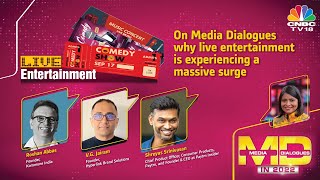
Media Dialogues | In Conversation With Roshan Abbas, VG Jairam & Shreyas Srinivasan | CNBC-TV18