17 Top Kosher Wine Celebrities Discuss the Four Questions Around a Global Virtual Seder Table
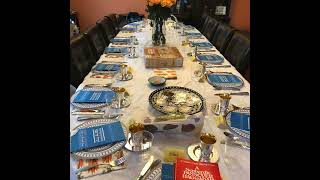
Simon Jacob talks with wine professionals about choosing wines for the four cups at Passover Seder. They recommend light rosés for the first cup, Pinot Noir for the second, aged reds for the third, and dessert wines for the fourth, while considering fatigue and health. Avi Davidovitz urges supporting Israeli wineries during wartime.
Chapters
Welcome to The Kosher Teruah.
I'm Simon Jacob, your host for this episode from Jerusalem. Before we get started, I ask that wherever you are, please take a moment and pray for the safety of our soldiers and the safe return of all of our hostages. This pre-Pesach episode is going to be both interesting and very special. I've reached out around the globe to some 10 or 15 friends, wine friends, and posed the following 4 questions. It's Pesach, after all. Do you have a go-to strategy for handling the 4 cups at the seder? Do you start with a light wine, heavier wine, red, white, sweet? Dry wine? Question number 2: If you have or had 2 Seders, does your strategy change for the second night? 3: Do you have specific wines you would suggest for each of the 4 cups? And finally, 4: Can you share one really special or interesting custom or tradition that either you do at the Seder with your family or you have experienced at someone else's seder. This turned out to actually elicit way more diversity than I thought possible. Please excuse some of the sound quality because I was reaching out to people literally all over the world, and this Pesach is an extremely busy time. Many of the people that I reached out to were in their cars or in the middle of transit. Finally, these are just simply excerpts from the original recordings of the interviews. The entire interviews ran for hours and hours. That said, this is still a very long podcast. But I figured, as people are preparing for Pesach, and people have a lot of work to do, that you can simply listen to this in the background and enjoy your pre-Pesach activities. If you're driving, please focus on the road. If you're home, please open a great kosher wine and either work through those Pesach chores or sit back and enjoy. So Michael Kaye, welcome to the Kosher Terroir, our special Pesach edition. Um, wonderful. I'm calling to ask, do you have any special Pesach strategies for the 4 cups?
I do, as a matter of fact. You know, I think everybody who enjoys the wine in particular as part of the Pesach seder has some kind of strategy, master plan, and probably in some ways is frustrated that there's only 4 cups.
Yeah.
Because they would really like to plan out multiple layers of, uh, opportunity to try different wines. But that being said, um, so I like to start off with a big red, and the reason I do is twofold. One, um, I like to get a little bit of a buzz before I start this very long process and here is an opportunity for me to get a gesund, you know, amount of wine and kind of get me in an altered state so that, you know, it's special, it feels special. You know, Kiddush is always something that is about transitioning from a non-holy space to a holy space. The second thing is that I have the ability to to carry it. You know, it's still early in the evening. I've got plenty of energy. I haven't had a whole bunch of other wines. I'm not super full. I'm not just doing it out of obligation. Like, I genuinely want to have the wine. And so, that's what I start with. Now, we happen to— We happen to this year just released a Petite Syrah in base, Petite Syrah that fits that, but I can think of numerous big reds that would be great in that space. Then I feel like it's a matter of pacing oneself. If I were— and I say this because I go to different types of Seders or host different types, you know, and some, everybody wants to get out of Mitzrayim immediately, and the whole Seder from start to finish is done in 90 minutes. And others don't finish till 6:30 in the morning, adding Shir Hashirim and whatever else. And so, if I'm moving quickly through a Seder, I need to not just be— for me, not just be drinking reds and heavy. I need some lightness. And, even if I'm doing a longer Seder, I need that as well, except for potentially the last wine. So, like, what I might do is start off with the big red, then go to, uh, either a light red, like a, like a Pinot, for example, you know, something that's like, oh, okay, this is nice, right?
Cool.
Um, Or I'm going to do something like an interesting white.
Yeah, a Sancerre. A Sancerre.
Sancerre, Muscat Canelli dry.
Perfect.
It's got a, it's got a nice, uh, it's very aromatic, but it's dry, so it's not sweet, any of that. But it's going to refresh you and refresh your palate, and it's not going to feel like Now you're weighted down under two things of big wine, which I have experienced before. And it starts to become, it starts to become an avoda as opposed to a pleasure. And since it's a night of freedom, I think there should be as much pleasure as, as you know, you can, you can enjoy. Then the, the other two wines, the other two cups, so to speak, Um, are, uh, really, um, well, let's put it this way. Let me go in reverse. The, the last wine, the number 4, to me feels best suited to a, a sweet or a semi-sweet or an ice wine or dessert wine, something that's It's again, got a good strong alcohol. I don't mean like a sweet, like a Rashi Light or something. I mean, like we have a Gewürztraminer, it's 14%. I have a semi-dry version of it that is 16%, but the 14% is quite sweet. And again, you're going to get a nice buzz, but it's going to be treat. It's going to be like a dessert. It's going to be yummy and it's going to be good. And if you've got a well-made sweet wine, not— I don't mean a heavy cloying thing like a Manischewitz, but like a well-made sweet wine, it's a nice way to finish. And so, but coming back to cup number 3, that's kind of a grab bag. So, like I said, start out with a big heavy red. Second one's gonna be like a light red, like a Pinot or like the dry Muscat, like I mentioned, something interesting and floral, but that's not gonna weigh you down. And then the third one, I sort of feel like that in a way is like another special moment. Where it's like you're, you're, uh, you're— oh, you can, you can create a special space for this one because it's like in the middle of it all, right?
And you've had food, and so—
yeah, what's that? You've had food, so you've had food so that you can, you can handle more. Um, also It gives you a little bit of another little bit of excitement to, you know, like wake you up, you know, like, oh, I've got this cool thing coming. So maybe you're gonna do something that is, I would say, unusual. That's what I'm thinking. Okay.
So.
What would you suggest?
I've got, for example, a Four Gates Cabernet Sauvignon from 2014 that Benjo gave me. That I really hope to use for like the third cup.
Awesome.
You know, because it's interesting, it's exciting, it brings out something new to people.
Yep.
Or what I might do is, as I mentioned earlier, you know, I have this off-dry, dry Gewürztraminer that's 16% alcohol. It's an unusual white wine. It's like a big white that's not buttery like a Chardonnay or anything. And it's full of flavor. It's full of aroma. And it'll get you a little shicker again.
Sounds great.
To sort of carry you to that last thing. Yeah.
That's how I roll.
Big red, and then second one light red or white, third one something like that's really interesting and kind of different, and then the fourth is dessert.
Excellent. Any special customs that you have at the Seder?
One special custom. Yes, I can.
Okay, cool.
So my father, my father introduced the minhag many years ago. Do you know, have you ever If you've ever gone to like a sporting event, like, or watch it on TV, like football or baseball, and the people in the crowd do the wave.
I was gonna say the wave. Sounds like a wave.
Like a sort of move through.
Yes.
Right?
Yeah. Right?
So like the wave, which is first of all, like a hint towards the parting of the sea, right?
Very cool.
But also, you're sitting there for a long time You kind of got to get people moving. So for Dayenu, when we do the chorus, Day Dayenu, we go around the table in a wave.
Very cool.
I love it.
Yeah, I absolutely love it. Michael, thank you.
Thank you.
Thank you. Thank you. All right.
My pleasure. Chag Sameach.
Chag Sameach. Be good. Shalom u'bracha. Welcome, Amichai Luria from Shilo Winery. I have—
So first of all, I make sure that I'm hydrated.
Cool.
That means before I even drink wine, I make sure that I drink a lot of water or seltzer because I like to somehow get through the Seder. And since I'm on an empty stomach usually, Yep. And then I prefer to make sure that I'm hydrated. That's number one. Number two, I usually, my strategy is that it's a very good opportunity to drink older wines that I have in my cellar.
Cool.
I'll pick wines that are at least 5 years old and more. Because I want to— first of all, I want to enjoy the wine more, um, that I said that. And also because usually wines that were aged are easier to drink with nothing on the side.
Okay.
When you don't have any food next to it, then I do that. And I'll tell you something even more uncommon, right? A lot of people will drink 4 different wines for Laila Seda.
Yep.
I usually pick a wine and drink only that wine for all 4 Kosot for a couple of reasons. First of all, that way I don't have to finish the glass completely and I only have to add on to it. Makes it a little bit more easier and convenient.
So you're not doing any blending?
Second of all, Right, I'm not blending, I'm not pouring out the rest. I don't know if you know, I finished my levit, I drank what I had to drink.
Good.
And all I have to do is just refill the glass. Second of all, it's nice to see how a wine develops through such a long dinner because Leda said it is probably the longest dinner you ever have. So you see how the wine started and then hours later how the wine turns out to be.
Very cool.
And so I'll pick one wine and drink it throughout the Seder. That said, the meal of L'Eid al-Fitr, which is also one of the— I don't want to say most important, but it's the funnest meal of the year. Okay?
Yep.
Is the meal that we have on Leila Sedeh. Family, friends, Gerut. Usually times like now it's difficult to forget the, the, the, our troubles in our life, but usually Leila Sedeh we're focused so much on other things that it's easier to forget the difficult parts in our life. So it's a very extra enjoyable and important meal of the year. And so what I do is I'll have one wine that takes me through all the reseda, and at the meal itself, we'll open up a lot of different wines. And we'll taste a lot of different wines. And you'll see in our house, sometimes in front of each person, there'll be 3, 4, or 5 different glasses. We're tasting and drinking and enjoying ourselves through the meal and always getting back to that same glass of wine that we started at the beginning of the seder and took us through all the way to the end of the seder.
Very cool. Very interesting. Amichai, I have never heard that sort of practice before. It is super. Any suggestions you would make for that bottle of wine or for other wines to share?
So, I was just a couple of, I do not know, a month, a month and a half ago, I was in the States, and we tasted, was it a good friend of mine at his house for Shabbos. And he brought out two of the wines from the Heroes Edition that we made.
Wow.
In 2014, the year before Shmitah. So we're talking about a 10-year-old wine. And it was like really amazing. And I said to myself, you know what, this is gonna be the wine that I'm gonna drink for L'ra Seder. When I got home back to Israel, I checked my cellar to see if I have any of those wines left. I thought I did, and unfortunately I don't. Oh boy, I was planning to drink the Heroes Edition for Leda Seda, and that's not gonna happen. Uh, I do have, um, uh, my son is supposed to, uh, uh, check out our cellar and pick one of the old vintages that I have at the one at my, in my cellar in the house, and we're gonna see what we have enough of. He says, I really don't know what happens in my wine room in the house. He knows better than I do. I mean, he's married with a son and left the house years ago, but still he knows his way around my wine room better than I do. And he says that we have, and we actually tasted this, I think it was for Rosh Hashanah, we had a 2006 wine, the mosaic that we did in 2006. He says that we think we have a couple of bottles of that, so maybe we'll do it with that, but we're not sure. I really don't know. You know, we just had, I just did a big wine event here in Israel in a really, really nice restaurant called Sphera. And the guy brought in for the wine tasting We tasted the Cabernet Secret Reserve 2021 that we just released. It seems like it's the best Cab Secret Reserve I ever made. And he brought a double magnum of the Cab Secret Reserve 2014, which was the highlight of the event and of the evening. We had there the exclusive edition Mosaic. The Mosaic had so many different wines at this event, and the Cabernet Secret Reserve 2014 was really the highlight of the event. We're talking about a 10-year-old wine that was totally amazing, still had a lot of years yet into it. So there's a good chance that I'm gonna open up a big bottle from the Cab Secret Reserve, either 2013 or '14, because I have both of them, and probably we'll do that. That's what it looks like at the moment.
I would normally ask you about the second Seder, whether you do things differently, and probably your answer to me would be move to Eretz Yisrael. Eretz Yisrael.
I'll say even more than that, there's still time. I mean, you can still buy a ticket, come to Eretz Yisrael, and do only one Seder, right?
Yep. It's unbelievable to be here.
And on Chol Hamoed, you can make up for the wine that you usually drink on the last Seder. Just drink that much more on Chol Hamoed.
Okay. The last one is, can you share one really special or interesting custom that you either do at your Seder or that you've experienced at a Seder hosted by somebody else? Do you have any special customs?
I'm married for over 30 years, and I think only twice I wasn't home for L'dor Seder.
Okay.
So usually hosted by us. In our family, we have a A funny thing that goes, that has been going on for I don't know how many years, probably generations, or in the Haggadah it says, matzah zu shaanu chlim al shuma, right?
Yep.
That means this matzah that we eat, why do we eat matzah, right?
Yep.
So you can also read that same sentence in a different way. You can say it like this: matzah zusha anukhlim al shum. That means the matzah that we eat on garlic. And then everybody says, ma? And then you continue, you say, al shum. That means matzah, this matzah that we eat on garlic. And everyone says, what? Yes, on garlic. And that's exactly the same words. I didn't change anything in the Haggadah. All I did is put a a question mark and a pause in different parts of the thing. And then yes, at our family, we have a lot of garlic all year round, and on Pesach, even more than that.
Since I've been at your table, I can absolutely understand that. And it must be amazing. It must be absolutely amazing. Amichai, I know you're a busy person, especially pre-Pesach. And I really thank you for taking the time to do this. Thank you.
Hello.
Hi, Pnina, it's Simon. So I have here on the line Pnina Kassanovitz, a good friend and an incredible winemaker. So I have 4 questions for Pesach that I'd like to bounce off of you and that I've been bouncing off of everybody. All right. It's Pesach after all. Right. Do you have a go-to strategy for handling the 4 cups at your Seder?
So much like our more formal wine pairing dinners that we've shared over the years, I like to start with a sparkling wine, something to open the appetite, something that is very festive. A lot of people have a very strong minhag that the first glass should be a red wine, and if you do choose to go that way, I would recommend a light red, something like a Pinot or Grenache. For the second glass, I like a very big, heavy red, something that's going to open in the glass, something that we know we're going to drink together with our meal, uh, something that's going to open up in the glass throughout Maguid as we share words of Torah and take our time. And for the third cup, which is essentially dessert, I like a good dessert wine, something sweet.
Okay.
And then for the last cup, this is really, um, what, what people enjoy drinking, their favorite wine of the evening. Or I like to go back to sparkling again because it's a nice bookend, it's a nice way to end of the meal. It's light. It's usually a lower alcohol.
Do you have any suggestions as to wines that you would fit into those slots?
Yes, I do. So for the, for the sparkling wine, I really like the Gamla Brut and the Elvi Cava, if you can get it. It's not really available here in Israel. And I recently had the Raziel sparkling, which I can also recommend, was absolutely delicious. For the big red, I really like the Kloss Massora or the Psagot Peak because that's something that you really need to take your time with and even decant before the meal so it can handle being out and open in your glass for all of Maguid. And for the dessert wine, I am incredibly partial to the Yaakov Oria Old Musketeer. But I also really like the Or by Yaqub Tzora. And remind me what the dessert wine is called from Vitkin.
The Shorashim? The sweet Shorashim. Yep.
Huge fan of that one. And like I said, I like to end with a sparkling that I began with or a different sparkling.
Okay.
Or a nice gentle white wine like the Upstream Chardonnay.
Love it.
Or like the Yakovoria Playground or the Tavor Chenin Blanc.
Cool. Okay.
And if you're a rosé fan, this is also a nice, a nice, a nice time to just sit and unwind with a glass of rosé.
Okay. So the last question I have for you is, can you share one really special or interesting custom that either you do in the family or that you have experienced that hosted Seder?
At our Seder, there is a stack of backpacks and walking sticks by the front door. And when we get to the part where everybody has to see themselves as though they themselves were redeemed from Egypt, My husband Jack, who leads the Seder, gets everybody up and everybody chooses a bag and a walking stick and they leave the house. They go down the stairs, they do a little hakafah in the yard, and up they come back.
Wow, I love it.
Yep.
So cool.
And yeah, it lets you stretch your legs and it gives the kids who might be fidgeting something to do.
Also ask questions. It's great. I love it. It's a great idea. It's a great custom. Super.
Thank you.
Pnina, I know, thank you very much for taking time. What I was going to say is I know that this is a really busy time of the year. So thank you very much for taking the time.
It is my pleasure. Thank you for calling me.
Pleasure. Toda, toda, toda. Thank you.
Chag Sameach.
Chag Sameach. Hakadosh Baruch Hu. Welcome, Andy Sinton. Thank you very much for agreeing to join me. I have 4 questions for you. After all, it is Pesach. Oh, hard, hard questions. You know, it is Pesach coming up, so I have 4 questions.
All right.
The first of those questions is, do you have a go-to strategy for handling the 4 cups? At your Seder?
I definitely have a strategy. I'm standing up on my chair to answer the 4 questions here.
Um, great.
Yeah, so listen, my, my general strategy for the 4 questions, uh, for the 4 questions, for the 4 cups, is informed by, I think, a, a Seder experience I had about 22 years ago in Berkeley about what not to do during the 4 cups. So I was in Berkeley and my fiancée at the time and my future in-laws were there and it was Berkeley. So, what we had was I had large 12-ounce, 16-ounce cups. I remember we drank Four Gates, right? That's what we drank at our Seder because back then, that was the local winery. And, you do not want to drink 4 cups of dry, high-alcohol wine using a large glass. So, I try to do everything that's the opposite of that. My general strategy is I go for— I want my wines to be easy to drink, and I want to enjoy drinking a whole glass in one go. Um, so that, that's like my, my line, you know. And then I have a few other criteria that I put around it as well.
Anything different on either one, on either of the cups?
So my general strategy for the first two, for sure, I want to make sure that, that I'm, you know, sober for, for, for leading the Seder. And I usually go for an Israeli red, non- muvushal, enjoyable to chug, low alcohol wine, which generally means some type of red Moscato. It's very hard to find a non-muvushal one these days. The only one I know of is Tabor. But you could take a Germán Moscato and add a little bit of red wine to it. You could do that. But no, first 2 cups for sure I do low alcohol, something like that, 5% that I can lean back and enjoy chugging. And then, I have a nice wine for shochan orech. And then, for the 3rd and 4th cup, it really depends how I'm depending on how much I've had for Shochan Arach, I might go with, you know, with a drier wine. But for the most part, I will drink something like a Moscato for all 4 cups. That is my default strategy.
Okay. I have one last question. Can you share with us a special or interesting custom that you either do at your Seder or that you've experienced at a Seder hosted by somebody else?
So my koseliyahu, I really have to send you a picture for it. I had a friend who was in the stone business near Chevron, and I really wanted a stone, a nice stone kiddush cup. So I printed out on a regular 8.5 by 11 piece of paper, like the shape of a kiddush cup that I wanted, and gave it to him. I said, can you, you know, get this made for me? And he, a week later, comes back to me with a, you know, Jerusalem stone cup that is literally 11 inches tall. I mean, this thing, it requires two hands to lift, because he gave it to the Arab guy who was working at the at the stone foundry and said, "Hey, can you make this?" And he made it the size of the whole piece of paper. He didn't understand it was supposed to be something that you could hold in your hand. So I'd say that's the most unique custom that we have at our Seder, is we have this Jerusalem stone, Koseleahu, that can hold almost exactly, and this is really siyata d'shmaya, exactly 750 milliliters, pretty much. So I can pour a whole bottle in there and wait for Eliyahu to show up at the door.
Andy, thank you very, very much. I know it's a busy time. Thank you for making the time for me.
Chag Kasher V'Sameach.
Good morning, a soft pause. Do you have a special strategy for handling the 4 cups at the Seder?
The 4 cups is something that you pour for everybody.
Okay?
Right.
So you need to please everybody with their different flavors and tastes. And from the other side, sometimes it's not necessary to pour the most expensive wine to 20 different people when only 4 of them will enjoy it. The other won't drink it, or, you know, worse than that. So this is the first rule. See, know who is drinking. And fit the wines to the taste of the majority.
Okay?
Got it.
This is very important. So, because in my family, we drink the 4 cups, but after, when shulchan aruch, shulchan oech, we pour more different wines that we want to spoil ourselves.
For the meal. For the meal. You drink a—
Yeah.
Yes.
So over there, over there we can invest in like the specific wines that are interesting to the different drinkers. We start either with the single vineyard Riesling of Itkin or the Reichenberg or even the Grenache Blanc.
Okay.
The collector's edition.
That's for the third cup. Yeah.
And no, this is the first cup. The second cup is the Pink Israeli Journey for me.
Okay.
The third cup is the Vitkin Pinot Noir or Vitkin Grenache Noir because I want like a complex and delicious but not heavy red wine.
Got it.
And the fourth cup over there I can invest in something a little bit more deep, complex, and powerful like our old vine Carignan or single vineyard Cap Franc or even the wine Petit Syrah.
Okay.
But it's extremely important to see that the majority of the people will really enjoy those wines. If you have like a majority of aunts and grandmothers and people that are not used to drink very heavy red wines, I'm not going to pour the Petit Syrah. Maybe I use the Pinot Noir and then the Grenache Noir or even the Red Israeli Journey. So they can enjoy those wines. This is extremely important. Sometimes we choose the most expensive wines and we forgot that wine is meant to bring joy. It's meant to make you happy, to be delicious. So this is very important.
I wanted to ask you if there are any specific customs or special things that you do or that your family does at the Seder.
We are a melting pot, so When my, my father-in-law is making the ceremony, it's a Calcutta style, okay? And when, when it's with my brother, so it's the father of my sister-in-law, so it's a Yemeni style. And when my father blesses all used to be the manager of the seder. It was Ashkenazi style, Romanian, so you know.
Hazak Baruch, it was beautiful. Okay, shalom u bracha. I'll let you get back to your life.
Okay.
It's always a pleasure to talk to you. It's part of my life. You're part of my life, so it's okay.
Thank you. Thank you. Toda, toda. Good afternoon, Andrew Krauss.
So I would say that there isn't one strategy. Each year feels a bit different, and, uh, this year it feels to me that it should be really all about who has produced the wine. And, you know, here we are on the other side of the year to, uh, Yom Kippur, and it's a great moment to take stock of, you know, the journey. This is all about journey and where we're up to and where we're going. And what I'm going for this year is really who has produced the wine, and you know, how do they inspire me in terms of where I want to go from here to the end of the year. So my selections on the producers are based around really that question of who has inspired me for one reason or another.
Cool.
So it's got very little to do with the technical side of the winemaking. All I would say that, you know, for Pesach, for me, a very personal thing, that it should be from Israel.
Okay.
So, so that's, that's where I go to in terms of country. But in terms of producer, two producers that I'm going for this year, one is Yaakov Oria And the other one is Kishor.
Okay, very cool, very cool. Both of them are wonderful. I love Yaakov. I absolutely adore Yaakov.
So, you know, it's, it's as a person, you know, his humility, his generosity, and his, his honesty. And sincerity, as long as well as his technical, uh, genius.
His, his—
these are all, uh, these are all facets that, that, you know, when I drink my cup of cups of wine, uh, that this is what I want to have front and center, that these were made by someone of these qualities.
Is there anything different for you between the first Seder and the second Seder? Any shift?
Yeah, well, the first one, typically I go to my brother-in-law's.
Okay.
Um, and my brother-in-law is Persian, uh, so it's a very, very different thing, um, to go to Persian Seder to having my Ashkim Seder on night 2. In terms of the wines, I will take a bottle to the first. For the second, I will have a selection of my own. But it's a very different thing being beaten with spring onions on night 1 to maybe a calmer kind of backdrop on night 2. But there's a serious side to it too, which is that I like the idea of, you know, a combination of Ashkenazi and Sephardi custom. It's all about we're different but we're the same, achdus. And that's the way I like to start my journey on night 1.
Yep.
And night 2, it's to pay homage to, to my family, uh, heritage, which is Hungarian.
Very, very cool. Is there any specific custom or special interesting, uh, practice that you do at your Seders?
Uh, night 2 to me is, is what's normal. So is it special and different? Probably to anyone else, um, I don't know. It, it's more profound, I suppose, on night 1. It's really very different. But, you know, on a simple level, Night One is a combination of Farsi, Hebrew, and English, and a lot of noise. And Night Two is a combination of English and Hungarian and Hebrew, probably in reverse order. So that's, that's, you know, an obvious difference.
There are actually parts of the Seder that you do in Hungarian?
Yes. Wow. For me, Seder is very much about including, uh, everyone at the table on the journey. Not Dafka doing a language because that's what's been done previously, but to make sure that everyone has, has their part in, in that journey. It's all about journey. And, uh, at my table I have my grandmother who lives with us, who's in her 101st year.
Wow.
And she doesn't speak any English. She speaks Hungarian and German. So to include her, and in fact another guest, you know, is a Bergen-Belsen survivor who speaks English, Hungarian, but very little Hebrew. So, you know, they should all have their active role to play in the the Seder, they shouldn't sit there, you know, uninformed and uninvolved. Otherwise they're not part of that journey.
Why Kishor? Go ahead. That's a good question.
These are two that are special to me this year. You know, Yaakov I've talked about. Kishor is one of the wineries I visited not so long ago. And you know, I was moved by the people who work there and who are involved in the wine production and the, you know, sincerity, the excitement, the, you know, purity of some of the special needs people, members of that community that are involved in producing, you know, what is a very good wine. And I want to celebrate that too as part of my journey this year. We're blessed to have many opportunities to contribute to many worthwhile causes. And when we go to these causes, you know, it moves us in different ways. But this was one that moved me on the one hand, but I also tremendously enjoyed.
So, hug Pesach Hashivrisameach.
And to you and to your family.
Thank you. Shalom u'bracha. Thank you. Thank you, Andrew.
Hi Simon, how are you?
Good afternoon, Richard Davidoff. Bing Pesach. I have 4 questions. Okay, 4 quick questions.
Go for it.
All right, do you have a special strategy as far as handling the 4 cups at the Seder?
So, so I'll tell you what I do for the first cup. Um, well, let's start from the beginning. I understand that there's a, a minhag to enjoy red wine specifically at the Seder, um, as opposed to white wine, um, to correlate to the blood. Um, I stick to that for the first 3 out of 4 cups. So for the first one, I like to kick off with a champagne, so I'll go with a rosé and I, um, this year will be doing the Baron de Roths Chels, which I thought was quite nice. And I think it kicks off the evening with a bit of a bang, with a bit of fizz. It's nice. For the second cup, I like something a little bit lighter, so going with a Pinot. For the third cup, we're already just into the meal, or beginning just before the meal, and the leftovers will go into the meal. So going a little bit heavier with an aged Bordeaux. I've actually got, I think it's my last or my second last, Lieuville 2000. I think it's a fitting time to enjoy it. And Then for the last cup, um, I'm going with something sweet, so I'm going with Yakov Oryez, um, either the V or the G. I have another question for you.
Any difference between the first night and the second night?
Very good question. So the first night, um, I typically, um, do a more robust lineup. The second night I will typically do lighter wines. So for example, with the third cup I'm not going to be doing a Bordeaux. I'm sticking with Pinot as well. And I've got, for the first night I've got the '15, the Chantal Lescaut '15. For the second night I'm doing '16 and '17. 17. So it won't quite be a vertical side-by-side, all 3, but I'll be doing the 15 on night 1 and the 16 and 17 on night 2.
Okay. So I have one last question for you. Do you have any interesting customs that you do in your family?
I would say we just do traditional, normal traditional Seder and enjoy.
Okay.
Well, that's my 4 questions. And I really, really thank you for taking the time to answer. Good afternoon, Jay Buchsbaum. It's almost Pesach, so I have 4 questions. Do you have a Pesach strategy for the 4 kosot, for the 4 cups?
I do.
I always start with a lighter wine, usually these days, the last couple of years, a rosé.
Yep.
I'm going to go through the strategy quickly and then I'll tell you, uh, if you have other, you know, specifically. And then I go with the richest red. And it's funny that you would think that as normal thing, wine people go from the lightest to the last one being the heaviest, even a sweet wine, let's say. But in this case, because second pot, the second cup goes into the meal, I like to go to the richest red so that I can continue that with that red into the meal. And then I go to a lighter, as, and this is the general rule, then I go to a lighter red like a Pinot Noir. And depending on the Chianti, let's say a Chianti, again, depending on it, because Chiantis can be in a wide range. Of heaviness and flavors. And then often I will, I will end with a sweet wine just to kind of— it's my own like little New Year's, even though I know it's not New Year's, but, you know, and the Seder on a sweet note.
Cool.
Okay.
What about for the meal? Do you end up having bottles for the meal?
Yes. Um, So, so the first glass for the meal is usually that, like I said, the second wine that I used for the Seder. And, you know, I continue with that for a little, for a little bit, and then kids go down to the cellar and get whatever you want. That's my rule for the, for the meal wines.
Is there a difference between your first seder in your second?
Not in terms of the stylistically, definitely in terms of the wines.
Okay.
But stylistically, I keep it the same. So I definitely do not have— I mean, definitely, you know, as a rule, I don't have the same wines. Not the first, not the second, not the third, not the fourth. But I do keep it stylistically the same.
Any suggestions for what you'd drink at those 4 cups you'd like to make?
Yes, go ahead. Yes, so I always, I always, especially this year, but I do it anyway, I always include it, you know, one Israeli wine for sure. Okay, this year I believe I'm gonna use the Israeli one for sure for the second cup.
Okay.
And it might be something classically Israeli, like an aged Argaman.
Cool.
Which would be really cool because that's, you know, exclusively Israeli wine. Um, and the first cup, I really enjoy the Herzog. So the Argaman could come from Jezreel, for example.
Yep.
But the first choice— and there's also an Argaman, I believe, from 1880.
'48.
But the first choice and the Rosé, it's not an expensive wine, but it's really quite good. And that is the Herzog Lineage Rosé, which is 100%, has been 100% Pinot Noir. And so, you know, it really is light and fresh and some fruit, and on an empty stomach, you know, it really is It really is quite nice.
Cool.
And then for the third cup, I'm thinking this year to have something from Burgundy, like a Hardy wine. H-A-R-D-I.
Got it.
Which is also Pinot Noir.
All right.
Maybe there's some really wonderful whites this year. There's a Grand Cru Chablis that I might incorporate. for that third cup. And maybe I'll pull out an old Sauternes, either the '90s or the early 2000s, because as Sauternes age, they become— oh gosh, they become more complex, and they become a little bit golden, and they become more aromatic. Uh, and they become more luscious. Some wonderful stuff.
So that's your fourth cup?
Also, yeah, that's my fourth cup. And to mix it up, maybe the next night I'll have, uh, the late harvest from Sagot, or, uh, it's very few of these around, but, or, uh, Eli Ben-Zakeh made a late harvest wine. Right, that's only a few, not commercially available, but you know, it was available.
I've got one, it was, it was available at the winery, the M.
Yeah, yeah, yeah, I think I have a few bottles of those, so I might double up on Israeli wines the second night. The second night I might, I might do something like, um, a really wonderful new winery Uh, Cantina Giuliano. Yes, from Italy. The only 100% Shomer Shabbos that I know of. The only 100% Shomer Shabbos run, owned, and operated, uh, winery in Italy. I believe there might be one other, but I think this is either the only one or one of only two. And his Mano wine is a blockbuster.
Which one?
Just a real blockbuster. Mano, it's called. Okay.
M-A-N-O.
Cantina Giuliani Mano.
Any customs that you follow at the table that are interesting, or any, um, you know, like special, uh, different, um, things you do?
It's so great that you asked that question because I want so much to share it with people. What I love to do, and I mention this because we also met a wide variety of people over the years, and what I love to do is share with them our Yiddish songs that we sing at the Seder. So we sing a song called "Mua Sapra," which is about who is one. And then someone called us, told us, "Who is one" in English. So our customs, more than, you know, the traditional customs, which are not unlike the traditional customs, our special contribution, if you will, are those very unusual but wonderful Yiddish and English versions of various songs in the Haggadah. You know, years later I had somebody call me, actually someone sent us a letter that they never— for this is somebody I didn't even know who they were. They were sitting at the next table with Moshe at Moshe Weed's program. This was in, uh, in San Diego. No, not San Diego, uh, it was in California anyway. Um, and he said, you know, this was our first religious Seder that we went to, the one that you were at, Jay. This is 15 years later, he writes this note and he said, I want you to know it inspired us to become observant all the time. And since that day, we've always been observant. And in part, I mean, I can't take credit because I'm sure it was a much bigger journey than just listening to our Yiddish Mois Safra. But, you know, it's just nice to know that we are so happy with it. And that's conveyed. We have such a good time with him, and apparently that's conveyed.
Thank you. Thank you, Jay. I know it's a busy time of the year.
You're welcome.
All right. Take care. Shalom u'bracha.
Thank you.
Bye-bye.
Hi.
Hi.
Shalom u'bracha, Nathan. It's a pleasure to speak to you.
My pleasure too.
So I have— it's almost Pesach, so I have 4 questions. Okay?
Okay.
All right.
The first one is, do you have a plan for how you deal with the four cups?
The first thing to know is that for the cellar, like all they have about wine, the more important thing is to like the wine we have to drink. It's freedom, you are free. You have to drink what is good for you and that's the first thing. But, it depends from how do you spend the time of the Seder, how long you stay on the table, how long you are making the Hagodeh. For me, I'm beginning very late to eat. So, it's very important to have a light white wine to begin, because after a long day to prepare the Yom Tov and a good day after that, you don't have the— it could be very hard to drink powerful wine and high alcohol wine, it could be complicated. It's very important to drink something that is light in the mouth and with, if possible, with low alcohol. I usually beginning with rosé, light rosé like Provence rosé, or maybe a light wine like a light Syrah from the Rhône Valley or Cabernet Franc from the Loire. Not— I don't have in mind a Cabernet Franc or Syrah that we can find in California or in Israel that could be very heavy. We are talking about light wines. Of course not Bordeaux in style. And for the 2 first cups, I think it's the best way to begin. After that, for the meal, For the third and the fourth cap, it's more up to you, depends on what you are eating, what time is it, and whether you still very powerful by yourself. But it's more up to you, I think.
Is it the same for the first and the second Seder?
Yes, in fact, for me it's the same thing, the same problem. Just in the second day, we eat a lot at noon, so it's a little bit less important, but for me to be light and easy all the way of the Hagoda, I need a light wine too. It's very important for me. For the rosé, I don't have any name. It could be anything, depends on the price you can put. It's for me rosé, it's always something near wines. It's not really wines, but you know, it makes the job for the Kiddush, for example. But I don't think you have to put a lot of money about rosé. It's not a big difference for me. It's always something light and fruity, light, that nothing, so, there is no difference, no real difference, it must be good, but not a very good, very something, I have, doesn't matter which one. For the, for the, for the Kiddush, for the second one, one more time I will I think, but I don't know exactly what— I'm living in France, so I know more what is available in France.
Okay.
So, I would go on— it's, I think it's a very good idea, maybe a light Syrah or something like that.
Okay.
There is a lot. I don't know exactly what you can find in USA.
For the third, for the third cup, you'd go for a Bordeaux? Would you go for something that's heavier?
No, for me it's too heavy Bordeaux. I don't appreciate Bordeaux. We are tired and after a big meal. Yeah, if after the Bordeaux I will, I will, I have to, to go to sleep, finish the halal and to finish the seitan. So I don't, uh, it's, it's too much. Maybe for the fourth, it could be, but, uh, it's not, uh, I don't feel happy with the Bordeaux in my, to, to drink in my cup for the fourth too. So I, it's, I need all the way, I need something Lighter than Bordeaux, I think. It's not kif. It's not a kif to drink a heavy Bordeaux.
Okay. I have one last question.
For the meal of the afternoon meal of Yom Tov, it's a good wine.
Okay. It's a good wine for then, where you can appreciate it over time and that's where you're focused on, rather than having to worry about the Seder. I get it. I have it, I understand. What about customs? Do you have any like specific or interesting customs?
Not really, personally, Minhag, it's very interesting for me, meaning to talk about freedom and Herut, the right way is to begin to to discuss with your son. It's not a— I think it's the real way to make it happen, to be benechorim, it's to talk about the importance of Torah and yetziat mitzrayim and all those things. It's to talk about with your children about that That is the right way. It's not two different things, I have to talk about freedom and if I have to talk to someone, it could be my son. No, to talk to your children, it's a real way of, of, of Chaim Sheel Re'us. And, and I think it's a, there is a long, Many, many ways to understand that and making that happen, but I think it's very important. So, I'm teaching to my children to appreciate wines too, but it's just one point about a big relationship between father and son.
Excellent. I love it. Thank you. I really do. I thank you very much. I know everybody is pressured, but also congratulations. It's your daughter who got engaged? Mazal tov.
Yes.
Mazal tov. Okay. Be well. Todah. Thank you for taking time with me.
Shalom u'ra.
Hak sameach.
What's up, Rob Simon?
Hello, Dr. Medeb. So you're up for 4 questions?
All right, sure.
So the first one is, do you have a strategy for the 4 cups that you do at your Seder? Do you start light? Do you start with heavy? Do you, you know, do you have a strategy as to how to go through the 4 cups?
Sure, absolutely.
Okay.
I, I, um, what I do is you have to understand, uh, you know, I'll tell you what my issue is.
Go ahead.
Um, in the past I used to go for the biggest wines and it would— I would be irritated the whole seder. Um, so what I do is, based on experience, what I do is I start with a rosé. I believe that rosé is a red wine, especially people who are in the winemaking business. You realize that we're bleeding the skins, there's maceration time, and we really make it like a red wine, especially the French and, and most of the Italian rosés are, are made the same way that you make a red wine, right? So I start with a rosé, and I think the biggest issue we have is that you have to drink 4 cups, but you You know, when you're gulping wine down, you don't enjoy it, right? So, so to make it enjoyable, and I use rosé for my first glass because this way you're not— you're on an empty stomach. People don't like to eat in the afternoon, so they have hunger for the matzah. So I start with a rosé. It's light alcohol. I think it's slightly acidic. You don't— not gonna be suffering afterwards. And then you have to read the entire Haggadah. For the second glass For the second glass, I use a Pinot Noir. Same reason, okay? Because you're going to start eating. I feel like if you use a Pinot, it's a lighter, lighter alcohol, especially French Burgundy, okay? So you're not getting a heavy— you can get a beautiful, beautiful wine, earthy a little bit if it's from France. California Pinots might be a little bit heavier, people who want a bolder wine. But what I do is rosé, Pinot Noir every year. The third glass, and then I would put a Bordeaux, and I try to do an aged Bordeaux. My wine of choice usually is Valangro '05, and some years depending on how many people we have at the table, I'll use it for the third and the fourth. And some years I'll use that and I use A newer French wine for the fourth glass because, you know, at that point, you're not worried about anything as much. And I'll use a Bordeaux, either Lafite-Roche was one of my favorites. I stay away from Syrah for the entire seder because of the heavy nature of the grape, acidity on it, and things of that nature.
Okay. So let me ask you another question. This is question number 2. Is there a difference between the first and the second Seder for you?
No. Okay. For me, it's not. I do the same thing. I just try to switch. If I use a French rosé for the first night, I use a— I'll use an Italian rosé for the second night. I use two different types of burgundies. So for example, I use usually, uh, Demontille first night, then I'll use Agerterre for the second night. In my—
in my—
if you look at my portfolio Right. Um, uh, and I'll mix it up. I'll mix it up. Usually I use totally different wines, so I'm bringing 8 bottles even when I go away. Even if I did the alcohol on the program, I will bring 8 of my own bottles to do that. The only ones that I might repeat is the Valho 5, which is what I drink now.
Um, that's an unbelievable bottle. Yeah. It's a great bottle. Okay, so let me ask you another question. Can you make a suggestion for each of those cups? You made some suggestions, but yeah.
So what I use, I'll tell you, I'll tell you for the rosés, the two that I've picked for this year, um, I use Fantastique. Uh, if you see in our, in our chat, you're in that, my chat, my wine chat, the Fantastique every year gets best rosé of the year. I think it's worth the extra money because it's Pesach. I think for Pesach you have to spend. You want— you're asking Hashem for stuff. You want to show your freedom. You want to show what we've done. You want to spoil yourself. You know, even the Midrash says you have to take all the gold out. All your gold you should put on the table. The Mekubalim, you know, put out everything they have in gold because they— and the Moroccans are very big in it. When they dress the table, they make sure it's gold. It's yellow because they want to show that it's Pesach. So I use Fantastique usually the first night. Last year I used my Pescaia Rosé for the second night. This year I'm using Visione, which is the, uh, Val di San Gregorio Aglianico Rosé.
Wow.
I think it's beautiful. It's actually weighted on your tongue. It drinks more like a white wine than a rosé. Comes in a beautiful Lalique bottle. Um, I could take a picture and send it to you. You'll see them. And so I'm using those for the two rosés. There are other beautiful rosés I think people could take, but these are rosés that have, you know, dominated the market. The price, you know, on the Fantastique is obviously going to be a little more expensive, but I think it's worth it for the holiday. For my second glass this year, I'm using one of the Demonteils. I probably will take the Nuits Saint-Georges or the Volnay, which are drinking Much younger, much better for the second glass. First night I usually use Demontille. I think it's just a much more prestigious wine for the same reason because it's Pesach, I would use that. There's actually a couple of choices for that. You can use the Volnay from 2020, or I would use a Nuits Saint-Georges, which is Demontille's you know, baby child. And it's not the most expensive, but to me, I think it's the greatest combination right now of Pinot that has earth and fruit. Now this is a young wine, obviously, you know. If you have another wine which is not ours that somebody has in there, which I use this Purim, my last bottle, there is a Clos Vigeaux 2004 made. Royal brought it in then. It's Louis Latour you have that bottle, this is the time to drink that bottle. That would be the ultimate one of the mashiah wines that they call, um, but, um, I would use that bottle. I used it for Purim, so I don't have it. Um, the second night I would use Azure Terre. My choice is Bon Premier Cru. Again, not the most expensive, um, but either the Bon Premier Cru or Just a regular Volnay. There's a regular Volnay, it's not Premier Cru, it's village level. Again, not the most expensive, but beautiful drinking. Fruity, has a little bit of earth on it. The weight is a little bit heavier, so a little bit more extracted. So a lot of my Ashkenazim friends love it because they like a weightier wine. So those are the— those are what I would recommend. For those wines. The third glass, again, I'm spoiled. I'm not gonna lie to you, Simon. You know I'm gonna drink a Valendro '05, you know. But what I drink, I share with everybody.
So no, I know. So, uh, Ralph, that's what I'm asking you for your opinion.
That's—
I'd love it. I love it. Everybody, you know, the people at different levels, right?
So Valendro '05 is what I would pick. I can— I understand that if you're talking about $400 bottle, $500 bottle, so people can't afford that. That's another choice that I would probably use is, uh, uh, there is, uh, we do, we have used, uh, a Leoville OO. Yeah, okay, because has age on it, the legs are, are now showing themselves. It's a long wine that's made by Royal, uh, beautiful wine. I have a lot of that as well, so I would use that. Um, last year I use Smith Lafitte 2000. You see, if you use these aged wines, you're not going to be burnt down with acidity. You're not going to be burnt down with—
Tannins.
—just like overly tannic wines. So I— for the third wine where you're going to eat with Shukhan Orech, last year again I used Smith OO. I used in the past Valendro 05. I use almost every year for the last 5 years. And, but I would use an aged Bordeaux, which is what I do. As a note, I will tell you, rather recently, I don't know if you saw my Instagram, we hosted Cham David Yosef. I saw, I saw, I saw. And one of the things he told us about his father, his father would use grape juice for the last, at least for the last 3 cups, if not 4. Why? It says, you know, "Lel shimurim hu ladonai," you stay up and you protect and you want to learn Torah. So he didn't want to be bogged down with overly heavy wines that would make him tired and then he couldn't learn all night. You know, he stressed the point that it has to be for the kids and that, you know, you have to really stay up at night. So from there, I took my, one of my takeaways is we have to find wine that is not going to bog us down. So that's why I do that. Other choices that I thought would be nice Just so you know, is an aged— this is something you have in your collection, is the old Chalk Hills '97, '98, '99. Those, this is the time to bring them out. Those Chalk Hills have fruit, they have the weight, they're not going to bog you down with acidity. There will be a little bit more, more fruit in there, like sugar, because California is obviously higher alcohol content. So, you know, that would give you a headache in the morning. But, but now is the time to bring all of those early 2005, 2004 Chalk Hills, if you have them, that's the time to bring for the third cup. For the last cup, I'll tell you what I do. This year I probably will be do something a little different. There is a brand new wine that I was very excited we made. It's called Baffanero. It's an Italian Merlot. And what I like about it is that it's aged for 3 years in large oak. So it's not overly tannic, it's a beautifully balanced wine. And I think for the last cup, it's a beautiful last— so this year, rather than doing a new French, for the first night I will be doing this Italian Merlot. It's called Baffanero. It's brand new. People don't— again, who don't want to spend, I would tell them there's another excellent choice. For the last glass, I would use a Chianti Reserva. It's a little more acidic than General, but the Reserva is aged a little bit more. And the people who want a more bolder wine, a beautiful wine for that, so they don't wake up with a headache, so they don't have all this extra sugar at night, there's a Sicilian wine called Fau di Briciotta. It's a Nero d'Avola. It has the weight of Pinot Noir, but it drinks like a big cab. And you can use that. And it's not expensive. You're talking about a $50 bottle. Nero d'Avola from Sicily. The company is Faldi di Pisciotta.
One last question. Any special customs or special experiences you have at the Seder that you could share?
So, you know, one of the big customs you find in the Sephardic communities when they do, you know, the dametz fardea, I don't know if they do that by you, they pour wine and water. They usually give it to the young girls to do and like as if they're They're taking away all the makot. So they're taking away, and usually that's a good sign for girls to get married that year. So like when the father's reading them, there's one girl with a, one of the eligible ones who recently need to get married within the year. One is holding water, the other one is holding wine, and they're pouring it into a big basin. Then they take it out of the room, which is a custom that you see in burial, and all they do, tamiz rakh, they do it. You're talking about Syrians and Lebanese, Egyptians. So that's one, that's customs that I think is unique to the Sephardic religion. Obviously, you know, every seder has— we're very big on focusing on the kids. I'm sure many people. So we bring toys, we bring gifts and games and everything for the kids so that everybody's asking questions, everybody is, everybody is, um, uh, saying it, everybody's doing something so that they're giving out prizes to the kids. Uh, and even where we go away, right? So even we were in Punta Cana last year, that did— this year we're going to Curaçao, to a Dutch island. We slept all the toys, everything with us Wow. So that the kids, um, the— so the kids are— the kids are happy and they're asking and they're all involved. We want to get them involved in the center. So it's a— it's a very big thing. It's like unique for us that we— the entire family, doctors and lawyers and everybody get together. Um, even easier to get together there than— than to get together in the average Shabbat. Amen. And like the pasuk says, Amen. Hashem should continue to give you protection the whole year. Amen. We miss you very, very dearly, and the light of Pesach should continue for you the whole year. Amen. And for you, too.
Please, thank God. Take care. Amen. Bye-bye. Good afternoon, Avi Davidovitz. Pleasure to speak to you. It is almost Pesach. Okay. So I have 4 questions. Okay? Okay, the first one is your Pesach strategy for the 4 Kosot, for the 4 cups.
So for me, I really have had a strategy for the last number of years that has worked for me really well. And I'll start off with the first cup. You know, we sort of Coming into that first cup after a day of cooking and then you know you go to daven along tefillah and then you get home and you're pretty much on an empty stomach and you're asked to drink in a rove koos, the majority of a cup of whatever koos you have of that first wine. And it's not tzitzit, you have to drink it in a certain amount of time, all of these all these cups. So I don't like to go with anything too heavy on the first cup. I go with a rosé, and you know, I like to have it not too austere. You know, there are different types of rosés. Some of them are very austere and crisp and dry, and some of them have— some of them go the other way around, and you can get an off-dry rosé that's very sweet and fruity. I'm not usually into that, but I would go with something which is not too austere, but still dry and not over the top alcohol-wise. Most Rosés aren't. So for this year, I actually chose the 2023 Flamme Rosé, which is a wonderful bottle. In general, I would, you know, suggest everyone who's listening to always go with the current vintage. For Rosh Hashanah. So that's a topic for a different conversation.
Okay.
Second cup. That's the first cup. Second cup, we move on to, you know, the second cup sort of comes, leads us right into the meal. You know, you're drinking it, you know, with pretty much, you know, with right around the matzah and right as you move into the meal. And for that, for that, I also don't want to go anything too heavy. Also because I'll likely be finishing that bottle with the meal, I sort of get something which will lead into the one of the courses that I'll be having with the meal. So I usually have a poultry course at the state, and I try to get a Pinot. And this year I chose the Gauch 2018 Pinot Noir, which I think is One of the best Israeli Pinot Noirs that's been put out. It's both varietally true and it's got the right body. It's not, it's a New World Pinot, so it's not going to taste like a Burgundy, but it's one of the better New World Pinots that's been put out, certainly out of Israel. And one other note before I go on, you know, this year is a tough year in Israel. For obvious reasons. And I think it's really important, even if you don't necessarily only drink Israeli for the Seder. I know some people have that minhag to only drink Israeli wines for the Seder. I don't, but this year I am. And that's really to support the industry. I think it's important for everyone, if they can, to make space for Israeli wines at their state or this year. The industry is hurting and the country is hurting, but the wine industry, you know, specifically is hurting. It's been a tough, tough few years, and I think we should do whatever we can to help support, you know, these wineries that we all love, especially now, because it is really tough out there. 2022 was a huge year So there's obviously a drop in sales. 2023, we had a tough time with the war and tough out there. And that's coming after COVID where it was tough for these wineries too. So I'm a big believer in do what we can to support these wineries if we can.
It's interesting. I was speaking to Amichai Luria earlier and a whole bunch of his guys just got called back into Milouim. They finally came back and things were finally getting normal and moving along. And he's ready to, like, I was going to say pull his hair out. He doesn't have much hair left to pull. But he's like going crazy because some of his main people who finally came back after being away for months and months, he finally had some relief relief from that have gone back in at least through June is what they're telling him. So it's really crazy.
It's made a difficult situation going into 2020, into this vintage. You know, it's intolerable. I mean, basically, while the vintage is okay in terms of harvest, right? Basically most of Israel had harvested by October 7th. Right. But no one had really processed their grapes fully, and no one had manpower, and people really are struggling to get these wines produced. And then you know there's a lot of this, these wineries are very small, they rely on you know hand labeling and just even just the production of the wine, just you know blending and batonnage, there's There's a lot of labor that goes into making a wine, and if you don't have the manpower available to you, you know, the wine is really at risk. And a lot of these wineries are suffering. And let's not even talk about what's going on up north and the wineries that are up there who are under constant bombardment, like to this day. It's, you know, it's a very tough time in Israel. Now obviously things have gotten better from where they were, but it's really important, I think, for people to try to support, uh, the industry if they can. Okay. Anyhow, that's, that's me on my soapbox.
No, I know. So, okay, so you've gone through— I think we've gone through two kosovs. First two.
Yeah. Then I, then I, you know, then you have a meal. And like, for me, I have, I have a whole bunch of people over. We have around 20 people over each year for the Seder, and you know, we consume wine. So that's where you bring out, you know, the special bottle, you know, what you're having with your Pesach food. You know, people always talk about having a bottle of wine that you would be willing to serve to Moshiach if he came to start the Guela at that time. So, you know, you try to pick out a wine that's been aging for a bit. This year I chose Yatir Forest 2013. I haven't had in a while. That's great. That should be unbelievable.
That should be great in a bottle.
And I'm looking forward to drinking that. Then we move into the third course, which is right after you've had that big meal. And I, again, don't want to have anything too heavy there because I've just had a big meal and I know I have another course coming up at the end. So I move back to rosé. Usually something a bit more crisp than the first Rosé. And this year I'm going to go with a Matar 2023 Rosé, and that's as close to a Provençal Rosé as you're going to find in Israel. It is crisp and full of minerality. It's a really, really nice bottle. The Flam and the Matar are really my top two rosés for this year, for the 2023 vintage. Great stuff, highly recommend. Those are the first 3. The last cup is— I do something a little bit off the beaten track. You know, the last cup is after we finished challah and we're right before the singing section of the haggadah. And really all that's left is to— this is the last thing you're going to be drinking and eating. This is the last taste you're supposed to have in your mouth. And, you know, I don't mind sort of blasting off into the stratosphere. So I actually go and bring up— I have these small, you know, minimum requirement amount cups for the Seder that are about 100 milliliters. I go for a Port, which is obviously not everyone's choice, but I love finishing a meal with a Port. And why not do it at the theater? And this year it'll be 2012 Matilda LBV, Late Bottle Vintage Port, which is one of my all-time favorites. And that's what I'm drinking. I'll also have another rosé on the table just for people who don't want to go that route because I do have 20 people there and not all of them are going to want to, you know, blast off with me. And for that I'll have a Moni Vineyard, Moni Estate Winery. They have a wonderful rosé. And if you're in the States, you're lucky you'll be able to find it. If you're in Israel, you're less lucky. It's called Tale of Rosé. They make 3 or 4 different rosés. I can't say that I've tasted all of them. This one I have, and it's wonderful.
How do you spell that?
How do you spell that?
No, no, no, no, no, I meant the Pela. What's it? It's Pale. No, no, it's a Pale Rosé.
Okay, okay. No, not Pale. Tale. Tale of Rosé. Okay, Tale of Rosé. Got it. Story of Rosé. Got it, got it, got it. Um, it's— but it's not found in Israel. You won't find it in any shelf here. Uh, if you want it here, you have to go to the winery, and they only kept 2 cases here, of which I took about, you know, a half. Okay. So it's hard to find in Israel, but it is readily available, I think. I think Happy Hearts brings it in in New York. And so you can get it there. It's a great, great rosé, and very nice to finish off if you don't want to go the port route. That's my That's my theater strategy. Cool.
So normally I would ask you, uh, a third question, um, well, a second question, uh, as far as the suggestions for each of the cups, but you already went through that with me, so that was good. Unless you've got another suggestion. I gave you one.
I mean, listen, there are, there are a lot of different strategies. A lot of people will go with— and I don't— and I have this at my theater also. I don't go you know, write about or suggest it for, you know, for obvious reasons. You know, I have the Moscato-type wines for people who just want something very low alcohol and sweet and easy to sort of knock back. You know, so that's important. It's important to have, you know, the best wine is the wine that you like. It's important for the theater to have wines that people like, and not everyone is a big wine drinker and likes dry wine. I try to make sure that everyone has something to drink. And luckily, you know, when I'm hosting, I really, you know, just open up, you know, the cellar and pull out whatever you want. So it's sort of easy. But these are the wines I try to have, you know, make sure that I have on hand, so that when I'm, you know, sort of providing automatically. And if someone wants something else, I'm always happy to pull something else out. Someone wants to try something. But like I said, the Moscato— not the Moscato specifically, or the Martini Moscato or whatever— I try to actually have Pepperberg and Carmel both make, uh, in Israel at least, uh, pink Moscato. Is that sort of better for the four cups? So I try to have some of that on hand as well for people.
Okay, so I have, I have one last question. Customs or experiences you guys do at your Seder? Or that you've seen at a Seder that's been hosted by somebody else for you?
Well, my, my, my father-in-law is Moroccan-Algerian, and he had a minhag of— or he has a minhag of actually, you know, uh, leaving his Seder table, going to his neighbors and inviting them over during the Seder. Um, so that's one cool minhag that I've seen, uh, seen, you know, around. We don't do that. But that was sort of cool the first time I saw that. For us, you know, the Seder for us is really about food and specific foods that we have. You know, I grew up, my minhag was not to eat gibbrochs, which is, you know, anything which has matzah and water, though I've passed it all up. But so a lot of the foods that we have are, you know, sort of like, they're Seder foods, right? So there's, you know, we always have the Seder with another couple, another family, and we all sort of contribute to the Seder food-wise. They always bring a gribenes, which is fried chicken skin, and schmaltz, which we smear on matzah, and I make these, these Pesach noodles out of eggs and potato squash. These are just little, little foods that are like sort of special, that for me and my family, uh, sort of a tradition embody— it sort of embodies what, you know, you know you're having Pesach when you see all that stuff cooking. The kids get very excited. Uh, so that's what sort of makes Pesach and the Seder special for us.
Avi, I know that it's It's tough around this time. And I know your son went into the army this morning. So I know you've got all sorts of stuff going through your head. Thank you very much for taking the time to share with me.
It's really a pleasure. Well, thanks for having me. And, you know, hopefully it'll be the holiday of freedom for everyone. Yeah. You know, Sajda Seher, you know, which is really important. Right now, and we can only hope for Besorah Tovah. Thank you. And thank you very much.
Simon, how are you? Hello, Gabriel Geller.
Great. I'm great. I'm great. First of all, hug Pesach, kasher v'sameach, please God.
All right?
To you, to Chag Pesach Keshav Esameach, to you and to all of Israel.
Amen. Because it's almost Erev Pesach, I would ask them 4 questions. Okay? So you up for it? Sure. All right. The first one is, do you have a Pesach strategy for the 4 cups of wine?
Yes, I do. So the strategy is very simple. I use the same wine for all the 4 cups, a rosé. And for Shukhano'eh, for the meal, I open a bottle of aged wine, a nice aged wine from the cellar. And the first seder, I use only Israeli wine. And the second seder, Seder of the Gadot, I use only wine from the Gadot.
Very cool. Wow. That's— I've heard part of that, but that's the first time I've heard that. That's interesting. So there is a difference between your first and second Seder, which is the second question I was going to ask you. And that's really interesting. What about selection? What sort of wines would you recommend?
So selection, of course, that will depend on the food. Each, uh, yeah, individual, uh, either the food or, uh, of course, personal preferences, uh, requirements for Mevushal and non-Mevushal, and so on and so forth. Um, I, I would tell people to, of course, drink what they like. but also be mindful of their guests, their family around the table, and have wines that would appeal to different palates. So people who really focus on, you know, drinking red wine, and like really red wine, not just rosé like I do, I would say, you know, you you could have a nice Pinot Noir that's not too heavy. I'd say the Wittgen Pinot Noir, really nice option for that. And then you can go crescendo, and as the meal comes by, perhaps you can have something a little heavier, whether it's a varietal, Syrah, Cabernet Sauvignon, Cabernet Sauvignon, or a blend. And as you move on to the next cups, of course, you could adapt, you know, like with the Afficoma, and some people— I've done that in the past myself— develop a dessert wine. And, you know, there you could go even with a Port, which can be a little harsh because Port is high in alcohol, As you are, you know, more towards the end of the seder and you had the meal and hopefully you also drank some water, it's a little easier and, you know, you'll have a nice night of sleep. So I think those are some of the strategies that I can recommend to people. Or why don't you try it my way and have— One cup, one wine. The best rosé, yeah, the best rosé you can find for the cups. And then open the really special bottle that you've been keeping away, you know, for special occasions such as the Leila Seder. And open that. So this year actually for the first night of the first Seder, I will open, God willing, the Zatachem Caramel Limited Edition 2009.
Wow. Oh, cool.
And flam rose for the four cups. Very cool.
Okay, so I have one last question because you've answered the first three. One last question is, do you have any special customs or experiences that you guys do at your Seder or that you've had being hosted by somebody else? That was special?
Sure, so special customs, I mean, you know, some people, they have different minhagim in terms of like which type of foods also they can have, like nothing grilled or roasted because, you know, we don't have the, we don't have the betamic dash, and so we unfortunately cannot do the korban Pesach. And I know that there are communities that have the minhag to dafka, do sort of a korban Pesach and eat roasted lamb or something like that. We don't do that, but we have the custom to eat tongue. And that's like the main dish at the meal. We have tongue, which I know it's either boiled or cooked in a pressure cooker, which is what we do. And usually, you know, that's the type of dish that I would pair with Pinot Noir. I love Tongue with Pinot Noir. But this, I think the Cabernet Limited Edition being aged with softer tannins will be a great match even though it's not a Pinot Noir.
Very cool.
Wow. I thank you very much, Gabriel. I know now is a busy, busy season and things are crazy. Thank you for finding some time to talk to me. That's exactly what I was looking for. Always. A pleasure. Really a pleasure. Always. It's my pleasure. I miss you. I really miss you. I'm looking forward to either you being here or we might be there the last week or so of May. We'll see what happens.
Oh, very nice. Okay? Okay, well, looking forward. And if I make it, b'ezrat Hashem, to Israel soon, obviously I will keep you posted on that.
You have a place to stay. I know you have family here anyway, but you have a place to stay. So, okay. Thank you. Look forward. Please, regards home. Okay, please. Absolutely.
Hopefully talk again soon. And really, b'shalom to all the family. Hakasha b'sameach. To as well. Hakasha b'sameach. And God willing, you know, all the families who have, you know, people held by Hamas will be returned to their families for With God's help. Thank you.
Amen. All right. Take care. Take care.
Be well. Bye. Please. Bye-bye. Hello. Hello, Nachum. How are you? L'ani sh'ma. It's good to hear your voice. I really, really miss you. I miss you.
Thank you.
Okay. Thank you. So, this being close to Pesach, Um, this podcast is, uh, I've been questioning a number of people about some of their practices. So I have for you 4 questions. I think apropos to Pesach.
Okay? That's great. Yeah, of course.
The first one is, what are your Pesach strategies for the 4 cups of wine? Light, rosé, heavy reds, or whatever the host provides, or whatever?
Because of past experience, I have no choice but to go as light as possible without, without crossing over into the grape juice arena. So generally we'll use a wine like a Concord Cull, okay, which again is very little alcohol in it, is probably the best thing that for me. And I'd still— again, because traditionally I'd rather use wine, seder, than grape juice, which I would use on a normal Shabbos. So I will probably go the Concord Cowl route.
Okay, for all of them you use the same wine for all 4 cups?
I would imagine.
I'm trying to think if I'm going to switch it up. All I— the truth is, for cup 3 and 4, I may go to grape juice. I may be at that stage in the eating and drinking experience for me to go for grape juice. But for the first two, I'll go for real wine. Again, something that I consider real wine. Yeah, no, have it on the light side.
Is, is there a difference between your first Seder and your second Seder?
Well, in general, in house— I don't know if this is actually a good practice. I always question this as a, as a father and as a leader of the Seder. I don't know if it's a good practice, but there's definitely a lighter attitude toward the second Seder. So if I'm in the mood, so to speak, or if I, you know, or physically if I feel it's beneficial for me to go grape juice for the entire second night, I would do it. Something I probably wouldn't do for the first and second cup the first night. I would resist that temptation. The second night, again, I don't know if this is proper Jewish education or not when you're living in the diaspora, but we seem to take it— not that we, God forbid, do anything improper— but we take the second seder seriously, a drop less seriously than the first one. Okay.
What about suggestions for the actual wines themselves? Do you go with red mus— you know, the red Moscato types, or— well, you said—
first of all, Yeah, first of all, it's ironic that, that my favorite wine of the last few months is actually not kosher L'Pesach, which is really, really ironic. I'm referring to the Bartenura lychee can. Bartenura cans, uh, regular Moscato are kosher L'Pesach, the lychee ones are not. And that is just so ironic that I can't enjoy it on Pesach. I'm not only referring to the Seder, I'm referring to all the days of Pesach, because I'm sure you know that in the diaspora we have 5 full days of Shabbos and Yom Tov during Pesach, which is really crazy. So, so, you know, normally I'd go in that direction. We do have a case of regular Barthenura Moscato, so I'm sure I'm gonna have that. And, you know, I'm going to have some meals where prominent guests are over. I'm going to suggest to them to enjoy some of our Black Muscat, uh, Late Harvest Chenin Blanc, two of my favorites. And then of course, you know, there are some Ségal and Dalton and other wines from Israel that we do have in the house. So when we have, you know, people who know their wines over for certain meals, those are the ones I'm gonna be offering them. Very cool.
Okay, so I have one last, one final question. Are there any special customs or experiences that you guys share at the Seder?
It's funny because, I mean, this one's not wine related, but I always tell people that because we are from the Vilna Gaon, we are 8 generations from the Vilna Gaon, um, in honor of Saba Eliyahu. Eliyahu was the Vilna Gaon's first name. My father, my father would always use 2 matzos instead of 3 at the second Seder. Again, a way of— I don't want to say again, I may be using the wrong word about not taking the second Seder as seriously, I think, but people, I think, get the point that we'll change things up, which we would never do during the first Seder. First Seder, of course, our tradition is we have 3 matzos. The gru, the Vilna Gaon, had 2 matzos at his Seder. So very often my father would use 2 at the second Seder, just as a, you know, symbolic gesture, tip of the hat, so to speak, to the Gaon. In terms of other, you know, here's an interesting one. My father You know what, most people, I think most people, I wonder if I'm right about this, most people will dip their finger, their pinky, um, you know, into the wine in order to spill the wine during the 10 plagues and during Dom Vayesh, etc. My father always used a spoon, which I know some people are not in favor of, but my father would use a spoon. It would take a little bit out with the spoon, you know, each time. That's what we do, which again I think is more unusual than what others do, you know, in other households. I'm trying to think of what other customs were on the slightly different side or more unusual side. The leader of our Seder washes urchatz, washes during the second stage of the stages of the Seder. Nobody else at the table did. My father would be the only one to wash for Urchatz. I, in my house, I'm the only one who washes for Urchatz. And obviously when it comes to eating matzah, everybody washes. But that custom of washing and making sure your hands are clean and dry before eating a wet vegetable, again, because it was— because my father, I assume, viewed it as more symbolic than halachic. you know, more incorporating, you know, one of our regulations as opposed to it being a, a strict thing that everybody at the table must, must do, especially if their hands are dry, that it's likely that they wouldn't have to do it, right? Um, so he would wash, but, but the rest of us would not. Um, trying to just think if there's anything else. Oh, we always— so my father had a very, very strict policy which, which I have been a little bit I've been a little bit lenient when it comes to my father's sweet policy. Anything eaten at the Seder cannot be eaten that day. Monday, Erev Pesach, you cannot eat. And that included eggs, because we ate eggs at the Seder to start Shulchan Aruch in honor of the Korban Chagigah, and it included potatoes because we ate potatoes for karpas. So if your plan was to have karpas potatoes, you cannot eat meat and potatoes, you know, which you were going to have because you were going to have the potatoes. You could have the meat, but you can't have the potatoes during the day because you're going to have it at the seder. So I— oh, and then, then, and then he wouldn't eat apples. He wouldn't eat apples or Pesach because apples are in the charoses.
So he went in with a full, full desire for everything that was being served.
Correct, correct. That you have to show that, that, that literally the seder is the penultimate meal of the year and the most important, and so therefore you don't touch anything that you would have during the Seder. So he literally, I think, had borscht without the potatoes, had borscht erev Pesach, and had some meat. I think that was basically his afternoon meal because everyone wants to eat in the afternoons, the Seder starts so late. So I've been more lenient if someone in my family wants eggs or wants potatoes, that is not a problem, or something made like potato kugels you know, made out of potatoes, that would not be a problem. But obviously matzah, and I'm trying to think if there's anything else. I mean, I guess romaine lettuce we wouldn't have Erev Pesach, but the charoses ingredients, meaning not charoses, the charoses ingredients we would let people have. Funny tidbit about the Siegel family, my brother, my younger brother's bris was on Erev Pesach, and they served two items. You can't, you know, you can't serve matzah, obviously, and you wash on bread. Well, the truth is you could have washed on bread, and it's possible they did and then eliminated the chametz, you know, from the area before they went ahead and served, you know, obviously whatever they're going to serve is stuff that's, that's kosher because who's going to, you know, mass produce something that's chametz the day of Pesach, right? So I think so, they may have washed on bread, that's very possible once the bris was done. But then in terms of the meal, when they cleared out the chametz, they served two things. They served potato kugel because again, you know, and I guess my father did have potatoes that year, er fei, so they serve potato kugel and they serve shlivovitz. And that's something that's very appropriate for this conversation, Simon. Have you had shlivovitz recently?
I haven't had it recently and I try to stay away from it, to be quite honest.
It's one— what about eggnog? Are you gonna have the eggnog? Do you remember those eggnog bottles?
You know what, I don't, I don't remember those.
I wasn't a New Yorker, which was obviously, obviously a takeoff on eggnog. I wonder if the eggnog was even kosher. I don't remember. I don't remember if that was a Pesach item or a Rosh Hashanah Sukkot item.
But anyway, I certainly remember Yubetz, Yubetz, whatever. Oh, that, that was the only thing that was—
but that's a great treat.
No, that was the, that was, that was the, that and and the salted Breakstone butters, salted and sweet Breakstone butter. So, I mean, yes, the blue container. Yes. Yeah. That was history. All right. I know Pesach is a tough, you know, this is a tough time of the year. Everybody's rushing and doing things. Nachum, thank you very, very much for taking the time. Time to join me. A pleasure, an honor. All right, really an honor for me too. Thank you.
And regards to you as well, you and your family. Yes, as we say on this side of the world, azizan pesach. Something they probably never said in Singapore.
No, they didn't say it in India or Singapore at all, ever, but it's okay. All right, shalom. Shalom u'brachah, Shai. Shalom, shalom. Be well.
Amen.
Hello, Yaakovoria. It is almost Pesach. So for this podcast, I have been asking a number of people 4 questions. I think it is appropriate for Pesach. 4 questions? 4 questions. Okay, good. So the first one is, do you have a Pesach strategy for the 4 cups of wine?
Uh, yeah, I have a strategy and it's really common sense, I think. At least common sense to my sense. Um, see, the problem with the pairing wine to the, to the four Kosot is that we don't really meet them during a meal. It's officially on the Seder, but at no point of the drinking the Kosot, it's part of the meal. Right. And it's really, it's really, uh, eating the wine on a sacramental religious aspect of drinking wine because it's a mitzvah and not because we're enjoying a meal and let's have a good, good wine with it. And I think that dictates, um, different considerations that might— we might have if we, you know, go out to a restaurant and want to get a to bring a bottle of wine for a good meal. In fact, even though it's next, before and after the meal, it's not in the meal. So I think, and I would add to that, that it's a serious night. It's a night that goes on for many hours with a lot of intellectual debates and interactions with people and singing and staying up late. And we gotta think of our consciousness and our awareness And I think that calls for a strategy. So what I like to start— I like to start off with a very light wine, low alcohol. Okay. And it's the easy candidates that are sweet wines with low alcohol content, something like a Moscato or wines made in that style. And they're very enjoyable. For years I used to have Tepperberg Hamburg Moscato, you know, red Moscato. But recently I find that it's not the perfect pairing because although the alcohol is low, it's bubbles, and bubbles allow the wine to go into your digestive system prematurely, and you actually get very fast intake of alcohol to the bloodstream when you have bubbles in the wine. And what would happen is, because you're on an empty stomach, as you know, sh'nan p'sachim, er p'sachim l'ir la'okhala da matsha tashach, you're supposed to come to the seder on an empty stomach, and having wine on an empty stomach is a challenge to begin with, especially if you have bubbles. So what I try to use for the Four Cousins, the first course, would be a low alcohol wine. It's not hard to find, but they're not very common. You have to search for them. You know, you can find today white wines of 10.5% alcohol. They're enjoyable, they're fresh, they're a good start for an evening, they're great aperitif, and they're easy on you. Okay, you don't have to— they don't throw you off your feet. I would go to the last course now, and the last course is really after you're finished eating, and it's after the halal, and you know, you're basically tucked away to say the seder, and you're on leisure now. And that's when I would have a dessert wine, again with low alcohol, because we already consumed a lot of alcohol that evening. And I would have a pleasant dessert wine. That means not a port wine that will take you into the 20% alcohol, although they're enjoyable and you are on a full stomach, but again, it might be a little heavy. And if it's too much, then there's, you know, lovely low alcohol dessert wines, which are very reasonable. The two kosot in between, I try to drink red wine mainly because of the, at least the second kosot would be a dam ve'eshvitim rosh Hashanah. I want the wine to look like dam. So I look for wines that are relatively low alcohol, and there are today. Past used to be harder to find, but today there's plenty of nice examples of, you know, alcohol— the wines that are not heavy, not over-extracted, they're fresh. They can find good wines at 13% alcohol, very enjoyable, very drinkable, not heavy on you. And especially if you had a carpaccio in between and you sometimes you elaborate and maybe do a little potato or even and completely elaborate and have some antipasti. So you're not on an empty stomach at that point. So you can have enjoyable nice red and Bocca d'Amazzone. Also a nice red that's not too heavy. And that would be my order. A very light beginning, two light breads in the middle, and a dessert at the end.
Cool. Any suggestions for what wines, what those wines should be? Can you make a suggestion?
The main suggestion is wines that you like. Okay. That's the honest suggestion. I mean, I have wines in my portfolio that match what I just said, but I wouldn't feel comfortable recommending that.
All right. No, I'm— okay, you could. I was asking you so that if there are wines that are in your portfolio that match, then I would love to know them.
Okay, the beginning wine will be definitely, uh, Or Meofil. Or Meofil. Even part of the Seder, part of the Seder we take, uh, we'll have the Hashem will take us some, uh, phyllo around. Cool. And, uh, so it's, you know, basically in the Seder it's 10.5% alcohol. If you're careful to drink, uh, red wine on the Seder, by definition it's red wine because it's made from red grapes, even though it doesn't look like that. And it's just fun to begin with like that. It's not heavy, it's not taxing, very enjoyable. If I go again to the last course, it will definitely be the Sémillon. For those of us who don't have a problem with the éther maturé, Sémillon is 7.5% alcohol, a lovely dessert wine to end the evening with. If you are concerned about éther maturé, then we have the Viognier, which is 10%, also very low. Refreshing, fun. But, uh, nahetzer mechira. And in between, I'll drink any good red. I have my Adadam. There's a lot of great wines out there that people could enjoy. Cool.
Okay, so the next question really doesn't apply to you, um, because— but maybe you've experienced in the past. Is there a difference between the first and the second Seder?
Yes, I did experience it in the past, and I experienced it in a way that more of an observer and early childhood memories. And today thinking about it, you know, it seems like very overwhelming and taxing and, you know, Finally get through it, they have to start from scratch, the whole thing again. But from conversations that I had with people that do do this, they actually— I got a lot of feedback of people that really enjoy the second seder a lot more. Because the first one, they're cooking and getting ready and cleaning and yurkhamis, and house has to be cleaned and setting up the table. The second seder, they're coming to already out of a relaxation of Chag, things are more relaxed, they're more peaceful, they're more with themselves to enjoy what a Seder could be. I find it strange, you know, the custom or the halacha, I shouldn't say custom, the halacha to continue this. Yes. But what could you do? That's the halacha. It's just the way it is. But for somebody that got used to living in Israel with the correlation between what the Torah says and what we do, and going back to Chutz Laaretz, when you see the things that are, for so much of historical reasons, are different, it just creates some kind of dissonance with me. But that's just my personal feeling. I get it.
When I asked Amichai that question, he said they should move to Israel. Next.
Yeah, I'm saying the same thing in a much more delicate, uh, in more words, but yes.
I get it. Um, last question, final question. Sure. Any special customs or experiences that you have? You have a big family now, uh, there that you have at your Seder. Anything special that you guys do or that you've experienced even in a past Seder?
Yeah, it's something that I come unprepared. Okay. That means I enjoy this. I believe that the light, the enlightenment that the Seder gives us is a little trickle of orgeulah. And because it's coming gradually, that means orgeulah that we got last year That was good for last year, this year we're advanced, we're getting a different kind of Or Giyula. And the Or Giyula is as if going on a staircase, every year brings you one step forward. And therefore I can't rely on what I know. I'm here to a new experience of the new Or Giyula. And I like to read the Seder and the Haggadah with no premeditated ideas or thought of, It's, let's look at it as if from new. And I've been doing this for a few years, and I think every year I see the Akkadan in new light. And I'm careful not to be prepared, and it's just very enlightening to see new aspects that I never thought of before, and I just enjoy the Seder because of that. That's really beautiful.
Really beautiful.
Beautiful thought. Rather than coming in with a whole, you know, a whole notebook of notes that you want to present to other people.
It's— Yeah, exactly. Yeah, exactly. We're here to take a step forward. Right.
I agree. So it's always busy over Pesach, and I really want to thank you for taking the time to spend a few minutes in helping me with this podcast. So thank you. My pleasure and honor.
Thank you, Simon. Pleasure. Pleasure. And to all your listeners, Hakasher Vesameach.
Hakasher Vesameach. Thank you. Thank you very much. Hello, Ari Lachsweiser.
How are you, Rabbi Jacobs? How's everything doing?
It's not Rabbi yet. I'm still just a Stam Pashut Yehudi.
You're a Rabbi to me, that's for sure.
Thank you very much for joining me.
I told you, for you, it's my pleasure.
So this being kind of the Era of Pesach podcast, I wanted to call a bunch of different people and ask them 4 questions. I thought it was appropriate for Pesach, 4 questions. That's perfect. So, okay. Yeah, I would say so. All right. So here goes. Here's the questions. The first one is, do you have a Pesach strategy for the 4 cups of wine? Light, you know, do you start with light, heavy? Do you have a strategy?
Yes, the answer— so it's gonna be a little convoluted, but my answer is yes. And my strategy is to drink what's around the house. And what I mean by that is as follows: I do not hardcore plan in advance in terms of I'm gonna have this for my first cup, this for my second cup, heavy then light, rosé, sparkling. I don't, I don't plan like that. I basically have a bunch of bottles in my house that I'm like ready, going to drink for Pesach. And this year I'm going to be away. So even more so, like, I'm going to— whatever I'm going to have, I'm going to have with me. That's it. And a lot of times, like, my wife and I will go look at the wine, and a lot of times she'll be like, let's have a rosé for the first cup. I'm like, sure, these are our 4 or 5 rosés. Let's pick one and we'll have one. So it's— and then it'll kind of go that way through the rest of the cups. She kind of falls off after the first and doesn't drink any other wine. Wine, or maybe a little bit of grape juice, a little wine mixed in, whatever. But like, I'll, I'll— so I'll finish— usually have that first bottle for the first two, and then I probably will open a— I usually open a red for Shulchan Aruch. Like, I'll have a red for Shulchan Aruch, and then usually I'll just have that for my last cup. And then, and then usually I'll open either another— I'll probably go another red after the, the— once I open red, I usually don't go the other way. Like, I'm not gonna finish sweet. Like, I don't do that. Um, and I'll just, I'll just have the reds. But it's really about whatever's around. I don't have hardcore planning in advance. Um, I don't have like, you know, I wrote it, write it down what class I'm having, which bottle. Like, I don't, I don't really do it that way.
That way. So the second question is, do you have any suggestions for those wines though? It's really whatever you have in your house. But go ahead. Absolutely.
So I will tell you what I've been having, what I know for sure that I love to have. I like to have like Jardin Brut Rosé. It's always a bottle that I like to have for the Dalekossos, um, whatever vintage they have, as long as it's not Schmitz. I'm happy to have— I love having that for the Dalekossos, especially the first two. It's kind of like gets you going with the bubbles and everything. So like I kind of like that one. Um, this year some of the rosés that I've tried that I happen to really like already so far, um, I know my wife loves the Toura, and that's because the Toura is like kind of on the sweet end. Um, so if she picks that, we're gonna, we're gonna have that. Um, so Tour is a good one. Um, I like the Capsames Rosat this year. I thought it was really nice also. Um, I also had actually for— I usually don't— you don't have to write this, but like, I usually don't love this bottle, but like the Sheila Rosé this year was very good. Yep, it's really nice. So, so I would say you could do those three. Um, in terms of like the reds Reds are very, like, subjective because people like to— some people like to have Old French, some people like to have Big Israeli because of Israel. I'll stick to my— the rosé recommendations and let everyone pick their own reds on their own.
Okay, cool. Is this really applicable? Well, it is applicable to you. Is there a difference between the first Seder and the second Seder?
Seder?
No, really no. Honestly, no. I, I don't, I don't think I approach them differently. I really approach them with the same mindset. A lot of times the second seder will be easier to pick because the first couple will be basically whatever's open from the earlier meal, if there's anything open. Um, so it's, it's, it's very— I'm very, very non- nonchalant about it. I, I try to like, you know, enjoy the obvious. All the wine that I'm, that I'm gonna have with me, I'm gonna enjoy, right? Yep. So like, whether I have them in a meal, um, at the Seder, or whether I have them Friday night, uh, Shabbos Kol Hamoed, or whether I have them in like a day meal, I know that these are ones that I've picked because I want to enjoy them. Um, and whether I have them at the Seder or whether I have another meal, I'm not super particular about Okay.
So I have one last question. All right? Of course. Any special customs or experiences that you guys have at your Seder that's, you know, different and fun and unusual, or at a Seder that you've experienced in the past? Go ahead.
So this is a good question. It's so funny because my daughter is in first grade and they asked her, Morah's asked her this same question. Like, what do we do special at our Seder. And we were like thinking about it and going through it and deciding. It's like, I wouldn't say we have any like special, like, oh, well, we came from this town in Europe and in this town they do this minhag. Like, I don't— we don't have that. Like, I don't have a crazy Yiddish background anyway. So like the one thing that we do is like our family is that like the makos like really come to life. So like when we do the makos, we try and like either someone will like like wear a mask for, for like one of the animals and like, you know, the kids will like pretend they're one of the wild animals or like will like pour like a cup of red, like something and be like, oh, it's blood. And then they'll have a white one next to it. Like we try and really bring the makos to life because that's like, it's like the part where the kids can like almost like act it out a little bit. Like I know for when we get to the barad, we like throw mini marshmallows at each other. We've been doing that for years. Like that's our hail. So, so like, um, we, we just try and bring the makos to life very much so. Um, and, but other than that, I think we have a pretty standard Seder. I don't know, nothing like crazy special.
Sounds cool. Sounds cool. And I love the idea. We have a good time, I'll tell you that. Yeah. Well, that's, that's important. And it's supposed to be, it's supposed to be about getting kids to ask questions and for them to participate in it. And it's not about— this isn't about having a fancy meal, it's about having a meaningful meal. So you're 100% done, right?
Right. I don't like to— I don't like to like speak to the kids, right? Like, I wanted them to be like— I want them— I, I almost like kind of take a back seat, like, and then I'm like, all right guys, you're up. Whatever you guys want to say, wherever you want to say it, like, it's your seder, like, let us know, you know? So, so that's— I kind of try and do that as much as I Ari, I want to thank you.
This is a time of the year that's really tough for everybody, and, uh, everybody's rushing to get stuff in, in place for Pesach. Thank you for taking the time to, uh, to speak to me.
Really a pleasure. Really, anything you need, I'm always happy to help. And I, you know, I'm here to shem. I'm still trying to get there to Israel so we can hang out together. So I'm, I'm, um, when I get there, um, you're gonna be the first person.
Good afternoon, Jerome Parnes. So I've been asking a bunch of different people all over the world, um, 4 questions. I thought it was appropriate for Pesach, 4 questions. Okay. So here goes. Sure. I'm going to shoot for the first one. Here goes. Um, first one is, do you have a Pesach strategy for the 4 cups of wine? Like how, you know, starting with a rosé or heavy or whatever.
Yes, I do not start with heavy. Um, I actually, um, it's a little bit of a story how I start out. And I think it was in 1988, um, when did Craig Scannegan put out his Black Muscat?
Oh, '88, '89, something like that. I think '88.
Yeah, so I saw it in my local wine store. And I had just recently discovered his wines and I said, oh my God, what is this? So I said, I'm going to try this for Pesach. And it blew me away. It was not a heavy wine. It was absolutely delicious, easy drinking. Sweetness, and beautiful fruit. Quality, elegant wine. So when he went out of business, I had like a case, and, you know, over 12 or 6 or 8 years, I got— I finished it and couldn't find any more Black Muscat for my first Kos. It was my first Kos until Herzog came out with Junès Black Muscat. In terms— it has a lot of similar taste, not the same quality, but I've been making Kiddush on that. And the philosophy is, is really you have to drink Rovkos. I have a reasonable size, like a 6 or 8 ounce wine glass that I use. For the arbaqot. And that was a tradition in our family that I got from my parents. And I could not handle a 14.5% alcohol wine and then be sane for the rest of the Seder, you know, rov kot, for the Seder. So I decided to go with primarily black Muscat Occasionally I'll do a rosé for the first cup. Okay. Then it progresses from there on.
Progresses meaning that you go up to higher, you know—
Yeah, by the third koos, which is before Shulchan Aruch HaRav, I'm already using a high quality red, generally speaking. And I may even add a white to it for the meal depending upon what I'm eating at the meal. I generally use a high quality red. I don't like to get blown out of the water with heavy, heavy red tasting wines. So I try to have— I'll have a Pinot. Pinot Noir. Yeah. For mostly she, generally speaking. And that will take me into Shulchan Aruch. The other thing that's interesting is some— there are what would consider to be you know, typical heavy California Cabs. I don't like that. My palate has grown to favor much softer wines. So a California wine that I have really used for Koshishi has been B.R. Coles Cab. They have a 2019 now which is really elegant. And And so I might use that. I would use a mia luce Syrah, Green Stems or CSM, or a Chilo Fiddler, something like that. Or this year I'll probably use SOB.
Okay, cool. I have another question. Is there a difference between your first and second seders?
So the answer is probably. I never really thought about that. So generally speaking, I have leftover wine. And I mean, the Shammes, if there's any leftover, I'll use that for kiddush again. Otherwise, I think I tend to use a rosé for the first course. And I don't like using sparkling wines for— even though Joe Herzog just put out a thing where he likes to use a sparkling wine for the first course, but I find that too filling, too gassy. I'm not crazy about that idea. I will use a rosé for the first course, and there are many out there that I like. And the second course, if I've used black Muscat, I'll go to a rosé. And then the third course is, as I said, and the fourth course is generally if anything is left over from the third course, I'll have for the first course, for the fourth course. And if not, um, I will open up something nice also for the fourth course. And then on the second Seder, I'm generally drinking what's been open for 24 hours. And if it's a good wine, I like to see how it progresses, which I generally do anyway, even on Shabbat. Cool.
I have another question, another question for you. Sure. Because you've discussed the selection, you know, like I would have asked you, tell me some of the selections and what have you. But I think you've discussed that pretty well. The biggest question I have for you is, are there any special customs or experiences that you have at your Seder that's different and fun and that's special? Traditions.
So that's traditions. So the wonderful thing about sederim is that they're old traditions, and that we get from my father, who was a Holocaust survivor. And then we have traditions that we've created ourselves. And when I say we, meaning as a family, um, we have a very— our oldest child is a girl, is a woman who's a teacher, very artistic, and she puts together, um, she decorates the ceiling and the table with all kinds of stuff that relate to the, to the seder. And it's really amazing. She has this, she has this really great idea of Yitzchak, when we talk about Yitzchak Mitzrayim and going through the Yom Tov. So she has created like a blue-green curtain on both sides of the table. That out of, um, uh, out of metallic strips. Um, so it looks like a wall, um, but it's slightly moving like you expect water might be if it were in a wall. Cool. And it's pretty, uh, very interesting. Um, we also have small grandchildren, so when it comes to Um, uh, like tsfardea, she has like these tiny little frogs that she's just throwing out on the table and things like that. My father, it was really maror and charoset. So, um, he made the maror and he made the charoset, and the maror was typical Eastern European white horseradish that really would take the hair off your chest. And the idea was who could eat a kezait without bursting it, without having tears coming out of their eyes. There was always competition at the house, in the house. And my father's charoset was very interesting. And you know, the components of it. And every year we would come up with an addition to the recipe. Very cool. To make it more interesting, we would use— my father had a typical heavy red wine, Malaga wine, apples, nuts, and raisins. Then we started adding in all kinds of other fruits. Exotic fruits, then making it more Sephardic, adding allspice to it and things like that. And then it became a staple after the study for to put on my top for lunch or something like that as a spread. It would last the whole thing. My, my kids still ask us for these recipes and they now make them.
Wow. Jerry, I know this is a time that is really pretty tight with all sorts of things going on for Pesach. Thank you for taking the time to help me with this podcast. I really appreciate it. My pleasure. It is beautiful. Regards to Smadar as well. And yeah, Hakashiv Sameach, please God. Look forward to seeing you in Israel soon again. Please God. Yirtz Hashem. Please God. Please God. Bye-bye. This is Simon Jacob again, your host of today's episode of The Kosher Teruah. I have a personal request. No matter where you are or where you live, please take a moment to pray for our soldiers' safety and the safe and rapid return of our hostages. I hope you have enjoyed this special extended episode of The Kosher Teruah. It was exciting and incredibly informational for me as well. Please subscribe via your podcast provider to be informed of our new episodes as they are released. If you are new to The Kosher Teruah, please check out our many past episodes. Hag Pesach Kasher Vesameach to you all. And thank you for listening to The Kosher Terroir.










