A conversation with Assaf Paz, Chief Winemaker at Vitkin Winery
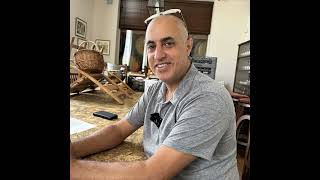
In this episode of The Kosher Terroir, host Simon Jacob interviews Assaf Paz, the chief winemaker of Vitkin Winery. The conversation opens with a candid discussion of how the October 7 war has disrupted Vitkin’s operations – visitor center closures, supply chain challenges, and the emotional toll on staff and the broader community. Paz describes the winery’s response, including donations of wine, modest reopening of the visitor center, and adjustments to vineyard access near the borders. Paz then recounts his unconventional career path: from a tank commander in the Israeli army to a pastry chef, food‑science student at Hebrew University, and finally a master’s graduate in enology from Bordeaux. He details internships at Château Pontet‑Canet, work in Northern California’s Anderson Valley, and a contract‑crush stint in Australia’s Yarra Valley, highlighting how each experience shaped his winemaking outlook. Central to Paz’s philosophy is a return to Mediterranean and native Israeli grape varieties – Carignan, Grenache, Petit Syrah, Maccabeo, and others – which he argues mature earlier and suit Israel’s hot climate better than traditional Bordeaux varieties. He explains harvest timing decisions during heat‑wave years, the post‑harvest workflow, and the importance of balancing vineyard potential with winery craftsmanship, coining a “weakest‑link” theory. Paz also shares anecdotes about introducing kosher production at Pontet‑Canet, advocating for kosher wine as a market expansion, and his role in promoting lesser‑known varieties within large Israeli wineries. The interview concludes with reflections on recent vintages, signature wines (old‑vine Carignan, Riesling, Pink Israeli Journey, Méthode à l’Ancienne), the gendered character of wines, and the ongoing tension between small‑scale creativity and big‑winery politics. Throughout, Paz emphasizes resilience, unity, and the cultural glue that wine provides, especially in times of conflict.
Chapters
Welcome to The Kosher Terroir.
I'm Simon Jacob, your host for this episode from Jerusalem. Today's episode of The Kosher Terroir is a conversation with Assaf Paz, the chief winemaker at Vitkin Winery. Assaf's journey started in Israel, as a pastry chef and at the Food Science School of Hebrew University, but quickly transitioned to wine, graduating with a master's degree of enology from one of the most prestigious schools in Bordeaux, interning later at one of my favorite châteaux, Château Pontet-Canet, and then on to a stint in Northern California and Australia before returning to Israel. Always an innovator, he pioneered the move back to Mediterranean varietals, many native to Israel, and has successfully developed a wonderful portfolio of delicious, but more importantly, memorable wines. Please join us in our conversation initially about how his winery is weathering the war, and then his history, as well as tasting a couple of his latest creations. If you're in the midst of a commute, enjoy. If you're home, grab a glass of your favorite kosher wine. And with the war, please try to make it Israeli. The Israeli wine industry could use it right now. Sit back and relax.
So first of all, welcome to the Kosher Terroir. It's a really pleasure to have you on the podcast. I wanted to do this for a while, so thank you for agreeing to be here. Thank you.
Thank you for inviting me.
To start with, because everything is going crazy with the war, let's start with an update. How has the war impacted Vidkun?
In a very harsh way. We are corona survivors, so we You know, we passed the pandemic. We say in Hebrew, 'Avarnu et Pharaoh,' we've been through Pharaoh, we survived Pharaoh. But this one is much more devastating. First of all, it's not a global thing, it's only us. So there is a little bit, or maybe a lot, to do with us against the world, or maybe the world's against us. We expected that most of the people will sympathize with what happened, and the reactions are horrific. And the fake news and the hatred and the antisemitism raising its ugly head. So this is one thing on the moral side. And the other and more basic moral side, maybe I should say it first, it's the loss of lives and the suffering and all what happened on October 7th. That we were shocked to discover. And then, of course, our main source of selling wine and income is the hospitality, restaurants, hotels, the visitor center, which is our direct connection to our clients. And all of this was shut down for, I think, at least 3 weeks.
So far?
Yes, so far. It's still on the— on the restaurants and hotels are still, you know, the hotels are full, but not with tourists.
They're full with all the displaced people.
Yeah. And we donated a lot of bottles of wines because, you know, I was released from reserve more than 10 years ago, so my unit doesn't exist anymore, even if I want to volunteer. So we volunteer in our own ways of We're giving away wines to whoever we can, not to the soldiers, not to the fighting soldiers, to the families of the soldiers and the displaced families and the people who are fugitive in their own country. And, but the visitor center is really what's really hurting us because it was shut down until a couple of days ago, until Thursday, last Thursday. And first of all, you know, the finance problem, issue, and also the moral issue. We were used to have it full with people, with wine lovers, with people that come to the winery and then they discover the wine through the visitor center, which I think it's beautiful. That's what happened after the corona. It was the post-corona effect, and now it's all gone. And we try to open it in a way that from one side will respect the situation and the people that were hurt mostly from it. So no celebration and no festive way of opening, very modest and very quiet. But from the other side, let the people that do want to get a little, get out a little bit, have a drink, have something to eat and enjoy the atmosphere. So they can come and enjoy our wines in our place.
Are you feeling any impact from Hezbollah, from the Lebanese side of the war?
We have relatives from Kiryat Shmona, so they moved to Herzliya. This is one thing. The other thing that I want to check my vineyards and not— the access is not available to all of them there. We have a lot of We have vineyards that, you know, few meters across the border, the Syrian border, the Lebanese border, and over there, it will be very unintelligent to walk now without any suspicions, without any caution. So I'm in close contact with all our farmers over there to check on them, to see how they cope. To send them as much wine as I can. And now it's a time that we don't visit a lot the vineyard, but it is important in few aspects because we do want to be present over there. So this is how it affects us.
How— where are you in the cycle of the winery? Where did this catch you in the cycle of the winery? Everything was already brought in, or were you still bringing grapes in, or how— where were you on the cycle?
So, eh, Vitkin is the pioneer of the Mediterranean approach, of the local wine, of the, you know, enough with the only Cabernet Merlot, Chardonnay, and Sauvignon Blanc. And I emphasize of only because I think that all those varieties are amazing and they do have a place in the wine field of Israel, but We brought the Carignan, the Petit Syrah, the Riesling, the Viognier, the Grenache, all of those that really adapted to the climate. And what I want to say that most of them are warm climate varieties that mature quite early. So you don't need to wait with them too long like Cabernet and Merlot. If you pick up Cabernet Merlot and Cabernet Franc too early, you get all those green and harsh notes. And the Mediterranean varieties, one of the advantages of them is that you can harvest them a little bit earlier and you won't have like off flavors or things that really bother you. Sometimes you have a little bit lower maturity, more freshness, more acidity, but you don't have this, you know, green pepper in your face like the Bordeaux varieties. So It all brings me to the point that we harvest, especially at this harvest, because of a lot of heat waves, we harvest, we finish the harvest before Rosh Hashanah. We had only one parcel that we, an old vine Argaman, amazing Argaman that we harvest after Rosh Hashanah. And it was still on the skins on October 7th. So it was the only tank small portion that we needed to press after all this catastrophe happened. So for us, most of the winery was quiet and after harvest, post-harvest situation. We still have a lot of work. I always say that harvest ends with the last press of grapes, but the red grapes. But then you have a lot of work of starting to making the blends, put all the reds, fill them in the barrels. Sometimes not all the barrels barrels available, so we need to get out the wines from the last year and then put them in barrels. So we still have a lot of work. So in the first couple of days, we were at the state of shock. We didn't know what to do, you know. So we brought workers just for 1 hour or a couple of hours just to check that everything is okay. And then in the third day, we brought them to make the press. And then we decided that the first week we will work like half days so they can be secure, they feel more secure, and they can go back to their families as early as possible. And then when we saw that it's, it's kind of a war routine, we came back to work full days because there is a lot to be done. We are after harvest, so okay, but still there is a lot of work to be done. And in a way, I think that it's good that we have a lot of work because, you know, I'm connected to the fact that I lost my father last summer. And it was during the press of the rosé, which is like the peak of the intensive work of the harvest. And I wasn't at the winery for one week, which for me never happened before. But then I needed to jump straight back to the deep water and start swimming because it's harvest. You cannot leave the graves with unintention. It's the baby.
Unattended, right?
Unattended.
Yeah.
You know, the baby is coming. You don't— the baby is coming.
You don't have a choice.
You don't have a choice. So because I didn't have a choice then, I needed to go back to life and not continue the mourning and, you know, be soaked in that. And it's the same here. We need to go back to life. And I think it's a big lesson to all of us. We will fight. We will need to do what we have to do. The Israeli army knows the job. He will do whatever it takes. We do— we don't need to listen to all the other nations that comfortably sit in their cozy living room telling us what we should do and what we shouldn't do and by which law we should act. We are living here. We are facing the problems. We will solve it. But we should never forget two very important things. To go back to life, to stand tall, to say to all those antisemitic guys, hey, this, the never again is the never again that you don't hurt us, never again. But never again we go, we take our heads down. We're standing tall and we look you in the eye and we say to you, never again. This will never happen again. And we need to go back to life, to production, to live, to celebrate life, and to show them that Am Yisrael Chai in the most basic way. And the other thing that we need to keep this amazing unity, this unity that comes to us unfortunately more in the moments of grief than in the moments of joy, but we'll need to remember what happened if we were not united. We need to remember that and to know what are the big problems and what are the small problems that we can discuss and negotiate about.
Okay, I agree with you 100%.
I totally agree with you.
Okay, let's talk a little bit about something more mundane, a little back.
Tell me a little bit of the history, okay? A little bit of the history of of yourself.
Um, it's interesting, I didn't know you were— you started as a pastry chef. And so you started as a pastry chef, and what's— what amazes me is many of the winemakers started in bread or in pastry or in— so I'm looking at that on the side.
What, the culinary side?
Yeah, the culinary side. But it's always interesting to me because it's like You got introduced to yeast.
Yes.
In bread and in pastries.
And then I can—
And then you continue to use the yeast in wine. I love yeast.
I love what the results in their action, the results that they bring to the world. Yeah. So yes, I found lately in my parents' house a book that I got when I was 16 years old. About pastries from Aharoni, Chef Israel Aharoni. Amazing book. And since then I started to cook, but pastries, pastries, bakeries. I was more into pastries and, you know, the precision and the finesse of the pastries than to cooking. And when I released from the military service, I was a tank commander, so it was very aggressive military service because when you're a tank commander, first of all, you're shooting, I think, maybe 7 types of ammunitions.
Yeah.
And your best friends, it's a 5-kilo hammer. This is your best friend. And then I went to study pastry course in the school of Tadmor, which was the, like, the highest level of hotel and management and culinary studies in Israel. Gastronomic studies. I never know if it's gastronomic or culinary.
Yeah, both. I think both work.
Okay.
Yeah.
And so I, in like, in, in like few days, I went from this aggression of, of a tank of a Merkava tank. I was the first, one of the first soldiers to be on the Merkava Type 3, which back then was like the Rolls-Royce of tanks. Maybe the Lamborghini. And then I moved to study pastry and cooking, and it was like a big change. But I like big changes in my life. It's really give me a lot of inspiration. And I knew exactly what I want to do. I want to make pastries, bake cakes, make sourdough breads. And that's what I did for like at least 3 years, which most of them I did in Mitzpe Hayamin, which is a very luxurious hotel in the north, very close to where I grew up in Tzfat in the Galilee. And then after 3 years, something told me that I need to go and fulfill myself in a more academic way. And it was my mother actually who told me, okay, my son, you know, it's very nice to have a profession, professional side, and make good money, but you need to think on the future. And like a good Jewish mother, she encouraged me to go and study in the university. So I went to study food science because it was connected. I thought I would go back to pastry as a food technologist. Or food engineer, and I went to study it in the Hebrew University in the agriculture faculty. And over there, since I love the land of Israel and since I love agriculture, I love to touch soils, to plant trees, to— I'm a big tree hugger everywhere I've been in the world. I planted trees from giant redwoods in Northern California to gum trees, which is eucalyptus in Australia, and so on. And I went to study biochemistry and food science. I thought I would go back to pastry, but on the way, a thing happened that showed me that wine is my great love, great passion and great love. Because it was something that connected all my loves. The love for the Eretz Israel, through agriculture. The love for biochemistry, because you deal a lot with science. The love of cooking, because when you're making wine, not with Vouchele, by the way, when you're making wine, you're creating new flavors. And this is amazing. Through grapes, you're very limited compared to real cooking. But this is what makes you really sharp. And I think also the love for people, because through wine I met the most amazing people. Wine is a human glue. It's connecting people together.
So true.
I met you.
So that's so true. So true.
It's really, you know, we met in New Jersey in a wine tasting in Teaneck, and it's like took us 30 seconds to be best friends. And this is, by the way, when I studied in France and a lot of people wanted to, you know, how do you say, poke me or, you know, why don't you have peace with the Palestinians? It's been too long. You have to have peace. You know, when I didn't really have the time or patience to explain them the whole story, and I didn't want to give them history books to know by themselves, I just told them something very simple. I told them, it's a problem. One of the reasons is because the other side don't drink wine. And they completely understand it in like 3 seconds. And when you say that, You know, it shows you a lot of the mentality, you know. On the Arab side, we have a lot of good people. We work with a lot of them together, but when you see what wine does to people and how it connects them, then you see the magic. And I think this is one of the pleasures I drew from this profession. It's when my product connects people and makes them such good friends or No couples and so on.
So you learned, as far as wine was concerned, you learned in where?
In the Hebrew University. It's a faculty of agriculture in Rehovot.
Rehovot.
I took a lot of courses that had nothing to do with biochemistry because I loved agriculture. It was like forestry and orchard and vines, of course, viticulture, courses and herbs, you know, medicine herbs, things that had nothing to do with my major, but I was so into growing things. So I went to study it and it helped me a lot today, even when I'm managing the vineyards of Vitkine and before, big wineries. And from there I continued to the Faculty of Enology in Bordeaux for a master's degree.
For master's degree in France.
Yeah, it's like, it's 5 of— it's one of 5 faculties in France that give the Diplôme National d' nologue, which is like the national diploma of oenology. It's a diploma that 2 ministers in France have to sign it. It took them like 6 years to bring it, bring the original diploma back to me. Up until then, I went with like a permission that I owned, that I obtain the diploma, but the real diploma, it took them 6 years to bring me.
Wow, wow.
They take their time signing diplomas in France.
So when was that? I, I know you spent some time interning in Pont-à-Canet.
Yes, yes. And then apparently I have a small part of Pont-à-Canet making kosher wines.
Really?
Yes, because when I worked over there, it was my first vintage in Bordeaux was 1999, which which was catastrophic. They in France, they call it "bon," which is good. This is the power of French PR. When you have like a horrible vintage, you never say it was horrible, you say it was good. When it's very good, you call it exceptional. This is the scale, it moves up. So I worked in both 1999, which was very challenging, and then vintage 2000, which was great vintage, especially when it came just after 1999. And that was in Château Pontet-Canal. I did my research for the diploma over there together with the manager, the directeur technique of the château, Jean-Michel Combe, which is today is one of the biggest experts of biodynamics wine growing and winemaking in the world. He's consulted the winemaker that works from California to Far East, I think, and a very great man. And we had a lot of discussion because he likes to— I think he's like, he have the Jewish gene because he likes to lead FALPEL, likes the FALPEL, and he likes to check things and to recheck them and to talk about them and to make a research again and again. And we had a lot of quality time together, and one, in one of those times, we talk about Judaism. And of course his wife got my special recipe for challah, which is— she's making until today because they fell in love with this bread. And he told me, you know, a lot of Jewish people, you know, approach me because they want me to make kosher version of poutine. And I told him, okay, and how does this go? He said, no, it scares me. I'm intimidated by it. And I told him, why is it? You know, because so many rules. And I told him, you know what, Jean-Michel, it's very simple. It's like you decide to make one of your parcels in the vineyard and one of your vats in the winery organic, you know, designated organic. So you need to follow all the rules of making organic wine. Later on, I learned that he went for the biodynamic. And then you do what they tell you and you follow. A man like you won't lie, you know, he do exactly what he should do by the rules and then you have the organic certificate. It's exactly the same. Here you have so few more rules that people that touch the wine, it's only Jewish and I explain him, I walked him through this process and I saw that how one by one is, how do you say, is cons, or, you know, pros and cons. Yes, so objection went down one by one, and in the end he said, you know, I will ask the owner, I will ask Monsieur Tesseron what he thinks about it. And I told him, you know, it's open your wine to a whole new crowd of wine lovers that never before tasted it. And I think it's significant. They are good in the business world and, you know, I think it will do you good as well as a business decision. And what really broke the ice and that he told me that like years later when the rabbi came and they started to talk about wine production, he told me, you know what really broke the ice? I told him what? 'You remember you taught me how to say in Hebrew the days of the week?' I said, 'Yeah, of course.' So I told them, 'Okay, so today is Shishi, let's finish it off because you have Shabbat.' And they were like amazed, and that's what really broke the ice and gave them the opportunity to go ahead with the plan. Wow. So I think I had a part in it. And also I've been in his house, he hosted me for a night, me and my wife and my daughter in 2018 for a dinner. And I asked him, you know, a lot of people tell me, ask me why you don't continue making kosher Ponte Cana. It's like years you haven't done. And they, I don't know, it will be too expensive. I told him, you know, name your price, tell it to them, but you should do another kosher wine. Later on, I learned that they made another kosher vintage.
2019. 2019. 2019, they did it.
and it was like, it was 6 months later.
Okay, so he did 2002, 2003, 2004, and the first one again was 2019, and this is 2020.
So this is my job. I didn't get a dime for it, but I'm so happy that so many people have this wine in the kosher wine list because I think it's better for all of us.
Actually, to be quite honest, the 2003 Ponte Cana— anytime people ask me, what's your favorite wine, I think that that is my favorite wine that I've drunk in my life. I've tasted many, many exceptional wines, some of them yours. And in fact, I was going to— I was interrupting you a little bit before when you listed all the varietals. Because you left off my favorite one, Maccabeo.
Ah, okay.
The Maccabeo is absolutely my favorite one. So, it's just awesome.
And I'm happy to introduce— like I introduced Château Pontet-Canet in a way to the kosher wine world, I introduce the Maccabeo to the Israeli wine lovers from our secret vineyard. And, but you know, 2003 was a very hot vintage. Ponte Cana is sitting on a very special terroir, and my research in Ponte Cana 2000 was how to make wines from grapes that shriveled a little bit. So we took grapes, we harvest them at the right time, and then we left them in the cajets, in the cases, for 24 hours and 36 hours. And then I checked it compared to the regular wine we made from the grapes that we harvest and immediately crushed. And we had a lot of conclusions about what's happening to the grapes when they are a little bit shriveled and a little bit more concentrated. And Jean-Michel Combe told me that he had a lot of— he was ready for this 2003 harvest, which all of the rest of the châteaux of Bordeaux was quite shocked because it was so hot. It was the first The first vintage they needed to acidify, to add tartaric acid to their wines because it was too hot and jammy. And Ponte Cana did amazing wine in 2003.
That's my favorite vintage. Some people like the '94 better, but I actually like the '93. I like the '93 very much.
It's a pity that we cannot drink together the 1994, which I still have in my cellar. Okay, wow.
Well, it's not kosher. I still have a 2003, so maybe we can share that together. And I also have a 2019 in my cellar in Jerusalem. So maybe we can compare the two. So it's, yeah, they're very, very cool. So once you came back to Israel, you came out of France, I'm sorry, and you came back to Israel.
No, not straight away.
Okay.
When I graduated, after I finished my research in Château Pontet-Ganay, I graduated and—
Talk about Australia.
Yeah, but I wasn't ready to go back and, you know, take— be in charge of a wine production in a winery like I wanted to do eventually. And I felt that I need more experience and I need more skills to do that. So I went to make a stage to be an apprentice, first of all in Northern California, and then down under in Australia. Do you remember where? Northern California, it's a place called Anderson Valley. I went to California first and foremost because it's the negative or positive of Bordeaux. It's like the complete opposite. Bordeaux is very square, they have their rules, they don't move a centimeter or millimeter from what they're supposed to do, and in California it's like You know, you do whatever you need to do so the finished wine will be amazing. And I went to a place in Anderson Valley, which is a very cool climate region in California. It's close to the Oregon border. And I went to work with Jim Klein. Jim Klein was the last winemaker of Golan Heights Winery. And through the Golan Heights, I got this connection. Before Victor Schoenfeld took the position of the head winemaker. And Jim Klein was the one that made the first Katzrin, and I think also the spark— I think also the first sparkling, if I'm right about it. And he was like, after Jean-Michel Combe, which was like my French mentor, the very precise and, you know, straight French that doesn't walk to the sides. Jim Klein was my mentor for the next level because he's an amazing winemaker, he's an amazing person, and he's an amazing teacher. And this combination doesn't exist a lot. It's very rare combination. People that are very skilled, then normally they don't know how to teach, and people that know how to teach, they don't know how to produce. And he have all those properties. He's making amazing wines, focusing on white wines, aromatic white wines. One of the most amazing dessert wines I ever tasted, you know, that stands shoulder to shoulder with the best German dessert wines, Austrian, Alsacian, and of course Sauternes. And Barsac from Bordeaux. And he also made— I study how to make lighter style white wines because in Bordeaux it's all about full body, red, black, heavy armory wine, wines. And over there I study to make an amazing Pinot Noir, for example, which I produce today in Vitkin for more than 20 years. And a variety called Valdigier. It's an ancient French variety. It's called Napa Gamay. It's a kind of— very similar to Gamay. And all those varieties that give lighter body red wine, today we appreciate them, especially in a hot climate country like Israel. But when I started to make Pinot Noir, people laughed at us. First of all, why do you make this thin reddish wine? Give me the big guns. And secondly, why do you make Pinot Noir? I always need to apologize about it, that I'm making it. But today it's like selling out very fast every year.
Yeah, they're lighter, but they're also— they're elegant, and they also have a level of complexity to them which you get to taste instead of them being over— over the board, overburdened by all of the you know, the heavy—
heavy maturity, the oak heaviness.
Yeah, the heaviness.
So you, you touching exactly the, the important point. You can have a lighter wine, but you don't want to dilute it. You can have a light, light and diluted red wine. Yeah, which tastes like nothing. It's have a little bit of color, it doesn't have complexity, doesn't have— you know, you take the first sip, you don't want the second, you don't want to take the second one. And for me, it's always about the second sip that you want to take. So when I'm making blends and I have all the options and I know what I like, but then I give random people to taste it, people that are representing the crowd, the clients of the winery. I always look at where do they take from the second sip. So they have like 4 options, 5 options, 3 options. They taste them all and then normally they go back to a certain wine to take a sip second sip. So the one that they take the second sip from, this, this for me is the winner because they want to drink more of it. It's interesting, it's delicious. So our Pinot Noir have this dissonance of being very light in color and body but very rich, very complex, and very elegant, exactly as you said. And also our Grenache, more lighter, yeah, but it doesn't take nothing from its complexity or its richness.
Yeah, it's elegant. It's very elegant. So after— so you went to California, Northern California?
Yeah, so I went to Northern California, an amazing place, great experience. And then I went down to Australia, to Yarra Valley.
The varietals you were making in Northern California were which? Like, like a Pinot?
Or were it mainly— so they had the Cabernet Merlot, and they have the Pinot Noir, and they had the Chardonnay. And they had the Sauvignon Blanc, but they have Chenin Blanc, and they have amazing Riesling, and they had amazing Gewürztraminer, and they have an outstanding Pinot Gris. And of course, old vine Zinfandel from unique parcels. And so I had to— I was experienced of making different vinification with different varieties. For me, it's from coming from Bordeaux, it's like working with two colors and then starting a rainbow. Yeah, it was amazing. And also, people in Northern California are very cool people. Today, I think there are some places they go a little bit to the extreme side of being too cool and too simplifying things and not checking their facts. And I saw that in the last few weeks, how it can drive people mad and go to very, very bad direction. But when I was there in 2001, I was in, I was present in the US when the 9/11 happened, and I saw what it made to the Americans, and America is amazing people, basically, but sometimes they are lost. Few of them, extremities are lost.
Yeah.
And I hope they will gather themselves together to go to the, to be on the right side of history.
Please God. So from there you went to Australia.
Yeah.
Where in Australia? Where were you in Australia?
So in Australia, I went to Yarra Valley, and I worked in a very unusual place, which is a contract winery. A contract winery is a winery that doesn't have its own labels. You know that we have this a little bit in Israel. It's a place when people bring their grapes or demand them to make them a custom-made wine.
Custom crush.
Custom crush. And So I cannot say that this is the label I was working for because there are so many labels. But from the other side, this winery made in one vintage almost 200 different wines.
Wow.
200 different wines. And it's like from sharp sparkling wines, Champagne method, traditional method. To heavy Shiraz, full body, and full body Chardonnay in oak, and all in between. So again, I learned a lot of varieties, experience with a lot of technique, technical side. Australians are very good in the technical side, they're very technical, and also they have delicious wines. You know, we know from Australia the heavy things, the alcoholic, the jammy, But if you go and look through the real stuff, you go to the amazing things in Barossa, in Eden Valley, and in Tasmania, and Hunter Valley, and you see amazing wines, fresh, sharp, focused, that most of them aren't exported. The Australians drink them. And of course, an amazing beer.
Yes, too.
And then I learned the phrase that I cited in every occasion today, that it takes a lot of beer to make a good wine. That's what the Australians say. Yeah.
You know, I never, I could never drink beer as a growing up teenager, what have you. And then I realized that it was because I never really did manual labor, hard labor. Once you do manual labor, which I then did when I was a late teenager and early 20s, when you do real manual labor, when you sweat a lot, beer is awesome.
You understand why beer is so successful. Yeah.
Yeah. Before that, I never understood.
We have an amazing brewery in Israel called Alexander.
Yeah.
They have every beer that they're making is excellent in its genre. They're making many types. One of them, it's called Saison. It's like a Belgian ale which they make in the season of harvesting the, you know, the wheat and all their vegetables when people are working under the sun and they need something to drink and to be satisfied. And so this is the beer that they drink. It's 7% alcohol. But when you drink it, you know that it's how great it is for people that works under the sun.
So I'm also, I'm a Belgian ale person. I like triples, I like the higher alcohol ones, but the really beefy Belgian ales are just my absolute favorite. It's like a wine, it's like a Bordeaux.
It's like a meal.
I know, it is, it is, it's true. You're right, 100%. So then when you came back to Israel, where did you come back to?
So when I came back to Israel, the situation is a little bit different because today there are a lot of winemakers that study abroad. I was the first winemaker to graduate from the School of Wine and Vine of Bordeaux, the Enology Faculty of Bordeaux, and I was surprised by that. I was I was sure that they were Israeli for me, but the dean called me at the end of the first year and told me, you're the first one to be graduating, the first Israeli to be graduating. I told him, wait a minute, I didn't finish the second year. He told me, the first year is the real triage, the real filter. If you graduated the first year, you have to die not to pass the second year. So please keep yourself alive. And I came back and I had 3 job offers and I choose to start to work for Tishbi Winery, which is a family winery. I remember that. Near Zichron Yaakov. Very nice people and they gave me a lot of— they gave me basically the key to their winery. I was very appreciating this. And 2 years later I went through I don't know if you can say that, but headhunting.
Yeah.
They really trapped me in their net. Carmel Winery wanted to create a special project of a boutique winery and they zoomed on me and they wanted me to go and start in 2003 harvest. But I already promised to Tishbi that I will stay for the harvest and I told them, you know, I keep my promises. If it's still available, talk with me after November 2003. And they did. They called me and I went to Carmel. I started working for them and I did a few very unusual wines for Carmel. I almost had like a fight over there because everybody wants me to make Golan and Meghalil Cabernet Sauvignon Merlot, Chardonnay Sauvignon Blanc, basically what everybody else did but in a higher level. And I told them, you know, you're Carmel, you're 100— back then 120 years old, today they are 140 years old. And I told them, you're Carmel, you're the one that brought the Carignan and the Grenache. Let's do those varieties, let's do the heritage of what you brought to this world and not be like everybody else. This is boring. And it wasn't easy. I needed to go, you know, I was— the CEO complained to me that People told him that I'm wasting the expensive vats on Carignan. And I told him, have you tasted the wine? He told me no. So first let's taste the wine and then tell me if it's not good what I did. So it was, I don't know how you say, like he's dumb when he's—
It was like, yeah.
Putting blood, I don't know. It was very hard to convince Albert.
It was an uphill battle.
Uphill battle with one hand tied behind my back. I did a very unusual wine called shal, late harvest shal, Gewürztraminer, and they didn't want this wine. Eventually, when they registered this wine to a wine competition, it won like the highest rank of all, and it was like, it was announced as the best kosher wine in the world. So eventually they understood what I tried to tell them. So I left them with the heritage of the old vine Carignan, the old vine Petit Syrah. I told them, don't uproot those vineyards. Let's do something amazing from them. You're Carmel, you have so many thousands of acres. To keep 3, 4 acres here and 3, 4 acres there, even if it will be expensive, you can do it, but it will worth something. And the Riesling of Kayumi, that was my creation. People want to graft it into Cabernet and I told them no. You don't have a lot of real Riesling, especially in this amazing terroir. So I really fight for those wines, the late harvest shal. And I left a heritage in Carmel. It was only 2 years, but very significant 2 years. Eventually it was too political for me, those days, Carmel, and I left. And Biniamina was an amazing house for me. I called it the 7 good years, like for Jacob. Oh, yeah. And Joseph, actually.
Joseph, yes.
So the 7 good years were in Benyamina. I worked alongside with Sasson Ben-Aron as a chief winemaker. And I told him, you know what, you decide what you want to do with the high politics. Let me be in the vineyards. I will take care of the vineyards. I will take care of this. Small technical things that are really important in the winery. Let's make some small batches to study what we have. And we did also very unusual things in Biniamina. And then it was time to go to the next place. I became the chief winemaker of Sigal for a single year. Then I decided that I'm too old for this big wineries and I went And I ask myself— I have a question for you. Yeah.
Because you brought it up. What's the difference between working in a big winery and working in a small winery?
So a small winery, you're doing— sometimes you're doing harder work than a big winery because in a big winery you have for every job, sometimes you have few people to do it. In a small winery, everyone makes several jobs, making several functions, and sometimes it's a lot of things to do. So first of all, in a way, it depends on the winery, it depends on the budget and how it's built. But normally in a small winery, the responsibility and pressure could be sometimes even higher than a big winery. When you're producing millions of bottles. It really depends on you, how you manage it and who is working under you. Secondly, when you work in a big winery, it's very hard to be in contact with— it's impossible to be in contact with every wine and it's still hard to be in contact with few wines that you want to follow. So a chief winemaker in a big winery is like a technocrat, you know, he's a business person, he's a business, he's not a creative. You need to be a little bit more politician, you need to know how to work with people like in all jobs, but over there it's how to move the people and how to direct them. And I'm more a guy that want to be in the terrain, out there in the field. I want to touch the grapes, I want to taste them, I want to to be near the tank when they sample it for me and to check it myself and to smell the smell that comes out of the vats when it's fermenting. So I think this is the difference. Sometimes you can make tremendous change when you're working for a big winery. When I worked in Carmel, I think I made huge change when I moved this big, huge winery to be interested more in Mediterranean varieties. And you know Adam Montefiore, a friend of both of us, he told me, you know, Asaf, after when you worked in Carmel, I know that it was a struggle for you to make those Mediterranean varieties shine in the eyes of the directors and to explain them that this is the right thing to do today, you know. But after you left, every visitor, every somebody that was somebody a wine journalist, a wine enthusiast, a wine merchant, importer, and so on. After he visited and they showed him the winery, they took him to taste the wine that you made, the old vine Carignan and the Petit Sirah and the Riesling. And so eventually those the wines that people remember, and that's why I made them. And people told me, we don't understand you, what's your business plan? You have a winery, a small winery that make a philosophy about those special wines and then you go to a million bottle, 15 million bottle winery like Carmel and you reveal them all your secrets and you make them make wines that will compete you. I told them, "No, you got it all wrong." I think in a larger scale, I think that Israel as a wine nation should do more fascinating wines, should do more memorable wines. Wines that when a tourist come here, and I always look through the eyes of the tourist that comes and don't know nothing about Israel, and they want to drink an Israeli wines, so they can drink an outstanding Cabernet Sauvignon and a delicious Chardonnay, but will they remember those wines? They will remember the Carignan and they will remember the Grenache and they remember the Argaman and they will remember the Maccabeo.
They'll remember the Maccabeo.
They remember the Maccabeo. And when they— This is what they take with them, and this was my motivation. And I told them, I don't want to be a solitaire, the only violin that plays Carignan in this orchestra. I want more people to make great Carignan because only then we can show the world what our strength and how delicious our wines and make memorable wines. So every time that somebody make a copycat of Vitkin and made the— you know, whether it was the wild Carignan, the Perret of Recanati, great job, great marketing job, great label. And the wines of Jezreel, the Argaman and the Carignan and other small wineries. And then in big wineries like Sigal and Barkan and and Carmel, and you know, I was so happy when Eli Benzaken called me, I think 10 years ago, and asked me if he can buy a small quantity of Carignan. I said, "Okay, if Eli Benzaken is calling me after his huge success with the Bordeaux varieties and the Chardonnay and ask me to buy some Carignan from me, okay, I think I made a difference." And Raziel, It's the example. Amazing job, you know. When Viktor Schoenfeld will make a Carignan, then I know I did a real change. Okay.
You know who else actually, you know who else has gone along that line as well as Flum with their new white label is also a Mediterranean blend. Yeah. Which is extremely—
And they say we don't market the wine through the popular varieties. We market it through being a special and unique and delicious wine, and that's it.
100%. So after that, where did you go? When did you arrive here?
So when I resigned from Segal, and it was like, I remember the CEO of Segal pulled back his chair and said, I don't believe you, you're leaving this amazing job with this amazing salary. I said yes, because I want to fulfill myself. I want to I want to know that I make a difference and I wake up with a smile. And those big wineries, you know, I got tired from it in a way. And very, very nice people in Barkan, but the system was very tight back then. Today I think they made a lot of changes.
Tight meaning rigid? Rigid?
Yeah, exactly. And I think that then I decided I need to make a change. I hadn't yet had a place to go. I didn't have an offer or a proposal. I didn't know where I'm going. But I believe in Hashgacha. I think that I was born in Sfat, and they say in the Kabbalah that, "A kol kavua me'rosh, ve'reshut netunah," which is like contradictive. Everything is predestined, but you have the right to choose. So how it's predestined, you will get there, but you need to choose how to get there. You need to choose the path. So I got a lot of spiritual side from my years in Tzfat, and I decided until I'm not making a place in my heart for something new, nothing can go in, you know. As long as I held this position, I'm not open to other positions. So, but I was right, because as soon as I, I thought I will take myself one month of vacation, and after two weeks, the, I don't know how they say it in English, but Tsukaytan, you remember Tsukaytan? One of the Gaza mini wars started. My brother-in-law who managed the winery back then, the wine production, was recruited because he was a high officer in the— in the other— in the army, the one, yeah. And two of our workers were recruited and the winery was full of wine that needed to be bottled and to be prepared for harvest. It was the month of July, I think, or something like that. And Sharon said, you, he was recruited to the army, you were recruited to the winery, come and help us. And so I said, okay, I'm free now. I came back to the winery and when the session ended and Doron came back and he said, you know, Shohana, Asaf, it's all perfect. Just if you don't have any ambitions to go to another big winery, please stay. This is how it should be. You should be here, full-time job. I have my full-time job in the village and you work with your sister and then we go from there. And then I It was fixed for me. I didn't have a choice. And then I stayed in the winery. It was Vintage 2014. In 2015, we moved to this new facility. And I managed all the, you know, how do you say when you move a flat or a house?
Logistics.
Yeah, all the logistics.
Yeah.
And then I just stayed. They said, okay. So today I'm 100% in the family winery and I'm free to develop new products, new wines, and make the wines more precise and more perfect.
Very cool, very cool. So you've been here since 2014?
Full-time job. We, of course, we established the winery together in 2001, so we are celebrating the 23rd vintage.
Tell me about the last couple of years. What's going on with the winery? What are you super proud of? What wines do you love?
So, you know, there are all my sons and daughters.
Yes.
Because a few of my wines are more feminine than masculine. I think most of my wines are feminine. Okay, how so? You know, if you talk about gender, it's like a trap, so you need to be very cautious today. But I think you can identify a wine as a masculine wine when it's very bold, very big, in a way aggressive, even though it can be deliciously aggressive. Okay. —and so it's more about boldness and very clear— In your face.
Yeah. Okay.
And I think feminine wine is more delicate, more elegant, more nuanced wine. The Pinot Noir is definitely more feminine than the Cabernet Franc, for example, or the Carignan. But even though if you compare my Carignan and my Cabernet Franc to other wineries or other regions, Cabernet Franc can and Carignan, you will identify the feminine color in them. The expressiveness. Yeah, more— not as ripe as other Carignan, but more freshness, more complexity, but not at the expense of elegance. So again, I You know, if you ask me which wine is my favorite, I think it depends on the day, the hour, the temperature, and the company.
And the company is definitely a big deal.
I don't think I will ever refuse to drink my single vineyard Riesling from Givati Shai'au or my Pink Israeli Journey. Of course, the Carignan, the Pinot Noir is right at the top. These are what years?
This is 2001, 2002, 2002 or 2003?
You're talking about the vintages as well? Vintages? Oh, whoa, now it's very hard. You know, the Maccabeo is something fascinating that If I can have a— if I can drink wine with the— you know, they was asking once if I can drink wine with somebody from the history. So it was very hard to pick a choice who I wanted to buy, who I want to drink wine with, but I want to drink with them, the Maccabeus. It's a wine to talk about its delicious and yet it's so fascinating that I can talk about it. Sometimes wine that you can talk about, you know, there are a lot of natural wines, orange wine, there are a lot of subgenres that you can talk about them a lot, but I'm not sure I can finish the glass or the bottle. And I love those wines that you can talk about them, but still they are delicious. And this is what's important to me. Vintages, I think Carignan 2005, also 2004 was like this. When I tasted in the end of the corona, 2020 I think it was, something like that, I tasted— End of corona was '21. '21, yeah. Basically I tasted, I took a bunch of bottles to a friend of mine who was a private chef and he invited Talia and me to, for a dinner. He cooked for us, just for the two of us, in his place on the terrace in front of the Mediterranean, the first front. The sunset was there and everything was perfect. And I brought much more wines that he can drink because I want to left a few bottles with him. And we opened the 2004 old wine Carignan. It was 17-year-old Carignan back then. And that was a wow moment for me. Because when we made it, I knew it was a delicious wine and a good vintage. And when I wrote the back label, I wrote that it could age from 4 to 7 years, perhaps longer. So it was 7 years old and it was still alive and delicious. Not just alive, but alive and delicious. And it was— I said to myself, wow, I was probably right with this, you know, prophecy of Carignan, that this is what we should grow here. And also with few of the late harvest wines that we made that age wonderfully, the 2005 late harvest Witkin, which is mostly Riesling. So those are wines that I will come back to every day.
I love them as well. I love them. 2023, how is the vintage looking like?
So we were sometimes terrorized by the heat waves and from a lot of things that happened, happening. We don't have catastrophe like in the last 20 years. I remember This is my 26th vintage, I think. Was my 26th vintage. I think I only saw once or twice catastrophe in harvest in Israel. It was grapes that were shriveled to a level of small stones. Not shriveled in the world like raisins. They shriveled and dried. So no more grapes over there. That was in 2002. And I think a little bit in 2010 in few areas when the vines, the grapes were too exposed to the sun. But other than that, it's not like Europe in humid and wet climates when you can have hail and sudden rain and a lot of problems that can really affect your grapes to a level that that prevents you from either make good wines out of them or make wines at all from them. So this is something that I think we don't have here. It's the promised land. This is the promised land for grapes. You know, not a lot of people say it. This is the promised land for grapes. Of course, we would love a little bit more cool areas or places with different soils and so on. But from a vintage-to-vintage point of view, we can make delicious wines almost every vintage. 2003, specific for your question, was a little bit challenging because of a lot of heat wave, sometimes very long heat wave. But If you are out there in the vineyard, if you're checking the grapes, if you're hands-on on all of the operation, you can identify the challenges and then act accordingly. So in this case, there were a lot of vineyards that we picked earlier and we got all the quality that we wanted. But in the level of quantity, we were affected. So in 2022, we had huge increase in quantity between 20% and 30% on average. The quality was amazing, especially when we saw the quantity goes up and we were afraid of diluted grapes. It didn't happen. And in 2003, they were very concentrated and solid wines that we made, but quantities are lower. And that's why also why we harvest earlier, because when you have less grapes per vine, it's ripening faster. And we finished the harvest before the war, before October 7th.
Thank God.
Wow. So all in all, we are happy with it. But I always like to talk about the quality of the harvests a few months after. Let's talk on December or January. Yeah, no. Now I'm building the blends of the Pink Israeli Journey because this is wine that everybody waits for it. And the dry Gewürztraminer as well for the same reason. And it looks very promising. It looks like every year we are a little bit more precise, a little bit more focused on the quality and the wine style that we want to achieve.
One last question because you brought it up in this. What's the balance between the vineyard and the winery for you? How much is, you know, how much is vineyard, how much is winery, how much There's, there's some winemakers who feel that it's totally the vineyard and that if you don't— the only thing you do in the winery is express what's coming out of the vineyard, but not correcting it or doing anything like that. And there's some winemakers who feel like the winery is the place where the magic happens.
I think both are right. Okay. I think that 100% of the grapes is coming from the vineyard, but it's up to you in the winery, not only in the winery, but also how you grow the grapes, how you grow the vines, how you direct the vineyard to give the production, the quality, and the style of wine that you're looking for, for the fingerprint that you want to put on your wines. So it's a little bit like workers. You have, you have a lot of workers. You know that some of them are very qualified and talented and the other ones are a little bit less. One of them have the capability to do the very fine work and then to go through details, and the other one is more like mass production, and he will take the hammer, he will have a lot of work done by the end of the day, but not with a lot of precision. So it's up to you to see in each and one of them the quality that they have and how you can maximize it and bring it to expression. So this is the work in the vineyard. What you have and what you want to achieve, and if you can get it from this vineyard. Sometimes it's not there. You need to look for another path or another wine style to to make. Sometimes there are surprises, but 100% of the quality is fulfilled or kept in the winery. So you can have the best grapes. It's like, like cooking. You can have the best steak, the best piece of meat, or the best fish, but if you don't know how to deal with it, you will destroy the quality. In the end, you will have very dry fish or a horrible steak because you didn't cook it properly. You overcooked it. So both are right, and I think there is no place that you can say this is less important, so I put less energy on this side or the other.
So it's a real blend between the two.
Yeah, and you know, it's like you're bringing up your children. You know that they have each and Every one of them is physical qualities, but you have the also the, the education that you give them, the guidance that you give them, the, the— you, you, you show them that they, they can achieve everything that they can do and so on. So you can have a very talented boy, but if you don't let him know that there, there is absolutely nothing that he cannot do, he can go to everything that he wants to do and he can achieve everything, maybe he will finish as a mediocre man. In the same time, he can be like this amazing person that contributes and so fulfilled, but he didn't get the tools or the knowledge that he can do it. So it's a little bit like that in the vineyard. You have the vineyard, the potential, and then you need to know how to to fulfill this potential and to keep the quality in the winery. So in the winery, it's the know-how, it's the precision, it's the quality of the work, of the labor, and of course the technology. You can have tanks from gold, but if you don't know how to work with them, your wines won't last and won't be good. So every detail is important. I call it the weakest link theory. In order for the chain of wine production to be intact and to be amazing right until the glass of wine poured in a restaurant or in your home and the wine will be amazing, you need to understand and to make sure that there are no weak links.
That's it. You know, as we've been talking, I'm sorry I keep looking over your shoulder. Because behind you are the guys who are in there, you know, topping the barrels. Topping the barrels.
They call it in French, they call it houillage. We are making houillage to the barrels. And once I asked my professor who is very knowledgeable about French, he's deceased already, he was like the god of white wine in in the world, Danny, Professor Danny de Bourdieu. I asked him why they call it Ouyage, why, why? And he said, first time I don't know the answer. And he looked and he checked, he checked it. He said because on le fait à l'œil, it's with the eye, which we fill the barrel until it's filled. We see it's a— wow, it's not oy vey like in Yiddish, it's "eye" in French, so they do it by the eye. They fill the barrel until the eye shows that it's filled. So, I love it. You see what we did for the— for this war? We had a lot of different plates and a lot of different tapas that we serve in the winery, and then we decided— so one of the changes we made, we made just only one plate but with everything. I love it. I love it. As we say in the world, so Elihai is one of the talented—
Shalom u'bracha. I love it. Beautiful. Thank you.
Yesterday we baked together. You know what we need? Wine. Wine. I forgot about it. This is a new one. People will be—
Chin Blanc. You're changing your style of labels.
Yeah, because this is like a special label, Méthode à l'ancienne. So the, the, from one side, the Riesling is like a, is, is, is very feminine because it's a white wine and it's all about delicate wine, and but It's so straight and it's so focused and it's so intensive that it's also masculine. This is my intake about the Riesling. It's a German-inspired Riesling. I don't want to say German style because this is Judea style Riesling. This is reflecting that you're talking about cultural terroir. And the—
no, no, no, no, I meant it. I, I stole your glasses. That's what I said. Don't worry.
So it's— we want to emphasize the Judea Foothills terroir, which we, we harvest the fruit from. But the inspiration and the, the style is more to the German side and all the Asian styles, more focused, more sharp, more intense. They call it in France, uh, nervous. Not nervous, but, you know, yeah, an edgy wine in a way, because it's sharp. And I think as a wine for food, it's amazing. Now we can't— it's a Shmita, so we cannot mix vintages to make the topping of the barrels.
Never even thought about that. What? I never even thought about that, about topping barrels because of the '22.
Yeah, yeah, you can't top Shmita with non-Shmita, you cannot top non-Shmita with Shmita. Okay, so this one, the Chenin Blanc. Yeah, this I want to taste. I love this variety. But it always went to the, uh, White Israeli Journey. It was always very, very fresh, and this vintage was a little bit more full body. So I took— I, I had an excess of juice and I didn't know where to put it, so I put it in two barrels and it fermented in the barrels like quite naturally. It was a little bit more on the skins. The fermentation was hotter than normally I use. So I always very restrained and I always very precise with the temperature of fermentation. Here, because you cannot control the temperature of fermentation, you don't— you cannot really control it in the barrel. It went loose and it went up, and— but the result was very fascinating. I said, okay, I need to separate. I don't know why this originally— I don't know what I do with it, but I see. I filled it into a tank and I need to fill the tank and I added like 15% of mixture of Macabeo and Grenache Blanc. And in the end, I said, wow, this is delicious wine. I bottle it. I don't know what I'm going to do with it, but first of all, I bottle it because I want to save this result, to freeze it in this situation and to see what happens. And then I tasted it after bottling. I said, hmm. It's good, but it's not ready. I wait. Tasted 6 months later, it still needs time. Still, you know, 1 year later, it's not there yet. Like 18 months later, I said, okay, now it's starting to figure out what it wants to be. And only 2 years after the bottling, we released it. So it's a white wine. Normally we do it only with the inside, with the macaroni. Chabert. I did a special label, I called it Méthode à l'Ancienne, not Méthode Traditionnelle. Méthode Traditionnelle, it's for the sparkling champagne method. À l'Ancienne, that means that you did things like in the old times. The skins were in contact a little bit more than usual, like few extra hours more. The fermentation was a little bit warmer. It's probably indigenous yeast because I separated the juice in the barrels, I didn't add nothing to those barrels, I forgot about it. So, you know, those little mistakes that make perfection. And in the end—
So you didn't add yeast to this? Uh-uh.
You know, there are yeast all over the winery. I know. So I don't want to say it's indigenous yeast, but it's spontaneous fermentation. From which yeast? I don't know. I don't have a lab for yeast. And in the end you get this elegance and this decadence in this wine, but yet you have a lot of power. So again, I cannot say if it's masculine or feminine, but I don't care. It's a delicious wine. It's exceptional. Anyway, this is our new wine. We sell it only here. We have a— I like it a lot. A few hundred bottles. I like it a lot.
Thank you. For giving me the time to be on the Kosher Terroir.
You asked all your questions?
Yeah, I did. The important ones.
You want to make a finish line that thank you, Assaf, for joining me?
Sure. That's what I was just doing.
Okay.
Toda, toda, Rabbi Assaf. Thank you very much for joining me on the Kosher Terroir. My pleasure.
Every conversation and wine tasting with you, for me, it's a big insight about many things.
It's wonderful. Meaningful for me.
So, shalom u'bracha.
And discovering the Tzfat connection was also awesome. I can discuss both of these wines? Of course. Of course. Okay.
This is Simon Jacob, your host today on the Kosher Terroir. I have a personal request. No matter where you are, or where you live, please take a moment to pray for our soldiers' safety and the safe and rapid return of our hostages. And whatever, please buy and share Israeli wine. Thank you. I hope you have enjoyed this episode of The Kosher Terroir. It was exciting and informational for me as well. Please subscribe via your podcast provider to be informed of our new episodes as they are released. If you are new to The Kosher Teruah, please check out our many past episodes. Again, thank you for listening to The Kosher Teruah.










