A Conversation with Dr. Ralph Madeb - Wine Cognoscenti
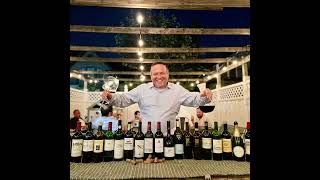
Dr. Ralph Madeb, CEO of M&M Importers, left urology to build a premium kosher wine business importing French Bordeaux, Italian Super Tuscans, and German Rieslings. He sources directly from winemakers like Falesco and Rocca di Francinello, importing only wines he'd drink himself. His strategy balances high-end bottles with accessible options to expand the kosher wine market.
Chapters
Welcome to the Kosher Terroir. I'm Simon Jacob from Jerusalem, Israel, your host for this episode. The following is a conversation with my good friend, Dr. Ralph Madeb, President and CEO of M&M Importers. He is responsible for some of the highest quality kosher wines being brought into the United States today. I've known the doc for many years, and as you might note, he affectionately calls me Zaidy, which is especially funny as we are both Sfaradim. This is a remarkable peek under the covers of the dealings that transpire to bring us some of the most remarkable of kosher wines. Sit back and grab a glass of some incredible kosher wine and enjoy. Doc, it's a pleasure to have you on the Kosher Terroir podcast. It's really a pleasure.
Yeah, with anything we do with you, Zépi, is a pleasure. And we're waiting for you back in New York.
I know, I know, I know, I know.
The only reason we give you a pass is because you're in the Holy Land.
I love being in Jerusalem, so I can't complain about that. Though I know Kadosh Baruch Hu lives in Brooklyn. So, and maybe in Deal these days a little bit.
So that's, that's right. That's right.
So can you give me a little bit of history of how in the world did you get into wine?
Ah, it's a great question. Um, I have to tell you, there's a spiritual side to this and a, uh, an actual, uh, I wouldn't call it business, but I would say non-spiritual side. You know, when I used to live in Rochester, correct? I trained in Rochester for urology. I loved it so much that I stayed there. And, you know, I was a history major my whole life besides doing biology. At those days, I don't know if you can remember, you know, if you wanted to get into medicine and it was harder that, you know, you needed to give your firstborn and you needed to make believe that you, you know, you traveled the world. So I did history as a major to impress our our entry department. And, um, I had just tremendous World War II history. And the funny thing is, I never read about the Jewish side of it, even though obviously every Jewish boy knows. But I was in war, the machines, you know, Hitler, all the generals, like really focused on, you know, the Nazi— Nazism, the philosophical rise, uh, things of that nature. One day my friend gives me the book by Rabbi Lau And I remember when it was, it was on Thanksgiving weekend because Friday, Black Friday, everybody wants to take off. And I basically used that operating room to my advantage. So me and my mentor at that time was a guy named John Balbo. We would do 2 big kidney operations or 2 big operations because nobody wanted to work.
Right.
So I got the book, I read the book, and I fall in love. I mean, I couldn't put my hands down. In fact, the Thursday night after Thanksgiving, we had this big meal in Rochester. You know, Lee Moore, she cooked for 1,000 people. And so we— I couldn't put the book down. I forced myself to put the book down at 2:00 AM because I had to operate the next day. I usually go out after Black Friday with a lot of the guys, you know, the surgeons. I just like went home and finished the book. I was so overwhelmed by Rabbi Lau's book, I actually brought him to Rochester. Long story, and we don't have time for it. I brought him to Rochester. And during that time, I said to myself, wow, this is Rabbi Lau, Chief Rabbi of Israel. I got to bring the best wines. So I started to, and in Rochester, there's no real good wine. It was a poor Jewish town. Anyway, long story short, I went, I called Brooklyn, I called France, I called all my uncles that, you know, had wines. And I shipped from all over the world. You can't imagine, Smith-Laffey, that that time the Double Cave Black was was the big Israeli wine at the time. Shoresh, Misty Hill. I mean, I picked out, handpicked. Can you imagine? And I had 50 people in my house for a select dinner. It was a fundraiser, right? We wanted to fundraise for the shul and fundraise for his shul. And I opened all these bottles and I put them in front of him and he tells me, boy chick, I only drink grape juice. So I'm like, what? I said, Rabbi, you know how much trouble I went to get all this because I thought this. He says to me, listen, for all the trouble, you should have a big bracha in the wine business, in the wine loving. And he just like this off the cuff, we had a great weekend with him. 6, 7 months later, I got a call to become one of the head doctors for Constellation. Constellation is, uh, um, it makes Herzog looks like their kindergarten. Okay. Yeah, they're, they're, they're on the stock, they're on the stock exchange. They're the largest distributors, purveyors of all French wines. They're Mondavi, they're Opus One. I mean, you know, they are the— all of Ricard is under them. They're the largest distributor in the country. And both Rob and Rich Sands, who I became friendly with, they were the CEOs because I was trading a lot of their vice— you know, them and all their senior vice presidents. They would come, we would have private office settings so they didn't have to wait, and they basically, every time they would come, they, "Here's Château Mouton, this is Opus One, this is," and I'm like, "This is Petrus." I remember in '85, Petrus, I'm like, "Sorry, I can't drink this. Sorry, I can't drink this." Finally, they start asking, "Why can't you take these wines?" So I explained to them there's kosher, non-kosher, and this one, and they slowly, they educated me about the business of wine, and I educated them about The kosher, what it takes to make kosher. And so I had all of the— I had like private tutoring in the wine business and the wine world, in wine, but I didn't drink anything. I didn't drink anything until I got from Rabbi Herzog the Hated to try to spit and things. But I got this tremendous, you know, education. It was sort of like private tutoring. You know how kids get private tutoring for the SAT or the MCAT or the LSAT? Same thing. They, they sat and taught me a tremendous— and they started with connections.
Wow.
And that's how the non-spiritual side, so to speak, got me into the wine world. Then I called my uncle Ben O'Salem, one of my father's best friends, and he was one of the 26 premier barrel owners with Edmund Safra at the time, with Fabrice Harari, all these very wealthy bankers, businessmen from Europe who was tired of drinking terrible kosher wine. So they started Smith Lafitte and I called them, I called them and I told Benno, can I get a barrel for myself? He says, well, let's try. So he called up, I think the time it was Benjamin Ouzan, the winemaker was Suissa at the time. And he said, look, my godson wants a barrel. So he said, no, we can't give him the same price. You know, the French thing, so hard to deal with. "We can't give him the same price 'cause you bought it 2 years." He goes, "He didn't even ask about money." So they gave me a barrel and I sold the barrel in 8 minutes. So I'm thinking to myself, wow, what an easy business. This has to be easy. 8 minutes, you sell the bottle, put money in your pocket. And then I call him back and I said, "Listen, I'm sorry, I sold all 300 bottles to my friends. They're all fighting me. Can I get another 150?" So he sent me another 150. So me and my partner at that time, you met him. David Motovich. We said, this is so easy. Wow. With this. But however, if I knew now what I knew then, I would have paid double to not be in the business. But that's how it happened. That's how you— Smith Lafitte got me in. Yeah. That's how I— that was my foot in the door. And when I called back Constellation, they told me, this is this. No, then you have this legal problem and that legal problem. So then I applied for a full licensure. We got vetted. They, you know, they— we did all of that paperwork. And then I got into the business and then IDS was my shoe-in because they had all these French wines and they had nobody to represent them. And so I started on that premise and my volume between me and you, Zaidy, you know what comes here. You see the volume, we're the highest premium market people. And my volume justified them to make more runs for more because now there's a final, you know, for IDS it was a final legal direct distribution because nobody wanted to deal with them and, you know, their attitude and the fact that you can't, you know, the money in IDS is so small because they take all the money. So, but we want, we all, we all I cared about is kosher wine. In fact, most of my, my, all our complaints were that We drink all our profits away because we just, we love the wine, we drink it and we don't use it to make, we don't, it's not a moneymaker. In fact, we're just pouring money in to make new labels. So that's like 40,000 feet how I got into, I mean, there's little other knickknack stories, but that's how I got into the business.
You know, I'll tell you, I am so impressed with the portfolio. It's like a home run selection. Every, every, um, you know, starting with the French wines, which are IDS, but there aren't— it's just about every major Bordeaux, kosher Bordeaux that I'd ever want, uh, and that I've ever drunk in the past, um, is there in the portfolio. It's just incredibly awesome, everything, you know, whether it's—
I mean, my, my rule, my rule And I think I've told this to you in one of our many dinners. If it's in my portfolio, I would drink it with you. There's not one bottle that I make that I won't drink. It will be on my table. I'm not afraid to serve it to my, you know, my non-Jewish doctors, everyone, starting from simple German Silvaner, you know, to our Mevushal line, to obviously the premiums. It's just, I only make what I would drink.
It's amazing. I'm really enjoying them. That's the reason I wanted to talk to you. But you're also—
Yeah, but—
Yep, go ahead. I'm sorry.
No, I'm saying, one of our issues—
I hope you're drinking wine in the background. I hope you're drinking wine.
It's not coffee. No, this is coffee. This is coffee. But I tell you, yesterday we had some of our boys over, you know, the boys who didn't go to deal or who, you know, stay back Monday nights to be closer to work. We went to Jonah Bibi, you know him, and we opened all, all our, all of the new French that just got here.
I saw that picture, actually. I saw that picture.
Oh yeah, that's right.
I saw that picture. And you know, that was last night, you and your family, you know, with a couple of extra, but it was all of the family.
Very cool.
Yeah, that's true. So What I'm— one of the things that's special about you, Ralph, is that you're, um, there are people who are winemakers and they're, uh, they're very scientific, and they're people who are distributors and they're very sales, and they're people who are in the wine business, but nobody is as comfortable to talk to people as you. Honestly, I think you're, you know, you're, you're phenomenal. And I think part of that is part of the reason why, as much as IDS, you know, really created this portfolio for you of wines and Geshem's wines and what have you, the new wines that you're bringing in yourself that are coming out of Italy are crazy, are really crazy. And there must be some stories about convincing some of these wineries to make kosher runs, the new Falesco. What's the story there? How did you get them to bring back some of these wines?
It's a great question. You know, Falesco was, um, and I think you can attest to this as well. I mean, more than anybody, you know, the traction of changing over from creamy Malaga to something else was all French, right? So you had local Sacramento wine, so to speak. You had Herzog making good California wines. You had French wines, whatever we can get, and Italy really just took a backdrop. Italy overall took a backdrop, the wines were very cheap, were considered sacramental everywhere else in the world. And what ended up happening was they created Fallesco at that time in 2005. There was 3 runs if you remember, the '05, the '06, and the '08. It was handled all gray market, so to speak. A lot of people fought to get the label. In fact, IDS had the '05 '06 was split between Herzog and a couple of people, and '08 was just totally up in the air. A lot of product that was lost. The 2008 was a very, very big hit. It was placed in places that were not hygienic, were not temperature controlled, and what ended up happening is that they were very insulted because they didn't treat the Italians with the respect. And I can tell you, being in Italy, 3, 4, 5 times a year. They'll know you all day long. All day long. No, no, we can't, we can't, we can't. You have them one drink with them, one espresso, one cup of coffee, you become their friend, they'll do anything to make that kosher. And it hurt them. It hurt them what happened in 2008. They lost a lot of money. A lot of the wine was sat in the port. Uncontrolled heat, and they didn't even care about the money. Cotorellas are a great family. Pierpaolo currently is the CEO. The father, Riccardo, is just saving varietals, running around the world consulting. And what happened was, again, medicine came in the forefront.
In the equation.
I was Yeah, I was providing care to a local Italian American from Queens, and he told me, "I see you love wine." I said, "Yes." You know, at that time my Instagram, you know, he said, "I saw you on Instagram, it was all wines." He goes, "You know, one of my best friends is a guy by the name of Nunzio, who you met, Castaldo." I said, sounds like a real Italian to me. He goes, yes, and he's been in the wine world for 30 years. So I call him up, I said, hi Nunzio, I'm the doctor of your friend so-and-so. He says, nice to speak to you, what do you need? He says, well, I heard that you were in charge of a lot of wine, and in fact one of the wines that you have is one of the wines that was very famous for the Jewish market. So we started talking about this. I live in Forest Hills, there's so many Jews. He's telling me, I'm the shabbos goy for the entire community. So I told him, yes, that's us. I said, I want to make this kosher again. He goes, guess what? Not only that they won't, they even have one that's not kosher. I said, what happened? He says, you know what happened? Everybody tried to get too clever. They didn't pay. They ruined the 08. By the way, that's why, Zaidy, you find some '08s that are perfect and some of them that are just not good because some of them were left at the port. Yeah, because there's crazy bottle variation. He goes, yes, and they made the '14 and it's still percolating, but we're not giving it to— what happened? I said, Nunzio, I'm a doctor. First of all, patient first, do no harm. We want no harm. We could try to help, but we can't cause harm by trying to help. I said, that's our golden rule. That's our ticket. I said, what I'm telling you now is the following. Whatever happened with my colleagues, they didn't pay, they didn't do anything. I'm embarrassed and it's not right, and I will take full responsibility for what they did. He goes, what do you mean? He said, you know, the truth is all Jews are related. All there. And by the way, he's a very spiritual man, Nunzio. I said, let's see, what's the problem? You're worried about payment? Tell me how much the entire 2014 vintage is. So he gives me a number. It's 10,000 bottles. I write him a check. Here's the full value. What do you mean? I said, this is the full value. This is how much it costs. This is how much I know the bottle was put into production with the haj kaka. He has the full check. I met him. I said— he goes, you serious? I said, sure, I'm serious. He's about to pick up the check and I grab it back. He goes, ah, you see, I knew there was a catch. There's no catch. If I'm saving your project for my people, you have to save your project for your people. He goes, what do you mean? I'm going to make the $14 million and I'm buying it outright. You can cash the check today. But I want the 2018 to be done. You make 2018, you got a deal. And that's how we made the deal. Wow. And Nunzio, who was the senior vice president for Winebow, at that time, Polesco was with Winebow, now they're with somebody else. And Nunzio became my consultant, full-time consultant, for the last, since 2000, I would say '16. And we've been all over Italy together. He opened up 20 new wineries for me. And exactly what you said, Diamond, the entire development of kosher Italian premium wine is based on connections. It's not how smart you are. It's not how prestigious you are, how much sales you have in your company. If I came there with ripped pants and a seatbelt, Nunzio told them, "This guy is God. We have a kosher run deal." And so that's how it started. Follesco, we brought it back kosher in 2014. They were very happy. Then we made 2018, which is released now. And we have great connections. Nunzio introduced me to, who I think you've met before, Alessandro Cilai.
Yeah.
Which to me, which to me, talk about relationship and kosher, he is, first of all, he's known as the King of Tuscany. He's probably one of the most famous Tuscan winemakers in Italy. And so he's the one who makes, the one you told me about the map problem, he makes the Sicilian wine. He makes the Chianti that you know with the bird, Castellari. And he makes the Super Tuscan.
Super crazy.
That's crazy, yeah. He is the lead winemaker. Wow. Yeah, and then we made the Super Tuscans from Rocca di Francinello, all him. And he thanks me every day, you know, instead of, I'm thanking him, thank you for making it kosher, thank you for, and these are award-winning wines. These are like top shelf in the kosher world. And he's like, thank you for giving me the opportunity to make kosher wine.
Italian? I was actually brought up with Italians. I was brought up in a little town called Verona, New Jersey. So you can imagine the Italian population there.
You have a connection to Verona, Italy.
I have an incredible connection. And when I was in Italy, I passed the town of Verona. I took a picture of the sign because we went up to, we went across Italy, my wife and I. And we went and visited Asti, and it was, uh, crazy. It was just incredible, incredible to see the amount of wine they were making, and that it was kosher. It was just incredible, just really special.
Yeah, look, it's a— it's very special. I mean, um, obviously you see my, my, my, um, my portfolio. We don't deal with, um, like the Astis in the world, because, because they do, they do. They do great work. I mean, there's no need to create another sparkling Asti Moscato wine.
You have a Moscato in your portfolio. You have a Moscato in your portfolio.
We have a dry. We have a dry Moscato that we made. A dry Moscato, which is like the old-fashioned dry Muscat that all the sommeliers used to drink. And we made a Nebuchadnezzar for the restaurant. People, it didn't take off great. I'm not gonna lie. Not every one of our— that one I think was too academic for the people. Because when you're, when they, you know, if they sell it as a Moscato, they're like waiting for that sweet sparkling, you know, punch at the end, and it's totally, it was bone dry. So anybody who understands real wine, they love the Moscato. It's my bucha, we put it in, we wanted to try to push it as a white wine for alternatives. But, you know, sometimes your love doesn't take off. Like, that was my passion, but People didn't see it, so it wasn't the greatest thing. But I have, you know, the beauty about Italy besides everything you mentioned is that first of all, you get much more for your money, okay? There's no middleman. It's not like in Bordeaux. In Bordeaux, I'm not allowed to go. Let's say you, Simon Jacobs, own Château Canon, you can't sell to me. It has to go through the negociante of The Vin de Bordeaux, for that organization. So already there's another player in the middle. Forget the fact that if you have a Jewish player, then they're taking the majority of the profit. So a kosher wine will always, from France, always be double for the same quality than an Italian wine. So if you would take out the varieties out of play, you went to a winemaker, like analytic laboratory in UC Davis, And you gave them my Pescaia Barbera, and you give them— I'm not going to talk about Smith-Lafitte, but you gave them Latour de Bille, and you're giving them two same styles, same winemaking capabilities. The analytics will be equal, but the Barbera will be $50 on the shelf and the Latour will be $100.
Right.
Because there's just so much more people involved 'til it gets to the shelf. And that's what I think is a huge beauty about Italy. Not to mention that we're making superstar wines. I mean, people don't realize, Rocca de' Fransinella is the number one Super Tuscan sold in the kosher market in the entire country. And we make it kosher. So, you know, we're doing good stuff. I love Italy, I love being there, and the people are great, the people are warm, And you know what, I wanna tell you one thing else. You know what I also noticed? When the rabbi walks into the room, any room we have, every guy in the room, the winemaker, they stand up. You know, just by habit, by natural. You know, they have such appreciation, even if they're not religious, but they have appreciation for the Pope, for the, you know, Rome, you know, for the bishops, for the cardinals, for God. And so, this is not my faith, and maybe I'm not a religious man, and they get up out of respect. Which to me, you know, it shows that there's still a bond. Don't forget we're brothers there, we come from brothers. Esav and Yaakov are brothers. So, you know, it's a nice thing. I enjoy making wine there. I enjoy all the different varieties, you know. You know, there are more grape varieties in Italy alone than the entire world together.
They make more wine than any other country on Earth, and I never knew that. I thought France was way ahead of everybody else. They're not. Italy now makes more wine than even France. France is, you know, a reasonable second, but Italy is number one in the world. So it's, it's pretty amazing.
They have enough history, they have a great history, and they have revolutionaries. You know, you take somebody like Antonori. You remember Chianti days? You remember the Chianti days where they were sold in that hay thing on the bottom? You know, those Chianti casks? Yes, yes, yes. Everything had to be in casks. You know, I remember there was a magazine when I read his book, he wrote a book, he wrote two books on Tienello and Sassicaia. He wrote a book about how he got to where he is. And I remember there's a cover of him standing on a mound of those Chianti tusks, right? You know, all those, the, you know, the bamboo—
bamboos that they used to put the bottles into.
Yeah. And they put like 1,000 of them, and he's standing on top with a bottle of his in a Bordeaux bottle, a Bordeaux bottle, uh, with his first, uh, Super Tuscan, so to speak. Um, he was a revolutionary. He didn't let them, you know, stay in the 1940s. I mean, he really wanted to push the agenda, make Chianti an international grape. He wanted to create something, and Italy is fraught with that. It's great. They're young, they're aggressive, they don't get locked into the history. They want to keep it making better, and they want to make more wine. And by the way, I make a lot of French wine that's not IDS. I mean, Château Vallandro, it's coming in today, by the way. Right after this meeting, I'm going to my warehouse. It should be there. We make wines that are our own, but it's never the extreme experience. Never.
Because, because you still have to go through all of the negotiation. I'm interested in a few of your really high— let's talk about the high-end Tuscan wines a minute.
Okay.
The Brunello. You have two Brunellos, don't you, coming in? Or only one?
We have 3 Brunellos. 2 Brunellos, sorry. No, we have 3 types of— but we have 2 Brunellos, which means we have the one we make every year, and in certain years when the vintage declares, okay, and only Montalcino— I'll give you a little bit of a history of Montalcino.
Please.
We make a Reserva, and it's sold as a separate bottle. So we have the Brunello that's made every year, we have certain years we have Riserva, and we have a Rosso di Montalcino, which is the third wine, which only ages for 3 years. So for Brunello to be a Brunello, it must, in a combination of bottle aging and barrel aging, depending on the place, you know, there's— it has to be at least 3 years in barrel, could be more, and at least 2 years in bottle, could be more. And Montalcino is a town, beautiful. It's like when you watch the movies and they want to show you what Italy and the Tuscan mountains are, Montalcino is where these pictures are taken. It's the most scenic, the most beautiful mountainous and vineyards and very small, very old-fashioned living. Everybody knows everybody. And they make the greatest wines. Obviously the premier, the one that LVMH bought out was Biondo Santi. So that's the prototypical. My favorite, which is on my radar, is made by Alessandro Mori. He's a lawyer and he makes a Brunello made under the label of Il Maronetto. Beautiful. One of the best expression of Sangiovese in the whole world. Very small and probably the most scenic winery in the world. Like literally when you— they show you pictures of open Tuscany, that is his winery. I'll send you a picture of me there. He was a— just as a quick note, Alessandro was a lawyer. His father was a very famous lawyer in Siena. He's still practicing law, and he got his son a job in Rome to be a real estate lawyer. And he, he just couldn't imagine himself sitting behind the desk for his entire life. And every summer the family would go to Montalcino. You know, they built them a pool. They were wealthy, obviously. They had the winery, and they would just make wine, grow grapes, and sell their grapes. And And he's like, I'm done with the office. He picked up his life, moved to Montalcino. And he created this brand. Sort of what I probably wanna do with prostates. I'm done operating on prostates. This is what I'm gonna do. But he has probably the most fascinating story, fascinating wine. And so I visited them all. And then finally, I went to the ones that we're making, made by Fabio Tassi.
Yep.
Fabio Tassi's— his family is 100 years, if not more, owns the center square of Montalcino. In fact, you know, Montalcino is between Siena and Pisa, and they're always fighting. Montalcino was a respite town, and they have— they had castles to protect them from the warring. And so he owns the castle. In there, there's a butcher shop. You see all the bruschetta hanging, and you see, you know, and he has probably one of the largest wine shops in the world. So Fabio became very good friends with Joey Sit. Joey Sit, you know Joey, Thor Equity, he's my partner in this wine. He basically, went to Castiglione del Bosco, which is a hospitality place in a vineyard, very small vineyard, and he tried to convince them to do kosher. And they said, Joe, we love you, we know you stay here, you know, and he has a big flair, he lands on the vineyard in a helicopter, you know, but sorry, we can't do it. So the export manager comes over to him, his name is Roberto Roscito, and he tells him, Joe, I want you to meet Fabio Tassi. You're talking about in the year of 2000, I would say, 2015. So we just started this business. So in 2015, he flies, falls in love with Montalcino. He meets Fabio Tassi. Fabio Tassi says, I'm gonna make your kosher. So he asked Fabio Tassi, he goes, look, I am Fabio Tassi, this is my family. Franci is my high-end Brunello, Tassi is my second, and then we make an Acquabona, which is our Rosso di Montalcino. And they hit it off and they made the wine. But Joey said he's a real estate guy, has no idea about wine. So his lawyer, Morris Misri, who was a good friend of mine, whose son happened to pass away, so I was more friendly with him then, may his soul rest in peace. And he called me, he says, I need you to save this project, Joey doesn't know what he's doing. Because they, you know, look, it's very easy to just pay for wine. But it's difficult to understand the process, the laws, the COLA labels, you know, how it comes in. There's enormous amounts of details.
Yeah, there's enormous amounts of details.
So me and Joe, you know, and—
Not breaking rules.
So me and Joe, we sat down, we— yeah, yeah. So we hammered it out. We hammered it out. We spoke. And we made the wine. And I had a lot of conditions. My conditions was, I wanted to see if they're really up to it. Now I knew they give grapes to Biando Santi. I know they gave grapes to all these people in those area because Fabio was just launching his own label. So we took our, so he gave us one vineyard and we call that the Bettina Vineyard because that vineyard is his wife's name, Betty Sid, Bettina in Italian. And he has the other vineyards that he names. Yeah, that's Bettina Cuvée because it's named after Betty Sid. Wow. And Betty Sitt's a big philanthropist. She does all the chesed in our, you know, for the women in our community. So it was very appropriate. And his other vineyards, he named them, he also names them. Colombo is after his grandfather from the mother's side. He has Giuseppe Vineyard on his father's side. You know, so it was something that was natural. Well, we submitted them into a blind tasting. Blind to James Suckling, Parker, like the top guys. And the kosher vineyard got higher score, blindly got higher scores than the non-kosher. Parker gave it a 96 and Suckling gave it a 95, or vice versa. Suckling gave it 96, Parker gave it 95, and, and the, and then the non-kosher got 1 point less, and the Reserva got a 99 points.
Wow.
Wow. So it's a, it's a great love story. We love it over there. It's so beautiful. We go there and and the wines. But there are a lot of rules, uh, I mean, they're not idiots. For example, you cannot release it before 5 years. Another rule, for example, take the Rosso. The Rosso di Montalcino was a way that Montalcino town tried to make a cheaper wine. Everybody knows that Montalcino in Italy commands the highest respect and the highest amount of money. Well, we're talking about the commercial world now, so they're like, well, nobody can enjoy it, so they made unless they made a lower line that it only ages 3 years, not the 5 years, and, um, and that they need to have—
you can blend into it.
And that you can—
it's like a— it's a Super Tuscan, isn't it?
Yeah, it's, it's considered Super Tuscan, correct?
Yes.
Uh, but they, but they, but they call it Rosso di Montalcino, so they don't call it a classic Super Tuscan. Because they always hit the Mount of Saint Jovis. Now, we— you can only sell it between €30 and €50. Well, our Moschia costs €30. So it's never— we were never able to sit. And in fact, if you look at our Rosso di Montalcino, it's actually labeled IGT, which means undesignated, so to speak, like all the wines that are not in the categories. Why? Because we can't sit into their, we can't sit into their price structure. But Montalcino is so strict that even the price structure, even the price structure, they take, they take charge of. So once you write it IGT, you could sell whatever you want, right? You could sell for a dollar, you could sell for $2,000 because it's not in the designation, even though not only is it a Rosso, it's a baby Brunello because our Acquabona is made exactly like the Brunello because we don't have enough infrastructure. Remember, we're in their winery. We're doing this in their home. So we don't have enough infrastructure to use other grapes.
Not to do exactly what you do.
So basically we make a Brunello and after 3 years we bottle it and that's our Rosso quote unquote. But you see, they want to do it. They don't harass you, "Why do you have to do it this way?" This is how maschietto costs. We didn't fit in and this is what we do. But it's a beautiful way to get a Brunello, a baby Brunello at a quarter of the price. It's much cheaper than what a full Brunello will cost. But the Montalcino is a beautiful place to visit that we send— you know Judith, my cousin Romano, who does all the touring in, uh, in Milan, out of Milan, she sets up. Yeah, she sends people to, to, to Montalcino all the time. Very impressive winery.
Very cool. All right, I want to go over a little bit, um, there's a couple of other wines I want to talk to you about.
Yes, so Serra Paolo, Serra Paolo is made by Claudio Quarta.
Okay.
And it is a non-typical, this is the key word here, it's aglianico. Aglianico is the name of the grape.
That's what I'm looking for, Aglianico.
Yes, yes. So Aglianico is the name of the grape that is Southern Italy. So if you go to California, you have California Cabernet and California Chardonnay. Yeah, people will dabble with Zinfandel in certain areas, but when you look at a textbook and you look at planting per acre, Cabernet is 1, Chardonnay is 2. Southern Italy, is Aglianico and Falanghina for the white, and some Fiano. Do they have other varieties? Absolutely. Number one planted is Falanghina for the white, and the red is Aglianico. And you can imagine how much you can do with Cabernet, meaning there's tremendous amount of variations you could do with Cabernet. Heaven's sake, take a look at Ginestra, the sweetest Cabernet you can even think of. And then they make Stag's Leap single vineyard, you know. So Cabernet, very versatile. Same thing with Aglianico. Just like in Piemonte where we have our Barolo region, everything is Nebbiolo, right? So Barbaresco is Nebbiolo, Barolo is Nebbiolo, there's a Langhe Nebbiolo that's aged only one year. So every region in Italy has their king and queen grape. And so in the southern part Aglianico is the number one red grape. Falanghina probably, although they have Greco di Tufo and they have Fiano, which is other white grapes, they're not as popular as those. Now besides that history, you know, introduction, there's another introduction you have to know. There's certain areas that are very famous. Irpinia, which is the Sena Paolo, and Tarrauzi, which is right next to it, are very volcanous and terroir-driven wines. So you'll get a lot of what people might say is reductive notes, you know, like burnt. People will say, oh, this wine is reduced. It's not, it's more of that's the volcanic soil that you have there. And so to put on top of it the Irpinha Elianico, which is the one you mentioned, São Paulo, is a totally different wine. In fact, fruit notes takes a back seat to earth notes. And it's probably, and I can tell you two wines that I know in the history of kosher winemaking, and both of them are ours, that do that. It's not because we're special, because it's the earth. The Nero d'Avola from Sicily.
Yeah.
And the San Paolo Alpina, where if you open it, you're smelling jasmine, you're smelling lavender, you're smelling, you know, you know, grass. It is a total herbal bouquet that takes, that takes the, that takes the taste, takes the aroma. It's all of these senses are are opening that way where fruit makes a back door. The beauty about Aglianico is cheap. So that wine costs anywhere between $20 and $30 depending on the sale. Because it's a high-end, well-made by an excellent vintner, Claudio Quarta. Just in full discretion, I didn't commission the wine. Yeah.
Full disclosure.
To disclose it really, Joel Bernstein did it. And he saw that I was already coming there, right? Because when you come to Campania, there's only two people making kosher wine. So he heard about me, I heard about him, he told me take it, and I said no problem. Because from there we actually went to two wineries. The first winery is Mastro Berendino, which is probably one of the oldest. He has a museum on his property. One of the oldest and probably one of the smartest one of the biggest winemakers in the entire world. He controls Southern Italy. He's a professor at the university. And we tried to make it for him, but there were legal restrictions for the rabbis, their unions, so we couldn't get in. Because Mastro Benedetto is a— it's a big name. It's like you saying, I want to work for Walmart. You know, you can't just walk in and say, hey, I'm here for a job, as opposed to coming into a Kings Highway mom-and-pop shop, says, you have any work for me? You understand, Mastro Berendino is a huge syndicate, it's part of the university, so we couldn't get around it. But they told me about Faude San Gregorio, which is the number 2 winery in all of Campania. There are a lot of little ones, but they're ran from Campalda, which is a famous family from Rome. Maybe even Jewish origins, we're still looking into it. And they loved the project. There was, Joel and Yossi Horowitz did do one small run when they did their test run to see if they could do kosher, but that was a little private label. And we just released the first commercial falanghina and rubrato. Rubrato is the entry-level aglianico, and it's next door to where they make the one you asked me about, il pigna. We are making an Anepina, we're making a Serpico, and we're making their flagship wine. It's called Piano di Montevergine, which is their aged Aglianico where the oak will soften. Aglianico is a hard grape, Zaidy. It's not— it's like Cab, it's big, it's bold, it lasts for 60, 70 years. Wow. Like it doesn't peak for 30 years. It's a it's a huge, it's a huge acidic, big, bold, and the aging potential is just tremendous. So it's very nice, you know what I love about it is I can jump over to the Amalfi Coast, I hang out in Santa Marina, I can eat Positano, and then I drive to the winery 30, 40 minutes, and we get a beautiful expression of what Southern Italy was, like literally in the times of the, you know, Romans and in the times of— and there was a lot of wars in Southern Italy, so there's crazy history. And we did Fal di Singegorio, it just got released, it's here. We have an entry-level white, an entry-level red between $20, $30. It's a beautiful wine. The Falanghina is the typical expression of Falanghina, so it's beautiful. Iannico, people have to get used to the notes, but once they do, they love it. It's a barbecue wine, it's not expensive, It's also approachable, isn't it?
Approachable, really?
Very approachable.
Yeah.
And I'll tell you one other thing, for the Israeli drinkers, yeah, for the Israeli drinkers, it's very good for them. It's very— they like it a lot. And the reason is, is that Israel has become dominant by hot, you know, high sugar, high alcohol volume, um, because of the nature of Israel. I mean, it's hot there's a lot of sunlight, they harvest the first in the world, and Southern Italy is not so far off. It's still Mediterranean, it's a little more temperate, but they share very similar characteristics. And so therefore, a lot of our Israeli drinkers love to drink Italian wines to move them over. And then we started with them, we started with Faldi Densissimo Gregorio, beautiful. We made all the levels. There's a new rosé coming out called Visione, which doesn't even drink better until the second year. That's how powerful it is. Remember, it's the grape that you're dealing with. So we're excited. And then we went to another guy, to Masseria Frattasi, who's the third winery down there we dealt with. Masseria Frattasi is basically the king of Southern media. His family owned all the newspapers of Southern Italy. You know, The northern Italians and the southern Italians.
Totally different people. Yeah, no.
One works and one drinks.
That's right.
And not only everything, pasta was made in southern Italy, wine was made in southern Italy. They're just bastards. They just copy everything we do. It's so fun hanging out with them. And Masseria Frattasi is on the Tabur Mountain. Funny how they call it Taburno, which is very similar to Har Tabor. Yeah. And it looks like Har Tabor. So they feel that there's a lot of connections with Israel there. In fact, there are old archaeological digs with a lot of Jewish remnants in history down there. And it's all dry irrigation. It's on the mountain. The University of Salerno, which is the southern university, says that they have the oldest living wine rootstock and vineyard. The vines are the oldest of Southern Italy. So it's specially guarded by them and it's all dry irrigation. It's on the mountain, they use zero water. And we made, you drank it, you know the Donna Laura? Yeah, yeah, yeah, yes, yes. That Jay Brooks found love.
Yes, yes, yes.
That is one, that is the oaked version of Falanghina from that mountain. And so again, we're doing it. We're making everything we can to be very authentic. In fact, you know what Amarone is, when they dry the grapes and then they make it into like sort of raisins and then they press it and then they mix it with regular wine. That's called Amarone. They make their own version of that in the south. So basically, you know, what we— my philosophy is we go, we do what they do best, we do whatever they— whatever we would drink, and that's where we're at. That's where we're at with it. And that's where we end this. Southern Italy is a totally different animal, totally different than Chianti in the region, the Tuscan region, which is which is driven by Sangiovese. So you're going to get a more seductive, you're going to get a more elegant, refined. It's not big, it's not bold. Look at the colors. The southern grapes, they're big red velvet, dark, you know, crimson or violet purple. Where if you open a Chianti, even the best Chianti which we make is called Sodi di Senecolo, the highest part of the mountain. In Castellina. It gets 19 perfect points by Parker in every 20 years, like maybe one year off, called Sodi di San Nicolò, and it's garnet, it's light, it's garnet, it's see-through. You'll never get that big bold Cabernet, that's what it does. So every region has different grape varieties, people try to compare them which you can't. It's an old world, remember Italy was 11 states at one point, 11 different countries. So we can't lump them and say, "Oh, all the Italian wines are the same." They're totally different animals.
No, they are very, very, very different. I'm, the whites are also, the whites are also awesome. The Arneis.
Oh, the Arneis, Northern Italy. Now you're in a different region.
I know that I went north, but the Arneis is just, that was one of the first things just blew my mind. And because I tasted the '19 and then I tasted the 20th. Yeah, I tasted the '19 and I tasted the '20. And, um, and it was just— the, the '19 was just over the top and the '20 was even, even crazier. So it's just beautiful.
Yeah, you know, you, you, you picked on, you picked on a, on a great producer to speak about. Piskaya is the producer who makes that Arnez Right. His name is Beppe Pescaglia, that's his name. He's in the northwest corridor of Piemonte. In fact, his only problem in life is that his winery is literally 10 kilometers outside the commune of Barolo, meaning when Barolo made their designation, he didn't fit into that thing. That's where he was born, that's where he was raised, and he makes some of the best expressive Nebbiolo possible. The problem is, is that it's not called Barolo because he's not in the region. Well, that's a problem for him. For us, it's the best thing that ever happened because it kept the price at a quarter of the price. And Beppe Pescaia is such a perfectionist and he's so meticulous. I tell you, Zaidy, I can operate on the floor of his winery. He is crazy about cleanliness, crazy about technology. He basically has ruled his entire— he's not, you know, every time there's a new machine, machines that he's patented and developed for farming. He is a genius and his wines are so meticulously made. I mean, he waits days between his Nebbiolo and his Barbera just to make sure there's no cross-transference of taste. I mean, it's incredible. And he, and in that area of the world, Arneis is the white wine. So the reds are dominated by Barbera, Nebbiolo, and the white wine is Arneis. There are many different clones of Arneis. Arneis is a very old grape that actually in the '40s and '50s was used to dilute the Nebbiolo. The Nebbiolo in the old-fashioned Cantono or all these you know, older producers was a very heavy, weighted down, and what they would do is dilute the Barolo up to 15% was legal with Arnès. Until the new age guy said, this is crazy, Arnès is literally like the Italian Sancerre. Yeah, it's profile, it's all Savignon Blanc.
So delicious, it's so crazy.
Delicious, it's light, it's fruity, it's key lime, honeydew, fruity.
Yeah, sweet, great.
You drink it, it's not too weighty, it doesn't have high, it doesn't have high alcohol content, and so people loved it. In fact, there was another gentleman called Italo Stupino who unfortunately just passed away from thyroid cancer. I met him about a year ago, makes one of the best, best in the world Barbaresco. It makes it, Santa Stefano is the name of the winery, of the, I mean of the cuvée on that winery. And I fell in love and he basically has done research for the last 50 years on the different clones of Arneis. We look at Arneis as one, there's 50 different clones and What a great guy, had a little dog like the size of a puppy and we had a great time in his vineyard. But you see that, you know, we drink something and there's people, their whole life he was studying Arneis. But Arneis is literally the Sauvignon Blanc of the north. It drinks like that. And it really put us on the map for Italy. I gotta tell you, Pescaia Arneis put people's mind, wow, you can make beautiful. And guess what? $24. Yeah, $24 at full retail, full retail. You know what that means? And it just, it was so great. And from there we started to make his Nebbiolo, we started to make his Barbera, and he has a red wine called Piccarelli, which is 7-year aged Nebbiolo, which means a year more than the average Barolo, which he does on purpose to show how he dominates the winemaking of Barolo, which should be ready hopefully in 2 or 3 years. So Pescaia is our king of the north, of our northwest, northeast. We do, you mentioned Verona, we do make an Amarone with a very famous person named Armando Fumanelli. 28 generations of winemaking. His son now is going into it and loves Israel. He spends a lot of time in Israel. Also very grateful we did it. We made by him a Chardonnay which would be released first. We make the real Amarone which takes 5 years to age and then we made what we— same thing like Montalcino, they have a Rosso, they make a Ripasso which is 3 years aged called Scorano and we're making that as well. That I'm very excited for. It's going to be a huge, huge success and it's a real authentic— there's a Roman temple on their property. It's historic to go to, to, um, it's historic to go to their, to their winery. And, um, they've been very good to us. We do—
I can tell you're a history nut. I can tell how important history is to you because, you know, that's part of it. It's, um, very few people really get into it. They, they taste the wine and they can describe it and they go through it and what have you, but they don't know the history and everything that, that goes into it. That's one of the main reasons I really wanted to talk to you, because it's— there's so much background that goes into, um, the wines that you bring, uh, bring out to the world. And it's, it's important that people know that. It's, it's really, uh—
I think that if you really want to understand wine, yeah, you have to know where it came from. You have to feel the earth. You have to understand what the earth is bringing. You have to understand what the family is bringing. It's all part of it. It's what sells. It sells the wine itself. Yeah, anybody could describe blackberry this, that, pa pa, has graphite, lead pencil shavings, but it's not. You want to feel the wine, you got to know the place. I mean, I know everybody can't just get up and go to Italy. I'm blessed. Hashem blessed me, okay? I'm not gonna lie. We do, we did a lot of, we did a lot of things. I try to make it a kiddush Hashem wherever I go. I know. You know, I know you.
I know you.
You're really awesome. You know, I look at it, I look at it as this is for our people. I don't look at this, not for Ralph Madav. This is not, look at this for our people. We represent our people. I don't, you know, it killed me when Falesco didn't want to make kosher because of a financial ruin that they fought over. So I took my money, I took it out of my pocket. I didn't even have a business then. I gave the guy a check for $100,000. He goes, this is for a kiddush Hashem. He didn't know what the hell I was talking about. And I said, we're going to clean this up and we're going to continue to make this kosher wine. And so I think we do great work. And it's not only in Italy. In Germany also, we took over all the Riesling projects. We did the Silvaner. And I know people are very touchy about Germany and whatnot. But I used Kahana's philosophy. If Hitler knew I was drinking his premier grape, he would be rolling in his grave right now.
100%. And he is.
And, uh, he did.
He, he knows and he is, he knows and he is, and guess what? Great. You know?
Yes. And so, you know, we, I didn't, I didn't want to kill the project. People were doing it before me. It happened to be funny story. I'm sitting in the American Neurological Association conference next to a guy, Mark Indig. And he tells me, what do you do? I said, I do general urology. I focus on kidney stones and prostate cancer and kidney cancer as my specialties. He goes, yeah. And so I don't know, I don't know what possessed me to tell him, and I make wine. He goes, I make wine too. I said, yeah, but I only do kosher premium wine. He goes, I only do kosher wine also. I said, you must be kidding. He goes, no, my grandmother's 90. My mother is 95 years old living in Borough Park. I moved to Germany and I started the Geffen HaShalom Project. You got it. And the guy, he's a urologist sitting in the middle of Germany. We're in the same conference. And then I invited him to America. We had lunch at Siena here on Kings Highway. I gave him my wines, he brought me his wines, and then we took over the entire project. And to me, It's history. That's all history.
I love, I really love his Riesling. I really love his Riesling. Yeah, um, that's one—
and that's, that's part of my rules. I always make— yes, the Van Havel's— I always make a wine that I would drink myself. Yeah, so it's a crazy Riesling. And I'm, and I'm not stopping. I'm keep going after the wineries to make new Riesling. A little bit harder in Germany, you know, for the rabbinical to move the Mosel is not easy to get to. The Mosel, where the best Riesling is made from. Yes, there are other regions, but in my opinion, I love the Mosel Riesling. And even though, you know, we make the Sylvaner, that small green bottle. Yep, yep, yep, yep. By Andrea Wersching, beautiful. Bit Stritsky is the rabbi. He took all the 100 project. It's a beautiful project. And, you know, it makes me proud. And another thing besides history and everything we spoke about, I always make white wine, you know. So wherever I go, if I'm making a red, I always make— I want to make a white wine. My belief is you can make many mistakes and the red wine become perfect, but with white wine, no chance. You need to be super talented to make something good. Yeah, you need to be super talented to make a beautiful white wine. And that's why wherever I go, um, I make a white wine even if I'm making a red. Even in Amarone. So Amarone is not famous for Chardonnay. Right, but I made one because he makes it, and I'm like, I'm gonna make this.
That Ferentano.
And so that is, is—
we didn't even talk about that, but that's like crazy, crazy good.
Ferentano is Follesco's— yep— king of white. They make a lot of white wine.
It's from Rossetto.
But again, yes, Rossetto. So basically, Riccardo Cotarella the father of, of, um, Falesco. Now the Falesco, by the way, is rebranded. The Falesco was originally named— talk about history— for the Faleschites, of the indigenous people called the Faleschites of that area. So he named the winery Falesco. At that point, when he already decided that he's going to retire from the actual winemaking, he gave it to his son-in-law Pierpaolo, and he decided to do lectures, enology, which he's probably the smartest, you know, he, by the way, he even consults to Israel. He flies to Israel. He consults on many different wineries, kosher and non-kosher. And, um, his passion, so to speak, was keep indigenous grapes alive. And when he was in that area in Lazio He realized that Lazio is perfect for Merlot because of the drainage, of the exposure, felt like it'll grow much better than other grapes because the heat, remember it's on the same plane as Rome.
Right.
You don't get the diurnal variation you get in Tuscany, the human, you know, the environmental ventilation you get in Tuscany. And he felt Merlot would stick out. When he was there, He realized that Rosetta was the white grape of the area and he single-handedly saved it from extinction. And that was part of my rule, that if we're going to take it, we have to make the white. And so in '14, they didn't make the white, but part of my deal with them, because again, I always want to make white, always want to see their capability, and I'm a crazy white wine lover.
I know, I know.
We made Ferentano. Yeah, and we made Ferentano. And you know, I'll talk about that in a second, but we made Ferentano. You've tasted it. The wine, the aging potential is 30 years, 25 years. I think it peaks 7, 8 years after. It has beautiful floral notes, but then you get an oily texture type of wine. So it's something totally different than what you would expect. It's a wine for food, it's a wine for Chilean sea bass, Dover sole, big fish, you know, lemon sauce. You put, you put, you put Ferentano near it, it's out of this world. It has totally different profile. Just the weight of your tongue when you try Ferentano is totally than any other. It doesn't drink like a Sauvignon Blanc and even doesn't drink like other aged Take white burgundy, you know how crazy I am, we made the Montrachet. We made white burgundy when nobody was dreaming of white burgundy since 2004. And it doesn't have the same weight. It's a special oily texture that you get. It's refreshing. So you're getting the best of both worlds. You get, you feel like you're drinking something with a floral aromatic bouquet of Sauvignon Blanc, with the weight of a wine that's aging on the lees, even though it doesn't. And so I think it's a beautiful wine, it's rare wine, it's a historical wine. You know, everything that M&M, so to speak, believes in, in terms of winemaking philosophy, history, that wine represents. And it was part of the deal. If you want, you want us to save the '14, we have to make the '18, and we have to make the Ferentano. And we did. Was limited, about 1,200 bottles. You know, they, they don't have that much grapes. They have— I think the whole run is about 5,000 to 6,000 bottles. And so we took about 20% of it, and, and I love it. And I love it. I'm a crazy fan of white wine. I tell you all the time.
Me too. Me too. Especially, yeah, especially the, the, the ones that have real, um, body to them. That was one of the things that attracted me to Iakovori at the very beginning. But he's making some wines now that taste like white, um, white Burgundies that are just crazy. They have so much, right?
You remember we were in Herzliya? Yeah, remember we were in Herzliya? Yeah, we discussed— he said he's also Pinot. You know, yeah, we're the first ones to bring Pinot Noir. Yeah, yeah, we're the first one to bring Pinot Noir back. Remember, the last one was Pierre Maldavnic's Château de la Tour 2004 Pinot Noir. And since then we met with IDS and then we made the Azure Terre and then with Nathan Hill from London, we made Demontille. Because I'm crazy about white and red Burgundy, obviously the Pinot and the Chardonnay. But totally profile different, you know, and that's what I do. I keep just shaking the envelope.
That, that, that, um, Clos de Luns, uh, yeah, is, is just crazy. And you know what's, what's cool? It, it combines, um, not only Sauvignon Blanc but, uh, Sémillon. And you know, since Yakov— I always come back to Yakov because he's, he's a, he's a huge mentor for me wine-wise. He's grown my head in so many ways. Because of that. Um, the— you know, I was talking to, uh, Josh Rinderman down in— what you call— down in South Africa, and he makes— I mean, South Africa, in Cape Town— and he makes a Sauvignon Blanc-Sémillon blend. And I said, you know, um, I've noticed something with those blends, that they age incredible. Incredibly, they, um, as they age, the Sauvignon Blanc recedes and the Semillon comes out of the, out of the background.
That's right, that's right.
And it's just so lovely and it's just so special. And those wines are— because I love, I love whites, I really love whites, they're my favorite. but especially that blend when you, when you put Sauvignon Blanc and a Sémillon, it's just crazy. It's just amazing to me. I love it.
So, and the wine, by the way, is— it's— you had the best description. That is the best description of why those Bordeaux Blancs actually age, because— and the ratio, the ratio of the Sémillon to Sauvignon, right? Always is more Sauvignon Blanc. You know, 50/50, 60/40, 70/30. The ratio of Semillon is the one that makes the price go up. The higher the Semillon, the higher the price, and the higher the aging potential. And I always say it's like jumping out of an airplane. When you jump out of the plane, you need a lot of guts, you know, and it's Sauvignon Blanc that's in your face. And then the parachute part is the Semillon. It cushions you, it saves you. It's the one that gives us this aging potential. And it flattens it out, you know, it makes it less raspy, it makes it less young and aggressive like Sauvignon Blanc. And that's why that Bordeaux blend. Clos de Luns is very special in that way, in that you're talking about a $40 to $50 white wine with a 15-year aging potential, made by a very famous family, Chevalier. I'll give you just as a polar extreme, Chevalier, which is second growth, probably one of the highest rate growth wines in the kosher market. I think even Leo Ville is third, Ponta Cana is fifth. Obviously Angelus, which we made, was first growth. But Chevalier is second growth. They make a white wine that they're famous. In fact, Domaine de Chevalier, who owned Claude Delunes, They're famous for their white Chevalier wine. Even in the non-kosher world, it's $150 at its best rate. So you can imagine how much the kosher is going to cost. And they make a 60/40, uh, Sauvignon Blanc, Semillon. Huge aging potential, huge history. Um, and it's probably one of the— if it is probably, I could say this undoubtedly, the the best kosher white wine for aging ever made. It's like the Rolls-Royce of Semillon-Savignon Blanc blend. And they're those same ones who make Claude Delunes. So they're very kosher conscious. So they have—
we're going to convince them to make a kosher wine.
We have it.
Oh, I didn't even know you have it.
Very limited, 100 bottles. Yeah, we made the red. We made the red and the white just came in.
Wait a second, hold on. We got to negotiate online here. I need, I need some of that. I really need some of that before all the Syrian guys grab that from you. Please, please save me at least a few bottles, please.
Yes, there was only about 100 bottles that we brought in.
Okay.
Um, it's a, it's a, it is the, it's the, it's the premier Bordeaux blend. It's, um, if you look at the picture that you saw yesterday of us, it's in the picture. Wow. But you know what, you know, I gotta tell you, and then this is— we make a— you know, I hate when I do these kind of things, like, you know, magazines or this. We're premium, there's no doubt, but there's a wine for everybody. You know, you want a cheap Burgundy, go to my Sicily Tirsat. It's Chardonnay-Vionnier mix, ages on the lees. It's a beautiful Sicilian white that you can enjoy. You don't want to pay for a Sancerre $75, $90? Our Ness is $25.
Right.
And it has the same profile. So we have a price for every point. What I try to do is when I make a famous Pinot, I make a less Pinot. Same thing, Alessandro Cellai, who makes Castellare, He trained in Burgundy. He's crazy about Burgundy. So what did he do? He played Italian Tuscan Pinot. And we have it for $36, $42. It's a beautiful expression of Pinot Noir that is totally like anything else, and you can enjoy it if you can't afford a Burgundy. And that's the key. I don't want anybody not to be able to enjoy wine because of money. I want everybody to have a historical connection to it. I love to push the White envelope. And just like you should know that a lot of things on the horizon, you know, you know about Super Tuscans, which is basically reds that are Sangiovese 50% at minimum, and then they do Cab, Merlot, Petit Verdot, all the French varietals. Those are called Super Tuscans. Well, there's a whole world of super whites that nobody knows about on the Alto Adige Slovenia border, which we are this close to closing a deal. Beautiful whites, whites that command the same price as reds. People have to stop looking at white wine as, ah, this is cheap. If you can't afford a red, you buy white. There are white wines that cost much more than reds, and there are white wines that score and are— that they score and they behave better than reds. You know, white wine is a love, it's a passion. It's not made to be red. It's not made to be, um, compete with a red. It's just totally different. And I think that's what I'm trying to— yeah, yeah, it is.
Doc, I could talk to you all night, but I, I, I'm very cognizant of the time I've asked you for here, and I really, I adore you. And your family. You're an awesome person. I thank you very much for all the time you've given me, and I really—
My pleasure.
I really look forward to coming back to New York, but I more enjoy you coming here to Jerusalem. So that's— thank you.
B'ezrat Hashem. And I just want to say you're a big tzaddik.
No, you're a tzaddik.
And I'll never forget every time I go to my mother's grave and we need a minyan, you go and you help, and you're and you didn't. So Hashem, my mother is upstairs making sure that I stick to the good people.
I'm very—
And I appreciate that, I never forget that.
Your family is really special. I got a chance this last time to really see your sisters and your— I had met your father before in the middle of COVID with all of the craziness. But, um, Baruch Hashem, it's really, uh, really pleasure to know you, and I thank you very much for all the time and also for all the wine. Not just the time, but the wine, because I'm really enjoying it. So, thank you. Thank you, Ralph.
I love you very much. Thank you, Doctor.
All right. Shalom u'bracha. Blessings from Jerusalem.
Shalom u'bracha. Bye-bye. Bye-bye.










