A Conversation with Ya'acov Oryah - The Desert Challenge
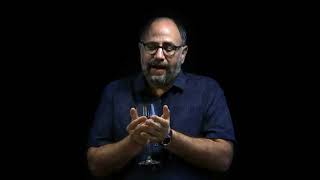
Israeli winemaker Ya'acov Oryah makes wine in the Negev desert, where extreme heat and reflective soil create a dominant character that overrides grape variety. Early harvests preserve acidity in whites but limit tannins in reds, forcing him to blend grapes and chase elegance over alcohol. At Pinto Winery, he experiments with sparkling Chenin Blanc and orange wine while managing salt from an ancient seabed.
Chapters
Welcome to the Kosher Terroir. I'm Simon Jacob, your host for this episode. The following is a conversation with Yaakov Oria, one of the most creative winemakers in Israel. He recently moved down to a new winery in Yerucham called Pinto. And our discussion is about the complexities and the difficulties of making wine in the desert. It's a little bit more technical than our typical podcasts, but I think it's still incredibly interesting and should be a lot of fun. Sit back, relax, and enjoy a glass of great kosher wine. I'm here with my good friend Yaakov Oria, actually sitting in his kitchen while he's preparing dinner. So if you hear noises in the background, they're kosher noises, they're good noises. So it's a pleasure to be down in Yerucham. It's a pleasure to be here with you and your wife.
It's a pleasure to have you.
And I very much enjoyed walking through the new winery this morning and also walking out in the vineyard and checking all the different varietals that are planted and growing and actually expressing themselves in the vineyard. The first question I have for you is, it's beautiful, but why are you in the desert? What are you doing here? Well, it seems purposeful.
As you, as usual, I really don't know.
Okay, okay.
I could, I could try to elaborate on what I do or what I try to do. I don't really have a lot of insights of why life brought me to where I am. You know, that's cool. Beyond, beyond my vision or sight. It started in 2008. I was very much interested in planting a vineyard and opening a winery in the area of Yari Yatir. And to do that, I wanted to get land, and to get land, I wanted to participate, to join a settlement called Har Hamasa. And the place was, it's a kibbutz that fell apart and there was a lot of tension going on there. People weren't talking to each other. So eventually I met up with Eliezer Bar Sadeh, which today runs Yekiv Tzuf. And he was one of the people who used to live in Har Hamasa. And I tried, I met him to help me get in, which didn't happen. But he told me, look, you want to be here in the area, so why don't you come down to the industrial zone of Arad, which is around 15 minutes by car, and start here. And eventually, you know, try to get your land and your vineyards working, but it will take you time. In the meantime, you get started in Arad. And that's what I did. We moved from the center to Arad, and we came in August. You just— I just had all my grapes planned for the harvest, and I made a harvest, and then I was curious. You know, the harvest was over and I was starting to plan for 2009, and I was intrigued by the idea of terroir. My perception of it at the time was just the beginning, but it had, it had a different value of making something local.
So I just want to be clear because Many people do not know where Arad is, but Arad is definitely in the Negev.
Oh, yes. It is below the mountain. The high mountain of Israel starts in the Carmel, goes to Shechem, to Har Bracha, Jerusalem, Hebron, Gush Etzion on the way, and it ends in Yatir. That is the end of the mountain ridge, and below that is Bikat Arad, Arad Valley, and that is the beginning of real Negev terroir. So I wanted to make local wine and, you know, it was my starting point. I just wanted to understand what grows here locally. It's not a matter of better or worse. It was just an idea that I should make wine that represents this place. This quest that started in 2009 to make wines of terroir, taught me a lot and, you know, gave me a lot of insight for what I'm doing now today in these days. But at the time, I wanted to make Negev wine and I started to shop. There was very few growers here at the time. There was one neglected vineyard of Barkan and they grew their Chardonnay. It was impossible to get their fruit because the vineyard was neglected. And everything else was small growers that they had, you know, a little guest house house in the middle of the Negev. And part of their hosting experience was that you could have a wine that was made, you know, within the site, within this batea arachat. They used to call it kavod bodedim.
Chateau within the estate or estate?
Not yet, but it was called kavod bodedim. And a lot of them had vineyards. A lot of them had vineyards and most of the vineyards went to big wineries as just added to their bulk. And they tried to make little small wines for themselves. And the first thing I did is taste wines. I went around, tried to see what's available, what comes out of these fruits. And it was clearly not impressive. But I wasn't sure if it's not impressive because of the growing area or it's not impressive because the people that made it had in mind to make something for their guest house representing part of their wholesome experience and not really done by professional winemakers that understand processes and, you know, dangers and what to do and how to deal with things. So I thought I'm gonna experiment myself and I I shopped around, I got quite a lot of fruit from these Chavot Bodedim. I got Merlot, I got Cabernet, I got Zinfandel, I got Barbera, I got Nebbiolo, I got a whole range of what was available then. And I made them in my winery in Asif, and at the same time, This was 2009, the first fruit of Nana, which today is Nana Winery. Eran Raz planted a vineyard 3 years earlier, and in 2009 was the first fruit. So he offered me his fruit. From all the fruit that I got in those Chavat Bodedim, I understood that the terroir of the Negev, the expression of what the Negev does to the grape, is so powerful that the common denominator of Negev was overpowering the differentiating factor of the varietal.
Of a variety.
You know, it doesn't make a difference. I had there Cabernet Franc, Merlot, Cabernet Sauvignon, and they all tasted Negev.
What makes it so overpowering?
Oh, it's extreme growing conditions. If you talk about the range where we grow grapes, it's usually from— it's called longitude, latitude?
Longitude and latitude.
Latitude. It's the vertical— it's the horizontal lines.
Right.
So it usually goes from 30 to 50.
Okay.
Today with global warming, it's going a little bit beyond 50, but that's basically the range in which wines are produced. Grapes could grow below and above, but their ability to make a quality wine is—
Within those.
Is compromised. So the wines will come from there. So Israel to begin with is something like 31, between 31 and 32. So we're really at the southern end of what you could consider legitimate for a wine-growing area. You go to the Negev, you have— first of all, you're closer significantly to the equator. Your radiation is more direct. Then you have—
Sun's radiation.
Sun's radiation, yeah. Ultraviolet. And then you have returning radiation because there's no vegetation on the floor. The soil is not black or brown or anything that would absorb the sun rays. So it's reflected from the floor, which is almost white, to the grapes from the bottom. So you have double radiation. It's more radiation because of the equator. You have double radiations because it's also returning from the soil itself. And then you have extreme day and night, day and night temperature differences. So, and each of those aspects will provide something that will express itself in the Negav to a point where I was starting to say, I'll elaborate what I think they do, each of those aspects, but what I found that they're so noticeable that they overpower the differentiation between varietals. My first wine, actually, I called it Negav Red. You know, I just put everything in one vat. I said, you're all Negav, don't bother me. I have Negav Red 2009 and just put everything there. I said, I listen to the grapes. I don't have an agenda that it has to be Cabernet and I'm going to do whatever I can to make it Cabernet. My plan is always a plan, a starting point, but I try to pay attention to—
Follow the expression. Follow the expression of the grapes.
Yeah, it's more than expressions, but their abilities. It's before expression even. And paying attention to the grapes, I realized that I can't call it a Cabernet and that call Merlot. The difference between them is for, you know, some high expert to say, oh, this is Cabernet. Nobody would recognize a Cabernet anyway because they're tasting Negev. So I just made a Negev red. At the same time, at the same year, Eran Raz started to say his vineyard started to yield and I was able to buy from him white grapes. He was the only person that was growing white grapes. I bought from him Chenin Blanc and Chardonnay. Thank God, My personal style preferences are low alcohol, and the wines that I made were, you know, not so common to the time. Talk about 2009. At the time, Chardonnay was usually buttery, oak, 14.5%. Chenin Blanc also, to a great extent, is made like that today. And I am not sure that had I done those styles, the beauty of what the desert does to white grapes would have shown through because it would have been, you know, worn out by time and by losing acidity. But as I said, thank God my preferences were for crisper wines and I harvested early. And I actually paid for Iran for the grapes with part of the wine. I mean, the first two vintages of Nana Winery were actually wines that we bartered. Bartered? Bartered.
Bartered.
Thank you. Bartered. And grapes for wine. So I took the Chardonnay and the Chenin, and he got part of the wine. And because it was harvested early, the second lesson I had that year, one of them is the great influence that you lose everything in a red wine. The second lesson was that in a white wine, you are almost in Europe.
Wow.
And I'll explain my understanding. Why is that in white and why is that in red? Okay, first of all, the three factors that I mentioned before, the the direct irradiation, the returning radiation, and day-night temperature cause very quick ripening. The radiation helps it, the return radiation helps it more, and the day-night temperatures stop the metabolism of the grape fast in the evening, which means to to explain what I just said. A grape does not, its ripening is not linear. It's not like a line, a graph that goes up. It's more like a saw. It goes up and down, up and down, up and down. It's like a jagged saw, but it goes more up than down, so eventually you have a graph that's escalating. But what happens is the sugars go into the grape during the day, and at night they go back to the leaves, and then again they go back to the grape and back to the leaves. So the sugar levels in the grape are constantly going up during the day and down during the night. If you present it with an environment which it gets cold fast, then the sugar levels from the day don't really have time to go back to the leaves because everything gets cold and everything stops.
I don't know, don't worry.
So that by itself means that you'll reach the sugar levels of harvest faster because it didn't have time to go down enough. It's just going up and up and up and up without the up and down, up and down, up and down, up and down. So you reach harvest at an early stage, and what happens is, is that the decomp— the, the deterioration of acids which happens in all grapes, but it happens in the evening when the vine stops doing photosynthesis and starts breathing. It starts intaking oxygen and exhaling carbon dioxide, which is the opposite of photosynthesis. During that process of breathing, it consumes its acids. So the more chance it has to breathe, the less acids you will have. When you have an escalated ripening cycle because of the radiation and the day-night temperatures, so your acids don't really have a chance to deteriorate. Again, if I would harvest at 14.5% alcohol, what I'm saying would be lost. But because I harvested relatively early, I found that there was a lovely acid in the grape. And actually, the acid is more complex because if you correct acid, you're correcting— you lose a complex of acids, but you correct only with the main acid. Our main acid that we lose is tartaric acid, and when we compensate, we compensate with tartaric acid. All the small, tiny amounts of other acids that are there and also lost, you don't really—
Don't get replaced.
They don't get replaced, and eventually you're losing something complex and you're compensating with something one-dimensional. So you're losing complexity.
Yeah.
And that's what I found in those in 2009 in the whites, that I'm actually getting a hint of cold climates where I'm getting the full acid range. It's not only to have a lot of acid, but it's interesting acid. It's not one-dimensional. So those are two lessons of 2009. And I explained what happens in the white. I'll elaborate also what happens in the red. What happens in the red is that you don't get enough phenolics in the skin because of the fast ripening. Now, the white wine, you throw away the skin. So it doesn't make a difference if you don't get a lot of phenolics. Your wine is really based on acid, and you have plenty of it. But when you have a red wine that ferments with the skins, the fact that the skin is poor, didn't get enough substance because it didn't have enough time on the vine, plays a role. Now, so you get wines that are basically light. Had it not been Negev, a light wine like that would be very green because you're harvesting so early, you're harvesting something almost unripe, so you have a lot of green flavors. But the radiation, the ultraviolet, breaks down the pyrazine. So you're harvesting early, but you don't have— there's a note of green, but it's not what you would expect to have. It's not what you would expect, the amount of greenness of the wine, because the direct radiation and the returning radiation break it down. So what you end up with is a light wine. It's very enjoyable, spicy, you know, a lot of fun, usually lacking the depth. Complexity to age. Or to— I'm gonna say age, I don't mean survive, I mean to develop.
Yeah, got it.
Everything is done.
I'm just gonna get something to drink.
Would you like to taste some Negav wines as we talk along and, you know, chat about them?
I definitely would.
See, Dadaframe knows how to help.
Okay, that I definitely want to do.
I actually brought 3 red wines.
Great.
Uh, because which one are they? Grenache, Syrah, yes, and, uh, Cholot.
Okay, as I said, we're in Yaakov's kitchen, um, preparing dinner.
Grenache.
We're going to start with Grenache. We're going to taste some, uh, some wine while we're doing this.
Some Negav wines.
Yeah, some Negav wines, which are, um, ultimately the whole reason we're here.
We can continue.
So yeah, this is the, this is the Pinto, um, Grenache.
This is the Pinto Grenache from the—
what year?
2022, actually just released. Okay, it was not in oak, and it has, uh, and it's from the Yeruham Vineyard we visited today, those photogenic, uh, grapes.
So the question I have for you is, so this is Grenache 2022.
I was starting to say we did not really have a plan to produce a Grenache on our, uh, lechaim tovim.
Lechaim tovim. Shalom u'bracha.
On our portfolio, but there's just so much charm in this wine. If you like Grenache, it's not for everybody, but if you like Grenache, I think it's a true Grenache. It's light, it's spicy, it's fruity, it's red fruit. Not heavy, not dark. You could chill it a bit, you know.
What am I gonna taste?
Tell me. Taste and then you'll tell me. Let's give it a few minutes.
Okay.
We'll air out. So the wine is clearly light.
Yeah, but that's Grenache.
You could have Grenache that is more heavier. If you go to Vitkin, you go to Haré Galil, you go to other— there's a few other producers here. Those are the kosher ones that I could think of offhand. Ramata Golan. Yeah, uh, you will find wines that are more dense, uh, more with substance, I would say, more concentrated.
Yeah, but this is balanced. This is balanced. It's, um, it, it, uh, and it has a long finish on it. It's actually quite, quite lovely. It is light, but it's nice.
I think this is a very typical Negav wine where you get the spice. You don't have any, hardly have any tannin.
Yeah, it's almost no tannin at all.
Very juicy.
That's true.
The acidity, as we said, we harvest early. This is 13%. You harvest early, you get good acidity there.
It has good acidity.
And, you know, I think what I tried to do here is not tame the Grenache to be a Syrah. I mean, that means it was really letting it be because, you know, everything that I said before about the red grapes is true about, you know, Cabernet and Syrah. They all have They all have that ability to be spicy and abundant and light. Grenache starts off light, so if you do that on a Grenache, you'll end up something that's almost juice, almost a fruit juice.
Yeah.
And it was just a decision, you know, to let it be, not fight it, not trying to make it more concentrated or darker or heavier, because I think there's a lot— there's a space, this place for wines like this in a hot climate, Israel, and they're not available enough. They're usually there to impress, and it's very hard to impress with the Grenache. So they make— they work very hard to fight its true nature, and here it's taking its true nature to an extreme which you don't find other places, and it's just a fun wine. It's just, you know, it's not meant to be anything but just drink and enjoy.
Wow, this is really lovely. It cleared up for what I was tasting before, and it's also— it is, it's lighter, it's crisper. The acidity is there so that it gives you It's really just, it's really perfect. It's perfect for the summer.
It's meant to be a summer wine.
It's perfect.
And I wouldn't chill it because it just closes the wine. You can't take it out of refrigerator like a white.
Yeah.
But, you know, take it out of the wine temperature, wine refrigerator, and drink it right away.
Right.
57 Fahrenheit, you know, 14 Celsius.
Yeah, it's, it— no, that's great. It's beautiful. It's actually, now I'm getting um, kind of a, uh, a floral acid.
Very floral.
Yeah, it's really nice, right? Great, very cool.
Now, but by definition, this wine did not go into barrels. In fact, it did, because, uh, usually Grenache tends to be, um, oxidative, and Syrah tends to be reductive, and you blend them and you get a balance. Each of them balance each other out. For some reason, this Grenache was a bit reductive, and I put in the barrels just for the micro-oxidization, just to let it breathe a bit. I was there for 3 months, you know, I don't count— I don't count them as barrel months, they were just breathing months, and it cleared it up. What you taste in the beginning when you open it is a little bit memories of the reductiveness, but a few minutes in the glass and it blows away.
And it goes away. No, it does. It's great. I love it. It's really good. And it's great for— it's— wow. It's great that this is coming out of the Grenache grapes that we were walking down the vineyard row and tasting. This coming year's production, which is not too too long from now.
Oh, very close.
Yes, might be.
And I think, I think I see it, I see it in the color. I think 2023 will be a little more, a little bit more dense than what we have here because last year the foliage, the leaves were short. They didn't grow to a full height. This year we're able to get a better, you know, wall of leaves. And I see it in the color. Last year in the variation There was a lot of pink, and here it goes from green to purple. So actually, we're getting more substance. So I'm going to continue making this wine, but it's going to be a little bit more hefty.
This journey of yours since Asif has continued.
Yes.
And I was surprised that the— at— the, the number of varietals that you were blending back in the— back in those days. Um, it wasn't— it was more than what I would expect other people to blend. Uh, and it was a lot of experimentation. I mean, you know, it was cool. I, I, I— one of the things I love about you as a winemaker is that you're, um, always experimenting. Always keeping very precise notes on what you're doing. You're not willy-nilly experimenting. As you experiment, you, you learn from every little detail that you, uh, implement. And I was surprised because I didn't think even back in 2008-9 that we— you, you were using all the different varietals that I know you're known for using now. And it's, it's It's cool to see that development process over the years.
I started winemaking with a problem and a benefit. The problem was that my palate— it's really, I'll say it in a different way. The problem was that I— and benefit is that I didn't grow up in a house of people that drink wine. I had wine for Kiddush, and I never thought of it as a beverage. Only after the army, I went to relatives that drank good wines from Italy and California, and I realized that wine could also taste good. It was not something you thought about as something that's supposed to taste good. And I started to develop an interest, and I found a importer of Burgundy wines, and not just regular Burgundy wines, but the top of the top, you know, the Romanée-Conti and Lafont and all the big names. I knew nothing of winemaking, of the wine world in general, not about Burgundy. I knew nothing of wine, and I wanted to learn, so I found this guy, and I started—
What a great place to start.
And I started to go to his tastings. It was still affordable at that time, and And my palate as a wine consumer developed on high-end Burgundies. This is way before I was thinking of making wine. And that's, you know, my perception of wine aesthetics was those real fine, complex, delicate, silky wines. And then I, over the time, started to make wine.
Those were mainly Pinots?
Pinot and Chardonnay.
Pinot and Chardonnay, right. And what a wonderful place to start.
Oh yeah, it's a wonderful place, but it put me in a problem as a winemaker because I wanted to make my Grand Cru Pinot Noir from Burgundy, and no, we're in Israel. Yeah, we don't have the varietals, we don't have the terroir.
Well, at that time, people were trying to make, you know, rich Cabernets, and you were at least at a point where you were like trying to accomplish something that was like close to achievable.
But oh, it wasn't. Okay, it really wasn't. I brought for dinner my first attempt on Pinot Noir. Well, you know, let's taste it now. Okay, uh, you need another glass for that, but I need— I want the burgundy glasses.
Okay.
And I've been making Pinot Noir from 2011. I only bottled twice, and not all my—
I only tasted your first one.
Oh, 2020. I— you'll have to get— okay, I bottled '19 and '20. And also not all of my Pinot Noir, but one barrel, or 2020 was two barrels. That's it.
Because you blended them with other things. You use them—
I use them for the Duc Pontife.
Yeah.
That's where its main, you know, place is. But my attempt to make Pinot Noir is consistent. And that's really my problem because I was trying to make wines of elegance in a climate that did not promote it. And my whole quest or search or experiments, as you call it, is trying to solve that dissonance. How do I make in a hot climate an elegant wine? Now, if I would want to make a big wine, I know how to do it. I worked in places that that's what they wanted from me, and I make big wines. That's fun. I also like them. That's not really what I'm aiming for. The second advantage—
I have a question.
Yeah, okay.
What do you call the SOB 20, uh, 18.
That's a big wine.
That's a big wine.
That's a big wine.
Such a delicious wine.
The Pinot Noir 2011 from Asif.
Yeah.
When I'm saying no, I'm saying no to my son Ephraim, who's working tonight as a sommelier.
Yes, he's working. Poor guy. Now, I'm sorry I interrupted you.
The second advantage I have—
As an interviewer, you should never interrupt, but I'm sorry, I'm new to the game.
As a second advantage that I have is the same thing that I said before, that I didn't grow up in a house that drank wine. So I didn't know what wine is supposed to be. It means when I go and make a wine and I say, let's try it that way, or just try it the other way, I'm free to do it because to me they're both good. So I have a lot of freedom in my quest because I'm not restrained by the right wine or the way wine is supposed to be. So I'm— on one hand, I have this dissonance of a quest for elegance in a hot climate. On the second hand, I have a lot of freedom to explore and to— because there's no right and wrong, you know, at least in my feeling. And —And I could say that all along I've been trying to solve that problem. I think I figured it out, you know, 15 years later with my playground. I'll get to that. But, uh, what you see in those early blendings when you just read the reviews of 2010 and '09 is that, uh— It was a review by Daniel Rogoff from 2011, but it was of the 2000s. Wines of 2008 and '09. Yeah, I was trying to get— What cup are you looking at? Burgundy cup behind the old and red. Oh yeah, there, the big round ones on the left. On the left, those. Yeah, those guys. This has to, you know, we have to give it a little few minutes to air out. Yeah. And I don't think it's a great Pinot Noir. Had I thought it was, I would bottle it, but, uh, it's just fun to remember. I have 12 bottles now. I have 10 bottles. I had 11. Sorry. Sorry, I'm happy to share. Yeah, it's an opportunity for me.
That's what—
okay, it's called priming.
This is really so nicely drinkable, this Grenache.
So to answer your question, I was trying If you talk about the wines that I had in my quest, those are wines of complexity and low-key. It means it's easy to make a big wine that has a lot going on, but it's huge, big, and massive. It's easy to make a gentle wine that has very little going on. The challenge is to make a wine that has a lot going on but not massive. That's the elegance that you find in cold climate wines. You know, put aside my passion for Burgundian, for Pinot Noir. If you're talking about cold climate, what I just said is really what you get there. You get complexity, density without being heavy, without being alcoholic, without being flabby. Or oaky or whatever it is. It's just there. It's what cold climate knows how to give. So I'm trying to get to that complexity. And the first thing you do is blend. The first step in my quest was to blend in my course in 2004 in Yaakov Sorek when I learned how to make wine and I had A demijohn of 25 liters. I had to make 2 demijohns because I had to have tried to blend with Merlot. I was the first person in that course that actually made 2 wines to blend them. Wow. And there's many steps that are needed to deal with your climate, which in other words is to deal with your terroir. And that was really my first, the blending. I see it back then because that's the simplest, obvious, you know, way to go to.
Very cool. We're gonna try this Pinot. Well, actually, we're going to let it sit in the glass a little bit and get some air, I think. It looks beautiful. It's really nice and dark. This is a 2011 that comes from the Assif Winery under your—
Yes, from Dalton. Actually, I actually still have— this wine I made for the grower. The grower had a winery. His name is Mordechai Mamo. He knew about my passion for Pinot. He did not know nothing about Pinot. He said, you make Pinot. So I made it in my service winery. He made all his wines for himself by himself. And the Pinot he gave me to make. For memories.
Yeah. Baruch Hashem.
Give it some time. So different from the other one.
Yeah, it's a lot different.
It's lovely, but yes, okay. Uh, so he— and from after, he didn't like the wine. He's a Cabernet person, and Pinot was not a wine for him. And that's my plot of Pinot. I still have it. Wow, that's, that's where I make my Pinot from.
And he still drinks caps. Oh yeah, yeah.
Wow, it has mint in it. It's, it's very tannic, surprisingly, after 12 years.
Yeah, it doesn't taste like an old tannin.
It's not a burgundy. No, it's not a, it's not a Pinot of Burgundy at all. But after it airs out a bit, it will have some of the profile. I think it's herbaceous. It does like mint. Herbaceous, right? It has some hazelnuts. Hazelnuts, yes, it does. That's our Sumaliya talking. Okay, let's—
You're very true. It is herbaceous. It does have Even some hazelnuts in it. You're right. Very cool.
Very cool.
It'll be better like in an hour. Yeah, we'll let it, we'll let it be opened. Um, okay, so let's get back to the desert.
So let's go to another wine of the desert. This is just for memory's sake. Yes. If I'm going to open us our Shiraz '22. More wines I want to taste with you to understand the Negev. We started with the Grenache and its, you know, lightness and taking a light wine and a light grape and taking it to an extreme to get something very different from the Israeli wine scene. But here, if you taste this wine, Let's taste this together.
Again, this is, this is the Shiraz.
Shiraz from the vineyard of Yerucham, 2022.
2022. Wow.
Un-oaked.
This also has a mint to it. A little bit of mintiness to it, and it's, um, it's got certainly more body. Um, it's, it's also very well balanced across the whole palate, from front to back. There's no holes. It's really nice.
Uh, see I think there's another aspect of Negev reds. And think of something that trickles, okay? As if your grapes are trickling into them flavor. And it comes slowly. It trickles, it trickles, it trickles, it trickles. So if you have a cold climate where the maturation is slow, You will get a lot of trickling and eventually you will accumulate a lot of flavors. But each aspect of the flavor is a trickle. So you have a very complex wine in a cold climate, but it has— because it has many aspects, but each aspect is part of a greater whole. When you go to the Negev, We're talking about the fast maturation. So, you know, the spectrum of the trickles is cut much shorter than in colder regions. So you have a very short time on the vine for the vine to get its flavors. On the other hand, because of the radiation, it doesn't trickle, it pours. So you have your wine that's— plays with your brain if you think of it. It's a very rich wine. And, um, it's not— it's not—
it's light, but it has the spiciness of Shiraz. It has spiciness of the Shiraz.
It also has a spiciness of the desert. It's not very tannic.
Yeah, no, it's got some though. It's not like it's got no tannin. No, it's got— it's got tannins.
It's got more because it's, after all, Shiraz and Grenache. But It's not very complex. You don't have a lot of flavors going on here. You have a nice set of flavors and you have abundance of them. So it's not— if you— let's go to extreme example. If you go to Kotrotti, where the, you know, part of the best Shiraz are made, they're almost Burgundy in style. They're lean. They're very elegant. A lot of things going on there, but they don't have richness. They have complexity, which over time develops into a fabulous wine. But here it's just abundant. So on one hand you have the abundance because of the radiation. On the other hand, you have a vine that has to be harvested fast because, uh, because you don't want to have a wine full of complexity but with 18% alcohol because you can't drink it. So you harvest early and you have a wine that's Juicy, rich, very flavorful, not very complex, and spicy. And if you— I hardly pick up any green notes here. It's not that it's not there, and it's a— it's okay. It's a vine that's harvested very early, but it's lost its greenness a lot of times, typical to Israeli Shiraz, because of the radiation and the returning radiation. That we talked about. Interesting. So you have your wine that's harvested very early and it's not green. And it's abundant, but it's not complex. And that's Negev.
Wow. So you can make wines in the Negev.
Oh, the reason I went to Pinto Winery is because it's people that, first of all, I fell in love with them. They're very nice people. They're such sweethearts.
Jimmy, David— the only ones I've met are Jimmy and David, and I'm— Jimmy is like senior awesomeness, and David is just like totally committed to—
oh yes, he is—
to, to really making sure that everything works super.
Now, uh, besides the fact that I think they're wonderful people their approach was what I was missing. I was in the Negev and I had a Sif winery and it did not continue. It was not— it was successful in wine aspects, but it was not so successful commercially and we closed. And my quest to understand red wines of the Negev and make them a big wine, not just that are good despite the Negev, but are able to express what the Negev is and have uniqueness in the wine world because it's grown in the Negev. And I think the last two wines represent that because Grenache is very Grenache-y, but it's not a typical Grenache to any place else. Right. And the Syrah, you have a lot more examples of Syrah, so it's, you know, but I still think the aspects of it where it's rich and not tannic and not complex, but very, very rich and flavorful. Is something that represents the Negev. So their approach was that they want to make wines that are not good despite the Negev or legitimate despite the Negev or acceptable beside the Negev, but they want wines that are representing the terroir of the Negev with its uniqueness. And because of that approach, I was really happy to return to the Negev because, you know, for many years I was not here. And when I left Psagot, I was thinking to expand my private brand and just, you know, make that my livelihood. And then I met them and I really something internally that wanted to figure out how to make red wines in the Negev and was never satisfied. I said, oh, here's an opportunity. I will continue my quest. Quest.
And I call it experimentation. It's really experimentation. But it is a quest. It is a quest.
And I think, you know, my last year in the Negev, I I touched it. I started to understand what really to do. And in Pinto Winery, I have a lot of varietals. I have freedom. I have technology. And I'm able to explore. I'm really happy to continue this. I told the Pinto family that it will take them 10 years to reach where they're reaching. And that's just really just to give me 10 years to continue exploring. That's so cool. The next wine we're going to have, and that's really the final conclusion of what I was just saying now, is the Chalot, where you're able to achieve the complexity that the single varietal doesn't have because of the fast ripening. And you take the tools that I used back then in 2011 and you get complexity and balance by doing that, not because of— you have a great grape that performs wonderfully in the Negev, But because you're able to balance it out and get complexity by using different kinds of grapes. Efraim, so the real requirement is to open the cholot. Ah, you didn't. Ah, okay.
So tell me about the cholot. Cholot.
Where is my cholot, Efraim? Ah, here it is. Right in front of my eyes. The Cholot. Cholot is the mid-range level of Pinto's portfolio. On one hand, it's very nice to start with a great wine and then trickle down a portfolio of, you know, people that want a great brand, but you have it in a little more accessible price. Yatir did that. They started off with Yari Yatir. Castel did that with Grand Vin, and reality doesn't always allow you to do that because, you know, you're starting in the Negev, you're pioneering, you don't really know what you're going to have. So you start with entry level and then you figure it out, you go to mid-level, and then you figure it out more and you go to the higher level. So we hope to start our higher level in 2023 because I sampled already the vineyard, I made wines from it. I think I I don't have there enough what I need to make high-end wines. And this is the mid-level. So what you're really getting here, it's actually a Bordeaux blend. Eventually we will have two red wines in Cholot. One of them is a Bordeaux blend and the second one will be a Rhone varietal blend.
So tell me about the Bordeaux blend. What makes it a Bordeaux blend?
Okay, in Bordeaux there's 5 acceptable varietals, legitimate, that you're allowed to use and call your wine Bordeaux. The main ones are Cabernet Sauvignon. The main one is Cabernet Sauvignon. The secondary is Merlot and Cabernet Franc. And esoteric, you'll find Malbec and Petit Verdot. When you go to the Néguev, which is a very, very, very different— we don't have Atlantic influences here, sadly. And so what you end up with grapes that perform very differently than Bordeaux. And one of the best Bordeaux varietals that in the Negev that performs the best is Malbec. So it's a blend that's like something like 55% Malbec. Secondary there you'll find the Cabernet Franc and Petit Verdot, which are— perform very nicely in the Negev. Then Merlot. And I, you know, I could have eliminated it, but I wanted to have a fully Bordeaux blend, so I have 2% of Cabernet Sauvignon. Very cool.
Wow, that's got tannins, that's got— but again, it's got this balance that flows through your whole palate. It's, um, the finish isn't quite as long, but this is just open. Um, it's, it's beautiful. It's a beautiful, um—
see what you have here, and you didn't— you don't have in the Syrah or Grenache, it's layered. You know, there's a lot— there's different layers of the wine. It's like it's not just rich, it's complex. The complexity that you didn't have before, you have it here. Yeah.
And it develops in your mouth, it develops on your palate over a few moments as you—
And if you notice, you still have the characteristics of the Negev. You still have that herbaceousness and the spice spice. And, uh, yeah, it's still—
it's hanging in, in the background.
And it's not— it's not jammy. That's surprising. Yeah, it's definitely not jammy because, uh, you would think that the hotter— the hotter you go, the more jammy you are. But the fact is that, uh, jamminess comes from overripeness, and this— these grapes were harvested on time.
Are they harvested on time or early? Early.
Okay. On time in my standards, early for the rest of the world.
Right. Yes. No, no, because it's—
yeah, even have your note of salinity. Yes, you can taste this.
You can taste the salinity.
The salinity you taste here, you don't— I don't think you pick it up in the Grenache slightly. In the Syrah, it's overpowering fruit, so you don't taste it.
So you don't taste it because of that, right?
But the red, this wine, which is the, the fruit's more restrained, you Pick it up in the Chardonnay and the Chenin Blanc, you pick it up. Because think of it, we're actually in the ocean floor of the Tethys Ocean. This used to be under— Underwater. Underwater of a salty ocean. The land here is saturated with salt. We have to actually irrigate, not for the vines, but to compel and to push away the salt from where the roots are going to be. When it rains here, we water, because the rain could push the salt back to the roots. So we have to put counter-pressure. When it starts raining, we start watering.
So the water actually pushes the salt away— Away from the roots. From where the root systems are. So that's why you put the water in. But if you have rain where it's saturating the soil all around, then the salt comes back in. Wow. Cool. See, that's negative. There's so many different attributes that I never ever thought of that you had to deal with. It's just crazy.
That's part of why I took the job, because it's a challenge. Wow.
No, I love it. It's not boring. I love it. I love it. It's okay. We will consider forgiving you. Yes. We're in an active kitchen. This is actually good. That's definitely attempting to make dinner and come up with some interesting things. And Patricia, Yaakov's wife, is squeezing oranges at the moment to get orange juice. I don't know how, but it's great. And today I tasted some of the fruit that she brought in from all the local farmers here, and the grapes And the cherries are to die for. And the figs are huge. The figs are huge. Everything was just, it is like, you know, as we read in the Torah a few weeks ago, when the spies came in, everything, all of the Prados was gigantic and it scared them. Here, I am just in love. I am in love. I'm in love with it. Um, thank you. Yeah, this is an excellent wine.
This, uh, this is really just starting to touch what you can do, what the Negev could produce. Because it's, it's just, just like the white wines are not, uh, compensated by only Tautaric, but they have the initial complexity Here too, you have wines that are, you know, again, you're achieving your things by blending, not by over ripeness.
Yeah, but it's all coming from here. It's all coming from here, coming from the desert. It's unbelievable.
And I think we have, you know, we talk about the old muscatier. I stopped doing it because it's a one-time thing for me. It's an experiment on oxidization. And I don't have the patience to make 14 years of barrel aging, but I'm actually doing it for Pinto. We have a sweet wine program which is the same approach as the old Muscatier. Okay. And we have a sparkling wine program which is fascinating because it's Negev white fruit.
Wow. Which is— could be totally awesome.
We're actually going more to the Loire. We're basing it on Chenin Blanc. The Chenin Blanc, there's a lovely sparkling program portfolio and producers. We're not going with the Chardonnay, which is right, which is the Champagne. Usually you'll find the sparkling wines because it's Champagne, because the Chardonnay here is crisp and light and fun and summery, and the Chenin is more regal, more substance, more interesting and rich. And I think especially if you harvest earlier, you know, like it's for a base wine at the potential alcohol of 11%, you need something with more tochen, with more substance.
Okay, now I'm going to ask you a really crazy question. I should have a moment of silence here so that I can cut it out of the actual recording. Um, what about an orange sparkling wine?
An orange sparkling wine is actually an oxymoron, right? Because what you do not— I had a plan once to do that. It didn't materialize because the real reason, you know, not the official reason, but the real reason is because the The base wine got floor. Okay. So it was a Sémillon. I actually used that floor as a component in the Gemma that I make for Brut in Tel Aviv. They wanted some note of floor.
So every time— People love, certain people love floor. They just love it.
That's— So I have the Anthology of Hope and the Alpha Omega 2015 with floor. And Brut, their wine, Gemma, I use the base wine of 2014 as a component. But the fact is that when you— in Champagne, I'm not talking about hot climates, in Champagne and the cold places, when you press the grapes, you use whole clusters because you don't want any phenolics. You want something very lean and clean.
And orange wine is exactly the opposite. Yeah, as soon as you said that—
The problem is, it's not, you know, there's no right and wrong. The problem is that the bubbles will make the tannins aggressive.
Interesting. Interesting.
That's really where the problem is. It's acid. Enhances tannin, and tannin enhances acid, and bubbles enhance acid. So you're, you're, you're something which, again, I'll probably just, you know, to say, to, to prove to myself that what I just said now is true, I'll experiment. Yeah, but, uh, what I'm saying is based on some kind of experience, and it's probably pleasant. I'm gonna try it. I never tried it, but I never was really in the need to try it because I understood what's going to happen.
Okay. I trust your experience and scientific judgment.
Okay. This is really enjoyable. I could keep on drinking.
This is lovely. This is really lovely.
Good night, Shem. Good night, Shem LeChol. Now let's sit and eat. Okay.
So we're ready to sit and eat. And I thank you, Yaakov. Especially for inviting me into your house and allowing me to capture a few moments about desert wines. Sure. And really, seeing the vineyards and seeing the winery, I pray for your Chatzlacha, Chatzlacha Rabbah. Amen. And I expect it because it's just— the preparations are just all there. And if you ever get a chance to come down to Yerucham, I wouldn't say in the next few weeks. Or months. Yes, yes. I would say, you know, October, November. If you're planning to be in Israel next year, come down and they're really planning an incredible visitor center and there's even a hotel nearby that you can stay at and it's just really glorious and it's It is in the middle of the desert. So, God bless. Amen. Shalom u'bracha. Thank you. Baruch Hashem.










