A Testament to Kosher Winemaking with Ernie Weir
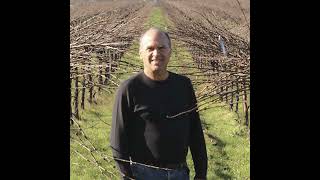
Ernie Weir, founder of Hagafen Cellars in Napa Valley, talks about building a kosher winery that doesn't compromise on quality. He studied viticulture at UC Davis under Robert Mondavi, ages wine up to 32 months in barrels, and has supplied the White House since the Reagan era. Weir also shares his deep ties to Israel, where he's consulting and pruning vineyards during the current war.
Chapters
Welcome to The Kosher Teruah.
I'm Simon Jacob, your host for this episode from Jerusalem. Before we get started, I ask that wherever you are, please take a moment and pray for the safety of our soldiers and the safe return of all of our hostages. The following episode of The Kosher Terroir is an interesting conversation with one of the founders of the California kosher wine industry, Ernie Weir, the extremely talented owner, agronomist, viticulturist, and winemaker at the Hagafen Cellars in Napa Valley, California. Ernie conveniently for me was visiting Israel on a mission to help Israeli wineries, specifically during this time of adversity when so many of their staff are away fighting in the armed forces. I caught up with him at the Flamm Winery in Eshtal, next to Beit Shemesh, just before a visit with his old friend Israel Flamm, the patriarch of the Flamm winery family. Ernie is an incredibly humble and modest individual who agreed to be interviewed, but really didn't want to lose track of the goal of his visit: building bridges between our global Jewish community, helping us all through this period of challenge with prayers for the return of our hostages, safety of our soldiers, and our ultimate striving for peace. Because he was in the midst of working and traveling, we didn't get a chance to taste his amazing Hagafen wines on the podcast, but I look forward to a future follow-up episode specifically addressing that. If you are commuting in your car, please focus on the road and enjoy. If you're home, please choose a delicious kosher wine and sit back and listen in on this wine conversation this legendary wine personality.
Welcome to the Kosher Terroir. It's a pleasure.
Thank you.
It's a pleasure.
Nice to be here.
I don't want to be chutzpahdic enough to call you Ernie.
You may.
Okay, thank you. But, um, or is it better Don Ernesto?
Well, that's one of my names.
I know. That's my name.
Mostly in Spanish, that's my name. Spanish is the lingua franca, so to speak, of Northern California.
Of California.
What I call Mexifornia too.
Yes. So it's a pleasure. It's a pleasure. Okay. Can you give me a little bit of your origin story? I know you're, you know, like, how did you start up? How did you get into wine at all? Where were you?
I was not connected to wine at all other than on the table, on the Kiddush, Borei Pragafen. So that was always my family role, even though I'm the youngest, that was my family role to make Kiddush. And, you know, I think if I think about it deep enough, I was probably inspired by that. I don't know with the name Hagafen, that came from that, of course, but I think I was inspired by the fact that we have something so special, we do something so special with wine that I thought, well, what can I, how can I contribute? And so I think I got to that sort of point of view. I'm not from a religious background. We were, in American terms, we were what we call conservative, right?
A sorty.
A sorty, yeah.
And though the previous generation was Shomer Shabbat, and we honored and we acknowledged, but we didn't keep strictly kosher in the house. But we had a good feeling for it. And, um, I think when I went, got to the wine business, I was looking for my place. So I think that I wanted to find my, my, my, my place. And also I knew in business it's very handy to have a niche, very helpful.
Incredibly true, incredibly true. Um, please go ahead, have it, have your tea. I don't want you to— yeah, yeah. You know, it's interesting. It's interesting you said that you had that comfort with Judaism enough that you wanted to make a kosher winery. It's funny to me only because— it's not really funny. There's some incredible winemakers who over the years have gotten turned off by religious Jews. And have now, you know, like, they absolutely won't make kosher wine. And it's sad, especially in Israel, that you've got some incredible winemakers who won't, um, who won't make their wines kosher because they've had a bad experience in their lives.
So we have different issues. Yeah. And that issue that you just described, I believe, is a particularly Israeli issue.
Yeah.
And that's not necessarily part of the American experience. Yeah. Okay, in the American experience, we live in a— as a small minority. We either look to identify, or some look to run away from their identity, but let's say we look to identify, and we don't carry the same intense feeling, pro or con, I believe, about kashrut. It is a lifestyle. Yeah. And you either adopt it or don't like it, whereas here it's— it has become a political statement as much as a lifestyle decision. So, you know, I was very careful, and even to this day I'm very careful. If you ask me, I almost never describe our winery as a kosher winery. I describe our winery as a Napa Valley winery whose wines are also kosher. So that works in English to say it that way. It works less in Hebrew to say that, but I'm trying to navigate that approach and that line so that everyone feels comfortable. Jew and non-Jew, religious Jew, secular Jew, that everyone can find a place there. That's what I've tried, and I think pretty much we've succeeded because we, if you came to the winery, you'd see that people, all kinds of people come to us.
It's fantastic. It's absolutely, I'm very much for it.
I love it. It's easier to do, let's say that, in America than it is in Israel.
Yeah. Ah, yes, it also depends on your attitude. It also depends on your attitude. If your attitude is trying to be inclusive of people, then it's different than an attitude that's looking for why are they picking on me or what have you. But, but I'm not—
but you're right, inclusivity is, is, is not necessarily a motto but is part of our reason to be. The tent, make the tent bigger.
100%.
More people in the tent.
100%.
Okay.
Yeah, that the pie can grow. You don't, you're not, because you're doing one thing, you're not taking a share of my part of the pie.
Right. And we have enough anxiety about being afraid of our neighbors and this and that. Let's try if we can to— Congratulations, the 2023 was your 50th harvest, which is I didn't even dream that I would do such a thing.
It's huge.
And it's, but it was, you know, it was fun. And I figured, I realized it at the beginning of the harvest. And I went on and said, well, this is, this is, this is cool. Yeah. This is nice.
It's unbelievable. Really, it's an incredible accomplishment.
I was a young kid.
Yeah.
I didn't have much to lose. I changed my life after I spent a year in Israel. It changed my life. I went back to California. I knew that I was going to move somewhere in Northern California. I decided on Napa. I returned to school so I could learn the craft. I had no base, no formal education in even science. I had studied, I had a degree in sociology, and I went to the local college, and eventually I got a job, nice job in a developing winery. We can talk about that too. And then I convinced them, or asked them, could I go to, to back to university? They said yes, for sure. So I went back to Davis. I have a degree in from Davis. Wow. And there I— and then I continued.
So where were you originally?
Los Angeles. Los Angeles.
So you were in LA.
You're an LA kid. My parents were Holocaust immigrants.
Okay.
Um, they met in New York. They from Central Europe, Czechoslovakia and Germany. And they spent their first years in New York and then they moved to California to the Golden Medina in California.
Yeah.
And then we grew up in LA.
Did you have any mentors or teachers along that path that were really special to you?
Well, I think I had some mentors that I didn't have that weren't personal to me. Yeah, but I am very grateful to people like Robert Mondavi.
I was going to ask you, my father had a personal relationship with him. Oh, um, in the insurance world, or because of— well, the insurance world was interesting because the insurance company that we did a lot of work for ended up becoming like kind of a bank to all of the vineyards that were upcoming. So it was a source of capital for them to establish and develop. So because of that, my father became very good friends with a number of winemakers. He's kind of the one who instilled in me a love of wine. And, um, and when I grew up, I was in a house full of wine, even though I didn't ever drink anything but kosher wine. So that's why Hagafen became so important to me.
We were the bridge.
Because you were the bridge. You were the first real bridge to get to a reasonable quality kosher wine. Israel's Carmel production in '76, I mean '96, no, '76 and '78, were also bridges into some vision of quality kosher wines, which were really cool.
That's true. Yeah. So Mondavi was my non-personal mentor, but we realized— I, many of us realized that he was such a trailblazer, right? That he opened up the sea for us to follow through and gave us the confidence and the ability to dream about how we could do that too. When Mondavi started, let's say there was the top 10 wineries, or top 6 or 8 or 10, let's say. And then I got a job, as I made reference to earlier, I worked for Domaine Chandon, which was in the next 10 tier, and that lasted for a long time. And certainly there I had a wonderful experience and learned a lot about all the aspects, all the fields that are important and part and parcel of operating a winery. My specialty at the time was viticulture and most specifically nursery management, grapevine nursery management. And then from there I went on to other things, but I was— it was like a think tank for a lot of us because a lot of us did eventually graduate from that experience and go on to start our own wineries.
So it's interesting that—
just like the employees of Mondavi, many went on also.
Right. So that was— that's interesting to me because one of the questions I had for you was it's unusual to find a person who's the owner, vineyard manager, and winemaker. So, and you came in through the viticulture?
Yeah, pretty much that was my entry, right? And then the natural development from there is winemaking, right? And then the business sense, I also of course did coursework and had a pretty good feel for business because that's the, uh, let's see, that's where it came from, family, let's say. I learned about business.
At the dinner table.
You know what we exchange at the dinner table oftentimes that you hear your father and mother talking about? You absorb those things.
What did your father do?
He was not in the wine business at all. He was in the automobile brake rebuilding business in Los Angeles, a little factory. And he had, he had all Hispanic employees. He had a partner who spoke Spanish. My father didn't speak Spanish. He He had one employee— this is just a side story— one employee who had been in the US Army stationed in Germany. And here's this guy, this Mexican man who's working for my father, speaks Spanish and English, and my father and him were talking in German. I was amazed.
You know, you meet people like that in your life that are just unbelievable.
So he knew what my father had gone through. He understood that.
Tell me a little bit about why you're in Israel now. Because that's really interesting to me.
I know a lot of people here in the industry. I've been in and out of Israel many times. I've lived here for short periods of time, and I have met many of the people in as winemakers or vineyard managers. And for a time, I have consulted here periodically from time to time over the course of this 50-year experience. So I know these people and I reached out to some of them immediately when I heard about the war. The war started, I was still in the harvest time, I couldn't do much except support from America and there it's mostly talking and writing checks, donating. So I felt like I wanted to do something a little bit deeper than that and that I could. So I exposed myself, or I offered myself to people, and here I am. Now I've been here for a few weeks and I've been to already half a dozen wineries. Where I've listened and where I've tried to listen to allow people to express themselves, because Israelis have a lot to say now at this time, and with which I relate and feel. And I've also wanted to offer some help if I can. So to this date, it's mostly been discussions and marketing discussions and things like that, but I'm also here now in Emet HaYela to to prune grapevines this week at 3 locations. It's a symbolic thing, but it's important for me to in some way give my time.
It's good to have your hands in it.
It's very good. And someone already called me the— and I'll translate— the American cavalry will come to support.
So I'm also supposed to be pruning grapevines at Pesachot tomorrow. Or the day after, so we'll see what happens.
Nice.
Please, God. I also get my hands wet in it.
Well, when I heard there was a shortage of labor here due to what had happened, I said, well, okay, then I can— maybe I can do something. So I had more offers than I can fulfill. I put myself into the IPEVO list, and I got a lot of offers, a lot of suggestions.
What have you found while you're here? You know, you've had a lot of discussions. I, I guess there's a feeling of, at least from my perspective, there's a connection because of the adversity. You went through a lot of adversity over the last few years between COVID and between the fires and everything else that was going on in Napa. Um, and you found your way through it. And creatively, in some places, creatively, I saw, I saw the champagne that you produced even during the year where you really produced nothing else. So the focus was always on quality, and that's what got you through that period of time.
We all realized, let's say, in the fire, the most devastating fire in 2017 and 2020, we all realized it's not in our individual nor collective best interest to put out any wine which doesn't meet the quality standards of Napa or Sonoma. We realized that right away. And so because we're in a big industry there and we can, if we have to, sell our wine in bulk to some place in the Central Valley that can blend it away. Yeah, it was not pleasant. We didn't— we lost money, but we survived. Yeah, we came back.
And so I think that adversity that you went through might have energized you for looking at Israel and saying, hey, what can I do to help these guys through this adversity? That's certainly true.
It's important while you're suffering in the short term to try to take a longer-term view also. So I think that's what we've tried. And yes, in NEPA, we, had— we usually have it pretty good, both in wine ripe— grape ripeness, wine quality, wine sales. But we took a lot of knocks in the last, uh, 8 years, 10 years, something like that. But each time we bounce back, and the grapevines are— it's a beautiful plant. We know that it's a fantastic plant. It's very resilient. So you can kill it, but it's hard to kill it. I have one story about a grapevine that's surrounding a house. So we had a little guest house that burned. We rebuilt it. Since 3 years ago, it's been rebuilt. There was a 100-year-old grapevine there. They were all burned to the ground. They all came back.
Wow.
They all came back. And then now it forms a beautiful hedge around that house. Wow. Yeah.
What's your history in Israel? You said a number of times that you've got a pretty significant history in Israel over time.
I can't—
Besides your wife being Israeli.
Yeah, I arrived here in 1973. After I graduated with my first degree, to study, well, let's say to be in touch with Israel, and I also went to Ulpan and studied Hebrew. So that was on Kibbutz Rav Majochanan in 1973. I had studied about the kibbutz intellectually prior to that in university, and I wanted to see what this is all about. And so from that day on, and oh, I had studied Hebrew also in university, UCLA, as, it's funny to say, but as a foreign language. And I found an instant connection. I knew that in my own family, some had left Europe, some could, some never left Europe, but the ones who did leave Europe, some turned left and some turned right, in direction sense, not in political sense. And so I knew that we were connected. I just had to find that connection. And then I made that connection. It's going to bring tears to my eyes.
No, it's—
we are connected. We got separated, but we are connected. And now the only problem is getting here, is the distance between here and there.
Right, right.
So I've been here many times with my family, with my children. I've lived twice in Kesaria for a long extended period of time where I put my children in school. They loved it, but they missed their friends in California back. So we back and forth, back and forth. And as you said, my wife is Israeli too, and so lots of her relatives live here.
Have you noticed any similarities or differences between the wine growing here and Napa? I know it's technical, but—
Okay, certainly there are a lot of similarities. The bridge between Israel and Napa, or Israel and Davis, the source of is, is a very strong, very strong connection. And so in a strange way, uh, the information comes from Europe, comes to California, comes to Israel.
Wow.
Not always, but you know, that is a, that is a, a common, uh, route.
And so when you say Europe, you're talking about France, Italy?
Yeah, France, Italy, Spain, Germany.
Okay.
You know, and so Yeah, so I've been connected to the university in Davis, quite connected to certain departments. And, you know, for a time I helped bring plant material from Davis to Israel. It's a strong connection. And a lot of the people, of course, who are in this industry, winemaker studies in Davis. Not all of them, but many. But many.
Many of the ones that I've interviewed and spoken to.
Maybe I'm wrong. But many. And so the many who come, I don't know them all, but I know many of them because they wander to Napa. Napa is only an hour from Davis.
Louis Pascoe.
Yeah, I know another one for sure, for sure. Yeah, Margalit and Schatzberg and all these guys, and many of them became my friends and associated. Very cool.
So now I've got some very specific questions about your winemaking. Yeah, um, yeah, which is unusual for me because I haven't seen it in many places. As an example, um, you seem to have very long barrel aging. Compared to what people normally do here. Um, things like 32 months in a barrel. And normally people here— I'm not talking about California because I don't know California well— um, try to strive for 12 to 24 months maximum. And is there a reason for that?
I believe that the profile, the aging profile that I use, is more typical in California. Okay. In Napa and Sonoma than it is here. Here I see that people do shortened aging periods, but I think the system that I use is more typical also of what happens in the fine regions in Europe.
Okay.
Right? Tuscany or Bordeaux or so on and so forth. So I think barrels are expensive and aging wine is expensive. The cost of money is the interest you lose you know, for another year is expensive.
Very often—
if it's justified by the quality of the wine and the wine can command a higher price, then it pays for itself. So it's an economic equation to me.
Very often I've heard from people that oak aging, barrel aging for long periods of time is to cover mistakes, not to really—
I don't think so.
Okay.
If you've got a mistake You don't want to— it's not going to cover it up, and you don't want to leave— you want to deal with the mistake as quickly as you can.
So is it because of the oxygenation that you're getting, the micro-oxygenation of the— of the—
it's that slow metered oxidation of the wine, right, in a controlled atmosphere, controlled humidity and temperature, and the absorption and of the oak component, which adds to the complexity of the wine.
Okay, you opened my eyes to something, really opened my eyes to something. So thank you.
Good, good.
Thank you. No, I'm—
I— but it could be overdone. Yes. But you have this whole system in Europe which is defined as a reserve system in many places. Yeah. Which is, in America, and I don't believe here, reserve has any, any meaning, meaning, right, any regulated meaning, right? But in Europe it does mean something, and usually it means another year or two, Spain, a year or two of aging. Okay, yeah, okay.
Mevucho.
I knew we'd get to that.
Okay, because I think that you're one of the few, um, ones that— winemakers that, um, that embraced it early on. Yeah, I know it's because of the market in the United States. Yeah, but it's also, um, It's also, you, you make a very quality wine. So what's your, how should, what's your read on it?
Well, I won't give you all the secrets.
Okay.
No, but, um, yes indeed, you know, whoever, however, we can go back and discuss that too, but it was decided that in America wine needed to be mevushal in order to be served in a public setting. However that was determined, and there's maybe politics involved in that too, and so on and so forth, I realized that if I'm going to be taken seriously in the United States, I, I need to figure out if I, if I can do that. I, I didn't do that for the first, uh, 12 years maybe, or something like that. I didn't do that. I was fearful. I started to do it a little bit to see what would happen. How I could do it, what the techniques needed to be. And I realized eventually that I could do that in a non-harmful way. And that was very important to me too, because quality was my number one. Kasha was not number two, but it had to be—
but it had to be— yeah, it couldn't—
it had to be quality. It had to— right, it couldn't impair the quality. So once I realized that I could do that, and the biggest leap I think was that I could do that on white wine, and then the big leap was when I could achieve that on red wine also. Because you— it's a slightly different timing when you do that, do the process to red wine. But once I realized that the technology existed, and with careful monitoring of the system, it could be done and not have deleterious effect, I was sold on it. And some people say to me, why don't you do non-bibbushal? I think it would be very confusing to the consumer if some of my wine was non-bibbushal and some of it is bibbushal. So I stayed with it. And then, you know, now I have my own equipment and we do it very, very nicely and very efficiently. And, uh, we've all learned, you know, there's always discussion about it because it's a peculiarity, or it's thought to be a peculiarity, of producing wine that's kosher. But when you dig a little deeper into the industry, you realize that there are other wineries in the world that also— yes, heat treat their wine.
They're actually—
especially now, it's becoming more and more It's not necessarily to the same regime, same temperature and time that we do, but it can be done and it can be done successfully by other people. It's, uh, to me it's become almost a non-issue, but I know there are those who still want to discuss it and who still want to berate those wines. Yeah, okay, if that's where you're at, that's fine, but that's I don't believe that's part of— certainly not part of my reality, right? I don't think I'm changing my wine in any negative way. And if I go a little deeper, I might be changing it in a positive way, but that's not what the intent is, right? So I— we're probably not going to discuss that further, but no. Well, I— it's funny, the intent is to change our wine so that it would not be attractive to others, right? No. And to the idol worshippers, particularly. And that's a difficult story to tell to the general population.
Right.
I agree. It's not the most pleasant thing to say. But if you do that tactfully, and then if we just ignore it completely, that's even easier for people. And those who want Mevushal, it's there.
You know, it's funny. I've found, at least in my experience, that the Mevushal whines actually, um, last better. I don't know if they're aging better or non-aging better, whether the mevushal process by some wineries freezes the wine at a certain place, but then the wines seem to last for ages.
There are quite a few successes, right? But there are quite a few non-successes. Okay. And I'm of the belief in that I see mostly wine that was not of high quality to begin with, that is nevushalized, yeah, so to speak, sent to America.
Yeah.
And then it becomes a self-fulfilling prophecy. Well, that's not good. Well, that's not good because the wine wasn't initially so well, so good either, right? All right, so Can we make life more complicated?
Yes, I agree.
I agree with you. And that it's not required here, not generally required here or not followed here?
No, they're actually, you know what, the Rabbanut is moving in slowly but surely here in order to get people to use mevushal wines in certain instances, in public instances. Yes? Yeah, even though there's, The population here is overwhelmingly Jewish. Among events—
You don't know who's pouring the wine. I didn't know how it got to you from Michael Kaye.
Yes. I love him.
A beautiful mensch. He was our mashgiach kashrut. Really? For many years. He lived in Berkeley and he was connected to Chabad there. So the OU said, fine, he's fine. And he came to us and he would stay with us. We had a little apartment upstairs. He would stay. And he was fine. We all got along so well together. He became more. And then he went out on his own and now he makes his own wine. I guess he—
We call it Special K because it has a cup on it. Correct.
So I'm sort of his mentor.
Anything else that I haven't mentioned, especially about your Israel connection or about Israel that—
There's things there that you might read that might help you. Our website might help you also.
I love it. I love the videos about pruning.
Okay, we tried to do those things. You know, we have this— have had this strong relationship with the White House for many, many years. Long years. And not so strong during the Trump years, but strong all with all the other presidents.
How, how did that come about originally?
I created the connection. I— the connection fell in my lap. I don't really— I did so long ago, but I know it had to do with the advisor to Governor Reagan in Sacramento, right, who was was sort of in charge of, well, amongst other things, he was in charge of wine for the governor, the governor's mansion in California. And then he went on to become the same, in the same role for the White House, for when Reagan came to the White House. Because Reagan changed the White House, the nature of the White House, because Carter was known as more of a teetotaler, not, and then Reagan came in and it became the Hollywoodization of the White House. Le tout vaut le rat, but anyway. So our wine started there with a visit from Menachem Begin to Reagan in 1980, and it just continued for decades. It continued more than 30 occasions. And of course, then we had a lot of occasions which were in the pursuit of peace because the process was progressing until it stopped. But so there were lots of times when Israeli dignitaries were coming to the White House, and so we had a good track record. I have some nice pictures. And seders. Obama had seders in the White House because he had so many Jewish advisors. Right. And so all these things led to, you know, and we're not supposed to be heavily promoting it, we don't, but we have a wall of pictures and menus in our winery and Shimon Peres, Pras Maschu, a good connection, good stuff. Yeah.
So how much longer are you here in Israel now?
Another 10 days, something like that.
So really good luck with everything.
Thank you.
Thank you.
Thank you for being on the Kosher Teruah, but more importantly, thank you for coming to Israel, especially during this time.
It's a pleasure.
When we're being abandoned by so many people.
Exactly.
And it's, um, It's good to see real people who are coming in and trying to contribute, especially with their own knowledge.
So I want to tell you, it's not just me personally. I represent a lot of people, people we don't even know, but I represent a lot. There's a lot of support. It's just we're in a horrible predicament.
Yeah.
And so when I observe the predicament and I also observe the rise of antisemitism, I say that's enough. We got to do something, which is why, you know, you have that. Do you know this?
Yes, yes, yes. Yeah, yeah.
So that's like a new initiative by, um, Robert Kraft. Robert Kraft, the owner of the New England Patriots.
Yeah.
And, you know, he's— he too, he says, I'm— that's enough, we must stand up against hate, right? I think that's what they call it.
Yeah, that was— that's— that was the Super Bowl. Yeah, one of the Super Bowl commercials. Yeah, that was the Stand Up Against Hate as well.
So it was— you watch the Super Bowl?
I don't.
I'm not a sports—
I didn't either because it was in the middle of the night.
Commercial.
Oh, but I—
commercial. Okay.
I'm not— I'm not a— I watch the commercials.
Um, yeah, the Super Bowl commercials, that's, that's a big deal.
Okay.
This is Simon Jacob again, your host of today's episode of The Kosher Teruah. I have a personal request. No matter where you are, or where you live, please take a moment to pray for our soldiers' safety and the safe and rapid return of our hostages. I hope you have enjoyed this episode of The Kosher Teruah. It was exciting and informative for me as well. Please subscribe via your podcast provider to be informed of our new episodes as they are released. If you are new to The Kosher Terroir, please check out our many past episodes.










