A Toast to Kosher Wine: From Willamette Valley to Israeli Vineyards with David Riven
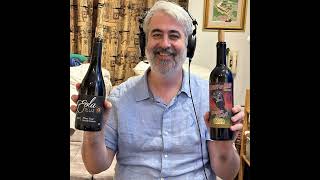
David Riven, General Manager of kosherwine.com, discusses the kosher wine market with host Simon Jacob, tasting four wines from Oregon and New York. The Israel-Gaza conflict devastated demand as restaurants closed and men were called to fight, prompting Riven to organize U.S. tasting events to support Israeli winemakers and move surplus inventory before Pesach.
Chapters
Welcome to The Kosher Teruah.
I'm Simon Jacob, your host for this episode from Jerusalem. Before we get started, I ask that wherever you are, please take a moment and pray for the safety of our soldiers and the safe return of all of our hostages. The following episode of The Kosher Terroir is a fun conversation with a very personable and detailed general manager of kosherwine.com, David Riven. Kosherwine.com has enabled most wine consumers in the United States to order from an enormous selection of wines with the simplicity of the click of a button from their desktop or mobile phone. And to have those wines speedily arrive at the threshold of their home or office without even carrying a bottle up the stairs. Their diversity of wines is truly incredible as they stock kosher wines from around the globe. David discusses his past as we taste some of their exclusive wines from around the US. He shares tips on on when to order most economically and some of the special Israeli wines they are making available to their customers. If you're commuting in your car, please focus on the road ahead. If you're home relaxing, please choose a delicious kosher wine, sit back, and listen in on this surprisingly fun wine adventure.
I have the pleasure to welcome David Riven. To the studio here in Jerusalem. It's an absolute pleasure to have you here in Eretz. And it's great. So welcome. Welcome to the Kosher Teruah.
Thank you. And it's always good to spend time with you. So thank you for welcoming me on the show.
Pleasure. Really a pleasure. What are you doing in Israel?
So this is my yearly visit. I come to meet with different winemakers, visit different wineries, see what's new. And spend time with good friends in the industry.
We're going to be tasting some wines, so let's, let's at least start with that so that we can get, um, get a little bit of wine into us, and then we'll, we'll go from there. So we're going to be tasting 3 wines— 4 wines, correct? 4 wines. So, um, what are we starting with?
We're going to start with the Pinot Noir, uh, from Willamette Valley in Oregon. Anyone who likes Pinot Noir probably heard of Morava Valley and may or may not have tasted this production. This is a kosher production made at Eola Hills Winery, which is a non-kosher winery producing some kosher wines. So we were lucky to join with them and make this Pinot, and let's taste it and see what we think.
It's really interesting. Mm, it's very interesting.
Yeah, it's a little rich and deeper than your burgundy, your burgundy Pinot.
Pinot, yeah.
Um, uh, this is the second vintage we did with them, and it's, uh, I would say this one's a bit more rich than the, the previous vintage, but, uh, I'm sure, you know, over time it will change somewhat and Even opening in the glass, it will change somewhat. So we'll enjoy it over the next little while.
It's definitely a deeper color as well than a normal Pinot. It's very approachable, and it's very, very nice.
It's also traveled all the way from the West Coast of America.
So yeah, it has the right to have some bottle shock.
Yeah, I still, I still think it's drinking fine, but it's, uh, it's also as recently bottled, um, you know, this is the 2022 vintage, so it was bottled, uh, late 2023, so it's a few months in the bottle.
So tell me about kosherwine.com. What's your role?
So, um, I am currently the general manager of kosherwine.com, so I do everything from buying, sourcing, pricing. Um, I work with— I obviously have a team and my team does a great job, but I work with the different individuals, you know, from customer service, sales, marketing, uh, to just make sure that the wheels keep turning. When I joined in 2015, at the time it was just, it was just wine. It was J Wines. J Wines had purchased kosherwine.com. And then shortly after I joined the company, there was an acquisition of Judaica.com, which I was involved with very mildly. But then I decided I needed to focus on wine. There was a lot going on. Subsequent to that, we purchased or we launched a food division and there was some acquisitions and and launch of our own meat division and meat company called kosher.com, and then the acquisition of Grow and Behold. So there's a whole entity of meat, and there's also a challahandco.com, which is like food baskets. So one division handling food and the wine division plus Judaica.
Okay, have you ever thought about beer?
I think about beer a lot. I drink beer. Um, the— I mean, the commercial side of things, when you think about, um, what's unique about wine and, you know, the service that we can provide, is that it, it needs hashkacha, whereas beer, there's plenty of people who don't need the hashkacha on the beer. I myself, I drink beer as long as you know it's kosher, so— and you can get it anywhere. You don't need a kosherwine.com to ship beer to Nebraska, right? Whereas wine, there may be a limited selection if you're a Jew living out in Nebraska, and, you know, we can provide the service that you wouldn't need.
I actually love the service because you have no idea how many questions I get from people who say, I listen to your podcast, it's great, but where do I buy this wine? And I just go kosherwine.com, and it's like, uh, it's magical. It's— is that— is there any state you don't ship to now?
There are a few states due to regulation that we don't ship into, but for the most part, most states we ship into. But also, speaking about beer, I do have to mention that, that podcast you did a couple weeks ago, um, with, uh, with everybody. Yeah, amazing. That guy's That guy is great.
He is, well—
And I didn't even taste the beer. Just that, I started listening to them like, oh, beer, okay, but I was driving and I'm like, okay, this is not about wine. And I listened to it, I was just amazed.
You don't know how many people have called me and said, you know, I've never even tasted beer before. After that podcast, I went out and bought some beer. I really wanna taste it. He's amazing. He's absolutely an amazing person, but he's also looking to try to export to the US. So he's an interesting guy.
Israeli beer may be slightly different because, uh, it's not readily available everywhere. Uh, there may be different regulations, and then you get into the, the packaging, like logistical stuff, which it could be investigated, but he may be better off going through a traditional importer with traditional distribution And I'd love to try those beers. I know I'm here in Israel now, and I could probably find them somewhere, but I'm saying I'd like to have them readily available when I'm back home.
I have a few of them upstairs in the fridge that you can taste after the podcast.
Amazing.
So we'll send you on your way with a package. Perfect. He's great. He's become my beer whisperer. I have a couple of people who are wonderful with wine. For me, Eviatar Cohen, who's just incredible here. And he's my— I call him my playlist guy because it's like with music, there's so many songs available, you have to know who to listen to. So he's my wine playlist person, and it's just great.
His reputation precedes him.
No, he's amazing. He's absolutely amazing. You're here visiting wineries. What's the specialty of kosherwine.com? I think it's boutique wineries.
Right, so we carry a wide selection of kosher wines. Of wines that are imported through traditional, that, you know, imported through traditional importers like Royal and Red Garden and Allied and River and, you know, everyone else. But then there's a lot of smaller wineries here making really small productions that it may not make sense for them to go through a traditional importer, either because they're not producing enough that someone could then take it and distribute it, or because they may need to charge a bit more and given, you know, the three-tier system in the U.S., it may not hit the shelf at the right price. So if you, you can go a little more direct by us bringing it in and selling it direct to the consumer and getting it on the shelf at the right price. So there's a small niche there which we decided, you know, to help winemakers here and give them the exposure. And it's, it's been, it's been great. We've got great feedback. I love the wines, I love the people. These winemakers, they're fantastic individuals. You know some of them. And one of the winemakers that we were importing from, we were importing Guito Winery and Malkiel Adari, who was the winemaker, passed away just before Pesach and the Shloshim was on Friday, which was for the timing of my trip, it was planned to be here. I couldn't be here for the funeral or shiva because it was like literally passed away Thursday night before Pesach, it was like 1:00 AM, I got the text. Even if I tried to book a flight then, I would not get here in time for Shabbos or for Shiva. So I said, I'll make a point to coming for Shloshim, and that was this past Friday. And again, great, great individual, amazing. Like he's persistent. His wines were just fantastic. Approach it very scientific, very meticulous. And, um, you know, that's just speaking of one of the individuals, but these all, all, all the people I deal with, very happy to, to have them as friends. I stay with them, we, we hang out, so to speak.
I love, I love that you're bringing these smaller boutique wineries that typically were just in Israel to a greater exposure throughout the United States, because it's just It's amazing. Some of these, some of these wineries are just spectacular, but they're very, very small, and, uh, and they would never get seen by anybody. So it's, it's hard enough to get seen being a larger winery in the United States. There's so much, um, distribution now. There's just so many different wines that, uh It's really hard, and I really think that you guys play an incredible role in getting some of these newer, smaller wineries some space.
Thank you.
It's— no, it's really special. It's really, really special. Um, how did you get involved in wine? Did you, did you have a dream of wine, or—
no, and this, uh, and I feel bad talking about that on this podcast because, as you mentioned many times, everyone on this podcast wishes that they can work in wine. I just kind of chanced on it. Um, I was um, living in Canada at the time. I was— I grew up in Canada.
That's like— that's like a desert for alcohol.
It's a desert for alcohol. Yeah, that's a totally different system than the three-tier system. But yeah, um, and I, I knew that I wanted to move back or move to America. I got married. I lived in Teaneck for a few years, moved— I was, I was in the middle of doing my school when I met my soon-to-be wife, or at the time to be wife, and she was doing her master's in New York, so we decided to hang around there. And so Teaneck, and, and the plan was like a year later we'd move back to Montreal and I finished my degree. Anyway, long story short, when I did fin— we went back, I finished, and we decided we're going to move somewhere in the U.S. And we decided on Maryland. Her and my in-laws lived there, so we we moved to Silver Spring, and I was gonna like, I was, I was doing like a, I was self-employed. I was doing an online business. Like, uh, that was kind of, that industry was changing a bit. So I was like, I'm gonna look for something else, see where else, you know, I can, um, make a living. And, uh, I happened to be, you know, spending Shabbos at my in-laws, and someone mentioned like, hey, the guy from kosherwine.com, he's like, you know, he's looking for someone maybe maybe speak to him. So I said, sure, no problem. We sat down and the rest is history.
Just with Doody?
Yeah, yeah.
You seem to know a lot about wine. I know you've picked it up over time, I'm sure, but was there always— did you like wine at the beginning before?
So I, I always drank wine, like, but, uh, you know, going back to my days in Teaneck, I would go to, uh, I can't remember the name of the, of the wine shop, but it was now— it was It was purchased by a kosher store, but it used to be one of those chains. And anyway, so I used to go there and, you know, I'd walk in and look for, you know, putting a case together for like $150. What could I put together? Basically like $12.50 a bottle. You know, I drank wine, but I wasn't like very into wine. I worked at the time, interestingly enough, another one of your buddies, Tzvi Mahler.
Yeah, sure.
So they had the pasta factory. So when I was still dating, um, I was like, I thought I recognized you from there. It's very possible. Yeah, it was a very short period of time. It was a few months. Like, I was just, you know, I was dating and then I was like, I can't keep on traveling back and forth from Montreal, New York, Montreal, New York. Let me just settle in here for a few months and do something and then, you know, make a life for myself, continue dating. And so I found, I found the job at the pasta factory, and Sve is very into wine at time. And I remember once I had a few friends coming over for dinner and like, he would always have like a little fridge. This is before they had more, more of a wine situation, but he had a little fridge there. I remember there was, my friends came over. I figured, okay, there's a wine shop down this, down the block. I can't leave work right now. I'll grab a bottle and then I'll, I'll go pick up something for him later to replace it. I'll just get him. Turns out it was like a back vintage of something. And like, I didn't pay, I wasn't like back then I wasn't really into— like, I drank wine, but it wasn't into the extent of like what the vintage is and this and that. It was like, it was a Dalton Shiraz or whatever, let's say, for example. And I went and got another Dalton Shiraz, and he looked at it and he's like, no, this is not, this is not what you took. But I'm like, but it is. He's like, whatever, forget about it. But, but again, I drank wine, but I wasn't into wine to the extent that most of your listeners, or if not all of your listeners, are. So today though Yeah, so fast forward. Um, so when I started working, I was more on the operations side, logistics, you know, more business related. It could have been any product, but obviously you're around wine, so you, you drink wine every Friday. You go down to the, to the warehouse, pick up, you know, what should we try, what, you know, the people coming in with samples and you're drinking. So through experience, it was only when I kind of did my first round of looking for these smaller wineries here in Israel. And I came with Dovi, and he's got a great palate, and he's been into wine for a long time. And we were going around and tasting, and we really wanted to find like 5 wineries that we can bring in, like these tiny productions that aren't looking to sell containers, you know. And as we were tasting through them, you know, we had to make decisions— yes, yes, no, no. And I kind of felt like guilty saying no to people without being able to kind of describe, you know. And also, it's not just like, what do I like? I'm not going to be the consumer of all the wines I import. Um, you have to think about the, you know, the end user and like, how do you justify your decision? So I was like, okay, I should probably— more than just the experience of drinking, I should probably go and study a little bit about this. And that's what I did. I enrolled in WSET class.
And you guys offer that through your website?
So that's how that came about. So after I did that, I was like, we should make this available. Now Level 2 is pretty straightforward, and there's no tasting on the exam. Level 3 is a little bit more complicated because you actually get tested on— there's a tasting component there. But through the, um, through the Capital Wine School in Washington, DC, where I studied, where I organized to, uh, to offer a kosher WSET Level 2 and Level 3.
So there's a bunch of people who've taken Level 3. And they love you for it because, uh, it was— it's just amazing to be able to have that. Um, I actually, I tried to enroll in that Level 3 when everybody was going in, and I hadn't taken Level 2. So, but there's, there's a note that says, you know, here's an exam, take Level 2, take this exam. If you pass it, then you don't really need Level 2, go straight to Level 3. And I did, and I Aced it. And then I applied and they said, no, no, no, you need Level 2 before you take Level 3. And I said, uh, okay. Um, but my goal was to take it with this group. That's a whole bunch of kosher people.
Yeah. So first of all, you for sure could have taken Level 3 without Level 2. Um, I started Level 2, um, just to make sure I, I—
yeah, no, I get it.
I had a, you know, baseline. Level 2 is pretty easy.
Yeah.
Um, given the amount of time I'd already been in the industry and conversations I had with winemakers, like, you, you kind of, you know, get a lay of the land, uh, which is really what W— uh, what Level 2 is about. Level 3 was, um, I think it's difficult maybe for everybody except for Gabe Geller, who apparently took it without studying, which again, with all the experience that he has, and, you know, like, it's possible, right? You could do it if you have a good palate and you've been tasting enough. And you read a lot about it and you're working with it, it is even possible to pass Level 3 without studying for it. Not for me. I needed to study.
Gabe is a particularly special individual. He has a memory for taste that is just phenomenal.
Absolutely crazy. Yeah, absolutely. And that will never be me, right?
And it won't be me either. So don't worry.
I'm not worried. Yeah. So that was— that's the story. Story of the wine education.
Is there a region you like more than others now? I mean, in the world, in the world, or in Israel?
In the world. I mean, Israel is a little bit different with regions.
Yeah.
Um, so the, the interesting thing is that I, I don't end up sticking with a particular region. Uh, it kind of like moves, you know, moves through different times. You kind of— I would say I exhaust like drinking a certain type of wine, then I'm like I want a totally different experience. I can't say for certain that there's any particular region that is like, I always love all the wines from here. Obviously Bordeaux is pretty easy to say and Burgundy would be pretty easy to say as well. I tend to, right now I tend to enjoy lighter wines than they have. Like when I started, I was like Shiraz and Cab and the those big bold wines. Then I'm kind of more in a phase of like, I want lighter wines and more aged. And aged doesn't have to be expensive. We often get a lot of wines that are just older and it doesn't have to be 20 years old. We had a Côte du Rhône that was from 2014 that I was drinking up till a couple years ago. Now it's out of stock, but it was 6, 7 years old and it's just like, it's softer, it's milder, and You know, that's what I gravitate towards these days.
I think the palate in Israel is also moving that way. It's moving more towards lighter, hot weather wines that are not super rich and super overpowering. It's just the problem is that you've got to have a feel for wines before you start going down that path. Otherwise, they just taste like they're watery unless you know what you're looking for in tasting them. That's—
yeah. And then even in there, it's like, uh, you know, some people have certain preferences, like they don't like the gripping tannins, right? So you can get that in a lighter wine. You can also get that in an aged wine that originally had gripping tannins.
So I have a question for you, because you're in the business, so you know, um, about things that are going on. Are there any stress—
are there any special tricks or hacks I can't speak for the industry as a whole. We definitely have a fantastic sale that we do every year around Black Friday, Cyber Monday, and that's— there's always great deals. The thing is that it's not always going to be across the board. So there'll be, you know, we, we get deals, we pass on the deal to our customers, and it's not immediately, right? Yeah, it's not like we can always just get the whole range. So we always, and we get deals throughout the year, so there's always something. But I would say Black Friday, Cyber Monday is a great time to stock up. And any other time we have a specific good deal on an individual wine or a brand, it's a good time to stock up. We don't, it's not like just like, oh, we wake up and like, oh, today let's just put this on sale. We get a deal and usually it's coming straight from the winery, right? The winery wants to promote something. They go to the importer, gets passed on to us, gets passed on to the consumer.
So now we're coming up to Memorial Day. Is it a particularly good time to buy wines, especially for barbecues and summer and what have you?
Absolutely. It's always a good time to buy wines, and I also barbecue in the winter.
So me too, me too. So it's not really such winter here, right?
And Maryland's not as bad as Canada, so that's, that's also That's also good. But there'll obviously be a Memorial Day sale. We've been running, you know, for Yom Ha'atzmaut, we had a sale on Israeli wines. So always, you know, whenever you find the things that you like that are discounted and on sale, stock up.
We're putting a link on the podcast for that will, you know, pull out specifically Memorial Day wines for both American wines and Israeli wines. So, you can take your pick and choose as you would like. I prefer Israeli wines, to be quite honest, these days. But—
Larger selection as well, right?
There are so many American wines coming out now these days that are just awesome from Pennsylvania and what have you. We should taste the next wine.
Absolutely.
Because this is also another— and I am the one who is holding it, so you want to do this one?
Sure. Coincidentally, all the wines we have here are American wines.
American wines.
So this is the Sleight of Hand Cabernet Sauvignon, or Kosher Magic Cabernet Sauvignon. It's quite an interesting winery out in Walla Walla, Washington, and this is another example of a kosher production at a non-kosher winery.
What's the grape in it?
Cabernet.
Cabernet. It's a Cab.
Yeah. Now, this is a 2019. So again, here's another example, and I haven't tasted this in a few months, but here's another example of something had you tried it upon release, it would have tasted very different than it tastes now. And where a few years ago you may have found it to be too big and overpowering, Now, it's a lot more approachable. It may still be big. Again, I haven't tasted it in a couple of months and we'll see where it stands today. But it's definitely developed very, very nicely.
Is it blended with anything?
No, it's 100% Cab unless there's anything— I mean, wineries can do that without mentioning anything, but this is listed as 100% Cab. So if there's any other kosher magic in here, I don't know.
Okay, it's interesting.
Are you getting something on the nose that would—
I'm getting something on the— in my palate that's saying Syrah.
Okay, it's possible. Um, they do make Syrah there, but, um, I don't think that there was a kosher Syrah production that year because that came in 2020. So unless they took some from the harvest and threw it in there just before they bottled.
No, it— I don't want to, uh, I don't want to accuse them of something that isn't.
It's a cap.
Yeah, to me.
Okay, good.
Put it this way, I get— I, um, you know, one of the tastings we had in February um, we did— there was a— the Jewish Link did a tasting in New Jersey, and we had a table right across from Amichai from Shiloh. And when I had a moment to sneak away, I poured a glass of this and I brought it to him, and I said, here, just, just try this, tell me what you think. And he smelt it, and he's like, this is for sure a Cab. So I'll take his word for it as well.
I know you're a general manager And, um, and that means that you've got a lot of people who work for you and do things. But I also know that you go out of your way to do personal things for people who need stuff done, either for production people, wineries, people coming in. You at one time schlepped a whole bunch of wine down to some people in, uh, in Maryland for me on a bottling that we did that was separate. You're always willing to help people. So no, it's—
I'm moving up and down the corridor on the 95, so may as well.
It's amazing. But I wanted to ask you with regard to that, are there any stories that you have of like crazy things that have happened that you could talk about?
Well, I'd have to, I'd have to think about that, and we can circle back if something comes to mind.
How are you seeing the Israeli wine industry coming along? You know, you mentioned, um, you mentioned Guito. I thought it was his father who passed away. I didn't realize it was him.
His father passed away a couple years ago. No, or it was his mother who passed away a couple years. Yeah, yeah, his mother passed away.
I didn't realize it was him.
Yeah.
Wow. So that It totally blows me away because he is such a special person. My first case of wine from him, he actually— I tasted it at one of the stores here and he gave me a ride back to my house and helped me with the wine to get it into my house and it was just amazing. He's a special person.
Yeah, and we were really lucky to have found him. It was actually after meeting Eli Shiran. And it was— we were like on our way out of his house, Dovi and I, and, um, he's like, have you heard of this guy? And we're like, no. And he like picks up a bottle of Guito wine and shows it to us, and we're like, just based on how it looks— I know that could sound superficial, but if you saw like how perfect and how thoughtful— and, and we saw the label and we're like, okay, how do we meet him? And, uh, we already had packed schedule. We were here for 10 days, 40 wineries, 40 meetings set up. And it was literally on our way to the airport, on our way to Tel Aviv, we cut another meeting short, ran over to his house, rushed through a tasting so that we can get on our flight. And it obviously was impressive. His Chardonnay blew us away. Chardonnay Le Bon, he's using not American oak or European oak. It was— I'm trying to remember if it was Hungarian or Austrian oak.
Austrian.
And it just gave such a nice roundness to the Chardonnay that really made it stand out. And that was super impressive. And that was one of the things that I loved with finding these smaller winemakers, because when you're a larger winery, and maybe some smaller wineries, you really think about the end user. Like, what does the consumer want? What's— where's the market at? What do people— what are people drinking? A lot of these smaller producers, they're thinking like more like an artist. What do I want to make? What speaks to me? And you find really interesting things there, and they can experiment, and they're not tied to like that. Or at least earlier when I found that— maybe later as they exported, maybe they felt a little bit more obligated to be a bit more consistent, but at least earlier, they were like, this year I make Shiraz. Okay, next year I'm not, I'm not touching Shiraz again, right? Like, you know, Ali Shiraz made a Merlot, which is fantastic, then decided he's not using any of these, uh, noble grapes. Now it's like Carignan, Petit Syrah, Petit Verdot. That's it. And by the way, to go back to another, you know, for forgetting about region, but like, I happen to really like Merlot, and, um, some of the best Merlots outside of Bordeaux, of course, or maybe even if you'd like to consider them, but I don't want to offend anyone if that sounds sacrilege. Um, some of these Israeli Merlots that I've had are like some of the best Merlots. So Elise is one example. Yakovoria makes the A Place by the Sea, both fantastic. And there's other examples as well.
So A Place by the Sea, I've never even tasted yet because it's only for export. Okay, well, that's the reason I haven't tasted it, but sometimes he shares those bottles with me. But I haven't tasted it yet.
Okay, we'll have to get you a bottle.
No, no, I'll—
it's on a pallet. It's—
I'll give them a hard time. I'll give them a hard time.
You should definitely drink it and taste it.
The other one, um, Givaudan makes a phenomenal Merlot. I mean, just an incredibly crazy Merlot. They're— and they've said that the Judean Hills is the place to make Merlot in, in the world. They feel very strongly that it's the best place in the world to make it.
Could be possible. Yeah.
Yep. Do you ever taste anything from Agour by chance?
So on my first visit with Davi here, we actually went to Agour and tasted them. That was 2017. It's been a while, and I had not yet been in the mode of tasting to like analyze. It was more tasting to enjoy, and I don't recall, okay, very much what that experience was. It was, it was an experience meeting Um, what's his name?
Shiki.
Shiki.
Yeah.
Um, in that little hut. And right, but I, yeah, I don't remember the wines per se.
So Agourz changed a little bit.
Yeah, I heard the podcast.
Yeah, so Agourz changed. And, um, Elad, who came from Castel, and, uh, Ayal, who is just— he actually came from Seahorse, which is a wine that I always wanted to taste. And then I said, all of a sudden somebody came to me and said, "Oh, I have a kosher bottle of Seahorse." And I went, "Wait a second, where do I get that?" And then I found out that Eviatar has, like, he bought half the production. So he has bottles of it. And it is delicious. It is incredible. It is a Syrah that is called K-Syrah, kosher Syrah. Kasey Raa, and it was like kind of cute from a seahorse.
I love puns, so that's a good one.
Well, yeah. Well, Yakovoria, then you really—
His labels are great. Yeah, his names, that's fantastic.
I know. There's a bunch of names that I've been involved with.
SOB?
SOB was my definitely, and that's—
That whole production, right?
But that actually, there's— 2 people in Israel besides myself who were very much involved. Andy Sinton was the person who first said, "Yakov Orya will make a wine for us if we want." And I said, "How do we do this?" And Avi Davidovitz also got involved, and the 3 of us were really, really involved. But Andy was the first person to get that going.
Yeah, and my understanding is that that project is being discontinued. I think 2020 is the last of the vintages.
We knew that. We knew that that was— he would give us 4 years of it because we got it at such a phenomenal price that, um, it's really almost like his, uh, you know, showcase wine. And we were getting it for, you know, we contracted with him to do it at, uh, you know, thank God, a great price.
Well, when you prepay, right, you take away all that all that expense and cost and upfront investment from the winemaker, they can afford to lower their price.
It's funny. It's a funny story with that. We said to him that we wanted to do kosher wine with him, and he said, "Okay, tell me what you want to make." Because we initially were going down the path of him being just like a contract winemaker, but then we wanted him to get the grapes, and we wanted him to taste it, and we wanted him to blend it. And he came back and said, "No, that's not what the price is for that. I mean, if you want me to be like the whole thing here, then it's a little more expensive." But he was very, very reasonable to us. And when we said, you know, "Look, we want you to be creative. We want you to do whatever you'd like." And he came back and suggested 5 wines. 5 varietals to blend together. And all of us looked at each other like, what is this gonna taste like? This is like crazy. Uh, is there going to be any sort of taste at the end of this deal? We bucked up and we just said, it's yours, whatever you want to do, do. And the first tasting was actually downstairs in this house, and, um, And we tasted the blending process. He came with all the varietals separately. And he served each of the varietals separately. And we tasted them. And they were extraordinary, to be quite honest. He had picked phenomenal varietals. And then he started to blend them, just 50%, 50%. And then 30%, 30%. He went through it, just pieces. And it was the first time in my life I've ever tasted, um, what complexity meant. And what, uh, it was just an amazing tasting. It was just absolutely awesome.
Like the different layers, because you're tasting the components individually, and then you see how you start to blend them, you can pick out what is from this varietal, what's from that varietal.
Yeah, but what— why blending made a difference. So you tasted the varietal and you said, this is great, I, I would buy this. And then all of a sudden he blended two of the varietals together and it was like so much more. And then he blended three of the varietals together and it was so much more. It wasn't, it wasn't detracting from it, it was increasing it, it was better.
Some was greater than the parts.
Yeah. And then, then he— then we got to— so we tasted 2 and then 2, and then we put them together into 4, and it was like, whoa, you know, like you could taste the complexity because you tasted these individual grapes separately. And then the 5th one was just, just— it was exactly what it needed to be able to, uh, to really express itself. And it was an incredible experience, an unbelievable experience. So that was a lot of fun for us.
Yeah, so the, the last of it is, uh, is bottled, and most of it's in the US. There's, you know, probably still a little bit more here that we'll pick up later this year.
I think he's going to keep it going. I think he's— or he might change the name, um, perhaps.
As of now, I think 2020 is the last vintage that— so be that I know of.
Okay, it's definitely the last vintage we're involved with. Okay, last vintage we're involved with. But we— he had said all along, I am definitely going ahead with this. And, you know, he might change the name on it, but, um, okay. But it's, uh, it— yeah, it was really special for each and every one of us. The— there, between the group in England and the group here and the group in America There isn't anybody who felt that they didn't get an incredible buy in that.
No, it is.
It was an incredible deal. Do you have any ideas for barbecues on Memorial Day? Any ideas of what wines would really go with that? Right. Because you're a wine connoisseur now.
Ah. So there's obviously different things that people like to barbecue. From fish and chicken to heavier cuts of meat. Everyone's different. And depending on what you would be barbecuing, there's different wines for pairing. So I mean, you can— I always cheat on this kind of stuff when people ask for pairing, and I'm not sitting in front of my computer right now, so I can't cheat. Cheat, but you just search Wine Folly barbecue pairing because it even boils down to the spices and the rubs. If you're going to do a Texas barbecue, then these are the wines. And if you're going to do some other style, then it's something else. So, it's very nuanced. It's not just down to the cut, it's down to the spices and the marinade. Now, I personally, in general, I'm not very fixated on pairings. Like, there's obviously things that like just don't go, but overall I'm pretty, you know, I'm not very particular. So if I'm drinking a wine and eating some type of food that is not a traditional pairing, as long as, as I'm going the meal, it's not offensive to my palate, I'll continue. It doesn't have to necessarily complement it. I'm drinking the wine for the wine, the food for the food. There are definitely foodies and winos out there that would want to get it perfect, and that's great. And there's so much information out there on the internet. You can even— even these days, ChatGPT, you can put it down to every ingredient that you're going to have on that dish with the side, with the sauce, and this and that, and you can put it in there and it will tell you exactly what wines or style of wines you should be pairing. And I will never be able to be as good as ChatGPT on this.
Do you ever handle any of his orange wines? Yakovoria?
Yeah, we bring in his orange wines. Even before we imported Yakovoria, I had come across some other orange wines here in Israel. One of them was from Binyamina. They had a reserve Roussanne which they made in orange wine style. And Royal represents Binyamina, so I approached Royal and said, hey, are you bringing this wine in? I'd love to share orange wine with the kosher consumer. And like, that's another little— it's, it's funny because like on, on the one hand you think like bring new things to the market and like first mover and you're, you know, like you'll capture the industry or in the market. The kosher wine industry is pretty slow moving away. Like, and it's not even necessarily moving away, but it's like pretty fixated on those bigger, bolder wines. Of course, there's tremendous support for Israel and Israeli wines, but when you kind of get into the more niche geeky wines, there's not a big following. And it doesn't seem to— there may be curiosity and people may try it, but it doesn't seem like there's a strong following. And this is like pet nat and orange wines and things like that. But I personally love bringing those things in. Just to make them available. If you love wine, you're curious about wine and there's something that's— and this is even beyond wine, like in food, if something is not kosher and you wish you could just try it, if someone can make this kosher for you, that would be great. So we bring it in and try it out. So we found this orange wine and Royal brought it in for us and we sold that. But it was a pretty approachable and not like a very sophisticated— it was an orange wine. And some people may have said that it wasn't an orange wine, but it was definitely skin macerated white wine. Skin macerated equals orange wine. Then with Iakovoria, obviously his wines are a lot more—
Pronounced.
Pronounced.
Right.
And yeah.
The reason I brought it up is because if you want to taste orange wines, spicy wings are exactly— the two of them together are like heaven. A nice cold orange wine with spicy wings coming out of a barbecue is like, wow. I'm just telling you, it's, it's an incredible combo.
And I've heard you say that, I've heard you say that a couple of times on the podcast, and It's definitely something I will have to try. I happen to like his orange wines that develop floor. I also, I really like those, like even Dalton has a dessert wine and it's slightly different 'cause it's a dessert wine, but it goes through like the Solera, quote unquote Solera system, right? Like all that—
That's an amazing wine by the way.
All that kind of stuff. I'm like, I can't drink that every day, like those style wines, but going back to the point of you're drinking kind of the same thing over and over and then you just want a break, you want something different. And those are always great wines. And Yakovoria has a couple of orange wines that develop flor. So one of them is a Schmitz wine. We brought in very little of it because most people don't drink Schmitz, but there's another one that isn't. And I just love those wines. And I'll even open them up randomly without any pairing, but I'll have people over and like, do you want to try something? Especially if they're like foodie, like people are into like the taste of things, um, and just like, like sit around and drink it and just, you know, it's, it's fun.
Yeah, I, I love it. His, his— he has, um, a few new wines that he's, um— the sweeter wines are amazing. The dessert wines are amazing. Yeah. And There's an S as well for a— coming soon, Samignon. I've tasted it and it's awesome. Um, I'm actually—
the Me series, I think, is what you were—
the Me series was the next— is the next one that's coming out. And that series, I don't even know if it's advertised or anything yet, but it's okay.
I think in Israel right now he's on the Shmita vintage, right? I think that's where he started with '22. Uh, so obviously that, that won't get imported to, to the US um, in general, most people are particular in, you know, without getting to the lucky thing. I don't, I don't get involved in that. Like, for me, it's a person— it's, it's a 100% commercial decision, right? Um, it gets confusing for the customer. It also logistically, like, you want to move on to the next vintage and you're still sitting on Shmita, and what do you do? And then like there's returns and you don't want it to get mixed up or wrong, you know, gets picked, whatever. Too many, too many problems practically.
You know how crazy it is, actually? You know how crazy it is? When you've got wines that are Shemitah wines that you've handled, when you go into the next vintage and you have to top up the barrels of the Shemitah wines that are still sitting there, anything you put into them is gone. It's Shemitah. Um, so it's like And you can't use the Shmita wine to top up the other barrels either. So it's like, it's really very, it's much more complicated than people realize. It's not simply, well, you know, whatever.
Yeah, the whole kosher wine industry, right? Because you're talking about harvest during Chagim, right? Right around the holidays, and it's really crazy.
It's, you know, so what are we drinking? What's this last one?
So right now we have—
not the last one, this is the second.
This is the second. This is the last of the, the dry reds. This is also from Sleight of Hand Cellars in Walla Walla, Washington. This is the Lewis Vineyard Syrah, and, uh, Lewis Vineyard kind of has a name for itself. People may know it. Um, Syrah definitely grows very well in Walla Walla, Washington. Um, Sleight of Hand constantly gets great scores on their Cab and their Syrah, like really, you know, in the '90s. And, um, just another fantastic wine.
This is delicious. Crazy.
And they can— and both these wines are suitable for aging. I know you asked me earlier about, uh, stories. I think you were— it was in relation to logistics, and at the time I said I'll have to think, I'll have to think about a story, but I may need to preface this by saying, like, if you've watched the movie Forrest Gump, one of the amazing things in the movie is that he seems to be at every monumental historical occasion throughout his life, right? He's always like wherever something is happening. And la habdallah al-fadl, as they say. So I'm near the man who is at like every monumental wine event anywhere in the world. It seems to be like— I remember this.
Who, you? Me?
You?
You got to be kidding.
The host of this podcast?
You got to be kidding.
I remember, well, first of all, the two events, but you know, the, the highlight probably, and this was, this was for me like, and I don't know if I'll ever top it, but like the highlight of my any tasting—
wait, yes, was in Connecticut.
Close. It was in— it wasn't it?
Oh, it wasn't in Connecticut.
It was in New Rochelle.
New Rochelle.
Yeah, but, but yes, the Connecticut— it was the cellar was from Connecticut.
Yes, it was in New Rochelle.
It was a New Rochelle.
That was the most outrageous tasting I have ever been in in my life.
So for me, it was— I, I expected you to have been, you know, with your experience. For me, that was like First of all, my wife had just had our youngest daughter a week before that, but we had this whole thing planned out where someone wanted to sell the wines that they had been professionally storing and they had large quantities and they wanted to donate the money to charity and they asked us if we can help liquidate the wines or sell the wines and have the give them the money and it will go to charity. So we, we said sure. However, I don't want to sell wine that, like, to my customers and charge them X amount and no idea if we can sample. And because they had such large quantities of each wine, I think there were like 30 to 40 bottles of— I mean, we were going— this was in 2017, this was in May 2017, and the wines were anywhere from like mid-90s to early 2000s and France, California, and Israel, right?
There was like '03 Castel, '05 Ortega y Forres, all the most incredible wines you could ever—
and right, it was Herzog, um, those chalk hills, all the original chalk hills. And then some things like, I mean, at that point I was only in the industry for 2 years, but like wines I never even heard of, like Château Fusel, like for me, that was a 2005— like, that was my favorite wine of the evening. Some of those things that you're just tasting and everything, like, in its prime drinking window. And, ah, it was one of the most amazing tastings. But sure enough, you were there.
That was absolutely just absolute chance. And I think Jay offered me to come And I said, yes, I, I couldn't get it out fast enough. But, um, I didn't even know what I was walking into. I don't think anybody really understood what they were walking into.
Yeah, I think we had, we had cataloged what they had, and then we said, okay, here's a list. But we didn't know where the wines would be holding. And I think of everything we tasted, I think there was like one wine, or like it was a white bubbly or something, we were like, yeah, it was dead. And we obviously didn't take that wine.
But all the wines were just spectacular.
Fantastic. They're all gone. We've sold through that. I mean, there may be like a few bottles of one of the wines left that we took, because then subsequently we took another batch. Like, because first they started, they gave us some, and then we took some more down the line. And it's just, um, you know, it's, it's not too many people were into cellaring wines. I know you, you've, you've been cellaring wines forever, but not too many people were And there's just not enough perhaps of these aged wines that are around. And I think now it's become a lot more common. There's these different chats and groups and people exchanging and sharing in RCCs that Yossi Harowitz spearheaded. And there's all these other opportunities. But these things are, to my knowledge, and again, I haven't been in the wino for a long time, but these things seem to have evolved over the last 10, 15 years max.
Yeah, totally.
And like, some of the— we were talking about productions from, you know, 30 years ago. Yeah, you know, so, uh, so that was a really, really special event. And the second one, um, this was actually made more special by, uh, by you and by your, your being there. The Rothschild, um, anniversary— like, Royal celebrating the 25th anniversary of Rothschild, which I think they actually celebrated 30 years from—
right.
And then you had brought all these back vintages of the Baron Rothschild, the original vintages, the original. But a slew of them from '80s into '90s.
They wouldn't let me— they first said, hey, look, um, thank you very much, but we're not taking them out because who knows what they're going to taste like. So I said to Jay, Jay, let's go in the back room, let's open one or two of them, and if they're any good we'll bring them out. And if they're not good, we won't discuss it. I mean, I'm not trying to, to shoot, you know, put a pin in their balloon. Um, but the '86 vintage, which was the original, was spectacular. It was just very— it was very drinkable. And it was— look, it wasn't at peak, but it wasn't undrinkable by any means, shape, or form. And actually, it was quite enjoyable. So that was a lot of fun.
And then it was also fun watching other people come and tasting and like, because everybody has a slightly different palate and some people may like this vintage better. And especially when you're talking about wines that are at this point, I mean, this was February 2020, so you're talking about 34 years, 30 year, like some of the wines were, I think some of the favorites most people gravitated were the, like the mid to late '90s. I think some of those vintages. Um, and I know we didn't have every single vintage there. I just remember some odds and ends from—
but the '86, what blew my mind was the cellar master from Rothschild said, whoa, you know, like, he just— it, it made an impression on him. He was so impressed with it. And it was— we had a lot of interesting people at that tasting. So it was— that was a Herzog thing where they took a non-kosher restaurant and made it kosher for the night.
And they hired some famous chef, which I don't remember, right?
And it was just a crazy awesome tasting. Yeah, that was another crazy awesome tasting.
It was crazy special because, uh, because you afforded all those wines.
I had— no, it wasn't a lot. I— it's just that I happened to have them from the—
I just happened to have wines from the '80s and '90s lying around in my cellar that were perfectly stored for 30-plus years here. Why don't you enjoy it?
But who's gonna drink them? You know, the trouble with once you have them— Yossi Horowitz has done me an incredible favor. Um, in the past I had these wines, and you're always looking for an opportunity to drink them, but who do you drink them with? You know, you're not going to sit home and open a bottle of something that's 20 years old that you've stored for all of these years to drink by yourself. So having the RCCs suddenly opened an opportunity to actually sit down with other people who liked wine. I think he did more for the kosher wine, high-end kosher wine business than anybody on earth. Um, Yossi, he's just an amazing person from that perspective. And he's an amazing person anyway, but, um, but it, it was, uh, It was a lot of fun. That's why I felt like I've been saving these bottles forever. Like, this is the time to drink them. When is it going to be better?
The perfect time to drink them. Yeah, it was amazing. It was an amazing evening, amazing wines. Yeah, it was a real special moment. So, thank you. Like, two of my best wine experiences were shared with you.
Wow. And, well, you're the one who facilitated the first one.
It was a group, group effort. So the last one we're tasting is this Sheldrake Point Gwurztraminer ice wine. This is a wine produced in the Finger Lakes. Um, so a lot of your listeners may be familiar with Ari Locksbeiser, who was featured on one of your podcasts, uh, about traditions and drinking for Pesach. Yeah, so Ari is serious wino, an educated serious wino. He's also WSET, and that's actually one of the— that kind of helped me get into it. He was already doing it, and I kind of asked him some questions about how to— what's the approach and stuff. And he was happy to handhold me and kind of guide me along the way until I got up on my own two feet there. But he's always been interested in producing kosher wines and specifically at not kosher wineries, finding great productions and trying to make a kosher wine there. And he was producing a wine or he produced the wine at Sheldrake Point, two wines, a Gewürztraminer and a Riesling in 2010. 2020, I want to say, was the first vintage. 2020, it could be 2021. And, um, when he was— after he was done producing it, you know, because I always like to say the easy thing is to, uh, to produce wine, to buy wine, that's the easy part. Selling it is always the, the hard part, the challenge. It's, you know, I come to Israel, people are like, oh, why don't you buy— why don't you go see this winery and buy their wine? I'm like, that's the easy the easy part. Like, I can— yeah, you could buy it, but then what do you do with it? Um, so after he was done producing it, he needed to find a home for it, and he, he approached us about taking, uh, taking the production, which we did. And, um, you know, we built the relationship with the, with the winery together with Ari. And, uh, down the line, we were like, what else could they, could they produce? What else do they produce? What else grows well in the Finger Lakes. You know, they had, they had some Pinot Noir, they had some rosé and different things. And this, this came up as an option, and I was like, perfect. There, like, there are no kosher ice wines that are from the Finger Lakes that are ice wines that are really— right. Um, I mean, there, there, there was, you know, De La Rosa makes some organic ones in, uh, from Austria. And there may be some that I'm— there's a couple, there's a couple in Israel, but the Israeli ones are not, right?
They're not, they're not really ice wines.
But so, so I was like, this is again, you know, this is great, something to offer the, the kosher consumer. And, uh, we— he got them to agree to produce, to produce an ice wine. And, uh, we actually went down there on the day of bottling and we bottled it with them. And you can see the little, uh, kosher sticker on there, which, I mean, the kosher, you know, the ashkaka is on the back label as well, but we had to apply the sticker to everything, onto every single, uh, capsule. So we were like standing there as their bottles are coming out, we're like sticking these things on. And it was, it was a lot of fun. We got to, to celebrate the, uh, you know, the bottling in a, in a very meaningful and and personal way. And I really enjoy, you know, going to these places and seeing the environment in which these grapes are growing and even the physical buildings that these— the wineries and the tasting rooms and things like that. And, you know, that full experience, not just the drinking of the wine. And Finger Lakes is gorgeous. It's a great place. We actually left some kosher wines there that if someone happens to call and say, hey, we're traveling and we're going up north, and don't you know a kosher winery there? Didn't you do something? And is it possible to set up a tasting? We can be like, yes, I'll make a phone call, there'll be something kosher for you to taste there.
Awesome. That is crazy. That's—
but not everybody all— not everybody all at once, because it's not like we left a ton there.
No, but that's a great idea. That's a great idea.
My in-laws love traveling and they were camping up near the Finger Lakes and I sent them there. They actually happened to go to Eola Hills as well on some other road trips. So they've definitely benefited from these kosher productions across the US.
It's a great idea.
All right, I'm gonna rinse a bit.
Well, this was a clean glass.
Yes, you drank accordingly. You had 2 glasses, one for the red All right, so first of all, I could tell you that the, uh, the color, just gorgeous. And you could— it's, it's already changing shades, like it's getting a deeper, deeper gold. Deeper gold.
It's a beautiful golden, um, beautiful golden color.
It almost looks like a whiskey.
Yeah, it absolutely doesn't almost— it looks exactly like a whiskey.
It'd just be confusing. Like a good whiskey.
Yeah, it looks like a— it It looks like a quality whiskey, to be honest.
Yeah.
And, uh, even the red tint to it is just beautiful.
Amen.
Ari is doing amazing work. Everybody who wants to do this sort of thing goes to, uh, France. And goes to non-kosher wineries in France and, um, brings out kosher rums. He has like become Mr. America. He's traveling all over the US and it's just amazing productions.
Yeah, absolutely. I mean, this is, this is a real special wine, very limited production. And I know we're talking about it now, but It is very likely— I think when I left the US, there was 3 bottles left in stock, and that was, uh, on May 15th. Um, today is whatever, whatever day it is, 20th, 19th, 20th.
Okay, and then this will be out broadcast not before the 20th. No, it won't be before the 20th, but this will be out in another couple of days, but right.
And, uh, it may or may— they may or may not be available. I actually had someone reach out for a case of it, and I'm like, we don't have a case left, and I'm in Israel, so I can't help you right now. I'm in bed. Oh yeah, but, uh, yeah, this is lovely. Fantastic wine. This, this bottle I actually brought from my house. Um, I mean, all of them I brought from my house, but this one I had sitting in my, uh, in my wine fridge, um, and I'm glad we get to share it and enjoy it here.
I'm sorry, this is really a special bottle.
You want more?
Yeah, actually I do.
You can have more of all the wines and I can leave them with you, whatever you'd like. You know, they're— I brought them for you special. I never repay you for all those Rothschilds.
Silly. Don't be silly.
You could always enjoy good moments. That's the— that's the beautiful thing about wine, right? At the end of the day. And even if you don't love wine as much, you can—
it's all about the people.
You still get to enjoy the wine. It's about an experience.
It's about the people. I, I love it.
The people part of the terroir.
Well, so that was the discussion in the beer, that maybe the people are the terroir for beer, because you don't have any of the other things. All the rest of that is produced outside of wherever you are. And it's an interesting perspective.
No, I— and I tend to agree. I think it also has to— and I, and I remember thinking about this, and sometimes my mind wanders when I'm, when I'm listening to podcasts and stuff, but you have to take into account the personal preferences, right, of the consumer. And typically each place has their different foods and different things that, that they gravitate towards, and that definitely can help shape 100%. So that's the people part of the terroir.
Israel, I think the spicy, the spicy food that's native to here is definitely bringing out more acid and bringing out more, um, you know, kind of edgy whites that you normally wouldn't see where people wanted much bolder, uh, big reds. The food here is built for, you know, lighter reds and incredible whites.
Right, there's a few interesting things about Israel. One is that the main meal is lunchtime, right? Dinner is usually a lighter meal, whereas in America it's typically dinner is the heavy meal.
I don't know if that's changing, but that's not the case here.
I mean, I remember from years ago, years ago, that was definitely the case.
Lunch was the big thing. You know, Israel has become this magnet for so many Jews from so many different countries. As an example, the South Americans who eat at like— they don't sit down to dinner until 9 o'clock at night. So they come here and, and they only come into the restaurants at like 8. You have the French as well, who also have a tendency to eat later. And I'm sitting there going, you know, I want a reservation at 5. I'm sorry, I'm, I'm an old guy now, so I can't, uh, I can't stick around for that stuff. But that's fun, right?
That would also lend well to lighter wines because like in middle of the day, it's one thing to top off your evening, end of the day you get too tired from drinking, just, you know, head straight to bed. But in the middle of the day, unless you're doing a siesta You pretty much have to power through the day. Lighter wines lend themselves better. Another interesting thing that I've noticed is because of how many wineries there are here in Israel and how small the country is, wherever you are, you're pretty close to a winery as opposed to the U.S. If you want to go to kosher winery and until more recently, any kosher production, if you don't live in California, California, you're flying across the country. Here you're basically going down the road and it's a lot more accessible and a lot more accessible to the younger generation. And the younger generation tends to like be on social media and what's the cool thing you're doing today. And I think it's picked up a lot of— it's become a trendy thing in the younger generation here in Israel. And even when I go to wineries, they'll, you know, and I ask them about, you know, the demographics and what they're seeing and like A lot of them are talking about like that young generation coming in, let's say, on a Friday afternoon and just like picnicking.
It's, it's— look behind you, that's a Vitkin picnic basket. Ah, okay, you see?
Perfect.
It's, it's exactly what— and the visitor centers are jammed on Friday afternoons, and they do all sorts of crazy things. During the war Um, uh, you got Castel and even, um, Flam having other wineries in their winery presenting things, and it's just—
Sphera does that. Yeah, the Riesling, which is apparently coming up in a month or so. There's like a whole Riesling summit.
Yeah, um, but Sphera isn't kosher, but they, they invite kosher wineries. Really?
So that— yeah. And I don't know. Oh, I don't know. Speak to— speak to us about it. I was just talking to him about it because his reasonings are—
his reasons are—
no. And he gave me— he gave me one for— for shot 2015. It's also Shmita.
I gave you a 2015 one.
Yeah, yeah.
I was gonna— I have a 2015 and a 2017 downstairs. Okay, if you want the 2017 instead, I'll give you the 2017. Whatever you like. But, um, no, I, I I agree with you. His, his Rieslings are off the charts. His Rieslings are really like real Rieslings. I mean, they're as good as the German Rieslings.
I mean, Assaf's making fantastic wines. Um, I think they're a bit ahead of where the typical kosher palate is, um, for the most part. But people who really enjoy wines and people who, um, you know, want to think about the wine when they drink it, like for sure is higher, like higher end. The Journey wines I think are, are approachable to everyone and anyone, right? And then as you go up, it's, it's like you want to really to appreciate it, you want to know a little bit about the varietal and things like that. But it like fantastic wines. Um, but I think that a lot of those more approachable wines and easy and lighter wines are more accessible to that picnic crowd, uh, that we were mentioning before. And I think that that's kind of like A lot of wineries have to respond to that and cater to the demand.
I agree with you 100%. It's become a very big thing here to go to a winery on Friday. Jezreel also has a huge offering up there with music and everything else, and it's a lot of fun. A lot of the wineries have been doing some really spectacular things. In order to kind of rebuild a bit because, um, with the war here, uh, it, it tanked the restaurants to begin with. Um, some of the restaurants have come back, but nowhere near where they were. Plus, there's a whole group of people that are, that are just like removed from the equation right now. They're all either in Gaza or up north. And it's a little craze.
Yeah, I remember in the beginning speaking to the winemakers that I import and trying to see what I could do to help. What do they need? What are they— obviously we know what's going on and the way all Jews are affected by this, but specifically to the industry and the working relationship I had with them. And we had a couple of the winemakers come to the US recently in February along with all these other tastings that were going on. I said, this is a great opportunity. Why don't you guys come down, there'll be KFWE. I'll try to get you in. There'll be the, you know, the Jewish Link. There'll be, uh, the KWD, this other kosher wine tasting group, like, you know, in Brooklyn, right? You'll get, get a chance to present, and then we'll, we'll, we'll skip and hop around the country. We'll set up some other events different places. People are always, you know, interested in, in hosting winemakers and stuff like that. Um, we did an event in Maryland and where I live in Silver Spring. We brought together a couple of different communities. There's a Chabad house there and there's a shul called KMS. It's a pretty cohesive community there, but these are two different shuls that we brought together for one evening, a wine tasting with the two winemakers. We brought Nelly Shirani and Akiva Voria. And we offered their wines that they had in excess here. Like, because we, you know, we plan out ahead, we know what we're going to order, we, you know, they know in advance. But in addition to that, whatever they had here that they were expecting to sell through, that all of a sudden just like stopped because of the war. And they were saying, you know, people are not drinking because they're not celebrating.
Yep.
And even if you have to celebrate because of the bar mitzvah or a wedding, the men are not showing up to these events, they're out fighting. So like there's not a lot of wine consumption there either. The restaurants are closed, the stores are closed. So like consumption just fell, fell off a cliff. And I said, how much excess do you have? And like, we, we sold like a pallet of wine at this event that was like from that excess. We didn't ship it from our warehouse directly, we put it on our next container that we brought in and got it to everyone, um, just before Pesach.
It's, it's really an incredible thing to see. You know, people don't realize this. There's two things that are going on that people don't really get. They understand the war. They understand a portion of the war. But what they honestly don't get is that there are hundreds of thousands of people who are displaced. I mean, the whole north, every city that's above Tsfat is basically evacuated. Kiryat Shmona is a city. It's not like a town. It's a huge city. And it's empty. It's empty. All of the people from up there have been, are staying in hotels all over the country. And by staying in hotels, people think, oh, well, they're in hotels. That's wonderful. Actually, what it is, is that they basically take hotel rooms, they take the furniture out of it because they need to put like 5 beds on the floor in order for these people to be able to fit. And they're living out of suitcases on top of beds in rooms that are not made for more than 2 people. And, and this is what these people are living in, and there's no sense of when they're going to be able to go home. So it's, it's crazy. I just, you know, I was with Amihai, um, not too long ago, uh, and he was particularly frustrated because he'd finally gotten people back from the war and he'd started to really get— it worked out, it worked out okay for him because these people were away while everything was sitting in— yeah, yeah, please.
Sorry, I haven't been paying attention to your glasses hidden behind there, but no, no, it's not— what could I pour for you?
Um, you know what, I want, I want to taste that first one again.
The Pinot?
Yeah, the Pinot.
Sure.
Thank you. Great. I'm going to let you go in a few minutes. Sure. Um, uh, it's with Amichai, it, it It was crazy because he finally got people back and he started to get a rhythm back into his, uh, into his winery where he hadn't had staff. And all of a sudden they got called back in to go north, and he was like, so disruptive. It was like, what am I going to do now? You know, like, it was just He, he made it through the first level of frustration, and now it was like easing. And then all of a sudden they got called back in, and he was like, you know, like, hit me again, you know, like, what do you, what do you want from me?
And then in 2 years he's going to say my best vintage was 2023.
It probably is, to be quite honest. It probably is, to be quite honest, because Kaddish Baruch Hu works in the most incredible ways. I mean, this whole thing with Iran and the president and all of these people who've been cursing Israel, all being in a helicopter together. And all of a sudden, this helicopter goes down.
How did Mossad know they were all there? No, they said, yeah, let the conspiracy theories begin.
Thank God they haven't begun yet, because they haven't even begun to think how to implement them. But I'm sure that they're going to be people, people who blame Israel for this. So whatever, it's crazy. So I really want to thank you for being here, being on the Kosher Terroir.
This was so much fun. I don't know how informative it was, but this was definitely so enjoyable to hang out with you and talk wine and, and reminisce on some fantastic, uh, wine moments and tastings that we've shared. And God willing, many, many more. And with the ultimate wine tasting that will come with Mashiach.
With God's help, I'm really looking forward. I don't know who's going to pick the wines when he comes. Yossi Haroitz. Good.
I think he's already picked them.
Yes, you're right. With the Mashiach wines. You're right. 100%. Okay. Really, thank you.
But you'll supply them because you probably have them in your cellar. If you're ever in the DC area, Yes. And even if you don't need a place to stay, but you should definitely come visit and check out my very limited and humble wine collection that we can raid. And, you know, there—
I look forward.
I love drinking wine with you and sharing wine with you. So I'm looking forward to creating new moments.
Okay, cool. I look forward as well.
Thank you for having me, Simon.
Shalom u'bracha. Take care.
All right.
This is Simon Jacob again, your host of today's episode of The Kosher Teruah. I have a personal request. No matter where you are, or where you live, please take a moment to pray for our soldiers' safety and the safe and rapid return of our hostages. Please subscribe via your podcast provider to be informed of our new episodes as they are released.
If you are new to The Kosher Teruah, please check out our many past episodes. And thank you for listening to The Kosher Teruah.










