A Valencia Winery Turns Bobal And Macabeo Into Kosher Terroir You Can Taste
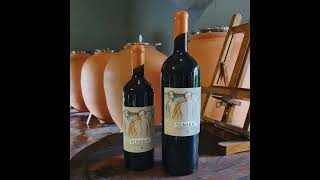
Armando Roberto Yitzchak Cartagena Malco runs Viña Memorias, a kosher winery in Valencia's high-altitude region, where pre-phylloxera Bobal and Macabeo grapes ferment in clay amphorae stamped with a Star of David. His 100% Bobal Alenar Tinto became a bestseller in Israel after COVID shifted consumers toward fresh, fruit-forward wines.
Chapters
Welcome to the Kosher Teruah.
I'm Simon Jacob, your host for this episode from Jerusalem. Before we get started, no matter where you are, please take a moment to pray for the safe return home of all our soldiers, and the full return of all the remains of our hostages. If you're driving in your car, please focus on the road ahead. If you're relaxing at home, please open a delicious bottle of kosher wine and pour a glass, sit back and relax. Today we're traveling, at least in our glasses, to the hills of Valencia, Spain, to a place where family memory, old vines, and Jewish history are all literally baked into the clay. Our guest is Armando Roberto Yitzchak Cartagena Malco from Vina Memorias, a small family winery in the Valencia region. His family has been tending vines there for generations, but instead of disappearing into bulk wine and co-ops, they chose a very different path: to craft serious, terroir-driven kosher wines from old vine Bobal and Macabeo on their own land, under their own name. This episode is is releasing during Hanukkah, the festival of rededication and stubborn light. And the white wine at the center of our conversation is Macabeo. Yes, Macabeo during Hanukkah, a Spanish varietal whose name echoes the Maccabees, made by a Sephardic Jewish family reclaiming its story in Spain. And bringing those wines to Jewish tables around the world. It's not just good symbolism. That's history in a wine glass. And the story keeps deepening. Many of Vina Memorias' wines are aged in amphorae, large clay vessels made by local artisan families. In one of those beautiful historical twists, These amphorae have been stamped for generations with a Magen David, the Star of David, long before anyone imagined they'd one day cradle kosher wine made by a Jewish family in that very region. Clay, star, story, and wine all circling back together in our time. But because good stories attract good people, this conversation doesn't stay one-on-one for long. Near the middle of our tasting, Joshua London, the wine writer who first introduced me to Armando and insisted correctly that we had to record this podcast, crashes the party. Josh brings his deep knowledge of Spanish and kosher wines, sharp opinions, and infectious enthusiasm. And the discussion shifts into an even higher gear. So light a Hanukkah candle, pour yourself a glass of something kosher, ideally a Maccabeo if you can find one, and join us as we talk with Armando and Josh about Old Vines clay amphorae stamped with Stars of David and what it means to make kosher wine in the hills of Valencia today. Let's dive in.
I have a very interesting guest here in the studio.
Thank you so much.
It's really a pleasure to have you here.
My pleasure. Thank you so much for inviting me.
Okay. So the question we're starting out with is if you could pour just one wine, one glass of wine that explains who you are and what the winery stands for. What's in the glass?
So we start with a complex—
I'm starting with a complex one.
They get easier.
They get easier, I promise.
When you start talking a project like we did, you thought that you have everything clear, but it's obviously the years are passing and then you are really seeing who you are through the results of what you are doing and where you are getting. But if I said, if I choose one of the wines and I said that in a more personal way, because probably my brothers or my parents, they might choose a different one, but if I choose one, I will say The one is called Unico, which was—
You happen to have brought a bottle of it, so I'm looking forward to that.
I brought it for you. I brought two reds today. So this one, we started our first vintage in 2016, and that was a wine that we started in 2018. And if I feel identified with it, it's because in terms of who we are as a family, the background of our family, the terroir, the expression, the history, everything. I think we can put it into that bottle. So I think it's very complete. If we start from the terroir, let's say, it's a wine that is made 100% with an indigenous grape variety, which is called Bobal. Which is the star grape variety from our region and happens to be the second most planted grape variety in Spain, a little bit on a par with the Garnacha. Garnacha is a bit more everywhere in Spain, and the Bobal is mainly in our terroir. So this is why it's called sometimes— our terroir is called the land of Bobal because mostly we have Bobal.
So you're in Valencia.
We are in Valencia, which is the third largest city in Spain. We are in Valencia, is the third largest city in Spain. And, and yeah, it's a mix of my— it's a mix of the world and my family. As we discussed before, I'm coming from a French family from Aix-en-Provence from my mother's side. And we have from my father's side is the Spanish side, is the land side, is the Bobal side. So in that wine, we put all this together. We will talk later about all these small things, but also in terms of history, it's a wine that we did it in 2018 already 100% with what is called tinajas. Las tinajas are these orange clay amphoras that's traditional from our terroir as well. That was that technique that were brought from the Phoenicians over 2,500 years ago, and since then has been used in the region. It's true that in a moment, since the barrels came to the protagonism, so the tinajas, they were less used, and that we wanted to go back to how the wines, they were made in our region at the time. And this is the result of Unico. So you have the Bobal, You have the Pré-Floch Serra vineyards that were planted in 1903 on it. You have the full expression of the terroir, the purity of the bobal. You have the history of my father transmitting the land, and we have the history of, as well, my mother that— I mean, people cannot see, but we have some paint made by the post-Impressionist painter from Aix-en-Provence. We choose one of the painters, and we put it there. My grandfather was a patron in France, and he has a beautiful collection of painting. We didn't want to make that too much of art and wine, but yes, we wanted to take a hint of our family history, and we choose the black and white scratch, as you can see. We added a little bit of orange to keep on the tone of the wine. But so yeah, it's a combination of all of this.
Yeah. The term we use here is— I can't believe I can't remember it. It's like done in pencil. In graphite. It's, uh, it's, it's in charcoal. In charcoal, that's what I was looking for. It's a charcoal drawing and it's very modern and beautiful. It really is unique.
It's unique. As well as you can see, there is a 3-person. Yeah, in my family we are 3 brothers and the 3 brothers are the almost the, the core of this project. We get to when, I mean We get together to do it. This is the— you were talking about the wine that you are—
Unity.
Unity. So there is also some unity on that aspect because we grew up in Spain and we grew up in a very little place in Spain close to Valencia. And then somehow we have the need to go out. And so in a moment of our life, we are all spread. My big brother lives in London. Comes very often to Spain but lives in London. My twin brother lives in Peru. At the time in 2015, I was living in Australia. So the communications of our family was a little bit, you know, we love each other, we want to talk to each other and it was a bit broken because of the distance. You know, when I wake up, my brother is going to sleep and this and that. So we got to together to take what we have, our heritage, what we have in our family. And together we did that. So this is why Uniqlo represents a lot to us and me personally. Yeah.
Fantastic. But now you live where?
So the story of moving never ends, but hopefully, yes, it did. Now I live now in Tel Aviv. And I spent my time of living in Tel Aviv and flying back to Spain as much as I can.
Very good. Tell me a little bit about— so let's talk a little bit about Nyiniko. It's all bobal? And how is it planted? How is it— tell me a little bit about it.
So if we go back to to the beginning is coming because of the need of preserving who we are and a real essence of our region. In our region, we have Beauval and we have some Prephylloxera vineyards that are today over 100 years old, that obviously the yield is super low. And if you go in terms of economically, it's not really worth it. But for us, it was so important to preserve that. Obviously, these vineyards, they give us something very unique, very special. I mean, they've been there for 100 years and they are, you know, growing and giving some particularities to the wine. So, let's say that Unico started from there. So, we made 100% Bobal from ungrafted Prefiloxera vineyards. And not only that, we wanted to bring to the stand a bobal that is as pure as possible. And this is why sometimes I think it's— for some people, it's not well understood because sometimes you take something so pure that it takes some minutes for the people to drink it, to taste it, and to retaste it. But then they realize what is it. We could have done it, we could have put it into French oak, American oak, and to do a classical, you know, fine wine. But we wanted to show the purity of Beauval, so we choose the tinaja. For us, the amphoras. Amphoras. We were fascinated about the amphoras always. We always saw it in our region. If you go to some of the village, you can see it on the ground, but just as a museum. And we were fascinated to start doing it. So in 2017, already we planned. 2018, we started doing it and we did 1,500 bottles. And we were— maybe as a mistake, but we were amazed about the result. Not because of what the people could think about it, it's because we finally found what we really like about Bobal. At the time, we were changing a little bit the way of how Bobal was done in the region. So we are unconventional, let's say, even in our region. We are trying to go for a profile which is a bit more fresh, more pure, and so on. So the tinaja allow us to show that. Okay. The tinaja, it's— is also bringing some micro-oxygenation.
It does, it does, but it's not without oak, without adding the flavors and what have you.
Exactly.
A pure way of doing the micro-oxygenation.
Exactly. So you have the bourbon and then it's going to age, it's going to, you know, during 14 months and into the clay and forage jars. And yeah, it brings a result that is, you know, super fruity, but aged, advanced in something else. And yeah, we can taste it.
We can taste it. Is it a wine that you want to age over time, or is it a wine that is very approachable now? What's the drinking window for something like this?
So 2018 was the first vintage. I still having some, not in Israel anymore, even in my personal, I don't have it anymore. I drink it all. But in Spain, we still having it and we still checking and what is the potential of it. In 2018, it's up to date, it's extraordinary. So today I brought you 2020 and I brought you as well a wine, it's called Think as a Riesling of 2020 as well, a different parcel, but it has been aged in French oak for you to compare how Bobal can show different profiles depending on how, you know, depends on the on the soil and the vinification. So I want you to have that perspective.
That's awesome. To try out two different— to try out the same varietal but just done two different ways. Fantastic.
Exactly. So what people— when most of the people, when they ask us, so what is the difference? Because at the end of the day, I have all my wines are made with 100% Bobal except the one. Okay, and the same thing almost for the whites. Everything is Macabeo. And people are sometimes used to have, you know, when they try a wine from a specific winery, sometimes they are, you know, what is the difference? This one is Cabernet Sauvignon, this one is Merlot, this one has a blend. In our wines are 100% Bobal, except of one. And at the moment when I explain to people that the difference of the wines are the soil, because, you know, a few kilometers, the soil can be completely different. It can be more clay, more calcareous, and the personality will be completely different. The age of the wine, because our project is based on old vines, but we can have vineyards that are 70 years old, or we can have the Prefiloxera, which is what I brought here today. We can have vinification process, which is different between the tinaja and the fine. So we have different profiles. And yeah, cool.
Very interesting, very interesting. So let's, let's taste.
Let's taste it.
Inoko.
So welcome to Bobal, welcome to the land of Bobal, welcome to Valencia. There is a concept as in terms of a terroir or more like geographical, I like to, we're working on it, it's called Altos Levantinos. Okay, so Altos is heights, Levantinos is Levante. Okay. We have a Levante in Spain. Our side of Valencia is called the Spanish Levante. Not in North Catalonia, not in the south of Spain, but that exact point, that area is called Levante. And we are in the heights of Levante. If you see the map of Mediterranean coast of Spain, on the 70 kilometers from the beach, from the coast, we are the highest area of all the Mediterranean coast, okay? So this is why we call it Altos Levantinos. This is gonna bring a personality on it which I think it's very characteristic.
It's a beautiful, beautiful, a beautiful deep shade. It's not— it's still red, it's not purple or something. It's a beautiful shade of red. And it's also, it's also got an incredible, incredible nose. So go ahead.
So when I, when I, uh, whenever you come to Spain, so you're most welcome. So I already sent the invitation to, to come to Spain, and I sent to, to everyone despite what is going on in in Spain. I think it's just a lapse of, you know, but I welcome everyone. And if you, when you come, you will try the 2018 and you will think, wow, how young is this wine in terms of the color, the taste, and so on. We are amazed about the results of Tinajas.
Wow, that is surprising.
So Bobal grape variety is an indigenous Spanish variety. It's because it's Spanish, because it's Mediterranean, because there is a lot of hours of sun So the skin of the bobal can be thicker. If the bobal is young, it can bring, like, scholot, like, vigorous and big, and clusters that can bring lots of numbers of grains and this and that. This is why we like to use old vines. Suddenly, the scholot are less number of grains, the size of the grains are smaller, and the production is less. Bobal can give a lot of color and lots of tannins to the wine. This is a wine that maybe probably in all the wines that we have, it's the one that has more structure. But what we try to do with this wine is trying to keep the medium body, medium plus on this one, with a great structure and great intensity on the mouth. Without being too heavy. Okay.
Yeah, it's not— it's, it's lovely. It's not too heavy, and it's also not, not, you know, very tannic. You can taste the tannin, you can, you know, you can feel the tannins, but they're very acceptable.
They are very well polished. And when I was telling you that we are unconventional as well from the wines of our region, I think the general thing when you do Beauval is to make wines that are a bit more tannic and more body and so on. But we wanted to take a different approach. We wanted to take the approach of having more refreshing wines, less body, yet intense on the experience in the mouth. So this is a pure Bobal. You get to have these red fruits, silvestre fruits on the mouth. Yeah, and I think it's a, I think it's a great example of what we, what we do.
Okay. So while we're tasting this, let's talk a little bit about the family story and the founding of the winery. It seems to be a very personal family project. Can you walk us through the moments your mother, Anne, Annie, decided we're going to turn these old vines into a winery and what that meant for your family that was scattered across the world?
So I think in, in this certain moment of your life, you, you go back to your origins and you go back to your childhood. I grew up in I grew up with my father, we grew up with my father since I don't remember, picking walnuts, apples, pears, grapes, all kinds of things when we were young. My father always brought us to help. My father was into agriculture. My grandmother from my father as well. It was few plants. As I said before, the thing of unity was very important. So I need to take all the brothers and come back to a common project where we have to be obligatory to communicate together, be together. That was very important. To do it with my parents was as well very important. I think the sense of unity in family, it's very important for us. And this is something that we were missing. At the same time, I myself, I studied finance and I was working on that space. And sometimes, you know, you said, okay, what do you want to do in your life? You want to work on a bank and so on, or you want to go back to where you were, is where you feel the better. On the third point, I would say that, as I said before, these very low-populated, very old vineyards, If you were not doing something unique with it, it will go away. And maybe it's just my generation now that we still, you know, '88, that we were thinking you have to do something special with it. You have to. You cannot let it go. It's over 100 years old. The quality of the grapes that we were having, it was exceptional. We were selling it to these people that we wanted to do something unique, but even though you have to pay for it, who is paying for it?
Who is—
At the end of the day, we thought that we have to do what we always wanted to do, to do a project together, to take these very old vines and to create unique wines. My mother said, "Okay." She's the one sometimes uniting and putting it all together. One of the conditions for her was that you that everything will be kosher. And we all said, okay, now that's a different story. We know about the nature, we know about the viticulture, we know about all of this, but kosher is something quite particular, especially on wine. And yeah, unity and going back to origins, going back to where we wanted to be.
Very cool.
Who—
what are the roles of all the brothers? You know, what are the roles in the, in the winery between you and, and your two brothers and your parents?
So if I start from my father, my father is the, the landman. He's the one is taking care of the vineyards. He's the one, he's happy to be spending the time out there and understanding what this vintage is going to happen, what we do, if there is rain, no rain, when we have to do the pruning, if we have to do it before or after, depends on the situation. So my father is— and sometimes I envy him so much. He has a passion and patience that I envy that so much. My mother is the, let's say, is doing everything, is doing operations, is doing— The business manager. Is the business manager. We, myself, I'm, you know, like as in a family business, you have to do everything, right? You go on sales, like you go on visiting, you go on cleaning barrels, You got to help your father to clean this and that. So I personally do a bit of everything. I do things that I wish one day we grow enough so I don't have to do it. So I will be more, you know, concentrated on what we do in the vineyards. My big brother is an oil trader, broker in London. And he representing the UK market and is also being part of our testing panel. Okay. My big— my twin brother is called Victor and he's a professional pilot. Since he's young, he dreams about being a pilot. So he's a plane, you know, commercial pilot, and he is the official importer in Peru. And he's also representing the wines in South America. At the same time, he's part of the tasting panel, and we have a WhatsApp group that is popping every single minute talking about everything regarding the wines.
I was going to say, with everybody so spread, you must be so thankful for WhatsApp because everything has got to be on a WhatsApp group.
Everything is WhatsApp, right? Today, everything is sometimes— if you go back to the reality, you have to say WhatsApp is not enough. You have to go and meet. We meet a lot. We meet a lot. My brother Victor is flying a lot. You know, for him to do 10 hours flight is like for you to do 20 minutes driving. And he said, are you coming just for 3 days from Peru to Valencia? Yes, I'm coming. And he's going back to his things. Yeah, I think the world, at the end of the day, we, we made it smaller.
Very cool, very cool. Why did you pick Bobal? It's kind of the workhorse grape of Spain, but why did you choose that as your flagship?
I think we didn't choose Bobal. I think Bobal chose us because of the old vines. At the end of the day, we didn't want to do— we were not looking for to do a wine in Spain. At the end of the day, we have to do what we had. And what we have was Bobal. And I think even though Bobal, maybe it was easier maybe to do something like Tempranillo, which there are a little bit, or Grenache, or something that is commercially easier to— or more recognizable for most of the people. But at the end of the day, we went to what we love the best and what we like the most, Bobal, and we were not scared at all if people know, or yes, no, or they don't know. Regardless, in the bottle, almost you cannot see which grape variety is made. When it is in the back of the label, you can see that it's Bobal. At the end of the day, what we are trying to sell is an expression of a terroir, an expression of that sense. So the Bobal is part of the project, also the soil. We have calcareous clay soils. If the common denominator of our region, Valencia, Hotel Requena, Alicante, Jumilla, all this area, is the calcareous soils. In our area, we have a bit more of clay. You can see in that wine, Junicos, specifically the content of clay, a bit more structured, a bit more bold. And yeah, I think Bobal chooses at the end of the day.
These are all naturally grown or naturally watered? These vines? Do you use pesticides? Do you, you know, how do you normally go about your—
They are grown the same way as 100 years ago.
Okay.
Okay. So our region, for many things, it's naturally organic. We are in 800, 900 meters altitude. So it's a dry region. Okay. So we have less that humidity, but we have winds coming from the Mediterranean, humid winds coming from the Mediterranean. But think about it, we have from the west coming dry winds coming from La Mancha. They are clashing together, they are creating a just perfect microclimate for the underground of the vineyard. We have a great current of winds. So sometimes, for example, in spring that we have sunny and then it's raining, and then we have more chance to have some difficulties in terms of fungus and so on. But there is very nice currents of wind, so we'll dry up the vineyards a bit better. So we are naturally organic. We got just because the certification in 2022 after 4 years of working on it, but it's naturally organic. We work in a sustainable way. So no machines, no irrigation, just what Hashem gives us. And I think that helps us more to express what we have in the soil. Suddenly, somehow, the roots are looking for themselves the water to go deeper and go exactly what they need to do. And on the way to go deeper, they go for different you know, the soils that happens on there.
So for— let's— for kosher wine drinker who's used to Cabernet and Merlot, how would you describe Bobal?
Actually, actually, if I have to compare with the— with, with Cabernet, the Bobal also has capacity of making a bigger, you know, guvmalet.
It's a fullness. It has a fullness.
Yes, I just said the word in Hebrew and then suddenly we got—
I know exactly what you're saying. I'm just trying to remember it in English. So yes, to make a full, to make a person full life, but it's also a full mouth. It gives you, uh, right, it's got a full mouth, right?
So if you, if you— we can have the colors, the point of colors of a Malbec, for example. Yeah, we have the, uh, the fruitiness of, uh, you know, the, the Monastrell, uh, Mourvèdre, like we said in, in French. But generally speaking, what we try to do is to make, as I tried to explain before, we try to make wines that are more refreshing, less body, yet intense. That's our— that's what we try to do in the ones that we are doing.
I think that's a spot-on description. It's right on. It's intense, but it's got— it's a lighter wine. It's not a full, full wine, —but it's more intensity than a Grenacha or something along those lines.
And this one has a bigger structure. Today I didn't bring the Magos Duopol, but if you bring Magos Duopol, it's even lighter in body and super intense.
So this is from Ant Forest? This is from—
So this is made with 100% handcrafted tinajas, amphoras, 1,000 liters. So more or less 2 meters. Yeah, there is bigger than that. They used to, I don't really, I need to check on the old people in the village because some places they have even 2,000 or 3,000 liters amphoras on the, under the, you know, they have the house and they said, first of all, you have to cook them. Where have you cooked like 3,000 liters, the amphora. And then how you have put this under your house, there's some mystery there that we just need to do. But this is 100% tinaja, especially in the Unico, we use it for all the process. So we bring the grapes to the winery, we crush them, not press. So we crush them, we throw them inside the tinaja. There, they're going to do the alcoholic fermentation, and most of the meat will be in contact already with the skin, so it's not separate. So it's going to be— you're going to do the alcoholic fermentation. Once it's finished, we take it out. Not an easy job. Just going back to the kosher, when the masgichim, when they come to our wineries, some of them, they think that they're going to press a button and they figure out they have 1,000 kilos of— or less, 100 kilos of grapes to take out from the top. And then they have to put it into the semi-automatic vertical press. And they actually, at the end of the day, when they see that and they see there is really tough work because at the end of the day, it's all handcrafted. And it's amazing how to see them that they are kind of like at the beginning, having some complications to do it. But at the end of the day, when they have finished the wine, because this wine takes like 2, 3 days to do it, they are so blessed and so happy because they actually have made the wine. Themselves with their own hands. And this is something that they are not used to.
It's connecting tubes and running pumps. Exactly. No, this is like real.
All the workout they didn't do in the yeshiva, or sometimes we bring people from Israel, they haven't done it there, and they go so happy. Very cool.
Talk to me, we talked a little bit about the amphoras. We talked a lot about them, but is there a specific way that they change the wine? Compared to oak?
I think it just respects more the pure sense of the grape variety. That's the sense of it. It respects and it lets it express by itself better than the barrels, in my point of view. Okay, so what you're getting here is 100% Bobal. There is nothing else. Okay. And it's a super complete wine, has everything that you will not miss anything and has not been touched, the barrel. That's the magic of that wine as well. I mean, to get to do this wine is not just taking the grapes and and put it in the tinajas. It's a mix of decisions, including the harvest. I think for Unico, for each wine, even though we do very small batches of bottles, 3,000, 4,000 of each, we do every year 5 harvests and 5, 6 harvests. Each wine has its own time. And for this one is the last one that we do. Okay, so generally speaking, let's not go over for the last years, has been a bit crazy before and this and that.
It's totally dependent on the—
but, but in generally speaking, if most of the wines on the red wines we do end of September or first week of October. So for Unico, we go just a little bit more, we go for a week more, more or less, depends on the, on the, on the time how is it ready. We go for the phenolic ripeness a little more advanced. We want the seed and the skin a little bit more advanced, and I think this is going to complete the essence of the wine. So not a late harvest. Sometimes when I try to explain that to some people, they say, "Oh, it's a late harvest." No, no. We just want the phenolic ripeness of all of it just a little bit more advanced because when we put it into the clay, we think that it will express better. Yeah.
This is not late harvest in this— in the traditional sense of sweetness and what have you that you remember. This is a wonderful dry, medium light— I won't say light wine, but it's got, again, it's, it's very focused, very structured.
It's very nice. Yes. Yeah, I would say medium plus. I think, I think that's the, the right— and it's swell so elegant. Yeah, that sometimes you could— you said, okay, maybe it's lighter, but no, no, it's, uh, the structure of the wine is there.
And yeah, you, you dedicated a whole line of wines to the Memoras del Rambam. Yeah, tell me a little bit about that and tell me about the Jewish content of, you know, the Jewish history, historical. So Memorias del Rambam.
Memorias del Rambam was the first wine that we made, and it was the first name that we picked. For us, Rambam in Spain, we see it as a cultural as something iconic in Spain, regardless of Judaism or regardless of religion. It's this iconic personage of all the Sefaradim, right? So when we choose, when we were looking for a new name for our first wine, we thought about Rambam. For us, Rambam in Spain has been always very, very close. And we choose Memoria del Rambam. We did the first wine. I think the people got— it was mixed feelings, I think, with that name. What could be? What is Memoria del Rambam? If it will be a serious wine or less serious wine or more commercial? But I think we choose that in the sense of, I think we couldn't find better person or better, you know, personage in Spain than him that could represent that. And he liked wine. He advised for wine. He was really connected to wine. And I think we did a good choice. People love it. We have a black label that we are having great success here in the United States as well. And by the way, maybe probably there will be— I don't have it today here, but probably will be the most classical, classic Spanish wine that we have made. Okay, that's a wine that is made 100% with the American oak, and American oak, it's a classical way of winemaking in Spain. And yeah, people connected very well with that wine too. But it's also Beauval. It's also Beauval. Okay. Again, it's 100% Beauval, and And it's coming from 75-year-old vineyards with calcareous clay soils, very old, very rich in clay content as well, but 12 months in American oak. Yeah, and when you will have it, nothing like Unico. Wow. A bit more aromatic, you know, these notes of American oak are hints are going out, vanilla, cocoa, cinnamon, dark chocolate on the back.
Yeah, I like this, you know, very much.
You know, so many people— it's like, for example, go and try, you know, Bordeaux, classic Bordeaux, kosher classic Bordeaux, and I wish we could have the same wine but no oak. Most of the people that will recognize that wine, they love that wine. You give them the same wine age the same time in the tinaja, and I think they will be completely lost. So when we bring, when we brought—
Lost in a good way or in a bad way? Depends for who, you know.
Some people, they don't like it. Some people, they love it. It becomes the best wine for them. The chosen wine, right? So yeah, this is the impressions when the people are trying Unico, they said, hey, something is very new. So it's not the taste I usually have. What is it? Okay. Do you understand that wine? I don't understand that wine. For example, I told you that I was doing the import myself in Israel. And people look at the bottle, they say, wow, it's a beautiful bottle. It's very appealing and this and that. And I I tell to most of the boutiques that I sell the wine, don't sell this wine to someone who has just the money to buy it. Sell that wine to wine lovers that, you know, they pick these, these, these. They will, because they will, they will understand it very well and they come regularly to buy that wine. Sometimes that they want just a flashy wine or something, I said, okay, you know, you know what, go buy the Jardin, or whatever, and it will be— but for my wine, it's not for everyone, this one, especially this one. We're looking for those curious wine lovers, amateurs, that are looking for something beyond. What's the pricing level here of this one? So here in Israel, it's around 2,040 shekels. Sorry, 240.
Yeah, good. 240 shekels. Very cool. But it's also very limited.
It's very limited. What I bring to Israel is around 800 bottles, more or less.
Yeah. Okay. Tell me a little bit about, you know, when we were discussing offline before, you told me not only about Spanish, but Ladino. Tell me a little bit about the Jewish interaction.
The Jewish interaction. Yeah. So I—
especially in today's world where people are actually scared of what's going on in Spain, from not what's going on on the street, but the, that the president of Spain is—
Spain, yeah. For me, again, I, I grew up all my life in a, you know, very small community far away from, you know, but I grew up always with this, uh, with the Judaism and and my values and this and that. Some people knew that I was Jewish and we were family Jews and we never had a problem. And if I remember one time when we were kids, I think in the park, someone screamed at us like from far away, we didn't know even who was it, "Judeo!" Like in a way that I think it just was No, really, I don't think they were saying that as an insult. It was like, for them, it was so curious that suddenly in these 50,000 people there is a Jewish family and they heard about what is Judaism and this and that, but they never saw it. You know, they think that we have to look at maybe at like these Nazi propaganda pictures with the nose or something. I don't know. Anyway. So for me, I never experienced in Spain nothing. I think people who has the culture, I think they are very well connected with us. It's like evangelicals in United States, those in Spain that have some, that are connected to the roots, to the Christianism and this and that, when they see the Jewish people, they are so curious and so happy and so, you know, so yeah, I think I always felt good things. In terms of Ladino, to be true with you, I had a lot more influence of Ladino in Israel and I started to get more interested in Israel because in Spain at the end of the day, the Jewish community there are not practicing at all the Ladino. It's more the communities are sometimes in, whether in Israel or Turkey, that suddenly— I told to your wife that the first time I really heard the Ladino, it was someone who was speaking to me in Ladino, but I thought he was trying to speak with me in Spanish. And I said, hey, this guy is— I mean, he's trying to speak to me in Spanish, but he's doing it very wrong. And actually, he was speaking to me when he explained to me that it was— no, this is the Ladino. And I said, wow, it's so close, it's so interesting. And this is when I got to get really close to the Ladino. And there is one of the wines that we did in the first time in 2022 that we choose to call it Alcunia.
But you know what I want to taste? I want to taste the other red.
Okay, so the other red, it's— so I brought the same vintage, 2020, so you can have a comparison of both of them. This one is called Finca Cerezal. So Finca Cerezal. So Finca, usually it's a name that in Spain we use for single parcel wine. So Finca is just that specific parcel. And Sersal is the name that we choose for it. Sersal, it's— how you say? Orchid plantation? Yes. Like Duve de Vanim. So in our area, in our terroir, as I said before, is a high altitude terroir. And we have also cherries growing. And not too many, but we have cherry plantations growing over there. and it's close to that specific parcel. So this one, it's— if in Yunnico, you have calcareous clay soils with high content of clay, here you're going to have very calcareous, very elegant soils. So also, this is a Prefructura vineyard. In this case, we have 2.97 hectares of 100% Bobal. Okay. So in that one, in Yunnico, you're going to see the powerful, the power of bourbon, and in Finca Cerezal, which has been aged 12 months in French oak, you're gonna see the finesse of the legacy of the bourbon. So when I was telling you that Unico is unconventional, here we have this classical profile, okay? The French wood, it's adding that personality that somehow it's more recognizable, generally speaking.
This is a much deeper ruby red, and you can definitely tell it's been on oak.
So in 2020, we used 100% French oak of 225. Since 2021, We put only 30% new and we bring the 500-liter barrels. Okay, so minimal intervention, less impact, more respect to the Bobal.
This is not heavily oaked. It's not like— sometimes they're so oaky it's like eating toothpicks.
But this is not like that at all. Exactly.
It's there, The only reason I can really sense it is because of the Unico.
Okay, the comparison of both. But you can appreciate the— without going too much into the hints of here or them— the personality of our winemaking style and what we want to show to people with bobal. Okay. You know, wine as well has to somehow adapt itself to the new occurrence. Now, also Bordeaux is not the same as it was 10 years or 30 years. So things are moving. And yeah, and we saw probably, you know what, that's the funny thing that when you are in a business family, that each one is coming from a different side. My mother has been a great influence on the personality of the winemaking. Elegance, Meranen, more refreshing, more elegant, less wood, more respect in the grape variety and more respect in the soil. And yeah, wines that you can enjoy very well. They're lovely.
Who's the winemaker? You're all the winemaker, or do you have a winemaker who's there?
So we have a winemaker that is called— it's more like technical director. Okay. It's called Daniel Expósito. And it's funny because the Jewish influence in Spain was so big that they said a huge percentage of the Spanish population has some some Jewish background, right? So he's called Daniel, okay? And he's called Exposito, which is also a very, at least was a very Jewish surname. So he is like Bobal. He was born there. He's been living there. His father also was into the wine business. And when we will talk about the Maccabeo, I will He was one of the founders of Deokava in our region. Okay. That today, if the appellation is called for wine, is called Uteo Utiel Requena, as only the side of Requena is also Deokava. And we'll go back to that. It's also Kava Requena. Okay. So he's the founder of that, one of the founders of that region. So he He knows bobal. He was born with bobal. He has been playing with bobal all his life. He understands very well the bobal. He's very sensitive, and he understood since the beginning what we wanted for the wines. Okay? He was doing his own wines. He is very specialized on the sparkling. And, you know, in 2000, already when we started the conversation that we were having together and tried to explain what we want from that specific parcels that we have, what we want to do with that, what we expressed that we want to do, and he understood very well what we wanted and has been, you know, one of the pillars of that project. So Talk to me a little bit about the process.
When you're doing it in amphoras, do you basically take certain parcels and put them together in different amphoras and then at the end test each of the amphoras and blend it? Yeah, exactly.
So there is, on this last one, Finca Tresal, is 2.97 hectares, which is very small. And we choose that that parcel because of the characteristics of the parcel and the soil and this calcareous profile that we really like it and we thought that we could bring such a beautiful and elegant finesse. And as a whole, this is what we wanted to show, Finca Teretal, so no need to separate. On Yúnica, we have 3 parcels. And we separate. We try to get more or less 1,000 and almost 2,000 liters per parcel. And again, 100% bobal, same age, and it's super curious to see just the difference between the type of soils. So the general common ground of these 3 parcels for Unico is because of the higher content of clay, which is going to be a bit more powerful to the wine. And this is what we wanted to show. Yeah. Okay. The same thing for the whites.
Okay. Making fully kosher wine in a relatively remote part of Spain, it's not an obvious path. Have there been challenges?
I mean, you know, when you go and you want to make wine from over 100-year-old vines and you think that is going to be the challenge because of the quantity and this and the how you work and how you pick it and this and that and you think that's going to be the hard part. When the kosher comes into ground, I think making wine is, you know, the easiest part.
There's a lot of winemakers in Israel who would say the same thing.
And especially in Spain because the community is very is very low.
So we've been joined by Joshua London. Welcome, welcome. This is an unusual, an unusual treat to have him here from London.
The treat's entirely mine. Thank you very much for having me. Okay. Oh, so we have the Unico and the—
so yeah, I'm Finka Fretal. So I brought to, I brought to Simon, uh, to 100% Bobal, same vintage, 2020. So he can see the difference of different personalities, different aspects of Bobal. One of them aging in the tinajas and the second one aging in the French barrels.
The tinajas are French, are amphoras.
Yeah, they play amphoras.
Just making sure you're up to speed. And I think when I tasted wines with Rami, he told me a little bit about them, but if you haven't already covered it, I'd love to hear more details about the manufacture and sort of what's the tradition and how they work out size and specs and all that kind of stuff. I'm just, my geek side curious.
So, so if, if there was one that is, uh, that we wanted to show, to do it, or to show to go back on how the wines were made, like, a few hundred years ago in the region. So, that's unique. This is why we use also the tinajas. We didn't use the tinajas as for a romantic or fun way to do it. We wanted to go as much as genuine on the way our region was, our terroir was using the tinajas. Were made in wine. So as I explained to Simon, if we go back to the harvest, for example, in these two whites, two red wines, usually more or less we go for reds at the end of September, October. Okay, if we start from there, Unico, we wait a little bit more. We want the phenolic ripeness to be a little bit more advanced. This seeds and the skin a little bit more advanced. We want to see it a little bit when, you know, when you put in your teeth and you— it's a bit more crunchy. Yes. Uh, so that's what we wanted for, for, for Unico, and we started from there. We bring the, the grapes, hand-picked grapes, to, to the winery early in the morning. We de-stem and we crush them. We go— they go directly to the, to the tinajas as in a paste, like puff, puff, puff, puff, puff. So the beginning, there is not much of a juice. We're going to leave it. There's going to happen the alcoholic fermentation. We want that connection that meets together with the skin, not separate. And as soon as the alcoholic fermentation is done— otherwise, we were joking about that, but because of some mashgichim, they are thinking they're gonna come to click a button and there is no buttons in that moment. So yeah, so they have to take this, you know, 800 kilos per, you know, 900 kilos per tinaja and to pull them out from the top and directly put it into vertical semi-automatic press, and we do a gentle press, go back to the tinajas for 14 months. Okay, so they're gonna stay there. You're gonna see that each tinaja has its own personality, has been made handcrafted. So sometimes after a few months, you started to see that some parts of the tinaja are a bit more humid. And the other one's a bit less humid, so you can see which one is— each tinaja is going to have a different personality. And we were talking about micro-oxygenation, right? Yeah. And if there is something I could say after all of these years making, I think the micro-oxygenation of both the tinaja and the barrel are are pretty much the same in terms of quantity, but I think the Tinaja is a little bit more irregular, maybe because of this handmade product that, like I say, in some sides there's going to be more porosity and the other ones a bit more porosity. I think the barrel brings a little bit more consistency. But yeah.
And I'm curious, for the Tinaja, how many How many producers use it in the region still or have gone back to it? And actually, I'm curious how many producers of Tanakh are there in terms of actually manufacturing them? How many artisans are there involved in it?
So, Unico was made in 2018 and in my region, I think we were doing it no more than 3. Although we have a museum, where you go into the museum and you see the tinajas, you see, wow, how beautiful. And that was the thing, you know, we were in a region with a long history. We have the oldest archaeological sites of winemaking in all Spain and Portugal in Putiel-Requena. And part of it was small tinajas, small amphoras. And then we saw in the museums, and then we saw a neighbor that is showing us, oh, look at the tinajas that we had, and we were thinking, why we don't do— why we don't use them? Why we don't try to make wines as they were done before? Obviously, in a more modern and in a more fine way, but why not to use it? And then we started looking at who is doing tinajas. Not easy story either. In 2025, who wants to do tinajas. Everyone wants to earn a lot of money doing something else and this and that. And these works are— these jobs are less and less being demanded. And for us, we talked with 2, 3 of them. We didn't want to bring tinajas on for us from somewhere else. I think in Italy they do very fashionable ones. This and that. You can get them in China now.
Yeah. They bring them from China. No, because there's a number of wineries in Israel that use amphoras.
For me, that's completely right. I think we believed on the work that these people were doing it. Also, few generations of doing that. And if you want to hear something curious, we didn't choose that just for that. But for us, it was the spark. So we choose different tinajas, we bought some of them just to try, and we thought that the ones that we are using today is— I don't know if it's the best, but the ones that were fitting what we wanted to express, the profile that we wanted to show. And my mother was looking at the tinajas and suddenly she sees how they were signing the tinajas. And—
Yevami showed me a picture of it.
Yes. And we figured out once the tinajas were at our place and then we saw, oh, how they knew it, how they knew we were Jewish. The owner of the place, they were signing with a Magen David. So we called him and he said, hey, okay, it's very nice the star that you put. I know this is how we sign all our tinachas. I said, what? Who is signing? Only you? No, no, that's something is coming from even my grandfather or even before my grandfather. And I said, wow. And, you know, we liked the style of the tinacha. And then when we saw the Magen David, we said, that's it.
That's, you know, there's so many hidden symbols back to the Jews were involved in these things. So the name Maccabaeo.
So the Maccabaeo is not clear yet where exactly it's coming from. Okay. I personally don't know. And people in the region don't know. And I did some research, even I have used ChatGPT. It does not. Just for curiosity. Probably, you know, this region where we are right now was so important back a few thousand years ago, so probably there is a connection. But again, we are using Macabeo. That's the grape variety that is more representative in our terroir, in our region, and also in Spain. And it's called Macabeo, so we couldn't be more happy.
Your vineyards are sitting between 600 and 900 meters above sea level. You're doing— they're dry farms with no irrigation. How does the combination of altitude and stress shape the style of your Bobal and Macabeo compared to the lower irrigated vineyards? Lower irrigated vineyards? Vineyards that other people have. How is your style different, or is it?
Okay, so if, um, you know, during the last, during the last years, they have been quite dry years. Yeah, no, no, last year was better, and, and this year 2025 started very well, but we will not see the results until next year really, because, you know, vineyards, they need time to recover, even though the same year it rained, but it needs time to recover. So hopefully next year we'll have an excellent year. We'll see. But for example, in 2020, 2022, that were really, really, really hot, the vineyards that expressed the best, or they were more resilient, were the ungrafted ones. They were ungrafted, that there were no irrigation. The ones that they get to express better because, you know, at the end of the day, everyone, all the vineyards, they give some certain kilos of grapes and you can do wine of it. But if you compare wines to each other, the ones that were more expressive, more natural, they were the ones that are ungrafted. So, you know, these vines are there for over 100 years and it's just for the reason that they are the genuineness of that place, and they know how to react on, you know, in moments of a lot of stress. Okay. So that was one of the reasons as well that we are amazed of that ungrafted. By the way, today is illegal in Spain and Europe to plant ungrafted. Everything has to be grafted. And I think we will come back to that. We need to do some research. Preflora is very important. And if suddenly, you know, we do all ungrafted and it kills all the vineyards, it will be a catastrophe. But we need to go back. We need to go back. We need to see which clones are, or how we can, you know, are better, which ones can adapt more. And again, to go back to that, the ones that were more resilient They were the ones that were more autonomous. They have the roots that go way deeper, and it's not just deeper, they go to the last place where it could be some water. And we feel it. We feel it on the wines. We personally don't have any vineyard that's irrigated, so we don't know exactly in terms of winemaking. But inside our vineyards, the ones that were ungrafted, they expressed better than the ones that were grafted.
It's interesting, you know, we think we know what we're doing by all of these interventions. We underestimate sometimes the vine, right?
Yeah, the vine, it's very resilient, it's very strong. True, okay, Today, everything is very globalized, everything is very mixed. If you are putting some Albariño in my region or some variety that is not made with it, I mean, it works because the land and because you water it, but if it's not naturally from there, then, you know, we'll have lots of troubles. But if you, again, and I think this is what happens today all around the world, Even in regions like Bordeaux, they are going back to the native varieties.
Okay. I want to talk bubbles.
I want to talk bubbles. We love bubbles, by the way. And when we are going to make the statement of the bubbles in the kosher market, that was, let's say, the second part of our, let's say, business plan or agenda. Yeah, it's the bubbles.
So yeah, that's a hard thing to do, you know. I don't understand why people make sparkling wines. It's so much work, it's so much effort. I mean, it depends how you, how you make them sparkling. You can just simply introduce—
it's so much a treasury as well. Yeah, no, and we were going to talk about that.
But the traditional method, just the results are fantastic.
The results are fantastic, but the results take a huge amount of work.
They do.
Well, yeah, but we are at the end of the day, we are in, in a business is called wine, and patience is maybe the, the main factor of it. So you have— we, if we want to, especially in the kosher market, if we want to to bring upgrade, generally speaking, all the level of all the wines, we need a bit more— we need a bit of patience and we need to— and especially on the sparkling. The sparkling wine has been, in the kosher world, has been underestimated or has been not well treated. We have been seeing sparkling, generally speaking, and let's put aside the Champagne because of the— but Really, we didn't see— So when we come to the sparkling, we, first of all, we wanted to show again terroir because in Spain, there is— it's not like Champagne that we have a unified region. In Spain, we have 4 sub-regions of Cava. So 95 or 96% or whatever it's It's the Contats de Barcelona, all the region surrounding more or less Barcelona. Then we have Valle del Ebro, which is in the Ebro River, which is Aragón, a little bit of Rioja, there's two points over there. So there is maybe like 1%, 2%, 1.5%. Then we have Almendralejos, that's another very Spanish, which is west of Madrid. In the region of Extremadura, again, 1% and something. And then we have the second biggest region of cava, which is in Requena. And the difference between— so we have 3%, which is very small compared with Catalonia. But the difference, the main difference with our region is that we have this altitude that the other regions don't have. In the context of Barcelona, we are talking about 300, 400, 500 meters. True, there is some peak somewhere, 700, but the average altitude of our region is 700 meters, 800 meters. So then you're going to have a different personality on the sparkling of our region.
The Rambam Brut Reserva Cava, is from Old Maccabeo vines with at least 24 months on the lees. What makes that wine different from what most kosher drinkers expect from cava?
So again, I'm coming from a family that French is there. My mother is French and, you know, the quality of the bubbles, probably the most important here. So obviously the white wine has to to be well made, the structure is fruity and this and that. But now we are talking about bubbles. And when we're talking about bubbles, the integration in the mouth, the fine bubble, persistent, well integrated in the mouth, it's the most important. So when we're talking about patience, it's giving time to things. The bubbles in the method, the traditional they're going to be made by themselves. And the longer that we let them do their job, the better expression we are going to have in the bubbles. So we decided to do 100% Macabeo because this is what it represents us the most. By the way, Macabeo grape variety is maybe probably the most popular white grape variety. In La Rioja, it's called Viura. Different personality because there is more Atlantic influence, less sun and this and that. But Macabeo is the main grape for using for sparkling. We wanted to show— we could have done a blend, but we wanted to show in this, in 2022, we wanted to show again the great potential of Macabeo, which is perfect for sparkling because of mainly the structure that can bring to the sparkling. So we made 100% Macabeo, as we do everything in Viña de Murías. Old vines. So again, in the old vines and the whites, we are talking about 45 years old. Non-integrated, goblet training system. And again, if Macabeo can give, can bring medium-sized grains. So when you see the macabeos that are coming from this unirrigated or dry farming, then you find small grapes of macabeo. We do the wine with it and we let the magic happen with the time. So I like when we taste the sparkling, I like to taste it that way. First of all, we don't move the glass. We let it relax a little bit and we're gonna taste it just to see the bubbles. Once we see the bubbles, how they react, we see if we like it or they are big or small or they're persistent or no, they are integrated or no. And then I like to move into the shaking it and see the aromas and so on. So I let it— I always like to do it that way. I let it a few seconds and then I drink it. Anyway, cheers for this and thank you so much.
No, it's a pleasure. These are beautifully fine bubbles. Thank you. Really?
So Daniel Exposito, it's a star of— his main thing is the bubbles. Has been, you know, '96, '97 decanter. Wow. And some of his personal things he does. And yeah, last time we were talking about, and he was telling me that in a competition with French Champagne that the judges after they were mad against him because suddenly one of his Sparklings was a 97 and they thought they were Champagne. If they knew that it was a Spanish wine, a sparkling Cava, they wouldn't give 97. But it was a blind tasting and they give him a 97 and it was a good So this is Macabeo. The personality is there. It's true that this one is coming already with a dosage Brut, which for me Brut, it's a very polyvalent, you know, wine that you can have it whether before or after. So I like it very much, very versatile. But here is present the Macabeo in a beautiful, elegant way. You have this bitterness on the back that characterizes very well the Macabeo. And many times, the Macabeo, when you go to Spain, or the Macabeos that are used for export, you will not see that on the Macabeo because they tend to do wines a bit more simple, more fruity, more— but it's important to show that touch. This is still the finish.
It's still going on. It's still going on.
It's amazing that it's incredibly refined, right? And yet spreads across the palate, engulfs the entire mouth. It's really, really nice because you have, you have that finesse, and yet it still coats in a lovely way, and you get the, the taste sensation that just continues on and on. Really, really well done. It's really good. Thank you.
Beautifully balanced. Incredibly beautifully balanced. Thank you so much. So between the bubbles and the balance and the finish, it's just hanging on the back of my, the back of my palate.
Yeah, so, so, um, 24 months, 30 months sometimes. So we do the— so they in Spain We are lucky, we have pushed very hard to the Deocaba to do some changes. So it goes from 15 months, they jump it to 18 months to be considered as Reserva. This one has a minimum of 24 months, but we do the disgorgement as soon as we sell. So sometimes we sell 1,000 bottles or 1,500 and we do the disgorgement. And then, so the last one can have 30 months on this one, more or less, usually.
But the disgorgement is done and then it goes straight out?
The disgorgement is done? Yeah, because I think from 2022, most of the bottles, they're gonna be— we're gonna be writing on the back the date of the disgorgement, because for me is the most important date to know, because You know, for example, you see like a sparkling from, let's say, 2003, okay? And we don't know, and it is on the shelf, and we don't know when this one has been disgorged. I mean, if it has disgorged like 6 months ago, 1 year ago, perfect. But if it's from 2003 and it has been disgorged in 2009, for me there is a problem, okay? If there is something that allows the one to be protected and to go for longer longevity, it's the shmarrim, it's the lees that is going to help and protect. And this is why we want to write on the back the tariq, the dates on when has been the scourge. For us, it's very important in order to show quality. So this is a Macabeo. So I think we brought to the kosher market something quite unique. It's true that it's not the cheapest Cabernet. Here in Israel, it's sold for 130 shekels. But we have brought something that's, you know, this handcrafted, these fine bubbles, these unique terroirs on the table. The bottle looks looks fantastic. And yeah, all as a package came very well. The market has accepted very well. And for the last 2025, just has been one of our most sold bottles. I think there is a— do you remember, like maybe 3 years ago, there was a wave of rosé? Oh, yeah. Like everyone wanted rosé. And I think the wave of the sparkling is coming for the kosher market, for the kosher consumers, because in the world, it is already happening. By the way, all the winemakers around me, my friends, they have doubled the production on sparkling. And even though the white wines now they are sold better, right? So there is some producers, they have even didn't do white wine. They have done all sparkling because there is something coming.
Cava is normally, at least for me, like a fun, light wine. That's like a fun white. Well, it's— and it's sparkling. For a lot of people, it's like an upscale Prosecco.
It's cheaper than champagne. It's a little more refined, a little nicer in some respects, but it's not typically— it's not—
but it's not in the class of champagne. This is in the class of champagne. Absolutely. Let me tell you something. This is in the— you know, you gave this to people they would never in a million years know that this was kava and not champagne.
So this is what I'm saying, like, and it's Macabeo.
It's not even Pinot and it's not even a Chardonnay. It's Macabeo. That's crazy.
So we, we, we want to look at the eyes of everyone and mostly the champagne people, right? I listen, I'm also, I was born in France. I have my French culture inside of me, terroir. And what I can do, it's even— I will need 100 years to get, you know, to what is to be champagne. So it's not just about the quality, this and that, it's just about the story, the tradition, and this and that. But in terms of quality, we want to look at the eyes of champagne. We want the people taste the wine and feel, hey, the quality is there, and the value is there. Really happy about it. And this is, uh, this is how I, uh, because at the end of the day as well, how many people can afford as well champagne? We are bringing something quite, uh, quite good value to the market.
This is not an aged champagne. This has not got like the yeasty, bready taste to it that certain champagnes have that I particularly like. But as far as a newer champagne, This is fantastic.
So they have some brioche touch on the end because of the— It has a little bit.
No, I'm not— It does.
It's interesting though, on the nose, you get— I get at least much more sort of an almond pastry kind of thing. So it's a different profile initially than champagne, although you do get the brioche at the back end a little bit. But that almond, it's really cool.
That's the macabeo.
Yeah, and it's really—
I think that that's a macabeo.
It's really cool. And it's really cool. And yeah, if I, if I can tell you something that most of the people, they don't know what it's, uh, what is the difference. You know what, when they ask me what is the difference between the Champagne and Cava, so you go on the main things, you know, the region and Spain and the grape varieties and this and that. But yes, uh, méthode champenoise is the same for both. But there is something very important, and is that in Champagne Most of the Champagne, if not all the Champagne, has been done the malolactic fermentation. Yeah, because they need to do it, because sometimes if not, the acidity will be too high and this and that. Most of the Cabas, unless specific that you wanted to bring a specific profile, but the Cabas is more— they didn't do the malolactic fermentation, and so you have a more fresh profile than Champagne. Okay, so that's something quite—
this is like a fresher version of a really good Champagne because the bubbles are just perfect. They're these pinpoint bubbles that are just crazy.
It's amazing, the softness and roundness of the bubbles, right? It's amazingly delicate. And it's funny, I'm I keep trying to think back to some of the other kosher kavas on the market, um, and you know, they're all pretty decent for what they are, but nothing—
not this. None of them impress me like this does, right?
Not even close. I know, yeah, 100%. And I'm a fan of them, don't get me wrong, you know, but it's a different class.
This is, I think, the game changer here, and this is what we wanted to work with very hard is being precise on exactly that, on the bubbles. And you know what? And now we are, Simon, that we are in Israel, in Jerusalem. I believe that in Israel, most of the people, they are not connected with bubbles. It's just because most of the bubbles or kavas or whatever, they came to the market where the bubbles were very grotesque. And somehow the people didn't connect. But hopefully with this new wave, you know, importers of kosher, like, you know, they're bringing some better qualities and people will connect more. And suddenly this, you know, segment will be much more appreciated. I think in Israel, Simon, correct me if I'm wrong, but I think there is some good— there is new producers of sparkling, right? In Israel as well. Sure, sure.
No, it's become very popular in Israel, almost Almost all the producers are now starting to create a sparkling wine.
They're not all uniformly good. No, not at all.
In fact, because they're just starting. I mean, look, even to get a sparkling wine that after you pour it doesn't blow the bubbles totally out of it so that it's almost dead in the glass is a huge deal. This thing is— I have a little drip in the bottom of my glass and it's still bubbling.
It's still bubbling. And you can close it today and you can do the taste and you can bring it tomorrow. And naturally you will have beautiful still bubbles. And if I can say something that will be the first time is that next year we will release the first Gran Reserva sparkling wine. In the kosher market. So we're gonna go for a Brut Nature. So in that sense, no, zero dosage, no additional. We want to show netto for these crazy wine sparkling lovers. We're gonna bring something quite unique. And then we bring a Grande Reserva that we're gonna go over 35, 40. Let's see, we will try it now in January, February, and it will go for over 40 months aging traditional method, which is unknown in the Spanish market, in the Spanish kosher market. So we are going to bring something quite unique. And yeah, we're very happy about it to keep bringing these premium sparklings to the table.
Exciting. Since you're living in Tel Aviv some of the time, how are you finding the acceptance in Israel of your wines? Especially the Bobal and also this.
I have to— I tell you the first experience. So the first time I did import the wine was in 2019. My Hebrew was really bad and I was trying to get the licenses and I, you know, headache and was calling on the phone, people didn't understand me. At the end, I got the license and I said, okay, let's 'Try one, the first one.' So I brought a wine that I really loved. It was, at the time, was Memorias del Rambam, a classic as we call it at the time. And it was a 100% Bobal, and it was something that is very typical from Spain, from the Mediterranean. A red wine, but lighter, less tannins, super fruity, but a little bit aged, so you get that roundness into the wine. So I brought that to Israel in 2019, and I brought, I don't know, like 2, 3 pallets, and I had to sell it one bottle by bottle. It was impossible because suddenly I bring to the market, a traditional market, I bring something completely the opposite. People were expecting for me to show them body, ball, this and that. And they said, no, but this is, listen guys, this is in all the region of Spain. What year was that? In 2019. But what happened? COVID came, 2020. COVID changed the way of— suddenly many people that were not wine consumers got to the market of wine. Change consumers' perception. Some importers, they brought some new things. And then suddenly in 2021, it was my— almost my best sold wine in Israel. I was bringing at the time a wine that is the same wine, but, you know, with a different name. It's called Alenar Tinto. And then suddenly it was the best wine because people wanted something more fresh, more fruity, less body, more— you know, you can have like amazing wines just without having this heavy part of it. And since then, I have been— God has blessed me every single day. The rosé that we do in Beauval, it's fantastic, and I've been introducing that to so many places. Very happy. Since then, Unico, you know, I found the perfect clients for that. Finca Feltal is just very easy to sell. And the sparkling now has been the last, you know, push for me because the market is accepting more sparkling.
So this is going to sell like crazy. As soon as people start to taste this and see this, I think that this is going to be crazy.
Is it yet in any of the high-end restaurants or, you know, hotel like Mabilla, the city like that? Do they have this in here?
So the restaurants here, especially Mamila, and I knew that you knew very well the sommelier, they want mainly Israeli wines. I get it. Yeah. So, but if you go, for example, to the, now to the restaurant here in Hotel Ramban, Asaf Gani, which is kosher, so they have all my wines over there. So in that kind of places you can— yeah, you have the Finca Teresal, they have, uh, they have Memorias Black.
You know, that's where I tasted them. That's where I saw this before. Probably. I couldn't figure out where I've seen this before. I saw the label, I said, I know that label. But you know, I think I was wondering whether it was kosher. And but I think we— I think that's exactly where we had it, in, in Granitz Restaurant. Because I asked for something unique and different, and they said, oh, unique?
Yeah, okay. So quick question, since we've pivoted back to the reds very quickly, I'm just curious, why the different bottle shapes? Why classic Bordeaux and more—
so most of the wines are Bourgogne, and most of the wines that we do in Beauvoir, let's say, in Bourgogne, with again, it's UNIQO is when you are really thinking out of the box in every single sense, you know, and the way of why making this and that. So we wanted to show something different as well. Yeah, I think again, nothing very specific, but we wanted something different for UNIQO. And it has been also, you know, the thing, you know, you can make something very simple if you think it by yourself. But at the moment that you put more people into the table, simple things become sometimes complex in many different ways. So this is like, you do remember, like we were talking about the WhatsApp group and the family, and every single thing that we are discussing is being like 2 hours of discussion. Sometimes could be very tiring because, you know, you have to convince your brother that this works, doesn't work, or this, or he has to convince you. But at the end of the day, is exactly what it— what we wanted, a bit of the unity of our family. And, and, and yeah, so yeah, so I hope, I hope, uh, you know, some of the—
sometimes some of the, uh, decisions that we took are just, you know, this is a man with a wine fridge because the bottle size is changing is the most frustrating thing in the world. Now they're actually advertising wine fridges that can handle multiple size bottles for a change, but it's like I buy this 250-bottle wine fridge and I can't fit any of my Burgundy bottles into the thing. It's one or the other. Yeah, it's one or the other.
Oh, so you have all Burgundy Bordeaux.
Yeah, so racks are made specifically for it because they're too wide, so they can't pack them properly. This—
well, you know, Simon, you need like, uh, you know, in the kitchen you have a halavive vasari. Yeah, so you need one for each.
You have one more white wine that you want to just try.
So this is the one, it's called Alcunia, uh, and is this, you know, going— you were asking me about the Jewish influence history in Spain and this and that. So we wanted to call this one Alcunia because it's written in Ladino. Today, the Spanish world is called Alcurnia with R and obviously don't have Y and don't have K. Y and K are typically from Ladino. So Alcunia, it's a wine that is 100% Macabeo. You're going to have In our perspective, you're going to have the full potential of a still Macabeo wine. This one has been made from old vines, the same as the Memorias, 45 years old, calcareous clay soils, strict rain-fed. And in this one, we're gonna be selecting a parcel. It's called Casa Cal. Casa Cal, and we're gonna follow a little bit—
Casa Cal is a simple house?
Yeah, it's like casa, it's— Cal is not calcareous? No, it's more like calcareous, more like this— Like the stone? Yeah, the soil of the— So we're gonna follow more or less the same process as for UNICO, but in this in this option with white aged on clay and forage earth, 6 months on the clay and forage earth. So it's gonna be aged on 6 months on the lees, and again, we're gonna have a white Macabeo having some micro-oxygenation, and then it's gonna stay on the bottle for at least 1 year. I think we tried to see to do 6 months, but after 6 months on delay, the wine needs to rest, and many times 6 months is not enough. So we give it 1 year. So you get a Macabeo that is a bit more body. So we're going to do the aging in this wine is 6 months on the lees, but with no bâtonnage. So we're going to leave the lees rest in peace. Just without touching. We want certain body but not too full. And yeah, it's a bone dry. It's gonna show very well the characteristics of the Macabeo, this white characteristics, generally speaking, white fruits, white notes, but as well some peach and some, you know, stones. Again, this calcareous soil is gonna bring sometimes, many times, some minerality to the wines. I like to call it salinity more than mineral. It's a little bit salty.
This is, this again is something that coats your entire mouth. It's got great balance and it's got a finish that just keeps going and going.
So this one is a 2022. Yeah. And this was when This one was the first vintage for Alcunia. In 2021, to Alcunia, we added a little bit of a grape variety. Again, a native grape variety. It is called Xarello, which is, you know, also typical from Spain, mainly from the region of Catalonia. Usually, you can see it many times in places that are close to the coast. In our specific case, it's 70 kilometers on 745 meters, a bit more continental than Mediterranean. So it's gonna, you know, it's gonna bring a bit more fresh, some lime notes.
I'm tasting that in the mid-palate where all of a sudden I get that different flavor coming out. Yes, it's quite complex.
So the aftertaste, it's, I would say, it's medium, but it's quite elegant at the end. Very.
The aftertaste is very pleasant. It is. There's an interesting— A different taste in the mid-palate.
Right in the middle. It's like a sudden sneaky complexity that jumps in. Yeah. That's cool. It's, I don't know quite how to describe it.
I don't either. That's why I said it.
It is something kind of citrusy-ish, but not, but it's interesting because it is otherwise sort of a stone fruit peach kind of thing. And then that mid palate note and it suddenly takes a slightly more citrusy. Almost a more aromatic. But there's still some kind of almond nut kind of thing happening.
It's the Maccabao. Yeah, Maccabao is amazing.
This is the first time I've ever tasted a Maccabao that's outside of Pitkin, so it's awesome.
Is anyone else in Israel doing Maccabao?
Not that I know of. I think I prefer that just Paz use it and make the wines, and we leave it there. Better to leave it there. So because in Spain, I mean, you can use use this Macabeo and do something very simple just because of the fruity, but I think the Macabeo, if you push it a little bit more, you can get something special. And I'm happy that this, when you taste it, is bringing you to different things. That's the idea of navigating with it and first taste, middle taste, and aftertaste bring you something different. So that's the idea of that wine. So Alkurnia, is a word in Ladino that means, you know, those who have a big last name. So those who have an Alcunia or Alcurnia are those who have a last name that was, you know, with history and noble background somehow. So that's a wine that is an aging wine, aging white wine. So this is why we put it Alcunia, because it deserves this, a bit of a grand Grand Vin on the white section.
So what's the drinking window for something like this?
So again, I think we still are seeing, because the first vintage was 2022, the 2023 is not even released.
Yeah, you're not even close to it.
We are going to be— we're not going to release it very soon. So, you know, with the time we will tell. But again, When you have good quality raw material, you can play with it. The question is how long it will last, the acidity or this and that, how well will be reacting with the time in the bottle. So we'll see. I hope, Simon, we can talk in 3 years or so and I can bring you exactly the same wine and we can you know, compare together.
It seems extremely well made. So please God.
We are intending to do wines with a little bit less alcohol, but this one has 13 degrees. And I promise you, you can drink the bottle, the entire bottle, and you will wake up tomorrow morning as a new person. We—
That's what I'm afraid of.
We try to integrate the alcohol into the wine in a beautiful way. As we said before, we work in organic and minimal intervention. Minimal intervention is a word that could be a bit sometimes overused or confused or this and that, but we truly, especially on the sulfites, we are truly limiting the maximum on touch on the wines. So that's something that those who are a little bit "argish," they are a little bit sensitive, will much appreciate it. This is why I'm saying that I bet that you can drink all the bottle and tomorrow you will be good. And moreover, on the sparkling, because, you know, sometimes the sparkling with the carbonic can bring you sometimes a bit of, you know, depends of a bit of a headache or whatever, depends on the people. So again, minimal intervention. This is what we try to do. It's true that sometimes in the kosher, it's a little bit more complicated because the lees is not something that you can grow by yourself, or it's very hard. It depends who is— So you have to be using external lees onto the— But we are very specific on what we do, on how we bring the grapes, I'm talking about that because it's something that many times, especially in Tel Aviv, "What is organic? What is TV? What is this and that?" And many people, we are talking directly about how we— when we make the wine, what we use or what we don't use, how we touch it. But I think the key success of having a natural wine is to spend 95% of the time in the vineyard and really, really, really, really having a full care and sacrificing many times some scholotes, some clusters. Oh, this one is too big, or this one is too packed, or this one is this or that. So we try to select and bring the best of the best that have a balance and the same unity on the wine. So we can work on minimal intervention. Thank you.
Thank you for being on the Kosher Terroir. My pleasure. It's amazing. It has been a surprise. Yeah, it was a big surprise for me, and I very much enjoyed it. Very much enjoyed it. This is great. Thank you very much.
Well, it was a pleasure for me to crash and to taste fabulous wines.
Well, actually, it was your idea. Yeah, it was. Thank you so much, Josh. It's my pleasure. My pleasure.
It was all mine.
This is Simon Jacob again, your host of today's episode of The Kosher Teruah.
Please subscribe via your podcast provider to be informed of our new episodes as they are released.
If you're new to The Kosher Teruah, please check out our many past episodes.










