Amichai Lourie: The Man, His Faith and The Crafting of Shiloh's Finest Wines
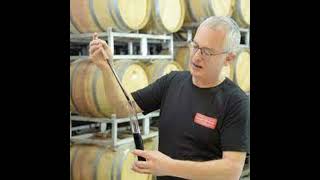
In this episode of The Kosher Terroir, host Simon Jacob interviews winemaker Amichai Lourie (also spelled Luria) at the new Shiloh Winery in Jerusalem. The conversation weaves together Lourie's personal history, family heritage, and Orthodox Jewish identity with the evolution of his winery. Lourie explains the spelling of his name, his upbringing as a kohen, his bilingual childhood, and his deep love for Hebrew and Torah study. He recounts how a hobby of growing vegetables and baking matzah turned into a passion for agriculture and winemaking, leading to the founding of Shiloh Winery in 2005 and its recent expansion with a visitor‑center and larger production capacity. He describes his hands‑on approach to viticulture—visiting vineyards weekly, tailoring care to each varietal, collaborating closely with vintners, and designing custom equipment such as catwalks over fermentation tanks. Lourie shares the challenges of scaling production while maintaining quality, his relentless pursuit of a 100‑point wine, and the importance of direct feedback from customers worldwide. The interview also touches on his open‑heart surgery, the genetic heart condition in his family, and his gratitude for health and for being able to fulfill mitzvot. Throughout, he reflects on the spiritual connection between the land, Jerusalem, and the act of making wine, quoting Rav Kook on gratitude and emphasizing the communal, family‑centered nature of his work.
Chapters
Welcome to The Kosher Terroir. I'm Simon Jacob, your host for this episode from Jerusalem. I was privileged to visit Amichai Luria in his new Shilo Winery. In part 1 of this podcast, he walked me through the different spaces of the new facility, discussing some of the goals in its design, including significantly scaling up its capacity while especially focusing on broadening its capabilities. He discussed benefits he has planned for customers in their beautiful new visitor center, as well as being excited by some of the planned programming it will enable. As you listen in, please note the incredible detail in all the different elements of the facility he is discussing. Also note that I edited out many, many calls during the interview, which included growers, winery assistants, outside distribution partners, accountants, and construction designers and managers, to name just a few. As you get to know Amichai, you quickly realize how much more achievable his remarkably ambitious goals are. He is a total workaholic, putting in hundreds of hours a week while impossibly balancing a commitment to his family as well as a rock-solid dedication to being an Orthodox Jew. In part 2, we sit in his new office and discuss the past, present, and future, and actually taste some of his new Chardonnay from the fermentation tank. A truly remarkable personal story of the winemaker, who has handcrafted Shiloh Winery and its brand from its origin.
So the first question I have is just really quick. Do you have a preference of the English spelling of your last name? Because it seems to be either Luria, L-U-R-I-A, or L-O-U-R-I-E.
So for, forever, forever, the name was spelled L-O-U-R-I-E. But from wherever my family came in Eastern Europe or whatever, it was pronounced because that's how I-E is pronounced in France. Not France, I think it's, I don't know, somewhere I'd say East Germany or Russia, it's Lurie, which is Luria. That's how it was written, I-E. And forever it stayed I-E. And although my parents passed away very young, but my grandparents, Baruch Hashem, lived to a very old age. And I didn't want to change anything from— The tradition. From the tradition, exactly. And some of my family already changed it to '-ia' at the end, 'Luria,' and I kept it with an '-ie.' Maybe one day I'll change it, but it's—
Because the marketing material, I'm just pointing it out to you.
Some write down '-a' at the end and some '-ie' at the end. And you know what? There are enough reasons for me to comment on what people do that I said, you know what, let everybody do it any way they want.
You're a kohen, and I remember learning that you're a kohen from the first time you showed up the morning of my father's shiva at the house, and you told me a story about how you were the first to come to the minyan because your father told you, as you couldn't, you know, do you want to relate it?
So my father used to say that because we're kohanim and we can't go to most funerals, then at least we have to be the first ones at a shiva house. And since then, he passed away very young, since then I remember as a kid him schlepping me, schlepping me Shabbos, Vatikin, once every month, once every couple of months to walk from where we lived in Yerushalayim to the Kotel, daven vatikin at the Kotel. Once every couple of months we used to go listen to chazanut, which I don't like at all. I used to hear it day and night from my father and I never got connected to chazanut. The Yiddish kvetch is a kvetch to me and I prefer regular davening. So we used to go to the big shul. Then I remember also him schlepping me to shiva calls. Every time, every opportunity, and unfortunately there are. That's the way of life.
It made an incredible impact on me. I just want you to know from the— it wasn't the first time we met, but it was quite a while ago, so it made a huge impact on me, huge impact. So thank you. What's your makor?
Where did you grow up?
Where did you come from?
So I was born in the States. My family is for, I think, generations in Boston area. My parents made Aliyah when I was 4 years old. My parents actually worked in Johnstown, Pennsylvania when I was born. So I was born in Johnstown, Pennsylvania. And parents made Aliyah when I was 4 years old. My sister was 2. 2 years old, and since then, history. So I grew up in Yerushalayim.
Where? Which neighborhood?
San Simon. It's near Katamot.
Yeah, I know. Exactly.
Grew up there. There were a lot of Americans there in the community and in the shul. I actually remember that I spoke English to my parents. When I lived in the States, My parents spoke to me in Hebrew because they knew they were going to make Aliyah, so I knew Hebrew. Okay? But when they moved to Israel, so I, at home, I spoke to them in English. Obviously to my grandparents I spoke in English once they came to Israel. And I spoke Hebrew outside. Funny thing is that I grew up in a frum community and frum schools. So separated, men and boys and girls. So school was only boys. So when I spoke in Hebrew outside of the house, I was speaking to boys in Hebrew. And then I went to high school and yeshiva in Hebrew. Only boys, okay? And in English I spoke to my sister, to my brother, to friends, family, was English. Actually, the first conversation I ever had with a female in English was in the army. So I had to like, I had to think that I wasn't making any mistakes in my grammar after living in Israel for so many years. My Hebrew was perfect. You never knew I was American. I didn't have an accent, right, in the army, but still I was thinking of how to speak. That was funny. I think that Hebrew is Lashon Hakodesh, and because Hebrew is Lashon Hakodesh, and although even in the Tanakh, in Feshur, when you get to the Gemara, the Hebrew language was influenced by Greek, Roman, Aramaic, so many other languages, but still I believe that we have to try to speak proper Hebrew. I do my best. I'm reading a very interesting book, two books actually, I just finished one, I'm reading another book by the same author, I forget his name, a Haredi guy, wrote a book about Tanach, And this one that I'm reading now is focused a lot about David HaMelech. It's called Melech Velo Melech. Very interesting book, fascinating, and a lot of things that I didn't know. Okay? And I'm like arguing with him in my head, and then being convinced by reading the book, which is, I like to be corrected. You know? Especially when it comes to Yiddishkeit and Tanach, and to learn something new, and to think that one thing is right, and then, oh, I made a mistake, and the Malbim actually says this, and gives you a whole new perspective of everything. But the only thing that bothers me with this book, I was just mentioning this to my wife on Shabbos, there is not even one page, I think, that does not have a word that he is using, lo azit, he is using all kinds of words or expressions from other languages where there are very nice words in Hebrew. Why don't we just use and be proud of the language? That is why I remember I grew up in the yeshiva system where you had to learn from Shas Vilna. And Steinsaltz, Rav Adin Steinsaltz came out with translation. And for somebody like me that struggled for years with reading and understanding and everything was very, very difficult for me. Harava Deyn Steinitzatz, I remember, once came to visit me at the house. He visited my parents for something, I don't remember what it was, by coincidence once. And for me, it's like such a lifesaver. I felt like somebody literally saved me. But when you grew up in the yeshiva system then, they made you feel as if you were literally sinning. Okay? It was a chet. And the people were so much against them and everything. And now there's Schuttenstein, which is for me a lifesaver. And when you think of it, this is what, in my opinion, this is how it's supposed to be. That means we should actually not be learning in Aramaic, although the Tanaim and Amoraim spoke in Aramaic, have it written in Aramaic, but finally now that we can, have everything in Hebrew, and you are actually speaking about— the Gemara is talking about a pasuk in the Torah in Hebrew, saying something from the Mishnah in Hebrew, and then suddenly going to Aramaic. But if you go back to Hebrew, then everything makes much more sense because you are using the shoresh, the root of the word, so everything makes sense. My son started a couple of years ago, once a week, a Zoom learning of Gemara. And some people go to his house and some people join on Zoom once a week. And it's fascinating. First of all, for me, I open up the Schottenstein Gemara, and I have to admit that I'm actually learning the Gemara from the, not from the Shas Vilna side, but from the Hebrew side. And it's suddenly learning Gemara is not stressful. It's not, I don't feel that I'm doing anything wrong, you know, that you have that sin feeling for so many years, and finally, I feel that I am doing it right. I enjoy more learning Gemara now.
Because you are learning the subject, not the—
I am learning something that is interesting. I am using a language that I can relate to. Things make more sense. When you— That's what Israel is.
That's what's so special about living here. You're living in the fish tank of mitzvot, in the fish tank of everything. It's just, it's crazy.
I had a very unique opportunity. Actually, for me, for a person like me and my family that we love so much the ideal and the privilege to keep mitzvot at loyot barets. Sometimes, you know, you walk in the vineyards, and I say this and it just doesn't get old, that sometimes you feel that from your legs there are roots that are connected to the— I had a unique opportunity this week. We harvested a Chardonnay for the first time. It was Neta Revai. So after 3 years of Olah, the 4th year, Neta Revai. The ideal of Neta Revai, which is, because I am reading a book about Nev'im Rishonim and Nev'im Acharonim, a lot about Nach, the connection to Israel, to Eretz Yisrael, and the connection to Yerushalayim. So there was a separation after Shlomo HaMelech, And there was still always a connection to Yerushalayim. How was Yerushalayim special and made sure that Am Yisrael, no matter where they lived and how far they had to travel, they always wanted to connect to Yerushalayim? So first there was Mitzvata Pesach. We don't do Chag HaPesach anymore, right? We have Chag HaMatzot, that means we do the 7 days. Chag HaPesach, people, Forget, Chag HaPesach starts noon before Pesach. So noon time you would do korban Pesach, you would do the shkitah of korban Pesach. And everybody came to Yerushalayim, so that forced you to be connected to Yerushalayim. Okay, before that was here in Shiloh, everybody came here to Shiloh. Netarevay was, people were farmers, most people were farmers in one way or the other, you would have to bring your fruit that grew in the fourth year, you had to eat it betarah in Yerushalayim, ma'aser sheni, the first, second, fourth, and fifth year you'd have to come to Yerushalayim. There was always a connection to Yerushalayim. And I had the opportunity to do what's called a khilul netarevayit, bracha b'shem malchut Hashem tzivanu, because today we can't actually come with a fruit and eat it betara, so you like transfer to a coin. So I had the opportunity to do that, which is, I also have another new vineyard of Malbec tonight that we're harvesting, so I'll be able to do it again. Unique opportunity to connect, to really connect to Eretz Yisrael and Yerushalayim. Yerushalayim. To the real root. As we say, Mishkachech Yerushalayim, there are a lot of mitzvot that surround Yerushalayim, that remind you that Yerushalayim is our capital and we shouldn't, and that the geulah isn't finished yet. There's still, we still have a way to go. We did part of the geulah, we have to be, Hakarat HaTov, the attitude of gratitude of what we have actually today. But we have to understand that the Geulah is, they say, ki ma'akima, you know, it happens slowly. So part of it has happened and happening, but there's still what to look forward to. There's still an effort that we have to Amazing.
What started you in wine? Where did the dream start, or the nightmare start?
No, no, the nightmares started later. It started with dreams. And so, like I said, my wife and I and the family, we like to connect to the land, connect to agriculture, to connect to Mitzvot Atloi Atbar Eitz. So we did a lot of our things on our own. So we grow our own vegetables, first of all because it's a lot of fun, second of all because you have the opportunity to work the land of Eretz Yisrael, to keep Mitzvot Atloi Atbar Eitz, afrashat ru'mot umasrot, of vegetables. Bake your own matzah. So today we bake matzah matzot mitzvah. Basically, when you go buy matzah, it's basically most of us are doing it bediavad, because the matzot mitzvah that you're supposed to eat, the chazait on Laila Seder, is matzah that was baked at the time that you would have bring korban Pesach. That means Erev Pesach, after Chatzot, you're supposed to bake matzah in lechatrila shukhanarach. That's the matzah you're supposed to eat. When you buy matzah a day before, a week before, a month before, this is b'diyavad.
People look at that and say, you're out of your mind. What are you doing? It's already Pesach, and how are you making matzah? You know, this is crazy. But that's the mitzvah.
That's the mitzvah. That's what you're supposed to do.
We have a family member who had to go into gulag. And there's an oven in the backyard of one of the families, and we make matzot. We make matzot exactly, and it's just, it's awesome, because the whole family participates, and even the kids with forks make the holes in the matzah and what have you, and it's really unbelievable.
So I'll tell you, when I grew up, when I was a kid, my father, after Bar Mitzvah, because you have to be Bar Mitzvah to basically bake matzah on Mitzvah, My father set me up to work on vacation before Pesach at a bakery in Mea Shearim. Why? Because if you worked in a bakery in Mea Shearim, erev Pesach, after chatzot, except for your salary that you got, you get 3 matzos. And my father wanted matzos mitzvah for Pesach. Then when we grew up and I got married, unfortunately my father passed away before I got married, way before. My neighbor is the Rav of the community, Rav Yair Shekol, and we decided let's, we want to bake matzah, we want to have our own matzah, we want to do it ourselves. So we built a matzah oven, you saw it, a really professional, the best of the best matzah oven. And for almost 30 years, a little over 30 years actually, we've been baking matzah every Erev Pesach after Chatzot, matzot mitzvah. We make more than enough for us. A lot of people come from all over the world to bake matzah with us Erev Pesach. It's a— you can't imagine what my backyard looks like Erev Pesach. But that's the way to do it. My kids grew up literally waiting for the— to be bar mitzvah, to actually bake their own matzah. And you have to see, my kids are professionals. We make these the best, beautiful matzahs, 100% kosher. And over the years we've been baking matzah starting a couple weeks before. I don't think I ate regular matzah on Pesach for years. We only, through the whole week, only matzah that we bake on our own. And doing it yourself, the next stage was, let's go pick grapes here from Shiloh and make your own wine. So could you imagine that we, L'era Seder at the Luria family, we're sitting around the table, and I remember my grandparents, zichronam livracha, they came a couple of years before they passed away, they were They already wanted to do L'el HaSeder in their own home. We had family from the States, friends, I would say friends that became family. And we had L'el HaSeder at our house and we said, wait a second, look what's happening around a Seder table at the Luria family. Bismillah Geulah. Ankhagah Geulah.
Okay?
We have matzah that we baked by ourselves. We have vegetables that grew in the garden that we're eating. Okay? And we're drinking wine that grew here in Eretz Yisrael. Al Eretz Tova u'Rechava sheratzita, v'inchalta lavoteinu lechol mipiriyav. Sometimes we don't really concentrate on what we're saying. And how amazingly grateful can you be when you're sitting around the table in Eretz Yisrael, family and friends, drinking wine that grew here with all mitzvot atliyot baaretz, and very good wine. Eating your own matzah, everything was done here in Eretz Yisrael, vegetables here in Eretz Yisrael, the lamb that you are eating was raised here, shechted here. It is like, think of our—
You were involved.
Think 100 years ago, 70 years ago, where the Jews were, and you are involved in every little aspect, the kids are involved. Now the grandchildren are involved in that. It's like, how grateful. There's an amazing, in my opinion, probably the most amazing thing I ever heard from Rav Kook. A person wakes up in the morning, a Jew, the first thing he says, "Modé ani lefanecha." Thank you, I, to G-d, what is the first word that you say? Modé. Thank you, I. The grammar, we talk about speaking Hebrew, the grammar is wrong. You are supposed to say, Ani modé lefanecha. The grammar, the sentence is wrong. And Chazal knew how to speak Hebrew. The Tefilot, or correct Hebrew, it should be "Ani Modelefanecha Melech HaMelech HaMelech." Or if you want to start, start with Melech. Melech. Right? HaMelech. Melech HaYevakeiam. I'm saying, "Ani Modelefanecha." But not "Modeh Ani." The grammar is wrong. Rav Kook says that, teaches us that when a person wakes up in the morning, If it doesn't start with thank you, it doesn't start with the "modeh," the "ani," the person, can't exist. You can't start "ani modeh" because there is no "ani," there is no you, if you don't have the attitude of gratitude first. So first of all, you wake, you open your eyes, you have to say "modeh," thank you. Then Ani can exist. So that is why you say, "Modé Ani Lefanecha," not "Ani Modé Lefanecha." So look at where we are today. I mean, we talk about the disasters that we, the Jewish people, have gone through the past 2,000 years. It's insane when you think of it. You know, people, complain, my wife insisted I should start walking around armed again. And I complained about my back because I stopped because it was hurting. And then I said, so why am I complaining? So I have to be armed. Nobody said that the Guela is going to be easy. On the contrary, Chazal say that they are afraid in many ways of the time of the Guela because it's not It's not going to be easy. It's not going to be simple. Nobody said things are going to be easy. But on the other hand, I mean, we can complain this tiny little bit, but most of it is amazing. It's awesome.
It's just awesome. I was looking and it's been over 18 years since you and the Shilo Winery started.
Yeah, the first vintage was 2005.
Right.
The owner of the winery, Dr. Meir Shomer, tasted the wine that I made at home with a small event that I made at my house with all kinds of wine producers around the area here. Brought in wine critics, reporters, and we've had like a fun event in my house. He tasted the wine, he said to me, why don't you turn your hobby into a profession? And I just broke my wrist and my elbow I was out of work. I said, you know what, I'll continue the construction business, but I'll start making wine. How hard can it be? And it's like quicksand, literally like quicksand. And time flies, and it's amazing, you know. And I have to say, it isn't getting easier. It's getting more and more challenging. I had a long, long conversation like a year or two ago with Yaakov Eliyahu. We were talking about all kinds of things, and he said, one of the things that describes me personally, and probably a lot of winemakers, is fear. It is so challenging making wine, and it's so difficult, and so many things can go wrong in so many areas that there are months that you literally live in fear. Okay, so you said you was talking about nightmares. Boy, do I have nightmares once the months that lead up to the harvest and during the harvest, because so many things can go wrong. So on the other hand, you always have to look on the bright side and daven for the best, but there's— it's extremely challenging. Tonight I'm harvesting Malbec, right? I insist on every single harvest before we start until the last grape is picked in the vineyards. And I always come a little bit earlier because there's always something that you have to make sure that's done right, that nobody forgot anything, and so many things can go wrong. So it's like I'm in the vineyards from a little bit, usually a little bit after Pesach till a little bit after Sukkot. So I'm in the vineyards at least once a week in every single vineyard, giving instructions, supervising, making sure things are done my way. And thank G-d, I have amazing, amazing vintners that I'm working with. That it took time for me to— for me and them to understand that I'm not growing grapes, I'm growing wine. Yeah. And it's extremely challenging, the work in the vineyards, and there's so much to do, like People say to me, why is your Merlot so outstanding? I think because I realized over 15 years ago, the same way each child needs a completely different approach, that my wife does much better than I do. You can't grow, or I like to say you can't raise a Merlot the same way you raise a Cabernet. And if you think that you're going to raise all your different varieties the same way, um, it's not going to work. If you understand that a Merlot that grows over here and a Merlot that grows over there also needs completely different treatment, then, uh, so do you know that, or do the vintners know that?
Or it's a combination of the two of them?
So over the years, I've been extremely lucky to grow together with my vintners. Okay, we've become good friends, uh, we rely on each other, we help each other out. Okay. In so many different ways. And I think when, when your vintner is a friend of yours and when you can trust them blindly and they can trust me blindly, then you get much, much better results. And I think that together, when we decide together on different things that have to get done in the vineyards, then we're getting better results. You know, if I had to raise my children alone, G-d help me. Okay, thank G-d I have my wife with me. Then Baruch Hashem, we see amazing results. Also in the vineyards, it's almost like a family kind of way of doing things. Like I say to them, when I, when I write a new contract, or when I shake somebody's hand, when we plant new vineyards and invest a lot of money and everything, I always end with— I know that some of my vintners, all their grapes come to Sheila Winers, only me, but some are big vintners and they have other wineries or other business businesses. I always shake the hand at the end and say, um, don't forget that first of all I'm your only child, then you have everybody else. You have to always treat me not just as a partner or a husband and wife or whatever when we work the vineyards, but I also want a treatment of the only child. So if you have a dilemma, if this has to be done and that has to be done, First you have to take care of my rows and my vineyards, and then you can take care of everybody else. And thank God, cooperation is amazing and the results are beyond my expectations.
And, you know, I was going to ask you the question of how much— I found that winemakers are— can really focus themselves in different places. Many winemakers focus themselves inside the winery, and they get the, they get the, the grapes coming inbound, and their process is inside the winery. Some of them are out in the vineyards and looking at the vineyards, and then when it comes to processing those grapes, it's like I know the grapes are made— it's making wine, not making grapes. It's really making wine. And they feel so strongly about that that then they just try to get out of the way. Whatever the grapes are going to give you, that's what we want to give you, and that's it. And then there's some winemakers who fall in between the two, and they don't fall in between the two, they hug both sides of of it, which is an enormous amount of effort, and you seem to be in that category. I don't know how in the world you handle that, but then at the same time, you're constantly visiting the market. You're constantly visiting customers. You're constantly— every show there is, you're there. And not only are you there with that, I'll take it one step further. There aren't many winemakers— I don't think there are any winemakers who have 27,000 followers on social media. Okay, I don't think there's anybody out there who does, who does that and who is so committed to the brand and so committed to the wine and so committed to your babies. And then at the same time as that, just to go one step further, produces a consistent product over so many years. The finishes on your wines are delightful, are awesome. And I'm not just trying to say nice things to you. It's blowing my mind, you know, like it has blown my mind for quite a number of years that the finishes on your wines— in fact, I came up to you, I think, once at a KFW 10 years ago, whenever one of the first KFW years were, I came up to you and said, how do you do this? How do you get this finish on these wines?
I—
every time I taste a wine of yours, I know what it is. I know it's yours. And I know it has this long finish that's so smooth and so— and I hate to use the word— a touch of sweetness to it. But it's not because it's sweet, not because it's sugary. These are dry wines, but it's got this special touch. Okay, now you can talk.
Okay, so I do take things to the extreme, you know, sometimes to a fault, maybe. Um, but I feel that if you don't connect to all these aspects that you're talking about then you don't really get the full picture and you can't get that amazing wine at the end. I think one of the biggest challenges in making wine is to stay consistent on the one hand, to try to get better and better every year, and also to come out with new products and new interesting things. To do that, you have to On the one hand, like you said, you have to connect to the people that are drinking your wine. That means you have to get out there. There's no way around it. And especially that we never had a visitor center. But even once this new winery is up and running, still you have to go to where the customer is drinking your wine— at wine shows, at restaurants, in stores, in wine districts, people's houses. And I do that because You need the feedback. If you don't get the real feedback, um, while people are tasting wine to enjoy the wine, then you don't really understand. You think you understand. That means you can't leave that to your marketing team. And I have amazing marketing team here and in the States. Every single person that sells my wine, that imports my wine, that sells my wine from store owners to sommeliers to restaurant owners to the sales team at Royal or here in Israel at Soul. Every— the guy in Texas and in California and New York and every single one of them are amazing. I don't know how lucky I am, okay? But you need to work with them. You need to get the real feedback to understand what's going on and to know where to go and what new to come out with. With. And you can't leave it to the specialist to tell you what to do, which is what I did the first couple of years at the winery and learned the hard way that you have to be hands-on there, all the way to the other side, which is the vineyards. If I don't decide what grape to plant where, okay, what angle, what size, how many plants per duna, how to grow the grapes, how to water it, irrigation, fertilization, all the little things, and each varietal its own way, then I'll get good grapes because the vintners are very good. But if you're not hands-on, if you don't experiment in the vineyards, if you don't try to take things to the extreme, if you don't change things, if there's a heat wave and you go run to the vineyard and change a protocol that you've never done before, which I actually did in a Cabernet vineyard that I literally— I like, I brought it back to life, and I'm gonna get the most amazing fruit from it because I wasn't lazy. I drove for hours all night, took care of something, came back just for a 10-minute thing to change something and supervise. And pick the grapes yourself, be there to make sure every little thing— what you don't want, you throw out, what you you need, you take. And amazing relationship with the vintners that actually are raising my grapes, working there. That is another aspect. And you have to have it. And if you are not there personally, so I can get, and I am looking for help now so I do not have to, so somebody will help me out. So I am doing baby steps. I am not letting somebody else do my work, but I'm letting people help me so I can supervise more because we're growing gradually. But I don't want to make— like, we started making 20,000 bottles a year and we're already up to 300,000 bottles a year. But we, we want to stay consistent. We don't want the growth to be on the expense of the quality. But that means supervising more vineyards, and there are 7 days a week There are only 26 hours every day, right? I wake up every day 2 hours early. I squeeze in 26, and I have my vintners are helping me out now. So for example, yesterday I had so much work to do in, in the winery, but I had to do something at daylight. So like 20 to 6 in the morning, first light, I met the vintner there and he helped me out by— we were running around with these They usually do a lot of on foot, but I wanted to get something done quickly, so he helped me out and he drove around with me for a couple of hours and we got a lot of work done, which would usually take me more time. So I find ways around to start, uh, how do I say, giving more rope to people to help me out. And then the last part is the winery itself. And if I praise the people that sell my wine, and if I praise the people— I'm extremely grateful to the vintners— when it comes to the winery, I have the dream team, literally the dream team here, um, from Aaron Ivry that's in Itay Metzger that have been with me for many years here at the winery, amazing people. That do amazing work. My son that started working when he was 8 or 9 years old and now is already working full-time here at the, at the winery. Amazing team here, and I'm able to get more done and better when you have amazing team. And, and what makes it even more amazing at that I used to be always right and never made any mistakes. Trust me, I was perfect about everything. I argued and I always won. And then I got to the stage in my life that I realized that there's a lot to learn from everybody. And thank G-d I learned that enough years ago. And I learn a lot from the vintners. I learn a lot from the people that sell my wine. And I have such an amazing team here at the winery, and we argue about things. We try to do things different. My every— almost every person here we'll have like a baby project that he's— we do a lot of experiments at the winery and trying things different and unconventional. Don't forget, I started doing wine by myself at home, a couple hundred, a couple thousand bottles a year, and did everything, things differently. And I'm implementing it in large scale today, and people see, what, that's not going to work, it's not going to happen. And then you taste the wine, oh my God, maybe that's the way to do it. Okay, and people that work here at the winery also have their baby projects, you know, tasting things, doing things different. My son just did a special project with a rosé. And I think that when you have all these amazing people around you that you can trust to confront you and to come up with different ideas. I think that helps to make that special wine that you get at the end. Let's not forget that I have a luxury that not a lot of people have. So if I have all these things going for me, don't forget that I have two other things that make this happen. One is that my wife supports, I say, the tzavshmoneh. Tzavshmoneh in Hebrew is, that happened to me a couple of times over the year, it's like you get called up to reserves to the army. But every now and then, and yet they have to let you notice a month or two before, you're going to go into the army and do this and that. For, I don't know, a month. I used to do a month, a month and a half, 3 weeks, whatever. And then there is tzav shemoneh. Tzav shemoneh means there is an emergency, we call you up. They give you, you have an hour to get to where they tell you. And I had this happen a couple of times. I say that my wife releases me for a tzav shemoneh every single year during harvest season. I disappear. Like, motzei Shabbos, boruch hamavdu, mikol lashachol, I am out. My wife benches Licht, 5 minutes later I come home from mixing a tank at the winery, or came back from the vineyard 10 minutes after she benched Licht, quick shower and enter Shabbos. So you need that to support it. And let's not forget the owner of the winery, Dr. Meir Shomuel, more or less, I would say, supports my wildest ways of doing things in the winery. And my uncle likes to say that maybe that's what makes him a genius businessman, that he'll take a step back and get the broader aspect of everything. And let me, let me run. And when you know that everything lies on your shoulders, all the responsibility, then you, you even like we talk about the fear that Yaakov and Obadiah spoke about, so you're always afraid even more to because you always have to make everybody happy. I have to make the tzul Shlomi happy, I have to make the stores happy, I have to make the customers happy, Royal happy, my boss, and everybody else. And then when I bring wine home for Shabbos, my wife has to like it too. So when you know that nobody, the major pressure comes from within, from yourself, then you even take it even more to the extreme to try to do it that much better.
You know, I'll tell you, you scared us all a few years back with the health situation, and I just want to tell you, it is such a pleasure to sit with you and see you healthy and spunky and sparkly. You're just full of energy, and it's a It is a pleasure. Baruch Hashem.
Baruch Hashem, I have to be very grateful that I had open heart surgery because they had to replace or fix the mitral valve in my heart. They were able to fix it at the end. I actually found out that I had this defect because I worked in the winery. The fascinating story of how Kadosh Baruch Hu turns things around. So I was working at the vineyards from before first light till late at night, and on a Thursday, and I probably got some bug bites on my arm. Friday, worked at the winery, and then like a couple of hours before Shabbos, I realized that it became like hives on my arm. The bugs, things must have, I don't know, either gotten infected or whatever. So I think I had my son take over and close everything up, and one of the guys here at the winery took everything up, and I went to the doctor in Ariel. Doctor, she already retired, she was almost, I think almost 70 then. She looks at her and said, listen, there's no choice, you have to start antibiotics, but Bais Ratashem, everything will be good. And she says, listen, I'm not your doctor, your regular doctor, it was like a last-minute thing, a couple of hours before Shabbos. Let me just give you a checkup on what I don't, I don't see anybody unless I give them a quick checkup to check everything else. They check my blood pressure, my this, my that, everything's fine. And then she takes the stethoscope and she listens to my lungs, she listens to my heart, she goes back to the chair and she says to me, I just want to open up your kupat cholim file. But you take your medication for your heart, yes? I said to her, I take medication for my heart? I just did like, at least 15 kilometers yesterday in the vineyards in crazy terrain. I don't think I slept much the past couple of weeks. Uh, I work like an animal, you know. I don't have any problems with my heart. He says, what are you talking about? You have a, um, uh, very acute, um, mitral valve, uh, mitralic, a leak in your— from your mitralic valve. It's obvious. I said to her, no. She comes back, she listens again, she says, listen, you have to go to the hospital. If you don't know about this, this is urgent. And obviously went to the hospital. The doctor said to me, this is something that's been probably happening for, I don't know, 20 years. You never went to a doctor, you were never sick, you never had I don't know, the flu or anything? Yes, over the years, for sure. And no doctor mentioned everything? Because I can put the stethoscope on the other side and I can hear this problem. This isn't something that developed in a year. This has been developing for 20 years at least, if not more. In the army, they never said to you anything? You went into the reserves and nobody mentioned anything? And you know, the funniest thing is my wife always says that when she used to put her her head on my chest, my heart always sounded funny. It had like a wish to it, a vish like that. They didn't believe. They said, listen, you have to, this is open heart surgery. So we said, the doctor said, you know, once every 3 months we want you to do a special kind of checkup, and then we'll decide when to do the surgery. I said, listen, if it's so terrible, let's get it done now. So the cardiologist says, "I'll be honest with you, in this kind of surgery, not everybody that goes in comes out, so we try to wait to the last minute." And he says, "Usually we're talking about a couple of months." It's going to— because at this stage, it took a couple of years. He said he's never seen somebody in such good shape with this problem. Then eventually it happened. I was in and out. I scheduled the surgery for the best time of the year, so it shouldn't bother me in the vineyards. And I was in and out. Baruch Hashem, everything worked very well. And I still go to check it up every now and then. Unfortunately, I inherited this problem to my, at least to my oldest son, also has the same problem, and one of my granddaughters. So it must be genetic. And it just shows you for how many years this gets developed and how they skipped it over the years. Nobody realized it, which is amazing. And thank G-d. I worked to see, so Kadosh Baruch Hu puts everything into perspective and then I'm okay, Baruch Hashem.
How's the 2023 harvest shaping up?
So it started amazing. The weather was unbelievable. Okay, I was getting to the vineyards even the end of— even July, first thing in the morning to start first light, as many hours as I can squeeze in. The vineyards were 14, 16 degrees Celsius at night. I mean, we're talking about really amazing weather. No extreme. And then July came and there was this long 3-week heat wave that wasn't too bad because most of our vineyards are high elevated and the mountain wasn't too bad. And everything was still going strong, going great, and everything's okay. And then hit August with this very long, extreme high temperature heat wave. Most of the vineyards, there was no problems at all. I had one problem with a Cabernet vineyard that I actually started something very unusual that I've never done in the past, and we are— we gave water small amounts of water twice a day to the vineyard, and it looks today incredible, really, really good. Saved it at really at the last minute. I was— I thought that we would get to the point that we wouldn't even harvest that, that vineyard. It was so scary. And another scare with a Petit Syrah vineyard that we ended up dropping more than half the fruit because this terrible heat wave happened at the end of veraison. So we ended up dropping more than half the fruit, and now it looks really good, and we started harvesting now. And thank God, first of all, the weather is amazing now. I'd say perfect. Okay, so we started harvesting two different Chardonnays, the best we ever had up until now. One of them was a smaller yield than we expected, but quality is amazing. We'll soon be able to taste from the tank in the middle of fermentation. Uh, we harvested for the first time— I didn't know if to keep it a secret or not— we harvested for the first time a Pinot Noir that, uh, I ended up going to this Pinot Noir vineyard. I was so scared. I go to a vineyard about once a week, 5 days, 8 days. I was at this Pinot Noir vineyard for the 2 weeks before harvesting, every single day. Insane. I was so scared to get it at the right moment. And we have it fermenting now. I'm really anxious to see what we're going to be able to do with this. We're actually planting next year 2 more Pinot Noir vineyards, and we also have a Merlot one that we harvested tonight, a Malbec. Everything looks amazing, and, uh, Besrat Hashem, you know.
So I was going through the— I was going through your wines And actually, this Pinot Noir is interesting to me because I was going to say, okay, you have 17 different bottles that you're making right now. What's going to be 18? What's going to get you to 18?
So sometimes we make more and sometimes we make less. Not every year we make all of them. Yeah, uh, sometimes we'll stop making a certain wine and then we'll start again. So there are new things that hopefully will come out in the next couple years. B'ezrat Hashem, we'll have a Pinot Noir. And I found the best place in the world, from my opinion, to plant Pinot Noir, two Pinot Noir vineyards. And we're hopefully, in a couple years, we'll hopefully make a revolution in that area. It's been a challenge that I've been trying and looking for for years. And I think next couple years we'll nail that.
You and Yacov Hori are both—
uh, b'ezrat Hashem, yes, yes. And, um, it's going to be a completely different style than our regular wines at the winery. Um, and, uh, for the first time we're harvesting a Chenin Blanc this year. We're going to try that. We're not sure if it's going to go in a blend or a regular We've planted a lot of new varieties, so we're not sure where we're going with that. And we've been experimenting for years. I've been trying to— so thank God, over the years we've been getting consistently from the best wine critics and competitions in the world, our wines are consistently getting scores in the 90s, anywhere between 90 and 96 consistently. But, uh, there's always that barrier that I'm trying to reach. I know it's not just about making really good wine and not just getting that recognition around the world. It's not just kosher, it's amazing Israeli wine. Very proud to show that Israel because there are so many amazing wines and special wines made here in Israel from so many wineries. Like 15 years ago, 20 years ago, you would buy Israeli kosher wine, and let's be honest, a lot of them just didn't pass. That means it— in the competition, they would be put aside. Something's wrong. Okay. And today, so many wines, so many wineries are making so many amazing wines. And to to find a wine that's bad is hard to find today. Today it's like— and kin atzofrim tarbeh chokhmah, Chazal say that the competition between scholars will expand the knowledge and wisdom. The same thing here with wine. So I have a lot of amazing winemakers that that I consider friends and colleagues, and we're all of us trying to make just better and better and better. That's why I find with a lot of my colleagues, I share all my knowledge, whatever I have. They share with me. Let's all of us do better. We're not— no secrets, right? We all want to make that much better. When it rains, everybody gets wet, so let's all do better. And the competition is good because it just— more people are drinking wine. It's not a competition, me or him. It's both of us. We're competing with ourselves. And there's that barrier that nobody has got that 100 points. A lot of it is because, you know, sometimes they just won't give it unless there you have a history or something, or a wine region or whatever, eventually an Israeli wine will get there. So I'm trying to get that, that, that goal. I even did a couple of day tour in Napa, tasted like I can't tell you how many 100-point wines to see where that's, uh, what makes a wine to get that special extra, as you say, perfection. 100, got there. So I've been playing around with this for, for years, experimenting, scratching, putting into different wines and starting all over again. I've been doing it for years, brought in outside expert, tasted with them, and again, and tried all kinds of different ways, different things in the vineyards, in the winery, barrels, and Um, in the past couple years I felt that I'm getting close. So we actually just bottled two different wines, uh, a 2019 and a 2020. We left it obviously with no labels or anything because we're not sure where, where we're going with this and talking about what's the next wine. So we're going to taste this wine, uh, in I'd say continue tasting it in the next 6 months, year, and see if we're close to that goal. I don't know if we nailed it. There are days that I say yes, and there are times I taste that I say that I'm close but not close enough. You know, when you get— when you want to get— when you go to an exam and you get a 100, 100, that means That's it. That means there is no better, no worse. I always laugh at my kids. What do you mean a 100? Couldn't you answer another extra questions again, a 110? You ask any of my kids, what is my reaction if you get a 100, if you get a 95? What do you mean 95? Okay. If you get a 70, I hug them. Perfect. No problem, no complaints. But if you get a 90 or 92 or 100, I mean seriously, you do better. So a wine to get a 100 has to be really exceptional. Okay? And there are days that I think we nailed it, there are days that I think we're very close, but when I say that I'm very close, to me, it's a failure. That means I didn't do it. Okay? Either it's there or it isn't. There's Pass or flunk. There's no— you understand? If the Cabernet Secret Reserve— right, if Cabernet Secret Reserve, okay, consistently every single year gets anywhere between 90 and 96 everywhere, okay, so if it gets a 91 or a 95, great, I'm happy, it's good, okay, but it's still It's a 100. If it's a 99, it's not there. It's not 100, right? It's not. So maybe we'll taste it soon.
I was going to actually talk to you about that. Last, last time I was in the winery, you weren't. I actually came and you, um, you, you had to go someplace else to finish some things, and, uh, you let one of the guys in the cellar, um, show me around and what have you. And he let me taste a red, and he said, you can't tell Amihai that you— but I'll let you taste this. Um, so I don't know what it was, he wouldn't tell me, but it— we tasted a red that was over the moon. It was just unbelievable.
So maybe, maybe he gave you a little bit out of that one of those wines. Okay, so it's bottled.
Okay, okay. So, um, yeah, I was wondering, I was, I was wondering, um, I was wondering about that.
To make the, the focus of every little thing that's being built here in the winery is what will make a better wine, what will make it easier for me to be hands-on every little thing, like the catwalk on top of all the tanks. That means for instead of me running around with a ladder because I insist on mixing and being on smelling every single tank during fermentation— so there's a limit to how much you can do in 24 hours, and, uh, or 25 if I wake up an hour early. And now with a catwalk, I can do that much more. And every little thing is built to, to the extreme to make a better, uh, physically trying to scramble up ladders to the tanks these sizes now are—
it would be an unbelievable physical challenge. To have the catwalks over the top is just— makes a huge amount of sense.
Yeah. And, uh, more than sense, a lot of, uh, a lot of the tanks are custom— most all the tanks are custom made in a certain way so do my crazy experiments. I remember years ago somebody came in, what, you're mixing the, breaking the cake like this, it'll never work, it doesn't happen, it doesn't— I said, before you say something here, I'll set a ladder for you so you can look at what I do from on top and tell me if it's not, oh my God, wow, that's a great idea, why didn't anybody think of that before? So I'm not hiding, people ask me, I tell you this is what. I have a special gadget way to top barrels and people say, nah, it'll never work. And then I've been doing it for years and I showed so many people how to do it, why not? You know, it's a good way, an easy way, why not do it and make it better? By the way, we have an opportunity for you afterwards when we go outside. Yeah. There is a unique unique and rare bracha that a person can say, and it's called, the Chazal tell us, and it's in Shochan Aruch, it's a bracha b'shem umalchut, it says, tanu Rabanan, haroei batei Yisrael biyishuvam, that means when you see you see homes in Eretz Yisrael being rebuilt, mevarach, baruch atah Hashem, elokeinu, melech haolam, metziv gevul almana. And you get the foundations and boundaries of almana. Like, Am Yisrael is sometimes referred to feminine, right? Like, Knesset Yisrael. So you can, you have the opportunity to say a unique and special berakah to a new place being built here in Eretz Yisrael, after, especially here in Shiloh. I mean, it means so much when you think of it, right?
I've taken up a lot of your time, so I just wanted to say Thank you very much for the opportunity. I really, really— you've been incredibly generous, and I look forward to doing, you know, doing some segments in the future with you. And it's really a pleasure, and I've wanted to do this for a while, so thank you.
We can go taste some Chardonnay if you want, and maybe we'll taste some other wines. And so this is the first Chardonnay of the of the season. So I don't know if you can see it, it's very, uh, with, with the— because it's still fermenting. Yeah, so you see the yeast.
What an incredible experience spending so much time with such a passionate winemaker. Amichai is awesome. By the way, one of my favorite tasting experiences is to taste white or rosé wines directly from the steel in their midst of fermentation. As an example, The sample Chardonnay I tasted was super cloudy with bubbles and yeast, nowhere near what a winery would put in a bottle, but so cold and delicious, at least in my opinion. Well, until next time.










