Ariel Bier: Balancing Military Service, Winemaking and Family in the shadow of Tisha B'Av
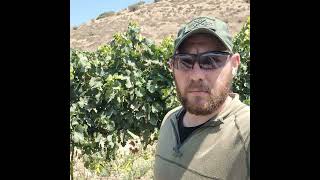
Ariel Bier, chief winemaker at Ella Valley and an IDF commander, rotates between the front lines in Gaza and harvest season while raising four children. He splits his winemaking focus: 80% vines, 15% production, 5% blending. His dream is an Israeli wine built on Mediterranean varieties like Carignan and Grenache that reflects local culture and climate.
Chapters
Welcome to The Kosher Teruah.
I'm Simon Jacob, your host for this episode from Jerusalem. Before we get started, I ask that wherever you are, please take a moment and pray for the safety of our soldiers and the safe return of all of our hostages. Recording this during the week of Tisha B'Av, I am really challenged as to how to possibly get across to our global listening audience the experience of being here in Israel at precisely this moment in time. Here we are standing on the edge of the saddest day of the Jewish year. Threats of attack are being broadcast hourly by our terrorist neighbors. Though many people walk around the streets trying to act normal, there isn't anyone not overwhelmed by the situation. So how do I record a wine podcast? But we're also entering harvest time, so how do I not? There are so many elements pushing us in so many different directions. I'm scared. It's Tisha B'Av. I'm scared. It's time to work the harvest. I'm scared. It's time to fight. My kids need me. The following episode starts with an abridged replay of the Tisha B'Av drasha by Charlie Harari from last year. He kindly granted me permission to include it here. Near the end, Charlie talks about being a Jewish lion. Our conversation that follows is with Ariel Bier, a husband, a father of 4 young children, a winemaker at Ella Valley Winery starting a harvest, a commander of troops in Gaza, a true Jewish lion who returned from Gaza in the middle of the night before our interview who made time to talk to me, and who was that evening, last night actually, on his way back to Gaza before Tisha B'Av. All of us think we have challenges, but in listening in on Ariel, we realize how trivial our challenges really are. I have tried to release this podcast so that you can listen either before the fast or during it. But I believe its message and example are relevant each and every day. If you're in your car, please focus on the road ahead. If you're home, please listen in on this powerful, uplifting message for Tisha B'Av, 5784, August 12th, 2024.
The story of the Midbar is a story of the Jewish people that stand up against something, and then when they turn to Canaan, they stand in front of Canaan and they walk in, and when they come out, the words they tell tell each other is, I can't. But if you look into the actual words, what they're saying is, we see these giants. How do you know they're giants? How do you know you can't take them on? Because look at the words, it's unbelievable. They literally spell out their problems.
Because in—
we see ourselves in our eyes like grasshoppers. So since we feel inadequate We must be inadequate. And God looks at them and goes, "Who told you you're inadequate? Who told you you can't? Because you feel like you can't? Because you see something bigger than you? I'm not going to punish you," God says, "I'm going to teach you a lesson. That attitude is the core of your own destruction." Bechiyas chinam isn't God punishing us, It's God showing us why we're punishing ourselves. "Bechiyas chinam" is life when we look around at our lives and we cry tears of vain. It's the tears of, "I think I can't, so that I can't." Because the whole essence of challenge is from the Hebrew word "nisayon," and "nisayon" comes from the word "neis." "Neis" means a banner. "Vesah neis." Because the only way we grow in life is when Hakadosh Baruch Hu gives us a challenge. And so it is totally how challenges work, that we don't think it's normal for us, because if it was normal for us, it wouldn't be a challenge. The whole essence of challenge is it's too much for me. That's what a challenge is. And the only way we fail in challenge is when we go, "I feel like a grasshopper.
I feel like I can't, so I must not be able to." Whatever's in your head right now of the thing that you can't, Chorban comes the minute you say, "I really can't." And the sin of the Meraglim wasn't that they failed. The sin of the Meraglim was that they didn't believe in God enough, because even if they didn't believe in themselves, they should have taken the shot anyways. Because the greatest aspect of what it means to be a Jew is to stare down your challenge and say, "I don't think I can, but God would never have given this to me if I can't, so I'm going forward anyways, because I would rather fail and fail and fail than not even tried." Because not trying is destruction. And God goes, "How many years have I been doing this? Am I a little older than you?" Do I want to win more than you want you to win? How about this? How about you believe me that I believe in you more than you believe in yourself? And when a Jew walks his life and says to himself every day, "God believes in me more than I believe in myself," you become invincible. Every morning they taught us, we say, "Moda ani l'fanecha, melech hai v'kayam, shehechezarta bi nishmasi." B'chemla Raba emunasecha. The Chasam Sofer says, you're not saying it right. The way you're supposed to say it is this: Mode'ani l'fanecha, Melech Chai V'Kaiam. I stand before you and thank you, God, Melech Chai V'Kaiam, the Coach of Coaches. Shehechezarte b'neishmati. You gave me back my soul. You put me on the court. B'chemla, with love. Kama. Raba emunah secha. You have a lot of faith. In whom? The Chassam Sofer says, in me. In my core, I say, maybe he believes in me more than I believe in myself. The fix for this period of time, the fix for the core of destruction, is a bunch of Jews that walk through their lives and say, as big as it looks and as scary as it can be, it wouldn't come my way if I couldn't overcome it. And when we believe in that, we become a piece of Kalev Ben Yefunah. We become a piece of "Olo Nalev Niroshnuoso." We become a piece of that small voice that says, "Let's fight, let's push, let's go. I would rather die in battle than sit behind the banks and stay in the camps." If we really want a life of geula, we don't have to wait for someone to knock on the door and say, "It's Mashiach." You want to this time really sit on the floor and say, "I want geula," then we stand up and say, Every single challenge in front of me, I know, is being— is there to build me.
And I will not fall into the same trap as the spies ever again and say to myself that because I feel like a grasshopper, I am a grasshopper. If God put me by the banks of the river of the Promised Land, I'm going in no matter what, because that's what God wants of us.
There's 216 hours in the 9 days. Do you know why? S'fas emes. It says because 216 is the gematria of arieh. You know what God wants from us during this period of time? Not to be broken, not to be upset and sad. God wants us to become lions. He wants us to stand up and say, no more. I know what they did, and It's not happening anymore with me, God. I don't care. I will not fall into that same trap. If we rise like lions, Hashem will bring us into the lands that we're meant to be. It is my bracha to all of us that we, in our core, believe that even if I don't believe in myself, the Master of the Universe believes in me. Rabba munasecha. We fix the challenges brought to us by the spies and become the lions that all of us are meant to be.
Ariel Bir, welcome to the Kosher Terroir.
Hi.
Where are we sitting right now?
First of all, it's a pleasure to be here and finally sit down and talk.
Pleasure.
Right now we're in the lab. We're in the heart of the winery where every decision is made, harvesting or production. I work in multiple wineries and I'm consulting another 3 or 4 wineries depending on the time in the year.
Yeah.
I'm trying to split my time and my vision between the wineries. Every winery comes with an owner that has his own path and his own ways of production and marketing. And Péa Winery, when I came there, I sat down with my partner Shlomo Eini And we talked about money and how much we're gonna produce and stuff like that. And then I asked him, "Okay, what type of wine do you want me to make?" He took off the table, then walked away and says, "You're the winemaker. Do whatever you want." And for me, it was a dream come true that someone give me 100% of the trust to do— to play with my art. And to see my vision come to life. And I think that that's what gave me the opportunity to come to Ella Valley as a chief winemaker. And here, Yaakov also said similar stuff. He said, "You're the winemaker. I trust you." He's a great man. And we sat down and talked and he said, "Listen, Ariel." 'You're the winemaker. I trust you. You know the vines and the vineyards better than anyone else. Do the best that you can do, and I'll manage the sales.' And that's what we're doing today.
So how long have you been here at Ella?
I started in May 2023. I did the harvest '23, and then On October 7th, I was drafted, and since then I'm splitting my time between the army and the winery.
So one of the reasons I called you is I saw a Facebook post and I thought, wow, I need to talk to this person. Oh, you're being called by one of your key employees.
Go ahead.
Excellent.
So who's this employee again?
That's my oldest son, Ethan. He's 11 years old, and during the summer I bring him to work to teach him the art. Hey, right now he's taking samples and Just squeezing the clusters to just to have the information about harvesting time and to take the decisions. Ken Hamoun. Matata? Yofi.
Okay, very cool.
But that one of the reasons that they're here is also that you can spend some time with them.
Right.
Because your time is really kind of compressed right now. There are many people who don't know how to raise, who don't know how they have enough time to raise their children. You have how many?
I have 4 kids.
Okay, 4 children.
4 children. 11, 9, 7, and 10 months old.
Okay, so there are many people who just balancing 4 children is a challenge, especially with work. No, go ahead, go ahead, you can answer.
Go ahead, come, come.
Tal? Seiiti. No, so there, there are always challenges, um, but it's interesting because kids have a challenge of time. You know, you can only put them off for so long. There, you need to handle things when you need to handle them. Um, but you're also involved in a winery that's going into harvest And you can't really push off harvest. You can say, I'll deal with it, but it's very hard. And at the same time, you're going off to Miluim, which is also another one that the time is very fixed. Baruch Hashem, Abarah. The time is very fixed. You can't say, yeah, well, I'll get to Miluim next week.
A wish.
So, I was looking at that balance in your post and I said, I have to speak to this person. How do they do it? How do they handle it? I can even see behind your desk, is you're ready to go to Milouim immediately. You've got your equipment to be able to just jump.
So, first of all, I have to say the biggest thank you to my wife. She's the queen of the house and she's managing everything. And she sacrificed so much of her own career and dreams so I can pursue mine. And she's amazing. She does everything. She takes him to the doctors and she does the grocery and she takes care of the house and the kids all the time. My kids born into the wine world. My eldest son is 11. I started in 2012, if I'm not mistaken, as a simple worker in Shilo Winery. And my wife— and he was born into this world, so they already used to it. And they know that at the summer they going to vacation with my family. And with my wife's family, but Abba is at home, at work, working. That's the harvest season. But on the other side, we're trying to spend the most time that we can doing stuff that we love, like traveling together. We bought an SUV 14 years ago. And until last summer, at least until the start of the beginning of the war, we were traveling every weekend. Took the kids no matter what, Yom Shishi, or Yom Chamesh Ibalayla, just taking them to have some time with Abba. And Baruch Hashem, we're doing our best. Now we're in a very complicated times. We have harvest, we have family, but the main— sorry, I don't have the words because it's— you're raising so much emotion into this sentence. And we're— this, it's not a regular war. It's not a regular cycle that we have here every few years against Hamas in the Gaza Strip. I was in, I was in, I was serving in the IDF during 2008 and 2009. That's my third or fourth time that I'm going to Gaza. And every time was like, it was like a routine, you can say. They shoot at us, we fight them, and then we do some maneuvers in this Gaza Strip. This time it's different. The massacre and the brutality of the attack in Simchat Torah is something that we cannot disconnect our emotion. And that's the first thing that we have right now to take care of, the safety and the security of our kids. Of our next generation. And it's take, uh, kdimut to everything. It's prioritize. And even if it says that I will not have time to be with my kids, or if the harvest will be only 80% and not 100% as we wish it was.
Going to war and coming back for 48 hours, or coming back for a few days and then going back to war. It's almost like it's commuter, it's a commuter war. People are like driving to war and then finishing, getting back in their cars and coming home. It's really pretty crazy.
It is, and the tricky part, or the most hard part, is not the physical part. I haven't slept for the last 2 weeks, but it's okay, we're used to it. The hard part or the complicated part is the emotional part. Right now we're sitting in the winery, everything is okay, everything is chill. We have amazing air conditioning and probably soon one of my workers will bring us some wine to taste. But my head and my heart is with my other kids. I have 29 kids at the army now. That I don't know what's going on with them. I just text them and ask my second in command what's going on and what are they doing today and what happened in the schedule. And on the other side, when I go to the army, I'm doing the same to the winery, texting Benci, my winemaker assistant, and though the work manager here all the time, like, what's going on, how is the harvesting going, how the grapes are developing. And it's a split. And in all this mix, I'm also trying to talk to my wife sometimes. And most of the days we get 5-minute call in like 2 AM. 'Everything okay? The kid was fine? You need to take one of them to the doctor, or there's something missing in the house?' Like very technical talk, uh, talks, because that's what you have time for. That's what we have time to. And if you start to put a little bit of emotion into the calls, you're gonna break. And, and she will try to start crying on the phone, and then all the pressure that comes from the home will be too much to bear in this situation. So we try to minimize the talk to practical, and then when I am coming home finally, then everything is thrown out and we have a decent conversation and quality time.
I do not know how you can possibly handle it, but Baruch Hashem, you do. So I am just very thankful.
Very thankful.
First of all, it's a good place to be. I also was in Givati in 2007. And first of all, shiavo b'shalom ve'achzov b'shalom.
Amen.
And only v'ragbe priyut. Our dream is always that our grandsons and kids will not have to do it. And the reality is different. All we have to do now is send them to give them the best education we can, we can possibly do, build them as men and women the best we can, and hopefully, and pray to God that they will come back home safe and sound and with no harm.
Please God, please God.
Baruch Hashem.
How did you get into wine? What was your first exposure to wine?
That's a fun story.
You said Shilo, but before that.
So first of all, I was, uh, my family always had wines at home, and we always had some types of wines at home. Like my grandmother and grandfather used to buy from the Maslik, if you remember the winery.
Yes.
and this was our, this was our, like, family winery, and we used to visit there as a family and stuff like that. So wine was, was, uh, always in, in the background, and, but my father likes Scotch more, so I forgive him.
And I have a love for Scotch as well as wine, so I, I have a—
my father have a very good A friend lives in Long Island, so every time he visited Israel, he used to bring us a bottle of scotch. And he always says that you start in scotch, and as you age, you develop yourself and start drinking wine. So apparently, that's what happened with me. But I went to study practical engineering in industrial engineering. And when my wife was pregnant, I used to own— I used to be partner in pergolot and decks, like woodwork.
Okay.
Used to work in wood and plywood and some construction. And then I was accepted to be a mom, and as a good husband, I went to my wife, the real manager of the house, and I asked her Honey, what do you say? Do you want me to keep working with the wood and plywood, or do you want me to go to the Imam? And she said, listen, we already spent 2 years of you working in the construction site and you're not at home, and you spent 2 years of studying. I don't want you to waste it. And I haven't married an army guy, and I have no intention to marry an army guy. So you're not going to the yamim and you're not keeping the shiur tzimim and stuff. I said, what do you want me to do? I have to provide for the house. She said, find a job. And then Gvaut Winery Gvaut winery. It was in 2011. In 2011, yeah. Gvaut winery, search for a work manager there. Said to myself, listen, I have, I'm a practical engineer, I have, that's the line of work that I want to do. I'll go there, I believe I'll work in the wine or whatever it is for 2 years. I'll have the resume that I meneli, like a production manager. Manager, yeah. And then I'll go to find a real job, like in Elbit or whatever, like in every big and high-tech, high-tech company. I went to there, I fell in love in the work, so I moved to Shilo Winery because they were looking for, uh, for a longer time worker. and I spent 2 or 3 years in Shilo Winery. I have to ask Amichai to remember.
He's great. I love him. I love both of those wineries. There's my— some of my favorite.
They are amazing guys. It's amazing. It's like every time people ask me, how did you learn winemaking? Because I haven't went to the university. Are you autodidact? I said, no, my teachers are autodidact. I had amazing teachers that had the patience with my questions. I always, like, Amichai was coming to the winery, you know, he's starting his day at 4 AM, finish his day at 2 AM, get an hour or two of sleep and then go to the vines. So every time he came to the winery, I asked him, why are you doing that? And why are you doing this? And why and why and why and why? And he had the patience to to actually teach me. And after 3 years, I went to Tuli Winery, and I worked there for a year. Fortunately, my wife had a ayin b'sikun, a very dangerous pregnancy.
Yeah.
And we have to move back to Jerusalem area to be close to our families. So I came to Yerushalayim and I worked with Yaakov Uria, that he's my mentor for life. And I work in Livne.
Livne, okay.
It's a very small winery in Sde Moshe.
Yeah, okay, I'm sorry. Yes, I know that very well.
So, so yeah, so I was there for a year and During this year, I also worked here in the La Vin winery as his winemaker assistant. And unfortunately, 3 weeks before harvest of 2017, our family had a severe car accident, and I was injured very, very, like, very, very bad. And I remember the call. I was It was in matzei shabbat. I called Yaakov and I told him, listen, Yaakov, I have a problem. It was on the 7th of May, of June 2017. And I called Yaakov and said, listen, Yaakov, I have a problem. I don't think that I'll be able to come to the winery to the harvest. He said, I know you. No matter what happened to you, I know that you'll be in the harvest. Because you're too dedicated to the work and to the winery. Listen, Yakov, I'm at the hospital. I had a severe car accident and I didn't know even if I'm going to survive. It was that severe. I broke multiple bones in my body and I had head trauma. But the first phone call that I had was to Yakov so he can find another workers. And, Baruch Hashem, after a year of recovery and a lot of work with physiotherapist and hydrotherapist and everything from everyone and a lot of help from family and friends, and I was able to, to regain some mobility and go back to work. And I went to Yoshalay Winery to work with Sam Soroka.
Yeah.
And then with Leo Laxer, and here we are today. Wow. I always say that as a winemaker, our 80% of our work is in the vines to grow the grapes. Another 15% is not messing it up in the winery to produce the wine and in the full potential that we got from the grapes. And the other 5%, it's the hardest part. That's the blending. And some wines just click, you know, like 2 seconds of work. Like, you try it for the first time, you know exactly what you want to do, and you understand what each barrel can do, and you like flow it, and everything goes Perfect. Some wines can be— it's not the right term, but can be stuck in my head for days. And you're not happy one time and again and again and again. And you send the wines to 3 or 4 guys that you trust them, that they know how to taste wine and they understand the philosophy behind my wines. And you ask them, their opinion. And some days you can just get answers like, it's not there, wait for it, it's not there, it's not there. And you play it again and again and again. And like you said, you add another 0.1% and the wine just clicked and it's working. And sometimes even this, that 1% doesn't work. I had a wine in Pehe Winery, and first of all, I'm a big, big fan of blends. I always think that— I believe that every wine can get better if you add something.
Yeah.
So I had a plan to do a wine with a skin maceration, and so Channin Blanc and Rossan. That was my dream. I had it in my mind. I knew exactly what I want to do. And I harvest the grapes and they ferment different, separately. And the Chardonnay Blanc had some oak in it. And then we came to the blends and it didn't work. It didn't work again and again, no matter what I did, no matter which percentage did I work with, didn't work. So in 2020, we decided to bottle them differently. So I have a Channay Blanc and I have a Roussanne. 100% clean and great wines. I didn't— until today, I don't understand why they didn't mix together, why the blend didn't work. But the fact is that together the wine was not there. Separately, they are amazing. And in 2021, I had a customer that wanted to do colombard, French colombard. And he had some leftovers, you know, like 50 liters or something like that. So I said, okay, what I'm going to do with 50 liters of French Colombard? And I already harvest my Roussanne and Chenin Blanc for the Ayala, the wine that I wanted to do. And again, the blend didn't work. Roussanne, Chenin Blanc, amazing wines, both of them are great. Mix them together, doesn't work. I said, okay, let's add this, those 50 liters of Colombard. And until today, I think it's one of my best wines I ever made. And you think to yourself, I spent so many hours trying to think about the wine, to do, to see what will fix and what will do, what happened, and then By accident, by coincidence, Kadosh Baruch Hu gave me those 50 liters that changed everything, and the results are incredible. So Yaakov can do it by purpose most of the time.
Even he doesn't. You know, one of the things I like the most about him is he's He's honest. When he makes a mistake, he's the first one to say, this was totally by chance. He's amazing. Yeah, there are very few winemakers who have the courage to be able to say those things.
Yeah, that's the reason he's my mentor for life. Every decision that I had to take in my career was first of all a phone call to Yaakov to ask him, Yaakov, what do you think? Is that the right time, is that the right thing? Not as a net, a safety net, but as a mentor that knows me, that knows the past that I had, and see a bigger picture than I can see, from what I can see now, in my age, in my perspective. And you haven't wrong yet, so Baruch Hashem.
Baruch Hashem, he's very special. He's very special. Very special. Are there any stories that you have that are like, um, that really express, um, the complexities of what you do now? I mean, like, that you were in the midst of one thing and then you had to do something else, and then you had to do something else, and— or that's your life?
First of all, that's our reality today. Um, in 2020, I know that I'm going back to this particular— it was a very hard harvest for me. I, I was Sam Sawoka left Yum Shalay Winery in 2019. So in 2020, it was Leo Lacroix.
I remember when that happened.
And I had the biggest harvest I ever done in my life, and I had Pea Winery to do. So I used to finish working in the Yum Shalay Winery around 11 PM, driving to Pea Winery, starting to work there around midnight, finishing the work around 3 or 4 o'clock, getting some sleep, and then go back to Yehoshua Lahm winery. And one day we got our Syrah and Grenache for the Black Ship, and we worked and worked, and then we processed them and everything. And then the work— my worker came to me and said— I was sure that we finished with the wine, like I had a ton of a ton of Syrah, a ton of Grenache. They set with different tanks and I was sure that we finished the work and I was exhausted. And then he said, listen, Ariel, we still have 200 kilos of each and some Roussanne, because I harvest the Roussanne to mix it with the reds. It's one of my favorite methods to add some white into the fermentation. It's a very new technique. They do it in the Rhône Valley for the last 500 years. So, very new. I looked at him, I was so tired. I said, listen, just mix them together in one tank and leave it. Like, whatever happened will happen and everything will be fine. And then we let it ferment together. And after a few months, we tasted the wine and I saw a big difference between the the Grenache Syrah that fermented together and the Grenache and Syrah that didn't ferment together, but we mixed them together. So I said, OK, I'll put them in another barrel, different barrel, to sit there and just for me to learn, to see what's going on. And then a few months later, I gave it to one of my friends to taste. He said, listen, there's— It's a whole new level. It's something else. I give it to another one and another one. All saying the same. There's a different wine here. It's not the regular black sheep that you do every year. And in my head, it was like, they're my friends. They're nice to me. So I'm a very young winemaker. They want to raise my morale. But then David Silverman came to take some photos in the winery. I said, okay, he's clean. He doesn't know me as a friend, he just is a professional. And, uh, and I gave him the wine. He said, listen, there's a— the difference here is the, the wine that ferment together, the co-fermentation, is 10 years developed more than the, the one that you just mix together. And we decided to bottle it separately. We called it Unicorn. And until today I say I didn't do anything with these wines, like the grapes and Kadosh Baruch Hu. I didn't do anything. It was like a mikreh that I was too tired, I was too busy in other stuff, that Kadosh Baruch Hu gave me this wine as a present for all the hard work. And we're not selling the wine. I decided to give him a very high price. So we will not sell the wine. So I have the opportunity to open those wines with my friends. This is wine for me and my family and my special guests and stuff like that.
The comments are very good.
People like the wine, but we're not selling it. It's for me and my friends. And last night, I haven't slept for the last 2 weeks in the IDF and the Milouim, and I came I'm going today to do the harvest, get the grapes, and tomorrow night I'm already going back to the army.
Wow.
Life are mixed all over the place, and that's not Hashem.
Please God, it should calm down, but pop it, you know, in a good way. In a good way.
All we have to do is to pray to God that we finish the work hard and fast, that we can promise security and peace to our kids, to our next generation. Personally, I don't mind the cost. If anything happens, whatever has to happen will happen. Kadosh Baruch Hu is the one who guided us. We're willing to do every sacrifice that we need to do, but please, if anyone hears us, please just let us win to finish this once and for all and to make sure that our kids and our grandson doesn't have to do it in the next 100 and 200 years.
Yeah, over and over and over again, right? 100%. What's your favorite wine?
There is no favorite wine.
Okay.
It's, it's, uh, it depends on the people that I'm drinking the wine with, the environment, and, uh, and the food. And my wife likes champagne, so the best wine for me is champagne when I'm sitting with my wife. Personally, I have a huge admire to Châteauneuf-du-Pape. So when I sit with my friends from the wine world, we usually will open something like that in the region.
Yeah.
So everything is depend on the social part, and the wine for me is is the escort. It's not the main event. It's a good escort for the event, and sometimes you can do the event very well, and sometimes you can just ruin the event because you brought the wrong wine or the wine was spoiled or something like that.
Which champagne do you drink here? Because there's so many new ones. There's so many people coming out now with sparkling wines that are just amazing.
So my wife have a very, very high, um, expensive taste. Very expensive taste. Right now we have Drappier.
What?
Drappier.
Okay.
And she likes— so I have a few cases of Drappier at home, and, uh, and she likes, uh, Golan Heights Blanc de Blancs. Yeah, and some— I have to check what the rest that we have, but we have like a full shelf in the wine room just for her champagnes.
Very cool, very cool.
And whatever she wants.
What would you like to experiment with in the future? What are your dreams?
Going forward? That's, that's amazing question. Um, first of all, my dream is to find the ultimate Israeli wine. When I started, we tried to mimic wines from Napa Valley in California and Bordeaux And I think that today Israel as a wine industry and as a wine country, I think that we need to find wine that is coming from Israel that talks our food, our culture, our environment, our way of life. And winemakers in my generation are looking for that. And for me, this is my dream, to find the wine that says, this is Israel, this is what we know to do better than anyone else.
And give me a hint, which wines do you see going in that direction?
So right now I'm trying to focus our Elaval Valley winery in Mediterranean varieties. And I think that Carignan, Grenache, and, uh, Morvèdre.
Morvèdre?
Morvèdre, personally, I had a very hard experience before, so I passed Morvèdre. But Carignan and Grenache, Syrah, those types of grapes that can yield very well in Israel and can have phenolic ripeness in Israel. And we don't have to harvest them in 15 bume to get 14.5 or 15.5, even sometimes 16% alcohol. I think it's too hot here in Israel to drink heavy and oaky and alcoholic wines. So I'm trying to play with colder maceration and colder fermentation. Here in the winery, we're not even crushing the grapes. We separate the skin, the berries from the— stems.
From the stems, yeah.
And we ferment them in berry by berry, not a full cluster, but berry by berry. And the result that we're getting, it's less of a color. We're missing some of the color, but on the other hand, the fruitiness that we get from the wine and the complexity we get from the grapes, it's amazing. And hopefully we'll see good results. I think that as a winemaker, you have to— when you go to produce your wine, you have to look at the crowd that will buy the wine in the end of the day. We do what we do because we love the work and we like the experience. And everything here is like, I'm coming to work every day with a smile. But in the end of the day, the customer has to be the one who's smiling in the end. And if he doesn't understand what you wanted to say, he will not buy your wine. So in every experience that we do, we try to understand what the customer will like in the end, what the customer will get from the experience that we do now. And I think that when I'm looking at the winery and I'm looking at my friends at home that doesn't— they are not in the wine world, like the regular Israeli, the food that they eat, the time that they drink the wine, the people that they drink the wine with. Those types of variants are the ones who sit in my back mind and say, you need to do this or that in your wines.
Very interesting. Have you thought about, you know, because your original start was in Kvoat, Šivi Drori, with these varietals, the very beginning varietals like Debuky and what have you, and Petuni. He makes a crazy Petuni out of— that's almost like a Pinot. It's so special.
I thought about it and I had, like, 2 weeks ago I had a conversation with Itay Munitz from Munitz Winery.
Yeah.
We just talked about that. He's a very good friend of mine and I told him, listen, I really understand why people go to this way personally because I know Shivi and I know the work that he had and all the efforts that he had to do to get the place that he got.
Yeah.
As from respect to him and the people who sacrifice so much work, I will not touch those varieties. In the next 10 years. I want them to have full, full record and full engagement.
For them to complete their work.
Exactly. I don't want to be the one who rides their success. I want them to have the full reputation or And one day I will work with those varieties, and one of my dreams is to work with a variety called Yael.
Yeah.
One day I will, but not right now because I think they have—
It's still in development. Also, Maguila Hem.
Maguila Hem, not to enjoy the success for their hard work. And let them complete their work. And, but yeah.
You know, I'm amazed by how many young, you know, you brought up Itay Munitz, but I'm amazed at how many young winemakers are in Israel that are just doing incredible work here. It's just awesome. It's awesome.
And I think that As a high-tech country, people are finally have the time and, and, um, yeah, the wherewithal to, to, to drink these wines. Exactly. Yeah, they have the time, they have, they have the opportunity, the ability to buy and to spend the money on that. As a Yerushalmi kid, I remember my father— we all, I said in the beginning, we had wines at home, but we were different from the— we were special in the neighborhood. People didn't— wine wasn't a thing when I grew up. When people, when my friend came to my house and saw us drinking wine or drinking scotch, They were like amazed that my father let me drink at like 13 or 15. And finally today we have culture. And you see my kid here, my son. I think that his generation will finally be a generation with a wine culture, not only wine drinker.
Yeah.
But with Israeli wine culture, and it's amazing.
I thank you. You've given me a lot of your time.
So, with pleasure.
Really, I thank you very, very much.
It was a pleasure, and it was a very needed break from all the other things around. And you know, you just gave me focus again to do what— and the head was so spread around, and now after this conversation, I think I have like focus to focus on my work, focus on my family, focus on the IDF. So thank you very much.
Thank you very much.
You too. Lekol hamisrei.
This is Simon Jacob again, your host of today's episode of The Kosher Terroir. I have a personal request. No matter where you are or where you live, please take a moment to pray for our soldiers' safety and the safe and rapid return of our hostages. Please subscribe via your podcast provider to be informed of our new episodes as they are released. If you are new to The Kosher Teruah, please check out our many past episodes. And thank you for listening to The Kosher Terroir.










