Avi Feldstein: Redefining Israeli Wines with Tradition and Modernity
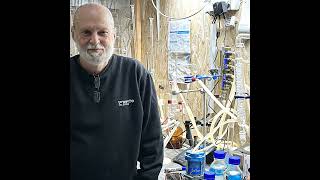
Avi Feldstein, who built Feldstein Winery from a historic Galilee estate, talks about planting 750 dunams of vineyards in the 1990s and developing a winemaking style centered on indigenous Israeli grapes like Argaman and Dabouki. He sees terroir as a triangle of grape, place, and winemaker, and uses concrete aging and long maceration to create wines suited to Israel's hot climate.
Chapters
Welcome to the Kosher Terroir.
I'm Simon Jacob, your host for this episode from Jerusalem. Before we get started, I ask that wherever you are, please take a moment and pray for the safety of our soldiers and the safe return of all of our hostages. Today we have an extraordinary guest, a true pioneer of Israeli winemaking, Avi Feldstein. Avi's name is synonymous with innovation, bold experimentation, and a deep respect for the land and its native grape varieties. From his transformative work at Sigal Winery to founding his own boutique, Feldstein Winery, Avi has shaped the way the world perceives Israeli wine. In this episode, we'll delve into his journey, explore the unique terroirs of Israel, and uncover the fascinating stories behind wines like his Grenache, Tabouki, and Sauvignon Blanc. Whether you're a wine connoisseur or simply curious about the evolving Israeli wine landscape, you won't want to miss this. If you're driving in your car, please focus on the road ahead. If you're relaxing at home, please select a wonderful bottle of kosher wine, sit back and enjoy this episode with Avi Feldstein.
Avi Feldstein, I'd like to say thank you very much for inviting me to come up to the winery. I'm happy to be here.
I'm happy you're here.
I'm very happy to be here. Took us a long time. It took some time, but it's okay. We went through You know, the Lebanese kept us apart for a while.
Yeah.
Hezbollah kept us apart for a while. So, yeah, it's okay.
But we're here.
I was afraid this morning, last night, actually, I was listening to the radio. And they're talking about how the whole peace thing is breaking down. And I'm saying, just leave it for a little bit longer, please. You know, we don't need missiles. The last time I came up to see Effie, not the last time, the time before, the missiles were flying everywhere. I mean, there was, as you're driving down from Sfat, as you're driving from Sfat, the sides of the roads were on fire and everything, right?
It was crazy.
But thank you for being on the kosher terroir. Okay, it's really a pleasure. I need to tell you that you've impacted my life for so many years. It's a pleasure to meet you in person. Um, one of my favorite wines that actually made a believer of wine out of me was the Sigal Unfiltered. It was so, it was so special. Uh, it was just amazing. Awesome wine. I have some questions for you. Tell me a little bit about your, um, your journey into winemaking and what originally inspired you on this path?
Wow, so long. I don't—
it's not so long. Come on, come on, come on.
You're younger than me. I started not— I wouldn't say by accident, but, uh, it was quite of a, uh, unusual path. Because I was, I started working, started my adult life, so earning while I was studying. I was studying literature and philosophy, Tel Aviv University.
Where?
Where? Tel Aviv University. Tel Aviv? Yeah. And I was an activator, literature, meaning, and I was publishing, not for the door. I was publishing, considered to be a great Proheshem, Avtacha. Yeah. Promise, a great promise. And while doing that, I need to sustain myself, but I'm not coming from a wealthy family. I started work. My work life started at restaurants and bars. Quickly I became an instructor because I have a nature. —To teach? —To study. Okay. Maybe also to teach. Teaching delight. It's a Renaissance idea. So I started to teach. I started— then I started to write, to write on the subjects in the newspapers, etc. About drinks, about wines, about food. And On one hand, I became quite famous in that realm. I was writing for Hadashot. Hadashot was then a new thing, and it was a newspaper that invented the modern Hebrew of newspaper writing. And the new style of writing about food was something half intellectual, food and wine.
You were living where then? Tel Aviv. Okay. And that's your origin? You were born in Tel Aviv?
Wow. Born and raised. Wow. Born and raised. People from all Israel are coming to Tel Aviv. Right. There's very little Tel Avivers born there. Right. I was used to say that I'm a Tel Avivie. Because from habits, not from any choice or— Right. This is what I know. I'm living in a street next to the streets I used to roam with my mother, buying food, buying fish, buying herring in newspaper. They used to roll it in newspaper.
Yeah.
Can close my eyes and imagine that. While I'm there. This is the last part of Tel Aviv still resembling what it was from the past. So I was in Tel Aviv doing that, started to write, starting to work also with, as a consultant to importers in the field of alcohol because I became very knowledgeable and Before I knew it, I opened the first Israeli bartender school, which was a financial disaster because it was like, I don't know, 60 meetings. There was no way to earn one shekel out of that, only to lose. But It was a terrific thing because it was also about cocktails, and which is now very more— were very popular. It's only a few years early. Yeah, exactly. But also had a chapter long and, and, and very elaborated chapters about beer, about wine, about the, the making of liquor. Balkonia, Brandy, whiskey, actually going into distilling details and stuff like that. So quite a few of the wine and alcohol trade people went under me through that school. Wow. Then came my good friend till these very days, Arik Segal, which was the son of Tzvi Segal, which was the CEO of Segal Wine. And he decided I should leave everything and come work for Ségolène. It took him like a 1 year of working on me. But finally I did that. Stopped writing for everybody. Started to work with him. First in marketing. The import, the import of Ségolène was unbelievable large. Because Israel drank actually so little of imported wines, you could have everybody, all the wineries and agencies under the same roof. I mean, Gallo and Mondavi were both agencies of ours. The only place in the world because they are rivals and they used to go to different— So I was exposed then to a huge quantity of quality wine from all over the world. From France, from the United States, from Australia. And this started to form my education. In those years, I advanced. I ended my management life at Segal as vice president for business development. This was my last job there. My last job, my last job before I switched and crossed the lines to winemaking, it was progressive as a manager, as a development manager. I did something very unique, not a lot of people have this opportunity, and it was to rebuild the winery. It was a winery with a great past but with an uncertain future. Okay. Because there was revolutions in the country. Polanyi winery came— Changed the whole world. Yeah, came to the center of the world. And Segal was still under the old paradigm that wine growers are producing grapes and the wineries are producing wine and you should not mix. Let everybody do his job, which of course is so, so not irrelevant to quality good wine.
Today, yeah, for sure.
So I came to change that and during that project I decided that the winery is built, is rebuilt from the ground, from the vineyards. And we should have our own vineyards and embarked on a journey of planting quite an acreage for historical independent Segal winery. And the unique thing about that was that I decided that the region to do that is this one, is the Galilee. You would be maybe surprised to know because it's so not relevant to water here today that the Galil was empty. From grapevine. Empty.
Everything was empty. No. But the hill was definitely empty.
Yeah, because the Judean Hills had vineyards.
And what year are we talking about?
We're talking about mid-'90s. Mid-'90s. Mid-'90s. Golan War. All the buses with tourists went to the Golan Heights. Right. The planes with the news reporters, because we used to fly them. Up north. Yeah, and the private cars with visitors all go— went to the Golan, and the Galilee was empty. To me, this was outrageous. I tell you why. Because of two things. First of all, it looked to me as a classical violate, which it is. Which it is, and proven to be. It has, it is high elevation, it is cold, it is fertile, it is diverse. And you get sunshine.
Yeah. So you get, yeah.
In fact, the Golan is a terrific place to grow grapes, don't get me wrong, but it's quite monotonic. Well, you have these little differences, but it's not like in the Galilee. In the Galilee, you can go with 10-minute drive, 450 meters elevation in the Shom Valley to 900 meters at Manara Cliff. Right. In a few minutes drive, you can go, you go through the, let's say, I call it the entry, the port, the gate, the gate to the Upper Galilee at Sommet Golani. You see all Your left, the Tu'an quarries, and you see the mountain cut open because they hang, and you see the white limestone chalk of the lime rock. On your left, on your right, you see basalt boulders, volcanic boulders. So you see the mixture as centering. And in the Galilee, you have a mixture of those in every different— in any possible way. You have vineyards facing north and facing south and facing east, higher elevations, valleys, mountain ridge within valleys, mountain with straight heights. Incredible terroir.
Incredible terroir. Yeah, yeah.
So if you were interested in that, in multitude of possibilities, and in the concept of terroir, which I was very interested in because I would then work more Bordeaux-trained than anything else. Terroir and longevity was the two hallmarks of a good wine for me. It's— it changed with years. It changed. I'm suspicious about the concept of terroir, to tell you the truth. I know that this is like pissing on everybody's parade, but you know, it is what it is. I can elaborate later. It's an important concept. It is a working concept, but it's not the one and only concept. In fact, Being the one and only concept to mainly— this is a religious side of secular people. So the Galilee was empty in this sense, and it was vacant. It was like, you know, it burned with emptiness. The other thing was that one in culture, one in environment, are connected. Terroir is a triangle, the angles of which being a variety, a place, a place is a climate and soil, and a man. In Europe, it's a community, the community of Saint-Émilion, which formed the ways in so many hundred years. In the New World, it's an artist, a winemaker, a winemaker, one person with his vision. It's not a community, it's a person, it's a creator. They're the creator of wines as images. But the man is there, the culture is there, the background is there, the history is there. The history is there. And the Golan Heights, being as good as it was for Gergoyim, is empty of Jewish history. It has some. So if they excavate a temple or whatever, they take the stone, they bring it to to the winery to prove us, okay, we're Jewish as well. But there's no comparison between the Golan Heights and what happened in the Judean Hills or what happened in the Galilee, because Galilee is the Israel of the Mishnah, and the Galilee is filled with Jewish history, religious, secular. In fact, I can take you with the car, 10 minutes drive from here to Jish, the Gush Kalav. Go on to the wadi of Gush Kalav, of the river Gush Kalav. 200 meters downstream, we find the remains of a synagogue, very well preserved with the stone, big stone that used to be on the porch with lions carved into the— And this was a synagogue of a Jewish settlement in the wadi, not of Gush Kalav. Gush Kalav was a Jewish settlement, and then there was another one. The other one was in a completely agricultural settlement, making a living out of olive oil and wine production. This was at the time of the Romans, which means 1,000 years ago. The place is just full of wine, ancient wine. 2,000 years ago. Yeah, yeah, 2,000.
2,000 years ago. We do strike, but it's, yes, I agree with you.
100%. So it being empty, to my liking, was outrageous too. So I decided that I'm going to the gallery. It was as a manager, and I planted some 750 dunams, including vineyards that became unicorns or became icons, as Dishon, Rignard, and Auvers. During that, I made a transition. Because during that, I became, I started to make wine here because I was like here all the day with the vineyards. Started to make wine together with Jeff Marx, the founder of Racha in Kibbutz Amiad. A small operation named Dalini Heights Wine. And then some time later, I became the winemaker the chief winemaker. Self-taught. I taught myself. I used the connection of Ségal with the wineries all over the world to go there and see. Not what you— not what people teach they do. What they actually do at the best wineries of the world. I could be a witness from close range because I was a distinguished guest. Which they opened the doors to, and studied myself from books. I was already a university-trained man, but I also felt that, you know, in the Western culture, the basic intellectual institution is not university, it is the library. It was always the library. It's the Library of Alexandria for the secular. It's the way Judaism was learned in rooms full of books, young people studying. And the concept of somebody that reads a book, stand on the podium and tells you what's written in it, then testing your understanding of what he— What he taught you. This is a modern concept. I went classical on that and taught myself. And so when those vineyards, new vineyard, gave fruit first time, I was in the winery waiting for them to make the first spice. It was a closure of a circle. So this is like the way I went in. Coming here, by the way, Coming here, half accidentally, to this specific location, I found the deep fear at the two display posters' backs. If you stand up, you see above those two black— there is the letter "HE"! Yes, yes, that's it! This is the grave of Rabbi Yossi Aglili. At the top of that hill? Yeah. Wow. Abi Yossi Aguri, aside of being a great senior, I feel in the Pesach, in the Haggadah, Pesach Ken, is a very interesting figure. First of all, he's called Bri Lik, so this was close to me to start with, from the name. He was a very original man. He used to eat, you know, he used to eat chicken in butter. Until they forced him to comply with the general rule. But another verdict of him, which is relevant, is that he said that you don't bring Bikurim from Erev R'Yarden. Don't bring Bikurim from Erev R'Yarden. Which means that he draw the lines of what is the agricultural Israel, what it really is. And it doesn't contain the, the, the, uh, the Golan Heights. The, the line crosses here down in the valley, leaving the, uh, Naftali Mountains as the northern part of classical Israel growing, agricultural growing region. Uh, why is this important? Because it came together with my vision. Look, Here is the— here is really his grave. Down there is a vineyard of mine. Yeah. The Rossan, between me and him. And over that is Abbe Cahoula. And on the other side, you can see the border line. The geographic map is very clear from here. And it includes what I've done in the Galilee. Because after I— there was a few vineyards here, very few. There was the Soukhnout plantings of the beginning of the '80s in Ramadalton. Okay. Which was in— they had to put something in marginal soils, so the vineyards were the only thing possible. But it was the majority white and the majority Sauvignon. Nobody knew what to do with it. And also one vineyard at Duchamp d'Ali, The vineyards of Ramot Haftali, which was a vineyard that Kamil planted, then abandoned to Ramata Golan. Ramata Golan was started in Chatzot HaGelilith before they went to the Golan. Right. When he was here. And they took the vineyard with them. And it was the heart of Cabernet-Ardennes and Chterin. They hid the fact that their best wine, best grapes are coming from Galil. But this was it. And it was between the moment I started to plant in mid-'90s, there have been 20 years that passed without any great planting in the Galilee. So I was like starting a new thing. I put— not alone, because also some other was starting to vision the idea. But because I planted 750 dunams and because I brought everybody that was willing here, newspapers and news writers about food, about wine tourism, well-being, Everybody stood in line to get grapes. At '99, when it first yielded, and everybody got, because it was my mission. I had more, and everybody planted after here. So it became, everyone got grapes from me, planted the vineyard near to me in the next few years. So the Galilee went on— A growth spurt. Yeah.
Was there a particular moment or vintage early on that solidified your passion for winemaking?
Look, it was, it was something that, that caught all my being. So, so I cannot single out one vintage that was the proof. Okay. Maybe the proof, yes. It wasn't the motivation, but it was the proof that Château de Veyroux is— I think the 1999 vintage with the new vineyards, it got a very yielding— Which one? 19? 1999. 1999. Okay. I had a few vintages until then, of course, but the new vineyards in the first year, which is not expected, gave such magnificent fruit that the walls of the winery was shaking. Shaking, yeah. Wow. And to prove that, some of those wines are still alive in the bottles.
Meir Hoos, what do you think are Israel's biggest strengths and unique challenges as a winemaking region?
For speaking about the strengths, the unique strengths, I'm compelled to speak about the local nature. Are you talking about the grape varieties?
The local grape varieties?
What the style is, what the history is, how they can all combine to one story. Because I think making wine is story making. It's not— 100%. And there is an obligation to the winemaker to write that story and to make the wine tell it. But if you want only the advantages, something that came to me in America while speaking with people representing myself, people that didn't know me but were interested in new innovative wines, it's a changing world. It's a changing world. It is changing climatically, and wine world should adapt. It is changing culturally. I think that the concept of terroir is related to the— in a deep sense to the former century. Not exactly— not so basically connected to what's happening now. It has influence. So because it's a changing world, because Israel is in the midst of a changing world, because it's a changing climate, because Israel is a hot climate, in a way, winemakers that try to accommodate to hot climates first For others, they are like the pioneers of the future. The whole world will look like the hot climates of today. Right. So in fact, we are pioneering the wines of the future.
I strongly believe that. I was privileged to be one of the wine pourers at the president's house a couple of years ago. Ah, it was a wonderful thing.
Who organized it?
I can't remember her name. It's— yeah. I'm becoming senile. No, I am already. See? Yes. Yes. She's the one who organized it. But I was there the first year that it happened. There's been 2 years that they did it. I was, I was with Yakovoria. And at that time they were, they were just bringing out Pinto wine. And because we said Pinto, everybody said, oh, it's a desert winery. There wasn't an ambassador from everywhere in the world who didn't stop by our booth to speak to Yakov about making wine. It was like we were the canary in the gold mine. In the coal mine where, you know, we're the ones who are impacted now, but they all knew what was coming in the future. And it was an amazing interaction. Everybody wanted to know, how were you doing it? What were you doing? How can I connect you to some of the winemakers and, you know, large wine, um, people within our own country and, and back and forth. It was very— there was an enormous amount of interest about Israel because of that. So— because of desert. Because of the desert. Enormous amount of interest. So—
by the way, I was also mixed up with that. Because Segal Winery was the independent Segal, even before Bacchan purchased it, was in connection with all the little wineries little vineyards coming in the Negev. Right. Yeah, I forgot the name of that project. Meteotichidim or something like this. People got land. The state gave them land. They gave them some loans to start their own vineyards, to start their own wineries. In the desert. And those days, if you wanted to plant a vineyard, you had to get a letter from a winery that is— that said that it is willing to, to, to use the grapes. So we gave, uh, some— quite a few, uh, contacts with those people, and we, we had also some wines from them. This one, Tupacán, Yeah. But Bakan took over that also. So we were even producing them their wines without telling anybody. It was behind the scenes. But we were buying the grapes for ourselves, a portion of it. We would transform to wine and give them back to sell. And Bakan was quite innovative those years. I mean, I think the vineyard, the Chardonnay and Pinot Noir vineyard at Speramon was the first really big industrial vineyards in the Faust. And I remember the pictures from, you know, from helicopters. There was no drones those days. So it was an expensive picture. You should charter a helicopter and send it up to to picture your vineyard and it's desert all around and then a bright green vineyard sitting in the middle of it. It was all over the world in Balkan. Wow.
So you've been working recently highlighting indigenous grapes, special indigenous varieties. What draws you to these varieties and which ones do you think have the most potential?
What drives me to them is the wish, the need to establish my local identity as a winemaker. Because this is what people do. They produce things and they want to know what is unique, what is related to the area. And this is a question that came to my mind a long time ago. Started with the '90s. In the '90s, becoming the winemaker, chief winemaker of Ségal, working a lot with Aldaman as a variety for entry-level wines, uh, and doing huge quantities, hundreds of thousands of liters from it. I felt that there's something hiding in the variety. It was something that took me a long time to understand what was hiding there. But I was sure that something was hiding there. And also the fact that it was a local cross spoke to me. Because a local cross is something that enfolds the environment. You know, there's always the question about a young man, a young person, which is more important, the genetics or the education? This could be, the same question could be transformed into the grape world. What is more, more, more important, the genetics of the parents? Because it's a cross, it has parents. It's not a vegetative propagation. Like industrial vineyards, you know, that you bring one grape from France, you put it in a nursery, and you start to— Concarnia, damn. —which are 100% identical DNA to the mother vine. So when you do a cross, you deliberately mix up the genetic charge of both parents of the cross and encourage it to make all, as much as possible, combination of it. Then you plant these seeds, because this is not vegetative propagation, this is like in children. Yeah, that's what Rael said. Not only the mother, the mother and the father. And start to look at what you planted and to check it, to check it by values of growth, of health, of yield, of quality of yield, of time of harvest, of anything. So as you advance, you pick, you pick some, and then you take the sum and you multiply the quantity, and you replant them, and you still are all over the vineyard looking and learning and choosing. Where are you doing that? You're doing it in a special soil. Where are you doing it? In a special climate. So the outcome is completely an out product of that climate and that soil. So Argaman was completely local to me. I could saw it. It was— of course it is different from Carignan, it's different from Suzan, the two parents, but it was local. And I felt that the wine— as a winemaker, the question is not why should I make a wine from Argaman. The real question was, how can I afford not to draw wine from Argaman? This is the question. It was in front of me. It was a son, a child of this land, the wine. It was representing it. It took a while until I did the first commercial one in 2006. The bottle, I still cannot, I will ask them to bring it to the test sample. Yeah. You realize that on the label it is written, 2006 I mean, that it is a moral duty to make wines from, to look for local identity in wine. This, it's written black and white on the bottle. So this was the beginning of the project to go The first commercial product was 2006, but I was playing for 10 years with it. And I planted the vineyard in Dovev, in Argaman, of Argaman. Dovev is at 2000 or at 1999 I planted it. So this was a completely lies adorable story because I just felt that I'm Taking the DNA of, from the roots of the main planes in Israel and taking it to a very good university at an elevation of 850 meters in the Galilee. Yeah. And training it and teaching it to speak as a lady. And see what was coming out. And it was the historical Agamemnon, which David Roboff wrote about the Tazdintez. There are 3 good things in Agamemnon. Color, color, and color. So I tell David. Thank you very much. I said, David, you are going to hit your head. And when you are going to eat your hat, I will supply the salt and peppers. So it would be more— he was quite a man. So 2 years later, when the wine came back from competition all over the world and was decorated, etc., he had a piece written in Arts, the headline being I'm eating my hat. So I still have it somewhere. But this was the very first beginning of doing this, trying to work with the concept of local identity. Look, for me, Israel has a long, very ancient wine production history. Yes, we all— everything around shows that. And in the ancient days, it was a huge producer. You know that the last winepress that was excavated near Yavne is approximated to produce 1 million bottles annually. Can you imagine? Can you imagine? Those days. It's unbelievable numbers. And those was exported all over the world. World, right. And, uh, and, uh, but the, the modern, modern history— and there is, you know, there is the, the researchers that say that the, the very, uh, basic DNA of grape where he comes from.
Yeah, I was speaking to, I was speaking to Shivi Drori and he said we were in parallel with what went on in Georgia. This was the— this was very much in parallel where people have said for years that Georgia was the beginning of the wine industry. That's not true. That we were parallel to them.
Right. They were mixed. Yeah. And they mixed. Mixed through the ages, through the— well, I think It was a process, you know, because we sent wines and probably vines outside of Israel. Right. They got mixed up with DNA from Georgia and then the Roman soldier brought them. Yeah. Because he wasn't doing it for the wealth of the world, but it was a habit, you know, in backpack. Right. There was the gladiola, the sword of the legionnaire, and grape cuttings. And all, all, wherever they went, they planted vineyards. You can look about, you can look the vineyard map of Europe, and it is like an historical map of the Roman conquest, right, of Europe. If you see the Spain and you see the Ebro and the Douro, the two valleys, to the big serious wine valleys. This was the roots of the Omani invasion of Spain. So they just planted vines all over there. So the Romans brought back into Israel also some of the mixed DNA. So it got more, more rich. The culture that did the opposite, while the Romans enriched the wine scene in Israel, The Islam.
The Islam. Islam did it exactly the opposite.
700 years ago. The last change of the Roman was 1,000 years ago, I think. The vineyard was again changed massively 700 years ago with the Islam. Islam. They plant out everything that seemed to them intended to alcohol production. And what was seen to them as table grapes, they would leave. If it was big and fleshy. And this is the real distinction source, the real source of the distinction between grape, between wine grapes and table grapes. When people asked at the beginning, they were annoying me, Why are you making with the zabouki? Why are you making a wine from table grapes? My answer, the first year, I'm a polite guy. I responded politely. After that, I would use to ask the guy that was asking me, are you Muslim? So me, Muslim? Why? Because you were asking me a Muslim question. You are using a Muslim distinction. Right. Nobody said that this is a table grape. The Muslims said it was a table grape.
So Dubouki, you brought it up. How— what do you think of it?
Dubouki was, uh, so Agamar was the first one, right? Then I, when I started my winery, my independent wineries, there was Dubouki in the middle of the scene. Dubouki was everywhere when I was growing. Dubouki was One of the main table grapes in Israel. The vineyards of the bouqi were from the Galilee to the south. Do you know Rami Naaman from Naaman Winery? I don't know, no. That winery in Ramot HaStali, a good winery. Rami told me that when he was a kid, he got beaten up because he was He was caught stealing the buki grapes at Ashkelon shoreline. Shoreline, yeah. So we understand that the buki was planted even on the coastline of Ashkelon. Ashkelon. So this is where the ancient name of Segal Wines came. By the way, it was called Ashkelon Winery. Before it got— Segal. I remember that. I remember. Because Ashkelon was growing.
Yeah.
Now considered to be the desert. So you see, there's not, not a lot new when you, when you dig deep enough. Yeah. Of course, also the people in the, in the, in, in the Negev would tell you that the Nabataic culture grew grapes and did wine there. They're just renovating or redoing history. But what I want to tell you, that in modern, modern winemaking, not in the ancient world, in the modern world, the history of grape growing in Israel and winemaking, let's say it's 100-something years from the Baron de Rothschild plantings. And this looked to me as the infancy years of the industry. It's like the years that a baby is learning how to walk and how to talk. Eventually he knows. Then he wants to use this new faculty of his. And it was to say something. The something that the baby Israeli industry wine wanted to say while it mastered its language, the language being how to grow grapes in a cold— in a hot country, how to produce wines more and more elaborated and overcome the difficulties unique to the place. What was in the mouth of this baby was a question of local identity, more and more and more. Of course, when you're talking about supermarket wines, it's less evident. But as you climb up the pyramid of quality, you find the question more and more. So for me, it was very basic. I started to do that at the end of the last century. Agaman and then Dabouki at 2014. And Dabouki was everyone and everywhere. And I said, you make— winemaker should make wine from grapes that are in front of his vines. Agaman was. And the bouquets, still the bouquet diminished in area because people were turned to eat seedless grapes. Grapes, right. Which I, till these very days, I don't understand the tendency. It's like eating peeled sunflower seeds. All the fun is in spitting the grapes.
That's spitting the seeds. Yeah, no, I agree. And the taste is so different. I know, they mute the taste so much, it's kind of crazy.
So little bubbles of sugar and—
I know, I know.
If you find a little taste, wow, it's a good table grape because it has a little bit of taste, a little bit of smell.
What about the other varietals? Have you done anything with the other varietals?
I've done, I've done, because I also was a consultant, etc. I started to use Marawi and Jandali as little additives to the Boukki a few years ago. Yeah. I made also some wine from Petuni. Yes. Why, why would, why the wait? The wait because Aguaman was waiting for the world wine to change. In what way? There are two reasons why Aguaman didn't succeed at first. Even though it was elegant, I pushed it to be elegant, worthy of any respectable dealer or wine tasting approved it in 2006. But Adamant, it will be very unwillingly producing high levels of sugar, even in the most hot years. And there will always be a very, in your eyes, your face, acidic side. To the wine. These were two features that was against the mainstream 25 years ago, but to make a wine with it, because the wines should have been very sweet and very alcoholic, and the Argaman in its nature is the opposite. It's very acidic and very low in alcohol. Today, This is one of the varieties all the world is looking for. Right. The varieties that are making refreshing wines, that are making drinkable wines. That are lower alcohol. Drinkability being a hallmark of the wine, of this winery from its very first day. Locality, drinkability. Coming back to the Boukki, just to complete my answer. The Bouquet, why the Bouquet? Because it was here, because I knew the grape. Let me tell you a secret. There were times that we lacked white grapes in Israel for various purposes. Let's say for alcohol production. I've Alcohol for aging would be better coming from grape white than the red. Artisanal Arak producers are completely convinced that the base wine that they are distilling should be the Boukhi. Really? Yeah. Wow. When I was starting, this was my competition. People wanted to buy the few vineyards remaining to Arak. And they're making Kiv and Yibas. Raisins and Dimas from it. But there was time that before the red was dominant, until let's say 5 to 10 years, which white is coming back because of grow by world, right? There was a red wine domination, and but before that There was a white craze. It was what is, was, was that. The beginning of the 2000s, it came together with the yuppies movement in the States. Because yuppies, established hippies, they find themselves in very varied cultural features.
Also by So you're talking about like the Chardonnay?
But they buy the food and buy the wine, they define themselves. And they define themselves, let's say, by colorless beverages. Okay. This was connected also to health. If I'm wealthy and I'm enlightened, I take care of my health. If I take care of my health, I don't eat artificial coloring. I will drink transparent sodas. And I will drink, you know, it's a metaphor. And I will drink, even though it's natural color, red, I will drink white. So interesting. Here, it came here, there wasn't enough white grapes. The Boukhi was all around Israel, the last thing remains. And the Boukhi was the grapes of the East Bank. Yeah. There's no question whether it's it is Israeli or Palestinian. It grows also in the West Bank, but that was— it covered all of historical Israel. Israel. And when you find seeds in ancient wine presses which are petrified, we cannot take out DNA samples for them, but their morphology is completely identical to the Dabuki. So it's a good reason to believe that it was a wine produced in ancient times. Wow. So all this spoke to me, and my story was a story with that grape outside the loud narratives of the environment. Because it's not appropriation because it's originally here, it's still ancient. You cannot mix in that I'm taking from the wine bank, but for the He's banned, but my goal is— well, at least one of them is Palestinian, so I'm giving a palasa to a fellow Muslim dweller of this country. You cannot involve me in any one-sided political agenda, and I like that. I like I don't like to be put in boxes, you know. All my wines, by the way, it's something I like to say because it's true, are made outside of the box. They all— each and every one of them is done with some feature which are unique.
Talk to me a little bit about your wines today because you just introduced into America. It's kind of silly to say that even because I'm telling you, my favorite wine in America was the Segal Unfiltered. And so that was— and actually, I said, we're going to meet Avi Felstein. And he said to me, who's Avi Felstein? And I said, okay, I'm just going to tell you one thing. I'm not going to tell you the history or any of the rest of that. I'm going to tell you one thing. Segal Unfiltered. And he said, wow. That was like real. That was my favorite wine. And it was— I'm not putting it, but it was certainly mine. And there was a lot of people who were drinking wine because of you. So it's amazing. You know, when—
first of all, thank you. But when Bacchan took over, Sergal bought it. After a few years, maybe 2, not much, the sales force people of Tempo were coming to me and telling me, you know, you are helping us to sell beer. I said, how come? Because if someone, a restaurant wants your wine and wants the unfiltered, They will say, okay, you must take the beer and then you get the unfiltered. And it ended up that they made the Gold Star unfiltered, which was an influence of the wine. It was coming into life of all my efforts and my visions. It was eventually done from the Louvignac vineyards in the Galilee. It was made by mixing terroirs. I told you from the very first beginning, I don't believe Tovar is a value. It's a defending light of the wild world because if not tovar, there will be no stoppage to the McDonaldization of the wild world, the corporate colonization of the wild world. So it's a defending light. It should be respected for that. But it's not the only value and it's not in any case, it is even the leading value. When you are doing a wine with your interpretation of the variety, your search for its pure inner core, you might use the same variety from different terroirs to give a full picture of the variety. Because the classical terroirs of the world were made historically where they are. Bordeaux became iconic to, to Cabernet. It doesn't mean that in another country there should be existing an area resembling in its nature to Bordeaux. If it has other qualities of places, other places' qualities, then you might need to mix too to get to the same outcome of an iconic wine. So what is considered to be already iconic taste of a variety. Which of course is a cultural construct. Terroir then becomes one of these unspoken and unnoticed functions, the commercial one. What's neutral to all the big terroirs of the world? Temperature change? There is different patterns of temperature change in the Rhône Valley and into the Rhine Valley. Soil, nothing to do from the chalky stones of Champagne to the terroir, to the aluvial marine dried mud of Bordeaux, which a Dutch engineer gave to France by drying swamps near the sea. Climate again, the climate of the south of the Rhône is sunny. Burgundy and Champagne, you know, it's gloomy. And Champagne, even at some— is not now, but in the past, it was even too harsh to ripen grapes in certain vintages. I think if you look into it, you will see that all what is mutual to all the big towers of the world is that it is an industrial, it is an agricultural area, not very far or adjacent to a big LWC city. The rivers being the commercial roads, the transport of the Middle Ages. This is what transformed Tewa to being paradigmatic. And by sending agricultural products to the city, getting back good money, fluently, and with close range, made the agricultural area able to develop itself, to enhance itself, to look for its core. You know, people that doesn't have what to eat are not looking about, are not asking what is the war of our land. They should be with a full belly. That's that. So, and the money from the big city get the opportunity. There is nothing to say, well, it's not intrinsic. It's not as if it's in the built of the world that this war is, but it's in this way, I mean, it's a cultural construct. It still has its full meaning. And this is what was established as iconic. The concept of the tower in its beginning was the way of the people living below. They say in Bordeaux that the best vineyards are the vineyards that see water. But see the rivers. Now, a part of this answer is that the vineyards that saw water could block the way to the water from the vineyards that didn't see it. By drawing a terroir border, you say this vein of life, of money, of wealth, of interchange is mine. Is mine and my friend and this friend with me. You are not included. You are not included. You are not included. It was a tool. Because it's connected to a certain time, a certain culture, it's still active. We enjoy it. We should go on enjoying it, but we should understand that when Franz is saying to me, "Ah, you could make a distilled Cabernet only from mixing two terroirs. I'm doing it from one terroir, so I'm better." This is This is the continuation of what they did back then when they say you are not allowed to go beyond the border, it's violent. This is the terroir, you are outside. The neighbor of Bordeaux, it's outside the terroir of Bordeaux, and I'm outside the terroir of Bordeaux by the same tool. If, if I'm accepting the playing rules that they set. Right. And I do not want to do that.
I want to break those rules. So let me ask you a question, a primary question, because it's actually— you're talking on both sides of it. The question I have is, where is the wine made? Is the wine made in the vineyard, or is the wine made in the winery? Both. Both.
I thought, I think, when they're making When the making of the wine in the winery is more basic, or it is more formulated, it's automated, it's a— yeah, people are doing, then it has less meaning what you do. And then the vineyard is shining out. It's a matter of focus. It's a matter of value choosing. Again, again, you can choose whether the value could be the artisanal work of a man, This could be the value. And then, and then terroir is becoming even more marginal. Listen, terroir is truth. When you take a certain variety, X variety, and you put in this terroir or in that terroir, the wine will be different. This is objective. Right. This is completely— That's the way it is. This is completely objective. Yeah. Okay. To say this is very good and this is awful is not objective. It's completely subjective. But the fact, the scientific fact, this is objective. Right. But because it's objective, you can use it as a material. So when people say, okay, terroir is the main thing and I am mixing Merlot and Cabernet to reveal this terroir in its most glorious way. Okay, I can say, okay, Cabernet is the subject, and I'm using two vineyards, two terroirs as material, as I used varieties in the first. Yes, I'm using now two terroirs to show the glory of the variety.
Just because they set the rules doesn't mean that you need to play by them. Yes, it's very evident.
You cannot, you cannot, you are not allowed to add acid in France in winemaking. Right. This is very bad. Everybody said, is this original acid? Is this natural acid? Everybody, you know, there's people that goes to winery and shooting in their mouth to think, oh, we can taste addition of of acid. I'm putting $10,000 that you cannot. I will make you a tasting and you will not know which is— this is bullshit. But what is the origin of this? Is this something, some purity thing connected to wine? No. You know, it's the reason you are not allowed to add acids to wines in France, because the only situation that you could be in that you want to do that is if you want to forge wine. If you want to add water to wine, you have enough acid by all standards. If you want to add water to the, to the wine in a larger quantity, then you have to add acid. So this is why it's not allowed Originally in France, but then they made it a Tula hot chocolate. Okay, we don't need, hot countries need. That's a bit like the hot countries say the second best because they add acid. It's, I don't even know why, it's, whoa, all the way, oy vey, they're adding acid. But they're adding sugar. This is okay, this is all right. Right. The reason we are not adding sugar Probably in a hot country. The only circumstances you want the yeast to add sugar is if you're adding water.
Again, if you're forging wine. Okay. What wines now are you proudest of that you're manufacturing? What wines really make you feel special?
Listen, I tell you, all of them. Because, you know, it's like children. Exactly, it's like children. And it's a smaller family than it used to be. Yeah. Because when I was independent, I used to make about 16 to 18 wines, different wines, every vintage. Partnering up with Bacchan Temple, It couldn't go on because you cannot take a huge sales force and train them to sell 16 different wines every vintage and to sell Sémillon and Sauvignon and Sémillon Sauvignon. It cannot. If you are transforming yourself to a sales, to a sales, salesmen, Sazmen, then you can go and sell it, but no other one can.
Yeah, nobody else can sell it.
So I had to narrow it down. I narrowed it down to 4. Now I'm back into 8. I'm not finished with that. I want to do some more because I continue to develop, looking for a local identity by selection of grapes, indigenous grapes. Local crosses like Agaman, southern grapes like Grenache and Roussanne, which comes from areas that are Syria, East to Israel. This is a good place to start with, and also the good— it is a good tool to compete. Israel is making nice Chardonnay, but there's only a few people that would say that you can take an Israeli Chardonnay and put it on the same table with a leading Why driving? They're not so hot. You're a diva with him. They're not so hot. But you can take an Israeli rossan and put it on the same table with the best rossan coming from south of France, even the iconic or the unicorns like Gages de Peyres or Rayas White, Château Rayas White, and they will stand on the same table. You might say that the French is better, but they are comparable. It's the same entity. So if you want to compete, why compete with one hand tied behind your back? So this was all about variety selection. But in Feldstein, there was another thing. There was the trying to speak about what the style of local Israeli wine should be. This was unique. This I didn't I did it at my last years in Ségal, but not all the way like he's looking with the varietal. So the wines today are outcome of that search for a local style, which for me is quiet, contained, meditative. Because it's a hot country, people might think, uh, because it's hot country, we should drink a white wine which is like a fruit nectar, like a mango nectar. No, your body, your mind wants something more pure, more relieving. And it was easy for me in the States now to explain people, but listen, the style in Israel was like it was in Napa Valley before 15, 20 years. You wanted fruit bombs. Wanted wood bombs. And actually in Israel we have, as it is, too much bombs. At least the wine should be bombless. Yes. So the style is meditative, is more Burgundy-affiliated than Bordeaux.
Lighter, lighter and summer, warm weather.
Yes, you know, lighter in our world sometimes seems like a pejorative. I know. A term, but it should be more drinkable. Drinkable is a good word. I was coming into Plum, is the name. It's supermarket, but it's a gourmet supermarket. And it has a huge wine department. Some of it is not kosher. It had very extensive kosher shelves. And he was in the middle of his day. And we bothered him with bottles, let's look at tasting, he was on the counter and tasting at the beginning, then his eyes lightened up and this is a guy trained with world, from all over the world, you pick them, you can see the good selection that is selling, salesmen, you know that I tell the truth, I have no shame, if I see he cheat, I say it in your face, said this is world-class wines. These are completely a different style. These are refreshing and drinkable wines. You know, when I was speaking about Israel, I'm using— I used to think about something with a plum taste. Reds. Processed something with plantains, it's very sweet. This wine doesn't have anything reminiscent of that. So all the, all the reds are under the same umbrella, even though they are very different. They are different from each other. They are done outside the box. So they are different from what is done by others. But still they speak in the, in the same way. I'll give you an example. Let's Let's speak about Shemesh. Shemesh is a new wine of mine. It's the second vintage is coming on the market. Shemesh is a blend. It's a GSA, Grenache, Syrah, but instead of Mouvedre, instead of an M, it's A, Argaman. Argaman. Argaman. This is the blend. All the parts are fermented apart. They are fermented in all cluster. And then they are aged not in wood, they are aged in concrete tanks. In concrete? And in clay amphoras. Amphoras. And this gives what I— Šemeš is because Šemeš is the sun. Two senses is Šemeš, the wine. First, it comes from vineyards born under the sun and which are not ashamed. They're not trying to be in a forceful way lean. They're not too early picked to resemble European way. Kana. So this is on one hand. And on the other hand, they can be drank under the sun in the Israeli summer. You could drink a red wine and you can drink it chilled without being, without ruining it. Of course, it would be very nice to see it evolving. Cold, West Pole, a little bit warmish. But it would be nice even when self-chilled. And this is a new concept. This is a new concept. This is a concept coming from modern needs, from a global warming world that is following hot countries like Israel. All over the world you see the, the, the raise of white wines and the diminish of reds. If they plunk out Syrah vineyards at the north of the Rhône and they put in Rosanne, something is happening. You cannot ignore that. Yep. And if red wine wants to live, imu chafetz chayim, as you say in Hebrew, you should adapt. You should adapt. You should fight white wine in its tools. And Chemisch is doing that. It is more acidic. It is, it's not green, but it's more, it's more sculptured. So this is Shemesh, for instance, and it shows you the new— my new style, my— what I'm trying to, to, to give to the Israeli wine world and to generate to the wine world, because this kind of wines are new all over the world. They're the one there forever.
How do you accomplish that though? Because the, the 3 varietals you're telling me about, especially how do you make a lighter wine with a varietal Argaman?
You start with a fermentation. We take the light side, which will prefer the light side. And Argaman, don't let it fool you, even when it's very dark, it's not heavy.
No, I know it's not heavy. You're right.
The body is minimum, is at max medium, medium. You could even like. What does, what confuses people is the color. Yeah, the deep color, you expect the deep taste. Coming back to what Rogoff said, to me the 3 worst qualities of Argaman are color, color, color, because I don't like colors. I do long maceration, I, people techniques that you lose color with. And people tell me, you don't, uh, it's not a pity, you don't mind? No, I don't mind. I'm not a color worker. Yeah. I'm not a sabayé. I'm not a painter. Painter. I'm not a painter. I'm not a painter, I'm a winemaker. By the way, those full of color wines of the past, right, look to me genuinely Volcàf. This is the word. I cannot— I feel not— when God thought the first time of the word wine, it didn't mean something opaque you cannot see the fruit through. I'm sure of that. So I gave you one example from one sort. Let's speak Cabernet. Cabernet is the opposite. A René area is supposed to be as sandy as possible. And I'm at least one of the fathers of the heavy style of cabaret in Israel.
Mm, that's the Rousan from here.
Very nice, very light.
It's light, but it's— has the floral. Yeah, but it's also acid. It's medium, it's medium acid. It's not on low acid. But it's great. I love it. It's really nice.
Very nice.
It's nicely made. It's balanced. I like the finish on it as well. Thank you.
And it's still a baby. There is a critic that wrote about the Rosanne '22, which is in the market. He dissected it, the scope, burger, everything. But he generalized it that to drink this Rosanne is like floating in an infinity pool. A few days before autumn. It's a beautiful sculpture. You might understand what I mean by doing more meditative wine. The Semillon is even more than the Riesling because it's not a wine that jumps on you. It's not like Chardonnay, it's all in the fruit. It causes you to look inside it. It is not— it doesn't want to show its concentration. It looks for your concentration. You see the variety, you see the honey-like nose, the Mayflower nose, even stonish mineral side of Roussanne, and then you see the winery because you see the reductive side. It is all the style of the winery because I'm trying to do whites more and more reductive each year. One of the main instruments, vehicles for that is keeping the wine on full leaves.
On full leaves, okay. On the leaves, on the yeast and on all the—
It was fermented in oak barrels for a little They are just in front of you. It was fermented inside. That's the wheels. That's why the wheels in there. Yeah. Okay. And it's, uh, and it will stay for 12 months in this on full lees. The majority of winemakers would take out the wine after fermentation, even it would barrel ferment. Take, let the lees settle, take out the wine, clean the lees, put back the wine. But this is kept on full lease without batonnage. In order to—
without batonnage?
Without batonnage. In order to— in vintage with batonnage to help the yeast metabolism, also to extract from the yeast. When you leave it without casonnage, you are letting the yeast to be the sediment of the reductive nose of a Guare. So you see the style of the whites. Yeah, I'm trying to, to be very specific in this style. They are all, except the Bupi, they are all barrel fermented and barrel aged, and aged for 12 months. That's a lot. Usually in Israel you bury a wife for 5 to 6 months, but I'm burying him for a year. He need— well, part of me is trying, is consciously trying to do things differently, outside the box, going against the mainstream. So my reds are seeking to be less and less oaky, and the whites, well, not oaky, but oak-influenced. I pick barrels that in their nature leaves a very light stamp on the wine. They ask me, "No." You know, there was a researcher philosopher and very good winemaker in France, modern winemaking, he's the father of modern winemaking in France, asked him what is the right quantity of oak in wine. He said if you taste the wine and you can say for sure it wasn't oak, that's too much.
Zero.
Essentially zero. Or you should hesitate, at least hesitate. The hesitation is over. It means it's in the background, lurking in the background. You were speaking about the style of— you were asking me about my wives, and I replied about the styles, and that they are all children of the same style. We spoke about Cheresh, and I started giving you an example of Padel. When I started the winery, well, first of all, if you want to be a very up-to-date, cutting-edge winery, Itadelu by Winery is to see the wines. They were different, they are extremely modern, extremely on the notch. Look, not Parker style-wise, the opposite. People that doesn't know we, I show you this is a winemaker of 30, 35, 40 years. I'm very happy with that because I'm getting old but my wines are not getting old. So this, this is a comfort or comfort. Uh, still I'm making Cabernet, which is not popular because young popular hype winemaker like to blend Cabernet. I will not blend Cabernet because I think it's a It's a noble variety. I think it is very successful in Israel, in the Israeli climate. Yeah. Not everywhere. Judean mountains are not making good Cabernet, but the Galilee is. And you know, I'm a Galilee, uh, Hasid. So, uh, everybody was doing a Cabernet. Not then with Vasily Ovanyanovich, people were expecting of me to do that treatise again. I said, well, I'm not a cow, I'm not going to regurgitate, I'm not going to live on the past achievements because this is a prescription of death in life. If you continue to do what you did, it means you don't believe in your present, only in your past. And because my style changed, I'm not the same winemaker I was. I'm more inclined to better the terroir Bordeaux. Longevity is important, but it is less important than it was to me when I did wines 30 years ago. And I did what is the true drum journey, that I stay alive and make people happy. Coming to Cabernet, the Cabernet should not be a version of the Unfiltered, which I love. It's a son of mine. It's a grown-up son. He lives outside my house. Trauzeau family, yeah. Not so bad. The communists in Föchstein should be 180 degrees from it. Not another succession, they are different. The way that they are different is that if the Alfredo was an example, a paradigm of muscular Cavanagh, of Cavanagh on steroids, even though it was elegant. The difference between it and its successors or imitators were that they were not delicate. It still was a delicate wine, very full, but you cannot hide that it wanted to be big. It wanted to be overwhelming in a way. Delicate and overwhelming. What if this is the issue? If I can generalize that by Cabanas steroids? My Cabanas now are Cabanas after sculpting diet. I'm in the lastest morculus. I operate in the lastest morculus, you see. As in, my job is not to, to, uh, load and add more and more nuances. My main work is to clean, to clean from the grape what seems to be less important, less, less central, less pure. Clean, clean, clean. Uh, the main way to do that in Cabernet, the people, uh, is by, uh, uh, long macerations. My Cabernet is macerated post- post augmentation of surgery, it stays with the skin a lot of time, a lot of days. The least I will make is 45 days, but it goes to 65 days, it will be between 100 days of skin maceration, hyper maceration, which the skin transforms, the function, they're like this huge She is there within the wine taking off elements. Color also, but don't you throw it out here. That's interesting.
Okay, so I'm learning something new. So hyper maceration actually lowers and filters and also takes off color? Yeah. Because I always thought—
This you can measure.
No, no, I believe. I believe you. It's new for me to learn.
At a certain time, the skins start to withdraw the olor. Take away from it. Wow. Stuff. And you, if you are on the wine, you taste it constantly, you see the development, you imagine the point that you want to cut it down, stop it. But until then, it's a selection process. The few days of fermentation, first days of fermentation is building up process, and then the rest is selection.
So the tannins reduce? Yes. If you leave it inside, if you leave it in macerating longer?
Wow. They become, I don't know, they don't reduce, they also reduce quantitatively I think, but the impression of tannins is going down for sure because the wine is becoming much more rounded, much more ready to drink.
Well, wow, you have opened my eyes.
In fact, in certain regions of the world, like in, uh, Piedmont, yeah, they do that for centuries, because the Violo is, uh, especially when fermented with olive seeds, uh, is, uh, a very, uh, tannic grape, right?
They macerated for a long time in order to release it. I always thought the maceration for a long time is what caused that very tannic.
Up until the time, up until a certain point, the front is at the point— well, I see it reverses. Okay, so then you see how two sides— well, Chemin de Charmes and Cabernet are both wines outside the box. Each one in its own way. They are very different. This is a Mediterranean variety. This is a Cab, a Cab. But you see how they come into the same family because the less is more philosophy is evident in, indeed, with different means, but is evident in both, both as the general way of thinking. And so this is the philosophy of the Reds, trying to be more drinkable, have intricate noses, complex noses, ability to age. But first and foremost, they should be drinkable. They should be suitable for hot climates. They should be able to compete with whites. The whites, vice versa, if whites are getting the center of the scene, then they should have not only the fresh stainless steel version, they should have also the aging version, and the aging version is in oak. So I like to take— trying to take oak is sometimes investing, you know, because my Cabernet, let's say the 2019 Cabernet, which is on the market, nobody that tasted it would say it was in 100% new oak, but it was. But it was in 100% new oak that the most expensive old you can imagine, with the main feature of this huge money expense being that the bird just refused to leave imprint on the wine. It builds the wine while staying at the back.
Wow. So they give you the micro-oxidization without giving it the flavors of oak.
Yes. And also, they cause the taste of the wine to be more intricate, but not in an evident way. And you taste oak because, well, after all, it's 100% new oak, right? But it seems as a very delicate second or third use of oak. Okay, wow. Want to taste another one?
Yeah, sure. This is sitting in what now? Steel or in what you call it?
This is in barrel. It's in barrels. This is the same, tropical.
Yeah, very The finish is a little different than the other one. Very nice. Nice light.
This is a Sauvignon that will age. It's not a fresh fruity Sauvignon.
It's very fresh and fruity, but it's not fruity like real, uh, you know, this has got body to it. This has got body.
This is—
it's got a lot of acid, but this has got I think it's got a lot of acid.
I agree.
No, you're right, but— Right, but it's got— I also want to say— No, but it's got— Acid. It's got real body to it. It's full. That's come from oak, used oak.
It's very, very— Tasty oak. I think very, very— Very, very—
I'm tasting almost mint. Mint. Yeah, there's a mint to it, and that's a nice thing. I like it. After, there's some grapefruit.
Mhm. Yeah, but definitely grapefruit. You smell the grapefruit.
I'm a person who likes, um, the pith from, uh, from the grapefruit— not grapefruit, but from the, um, pomelo. This is like the pith of a pomelo. It's delicious. That's great. So this is—
this is '24.
So this is going to be available when?
I will take it out of the barrel in the first week of '25 vintage. Yeah. Let's say beginning of August. It will wait until the vintage is done because it cannot bother you in the middle of— Right, right, right. Head house. So if you people to next chapter. Okay. Take some mix.
And what's it going to be called?
Sauvignon Blanc. Just Sauvignon Blanc. Okay.
Okay, so I see the last one is a red. Is a red, yes. Which red is this? This is Grenache. Okay, Grenache. Wow. These are all my favorites. I like this. I like it too. But this is— look, this isn't a wine you can go out on a hot afternoon and drink. Again, I bet you've been over there.
Yeah, uh, Shabbos brunch. No, it's nice. A picnic, Southern fried chicken.
The Southern fried chicken I wouldn't have with this, but it's okay, maybe you would.
But heavy fried chicken that's not too greasy. Yes. That is light. Yes. As opposed to heavy oily southern fried chicken. There's no good southern fried chicken in Israel.
I hope you noticed the width. Width of the nose. Of the nose. It is.
That's what I was telling you before. I was just smelling that.
Like an overwhelming wave of fried pits. Yes. And this is, means in our country, from a hot vineyard and, uh, to consumption in your days also. I tell you what it tells me. Maybe, maybe you should look at it this way. You're entitled to your opinion. So just offering you perspective. Okay.
Imagine we Israeli like Billy Seldon Papad? Mangal.
Mangal, like, imagine, imagine you having a big nice steak in the middle of the day in a Yom HaTov with a barbecue. Now imagine yourself with a classic red glass of wine to have it. You will not be able to bring more than 2 seats, I, I assure you. Then I, when we return the low-artic kind of wine, you will resort at the end for beer. And I hate to lose ground to beer.
You spend too much time working to lose ground to beer, which they make in 10 minutes.
By the way, I love beer. I know. I don't do beer anymore a lot because I— with age, I know, I earn a lot of gifts. One of them is gout.
Nice smell. It's nice everything. No, but it is the smell. You don't get that with the light wine that built. That's the difference.
It's a Grenache. It's a beautiful Grenache.
The smell is beautiful.
I want to leave the nose, but make the body one drink.
No, no, you conversed it easily.
I like it a lot.
But all your wines have unique first or very pronounced smell. Floral, acid, whatever, but it's— all your wines are made with intentionally to have that smell. I'm thinking, I'm thinking about— How do you do that? I'm keeping it light. That's my question.
I had the general idea what I want. Picking the grape in a certain regime of growth because, you know, Grenache is very style. We can do black intense, uh, Priorat style wines. Yeah. And, or you can make, uh, this style like do in Spain, but not in Priorat. Sometimes it's not only a matter of tools, it's a matter of instinct. When you know what you want and you taste the wine, your guts is telling you where the wine is going, and you know if you continue that path or you want to change it.
How often do you change middle fermentation or towards the end? What are you going to do because you taste it and you go, not yet, or it's ready? And how often do you change your mind?
Do you ever taste a wine in the middle of what you're doing? And decide, whoa, that's not going where I want it to go. That's what you mean. And change your method.
Yeah. And what is that change?
What do you do? It depends on what—
So what's in that toolbox?
It could be deciding on a longer maceration, it could be shortening it, it could be changing the regime of the fermentation, making it more more oxidizing or less oxidizing.
Is it a normal thing not to get what you're expecting? Yes. Yeah. It's not a particular surprise. It's like, this is natural. It's a natural process. It's like— it's a natural process.
You can Take this perspective. In every milliliter, in every milliliter of fermenting wine, there is 10 to the 8th living cells. This is your inner garden, and you are the gardener of 10,000s of liters. You imagine the quantity of living creatures you are managing? Billions of billions. And you are responsible for their well-being, their health, their feeding.
The feeding. Yeah. Yeah. And they also have to follow your instructions.
Yeah. At the end of the soup, payback.
Yes. Toda, thank you very much for being on the Kosher Terroir. Thank you very much for spending so much time with me. You're very welcome. You woke me up in a lot of ways.
This is Simon Jacob again, your host. Of today's episode of The Kosher Teruah. I have a personal request. No matter where you are, or where you live, please take a moment to pray for our soldiers' safety and the safe and rapid return of our hostages. Please subscribe via your podcast provider to be informed of our new episodes as they are released. If you are new to The Kosher Teruah, please check out our many past episodes.










