Capçanes's Kosher Pivot, That Saved The Spanish Christian Winemaking Cooperative
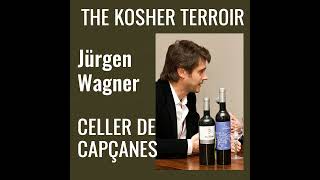
In this episode of The Kosher Terroir, host Simon Jacob interviews Jürgen Wagner, winemaker and export director of the Capsanes cooperative in Priorat/Montsant, Catalonia. Wagner recounts the cooperative’s origins in 1933, its early years as a bulk wine producer, and the crisis of the mid‑1990s when larger wineries stopped buying their bulk wine. Seeking a lifeline, Capsanes answered a request from the Barcelona rabbi for a Spanish kosher wine, launching the 1995 "Peres Habib" bottling. The kosher launch earned critical acclaim, catapulting the cooperative onto the national and international stage and prompting the development of a non‑kosher premium range. Wagner explains the cooperative’s ownership model (55 farmer‑owners, 18 staff), the point‑based incentive system that rewards growers for quality and organic practices, and the unique 110‑115‑year‑old bush Grenache vines that yield low‑quantity, high‑concentration fruit. He details kosher winemaking at Capsanes: a sealed “winery‑in‑a‑winery” area, exclusive use of free‑run juice, avoidance of animal‑derived fining agents, no fertilizer, natural yeasts, and minimal intervention, which also aligns with vegan trends. The conversation moves to export operations (60+ countries, 600,000 bottles annually, 15% kosher), market surprises (e.g., Maldives, Caribbean, Thailand), and the cooperative’s signature “Nights of Grenache” events that compare the same varietal from four distinct soils. Wagner concludes with reflections on future challenges—climate change, extreme weather, and the need for vineyard innovation—while emphasizing that growth will focus on reputation and quality rather than volume. The interview blends historical narrative, technical insight, and strategic outlook, illustrating how a modest cooperative leveraged kosher production to reinvent itself.
Chapters
Welcome to The Kosher Terroir. I'm Simon Jacob, your host for this episode from Jerusalem.
Welcome back to The Kosher Terroir, where we uncover the stories behind the wines shaping today's world of taste and tradition. In this episode, We head to the rugged hills of Montserrat, Spain, where a small cooperative of just 5 families grew into one of the most dynamic wineries in Europe, Capsanas. At the heart of this transformation is winemaker and export director Jürgen Wagner, a German-born visionary who brought precision and passion to Cantalonia's old vines. Together, we'll explore how a request for a kosher wine in 1995 sparked a revolution, how terroir speaks through ancient Grenache vines, and what it means to balance tradition, innovation, and faith in every bottle. If you're driving in your car, please focus on the road ahead. If you're relaxing at home, Or if you're in your Tesla on FSD, pour a glass of wonderful kosher wine, relax, enjoy, and get ready to taste history, culture, character, all poured into one glass.
Jürgen, welcome to the Kosher Terroir. Thank you very much for agreeing to be on the podcast.
Thank you so much for having me on your podcast. I feel very honored. Thank you.
My pleasure.
And it's my honor. Thank you.
So tell me a little bit about your origin. How did you get into wine?
Where are you from and how did you get into wine?
Yeah, originally I'm from Heidelberg, from Germany. So I started winemaking in the early '90s. And I'm not at all from the wine industry, so I'm an outsider. I'm— none of my family was ever involved in the wine business. And this was also my— somehow it was an advantage for me because after my studies I had the chance to do whatever I wanted to do. And yeah, so I ended up in Spain.
What did you study? What was it? What was your major?
I started actually winemaking at the university in Geisenheim in Germany. So it's the main place for winemakers. And in my third year, my fourth year, I got the opportunity to go to Spain. So I got a scholarship for Spain and I was for one year, I was halfway Barcelona and half time Barcelona and half time Tarragona in Catalunya in northeast of Spain at the university over there too.
So how did you end up in Cap Sanes?
Once, once I decided to stay in Spain, you can imagine I was non-experienced. I was young and I was a foreigner. Nobody, the world was not really looking for me, so I took every opportunity I had. And so I did lots of little part-time jobs, and I worked also in— I did lots of stages, I did lots of training programs at different wineries. And at one of those wineries, by the way, one really famous one, Clos Erasmus in Priorat, I met the owner. And Daphne, the owner, is married to an American importer. And this American importer so far only imported French wines, and his goal was to build up a Spanish portfolio as well. And he looked for a wine scout, for somebody looking for Spanish wines. So this was one of my first serious jobs in Spain. And yeah, in that position, I heard about Cappsana, fall in love with our wines, and 3, 4 years later, they made me an offer to become become part of Capsanis.
So your role at Capsanis now is what?
It's a small company. We are, we are 18, 18 in the team. When we started, there were only 5 of us, so we did everything. I was also part of the winemaking team. I was the only one with some experience from abroad, also from different winemaking views. So yeah, so I was pretty much in, in, in creating new wines and opening and pocket, widening pocket, our portfolio, winemaking our portfolio. So I was at the beginning, I was pretty much in the cellar, and then the more wine we did and the more wine we produced, the more market we needed and the more customers we needed. And yeah, languages is not really the strength of our team, so I was more and more, yeah, told also to take over the foreign markets, so the export. But today Yeah, so today I'm in charge of export. We export to, yeah, to 60 countries around the world. Wow. And, and yeah, I'm also doing the marketing, the communication, but also in charge of new wines. In, in the mountain, there's very little, there's very little input, whatever is happening out there in, in the world. It's that easy. By traveling, you know new things, and with all this new input, yeah, we are constantly changing and adding, yeah, our range, our portfolio.
I guess because since you're the export manager, you're the one who's dealing with the world at large and giving, getting, receiving feedback and giving feedback to the team there.
Yeah.
So that's a pivotal place to be within a seller.
It's very important for me. This is one of the, one of the, yeah, one of the most important positions because once you're out on the market, you get the good, but you also get the bad. You have to be very open and you have to accept critic and whatever happens, it is my job to bring this message to the team and yeah, to grow together with all these new, yeah, new information.
Tell me a little bit about Capsanis as a whole and the cooperative that goes back to, I think it's 1933? Is the origin?
Yes.
Origin.
Yes, that's right. From '33. As you just said, Capsanes, it's a cooperative. So a cooperative means we don't have just one single owner or several. We have, in our case, we have 55 owners. The owners are the viticultures, the vine growers, the grape growers. And so the whole place is owned by the farmers. And in the team, we are 18 in the cellar itself in charge of the winemaking. So the farmers, they do what they can do best, which is the vineyard work. But in the cellar itself, and when it comes to the business, we are all professionals, and there's a different team involved.
Wow. In that, isn't that— sounds like it's difficult because you've got all of these farmers growing whatever they grow. How do you pick between— how do you rate quality and how does everybody end up sharing properly within that? It must be a difficult task.
Let's call it challenging. Yeah.
Okay. It is a challenge.
Yeah. Yeah. Kapsanis, it's the name of the winery, but it's also the name of the village.
Yeah.
So in the village itself, we are 400 farmers. Sorry, we are 400 people. We, it's a tiny place. There are only 400 people living and most of the families, they're shareholders of the company. So we're 55 farmers, 55 families, let's put it that way, and 400 people. So in Israel you have kibbutz. Yeah. So a cooperative, it's not exactly the same, but I guess some of the challenges are pretty much the same. So what happens in the cooperative is, it is very important to guide, to guideline the farmers. You need to have a very clear philosophy, you need a very clear strategy. And so what we do have, we have a vineyard control manager employed by the cooperative. So it's a colleague of mine, and he's taking care of looking over all the farmers. So Juan, he's taking care of analysis of of the soils, of fertilizing, of pruning, of which products can be used in the vineyard. So we do everything, but the hands-on people are the people who are actually doing the work, are the farmers. So they have to follow our instruction. But of course, you can imagine, 55, not everybody is willing to listen, and not everybody is able to listen. And so of course we can't force them, but we can, we can give them some extras. So if They listen, they get with something like a point system. So the more they listen and the more they follow our instructions, the more points they get. And the higher the prices are, we pay their crepes. For example, we do, we give lessons, we give just like a team building program, etc. So when you follow those, when you participate in those programs, you get some extra scores. You get some extra points. When you, for example, when you take part in the— we have an organic program where all the organic farmers, all the organic vineyards are, you also get some extra points. And yeah, to give you an idea, the farmers who don't listen and the quality we like less, and so let's put it the minimum, the lowest price per kilogram of grapes is around €0.50, €0.60 per kilo. At the high end, 100-year-old bush wines, now for our La Fleur old wines Grenache, we pay up to €5 per kilogramme.
That is a huge difference.
So it's 10 times. Yeah. So that's, I mean, it's that simple, but we are all humans. This is by far, it's the most, it's the strongest motivation system which exists. Yep.
Wow. Crystal clear.
All right. Yes. At the other side, you should also keep in mind that it's a community, so it's the village and they've been together to kindergarten. They went together to school. So all of the families, they know each other. And I like to call our cooperative with 55 farmers, it's a bit like two school classes. And in a school class, you have every kind of person. You have them 3, 4, 5 times. Yeah, so you have the clever one, you have the one you can trust on, and you have the one you should never trust. And we have all of them, we have them whatever, 6, 7, 8 times. So we know each other perfectly. The farmers, they know each other, who you should be a little bit more, yeah, care, taking care of, and the others you can 100% trust on. So that, that's also very helpful.
Very cool.
Very cool. So, tell me a little bit about how Capsanis ended up being in the kosher wine business. What motivated that? How did that come about?
Vines were grown in our area for 700, 800 years. Everything started in 1933, but the first 50 years of our business, the first 40 years of our business, we only did bulk wine. We only did tank wine. Yeah, meaning at our property we never bottled our wine. We sold it off to third parties in bulk, in, on, on big trucks, in big tanks. It was sold mainly to Tarragona and to, to Barcelona, and in the cities you had major bottling facilities and they bottled wine with their own labels. And you can imagine all the markup, all the benefit was on their side. So this was our business until the mid-'80s when Spain Spain became part of the European community, of the European Union, in the beginning of the '80s, the mid of the '80s. Spain changed completely. Suddenly you had lots of new facilities coming to Spain, lots of money, lots of knowledge. First people left the country to study abroad. The whole wine industry was changing pretty much. And the first people who introduced, mainly from France, the new winemaking technique where all the big players around Barcelona. And those big players used to be our bulk wine producers, but in '80, '85, when they introduced stainless steel facilities and nitrogen-covered facilities, temperature-controlled winemaking, everything what you need to make high-end, to make much better wines, when they introduced these new facilities to Barcelona, They decided not to buy any more bulk wine from us, so unbottled wine, but they decided to buy our grapes because in their understanding they preferred to vinify our grapes in their new facilities under much better conditions. So from '85 to '92, '93, '94, the worst happened what can happen to a winery, bulk wine producer. You can imagine bulk wine producer socially-wise, you're already at a very low level, but when when you are suddenly declassified to become only a grape supplier. Yeah, yeah, that's the lowest level.
The worst.
Yes, it's definitely the worst. So you can imagine, from '85 to '95, the whole facility, our winery, yeah, was run by 2 persons, and they only worked 6 weeks a year during the grape harvest, after grape harvest, just to wait the grapes and to put it on the truck and to send the trucks to Barcelona.
Wow.
So that was our business still until '92, '90, 1902, 1993. And then something happened what really nobody expected. The area we are located, it's called Priorat-Monsant, and this area nowadays in Spain, it's one of the hippest, one of the, one of the of the high-end quality wine growing areas. In the beginning of the '90s, in that area, you had lots of young people around, and those young people started to make wines in different ways, much more in a Northern European way, with less oak, with more fruit, much more concentrated, much more complex, but a completely different identity compared to the old school of Spanish winemaking. In the old days in Spain, everything Everything was put for a very long time in old barrels, and you had these oxidized raisin, fig flavors on top of everything. But this new generation, they wanted to go for fresh fruit. Yeah. Yeah. And those first wineries in Montsant-Priorat, suddenly they put Spain really internationally on the wine map. Those wines, they became stars. And when our former bulk wine and grapes buyers saw that in our area something is happening with the business vision. They thought that bulk wine buying is already clever, but grape buying is even more clever. But the best is if you still buy all the land until before the prices are going up and to grow your own, your own grapes, your own vineyards. And so in '94, '95, the one and only customer we had for grapes and for bulk wine, suddenly we saw him buying vineyards in our mountains. And of course, you can imagine, our only customer suddenly decided to become— to farm his own vineyards, and then it was just a question of time that he wouldn't need us anymore as a grape supplier. Yeah. So we were really in a dangerous moment, in a very difficult, very dangerous moment. And we looked desperately in '95 for an alternative market to become independent from him. And the most bizarre, the strangest idea, definitely the strangest idea we had was listening to the rabbi in Barcelona, because in '95 there was no kosher wine made in Spain. And the rabbi in Barcelona, he was forced to buy the kosher wine from the French. And you can imagine the Spanish rabbi had to buy the wine from the French, which is from France, which is not really ideal for the Spanish people. He was looking for somebody doing kosher wines in Spain, and by chance he met our former president of the cooperative, and he convinced Francisco, our farmer, to, to go for kosher. Yeah. So in '95, we did our first Perah HaBit, And the great thing is that the second vintage of our first Pere Xabib, it was actually the first bottle wine we ever did, yeah? So the second vintage, the '96 vintage, got reviewed by José Penín, who's the most influential wine writer. He's the big wine guide in Spain, yeah? Behind Pingus and La Mita, to become the third highest scored wine at all in Spain, yeah, being kosher or non-kosher, yeah. So from one day to the other, suddenly we were put on the map, and our Pere Xabib was considered to be the third highest scored wine at all in Spain. And just to give you an idea, the Pingus nowadays, Pingus costs you whatever, €1,000 or €1,200 a bottle. Lamita should be around anything, whatever, €600, €700, €800 a bottle. And then on the third place You had our Perihabib. Wow. And this was just the year when I started to work for this American importer I explained to you earlier, looking for Spanish wines. And I heard about, I read about this kosher wine in the press. I didn't know Capsanis, and I had, I've never had in my life kosher before. Definitely it awoke my own curiosity. So I came to Capsanis taste the Peresh Habib, the first kosher wine, fall in love with the kosher wine. Yeah. And based on this kosher bottled wine, we decided to build up a non-kosher wine range. Yeah. So the story of Capsanis is a bulk wine producer became a grape supplier, then a kosher bottled wine producer, And finally, a non-kosher bottle wine producer.
Wow.
In Capsanis, there is not one single Jew living. There's not one single Jewish dollar invested in the company. Yeah. So the Catholic narrow-minded mountain farmers invested their own money in the kosher winemaking to become independent from the grape and the bulk wine sells. And then a German winemaker comes, tastes the kosher wine, and based on the kosher wine, we decided to make non-kosher bottled wines. So it's a really bizarre story. It really is.
Yeah, I don't know how you get there from here. It's really amazing. It's an amazing story.
Amazing story.
You can't, you can't make it up, but that story is Yes, yeah. These kind of stories only life itself can write.
Can create. So tell me, kosher winemaking, what's different about the process with non-kosher winemaking?
Yeah, maybe first of all, there's something very curious. I'm not Jewish, I'm not involved in, I'm not familiar, nowadays I am, but I was not familiar with kosher at all.
Yeah.
But from the very first moment, there's a big difference the way we focused kosher and the way you look at kosher. When you look at the old, when you look at the first Peresh Habib from '95, '96, '97 on the first labels, you would be scared. You would be, you would laugh about us because on that first kosher labels, on very big letter on the front label, we wrote for Pesach kosher wine in very big letters. And whenever Jews see those old labels, it looks ridiculous in your eyes, yeah, because it even looks cheap, yeah. But in my world, in our world, in the non-Jewish world, all those Hebrew letters, they evoke a lot of curiosity. Just the other way happened. So everybody wanted to know, oh, what's the story? What's about kosher? Tell me what it's— yeah, the history and why they do it, whatever. So we You, in my experience, you always hide the fact that it's kosher, and we do just the opposite. We shout out to the world that it's kosher. Yeah, yeah. And in the non-kosher world, this, this really opened— it was for us, it was even, it was even like, like PR. Yeah, like public relations. For me, for me, and maybe I'm not— I'm very sorry, and there must— there might be something which are not going to be 100% correct, but the way I learned it and the way I was taught by rabbis. And for me, I mean, in the kosher world, I like to explain that there are two lines you have to follow. One, one line is the religious purity, yeah, the religious part, religious aspect. And on the other side, you have the food and beverage aspect. When it comes to the religious part, everything has to be done under the supervision of the rabbi. So whenever the rabbi is not there, I like to call it, it's like a winery in the winery. Because the difference in Capsanis is in most other places around the world, 100% of the winery is kosher. In our place, 20% of the winery is kosher and 80% of the winery is non-kosher. Yeah. Which makes it much more complicated. So in our case, the kosher part, it's sealed. It's not only the rabbi has the key to this facility. So it's like a winery in the winery. It's completely hermetically closed. Yeah.
Got it.
To guarantee that only observing Jews get access to— only the rabbi and his team get access to the wine. We keep this, we keep it with a lot of respect. And then this is for me, this is for me very important. We should be respectful with everybody's religious beliefs. For me, there's this religious part, but of course this does not change anything on the wine. There's no difference if the rabbi is doing it or if we do it. If they do the hands-on work or if we do it. As long As long as the rabbi is trained into winemaking, yeah. Yeah.
The process is not any different between the two, between him carrying out your instructions and what you're doing.
Exactly. Frankly, I like to say there's no reason why kosher has to be bad. Yeah. There are many reasons why kosher can be bad, but there's no reason why kosher has to be bad. Okay? So, that's the religious part. For me as a winemaker, the other part is the interesting one, because the kosher law, it's thousands of years old. And nowadays in the non-kosher world, we are more, much more into natural and sustainable, and we are going back to the roots. Yeah, we are more and more into minimalism. We are more and more doing, thinking that the less you do, the more you get out of the grapes. Yeah. Yeah.
Okay.
So when it comes to the kosher, for example, we don't use fertilizer in the vineyard, yeah? Because the fertilizer in the old days, the older fertilizer which existed in the old days used to be the excrements, the excrements of animals. And of course, when you bring them out to the vineyard and you walk and you work the vineyard, you run the risk to bring back home the fecal bacteria. And this is something which can, you can become ill and worst case, you can even die of those bacteria. Not to use the fertilizer, you reduce the yield, but the little fruit you obtain is much more concentrated. Yeah, so this is for us one of the first major goals. We try to work with the lowest yield at all possible in the vine. Yeah, just to give an idea, when you fertilize and when you irrigate the vineyards and you do intense viticulture, you can do anything up to 15, 18,000 kilos per hectare theoretically. Yeah. In Capsanes, in our old vines, we do roughly 1,800 to 3,000 kilograms per hectare. We do very little, but that's the start of everything. So the low yield. And then second, and whenever I talk about those laws, we talk about the, I mean, about the origin. There have been some changes in the last decades. For example, in the old days, whenever you do winemaking, you need yeast to ferment sugar into alcohol. Yeah, then you need bacterias to convert certain acidities in other acidities to make the wine smoother. And then you need enzymes to extract the color out of the skins. And all of those, the yeast, the bacterias, the enzymes, you can find them naturally. They're out there in the vineyard on the berry skins, they're out there. Yeah, but you— but the problem of those ones, of those natural ones, they do whatever they want to do. Sometimes they are very high-end, but sometimes they can also mess it up. Yeah, you move much more in the extremes. Okay, but the good thing of those natural ones, at Capsalis we only have ours. Yeah, so we don't you have your own identity. Nobody else, even your neighbors, they have other yeasts. Yeah, so this gives nature proper identity to your wines. Nowadays in the non-kosher world, nowadays in winemaking generally, you can get all those bacteria and all those enzymes and yeasts. You can also find industrial ones. Yeah, yeah. If you use those, they do a very good job, they make very clean wines, but by the end what happens? Everything tastes like the Yeah, so that's another major aspect we follow. And then another one, and this might be a little bit, yeah, maybe even a little bit scary for you. In winemaking, there are certain methods we can use to clean wines from certain flavors and taste and colors which we don't like. And this method, yeah, we use it, we use them, fining. —It's called fining. —So, it's called that. What we do is, we try to make something nice, what was ugly, by these fining methods. The way it happens is, you take a product, you put it in the wine, and this product acts like a sponge and absorbs all the flavors and the tastes and the particles, and it even takes out certain colors which you don't like. The problem is, and then you filter it, the wine, so you take these materials out. The problem is all those fining materials which are used in winemaking, unfortunately they're based on milk, fish, and meat derivatives. And of course in the kosher world, as the wine has to be kosher, you're not allowed to use any of those fining materials in kosher winemaking. It's completely forbidden because otherwise the wine wouldn't be kosher anymore. Or gelatine, which you get out of meat and bones, or fishtail, or casein from milk. You can't use any of that in the kosher winemaking process. If you don't use those products, a law which is thousands of years old nowadays becomes very trendy, because once you avoid all those findings on animal origins, Yeah, these wines are called vegan. Yeah, so whenever a wine becomes vegan, it is by the end kosher. It's almost vegan if you also avoid egg whites in the winemaking, which we don't do at all at Cap Salines in none of our wines. And to make a long story short, the kosher— the fining, the problem of fining, whenever you fine a wine is you always take out the bad, but you also take out part of the good. So you also lose part of the flavor and of the taste. Our wines are not fined, yeah, they're only slightly filtered, but they are not fined, very long skin contact, only natural yeast, etc., etc., no fertilizer, very low yield. So somehow we try to make our wines like in the old days, yeah. But But with the hygiene and with the winemaking skills, with the knowledge from today. Yeah. And that's definitely part of the quality of Copsalis.
Is there something that you need to do to avoid those negative tastes and what have you? So you don't have— so it's not requiring you to fine it? Are there things that you can do that get you into a better position with the actual juice that's coming out?
Yeah, there are lots of things you can do, lots of things. First of all, a big difference between us and many other wineries, I mean, in the US and also in Israel, we own our own vineyards and we work our own vineyards. We don't buy any grapes at all, so we only work our own land. Yeah, got it. Meaning we are very on top of the, of the yield. We work with very low yield And everything we do, it's 100% hand-picked. It's 100% hand-picked in small volume. And when the fruit itself is already high-end, you don't— lots of the problems, you bring it in when the fruit is not 100% at a good level. Okay, so that's the first. Then the second is most of the fining materials, you use it to take out tannins, to take out this bitterness. Yeah, and the bitterness, usually you get it when you either work with too much skin contact, which I think is one of— is a major problem generally in the wine industry. People try to make wines the bolder the better, yeah? The bigger, the bolder, the darker, the better. But when you work with too much skin contact, you get the problem that you have the problem that you also, you not only extract color, you also extract a lot of tannins and a lot of bitterness out of the skins. And this needs to be fined afterwards to smooth smooth it again. So this is something you should very much keep in mind. And then the major reason, and this is actually something we were obliged to do because there was no alternative, after maceration of the skins for red winemaking, after whatever, a week, 2 weeks, 3 weeks, 4 weeks, usually you take first the free-run jus, and then there's still a lot of wine left in the berries, and this is put on the press, and then you press it. And at that moment, you can still get a lot of wine out of those residual grapes. Yeah, the problem is in this you have a major content of tannins. Yeah, at our property, we only have one press. A press is a tank unit, and inside in this tank unit, you have a blast sack, you have a plastic, yeah? And under pressure, you inflate this plastic unit, and that's the way how you get out of the skins. We are not allowed to use this press for kosher and for non-kosher, yeah? Because this plastic sack, it can't be sterilized, it can't be cleaned 100%, meaning we never use at Capsanis press wine for any of our wines. So at Capsanis, we only use 100% of free-run juice. And that's by the end a major issue because all the rough part, we don't put it into the kosher. So what we do is once we take the free-run juice, the first quality, yeah, out of the tank for the kosher wine, the remaining part Of course, we put it on the press, but then of course it's not kosher anymore. And this one, we use it for— I mean, it might sound a bit strange, but then we use it for our local farmers, for our local consumption. And we put it on the press and we press it very hard because this one, it's rustic, it's robust, it's black, it's tannic. It's— yeah, but this is exactly the style of wine our farmers particularly the older generation, is used to drink from the old days. This was the way how wines used to be made in, in the old days. So for kosher, we only take the high-end free-run juice, and of the same grapes, what's remaining, we use— we, we declassify, then it's not kosher anymore. Wow.
So that's so funny. You really educated me as well, because I always I thought that fining was just simply a means of filtration. I didn't realize— I thought it was trying to get particulates out, but I didn't realize that was also removing taste and other things that you didn't want, or color. It's—
yeah, there's one major difference. There's the difference between filtration and fining is by filtration you, you take out some major particles, and by, by fining, you can reach the next level. You can take out by absorbing much smaller particles, much more into taste, flavors, and colors. So fining is much more— there's a much bigger impact on fining than on filtration.
Wow, amazing. Okay, so that, that— you educated me with that one. Nick, I have another question. Let's talk a little bit about the vineyards and especially the old vines, which Capsanis is famous for its old Grenache vines. Can you tell me a little bit?
Yeah. At Capsanis, all over Europe, we had phylloxera. Yeah. This little insect which destroyed all the vineyards, which destroyed all the vineyards, which destroyed all the vineyards 100 years ago. And after phylloxera, the vines were replanted. And we are in the privileged situation that at Capsanas nowadays we still have 110, 115-year-old bush vines. It's incredible, but this is simply given to the fact that the southern part of Catalonia, where we are in the mountains, this was always considered to be one of the poorest areas in Spain. So those mountain farmers they could never afford to take the vines out and to replant it because when you replant it, a vineyard needs 3, 4 years to reestablish. So it was really sad for the farmers during decades because they saw the yield going down year by year. But nowadays, for us, this is like paradise on earth. We have lots of old vines. And when you talk about old vines, you have— they look like bonsai trees, yeah, those old vines. And you have very little yield, you have just a couple or 3 berry grapes, and the berries are much smaller, they're much thicker skinned, yeah, they're much more concentrated, the yield is lower. And also what happened in those old vineyards over the decades, only the best vines survived. So when you have little plots, a vineyard is never the same all over the same parcel. So sometimes you have some parcels that are better, you have something in the soil, there might be some rocks or whatever. And so over the years, only the best vines survived. So you have the best vines and you have the lowest yield. This combination makes it.
Wow.
Okay. So tell me a little bit about the kosher wines that you make. Pierre Habib is, it was your kosher flagship at one time. Now it's not. But tell me a little bit about the different varieties that you, you make.
Yeah, Pierre Habib was the first kosher and for many years the only kosher wine we did. Okay, and you can imagine in 1995 telling the kosher story, we, we made a lot of noise, and the people, they wanted to taste something, they expected to taste something different. They wanted to be, wow, they tell a lot, so the wine must be amazing. Yeah, and for that reason we decided to make it in the loudest possible way to make a noisy wine. In Pére Chabib, we have Cabernet Sauvignon, we have Carignan, so those two, they're more at the black fruits, a lot of backbone, a bit higher in tannins, a bit higher in acidity, but definitely more at the small black fruit side. And then we add one-third of Grenache, which is the beauty, which I like to call her the queen. Yeah, so she she's civilizing somehow the two masculine parts. So this was the way we started in '95. But we talk about 30 years, actually this year is our 30th year of kosher winemaking. Wow. We are not Jewish, we are not in the Jewish community, but we might be one of the oldest kosher winemakers. I mean, it's—
Kosher, definitely one of the oldest quality.
Kosher quality winemakers, of course, winemakers, bottle kosher winemakers. Yeah, yeah, yeah. The first years, the Perrage Habib, it's not terribly expensive, but it has a certain price point, yeah. And not everybody can afford that price point. So in 2004, 2005, 2006, we decided to make a baby Perrage. We call it Perrage Petita, also to, yeah, to make wine for in between the week, for all days, and also for everybody. This, the cost price of Perrage Petita, it's It's definitely a different level. And Perespetita, it has shorter skin contact, younger vines. It's partly aged in barrel, but it's also partly aged in tank. So it's a bit more fresh fruity and a bit more— it's more easy wine drinking. It's the same varietals? No, there's no Cab. There's also a little Syrah, Merlot. So it's a bit more red fruit forward looking. It's a bit more peely. Yeah, yeah, okay. And then in '95, the kosher wine world— I mean, it— I mean, the kosher quality wine world did not exist. There was hardly— there were— there was very little, very little demand for high-end kosher wines. But this changed a lot in the last, I would say, in the last 15, 20 years. Now you have nerds in the Jewish world, they go mad for high-end wines. They're— this nowadays, I think the kosher and the non-kosher wine world is getting closer and closer. In 2010, 2011, 2012, we decided to put something on top of Péra Shabib to widen, to, yeah, to give, yeah, to show what we are able to do in the non-kosher wines, to bring it, to bring this also to the kosher world. And then we did 100 years old Bushel wines, Grenache, La Fleur de Flore, and we also did one small plot of 100 Years of Bushwines Carignena, which we in Spain, we call Carignena Samso. Yeah. And so Samso and Carignena is exactly the same. By the way, maybe you already knew this, but in Catalonia, Carignena is Samso. And in Hebrew, Samso, Samson is Shimshon. Yes. Yeah. And when you look at Carignena, at the varietal, it's black, masculine, robust, rustic. It's the big masculine muscular guy. Actually, the varietal Samso Carignena, it's a bit like Shimshon. Wow. So it's very curious that there are certain— yeah. Wow. Yeah. And then a few years ago, we made also this This was very tricky because red winemaking with certain skin contact, it's a bit more easy when it comes to kosher because we have one big challenging factor. We have one big challenge. Harvest, grape harvest in our area usually is during the whole month of September. And the whole month of September you have lots of holidays. You have lots of true religious holidays. When it comes to red wine, if the wine is a day less or a day more on the skins, it doesn't really make a very big difference. Yeah, but in 2020, more or less, we decided to make first also a rosé and then second also white wine. Here you have to be very precise, you have to be on top on the day And so since 2020, we also have a white Perespetita and the rose Perespetita. And since this year, and this is brand new, it's not even on the market, it's already bottled, but it's not yet, not on the American market, but also not on the Israel market, but it will be released soon. We make Flor de Primavera, we make an old wines white Grenache. Wow, I'm looking forward to that. And this is— I love it, it's amazing. It tastes like a high-end Northern French. Yeah, you have a beautiful freshness, you have— it's amazing. It's like a Sancerre, it's like a Sancerre, crisp, fresh, with a little hint of oak. And so that's the— that's a new addition which is coming up Looking forward to that.
Very much looking forward to that. Wow. Very cool. Tell me a little bit. I got interested and I know it's not, it really has nothing to do with the kosher market, but I love the idea of your Nights of Grenacha. It's just such an interesting idea. And could you tell me a little bit more about it? I just thought it was so special.
Yeah, you can imagine in 1995 when I came to Capsanis the first time and in the cellar we were all young, we were all inexperienced. By the way, we had no idea, we were starters. Yeah, yeah. And so what we did is we constantly met other winemakers from the area and there was a very big, yeah, like a bit like a trainee program. We learned from them, they learned from us, we exchanged all our our experiences. So in around 2000, we started to establish, at the very first beginning was just for winemakers, a little come-together. And after a few years, this come-together was converted into a party. So we started with 5, 6, after 2 years we were 20, then we were suddenly 200, and after 5 years we were 1,000. And we opened the party also to wine lovers, to trade, to sommeliers, but also to wine lovers. And we opened the cellar on the Friday night before the 1st of May, which is a holiday in Spain. So on that Friday night, we opened the cellar at 11 PM and we made party until 3 AM. Yeah, and we had live music and we always invited some other wineries and on that night we always showed 4 Ganachas, so 4 different vinifications of the variety of Ganachas, and the only difference of those 4 Ganachas is that each of it came from a different soil. So the vineyard, the vines were planted on a different soil. So one Ganacha was planted on sand, The Adaganatscha vineyard was planted on limestone, on clay soil, and on slate soil. And the same varietal, the same winemaking, but from 4 different soils, the wines taste completely different. Yeah. And during that night of Grenache, this during the party, we always had 2 2 one-star Michelin restaurants at our property, and they made the finger food for those ganachas. This was really, this was a very top event.
I love that idea because it makes it, it really exposes people to what the differences of terroir are, what the difference is in soil. It's not, it's hard to describe these things. Sometimes wine they're extremely minerally and what have you, and they're wonderful, but it really gives you, when you're tasting things next to each other, it allows you to really compare even down to very precise little nuances between them. It must be amazing.
Yeah, no, it is. It's, yeah, who knows, maybe one day we are able to do something like that in the kosher as well. Yeah. The problem is the lots are tiny. I mean, we do 2,000, 2,500 bottles per each lot. And with the rabbi and with the additional challenge of the dates during September, it's— but it would be really— it's an eye-opener. It's an eye-opener.
Yeah, I think it's just incredibly special to be able to compare wines that way. Yeah, it's fantastic. Yeah, it is. Yeah. Tell me a little bit about since you're in charge of exports, which markets, have you been surprised by any specific markets? Are you always looking for new markets or are there certain markets that are just exceptional? And does the kosher help you in export markets?
Yeah, it's, I mean, it's a strange time we live in. Wherever you look in the world, it's not easy. It's not really a nice time. And so there are challenges And there's also sadness around the world, wherever you go. And so in the wine industry right now, it's, I would say it's not one of the easiest times we faced. We are, thanks God, we positioned ourselves in over 60 countries. So we have our established network, we have our established distribution system, at least the kosher distribution, it's still growing and we're still adding new countries. In the non-kosher world, it's going a little bit in the wrong direction. In the— what's, for example, a very nice example is as a Spanish wine, we are one of many. Yeah. But as a Spanish kosher wine, at that quality level, we are one of very few, right? And just the fact that, I mean, you travel a lot, Jewish people travel a lot, there's a lot of Jewish and kosher tourism. Yeah, we, I mean, we, for example, we sell our kosher wine, we sell Pereshat to the Maldives. Yeah, wow. Because during Pesach, when certain islands are converted, when they take over the whole kitchen, so we do Argentina, we do Brazil, we do Panama, we do Puerto Rico, we We do lots of Caribbean islands. And so this is also very good. Vietnam, we just opened Thailand. There's lots of, lots of small markets still waiting for kosher wines.
How many? What's your volume? What's your volume that you actually produce? All in all, we do.
Yeah, no, there are no secrets. All in all, we do 600,000 bottles. Okay. And 100,000, roughly 90,000 are kosher. So 15% is kosher. And 85% is non-kosher. Wow.
Yeah. I had one— I had just a couple of—
a couple more questions. One is innovation, experimentation. Is there— are there things that you're doing now that are new that you're looking to towards the future at Kepsanis?
New varietals or new?
No, I think the challenge for the future is not that much in the winemaking. We might, we might use more and more things from the non-kosher world and move it also to the kosher wines. There might be some additions, but which is not actually that new to us because the non-kosher world, everything started much earlier. But I think that the major work we have is, I mean, by far is in the vineyard because global warming is a big issue. And we are facing more and more weather extremes. We are facing heat waves. We're facing heavy rainfalls. We are facing dry periods of 4 months during summer. In Israel, you're amazing when it comes to viticulture and to agriculture. In the vineyard itself, you are ahead of the whole world for, by decades. But there's no question the irrigation and fertilization in agriculture and whatever, you have so much knowledge out there. And so we have to learn still in the vineyard to face this global warming issue here.
Looking ahead, where do you see as the future for Cap San In 5 years, 10 years, 20 years, is there a goal to grow it bigger than what you have it, to double its size, or improve quality and keep it the same size?
Nowadays we should be realistic. I'm sure there's no— there might be some exceptions, yeah, but the overall wine consumption is going back, is going down. I guess most people are not into growing, into planting more and more. It's more about positioning and it's more about taking care of your customers, building up the reputation and yeah, to strengthen your position. And that's the major goal and that's, yeah, that's our, that's the job we have to do and we're looking forward to. Yeah.
Thank you very much for all the time time. I really loved speaking to you, and, and I really thank you very much for being on the Kosher Terroir. Jürgen, no, thank you.
Thanks a lot. Thanks a lot. And please, one last word. Yes, anything. Whoever wants to come and visit and live our experience, yeah, please, please check our website, and on, on the website you find the contact details. And just look for my name, for Jürgen, and send me, drop me an email and we will find a way to, to, yeah, to bring Capsanis to you. Yeah, I really visit us.
Yeah, I really look forward to coming to visit. I really look forward myself to coming to visit, and, and I'll make sure that the contact information is on the podcast as well.
And that brings us to the end of our journey through Montserrat with Jürgen Wagner and the remarkable story of Capsanis. From humble beginnings as a small cooperative to producing world-class kosher wines, their story reminds us how tradition, innovation, and sheer human dedication can shape what we taste in a glass. If you've enjoyed this episode, Don't stop here. There are more vineyards to walk, more voices to hear, and more stories waiting to be poured. Be sure to subscribe, revisit past episodes, and share the Kosher Terroir with fellow wine lovers. And stay tuned, because next time we'll be opening yet another bottle filled with history, culture, and discovery. Until then, keep exploring, keep sipping, and Remember, every bottle has a story, and every story is worth savoring. This is Simon Jacob again, your host of today's episode of The Kosher Terroir. I have a personal request. No matter where you are, or where you live, please take a moment to pray for our soldiers' safety and the safe and rapid return of our hostages.










