Cultivating Dreams at HaSela Winery Amidst the Clutches of War
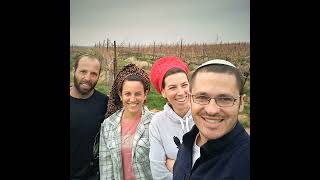
The episode of The Kosher Teruah, hosted by Simon Jacob, records two on‑site conversations (January 9 2024 and March 3 2024) with Yoni Glustein, his partner Eitan Lachs, and their families at the HaSela/Yekev Hassalah winery in Gush Etzion. The first interview captures how the wives, Neta and other family members, kept the winery operating while their husbands served on the front lines after the October 7 war. They describe the harvest, fermentation, barrel work, and the logistical help from reservist soldiers. The second interview, after the men’s return, explores the founders’ backgrounds, why they chose winemaking, the evolution from selling grapes to producing their own boutique kosher wines, and the specifics of their vineyards (35 dunam Cabernet Sauvignon, 12 dunam Merlot, 7 dunam Petit Verdot). They discuss winemaking partnerships with winemaker Yitzhak Lotan, production volumes (≈34 tons of Cabernet, 3‑4 tons kept for own wine), bottling of 2020‑2023 vintages, and tasting notes. The conversation also covers business challenges—online sales, limited distribution, labor shortages, theft, a viral leaf‑roll disease, and a long‑standing lawsuit over vineyard stakes—alongside future plans: adding Merlot and Petit Verdot, expanding the visitor center, opening a mini‑restaurant, and hosting community events. Throughout, the hosts repeatedly ask listeners to pray for soldiers and hostages, framing the winery’s story as a testament to resilience, community, and the spiritual connection between the land, wine, and biblical prophecy.
Chapters
Welcome to The Kosher Teruah.
I'm Simon Jacob, your host for this episode from Jerusalem. Before we get started, I ask that wherever you are, please take a moment and pray for the safety of our soldiers and the safe return of all of our hostages. The following episode of The Kosher Terroir is an interesting conversation and wine tasting held on two occasions almost two months apart. The first was on January 9th, 2024, three months after the war started on Simchat Torah day, Shabbat October 7th, 2023. I visited the Hasela winery near Arugot Farms, in eastern Gush. With their husbands, Yoni and Eitan, on the northern and southern battlefields, Yeska and Neta were left to manufacture the wine while also caring for the vineyards, as well as feeding and managing all of their children. It was a difficult time for the wives, but they worked diligently to keep the winery going, as well as entertaining guests who wanted to visit, taste, and purchase wine. The second conversation took place on March 3rd, almost 2 months after the first conversation. Yoni and Eitan were back from the war, Yoni at least temporarily, as he has been told to be ready to get called up again in the next few months. We explored how the two men became partners, how and why they decided to focus on winemaking in the first place, and their experience from the battlefield, wondering how the family and the winery would make it through this challenging time. This amazing story was repeated countless times across Israel, with soldiers being called up at a moment's notice in the midst of our festivals, with their partners and spouses stepping up to carry out the double and sometimes even triple load of their day-to-day activities. What an amazing people, what incredible individuals each of them are. If you're commuting in your car, please focus on the road while listening in. If you're at home, please choose a delicious kosher wine, sit back, and join in on this remarkably challenging adventure of defending a country worrying deeply about the safety of your spouses, raising and nurturing children, all while also making wine. So where are we here?
Okay, so you are right next to Ibn Achal.
Okay.
And what you can see from here is the beginning of Midbar Yehuda, Nachala Rukot.
Okay.
Right on the other side is Nachala Rukot, and we are right outside our beautiful winery.
And I'm looking down at a vineyard on one side and a vineyard on the other side. And then over the hill is your bigger vineyard.
Right, right.
As well.
So the other side we have 35 dunam of Cabernet Sauvignon. Here we have Petit Verdot, 7 dunam, and 12 dunam of Merlot.
Very cool.
Altogether about more than 50 dunam, and it's a lot of work.
So welcome to the kosher terroir. That's really what I wanted to say welcome for. We're here at the Hasela winery. The reason— how did it get its name?
Well, when we were walking around and getting to know the area around our house, which is here in Ibi Anakhar, we bumped into the sela, which happened to be a top of a water cave. And—
Yeah, what you call it?
I think a sister—
a cistern.
And yeah, so when we would like do our walks around here and we would come and we'd see like a whole bunch of birds flying out and water and dirt. And that's where our husbands decided to start their winery.
So speaking of your husbands, has the war caused anything? Has the war here caused any issues for you guys? I know I'm actually asking the question, but I super know the answer.
Yeah, well, aside from the sadness and us feeling for everybody whose lives have turned around, our husbands had left that morning, Shabbat morning, straight out of dancing in the shul to the army, and they haven't been home since. We've been here taking care of the kids and the winery and the wine and the vineyards on our own. Me and Neta, Yoni and Eitan, they are both in the army since. All the events that we had plans on for Acheret Chagim were all canceled.
For the holidays, yes.
And we're here. We're trying to keep the things going even though They're absent right now.
So what does that really mean? I mean, I know they're in Gaza, so the winery just runs by itself, doesn't it? I mean, it's like, what sort of things did you have to do when they left here on that Shabbat morning?
Right, so, Baruch Hashem, we were right after the harvest, so we didn't have to do that on our own, 'cause that's a huge production. It's once a year and it takes, a lot of effort. It's about a week that we harvest the grapes and bring them down into the winery. So that was— that part we did already. And now the next stage was to take care of the wine and turn the grapes from grapes into wine.
Right, the fermentation.
Yeah, each stage has its own unique process that has to be done. So we got our guide from His name is Itzik Lotan, and he tells us what we have to do to make the wine, to produce it. And me and Etta, we do the work. Wow. We take care of it.
So that's punching down the grapes.
So there's the press that we did with the kids.
Oh, that's even more so, the pressing.
Right.
I forgot all about the pressing.
Right. So the pressing is a big thing because we had a few chayalim that came to this area to part of their miluim.
Yes.
And they said, well, your husband's are miluim there and we're doing miluim here and you need some help. So here.
Okay. Very cool.
Yeah. So we had soldiers here helping us move the huge crates of wine and whatever. And we did that part. The press was a big thing and then moving it into the barrels eventually. And we had to 3 weeks after the press, we had to mix the grapes 3 times a day. So we would come here with the kids and open it up and mix it and close it and make sure the temperature and everything's the way it should be.
And wow.
Bechosa Khalila, once again.
So now, now they're in the barrels.
Now.
So, so now at least they're in the barrels.
Right.
Is this still working?
We put them to sleep.
You put them to sleep. So right now they don't take as much daily effort.
Right, right.
Okay.
There are other things that we have to do here as a routine to keep the place going and take care. We have empty barrels that we have to take care of them so that they can be used in the future. We have to take care of them every month. They have to go through things and the vineyards are also, they're now asleep, but soon they're going to be waking up and there's a lot of work to be done.
Yeah, I'm watching.
These vineyards here, this year is going to be our first harvest after 3 years. And there's lots of stuff.
Off the orla.
Yep.
So this will be actually amazing.
So they're young. They're 3 years old and they have to be pulled up. It's called hadlaya.
Yeah.
So we have to do that in the next few months so that when they wake up, everything is ready for them to grow onto.
So it's— I tasted the wine. I tasted the Cabernet from 2020, which was your first year.
Right.
And you made it in Binoun Winery.
Right.
So you used the service winery in Binoun to make it. It's spectacular. It's really, it's delicious. It's just very approachable. It doesn't fight with you. It's just an incredible wine. It's just a delicious wine. And I also tasted the 2022 rosé, which is a lovely wine, which is actually perfect for food. Really, it's got a nice acidity and it'll do great with food. So, Baruch Hashem. So if people want to contact you about the wine.
If you look us up, you can find all the information. Hassela Winery. Yeke Vassela. We're here. Anyone who wants to come to visit and see the place and taste the wine, more than welcome to come. And people get in touch and order wine. We have deliveries all over the country.
People order and they get it to their doorstep and I strongly recommend at least doing that because the wines are delightful. The wines are really delightful. Thank you. Thank you for spending a few minutes with me. Toda. Baruch Hashem.
The following is the second part of the interview, which took place on March 3rd, 2024, several weeks after Yoni had returned from the war.
So welcome to the Kosher Teruah, and you're welcoming me here to Yekev Hassalah.
Yekev Hassalah. That's great.
Tell me your name again.
Yoni Glustein.
Yoni Glustein, pleasure. Simon Jacob.
Pleasure to meet you. So this is the winery itself.
Yep.
Um, we found this cave, uh, it's an ancient water cistern. Cistern, yeah. Um, and apparently it's perfect for making wine and for aging wine. It's cool, there's no air conditioning on now, just cool, just humid.
All your humidity is perfect, perfect for the cork.
Exactly. Here we have right here We monitor the temperature and the humidity. So these are the barrels. Now this is 2023 inside here aging.
Great.
Um, we got some new barrels, some old barrels, going to mix them together. Um, and we're making our rosé still at Binoun Winery. Binoun Winery, um, they're actually kind of teaching us how to make the wine.
Okay, that was one of the questions I was going to ask.
No, no, I'm sure we can sit down.
Yeah, yeah, yeah.
Other questions, but we, our background is, you know, growing the vineyards. We've been doing that for 10 years.
Okay.
We learned a lot about that, but everything has to do with the winemaking, we're rookies, we're just starting. So we took, we said we'll do it properly. We have a winemaker, his name is Yitzhak Lotan, he's Binon's winemaker as well. He comes here and he teaches us everything. We send samples of the wine to him whenever he needs.
So they have a lab, so they analyze everything. Great.
To analyze and do it properly.
Awesome, awesome. So what do you have here that's going percolating at the moment?
So this is our first wine.
Yep, this is what year?
This is 2020.
Okay, that's what I tasted.
This is, is delicious. It's our best wine so far.
It's delicious.
Beginner's luck.
Yeah, no, delicious, delicious.
So we only have like not even, uh, 100 bottles left. We're going to stop selling it in a minute and keep some. Um, today we're— this is 2022, is what we're just going to taste now. Yeah, Cabernet. And we have a rosé. This is the end of the rosé of 2023, and we're going to be bottling our new one real soon, within 2 weeks.
So this is the 2023 rosé, not the 2022 rosé. Sorry, it's the 2022 rosé. Yes, I tasted it and I love it as well. And now you're going to and now we're going to be bottling 2023. No, perfect, perfect. Makes a lot of sense.
Exactly.
Okay, very cool. And these are what?
This is the same, this is the 2022 Cabernet.
Okay, great.
This harvest we're going to be harvesting two new specimens, two new species. We're going to have Merlot.
Varietals.
Varietals, that's what it's called? Yeah, yeah, varieties. My English isn't—
Don't worry, your English is perfect. It's a lot better than my Hebrew, so, Baruch Hashem.
So we're going to have Merlot as well, and some petit verdot, and we'll start doing some blends. So it'll be interesting.
So we got in just in time.
Is that rain?
Yes, I think so.
Oh wow.
I might be wrong, but I'm listening.
Yeah.
And it sounds like it's raining.
Sounds like it's raining. It is. You walk in just in time.
Wow. I made it in just in time. Thank you, Károly Szmárko.
Do you want some water or something to drink?
Actually, I'd like to taste this with you. So do you have another glass?
Sure, sure, sure.
We can do it together.
Sounds good.
Wow. So tell me a little bit about yourself. How did you— you know, it's you and your partner, but tell me how it came about. Where are you from? You're from Israel?
So I was born in Israel, in Jerusalem. My parents are Canadian.
Okay.
So I grew up in an English-speaking house.
Okay.
My wife as well. She was born in Israel. Her parents are from the States.
Yeah.
Also spoke English at home. So we came to Ibe Anakhal in 2012, and I always wanted to do something with agriculture, something, you know, with settling the land. The issue was very small, we were family number 6 at the time. And then I looked for what I can do here agriculturally, and we took samples of the earth, and we checked it out, and we asked around, we asked the kibbutzim in Gush Etzion, They have been growing grapes here for years, and apparently it's an amazing, amazing place to grow grapes. We're at 800 meters above sea level, cool nights, hot days, very dry, perfect for quality grapes. And since at the beginning I thought, all right, so you put the vines in the ground and you add water and they grow. And we realized that it's a little more than that. A little more than that.
Yes.
So I teamed up here with my partner Eitan Lachs. Who came a few months after me to the yeshuv. We didn't know each other at all. He also was asking around if he can do anything, haklot, and stuff like that, and we just teamed up without knowing each other before, and it's been an amazing partnership. We've been partners for over 10 years. So we planted our first vineyard, 35 dunam of Cabernet Sauvignon, which was a big step to start with. It's pretty big for us.
It's huge.
It's huge.
Yeah, it's huge. It's not pretty big, it's huge. It's, it's a big, it's a big step, especially if you, you're coming into the wine business, um, I think in the correct way, coming in from the, in the culture, um, perspective where you're growing vines and you're caring for vines and you're seeing what you need to do to, to, to, uh, take care of them. I just noticed you, you guys are now, um, we're pruning them. You're pruning them.
So We got out just in time. I was in the army until now, until 3 weeks ago. My partner got out 2 weeks ago from Gaza. I was up north just in time for the pruning.
So I was here January 10th, 9th or 10th, and your wives were here valiantly working away.
They did the whole thing.
It was incredible.
It was unbelievable.
We were sure that— we just finished the batzil, the harvest, right before Yom Kippur, it was like last minute, and then we were off to the war, and we said, all right, dispatch, or whatever, hefker, not going to have wine this year, we'll have next year, B'ezrat Hashem, and they just did everything, it's amazing. They got in touch with our winemaker, Yitzchak, he came here, which was also amazing, he came here a lot more than he committed to, he showed up every time, he helped them, he helped them do everything, from the you know, from the before the press, even the filtering and the checking it and the whole, the whole thing, putting it into the barrels.
I remember them saying they moved a barrel down the stairs and I'm going, you did what?
We have a video.
She said, well, yeah, no, it was, it was on a, it was on a cart. And I'm going, yeah, but, but they weren't full. It was an empty barrel. I said, yeah, I know it's an empty barrel. That's huge. How in the world did you, did you do that?
And everything they started, they started getting online sales going, something we didn't have here because we would only have group groups come here and we would sell here the wine. We're not in stores yet, we're too small.
Yeah.
And they got the online sales going and started working on Instagram and Facebook and really getting— I told my partner, we can move on to the next project.
I think they've got it, they've got it handled. Yes. No, they were really special, really accommodating. Um, it was, it was amazing. We did a tasting, it was an amazing, uh, time. And I spoke to your wife because she was the one who spoke English. And we sat down and I interviewed her a little bit for maybe 10 minutes, 15 minutes, and I said, "I gotta come back when the boys are back." I'm back for a little.
April, I'm heading back already.
Oh, you have to go back again.
At least have another month here. So after we planted, we realized that we need professionals with us. So we connected with Migdal Oz, which is a kibbutz in Gush Etzion. They have been growing grapes for many years, and we hired them on a monthly basis. They would come and we would check the leaves and we would check the soil, and we would decide which fertilizer to put in and the whole thing. But we learned that, and after a few years already, we started doing it on our own. We already learned.
So initially you grew the vines, and then somebody else was buying the grapes from you?
So until today, most of the grapes still go to a winery called Hebron Heights Winery in Hebron. We send most of the grapes, and just a little bit we're keeping to ourselves and starting to make our own, make our own wine. But as you said, it's interesting coming from the agricultural side into the wine world, which is another, as you know, whole world. And also here, we just like we did there, we take professionals to teach us. And on one hand, we're a very small winery, only 3,000 bottles, next year 4,000 bottles. but we're doing it by the book with a lab and with, you know, proper machinery. And I think also the fact that we can control the way the grapes are grown, you know, gives us a big advantage. It's a huge deal growing your own grapes, understanding how to control them, if it's with the water and if the timing and, you know, all the things you can play around with. And we can choose from, you know, all those exactly what we want and make the wine with it. And it's funny, I don't know if I should say it on a wine podcast, but—
I edit, so if you don't want to say it, I can pull it out.
I'm still learning to enjoy wine and to like wine. Most people that start a winery have a big passion for drinking wine, and then they want their own winery. Both myself and my partner came from loving the land and wanting to do something to, you know, to settle the land.
That's the proper way to get into it, to be honest.
That's really the proper way to get into it, because otherwise you're, you know, you're, uh, you're dreaming, but it's not like, um, it's, it's not particularly practical. Uh, so you're definitely coming the, the, the— I believe the better approach into the winery business.
So I hope so. Yeah, I did take a course from Misad Haklut, had a course about, uh, um, starting and running a boutique winery, it was called. And the last shekef, the last— was, don't start a winery. Because they looked at, you know, the economic aspects and the cost, and they say, it's just, unless it's like your one of your biggest dreams, don't do it.
Yeah, it's very hard. It's very hard for people to make money in it. It's— I know some people who do, but it's very hard to make money in it. And it's also It's an enormous amount of work. It's not a little deal where, you know, you've invested in something and now you're looking for the returns. You have to invest every single day. And that you have committed wives, partners in this, that all of a sudden when the war broke out, it didn't just go, Hefcare. You were able to they were able to take care of everything, you know, including kids and including everything.
It's like crazy.
Including everything, everything, kids and work and the winery.
It's crazy.
It became something nice. At the beginning, it was more me and my partner Eitan running things, and it really became like a family business, two families.
Yeah.
Which is nice. We have the kids here when we have events, so my son's working the coffee machine and my daughter's labeling bottles, and it's nice.
Yeah, I even labeled bottles.
Oh, you did?
When I was here, I labeled bottles when I was here for the bottles I wanted. I labeled them. but it's— it was great. It was absolutely amazing. Awesome. Very cool. So you said you've expanded the varietals.
So which varietals you bring in?
So today we have Cabernet Sauvignon only. That's also our rosé is Cabernet Sauvignon. This summer we're going to have some Merlot and some Petit Verdot. Cool. And hopefully we want— when you drove down, you saw on both sides of the of the road, we want to make their vines kind of Italy style where you drive in and you have, you know, the vineyards on either side. And there we'll be able to play around with smaller amounts, maybe do different varieties and interesting stuff. We're now trying to do all the pruning. And on a regular year we have a team of like 10-15 Arab workers from the area here, and we're trying to do it with Jewish workers this year. It's been a big challenge. We found two workers, you can see them down here, that'll come and do it like every day. And we're bringing bigger groups of volunteers just to do like the "présmira" because you can't really— it's hard to teach them to really prune properly. It takes a few hours to get to really get it. So they're just doing like the first—
how do you say "présmira" in English? Yeah, the first clipping. They're not actually worrying about which—
exactly, they're not choosing how to prune it, they just Cutting down the big mistakes. It's quicker for us to come in there.
So is that where you were this morning? Were you doing that this morning?
Eitan was with him this morning.
Okay.
I, both of us also work full-time jobs.
Okay.
Until this place is, you know, really functional enough for us to do this. So I'm the portfolio manager. I'm sitting in front of a computer. Eitan has his own business of ginun. So we're trying to juggle everything.
You started with, uh, with the growing. When did you decide that you were going to start a winery? So what started that?
What started that?
Yeah, but it's a good question. Yeah, so you started that when?
Um, so 2020 is our first, the first bottle, first vintage. Yeah, for the winery. Um, it came again also, first of all, we realized that the grapes are really special.
Really, really good. Yeah, it's lovely. It's lovely. That's the Cabernet. It's a 2022 Cab. Very good. Very good.
Okay, so first of all, we realized that we have really, really good grapes, very high quality grapes. And again, we found the place, we found this ancient water system, and we wanted to keep on expanding and building something and settling this area. And it kind of fit together. We said we have amazing grapes, we have this interesting place that we want to turn into, you know, we want to bring people here. That's a big deal. That's also another reason why we're not really in stores yet. A, we're too small, it doesn't A) it doesn't add up, the numbers don't add up, we can't give such huge discounts to distributors, etc. And B) we want to bring people to this area. I think it's special, definitely, to come overlooking the vineyards. We have the— down here is the Petit Verdot and the Merlot, like right under the winery. And it kind of was a natural stage to, you know, to grow in the direction of making the wine from your own vineyards, being able to have a place to bring people to see the vineyards, to see the winemaking. We do events here, we cancel them all now because of the war, but we have Simchas here and bat mitzvahs, bar mitzvahs, My brother had his wedding here.
I saw, I saw some of the pictures on your, on your website. Your website's beautiful, very cool. All right, so that's— so when was that? That must have been 2018, 2019?
2019, we started building the place. Our first 2020 bottles we made at Binot. We didn't have the whole facility up and running, right? So we brought the grapes there. We came there every time for, you know, all different stages and decision-making. And so this 2023 is actually the first batch that we're actually making here in our facility. So that was a big step.
So the girls made the first one?
Yep, 100%.
I know I'm calling them girls, but they're definitely moms, you know. The moms made the first one. Wow, wow, that's amazing. Yeah. What are you thinking about the future? Where do you want it to go? More more, the more varietals in order to do blends or in order to do single varietals, or what are you thinking of?
So again, we're, as I said, we came less from the professional winemaking knowledge side of things. Any question like that, we sit down with Itzik and plan the next years. We do have a meeting with him in a few weeks to plan this year's So still, our Cabernet Sauvignon is our flag. It's really— everybody who's tasted it has really enjoyed it. I say my wife likes it, and she doesn't like wine, so that's like a good indicator.
No, I'm telling you, there are people who don't like wine, and I say, okay, I hear you, this is a cab, but it's kind of special. Here, try it. And there hasn't been anybody who's ever said, oh, this is not for me. Every single person says, I really like this, this is amazing.
Amazing.
So, Baruch Hashem.
Baruch Hashem. We also, the way the pictures that we put on the labels is always something that connects to the place. So here on the cabs we put the picture of the cave, and on the rosés, which we can taste also, I hope I have one in the fridge.
I love that label.
It's this, it's right over there.
It's that corner.
It's that corner there, and we didn't plant any of these vines.
They just grow through.
They just grow through.
Right.
So again, we like bringing people here. So someone was here and he saw the place and he's leaving with a bottle that reminds him of the place, of the area. It's like, like the rosé. You see, people love it in the summer.
They come here, they just sit and drink it. It's great. They love it. As you come through this, what have you learned? I mean, like, if you could talk to yourself back when you were going to take this on? I mean, would you say, "Don't do it," or, you know, what would you've told yourself? What did you— what have you learned?
I 100% would have told myself, "Don't do it." Yeah. And I hope that I wanted to listen to myself.
Okay.
I think that would sum it up. We definitely took on big risks here that we didn't know, like, we didn't really know what we're getting into. One example even is the virus. We had leafroll 3, The Petit Verdot and Merlot had to be uprooted completely, wait a year, poison each one, wait a year, and then replant them, which was a huge, huge loss. And other also challenges being in Yudat Shemot.
Where did you get the shtilim from?
We got it from Beit Gedul up north, but the Chomer Ribui came from Israel.
Okay.
And sadly, we're in a lawsuit with them for many years already. I don't know what's going to be with that, but they're not taking responsibility. Another challenge is being in Udava-Shamor, we've had thefts, you know, the Bedouin in the area have stolen— they come for the metal, they steal the poles, which is the most expensive part of the vineyard. And just a lot of challenges. As you said before, it's tons of work. People don't understand, like, right, it grows and it grows by itself. It's tons of work. Even the vineyard is tons of work, the winery is tons of work. But again, going back to my first answer, I hope I wouldn't listen to myself because bemet, it's been an incredible journey. Also as partners getting along for so many years so amazingly is an accomplishment.
I can imagine coming back from the Tzava where the four of you were back together again with the kids and everything, but the four of you were back together again and able to just come and sit for a little bit, must be an incredible bonding experience. Sure. It's just incredible.
It's getting through tough times together is what makes it special. I remember myself coming back for one. I came back for like 48 hours, and I parked the car, got in the house, it was already like 9 o'clock at night, the kids were sleeping, My wife is like, great, you're here, come to the winery. We have 3 orders to pack. And I'm still in Madin, like, packing up. I'm just like, you see what I do after the kids go to bed? This is where I go. Now you're coming here.
Non-stop. It's non-stop.
It's non-stop. But when you have a winery and you're not in stores, so you're also doing the branding and you're doing the, the pilsoum and the shivouk and the whole, you know, you're doing everything. So, and also it's not like the person who knows how to grow the grapes isn't always the best. Marketer, isn't good at marketing, or isn't good at social media. So it's, you know, you kind of have to be a jack of all trades, and you have to be on top of the financials and be on top of cash flows, which is the life, you know, that's the life of every business, petah ha winery. We started doing online.
And how do you ship that?
Exactly, after a lot of work, we found a chavatch likuyot that will take the wine for us in Israel. We didn't find a way to ship it overseas. We're too small. I don't think it's an option right now. So we sell— people that just order in, and we sell to them. And we started getting some clients that are large companies that are like buying Shailachag for their employees and for their clients. That's a great place to be because that's like, you know, 100 bottles order. You take it to one place. Baruch Hashem, our packaging We're getting a lot of compliments from just the way the bottle looks. I know a lot of people, a lot of people understand wine and appreciate wine. A lot of people buy the wine because it looks pretty.
Yes, 100%. The packaging on your rosé is gorgeous.
So the person who did it is Neta, is Ethan's wife, my partner's wife, her sister. Her sister does the logo, did our logo, does everything. She does an amazing job. Really amazing job.
It's pretty because the color of the foils fits in with the— fits exactly to the rosé. And I know, you know, she said something like it wasn't planned to do that, but it did, and it just is perfect. It's absolutely perfect.
It looks great.
If people want your wines, the best place to find them is to come here, I guess.
Is to come here physically, even though now the winery— the visitor center is still closed. Since the war. Like, we're— every minute we have, we're either in the vineyards or taking care of the wine. Um, people can— if you Google us and you press— we're still building our website, actually. She's building her website also.
Okay.
But even if you press, um, where you should have a website, it takes you to an online place where you can just order our wine directly. We'll deliver directly. Uh, so that's one way to help us out, is to just order wine over the internet. And, um, companies or anybody who is working in a company and wants to order for their employees or for Pesach now we're getting orders or even already towards Rosh Hashanah, that's also a big deal. And B'ezrat Hashem, towards the summer we're even planning on opening it up Fridays, making a little mini restaurant, we have a coffee machine, we have outside pizza oven, and we have meat smokers that my partner's brother made out of wine barrels. Just this week, my partner brought his klugah here from— they were together in Aza, they did just like a meal here, and they put lots of meat in the meat smoker, and it was incredible, it was amazing. So once we're up and running again, we host events here. We host events for— we had companies come and do like their lechaim for Rosh Hashanah, startup company here in Gush Etzion, we had companies come from even the Americas.
Overall, I mean, to get the equipment here and to get it into that cellar must have been a pretty big deal.
Again, luckily, that was before the war. We just brought a whole pile of friends from the yeshiva, and there's 6 or 7 of us lifted the press and walked down the stairs and brought it. And yeah, it was a big deal getting all the equipment together and getting it here. I think what's unique here is, on one hand, we're like the size of a garage winery, you know, that people kind of do at home in their basement. On the other hand, we're doing it like as professionally as you can. We have hired a serious winemaker, we're buying all the proper equipment, and we're controlling the way the grapes are grown. So I think on the one hand, you have really like garage winery style care, like we know every— what's going on in every single barrel, and we're really on top of things. And on the other hand, it's done professionally. It's not like just a hobby.
How much of the grape production do you keep for yourself now?
Just about 3 tons, 3, 4 tons of grapes.
Okay, out of how much? How many tons do you produce now?
That produces about 34 tons, the Cabernet, about 34 tons. And this summer we're going to be producing another— well, it's Neter Revay, so usually we don't reach it, we don't reach a ton of Dunam, but that's like our objective, about a ton of Dunam.
Gotcha.
So it's another 21 this year is probably going to be less, maybe 700-800 kilos.
Yes.
And we're hoping to plant more varieties on top of the winery, and then we'll— it'll be all for us. Everything they're going to plant here is going to be just for our winery.
I really thank you. This is so—
thank you.
This is wonderful. This is really wonderful.
I'm coming all the way out here.
No, it's— it's— where in Canada did you come from originally?
My mother's from Toronto.
Toronto.
My dad's from Montreal.
How long have they been here? How long have How long did they?
I was born here. So they, my dad came here even for yeshiva before they were married, yeshiva Tekotel, did Hester, army. My mom came to do shiur to me at Rav Tzvania, Dvori, Shivi Dvori's father in Ketchumona.
Looking out over the view from here, this is facing south?
This is facing south. The Yam HaMerach is right over there. You can see it from the other vineyard. From the vineyard you see Yam HaMerach. So that would be east. West, north, Yerushalayim, you can see Yerushalayim from here.
Right.
That would be south.
Thank you very much for being on the Kosher Teruah.
Thank you. Do you want me, I usually, every person that comes here, I read the last psukim of Amos. Should I read it?
I would love to.
Well, first of all, why Amos? This area is Amos Hanavi's area. Yeshuv next door is called Male Amos. There's Nachala Mos right by here, and even Tekoa and Nokdim, which are a little north from us, The book starts, "The V'rayamos mitkwal enokdim," that is where those names are from. So this is really like the area of the Nevi'imos. And you have heard them already 3 times, you know these Psukim, but we feel really connected to these Psukim. "Minei amim be'im nu'umashem, venigash chodesh bekotzer v'dorich hanavim, be'moshech hazarah, ve'tifu herim asis." The mountaintops will flow with asis. What is asis? Asis is wine. Asis is after the grapes are crushed, what comes out of them. And when we started our vineyard, then we started a company and we called it Kereh Masisarim. That's still today, that's what we have in our Cheshboniot. It says, Kereh Masisarim, from these Pesukim, Veshavti Yechvuuta mi Yisrael, and I will return my people, right? Ubanu arim neshamot, they will rebuild the towns. Ibeanachra now is being built. If you drive through the Yeshuv, we're still in caravans. We've been waiting many years to be authorized, we were a few years ago, and now people are building houses. Everything stopped in Simchat Torah, but the houses are being built. V'yashvu venatuk ramim, and they will plant vineyards, v'shatu et yainam, and they will drink their wine. V'asuganot v'achlut bere'un, v'ata'atim balad matam, I will plant them on their land, v'lo yinachud me'alad matam, shanatat ilei mamal adonai le'achan, they will never again be uprooted again from this land. So when people ask us, why did we do all this? That's honestly where we came from. We— I confessed before, I wasn't some big wine lover for many years. We just really wanted to be part of this nouveau in this area, in this land.
Look at what's going on.
It's called Dukhta de Moshe Baranokh Azakh.
Yeah.
Moshe Baranokh didn't have this privilege.
Where in the world did we get the privilege to be here for this? It's so special. It's so awesome. So it is really an amazing place. Baruch Hashem, please God you should have hatslafah at Zahramayim. Amen.
This is Simon Jacob again, your host of today's episode of The Kosher Teruah. I have a personal request. No matter where you are, or what you do, or where you live, please take a moment to pray for our soldiers' safety and the safe and rapid return of our hostages. I hope you have enjoyed this episode of The Kosher Teruah. It was exciting and informative for me as well. Please subscribe via your podcast provider to be informed of our new episodes as they are released. If you are new to The Kosher Teruah, please check out our many past episodes.










