Cultivating Legacy: Part 1 The Anava Vineyards Story
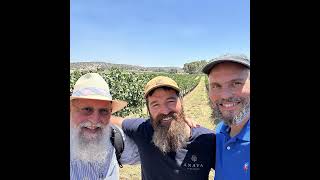
In this episode of The Kosher Terroir, host Simon Jacob interviews Nadav Jesselson, founder and winemaker of Anava Vineyards, to explore how the boutique Israeli vineyard operates as a community‑owned, kosher wine project. They discuss vineyard design and pruning terminology, the impact of Israel’s security situation and Miluim reserve duty on staffing and timelines, and practical challenges such as virus‑infected vines, bird‑deterrent systems, irrigation, and heat‑wave damage. Jesselson explains Anava’s unique ownership model – individual parcels (30 + plots) sold to members who can participate at any level, a $70 k entry fee plus annual fees, and a new “single‑vintage” option for those who want a one‑time experience. The conversation moves to the spiritual dimension: integrating halachic cycles (Shemitah, Orlah, Neta Revai, Otsar Beit Din) into vineyard work, offering participants a way to fulfill mitzvot tied to the land. They also describe the evolution of the younger and older vineyards, the T‑shaped VSP pruning system, upcoming harvests, and the role of agronomists and winemakers. Finally, they touch on community events – weddings, bat‑mitzvahs, private dinners – and how Anava balances commercial viability with preserving the sanctity of the land amid war, travel restrictions, and fluctuating tourism.
Chapters
Welcome to The Kosher Teruah. I'm Simon Jacob, your host for this episode from Jerusalem. Before we get started, I ask that wherever you are, please take a moment and pray for the safety of our soldiers and the safe return of all of our hostages. Over a year ago, I sat down with Nadav Jesselson, the visionary behind Anava Vineyards, a place where passion, personal connection, and profound terroir converge. But Anava isn't your typical vineyard. It's a living canvas where individuals and families don't just drink wine, they craft it from their own plots of land, guided by a world-class winemaking team. Now Nadav is back, and we delve into what has changed in the vines, in the cellar, and in the way Anava empowers people to turn a dream into a barrel. In this episode, we dig deeper. What does it take to steward a community of landowners into becoming producers of wines that matter? How does a vineyard navigate war, shifting climates, evolving expectations, and the sacred intersection of heritage and innovation? If you're curious about owning an Israeli vineyard and what it means to truly connect to the land and the grape, you won't want to miss this new episode with Nadav Jesselson. If you're in your car, please focus on the road ahead. If you are home relaxing, please pour a glass of delicious kosher wine, sit back, relax, and listen to this wonderful conversation with Nadav Jesselson. So, Nadav, welcome to The Kosher Terroir, or welcome me to Anava.
We did not meet for a long time, so I forgot the name of the podcast. I know. How is it going?
It is The Kosher Terroir.
You are still doing a lot.
Yeah, yeah, I have got over 100 episodes.
Amazing.
Crazy. Crazy, crazy.
I have to listen to them again.
Okay, it's okay. It's okay.
What was the most interesting that you had lately? Recommend me a—
I had a really good podcast not so long ago with Noa Ma'oz, who is an agronomist.
The name's familiar.
Yeah, she's the one who basically saved the wine industry here in Israel.
From the virus.
From the viruses. So that's her specialty. She's a really sweetheart. Where is she from? Maroma Golan.
All the way out. She was here maybe once. They come once a year to do a seker. They go through the trees to look for viruses. Last year they found one here.
Wow.
One tree with a virus. And I was depressed. I said, oh my God, you found a virus. And they looked at me, they brought me a stuff of Carmel. And they said, are you kidding? That's nothing. That's nothing. You have one out of the whole vineyard. That's nothing. It's a tree we had to pull out.
Yeah, there's no— I said, you know, so what does that mean when you find a virus? You've got to give it an inoculation of something, antibiotics, whatever. No, you're going to pull it out. There's no chance. Yeah, there's no chance to do anything.
Yeah, they pull it out, and they used to pull one out and one from each other side also. This year we didn't do it, just gave more, uh, um, pesticides to the trees that were near him.
So, it's the last time, it's as beautiful. I'm sitting here under this, what you call it, cupola, cupola.
Pergola.
Pergola, a pergola, right. I'm sitting here under this pergola in the middle of a vineyard that's just gorgeous. You're planting even vineyards along this little—
Right, this was a few spares that we had. We put them on the fence, but the watering didn't work. So I think only 3 of these are left out of all of them.
Oh boy.
Yeah. You got to give them attention. If you don't, they won't work.
So I planted, we planted a vineyard.
That, the booms we're hearing is from a vineyard on the other side of the street, of the road.
Yeah.
They have like a cannon. It works on gas. It's connected and every few minutes it gives a boom against birds. Oh. There they have eating grapes. So it's crucial because the birds go down on their grapes and they'll eat their grapes and they have to, their grapes need to stay aesthetic, you know.
Right.
It's not like when we make wine. So that's one of the patents to get rid of the birds and the animals.
Wow. Okay.
The Davidka Bird Removal Team. Exactly, exactly. That should be the name.
Amen.
Ayal is crazy good.
This is really, wow, delicious. This is the new ones where he's getting the grapes. These are their grapes.
Yeah, I know the vintner. Very special guy. His name is Zelig from Givati Shaiel. Beautiful vineyard. He finished the army in a very, you know, for pension already. He was there for a long time. And he went to do a vineyard. Very, very talented guy.
Wow, unbelievable. So yeah, we're tasting their new, um, the yam from Agour and, uh, Liam Lavant. It's a 2024 and it's just amazing.
He has rosanne there, didn't know.
It's a— what is it?
It's rosanne.
Oh, I didn't even know that. That's why it's so good. That's why it's so good.
The, uh, Used to take rossan, I think, from Retamim, down south.
So this is theirs.
This is amazing.
Born and bred with them now. Amazing. Their own vineyards. And they changed the label now from Agour Winery to Agour Vineyard.
Amazing.
Vineyard. Yeah. So, Baruch Hashem. Very special. Okay. That said, let's talk a little bit about Anava, because we're here. And it's such a peaceful, incredibly beautiful setting. Since our last conversation, which is well over a year ago, I don't exactly remember exactly when it was, but I thought it was closer to 2 years, but it might be just a year and a half or something. How has Anava evolved? Is there a change in philosophy and operation and experience?
So first of all, you got to take into consideration that everything that's been going on has been going on besides the war that's going on.
War? What do you mean?
Yeah, what's going on? What war? There's a war? There's a war? You could sit here and literally forget it. Yes. But the effect on us is the Miluim.
How has it affected you?
In and out, in and out, in and out of Miluim. And I just came back a week ago. We were called in for Tzav Shemoneh.
Yep.
Friday, you know, the morning of the attack in Iran. Everybody was called in. We went to— actually, we were in a very peaceful place. I was in the Egyptian border.
They were afraid of the Egyptians.
The Egyptians, the Jordanians. At the beginning, they sent us to the Jordanian border, then they took us to the Egyptian border. A bit of a balagan. That's how it is in Midway and in war. And it was very peaceful. Thank God, nothing happened. And for me, it was even— we were laughing, the guys there, that we are like We are in the Ohrif and the families are in the Chazit. I don't know how you say that. Meaning we were in such a peaceful place when the families were running in and out of the Mamadi. And we were in the desert, going out for the sunrise, going back to the sunset. It was very peaceful. But still, the in and out of Miluim is very difficult. Very difficult to take. It takes me, this time it took me almost a week to settle in and to get things, you know, in order. And also I came back and it was crazy because we, the main thing that we're doing here now is we're designing the vineyards, the younger vineyards that are in the third year of aguila now. So I came back, I was sure we're going to be finished because I had a worker here that was still working and somebody, some girl that's actually here today also. And I got to a situation where there was a lot of work. I had only 3 days in the week. Anyways, it was crazy. So as far as that, that's the reka, how do you say, the background of the last year, of course. And so the vineyard is evolving amazing. Like I said, we finished last week designing the younger vineyard, and it looks very good. I'm very satisfied with the outcome of the designing. We designed mostly with the girls from Regavot, the high school girls that are our main workers, and then they finished their high school, so we got workers from the Shomel HaKadosh, and we were lucky because usually they are packed with work, and we got a few days with them. So they really did a good job and they finished everything. Now we're basically fine-tuning the designing. We're going, we're going all over the, the, the vineyard again, checking each one that is designed correctly, doesn't need any fixing. Some we haven't designed yet, one here, one there, because they weren't big enough, because you have to wait for them to be big. And the way I imagine it this time, it hit me We've talked about this. There's a few ways to designing, right? You could, the way we're designing it is called VSP, which is one long row. And then in that one long row, you could also do either what we call the reish, which is you take the vineyard and you take him only to one side, and then the one next to him goes also to his, and then they're touching each other. The way we're doing it, it's a T. It's a T. It goes up and we split them into two. And then the way I imagine it, they're all holding hands. All the vines are basically— that's how I told the guys. That's when I tell them how to do it. So I want them all to be holding hands, all the vines. And that's how it is at the end.
So by designing it, you're talking about pruning the vines back to the way you want it to be, to grow.
So pruning is cutting, I think. Yes. So there is cutting. This is just taking the shoots and bending them down. And when you bend them down, they also change their name. Because at the beginning, it's a sarig.
Yes.
Which is the branch when it's green. It turns to be a zmorah when it becomes brown, like a branch, right? And if you bend them down to be basically the main branch for the next 60 years, so it turns to be a vad. That's one of the special things that we talked about, that the vine has many different words in Hebrew for each part of it. So when you do that, it becomes a bat. The bat is a korah, which is a main wood, a beam, right? So that's what we did. And so that's the pruning is going to be in the winter. But what's amazing that we have a small part where we finished designing last year, and you see the difference between one that you finished designing and one that isn't ready yet. The ones that we finished designing in the— was the Sauvignon Blanc. They had endless fruit this year, and all the rest didn't have anything. They had a few, you know, here and there. But you see that the importance of designing and why, for instance, with Karma, when we did the older vineyard here, they were very— they were pressuring me to finish designing in the third year. In order for the 4th year to be already full with fruit. Really? In the 2nd year they wanted to finish, and that's why we had here a lot of fruit on the 3rd year. And so we had here Chayalim, Gdud, I think it was Hamishim Mechad from Bach Golan, and they came to work. They were amazing, and they took off all the fruit from the Sauvignon Blanc. And it was, those are my favorite days when I get these groups. So that's as far as the younger vineyard. The older vineyard we're preparing for harvest. It's looking good. We're already in bokhal. Bokhal is when the fruit changes its color. Yeah. Is there a word for that in English?
Yeah, it's called rizan, where it goes from—
It's in English or in French?
It's probably French.
Yeah.
It goes from green to purple. It goes from green to purple.
Yeah.
But it's across the different grapes. So it's not all purple yet. They're right in the middle.
Right. So in the Petit Syrah, we're already almost 90% went, uh, purple, purple. And in the Cabernet, not yet, didn't even start. I think it's a little too— a little early. But, uh, but actually this summer hasn't been that hot yet. We have had heat waves, which also, uh, damaged the younger vineyard a little, took us back a little as far as designing, but we overcame that, thank God. And, uh, so the summer isn't that hot, so I don't know why we're already there, but We're there anyways, so I'm sure it's good. So that's the younger vineyard, the older vineyard, and as far as Anava, you know, the concept of Anava.
Yeah.
So we are evolving all the time as much as we can, again, in and out of Miluim, so it's hard to get, you know.
And there's nobody coming from abroad.
Exactly.
I mean, it's not like there's any flights to be able to, now the flights are just starting to reopen.
Right, right. And it's not— it's going to take time still.
It's going to take time for people.
But so besides the fact that people aren't coming, it's tough, it's difficult for us. Already 2 years, you know, we're trying to get our minds, you know, on this project and to understand the product and to know how to give it, you know, to someone. And so we are doing a few changes. We did— we're opening now an option basically for someone to join for just one cycle. To have— When you say a cycle, what do you mean?
A Shemitah cycle?
Not a Shemitah cycle. When I say a cycle, I mean the Ona. Ona is a season, for a season cycle, meaning, or a vintage. A vintage, exactly. To join for a vintage. Basically being, coming, enjoying the vineyard, the events that we have here and all of the experience that you enjoy here and the harvesting and, you know, being— seeing where you're going to grow the grapes for your wine, but for one vintage. Vintage, for one vintage. That's a new concept that we are working on now. Hopefully very soon we're gonna already you know, try to advertise and try to get people interested.
Tell me, what's the base? What was the base idea again?
Correct. Perfect. The base idea was to, the vision of Anava is to share and connect. That's reminding. Chazer alay shalom.
Share the opportunity to connect to the land.
Exactly. And to connect. We want to connect to people with the same values and the same love. For the land, for wine, through, for the land, for wine, and through wine, basically. And to connect between the people that will join, because I'll give us certain examples that we just had lately that I don't know if you remember, but it's going with one of the things that you told me that you tasted with Jacobo Weill. You had, we were doing the blends. So we had something similar now. So our main concept was, that's our vision, and how do we do that? By giving someone his own vineyard. We planted the vineyard in a certain way that's not conventional, meaning we planted half a dunam separately so everybody could feel where his plot is, literally. It's not even a row in some vineyard, one of these rows, yeah, this is yours. No, this is like, You have a small garden, you're a hakla, you're a vintner yourself. And you're a vintner yourself because even if you're not coming, we are your shluchim. Shluchosh ladan kumoto. So we have one of the plots here called Fortress, which is a parcel of Eran Gil that lives in Colorado. And we're working here as far as we want to think about it is we're working as his shlichim and he is connecting to the land and we're connecting with him.
You're doing heavy lifting.
It's heavy, but when you have fun.
Yeah, no, I don't mean that.
Not heavy in a bad way. No, no, no, in a good way.
What's happening is you're giving people an opportunity to own a vineyard where they can get as involved as they want, but there's no, it's not on their heads to be involved. And the situations where they can't be involved, you can handle the operational side of it.
Exactly. So the way we're doing this is, number one, that we planted these parcels separately, and you can feel it, and we have beautiful signs that you give the name. So he gave Fortress. We have Vinier Merav, that is Menachem, he named it after his wife. And we have AP Partners, which is a private equity from Tel Aviv, which I worked with, and they also very into wine, very Zionist, so they hopped in right at the beginning. So that's the first thing of the vineyard. And the second thing is basically a club. This is a club of people with these values. And who want to basically take the wine to another level, I think. Because you can do a barrel almost in a lot of the wineries. You can come and you'll pay money and they'll make your own barrel and you'll get also your own labels and everything. But here it's the whole cycle. Here it's to connect from the roots, from the land. So the That's our high-end concept, or the original one, and we're adding to that. First of all, because we want to add more people. We have 30 parcels, 27 left, and we want more people and to also bring a price where it's more accessible for more people. What's the base price before you get to the more accessible thing? Buying into the club is $70,000. Okay. And with that, you get your personal plot and access to the events, to the vineyard, to being involved in everything. We have a few events throughout the year. We started with 2 events when it was only the vineyard. Next year, we're already in a winery. We're starting making wine. So there's going to be 2 more events. Maybe even 4 more events. And so that's 70,000, and then the yearly payment is 18,000 to taking care and to getting a barrel at the end. The full cycle, of course, of the vintage is in the vineyard and then in the winery. So we're making the wine, of course. Eyal Drouhi, he's our winemaker. He's going to be leading. We're going to bring in someone to do the handwork together with us, but Eyal is going to be the mastermind behind it. Eyal is also very cautious to what the people want to do. So for that, we're grateful that he's with us because he's perfect for the job. He's amazing. And we also have Avinuam Imbar, who is the agronomist. He's also leading with us. Yeah. He was the agronomist of Castel for many years, and now he's, uh, went on his own path and he's with us. He's here once a week. So that's our first product, you could say. And the second one is for a cheaper price, which we're working on the price right now, so I'm not going to give it to you yet, but that's for Vintage, you come, you don't have to go for many years now, come for just one to get your taste of wine from the vineyard that you are connected to. So you get a bottle. And your own, yeah. Again, I don't know when the vintage, you're gonna get, I don't know exactly the amount yet, but you can get an amount, a nice amount of bottles. With your label.
About 300 bottles.
Right. That's a barrel.
Yeah.
But we have to see if— Exactly.
Yeah, what makes sense.
A barrel or a little less. Talk to me about the kiyum mitzvot that comes with, you know, participation.
So we talk about the legacy, the land. We've talked about the money. Now let's talk about tachlis. What are the mitzvot you can get from doing this?
All of the mitzvot that Leo did. Literally.
Go ahead, go ahead, tell me.
No, to see, give me a test now. No, no, no, no, no. Problematic because I, I believe, vushti, I'm not knowledgeable enough or as much as I would want to be. Okay. As far as the mitzvot of the Oath of the Altar. First of all, of course, you have Shemitah, which is maybe, I think, the highlight of mitzvot of the Oath of the Altar. The tzavut by which the Jewish people merit the land of Israel. Mamashkacha. And basically, Basically, we give the option to do whatever you want in your parcel for the Shmitah. So you could say, this year I'm not doing anything, and then we'll prepare for that. We'll do probably pruning much earlier. And one year we'll do— and if you want to do Otsal Bedin or Tel Mechira, we're forever whatever you want. Then we have the Oghla, which we're going to be next year already after. And then we have, of course, the Neta Revai. Next year we're going to be in Neta Revai. We had Neta Revai here last year. And it was—
That was amazing.
Who knows, maybe next year already Neta Revai is going to be literally taken into Yerushalayim and eating it there. You have a party already. Neta Revai is the— So we have Neta Revai, Oholah, Shemitah. There's also the— Actually, that I did learn lately. Olilot. how does it go? Peret. When you harvest, you have to leave the little clusters on the vine. You're not allowed to take them off. You're leaving them for the aniim. I forgot. So peret ve'olelot, something like that, right? So I think that I learned about it, that it means that there's no enkatif, meaning the cluster usually is like a triangle, right? So if there's no katif, no shoulders, you have to leave it or something like that. But that's only when ani'im literally come to take it. If they don't, you take everything off, you don't have to leave, and you don't even have to give some pidyon for it. What about pe'ah for the corners of the field if you've got a— So I think that pe'ah is in, correct me if I'm wrong, is for, is for wheat. Not for the vineyards, but I have to look into it more.
Okay.
Awesome. You know, some people, actually we're trying to work now with an amazing guy with the name of Ari. He is a wine, you know the site maybe, Kiddush? They sell wine? It's his site. Anyways, he does marketing and not sales, mostly marketing. He's a very brilliant guy. So we met him, and what was nice that he said, I've seen your site already. And I said, when? He said, a very long time ago. We had the same idea, him and two of his friends. Somebody had an achala not far from here, and they were gonna do— he said, we weren't gonna do another winery, so we said, well, let's do something special. And they went towards the fact of Mitzvot Hatliyot Baritz. But when we started, I felt a little bit uncomfortable for selling mitzvot. I don't know why, but I felt a little bit. So that definitely you're getting that, definitely you're part of that, but that wasn't gonna be, you know, come do mitzvahs and give me money and do mitzvahs. That wasn't kind of me. When I started, somebody came to me, it was right there, We planted it right before Shmitah. And then somebody came to me, somebody that I met through a period where I worked with Turgim. And he came and they wanted to buy the olive grove in order to sell it to people so they could do Shmitah. I don't know why I felt uncomfortable with that. I guess because they have a combination of doing mitzvot.
So I wanted to do that with fields where, you know, to tell a farmer you have to keep Shemitah and you don't have any support for that. I always thought that that was crazy. In order to give the farmer support for keeping Shemitah, So fund him some money.
So there's a Keren Hashmita.
Yeah.
You've heard of it?
Yes.
So my friend across the street, he worked with them a lot. He went to the States a lot also to raise money for it, I think. He didn't do Shmita, he did Otsar Bedin. Okay. But still, when you do Otsar Bedin, you could put a big sign, Kan Shomerim Hashmita. You know that you've seen those signs?
I didn't know you can do that.
Yeah. If you're doing with Tzalbeitim, you could put up a sign. That's what he did. So this is already a dion, what's Shemitah and what's not. Maybe it's also, I'm going a little bit to politics, but as far as I'm concerned, we did a Teruah Michira. We didn't have fruit, but we did a Teruah Michira. And Anishomer Shemitah. Meaning, if I believe that this is halacha, so Anishomer. So people ask, Anishomer Shemitah? I think that Shmita is one of the most amazing concepts in the Israeli Jewish agriculture.
It's also, to be honest, it's— people think that they know Shmita. They know what they're talking about with Shmita. 99% of the people don't know. Even the rabbeim don't know. I remember I used to, I used to not touch anything that was shemitah. I wouldn't touch any wine that had had to mechira, or otsar beit din, or anything. I wouldn't touch it. It's shemitah. I don't want to have anything to do with it, what have you. But that was a mentality that I derived from living in galut. Living in Israel, if somebody's keeping Shemitah, like Otsar Beit Din or what have you, it's a mitzvah to drink this wine. It's a huge deal to drink it, and it's not, I mean, this isn't something I can take the bottle and take it to America and what have you. You really shouldn't do that. I don't know whether people have kulot to do that or not, but I wouldn't do that. But then I'd also, at the same time, make sure I drank every drop of it.
My father used to finish the bottle, pour water into the bottle, and drink the water. And drink it again.
That's what I do. I do that. But that's actually, that's a situation. It's not just a kumrah.
That's wearing a belt for the fun of it.
That's wearing a belt.
That's not even a kumrah. That's for the fun of it. There's nothing in there. That's for alotetanitzotzot achia achia achia achia— not to miss anything! I think that's out of love; it's amazing.
I agree. So, as I said, that's like wearing a belt and suspenders. It's extra. But I think that's an incredible thing to be able to give people an ability to practice halachot Jewish law) that they don't have access to.
First of all, it's on my to-do list, and hopefully soon, that I want to learn the issues, you know, mamash l'omek. At the end of the day, the first year I kept here Shemitah was an unbelievable experience. Again, we did a teuromichira, but even if you're doing a teuromichira, you can't prune by yourself. You have to bring non-Jews to do it. So we were in the year of the last year of designing. And the first year of designing. And even though we had a whole dune with the Kashrut of Carmel and with, who did we talk to? We talked to a few people, Furug HaBanim, that are into the, know the thing. And the dune was, is this considered Zmira? Because Zmira is the hardest. You know, the achiyassu. And he said, no, yeah. So we did it only with Palestinians who worked here. And I was walking in the vineyard with my clipper. It was in the pocket for the whole year. You couldn't take it out. Even when you see something that you have to cut, you couldn't take it out. It's like Shabbos. This is Yosef. You remember Yosef?
Shalom u'bracha. How are you? Simon Jacobs.
Simon, let's maybe move you out of the sun. Sun, because that's how it moves. A little bit to the left. You're gonna be in the sun more and more.
I like sun.
Okay, perfect. Oh Hashem. Yosef is a Popor. We were talking about Miluim, so he came back Thursday, going back today, tomorrow? Tomorrow. He's in Syria, working hard in Syria.
At least it's not cold. This is a local shot.
Huh? It's cold. Really? That's the Golan. The Golan has unbelievable— the Golan is, you know, I envy the Golan for their grapes and anything they grow there is unbelievable. Between the shifts, he's going all over the vineyards there, you know, learning, looking, because the Golan was the first place where they made quality wine. Yeah, a gift from God. He's amazing. And he came here, he came here to live in the caravan, and it was perfect because it was when we planted the vineyard, the younger vineyard, and I really wanted somebody to be here all the time, you know, if there's a problem with the watering or something like that, because we had in the first experience, in the first planting, we had issues. So the fact that somebody was here all the time kept us calm. And it was a win-win because they were looking for a place to put their kavvan, and we needed someone. And it was a mashnav ala la'imishamayim. And since the war started, and he had a different job, and since the war started, he was in Meruim for a few months, I was in Meruim for a few months, and when we met after a few months, he said, again, I was looking for a worker, and he was looking for something more stable because he was, as you say, atzma'i. He was independent and he was working in pruning trees. He was looking for something, you know, a job with a paycheck. So it was again, we had a little hashashot because we were like family. So what, you're gonna work for me and whatever? Got over that and for the last 2 years it's been amazing almost. And he cares for the vineyard. That's at the end, that's what we want. People who work with me, I need their heart.
Yeah, who are owners. They want to be owners.
So for the 27 unsold plots at this point in time, have you started the process at all, or is it— meaning they're already partway through the orlah process, or they're still— it's still undeveloped? They are in the third year of orlah. Wow, okay. Next year we're harvesting. Wow. Okay, hand harvest, and we're going to make wine. At the winery of, together in the winery in Safririm with Hidai.
Okay.
Hidai is what I told you, that's his wine here.
Okay.
He's, I'll just read the back for you because you're gonna like this, I think. Because it's also your Rebbe, I think, in wine, if I remember correctly. Because there's Aleph Dalet Golden, you know the name? He was the— they call him Rav Shela Chalutzim. You know, the days where we're talking about before the establishment of the state, So it was Aleph Dar al-Goldon, he was in the days of Rav Kook, and he was not religious, but what he wrote and the things he did, he was, you know, mamash, he was there morei aruchani. And he has a thing, he said, ve'od nizkarti, this is Aleph Dar al-Goldon, ve'od nizkarti, v'ines sulam mutzav artza, ve'rosho megiya shamayma, uma anu mevakshim besachakol, "Ha'im lo makom bishvil o tosulam." Yeah. So I love this because one of the paroushim on Yaakov, right, that he is the ladder.
Right.
"V'rosho megea shamayma." They say about Yaakov that he, rosho sheilo.
Ken.
He is the ladder. We are the ladder. We have shamayim va'aretz inside of us. So he says, what are we looking for if not a place to put our ladder? So I love that. So he calls it Mikomi. He's building a winery behind his house. Our connection is that when I planted, Idan Bat, amazing guy who was my consultant, he was my moriver rabbi for the vineyard. And he said, listen, you have to meet Idai because he's also planting. Go see what he's doing and learn from him. And we clicked immediately. And since then we're a chavuta, learning Gemara together. He's not religious, which makes it for me even more interesting. Yeah, he's very knowledgeable and he's very into Hasidut, again, but he's super not religious. So, but, so I'm saying he's not religious, shomer mitzvot, but he talks about ani malei nitzotsot, me'aretz, when he goes into the vineyard. Vashu bemet me'uchad ve'manyen.
You know what? Somebody needs to talk to him.
Yeah.
I'll tell you why. Because it's not about connecting to the Rabbanut. It's about connecting to the Kadosh Baruch Hu. That's all. That's the whole discussion. I mean, you can have all sorts of disagreements with rabbis or rabbeim or the Rabbanut as a whole. But the thing that you can't, you know, like when a person says he's hiloni, You know, unfortunately, the blockage is the Rabbanut, and they've got to realize that that doesn't make a difference. It doesn't mean anything. You can't be Hiloni from Hakadosh Baruch Hu. That's what you need to be connected to. And that's it. And that's what it sounds like. It sounds like he's connected to Hakadosh Baruch Hu, but he doesn't want to deal with the Rabbanut. With his groups, the middlemen who are on the ground. Wow.
I heard somebody say once, the problem isn't the Yahadut, the problem is the Yehudim.
Please God it won't be. Please God it won't be.
You know why? I don't totally agree with that saying. And I totally agree with you. I think there's also, I don't know what to tell you. I envy him the way he talks about his vineyard because that's like something I want to achieve. Walking here and being in such irat shamayim and ahavat Hashem, that's a— That's the whole thing. From understanding, I think he experiences what we're talking about, the land and the creation of man.
That's what I want to make sure he understands that. That I get that he does. Okay. So Albert Einstein was the same. I just finished a biography by him. It's such a pity. He's such a spiritual person. He was such an incredibly spiritual person. He believed that there was a Creator. But he didn't believe that anybody could have a direct connection.
A connection.
A connection with the Creator.
That's like the philosophes.
That the Creator does not come. He read a lot of philosophy. He was German and what have you. He read all of the rubbish. So he believed that God would be there. God is there, but He doesn't care about me. Why would He care about me? I'm a little pitzelah. And the truth is, that's so sad.
Because you're a ladder.
You grasp the universe. This is like you're Avraham Avinu. You see that this is all not random. I mean, he said his whole life, "God does not throw dice." He realized that it's not random, that everything is there because of God, that God has a plan, but that he wasn't part of the plan, that he didn't have a kesher into it except as one of the pieces that were moving. And it's so sad. It's like not knowing your father. Knowing that your Father is there, but not ever knowing that you could talk to Him. Not talking to Him. Yeah. So it's sad. It's a sad situation. But, you know, Baruch Hashem, there's a lot of people, and if you look at, what's his name, Meir, he, I think, very strongly believes in God. But he believed in God from a perspective of what we need to do is God is so real that the only way to get him to pay any attention to me is for me to zetz him. You know, there are children who are like that. The children who you have who are the perfect children, they take care, they do everything that you would want them to do, what have you. There's other children who are the the worst, they're the most difficult people.
And they connect through the pinching.
Yeah, they want to know that you're remembering them. They want to know that you're—
Wow, I never heard about Achil.
It's definitely, it's definitely, this is exactly what he did. And when he saw other people breaking the rules, he said, no, no, you can't do this. It's wrong.
When he was walking with a maid.
With a horse.
And he told her stop.
You're going out of the—
Right.
'Um, you know, that's ridiculous. If you don't believe in God, why would you say that to a person?' So, I really believe it's like he felt that he wanted God so much that he was trying to stick him in order to get him to deal with him directly. You know? We do that. We all do that. We all do things from different places.
Okay.
Tell me a little bit about what sort of, what sort of simchat have you had here? What sort of special occasions? I participated in a dinner.
Right.
That was like—
Right, so we're having another one this year. We're having another one this year. Wow. And I hope you come.
I would love to.
Perfect.
Are you kidding?
And this time we're having it with Hidai. Like I said, Hidai is a special guy. He's a chef. We have to try it. You have to open it. Perfect. Okay. Idai, he has, I don't know if you're in Jerusalem, you know Bet Tenzin?
Yeah, sure. So he has a thing there. He's a vegan. Exactly.
It's a coffee shop with the whole concept of from farm to table. He has, his brother is running the farm in the Arava, and almost everything that they're serving there is from the farm. Meaning, or they know exactly where from. They're not buying from somebody, from a middleman. They're buying directly from the Haklaim. So he is going to prepare us a meal.
Okay. Wow.
He's going to prepare us a special meal here. Hopefully we're going to have some talks. It's going to be different from last year. We're doing something a little different. Not with the whole sitting and everything. No, we're going to have a table.
Yeah, but it doesn't have to be so fancy.
Exactly. Exactly. Exactly. A little less formal.
Okay, but that was over the top, so incredibly beautiful.
Yeah, that's all we want to do.
There's so many people I wish had experienced that. It was like, my wife is, is, is not a formal person. She doesn't, you know, she doesn't like makeup, she doesn't like all of this shtick. She's very— she likes— I would take her out to a fancy restaurant She would laugh at me. She likes a picnic. She doesn't like anything fancy, what have you.
You're lucky.
You know, it took me years before I realized how lucky I was. It really took me years. So all of a sudden, when we came to this dinner, she said, this is the best. This is the best we've ever had.
It makes me so happy that you're saying that, because I think that that is what we're trying to do. It's high class, but Eretz Israel, you know, from the ground.
100%.
Mashum me'od arzi, me'od pashut, me'od amiti. You know, nothing that's just shiny with no tochen, with no substance.
Yeah, substance. That was an incredible experience. Absolutely incredible experience. The people, I think everybody who was there was blown away. There wasn't anybody who came.
Yeah, it was really fun. It was really—
Didn't feel like, wow, what an incredible curated experience to have. So has anybody done bar mitzvot or bat mitzvot?
We've had here weddings.
Okay. How did they do that? Where did they have them?
Right here. Through in the olive grove.
Okay.
We have the dancing was over there. Here you have tables. What the way the events, I call them the private events, not the anava events. The way the events evolved here is that we had our daughter's bat mitzvah. Again, the whole concept of sharing and connecting. So whatever we're experiencing, I want to share this amazing experience. So we had our daughter's bat mitzvah. Actually in the middle of the vineyard, because then also the younger vineyard wasn't there yet, so we could park everybody up there. And then my daughter met her friend who said that her sister just— the vineyard where she was supposed to get married in canceled on them, so they were looking. So she offered her— my daughter offered her— who bought the daughter? Offer? No, the older one. Okay, the older one said, we just had an event, maybe you want to do it, talk to my father. And that's it. And they came here, amazing people, our neighbors actually. They are from Aderet and now they moved to Nehusha where we live. And they had their wedding here. And it's amazing. I think that weddings are the best. And just give an example what I mean, that when I had here one of the weddings we had here last year, so a friend of my, it was a friend of my brother actually, Bemikre. And another friend told me, he looked at me and he said, "Andav, ze'adishen chituv." This is the best, how do you say, dishen? Fertilizer?
Yeah, yeah.
This is the best fertilizer you can put for the land. Simcha ve'ahava ve'masu bemid. And that's how I feel. So we can't do too much because at the end, you know, you're not allowed. No, you can get, uh, uh, ishurim for it. You can, you can get authorization to do an event, but if you do a lot of events, then it becomes, it becomes a garden, right? Uh, an event. Um, and, uh, that's not— first, that's not what I want to do. Yeah. Second of all, it could get us in, not in trouble, but, uh, it could do problems.
You don't want that.
So what happened is, um, the sister of the guy who built this amazing pergola got married here. And later, after she got married, I understood that she is a very known wedding organizer. And we connected and we felt that we could trust. And at the end of the day, anybody who comes today She's our wedding organizer. So we don't take any money at all for the place. In different places, they take a lot for you to do an event. But because I don't want that to be the issue and I want to do it from the heart, so what we did is at the beginning, we used to meet the couple and then we used to meet their wedding organizer and we have to see and then we have to tell them, you have to be careful here and careful there. And we had a wedding which we— it wasn't bad, but we didn't— it was hard with the wedding organizer. We didn't feel that she was with us, you know, and taking care, all in. So with Batya, that's the girl that's the wedding organizer, she is— she cares for the vineyard as if she's one of Anava's employees. Mamash. And so anybody who calls us today, even though it's hard for me to tell them, "No, you have to go through Patiya," but a few calls and now that's what I'm doing all the time. Even a friend of a brother of a friend of my brother, which I love, came here last week Thursday with his fiancée. The cutest, amazing, amazing. That's all, again, I love it. I love to meet these couples. He's from the Gush, she's from Weizmann, from Rehovot, mamash, olamot mitkhabri, mamash. And he had a wedding organizer already. And even though I know him and I love him and everything, I told him, listen, you got to go through batya, and I hope it works. And if it doesn't, again, I can never tell people no also. So she does it for me. And she's very good because she knows when it's not shayach. 'If somebody just wants to have a crazy party here, that's not here. Don't come in. Yeah, don't come into my— I'm inviting you into my house, which is a zchut g'dolah for me, you know, bechlat to call this house.' And so she takes care of it. So we have mainly weddings. There was going to be a bar mitzvah, but then the war with Iran burst out. For somebody actually from— that's interesting. That's not through batyatz, through a friend of ours from Yerushalayim. She's a very high-class organizer, and she was going to be— a family wanted to do something with miluim nikim and something, you know, a bar mitzvah with. So I brought a friend of mine who is doing endless miluim, much more than me, and he has his own company. He builds greenhouses mainly for schools and stuff like that. And he gives them also education there and everything. And they have, the schools have a greenhouse where they plant stuff and go through educational process. So they were going to build one here. I was going to bring him, and then they were going to benefit for the meluimnik and do something and have their event here. That, at the end, again, the war came, and then they stayed in Miami to do the bar mitzvah. As far as I know. So I think, you know, we have to celebrate this land as much as we can, mainly weddings meanwhile. But what we're doing now is also, until we have Anava members, when we'll have Anava members, I'm gonna— we're gonna stop everything that's gonna be from outside because it's gonna be only for the Anava members. But until then, we'll see. Baruch Hashem. Thank you so much. Thank you so much.
Wow. I tried to surprise you. You surprised me. Please tune in again next week for part 2 of our episode with Nadav Jesselson and the Anava Vineyard. This is Simon Jacob again, your host of today's episode of The Kosher Teruah. I have a personal request. No matter where you are or where you live, please take a moment to pray for our soldiers' safety and the safe and rapid return of our hostages. Please subscribe via your podcast provider to be informed of our new episodes as they are released. If you're new to the Kosher Terroir, please check out our many past episodes.










