Decanting the Soul of Kosher Vintages: A Wine Whisperer's Tale from Netofa Winery
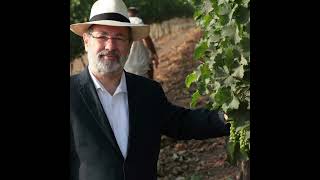
In this episode of The Kosher Teruah, host Simon Jacob interviews Pierre Miodownik, the pioneering winemaker behind Netofa Winery, alongside Netofa CEO Yair Tiboulet. Pierre recounts his unconventional entry into winemaking in the Languedoc, his breakthrough collaborations with elite French châteaux (Baron Rothschild, Château Giscours, Château Saint‑Estèphe) and the Royal Wine partnership that produced some of the most celebrated kosher wines. After making aliyah in 2005, he founded Netofa Winery in the Galilee, choosing Mediterranean grape varieties (Syrah, Mourvèdre, Grenache, Roussanne, Tempranillo, Touriga) to craft Rhône‑style blends rather than traditional Cabernet/Merlot. The conversation covers viticultural and vinification philosophies—simplicity, hands‑on barrel work, limited remontages, and the importance of the winemaker’s presence—alongside operational challenges such as shmita, limited grape supply, and differing taste profiles in Israeli versus U.S. markets. Pierre describes Netofa’s portfolio (Matzpen GSM, Tour‑Syrah, D’Or Syrah, Telkasser, Marseille, Domaine) and recent innovations including a VDN‑style fortified wine, upcoming rosé, and experimental vermouth. He reflects on market growth, export strategies, brand storytelling, and the future of kosher wine, emphasizing steady, quality‑focused expansion rather than mass production.
Chapters
Welcome to The Kosher Teruah.
I'm Simon Jacob, your host for this episode from Jerusalem. Before we get started, I ask that wherever you are, please take a moment and pray for the safety of our soldiers and the safe return of all of our hostages. The following is a conversation with one of the foremost personalities in the kosher wine industry, the winemaker and owner of Netofa Winery, Pierre Miodownik. Pierre's wine journey started in the Languedoc wine region of southern France. He started in 1982 by approaching non-kosher wineries to allow him to make kosher runs of their wines in their non-kosher facilities. In 1986, he successfully approached Baron Rothschild and a number of other Grand Cru Bordeaux wineries. In 1988, Pierre was approached by the Royal Wine family, and their partnership became kosher wine history, birthing many of the most memorable kosher wines ever made in history. In 2005, Pierre made aliyah to Israel, and in 2006 planted his first vineyard under Mount Tabor for his new Netofah Winery. This year is his 42nd vintage, including all of his European and Israeli production runs. and he is still running full steam ahead. I was treated to a truly exceptional conversation and wine tasting in Natofa's newly expanded visitor center along with Pierre and Natofa CEO Yair Tiboulet. If you're commuting in your car, please focus on the road and enjoy. If you're home, please choose a delicious kosher Israeli wine and sit back and listen into a truly interesting conversation with this exceptional kosher winemaking legend.
Pierre, welcome to the Kosher Terroir. And thank you for having me here. You've grown the visitor center here so beautifully. It's amazing. I— when I was here last, it was nowhere near all of this. It's— there's a place for people to sit and eat. There's a place to have, to taste wine. It's beautiful. Beautiful. So it's a pleasure. Thank you. Thank you for saying yes.
Thank you for coming. It's also a great pleasure. Pleasure for me to serve you. Since time I didn't see you.
I know it's a long time. It's a long time. Baruch Hashem. So what I want to talk to you about, a little bit about the past. Where, how did you get started in wine? Where did this all, where did the dream to be in wine start? Or was there ever a dream?
So I'm not born from a family of winemaker.
Yes.
Neither wine grower.
Yeah, it's good, it's good.
Never a wine grower. Yeah. But I was born in part of France where the wine growing was only industry.
Yeah.
Yeah, it's called the Languedoc. Languedoc is south of France, north of Spain. You do it apart. Yes, okay. So I grow in this atmosphere. And I was a tailor. I was, uh, every time, uh, went to, to, to enter in the industry. And then, okay, so first of all, I, I, I was working in, uh, in the winery, but in the, the winds. Yeah. In the wines growing. Yes, the vines. After, I begin to work in the winery. And in this time, you know, the best way to learn to make wine was not university like today, to make exam in university. The best way was to I began to work in winery, and with a simple work, and slowly, slowly to— so, at this time, I wasn't religious, but in same time, it was, I spoke, I speak about the year 1980, I begin to make Chivas, Chivas. So when I make Chivas, I was thinking, why not do some kosher wine? In France, in this time, you had only 2, 3 wine kosher, but really simple wine kosher. And I said, I said, you have so good wine in France, why not to try to do some better wine? So I began, it was my first kosher wine was in '82. '82, it was called the Château de Parazin. And in the same time, the same cuvée, kosher cuvée, reserve from this— it was a— I don't know if you know, it is an appellation, it's called Minervois. Minervois is a small appellation of Languedoc.
Yeah.
And we received the best, the gold medal for this cuvée. The château was so proud, proud to present this cuvée. Yeah. So, and 2, 3 years I continued to make wine in Languedoc, in south of France.
Right.
So vin de pays, white, red, rosé. And in '86 I had the chance to, the opportunity to make wine in the Château Château Edmond Rothschild. It's called Au Médoc, from the Baron Edmond and Benjamin Rothschild. So it was in '86, and it was the key to open doors from friends of Baron Edmond and to entice some very great winery. So, in Sauternes, in Margaux, in Pauillac.
So, wow. Yes.
And in '83, we produce, we have the first kosher great cru classé. It was Château Giscours. And after that, we produce Leauville-Poix-Ferrée, we produce Pont-et-Canet, some other great grow, Malartic-Lagravière, and all this with the help of the great company Royal Wine. Because since '88, I was the European winemaker for 30 years of royal wine. Yes, I produce, I was producing despite the Italian wines. Yes, the Portuguese wine, Spanish wine, French wine for royal wine. Wow. And in the—
what was it like then to, you know, like one of my favorite wines is Ponte Cana. It's always been one of my favorites, specifically the '03. I just love the '03.
I still have one bottle, only one bottle.
That's what I have. I have one bottle left.
One bottle.
I have one bottle left. And it's amazing for me. What was it like in a place like Punta Cana or even in making kosher wine, like, it's— wow, it's such a big deal.
It's really, you say, a big deal because, you know, such winery, such château doesn't need to produce kosher wine to do business.
Yes.
So that's why in the—
why did they agree?
So that's a question that I have until this day.
Okay.
And I believe it's not only for business reason.
Okay, it's not for money?
No, not only for money. I'm sure, you know, we know that Hashem makes all the things in the world. 100%. But in every in every château.
Yes.
That I did, but I still doing some grid château now also in France. It's a, it's a story of, uh, uh, spiritual history. It's not only to, to, to do one. I, I, I can, uh, we now, for example, I produce a grid Saint-Estephe. It's called Château au Marbuset.
Okay.
One of the best Saint-Estèphe that Parker said it's unclassable. Okay, okay, wow. The owner, Mr. Henri Duboski, one of the iconic owner of château in Bordeaux, very well known. For years and years, he doesn't want to do kosher wine. He refused, not for me, but for everybody. And since 2, 3 years, it's now an old man. He accept, as I said, well, well, you sent you, he sent me. I'm now very close to go to see the Lord. And I'm sure, he made kosher wine. And we— so we— and I make another place, it's called Château Cantenac-Bron.
Okay, yeah, Cantenac-Bron. Yeah, I have—
it was open before 10 years when I make the first. The owner— it's okay— the owner was a Jew, not a religious Jew, but a very big, inclusive in London, a Syrian Jew, you know. So he own this château. Maybe he come one, two times a year to visit. But so I know, I know well the director of the château. I approach him and I said, we want to do Cantonac Brown, a great name, a great wine, great château. "Azomer, but I have to ask the owner. I can't take the decision." "Azomer, I will be in London in 2 weeks. There is a bar mitzvah." From the son and the owner. "And the owner make bar mitzvah, Gadol, with kosher, non-kosher, non-kosher Cantonese brownies." But he invite rabbi to make a print. As they were sitting on the table with the director, the rabbi, and the family of the owner, Mr. Halabi, Shimon Halabi. And he say to the rabbi, you don't want to drink wine? So the rabbi said, no, it's not kosher. As he turned to the director, he said, now do kosher wine. And we— Kadosh Baruch Hu. So the same thing in the Ponte Canet. I remember Mr. Tisseron, it was in 2003, 2004, after we didn't produce kosher Canet a long time. And now I know that Royal Wine is producing again Pont des Canets. And, and, well, every place, every the simple place, the great, great château is a, is a history. There is not only business relationship.
Yes. Wow.
Very, very interesting. And So I ended to work with Royal Wine because I make my Alia and open at the Netofah.
Why did you make Alia? You were working well there. Why did you decide to make Alia?
Also, it's an opportunity from Hashem. I had here in Netofah some friend. And they asked me one time, we have an opportunity maybe to plant vines, would I come and to help us to open a winery? Why not? So he come to— in the same time, they had in the Mitzpe Netofah, in Yeshua, some place to build to buy and to build the house. So I say it's an opportunity. You know, when I was young and 20, 21, I was few years in the kibbutz in Israel, not far from Mitzpe Netofa. And when I leave Israel, it was just after the Kippur War. Keep working. I was here in Israel. I said one time I will come back to live in Israel. So in 2009, it was an opportunity to open the winery, to have the first wine, the first vintage in 2009, and to have a new house. And so we met Kalia. And I don't regret anyway. And if you see now, you know, the situation in Europe now, in the States, the only place for the Jews is Israel. So, and so it was also a great challenge to make wine in Eretz Israel, in Eretz HaKodesh. And, but I still working as consultant from some— but only in great château, you know, like, like Omar Buzay, like Carillon d'Angélus, you know, the great Château d'Angélus, Château Soutard, and some other great wine. But my My real challenge is to develop here in Israel, in Galilee, good wine. Okay. And you know the wine of Netofah.
Yeah.
There are special wines, not as special as like Israeli wine. It's more in the French style. And but we plant here. in Etofa, because in Etofa we don't buy any, any grapes. We have a whole—
Everything is from the château. So it's a château.
It's a state winery. We plant.
Yes.
And we grow. We have a grower team. And, uh, we— so what we plant, we plant, you know, Galil, Galil, Israel, it's a Mediterranean climate. Yeah. So we plant, uh, Mediterranean grapes like Syrah, Mourvèdre, Grenache, Roussanne for the wine, Chenin also Tempranillo, Touriga you know only grapes from the south.
You didn't plant any Cabernet or Merlot? No no what have you—
For two reasons first of all when we opened the winery I said to my partner If we plant the same things as others, why we need a new winery in Israel? Right. And second thing, I really think that some grapes doesn't grow good, well in Israel. And for example, Pinot Noir, and it's also Merlot. I don't —so I didn't want to plant—
So you've been— so, okay, so you've been growing from the very beginning only Mediterranean varieties?
Yes, yes, yes, and we are now known—
Rhône blends, it's like a Rhône blend?
Yes, it's really Rhône-style wines. Yeah, yes.
What has been your experience since you've been growing and planting here in Israel, in the desert?
What do you mean?
What's— I know you're successful here, Baruch Hashem. What were the challenges that you found here in Israel?
So, first of all, as I explained you, it's a great, great satisfaction. Yes. To vinify in Israel. Yes. Israel is not a simple vineyard, it's a red star kodesh. Yes. So it's very great, but also we have to, you know, a winery, every part in the world, also in Israel, it's— you have to to— what's the word— that's much to be efficient. Yes. It's not only your dream, you have to— we are working, we are welding, we have to produce and to sell and to— yeah. So it's also a challenge, yeah, and for that I said I want to do here in the same way we produce in France. What is the same way? Yeah, so the fact we have to respect the grapes, we have to accompany all the wine for the— during the vinification. You know, the winemaker is nothing, it's also some somebody who are comparing what the nature gives. First of all, we have to have good grapes, and with good grapes, you know, it's really easy. But, you know, we are very small in the— as human, you are very small, and as winemaker, we are a small part of the process. And you know, you know the ego of some winemaker. Yes, yeah. And so it's not my way. Now we produce the— I produce a Winifred 43 vintage this year. This year?
No, can't be 43. 42. No, 43. 43rd vintage. 43rd. You've been making wine for 43 years? Yes.
No, for 80 years. 82.
Since 1980.
Okay. And then maybe it's a— No, no, it's 42, 43.
Yeah, it's probably 42 or 43. Yes. Okay.
82.
Wow. Yeah, 82. So, uh, And so there I learned— every time you learn something new. Yeah, but what I learned first of all is to hear and to show, to look what all the winemakers are doing. Yes. And you know, And the more simple you do, yeah, the best. And that's a problem now in the modern vinification, maybe. No, everybody thinks that you have to change. New bulk, new barrels, stone bulk. Yeah. Quoi, l'eau, l'eau, you don't use? Where we need now steel bulk with all the minute, you know, but now they come back, they say, no, maybe it's better. So you don't have to have, you know, certitude to be sure. Yes. So we have to change, you know, I make, I have, I spoke about in France, Château Haut-Marbuzet, Saint-Estèphe. And he make maybe during the vinification one or two remontages, une remontage. Yes, yes. To mix. Yes. And for certain winemaker, you have to do 3, 4, 5 remontages per day, yeah. Yes. So it's a— that's my way, that's the way that I will continue in Netofah, and Baruch Hashem, you know the way and where. So it's wonderful, it's wonderful. And you have something else that's very important for me, that's— it's also, it's maybe strange, but I'm sure that the wine need the contact with the winemaker. Yeah. So sometimes I don't need to be in my barrel room.
You don't have to be in the barrel room.
Yes. But I'm visiting the barrels. I spoke with him. Brocasson. Why, you know, I do like that on the audio today. And especially in this time, because our site of production is near the Lebanon border, right? And all the day you hear boom, and you know, it's not so dangerous because it's a little so far from the real border, right? But I say I need to be with the barrels, you know, they don't like that, this atmosphere. Right. So I think it's very, very important for when the corks have the keshet, the contact.
Where is your production? Near Dijon?
No, it's near, it's in the industrial area of Dijon. Okay. You know, it's in front of Dalton Winery. You have Adir, Dalton, Camisa. I don't know if you know. Yeah, yeah, yeah. So we are here.
But all the grapes are grown where? In the Tofah itself?
No, no, it's a grand 4-5 kilometer from here. Okay. Near Mount Tabor. Okay. Okay. In only one plot. Our vines are only in the same place.
So there's a team that watches the grapes, that maintains the—
Yes, we have a wine grower director, Menahel Kamin, and his job is— so I give him instruction, what I need every time during the growing. And after, we pick and then it goes there again.
What are your future plans? Do you have future plans for what you want to grow or things that you want to do differently? Or, I mean, this has grown into so much more than what it was.
I don't know if you know now, all our wine, but I don't.
I just saw one with a new label, with a blue outside.
I will taste it after that. So as the blue label, it's a brand, it's called Matzpen. Yeah, Matzpen. You know what Matzpen is? Compass? Compass, yeah, it's Compass. And, you know, every time in the same idea to know, to To appreciate the wine of Netophah, you have to know where you are going and what you expect. And so, as for example, we produce this, and I still do here in Netophah some wines that are unexpected in France. This Matzpen is a good, good example. We have a Matzpen, it's called Tour Syrah. It's half Touriga Nacional and half Syrah. Okay. So it's not a common blend, but you will see it's a really good wine, very successful and very You can age it for years also. You know Dorr, you know our wine? Yes, Dorr, sure.
Okay, so it's— I still have, I still am drinking from 2013.
2013, you still have a lot of that? I have some. I think you have to drink it.
Yeah, yeah, I'm drinking, but it's been doing very well in my cellar.
My cellar has been doing very well. And after that, I will give you to taste some other vintage of Bordeaux. And so that's our challenge. We don't want to be and to be like a big company to produce millions of bottles. Yeah, we hope to grow, we have to grow, but we are growing Slowly but surely, our market, especially in Israel but also in the States, I think also in Europe yet, are growing. And it's also amazing to see that the US market and the Israel market don't have the same taste. Yes. They do not. We have a wine, it's called Telcasser. Yeah, Telcasser. Telcasser, red Telcasser with Grenache and Syrah. We are surprised for the success in the States of this wine. Wow. Maybe it's one of— we are working with Royal Wine. Royal Wine is our importer, right? And he sends purchase order, purchase order, but in Israel we have some another taste, you know, they like Latour, if you know, Latour, Latour Nettofar, with more classic wine of Syrah and Mourvèdre. And you ask what type What I still expect to winify, we develop in France. I said you, we begin to work with very really great château like Château Angelus. Yeah. And why not one time to make Pétrus or— I love it, I'm waiting. Yeah, yeah, yeah. So we still have some Greed Goal in France, if it's possible.
Yes, I would love it if you could find a way to make Château Petrus.
And so, you know, you spoke about the Pontet Canet 2003. Yeah, in 2003 you have maybe 5, 6 Greed Goal, Greed Goal kosher. Yeah. And now, 20 years after, You know, you have a long list. Royal Wine develop some other, I do, somebody do also, Château Vallandro, Château Smith-Soulafitre. So somebody who want to drink now a good kosher wine, French good kosher wine, he have a very, very big list. And same thing in Israel. I'm very happy to see the development of of the wine industry. You know the Château, the Domaine Castel, right? Before 20 years, what may be the first good, good Israeli wine.
Yeah, well, at least French-style Israeli wine, but it was also good.
You're right. And now you have some good production in Israel. I'm very not surprised, satisfied. Yes, yes. And also I saw the evolution of the Israeli consumer demand and taste. Yeah. When we begin to produce here in Netofa in 2009, people was asking red, red, only red wine. Yeah, we need red wine, red wine. And now we don't have any rosé, we don't have enough rosé, we don't have enough white wine for the demand. And I know that every cellar, wineries, have the same problem. And that's good because Israel is a warm country, Mediterranean country, we have to drink a lot of white, a lot of rosé.
So I'd love to try some wine with you.
Okay, we'll go over there.
Yeah, yeah, yeah, we go over there. We'll go over there. Where do you want to start?
Two white. Two white. Two white. Two white. Yeah. And after we will drink some, some, some red. Let me to explain some things maybe that you, you don't know.
There's a lot that I don't know.
And we have First of all, uh, Schnatinita. Can, can. Okay. Schnatinita 22. And just before that, we have a growing of the sales, and so we finish very quickly our white and rosé wine. And so we stop to produce, you know, we had a brand, it's called Domaine. Yeah, it was our first level wine. Yes. So we stopped to produce, but we, we had, we was in the lack of white and rosé wine for, for months, both because due to the schmita. And so we had an idea to produce in France, yeah, in Languedoc, yeah, wine that we label it Marseille. Marseille by Netofah. Wow. But it's French wine and it's replaced the brand Domaine. Okay. And, and why Marseille? You know, it's called Elie Marseille B'nai Yisrael. As I did here is Elie Marseille Pierre. During his way to Israel. So as you will see, it's a very, very interesting wine. Okay, induction. It's made, it's made with Grenache, white Grenache, and Fermentino. Fermentino, it's a It's grapes grown in Italy and in Provence, in Languedoc. So a table wine, a Tuesday wine. Yeah, very, very nice. It's our lovely— it's our first prize wine. Lovely, nice, tasty. So we have a brand with red, rosé, white. It's made in France. It's called— and we import it and we win. Now we will develop certainly this brand with maybe a Bordeaux, maybe a Burgundy wine, you know. Wow.
So how do you, how do you import it? Do you import it in, in the bottles?
No, no bottle. Yeah, we bottled in France. Nice wine, tasty wine. For the, the sale price is I think 80 or 85 shekels. Yeah, shekels. Wow.
No, it's very lovely. It's very good. It's fresh and delicious.
It's fresh, lovely, and we have a good success with him, with this brand. You know, we in the maybe one month We will have our rosé in '23. '23. '23. And also our first white wine. You know, since almost 2 years and a half, we don't have. We like to make it with the hotel, the Caser Lavan Roussanne. The Roussanne. Maybe you know him, no? I know him. So you will drink, I think, the 2020. I like this wine because it's an amazing wine, you know. Every Dakar, every minute, it opens and you discover more, something else. This is beautiful. Wow. No, no, it's beautiful. If this is a typical white wine, yes, for fish, you know, to drink, to drink with fish and This kind of wine that we are drinking, the Telkasser Roussanne, it's— you can't accompany meat. Yeah, no, no, no red.
No, but spice, you can do it with spice, very flavorful food. Yes, you could do it with even, even spicy poultry. With poultry. This is much better with— this you can drink sitting on your porch with nothing, no food, nothing. This is for food.
This is to accompany a meal. It's to accompany a meal, certainly. 100%. You spoke about the Rhône Valley style. Yeah, you know, Roussanne is come from the Rhône Valley as well. Yeah, and it's typically like a white from Rhône Valley, like Hermitage, Croze Hermitage. First of all, yes, I want to— I spoke that we do in France, the red also, Marseille. Okay, I want to tell you, it's a GSM. Yes, wow. So just to have an idea, so it's all— it's come also first level wine, it's replaced Domaine, it's a GSM from Languedoc. Okay, no wood. Norwegian barrels, but also Tuesday wine. Yeah, it's a great—
it's, yeah, it's a nice entry wine.
If you want to taste something special, you say me, but I choose for you some red wine that you like, and we will serve it from— you know what is Coravin?
Yes, perfect.
So we spoke about— you spoke about the new label, the blue label, Matzpin. Yes. You know?
I didn't know it was multiple wines. I didn't know that it was multiple wines. Matzpin. Okay. It's not just one varietal?
It's— We have two. Okay. 2. As we have one, it's GSM, pure GSM, Grenache Syrah Mourvèdre, third, third, third, aged for 15 months in the barrels. Yeah. And after we have the Tourcy, the Touriga and Syrah, 50/50, also 15 years in barrels. Yeah, we still have Opened from yesterday with coravin. Okay. As a— je veux le GSM first. Non, le GSM y'a pas. As a typical GSM, 2021, no one. You have the noise of the Syrah. and the, the, the groove of the grenache. And it's lovely. Also wines that you can age 4 years, no, is no problem. '21 was the years before the Schmitt years. Yeah. And it will be like the '23, the year after Sumitomo. So we receive a Brava. So nice years, '23 also will be a great year.
This, okay, so this again is, this is a GSM.
It's a typical GSM, but, uh, third, third, third, third, third, third. As now you can smell more maybe the Syrah aromas. Yeah, yeah. But with the time, you know, the Syrah, it's a little bit goes down, and Grenache Mourvèdre, it's—
it's lovely, it's lovely wine. It's well, very well made. It's very balanced. It's classic, very classic.
We have a great development with GSM in the state. Now we will taste the Toursir. It's not the Toursir, it's the Tourigas and Syrah. It's very special. If you— it could accompany a lamb. Lamb. Lamb. Lamb. Yeah, yeah. I must say to you that today, today, yeah, it's my favorite wine of the wines. It's lovely. Yeah, it's nice, huh? And also wine you can lay for a few years. And you know, I have a good relationship in all the producers we had in France. Yeah. So when I visit them, I bring with me some bottle of Nettofar. Yeah. For them to, you know, when you are in the Grand Cru Classé, if I bring a bottle of Latour or Tursy or Dauves, You know, it's not the same level. Yeah. But when they say to me, Pierre, it's a good wine, it's my satisfaction. Wow. And they said that. I bring— we have wine, it's made with Mourvèdre, you know, the Telkacel, Varroa, Segol. So I bring one bottle to one of the châteaux, he liked it, and every time he say, "When come back, bring me bottle." So for me, you know, it's a great satisfaction. You know, when the cask is empty, if you still have some perfume, that means that is a good wine. If you have a default in the wine, You smell it immediately.
Immediately. Very lovely. Both of them, the two, the GSM and the Sauvignon Blanc.
But it's two different wines. Very different. But, uh, yeah, and we, we do small production, not to— because we don't have enough. No, first of all, because in '21 it was the first year, so we make small production. Yeah. But we don't have— we can't develop a great production because we don't have enough grapes. Grapes, yeah. We spoke about Dorr. Yes. 13, yeah. So we will test 3 Dorr. The 16. Yeah. 16, 16 here, 17, and 18, F418. So I will bring the 18. We produce 16, 17, 18. After, we jump to 21, but 21, it's not now on the market. We don't produce in 19 and in the 20. You know, the concept of D'Or is to winify only It's Syrah, 100% Syrah. Only if you add good Syrah, great Syrah. So, and we produce in 2023 also. So the '16 is not Syrah, it's Tempranillo. Okay. It's Tempranillo. After we come back to Syrah for the two other years.
The '13 was also Syrah?
Yeah, it was also Syrah, yeah. And 2003, we will have Syrah and a small batch of Touriga.
So the first one we're going to taste is the '14? Is the '16. The first one we're tasting is the '16.
So it's Tempranillo. This is Tempranillo. It's like all the You can see the colors. Yeah, it's lighter. Typically lighter.
The goal of Dore was to make something that would age over a long period of time.
Yeah, but you have a limit, you know, to age.
Yes.
What's the limit? First of all, it's when somebody By, for example, a case of D'or.
Yes.
A case of Giscours. Yes. And they say, like, J.J. Gayler, Romero, drink it in 10 years. Yes. Or in 20 years. I every time say to each, to every 2, 3 years, drink a bottle. If you want, you know, if you see that— I agree. Is finishing. Finishing. So finish your case. Don't wait another 10 years for wine. That's why I say now the Syrah 2013 is still very nice, but I don't see him 4 or 5 years more.
That's exactly what I've been doing. I've been drinking it. I take a bottle out every year, every 6 months, and drink it.
That's the best way to see, first of all, to see the evolution or the coming down. This is amazing. As a low-premium taste, I really like the Tempranillo in '16, like Rioja. Alors, pour la queue, le tour syrien, you know, we had very difficulty to sell in Israel, some Tempranillo, Tour Syr, even Syrah.
Syrah is more acceptable. In America, it's very difficult to sell any of them. I know, I know that. It's gotten better. It's gotten better over the last 2 years, people have gotten more accepting of Syrah. Also in America, they're selling Syrah.
For me, I say the Syrah, yeah, it's maybe the best, the best grapes for Israel. Yeah, yeah. Also this with lamb, lamb and not heavy red meat.
No, no, but no, this is— yeah, it's opened up. This is really, really good.
Really? We don't sell it.
This is delicious. This is delicious.
No, it was a great year. This is absolutely delicious.
This is— this is what year?
'17? It's '17. '17.
Yeah, this is delicious. This is crazy delicious. It's a wonderful year.
What? It is wonderful.
It's a wonderful wine.
I haven't tried I just, I sipped it and I said, wow, this is the 17 Door, and it's just, and it's a Syrah, 100% Syrah, and it is just lovely.
I'm not sure how you can find it out even in the shops. No, you won't find it anywhere.
You won't find it anywhere.
You won't find it anywhere. Kosherwine.com, maybe he has, you know. I don't know. Do they have it?
I don't know.
They do a great job. kosherwine.com.
That's lovely. It is. Wow. Surprising. Yeah? Surprising.
We haven't tried it, I think, for a long time.
I didn't taste it for a long time.
You know, I found that a lot of the wines, people taste them too early. And they make a judgment, and they say, "Oh, no, no, this is not good," and what have you.
Is that true?
And you've got to give it a little bit of time. And I really find that after— whenever people say that to me, I go, "Okay, good." I just put mine in the back of the cellar, and I come back to it later. Yeah. And it's so much better. It's so much better.
So I don't know. You haven't tried the— you have not tasted the Latour Delcassé?
Have you tried it? Maybe.
Maybe.
No, I have the Latour that I have is also maybe 2014.
2014?
Yeah, Latour.
It's the only one that we don't have. We have the 2011, the 2012, the 2013. We don't have the 2014.
I think I have 2014. Really? Either 2013 or 2014. I think it's— 2013 is beautiful. Yeah, but the Latour is lovely. Yeah.
I think the Latour is one of the best VFM.
Latour is classy. Yeah, everybody likes it.
Have you tried the Matzpan already?
Yeah, yeah, I'm really impressed.
It's your first time drinking them?
Yes. Oh yeah, yeah, the Matzpan.
I saw somebody asked about it on the wine blog and I said, where did that come from? You know, like, where is that from? And I said, this is a, uh, a tofa. Well, I gotta talk to Pierre. I gotta find out what's going on with this. But it's— they're lovely, both of them. Yeah.
Have you tried— it's your first time trying them?
Yeah, absolutely. First time. How old are they? They're not new, they're not old.
No, I think, uh, March we got it out.
Yeah, this year. Yeah, this year.
Yeah, yeah, sure. Yeah. No, I didn't try. I didn't try. Okay.
It was, it was March. June, June, May, June.
No, but you know what, I would love to taste it again because I have that. I think it's Shloshes Re'eh or Arba'as Re'eh. I have to check.
You have a big sip. Arba'as Re'eh was pretty much similar to— vintage-wise, it was pretty much similar to '18 that we're drinking at the door right now. It was a hot year. Nahon? Ani zocher nachon? Shema. Arba'as Re'eh was a hot year. Yes. And we got wines pretty similar to '18. '18 also, the Syrah specifically, the Syrah specifically went— it was, I think, one weekend that we waited.
We went to pick in the Yom Shishi, but we say, okay, we wait.
It's so hard to pick in Yom Shishi.
You know, in 2 days, in 2 days, in 2 days, the Syrah jump.
It's another whole world.
Yeah, I think this one is 15%. It was the only year, the one and only year that we had a wine with 15% alcohol, this one. So 14% was pretty much similar to 18%.
Ah, well, so this one is what?
This one is Syrah, it's Dau Syrah 18%.
you get a different wine.
It's totally different. It's an amazingly different wine. Totally different than the first, the '17. Right.
It's not bad. No, it's not bad at all. But the '17 is amazing.
This is not a typical metaphor wine, if you ask me. The Dol 18, it's not typical metaphor wine.
Why? It's too fruit-forward?
It's probably too fruit-forward.
Yeah.
But people like it.
Yeah.
You know, Israeli customers, they like it. It's not only Israeli customers. I think US customers, the less sophisticated customers, like fruit-forward wines. Yeah. You have to make a living too.
Yeah, even though it's 15% alcohol, it doesn't bother me. Good. Neither of them bother me. This one is 14 alcohol. Yes, it's 15, right? You, you, you feel it?
No, but it doesn't feel alcoholic.
It doesn't feel alcoholic.
It's not hot. It's not hot from that. To put it away.
Beautiful. 10 years. Yeah, 10 years. It's a Sauternes. Sauternes was a very, in the beginning, very close year, but I feel that it will be a great year. Yeah, it came out. 10 years after.
The acid is amazing.
Yeah, the cutting of the acid. Sure.
Usually we serve the Latour, the 21 Latour, in the regular tastings. We serve it with that. Bite with that dish. It's a brochette with grilled eggplant paste and grilled cheese on top. It's like a smoky dish and for us, a De La Tour usually, it's a bit of smoky wine. Wow. Yeah, it's a nice bite. Who came up with this? We're working with a chef, his name is Yanniv Gourarier, amazing chef, and we build up like a wine pairing session for the general customers. Customers, yeah, no. You do not have to order it in advance or anything. and we paired each wine from the general wines that we do in the tasting. We paired for each wine, we paired a nice bite or a dish. Some of them are pretty simple, some of them are a bit more sophisticated, but the idea is to bring out the story of wines to the general public. And that bite was supposed to explain what we talk about when you talk about barrels and smoky flavors and oaky flavors. We're trying to explain that with that dish. Wow. Yeah.
This one is great.
The Latour. It is.
It's really nice. This year, the '23, we winify— it's not exactly a white port. It's more— it's really—
wow, now you've got me curious.
We have few things under our sleeves. Yeah, for in this vintage Pierre is going to produce, uh, well, it's not a white port, it's a VDN fortified wine. You know what VDN is? It's like a Vin Doux Naturel, which is like a Provence-style fortified wine.
What do you— how do you fortify it? How do you fortify it?
We add and alcohol.
With alcohol, the same alcohol we use there, but it's not exactly the same manner of—
And Pierre is working on the formula, the exact formula of hopefully vermouth that we're going to produce. Wow. Yeah, one or two styles vermouth wine. Of course, in two weeks or so, we're going to Your rosé is coming. The rosé is going to be out, and then another new Latour, Latour white, un-oaked Latour white. Most of it is Roussanne and a bit of Chenin.
Pierre, thank you for being on the kosher terroir.
Thank you that you come.
Are you kidding? It's a pleasure. It's really a pleasure. It's really a pleasure. It's crazy. Thank you for coming. Yeah.
This is Simon Jacob again, your host of today's episode of The Kosher Teruah. I have a personal request. No matter where you are or where you live, Please take a moment to pray for our soldiers' safety and the safe and rapid return of our hostages. And whenever possible, buy and share Israeli wine. I hope you have enjoyed this episode of The Kosher Teruah. It was exciting and informative for me as well. Please subscribe via your podcast provider to be informed of our new episodes as they are released. If you are new to The Kosher Terroir, please check out our many past episodes.










