Elizabeth Kratz: Transforming Kosher Wine and Jewish Community Journalism
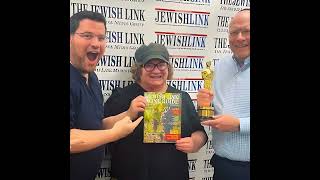
In this on‑location interview for The Kosher Teruah, host Simon Jacob talks with journalist Elizabeth Kratz, associate publisher and editor of the Jewish Link Media Group, about her pivotal role in the annual Jewish Link Wine Guide and the broader landscape of kosher wine journalism. Kratz explains how the Guide, revived after the Jewish Week’s guide ceased during COVID, uses a blind‑tasting panel of five long‑standing judges plus a rotating professional to evaluate roughly 600 bottles each year. She describes the Guide’s mission to provide accessible, consumer‑focused ratings and stories about winemakers, and its reach across the United States, Europe, and Israel. The conversation then shifts to Kratz’s recent trip to Israel, where she and her teenage children volunteered in vineyard planting and harvest activities at sites such as Shiloh, Susya, La Forêt Blanche, and the emerging Bazak estate. She details the cultural significance of Tu B’Av for vine planting, the hands‑on work of digging, drip‑irrigation, and covering seedlings, and the involvement of local kids. Kratz also shares tasting notes of a local spirit, Ella, and highlights the creativity of winemakers like Ayal at Agour. Throughout, she emphasizes her commitment to recommending Israeli wines—especially mevushal bottles—during the 2024 security crisis, viewing wine sales as a way to support the Zionist cause and Israeli viticulture. The interview also touches on the Jewish Link’s community‑focused editorial stance, its family‑oriented sports section, and its unapologetically Zionist identity. Kratz’s personal background—from a legislative aide in Washington, D.C., to a journalist covering the Pentagon, to a German fellowship where she wrote her first wine piece—is recounted, illustrating how her career path led to her current dual focus on Jewish community journalism and kosher wine advocacy.
Chapters
Welcome to The Kosher Teruah. I'm Simon Jacob, your host for this episode from Jerusalem.
Before we get started, I ask that wherever you are, please take a moment and pray for the safety of our soldiers and the safe return of all of our hostages. In the following conversation, I took advantage of Elizabeth Kratz's trip to Israel to interview this very special wine ambassador in the midst of her vineyard volunteering with her teenage kids and her exploration of new local wineries. Elizabeth is a journalist, associate publisher, and editor at the Jewish Link Media Group. Along with her featured articles focused on the New York Metro Jewish communities, she is the promoter and editor of the annual JewishLink Wine Guide, which celebrated its 4th anniversary edition this past March. The Wine Guide comes out just before Passover and contains extremely valuable wine consumer information, breaking down the many wine offerings by region by varietal, and by price. It also rounds up a knowledgeable team of tasters which grade wines in terms that all levels of consumers can appreciate. Also included in the guide are pertinent stories about winemakers and vineyards so that people can get to know the faces and stories behind the bottles they enjoy. Though this annual wine guide is printed in New Jersey, I have found dog-eared copies scattered across the United States, Europe, and Israel. They also have an internet-based version for global consumption. So, I will as always include contact information to Elizabeth and the Jewish Link below in our podcast notes. If you are driving in your car, please focus on the road ahead. If you are home, please select a bottle of kosher wine Sit back, relax, and enjoy listening in on this very special kosher wine emissary.
So, Elizabeth Kratz, welcome to the Kosher Terroir. Thank you for agreeing to participate. It is great.
Thank you.
Great to have you here.
Great to be here.
It is especially great to have you in Jerusalem. So, I have been following you for a while. How long have you been working at the Jewish Link?
I've been at the Jewish Link almost since it started. I was the second editor and I was there within about 6 months of its founding. And the Jewish Link just celebrated its 10th anniversary a little bit over 6 or 7 months ago. So really about 10 years.
Wow.
And then the most important part of the Jewish Link, of course, is the Jewish Link Wine Guide.
Right.
Which just printed in Pesach time, the 4th annual edition.
Wow.
And this was a, it was sort of a continuation effort of the Jewish Week's Wine Guide, which ran for about 9 years in New York. And the Jewish Week stopped printing during COVID So the Wine Guide sort of was going to fall into oblivion unless we took it over, basically. So Jesse Horowitz, as you know, And Josh London, as you know, and Gamal Cronomer all sort of got together and said, Elizabeth, you have a newspaper, you have resources.
Let's do this.
Let's do this.
Very cool. And I especially like, you know, Yetzi, I almost, I almost feel as a professional, even though he is, he is not in the wine business as such. Uh, he is very much a major part of the wine business. Um, I always tell, I always say to people at Herzog, you, you, you know, you owe Yossi millions because, uh, without his RCCs, um, the wine would never, the, the high-end wines would never have blossomed.
They wouldn't move.
They, they, they, and they didn't.
Right.
Until the RCC started. So it's really pretty amazing. And the Kosher Wine Guide, the Jewish Link's Kosher Wine Guide, which is your baby, it's really your responsibility.
Fourth child.
Right. Is awesome because I love the people you bring in to comment about it. You don't bring in— you have some professionals who comment in the guide itself, but overall they're all Very caring consumers. And they have, um, they have incredible backgrounds. Uh, and, and they're just awesome, right? Awesome consumers.
Yeah. So I think what, uh, what sets it apart was Jesse set the tone of the judging panel. Right. And he, he basically explained how we should conduct our tastings and we do everything blind. As you probably know, we had about 600 bottles over the last, uh, last year and the year before we started to get bigger, but it's very difficult to manage such a tasting. And I had a lot of questions and Jesse really was sort of our north star in kind of the guidance of how to, how to develop and create a panel that was consistent over time. And, you know, we had to get through 600 bottles in really about 2 weeks of maybe 4 to 6 tastings over a 2-week period. And it's intense, but we have a panel that is— 5 of them have been there since the beginning. And then we added one more this year, Gary Wartels from formerly of Skyview Wines, now of Columbus Wines and Spirits in Manhattan.
They are professionals. I don't want to belittle them.
Right.
But they give a consumer perspective more than like insiders. They are insiders to these people. Josh London is a writer. So yes, they are.
And I also consider myself a writer before a judge or a critic. I'm certainly not a critic. But Greg Raker is now studying for the WSET Level 4. Exactly. And his wife, Daphna Roth, just passed the Level 2. And so she's on her way. And I've, I've completed Level 3, but I didn't do the exam. I did the tasting exam, which I passed, but I didn't pass the written, the written yet. So okay. And the other two are really consumers. They're pure consumers. They're people who love kosher wine. They've been tasting kosher wine for 20 years. And that helps us, or at least Yussi's argument is that helps us because it brings us to a roundness of our experience where not all of us are, you know, thinking about the value of the future tasting while we're tasting, thinking about cellaring, etc. These are just people who say, "I like it," "I don't like it," and that helps us in the broadness of tasting and to keep our scores consistent over time and to make good recommendations.
Yep. No, it's fantastic. It's— I think it is the go-to guide. Um, thank you. I was going to say the go-to guide in the New York metropolitan area, but I don't think there's a guide coming out anyplace else.
Right. So we are the only magazine dedicated to kosher wine in America. And I don't know if there is another one in Europe. Or necessarily even, is there like a magazine about kosher wines in Israel? There might be a magazine for Israeli wines or agriculture, or—
There is plenty of agricultural things, but there is no, I do not believe that there is a tasting guide, besides, you know, the guide you saw downstairs, which is now out of print.
Right. The Rogov Guide.
Yeah, the Rogov Guide. But besides that, Adam Montefiore comes out with every so often with something, but it hasn't been an overall guide.
Right.
So we'll see.
Right. He's written some beautiful biographies and sort of, I think he did the one of Castel.
Yes. And the one of Jourdan.
Yes. So these are beautiful, right? Beautiful stories of histories of our of our important wineries.
He has been a documenter of Israeli wine and kosher wines since the beginning. He is like the number one kind of chronicler. I do not know if that is a word, but he chronicles the, what you call it, the kosher wine world here. And he is amazing at it. So they did a good— he did an excellent job on the Castel one and also on the Ardennes one. It was really beautiful. And I've had him on the podcast. He's a good friend. He actually, he listens to the podcast on a very regular basis. And he, I would say every podcast. And he, And I get comments right after the podcast, either, you know, thumbs up or thumbs down. I don't like that. Don't do that again. Or what have you. And he's really excellent, excellent advice.
That— well, that you're, you're a very good interviewer, if I can say that. And also, I would add that, um, the— it's sort of like you're kind of like the Oprah Winfrey of kosher wine at this point, because, uh, like, there are so many stories. Like the, the woman who is a winemaker at Herzog in California, she She didn't just tell you about her winemaking career. She told you about her odyssey and her life and her decisions and how it sort of played into the world of kosher wine and created a place for her. It was very beautiful. I thought particularly, maybe because she's a woman and there aren't so many of us in the wine business, but I thought it was a very unique podcast and it told a very compelling story.
Every single podcast I've learned about something new. So it's been awesome.
That's why I like being a journalist, because I usually get to ask the questions. But I guess you can ask me some.
I'll ask you just a few more. Tell me a little bit about your background. Where did it start? Where did you get in? How did you become a journalist first? Then how did you get into wine?
Okay, that's two questions.
Yeah.
Okay. So both of them. Lead back to Washington, D.C., where I was after college. And I spent 3 years working as a legislative assistant to a member of Congress. And I was sort of interested in the press job, the, you know, dealing with the press. But I really burned out of the job in terms of politics before I advanced too much. So I worked there for 3 years and then I'm like, Okay, amén, dayenu. And I moved over to a magazine at that point. That was my first job in journalism. It was an easy transition somewhat. And it was a magazine that was actually covering the military and the Pentagon. There are, you know, a lot of jobs in Washington that just sort of have a specialist specialty in this way. So, I did that for another 3 years. And during that time, I was living in Georgetown, in Washington, DC, in the Keshar Israel Congregation community. And I lived on Q Street. Q Street is one of the streets all of letters in DC. And on Q Street, on both sides of me lived two people. One of them was named Josh London. The other was named Gomil Kronimer. And they had a group. Josh, in particular, was really interested in trying new wines, trying kosher wines. He's interested since he was a teenager, and he had been to Israel and had brought home things, was interested in Yarden, interested in Siegel, and all the things that were going on in the sort of early 2000s, I guess. And he had a wine tasting that Gamwil and I were both at, and the famous joke was, it sort of solidified our friendship, Gomliel secretly replaced the contents of a regular 750ml bottle of wine with Manischewitz and then did a blind tasting. And at the end, like, you know, whatever it was, bottle number 7 or something, everyone tried it and the room exploded. Everybody knew this is Manischewitz. This is like Concord or Cream Concord or something. And it was just like a funny foundational memory. And I think for me personally, I was looking around the room and I'm like, man, you know, I want to know more about how everybody in this room knew exactly what that was. I want to know, like, I really didn't at that time know everything there was to know about taste and tannins and dryness. And I was just like, okay, I'm tasting, tasting it blind white. So, but that was my first experience with tasting and it was a great, they were great teachers.
They're great people.
Yeah, a lot of fun. So Josh and Anna, then they got married and they're now in England and Gomleo and Jessica are sort of still close by in Silver Spring. But we're all still like in contact and working together and talking about wine and spirits and different things all the time. So that was my first experience with wine. And then after my foray into journalism, et cetera, I worked as a journalist a serious journalist in sort of a non-Jewish secular community area, whatever. And I won a fellowship. I, during the time of my, my first journalist job, I was also doing my master's degree at Johns Hopkins, uh, which is, has a program in the city in Washington, DC. And after I got my master's, I got a fellowship and that fellowship took me to Germany. Where I lived for 1 year. So I learned a lot of German. I, you know, became versed. And I actually wrote my first wine article while I was in Germany for the Frankfurter Allgemeine Zeitung English edition from Frankfurt. And it was about a prince who had bought back his vineyard in like Nordrhein-Westphalia, maybe not as— not a specific famous wine region. But he bought back the vineyard and was growing grapes there and making German wine. So that was my first article that I ever wrote about wine. First of many.
Wow.
Yeah.
How did you get involved with The Link?
So that fast forwards me another 15 years or so. I was living in New Jersey, had just had my third child. My husband is from Austria, and I met him sort of through through people knowing that I spoke a little German, basically. And I was like, "What? There's a Jew here from Vienna?" And we got married. So we had our third child, and I was sort of looking for a job that was flexible. And the Jewish Link had just started. It was really— and I was very interested in it as an idea because northern New Jersey really needed a paper. Like, the Five Towns has a lot of papers. New York had a lot of papers at the time. The Jewish Press was very active, but not covering New Jersey, really. So I was like, this is a good idea. And then I went in and met Moshe. I don't know if you have met my publisher.
I have. And Moshe is brilliant.
Yeah. He has his finger on the pulse.
He is brilliant. You know, there are a lot of people who have tried to bring out papers. And, um, based on advertisement and not on subscription prices and what have you. And I have never seen any of them really last, let alone blossom. And he came up with a concept. I do not even know if they talk about it, but I noticed it, that he wrote about kids' sports every single week.
Yeah.
And he had pictures of the kids' sports teams every single week in the back of the, of the, of the Link.
Yeah.
And there isn't anything that will draw people to picking up a newspaper than wanting to see their kids in the back of a newspaper. Right. You know, is my kid in it this week? Is my kid in it this week? It was unbelievable.
Right.
And I don't think he could print them fast enough.
Right.
Where normally you'd get distribution that would be very little. His distribution went through the roof. Um, and advertisers saw that and, and they participated and he, he really built a machine.
Right. So, so it, I agree. So the kids section and the sports section is part of our foundation. A lot of people might poo poo that, like say, what, who cares? You kidding? But The thing is, today's kids who are in that paper are tomorrow's readers, tomorrow's contributors, and, you know, in 10 years, tomorrow's advertisers. And we have people who have grown up now with our paper who don't remember a Shabbos without it.
Right.
And they get multiple copies per family, and they relax with our paper. And I would say that leads to another one of our foundational messages in the paper that I, I feel like, I don't know if Moshe would say this if he was on your podcast, right? But I say it, and that we're basically not an objective journalism paper community. We're more like, we're unapologetically Zionist and we are Jews and we're doing all of the work and all of the writing, all of the editing, all of the— even the memes we publish in the back and the puzzles, the Torah, um, all of those things are geared toward the message that we are proud to be Jewish and we don't want to discount that or minimize it in any way. And so I feel like people do feel comfortable with the messaging, that they're not going to read something that upsets them. Believe me though, we do get We do get letters. People, we do. I'm sure every single week we get, we have something in there that upsets somebody, but on the whole, it's not because of who we are. It's, it's, we are, it's community journalism really at its best. Like we're not apologizing for being present in New York, New Jersey, Scarsdale, Riverdale. We, we live in these places. We, we do our chesed, we do our work. We are going to school, we are going to our jobs, but we also have Israel on our minds and in our hearts all the time. And in a lot of ways, that is our center point.
It is amazing. It is absolutely awesome. Because it also attracts, you know, people know that that is the focus of the paper. And it attracts advertisers who want that as well, who are trying to get to the Jewish community. They are not necessarily all Jews who are advertising, but it is But if you want to get to the Jewish community, that's the way to get it. And it's great.
Yeah. I mean, in some ways, the 20,000 copies a week that we print are really a low— it's a low average number of the amount of readers we have every week, because we also have online and maybe an entire family reads one paper, one copy. So it's beautiful. Thank God. I hope it continues. B'ezrat Hashem. It's been a very interesting job. And it's been a job where I've been able to be very creative, and able to pursue my interests, especially in the wine community, food community. And, you know, we've had— I've had so many opportunities through it to be creative.
So we've talked about the wine community. I want you to taste something. This is called Ella. It is from Agour. It is not a wine. I believe it is a vermouth. We are drinking it on ice, and it is just a sipping. It is something that you sip. It is actually an infusion of— it is an alcohol. It started out as a rosé that was distilled, and then it became— was infused with herbs and plants, flowers from the Judean hills. So it is almost like tasting the Judean hills terroir.
Amazing. Is it a hagafen or shakol? Shakol, I think.
Shakol, leave it raw.
Sweeter than I would have imagined.
It's not really sweet. It's got a little bit of sweetness in it.
I do get some blossom and some, some green fruit elements. Interesting.
Yeah, it's an interesting— it's, it's from Agour, which you said you're going to visit.
Yes.
And Ayal, who is the winemaker there, is really, really creative.
Yeah.
Unbelievably creative.
Yes. So I tasted their Blanc and their Kessam this summer.
Yep.
And Yehiel Wolgel, who's actually going to be changing his name to Chovev soon. I don't know if you knew that, but we'll just call him Yehiel. Yeah. Is some kind of assistant winemaker there now. I think he moved there since You last had Yechiel on the podcast.
He moved there in the process of me having him.
Amazing.
We went and visited Agor together, and that is when they offered him a position.
Beautiful. He is so enthusiastic and really jumping in with both feet.
He is like a sponge. He just soaks up every piece of information he can. He is really bright. He is a very bright kid.
Yeah. So he was actually— so how I met Yechiel, and we have this, we have a whole chevra of people people who were in the— in America, they did the WSET Level 2s and 3s during COVID basically. So a lot of us, including Jules Polonetsky, who is now a, you know, a newly minted WSET Level 3 and headed to Bordeaux with— with, um, on that trip with all those guys this summer.
Um, Kenny Friedman as well is another one.
Kenny was with me, and Kenny writes for The Link also. Uh, he's a— couldn't do without him. Um, So Kenny, myself, Jules, Yehiel, we're all on this, this Chatter WhatsApp, which just, it's all education-based. And more than once, one of the people in the group have said, this is my favorite WhatsApp group because it's, there's no, like, there's no criticism. It's all learning. And we're all just really interested in what Yehiel is doing and what other people are tasting. Shmuel Sofer also, who I believe he's also with us. It's a great group of people and I've just been really, been really, I've benefited from being with a group of people who are so positive. They're just really, really interested in knowing more, interested in supporting kosher wine, but also interested in increasing the quality and the variability of the wine.
Yep. They're really amazing people. Yeah. So what have you done while you're here in Israel?
Right. So as we were talking, as we were coming upstairs, Tu B'Av is today. Today. Today. So planting essentially ends, that is the end of the traditional planting season, and then it moves over to harvesting, right?
Do you know why?
A little bit. Maybe you should tell me.
The reason why Tu B'Av is so pivotal in this is for Orla, You need to wait 3 years after you plant the vines. The counting of the 3 years counts from Tu B'Av.
Right.
So if I can plant my vineyard even a few days before Tu B'Av, Tu B'Av comes and says, "You're a year old." One year. You're one year old.
Right.
So it cuts a whole period of time out of the wait. In order to get to grapes, in order to get to wine.
Right. So that makes a lot of sense. So basically on Wednesday last week, we were with Amichai in Shiloh planting a very long-awaited vineyard. Especially Shmuel Sofer said he was really excited about a Pinot Noir coming from this area of Shiloh because, because Gvahot makes such a beautiful Pinot Noir. So this is a first planting of Pinot Noir for Sheila Winery. And it was a pleasure to be there. And they were up with the sun. My kids were really into it. There were a lot of kids there planting, putting, making sure that the vine went in right under the spigot of water so that it would get a lot of initial irrigation, and then putting sun covers over that new vine. So, we You know, it was beautiful.
There's nothing like being down on all fours and carving a hole in the ground with your bare hands and sticking in this little plant, little seedling. It's not a seed, but it's a, it's a, they call it a seedling.
It's very young. It looks so powerless.
Yeah. And vulnerable.
Yes. Vulnerable.
Exactly. And you put it in and you, you know, you check to make sure it is underneath the— they use drip irrigation, so you make sure that it is near the drip. And then you put in a stick next to it and then you put a little cover over the top.
Right. So it is very interesting. The soil was different. So then—
Did you get thorns in your hands from the soil? Were there a lot?
Not at that place, but the next day we went to Saucière.
Yeah.
To La Foire Blanche was doing a petite verdure. Vineyard. And there they gave us actually an axe because it's very rocky soil and white. So it's more with more limestone, I think. And that was very different in color. The dirt on our clothes was a very different color in Susia versus Shiloh. Shiloh was definitely more, it seemed more like a farmed brown, reddish brown soil with some movement.
Terra Rosa.
Yeah. And then the one in the limestone-based in Susia, this is— that was a crazy place. It really did feel like we were helping to plant a vineyard in a place where, you know, now there will be a vineyard as opposed to, you know, before there, it's like desolate and rocky. And the fact that they're able to plant there and grow beautiful things is really a testament to the to the viticulture and the skill of the staff and just, you know, trying to make sure they have strong grapes that grow good roots, you know, in this tough terroir.
When you're given a pickaxe, so it was stone from the top or it was stone very close to the surface?
Yeah, stones very close to the surface, the latter. So you're cracking the stone and then planting Yeah, they didn't give us pickaxes in Shiloh.
No, you don't need to.
Yeah, it was definitely like more of an effort. You had to put in a little more elbow grease in Susya. But listen, Baruch Hashem, there were just, there were kids there also, mainly kids. That's one thing that we've noticed. The year that we're in, the level of the amount of people, the staff of the wineries who are running to and fro in Miluim, It's really, the vineyards seem to be planted by the kids.
Kids, or kids of what age?
Like the age of my kids, like 11 to 15.
Right.
And sometimes littler kids.
Sometimes a lot younger. Yeah. Well, they're like with their moms or older siblings helping. But it was really an intense effort. I saw, I think it took them 2 days to plant Right, I panned my phone camera all the way around me and it was just from the east to the west, as far as the eye could see, almost all these, the white cardboard covers over this area. And it had taken them 2 or 3 days. They planted from 6 AM until about 2 in the afternoon. It gets too hot.
Right.
So really by 10 AM we had to leave because it was like, my kids are like, You know, Americans. We're done. Like 9:30, they're done.
That you had them doing that.
Yeah.
When you start early in the morning, by 9:30, everybody's done.
Right. We were like done. So, right. So then, so basically after that, we went to visit Jacob Bris, who works at La Forêt Blanche. He's the export manager. I don't know what his actual title is, but for me, he's the export manager. Right. But I think he's very much involved with the running of the winery. And it was great to see him. And we also saw Vionnier being processed as we were arriving. They were bringing it in and we tasted some of the delicious Vionnier grape juice. And then he sent me home with a bottle of the Vionnier from last year so I could compare and contrast. So that was really fun. And yeah, I've been a— La Forêt has been sort of on my radar for like 4 years since it started out and rebranded. It was formerly the Livni.
Yep.
Winery. And I've just been interested in it. Met Yaakov a long time ago and been writing about them since the first vintage. Big fan of their Talpiot blend. I think the 2017 was the first one I tried. It was great. So it's a $20, $25 bottle.
There's a bunch of incredible values here as far as wines are concerned. And they've only, they have been getting better and better and better.
Yeah.
So, yeah.
And one of my, I think one of my, the reasons for my visit this year, and especially in August 2024, when there are tensions and, you know, Israel is once again under the specter of global stress. And really since October 7th, I've really made a very conscious effort to only recommend Israeli wines to friends when they ask. Like, I don't ask— if they say, can you recommend a wine? You know, often people ask you to recommend a wine. I'm sure this happens to you all the time. They say, I want a red, and they say, or a white, and I want a price range. I don't ask them whether they want it to be Israeli or not. I ask them whether they want it to be mevushal.
Yeah.
Or not, because that matters for like a restaurant or at a simcha, you know, if they're having it. Most of the time I get recommend requests for recommendations for a simcha, so I asked them if they wanted to be mevushal. But I almost automatically go through my Rolodex in my head of Israeli wines because I don't— I feel like Israel needs us now, and what better? Like, why else am I coming here if not to spend my American money, you know, in coffee shops and like be— do anything I can to support the Zionist idea and to support this country, which I feel needs to exist. And like, I just want to put all of my recommendations behind Israeli wine, specifically this year, but maybe always. I, you know, obviously I love French wine. I love California wine. I'm from California originally.
It's more especially now because of the, because of the people getting called back up to Milouim.
Yeah.
It's crazy.
Yeah. Like your podcast last week, which from the Ella Valley, Ariel is his name?
Ariel.
So impressive. Such an impressive podcast.
He is balancing his family, he is balancing a harvest, and he is balancing the war.
Yeah.
And the war seems to be winning as far as his time is concerned, but not his mental thoughts. His thoughts are with his family and also with the grapes. It is really amazing what people are going through. Now, he actually runs back and forth to Gaza people like Amichai Luria just lose his staff. All of a sudden, he thought everybody was finally back and things would be great for the harvest. And then a month ago, or a month and a half ago, all of a sudden, these miluim calls came out for all of the people in his staff again. So it is hard. They do not know what to do or what to replace or how to how to do it or how to deal with it. So they're trying, they're just working really hard at it.
And I have a nephew who is serving. And even the day we landed, I texted him and I said, "Hey, we're here finally. We made it. I hope you'll have time for us." And he's like, "I got called. I'm going back to Gaza tonight." Right. And, you know, 3 other family members who had planned to be in Israel in August, in America ended up canceling their trips because, you know, all the people they're coming to visit aren't available.
Right.
So it's a tough time. It's a really tough time for anyone who has people they love in Israel or working in Israel or trying to run a business. I mean, I can't even imagine. So if the only thing I can do is recommend Israeli wine when someone asks me, then that is what I am going to do. But hopefully I can do more than that.
It makes a huge difference here. Israeli wines support a lot of people.
Great.
And coming to Israel supports a lot of people as well, between the hotels and the restaurants and what have you. But it is very hard to do that right now. The flights have gone through the roof. Right. What few airlines are still flying, If you are coming even on one of the European airlines that is flying, it means that you have got to, instead of coming direct, you have got to transit through Europe. And it is tough. It is a difficult situation. Also, one of the airlines that used to handle a lot of people coming to Israel was Turkish. And now, they do not fly anymore. And they have made it clear that they are not allies of ours. And that's a pity that's really gone the other direction.
Yeah, no. So my mother-in-law in Vienna will be celebrating her 88th birthday next week. Luckily, or unluckily, depending on your perspective, we are able to fly through Vienna, visit her for a few days, you know, have some grandparent, granddaughter time with my kids. And then continue on home. And we even switched to El Al, sort of to make the price not so insane. But I knew even in June when I booked the ticket, I am like, "You know what? I have to book El Al." Because if we really want to get there.
Yeah. No, 100%. I have a whole host of family who are scheduled to arrive here for Sukkot, for Rosh Hashanah, the end of Rosh Hashanah. Yom Kippur and Sukkot. I know they are all booked through United Tickets. I do not know whether they are going to rebook or whether they are just going to pass this year. We will see what happens.
Everyone has to always just buy the most flexible ticket.
Right. No, it is crazy. What other things are you planning to do? You are planning to participate in the harvest at all? Right.
Yes. In Agour, tomorrow we are booked to sort grapes with Yehiel in the winery. And I don't know actually if we have a date where we're going to help with actual picking of grapes, but Yehiel put me in touch with a couple of people who, you know, may need small estate assistance, things like that, to do some harvesting. But we've had a lot of sort of the kids have had a lot of interest in picking other things during harvest. There's cherry tomatoes and different things. So we're on all the lists now. And there's no shortage of things people can do if they come here. Even whenever they come, there's always volunteering opportunities. So we've sort of been inundated with opportunities at this point. Um, but I don't know whether we have a date booked for, for an actual harvest day.
In harvesting is also an incredible experience because you really do it very early in the morning, right? Like ideally you want to get there before the sun is even close to rising.
Right.
And, um, and working on it because you're, these grapes are full of juice. They're just incredible.
They start to— the skins start to expand and pop before they even get handled, you know, significantly handled.
It depends on the variety. It depends on the varietal. But it's a really interesting experience. And to go through that first crush and—
I hope we'll get a chance. It's a little loosey-goosey at the point because my kids did also, they liked getting up at the 6 o'clock hour, but I don't know if they're going to get up at the 4 o'clock.
Yeah, it's, you know, you can say, well, we'll do that in the morning, and then we'll do— you won't do anything in the afternoon.
Great, you're done. You're, you're, you're going to lie in some air conditioning, right, and relax. Yeah, I figure, you know, we're here, it's harvest, we should, you know, do it. We're, you know, we're alive, we're, we're, we're here, we should join with the, you know, do what everyone else is doing. But it is, it is a little intense, and it might not be what what my 11 and 13-year-olds have signed up for.
Okay. No, it's cool.
But we could try. I do hope to get to it. And if not, we'll help in the winery.
Any other, any wineries that you've encountered that are new and different that you're—
I'm hoping, yes.
That hit the radar?
Yes. I'm hoping to visit this week Bazak Winery. Bazak. This is another winery that Yehiel is very excited about. This is, they don't export yet. And they, are apparently as close as Israel has gotten to a wine château, like the French style. You know, there's the house, there's the winery in the house, and then the vineyards surrounding it. So it is a true estate winery. And so apparently the Bazak family had been selling their grapes for many years, and people really liked the grapes. It's Judean Hills, I believe. It's you know, right in the middle of everything. Green, a lot of green there. And they also have orchards, I believe, where they make fruit jams and things like that, olives. And so I was told that after many years of selling their grapes, the, the father kind of got the idea that maybe he should try to make wine from these grapes that everyone says are so great. So he built a winery under the house, as far as I understand. So I'm looking forward to going there. I don't know if any of what I said is true. I hope it is. You don't know. But I hope to see that for myself. Very interested. And I'm interested in finding out how a winery like that gets to export status, like how they build up. We see a lot of wines on the other side of things, like some becoming very large and then turning into a real commercial enterprise. But, you know, to see it on the small side and see it grow, that's very nice. That reminds me of Sam Baum.
Yeah.
Who I don't think I'm going to be able to get up there, but he's also doing the crazy millouim back and forth.
He's still doing it. He's still doing the millouim.
And they moved up north, I think. They did. They did. So, looking forward to hearing great things about that wine.
He has always wanted to have a winery. He feels that the vineyard is the place where wine is grown. And he, that is what he wants. And he felt that the best grapes he could grow would be up in the Golan. So he insisted on moving up to the Golan, which he picked an incredibly difficult time to do that. But he is very driven. And his wife is an absolute angel.
Powerhouse, too. She is very good at social media.
She is.
She is really like Instagram.
She runs it.
Their Instagram is amazing. She runs it.
Yeah.
In the early days of the war, actually, we even wrote about this in a couple of articles about she was documenting doing like punch-down during—
She was.
While he was away. And she's like, "I'm a nurse. What am I doing?" And she literally was a nurse in the hospital. And she, but she had like, winemaking doesn't wait for Milouim to come home.
Or, you know, That's the, that's the crazy thing when you're in a millouim situation and a winemaking situation and the kids situation. I mean, kids can't wait either. You know, you can't say, well, you know what, I can't do this with you this week. I'll do it in another couple of weeks or something. Sometimes you can get away with that, but for the most part, you really can't. You have to deal with kids when they need to be dealt with. And grapes are very much that way. And millouim is also very much that way.
Right. So, just so you know, I know you didn't see the most recent issue of the Jewish Book Wine Guide from this past Pesach, but just in that magazine, we made a very concerted effort to use our feature articles to explain why this year was different for Israeli wineries. And there are a few articles in there. I think Kenny Friedman wrote it. It was called Winemakers at War. And it's just story after story after story of people coming in and going out. Yakov Berg from Zagot, the gentleman from Dremya, I can't remember his name. He was in a really intense unit, maybe a paratrooper or a brigade, I forgot, but very intense stories and, you know, a year of real stress. On the Israeli vineyards and the wineries. So we really wanted to bring that to light and we hope to do more in the coming year. One thing we also on purpose didn't do in the last magazine was we didn't award special awards like Winery of the Year, which we have done in the past, because we didn't want the, the wineries in Israel to be negatively impacted by the fact that they might not have sent wines that year, or the wines weren't— didn't arrive on time. A lot of, a lot of that happened this past year, um, and they just weren't able to stick to a schedule. So we, we didn't— we decided not to choose wineries of the year this year, and nothing bad happened. It was okay. No, but you know, we just felt strongly that we didn't want We didn't want our colleagues in Israel to be negatively impacted by anything we did.
Right.
We didn't want to add on to their stress.
I didn't interview anybody outside of Israel for a long time. And then I, um, and I had some pushback from some of the, uh, some of the people outside who said, "Hey, look, you know, um, there are wineries that are making wine in France." Spain and Italy who are supporting Jewish communities, and they are in a very bad situation with antisemitism. Don't cut us out. And I said, you are right. You are 100% right. I get it. I have been promoting winemakers who are outside of Israel as well now. But I definitely, my number one push is towards Israeli wineries because I just see what they're going through and I see the challenges.
Yeah. Yeah. But I mean, the title of your podcast, that's why it's so genius because if you're saying the kosher terroir.
Yeah. That's global.
That is global. That's Herzog. That's Elvi. That's Terra de Seita. That's all of those places. So, so, okay. I like it.
Yeah. No, that is what we are trying to do. Yeah. One of the other ones that is here that was really special, that is really special, is Hasella.
Oh, yes.
And they have two partners and their wives, and they both have businesses on the side. And the wives do too, besides taking care of their kids. And all of a sudden, the wives were making wine for, you know, 2023.
Yeah.
And And I went into the winery and I said, "Yeah, well, you are making the wine?" "Yeah, we are. We moved this barrel." We moved the barrel upstairs. We had to move the barrel. And I said, "Wait a second. You moved the barrel yourselves?" And he said, "Yeah, it was empty." Those barrels are heavy. And they were pushing the thing around and doing what they needed to do to get it done.
So don't they have a unique, uh, cave tasting, like a cave storage room? Yes, looks really cool.
That's actually where they make the wine too.
There have to be some, some venting, some ventilation of some kind.
They did. They put in, they put in a, they had a, they had a hole that the birds were flying in and out of, and they screened it and they, um, put fans in and what have you. So that, that actually works now to ventilate it. Wow. So that they can actually make their wine in that cave. So that is what they do.
Wow. That sounds cool. I will look into it. I would like to visit. I would like to spend some time.
Yeah, you can only do so many things.
Right. But hopefully not my last visit.
No.
Hopefully I will be back.
Sure.
Yeah.
I am sure you will be.
Yeah. So.
Thank you very much for taking the time. And participating in the podcast. It's really a pleasure. You're an important part of the kosher wine world, especially in northeastern United States, but I know that some of these guides made their way to California and all over the place.
Yeah, and we can always send the magazines anywhere by request. I guess it's just visit us on the web. The Jewish Link Wine Guide. We are happy to mail out copies, etc., and look forward to everyone's participation.
Yeah, I will include, I will include your email and information on the podcast so that people can get to you as well.
Yeah, and thank you for all you are doing, Rabbi, really.
No, it is a pleasure. Really a pleasure. Shalom u'bracha. Thank you.
This is Simon Jacob again, your host of today's episode of The Kosher Teruah.
I have a personal request.
No matter where you are or where you live, please take a moment to pray for our soldiers' safety and the safe and rapid return of our hostages.
Please subscribe via your podcast provider to be informed of our new episodes as they are released. If you are new to The Kosher Terroir, please check out our many past episodes. And thank you for listening to The Kosher Terroir.










