Embracing the Soil and Soul of Israel: A Heartwarming Tale from Tom Winery
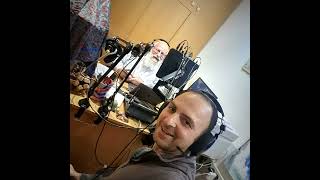
In this episode of The Kosher Teruah, host Simon Jacob interviews Ari Polak, a spiritual partner of Tomer Panini at Tom Winery, a small boutique kosher winery in the Shomron near Itamar. The conversation weaves together the winery’s origins, hand‑crafted production methods, and the 2016 Cabernet Sauvignon (Kerem Merav) tasting, while highlighting the deep personal and communal ties to the land. Ari recounts how he and Tomer financed the vineyard with wedding savings, the tragic loss of Ari’s wife, and the ongoing challenges of farming under wartime conditions as Tomer serves in the IDF. The dialogue emphasizes the spiritual concept of terroir—how soil, labor, and faith imprint on the wine—and invites listeners to visit the farm, attend events, and purchase the wine directly or through The Cellar in New York. The episode also reflects on Ari’s Aliyah journey, the Gush Katif displacement, and the broader Israeli context, concluding with prayers for soldiers, hostages, and a call to support Israeli wine.
Chapters
Welcome to The Kosher Teruah. I'm Simon Jacob, your host for this episode from Jerusalem. Before we get started, I ask that wherever you are, please take a moment and pray for the safety of our soldiers and the safe return of all of our hostages. The following is a conversation with my friend Ari Polak. Ari is a partner with Tomer Panini in the Tom winery located up in the Shomron next to the town of Itamar. Tom is a small boutique winery that focuses on quality, doing almost everything in the winery by hand. My plan was to have both Ari and Tomer speak about the winery and their current vintage, But as we are recording this episode, Tomer, an officer in the IDF, is in the midst of battle in Gaza. I look forward to his safe return home and to us recording a subsequent podcast together in the future. If you're in the midst of your commute, focus on the road, please. If you're relaxing at home, pour yourself a delicious glass of kosher Israeli wine, Sit back and enjoy. Ari, welcome to the Kosher Terroir. It's a pleasure to have you on the, on the podcast.
Um, pleasure to be here, Simon.
I know that, uh, you work with Tomer. I don't know, is there an official role that you have, or are you partner with Tomer in the, uh, Tom Winery?
Official role? I'm a partner with him, a spiritual partner, a partner in the whole process, you know, from when we planted until now. I'm a partner in the mission and I grew up together with him.
I wouldn't even call you a partner. You're more a brother in the mission. Yeah. You're there all the time, not every moment, but you're there all the time, and I know he views you as a brother. So, you know, partner is actually belittling the relationship. I think it's much more family than it is partner.
So my official role, basically, Tomer is, he's on the farm. With his wife, 10 kids, hundreds of sheep and vineyards. He's not looking to do a show for anybody. He's not looking to show off. He's not looking to market himself and he's not looking for branding or things like that. He's connecting to the land, connecting to the earth. Doing what he thinks is the right thing to do. And, you know, but if nobody knows about you, then it's not a sustainable system, right? So Tomer is there being real and connecting to the land. And I'd like everybody to know about this special magical place. And so I try to connect him to the outside world without ruining him, right?
Right. The first time I met him, he is the absolute image of a halutz from the '40s, from 1940, not 2040, but 1940. He's like unbelievable. And that he and his wife and all the kids are just an incredible family and an incredible force. If you ever have doubts about Eretz Yisrael, you need to spend an afternoon with that family, and you will be so pumped. It's just an incredible, an incredible experience to be with them.
Yeah, so for a while there was You know, when I first started getting into the wine, the wine business and connections, so people wanted to do wine tasting, and I said, "I refuse. I don't want you to taste the wine. I want you to come visit first." You can't really taste the wine without connecting and seeing where it was made, you know. And there was this one wine writer where I was pushing off for a while and he ended up coming and he's like, "You're so right. It would have been such an injustice to drink this wine without knowing what was behind it." Yeah, it's like drinking wine from a plastic cup, right?
Right.
You know, "Tzach lechabed." You need to honor it by tasting. So yeah, if any of our listeners are ever in in the Holy Land. Please come. Please see.
I mean, yeah, please reach out. We're going to leave numbers, but you could even reach out to me about that, because I'll make sure you're connected. Because I absolutely love Tom Winery and the Panini, Tomer Panini's family and Ari. Very, very special. So we're actually, instead of being really quiet about it, we're going to taste some wine from Tom. Now this is the cab?
Yeah, this is, I just made a bracha and had a little sip, you know, sneak peek beforehand just to make sure that it's okay. Ooh, this is great. Isn't it great? It's amazing. I love tasting these kind of things because I don't drink it so often. And, you know, we have limited supply. This is 2016, so, you know, maybe once a year. And every time it's like a different ballgame. It's revisiting and it's new and it's old. And it's, you know, I think 2016 was our first year that we actually had electricity that we were using for the wine crush. Beforehand, I was doing it, winding it by hand. And so it was a big move forward. It was very hard to do it by hand, that amount. We saw a lot of berachah from 2016, like real berachah. It was the year after Shemitah.
So this is a Cabernet Sauvignon from 2016, and it's from the Shamron.
Kerem Merav.
Yeah, it's Kerem Merav, which— tell us a little bit about why the name Kerem Merav. I know—
So, Keren Merav, I mean, me and my wife, we were good friends with Tomer and Maytal, and we were together with them in the Golan Heights. We were neighbors. We worked together. And Tomer went after his dream of starting Gay Farm, went to plan, and he said, you know, Yehuda Aryeh, or Ari, Yehuda Aryeh, as they call me in Hebrew. "Yep." "You know, you came from America, maybe you have somebody that can give me a loan to start a vineyard to make wine. I want to start this farm." I was like 21, or 20, just after I got married, a year after I got married. I said, "Tolmer, we can do this on our own. You know, I have some money from my," my wedding leftover. I asked my wife, and she said, "Yeah, it's for building the Land of Israel. What else are we going to use our money for?" Right? What a tzaddik. I was making, I don't know, $1,000 a month, $1,200 a month back then. And so every little bit of money, but we were fine. We were happy. We didn't feel like we're missing anything. So we gave some money to start. Tomer also took from his wedding money and somehow we started this, this, he started this vineyard. 15 dunams of Cabernet Sauvignon, which is what we're drinking right now. Cabernet Franc, Shiraz, and Merlot. Mostly Cabernet Sauvignon. Basically in the same vineyard. You've been there, you've seen the different colors of the leaves. Slightly different colors, but you can see it when they're together. 2 years after that, 3 years after that, my wife tragically was— she went on a hike and she fell on a morning walk and was killed. You know, a lot of times it's like a shame when you're thinking back on things like making a memorial about somebody. So I was thinking, you know, we started this vineyard together, and it's something that's growing all the time, and new life, and every year you see it sprouting from new and growing. And I called Tomer and I was like, you know what, don't pay me back, um, just take, take the money. Let's call it Kara Mera. And he was like, I was thinking the same thing, like, let's call it Kara Mera. And so yeah, that's Kara Mera. I've helped start it and now it's in her memory. Well, uh, since then I started getting much more involved, like, you know, I started, um helping fund more. Baruch Hashem, now it's more standing on its own, but in the beginning it takes a couple of years until, right, a vineyard becomes profitable or you see any profit from it. You know, it's about after 6 years you start seeing some revenue.
So you were the one who introduced me to Tilmor. You're the one who pulled me into it. Excuse me. You're the one who pulled me into it, and the truth is that I couldn't be happier. I mean, that— I have never experienced anything as special and as meaningful and as deeply as our interactions at at the winery and with Tomer's family and with yourself. I was crawling around the year you introduced me to him on my hands and knees planting, helping to plant a vineyard. I was— I've harvested a number of times, been at harvest a number of times, which is pretty physical, but it was incredible to get up at way before dawn and to be up there before the sun rises and to be picking grapes and then have the sun come up. And I always have the same feeling. It's so incredibly meaningful to be working the land. It's just awesome. It's just an awesome experience. It's an awesome experience.
Yep. Yeah, so that's exactly it. You know, I was thinking coming on a podcast about wine, I'm not one to talk about the different flavors and tannins and things, but I— so our connection starts from the plant, you know, planting it and feeling the earth and the thorns and the wind and all the forces that are against us and the forces that are with us and everything that makes the terroir around us. That's the first point. And the wine that we're tasting, I don't want to, you know—
No, it's—
I don't want to say about my own wine, but I really enjoy it. I think it's amazing. And I'm drinking and it's taking— brings you back to the land of Israel and what, you know, what we've been through and where we're going. And it's just tasting it and then in one glass of wine, which is amazing, you know. So that's why I want to drink wine slowly. I don't need to have a lot of bottles. I just need to, you know, sit down, have a nice glass with people that I enjoy to be with, take my time to smell, to enjoy, to look, to appreciate, to taste. Yeah, so, and to appreciate everything that's gone into it because we're not using big fancy machinery or anything like that, right? Everything is being done by hand by us.
I know.
Yeah.
Because I carried a number of the crates and poured it into the, what you call it, into the crusher.
Yeah.
And then took the buckets over and filled up the, filled up the that. So, yep. You know, it's funny. I think people would ask, "Okay, so where's Tomer?" I mean, we've got you, Ari, and myself here. And past there. No, and Tomer's preoccupied. Where is he preoccupied? He's sitting at home drinking wine. No, unfortunately.
Where all the good people are nowadays.
Right, right. Well, unfortunately, he couldn't even be on via the phone because he's in the middle of Aza at the moment.
Right. He's got no phone with him.
Yeah, he's got no phone and no wine. And he's in the middle of Aza. And to get a sense of the trials that that he goes through is that as he's in the middle of Aza fighting and his eldest son is also in the tzava, his wife is home minding the farm, the vineyard and the sheep and everything. And they're in the middle of the Shomron and they're undergoing attacks all the time as well. So, we were actually talking about who they have for guard duty each of the nights this week. And they're going to be doing— they have people who are lined up to come in and help provide guard duty on the farm while Tomer is down in Gaza fighting for the country.
Yeah.
So it's really— I know for many people outside of Israel, it's becoming tiresome to watch their social media feeds. It's becoming tiresome, you know, having to worry about what's going on every day. I kind of feel like, wake up! The people here are living this every single day.
We're not tired. We'll do it to the end of the day, so you know.
Right, and it's like, come on, you know, understand what's going on with this. This isn't some sort of a game. This is life, and it's very serious life. So when you're getting wine from a winery like Tom, that's taking in the entire terroir around it, which is one of the most beautiful places you've ever seen, looking out over the Jordan River Valley, high in the mountains, it's just, uh, Incredible, an incredible place. So being there, I know exactly what Tomer is fighting for. I mean, 100% what he's fighting for.
I'm happy you're transitioning us into the place because as I was coming over here, it's like, you know what, I can't speak about the winery without first going to the farm. I need to breathe it in first. Yeah, I need to get into them. Coming from work now, you know, I'm in a different zone. And so, uh, thank you, Simon, for bringing me here to, to get into, into the zone. I don't want to be the one to say—
you don't want to be the one to say what? That this wine is so incredibly delicious. Yeah, it's just crazy delicious. It's really good. Really, really good.
Say, "Ena nakhthom mei dali satoh," right? It's got to be a saying in English. The baker doesn't talk about his dough.
His dough, right.
But this is— thank you for opening this. I don't open this thing on just any day.
This is just wonderful.
It should be, um, for la'atzlachat, uh, all the chayalim.
Yes, and all, and the return of all the hostages.
Return of all the hostages.
Please God, the safety of all the chayalim.
Yeah, and, uh, destruction of our enemies.
So did you have any dreams of getting into making wine?
Um, When I was younger, yeah, I didn't really grow up drinking wine. Uh, I, I grew up in New York. I went to Haftar High School. Um, we used to go to a lot of parties when I was in high school, but I never really drank. I was just— I always made believe I was drinking because I was always the one driving. Yeah, you know, I was a pretty— I was a troublemaker but a pretty good kid. I only I got into drinking wine when I was living in the Golan with Tomer, and together with us was living a community from Gush Katif.
Wow.
Netzer Hazani. They moved to Avneitan, to the Golan. It was right after the Gerush in 2005. They moved to the Golan, same time that We both moved there, and we were together. So every Shabbat after Fatikin, we used to sit together around, read Rashi around the table, you know, and they wouldn't have it any other way. I had to drink. They kept pouring and forcing me to drink. Okay. You know, archemon. I'm forever grateful to that wine. Even though excellent wine for the price, in my opinion, right? It's a very cheap wine, Amcha, and there was a gateway drug.
Yeah, we call it inexpensive.
Yeah, inexpensive.
Inexpensive. But, um, yeah, it is, it is a gate, gateway for people to start enjoying wine and, uh, and, you know, move up into it, right?
I mean, the wine wasn't the, the wine wasn't the focus there. The people, the Torah, you know, it was the experience. And it was also a time, you know, looking back in retrospect, like, what, why? Why did they take those people out of there?
You know, out of Gush Katif?
What's going on? Why?
Why? What's crazy is recently, One of the young guys who comes to— one of the older guys who comes to shul, his grandson took a picture in Gush Katif with a big Gush Katif flag because he was born there.
Wow.
He was born there and then they, that year, they pulled them all out. So he's a young guy, but he's just exactly army age, and he's back in Gush Katif. It's like unbelievable.
Where they said, you know, we're never going to have to have another soldier there.
Right.
So me and my wife, blessed memory, was living in Gush Katif for a couple of months before expulsion together with my brother's family in the same house. And another 4, there were 4 families. My brother's family was in the living room in a tent. They lived in Ein Beit Kalim for 2 months like that. That's how we got to know each other. And my wedding was a couple of months afterwards, in the beginning of 2006. And when we said im esh kachech Yerushalayim, You know, we have a tradition of putting ashes on your forehead where you put your tefillin on. And so I had ashes mixed with sand from the Beit Knesset in Anveit Kalim that I put under my head when he said, "Imishkechechu shalom." And so may we know of no more destruction. I think we've had enough of ashes. We've had enough destruction. We've had enough pain. And we should only hear of good things.
Please God.
And only planting and no uprooting. And only drinking and happiness and no misery.
Please God.
Please God, please God. So one of the things I don't want to come across in this podcast, and Tomer would beat me if it did sound like that, is that we're not coming, we don't come across as a place where like we're miskin, where, you know, what's the word in English? We feel like we're the luckiest people in the world.
Right, 100%.
Every time I step on the land, you know, we have some of the people coming to pick the grapes. They're walking barefoot on the thorns. They're coming, these teenage girls.
Unbelievable.
It's amazing. These people are really, you know, they don't even feel the thorns. They're so connected to the ground. Like I'm the luckiest person in the world, you know, making, planting and drinking wine and enjoying. It's living where my ancestors lived, being able to, you know, to take in the art and to take in the people and to take in the spirituality.
I remember the planting. We were at a planting and— recently. All of a sudden, all of these young people just started walking up the road towards us. And, you know, like, just, it was crazy. And then I realized they were walking barefoot. And all of these kids came, you know, teenagers came to help plant. And they were just, you know, all over the place.
It was unbelievable. We're all complaining if we get a thorn in my finger or whatever, right?
And these guys are just walking in and they're doing whatever they need to do. Yeah, you know, Tomer doesn't serve in Gaza from a feeling of, "Oh, being put upon or being stuck with this," or what have you.
No, it's a privilege.
It's totally a privilege and it's totally a responsibility that he is happy to take on his shoulders, as is everything.
Jewish warrior. Right.
They're, you know, I—
It's not always easy, right? Because after a whole day, even not during wartime, after a whole day of herding the sheep and taking care of the wine and going from, you know, thing to thing, and then getting up at 2 o'clock in the morning for guard duty so that the Arab towns around don't try to come and steal the sheep or even worse than that.
Right.
You know.
It's an amazing— his vineyard and farm is a truly magical place. I remember one of the first times I came, we were down by the peonies field, and there were a couple of interesting things that Tomer told me. One was that when they planted the peonies, Before they planted them, they just started watering. They put in a watering system to get the soil ready and what have you. And when they started to water, out of the ground came all sorts of stuff, grapes and all the grains just came out of the ground like they'd been sitting there. This is totally barren. All of a sudden, out of the ground came all of these incredible things that were just waiting for a farmer to come and water the ground, and to be ready for it. And it was just incredible.
It's like the land saying, "I'm here for you. I've been waiting." You've come back, you know, it's like talking out to you.
Yeah, yeah, it definitely was talking, if not yelling.
Yeah.
And it's like, it's crazy. The other thing is I remember being there and all of a sudden in the distance I saw this cloud of smoke. I didn't know what it was, but it was coming closer. And then I heard this beautiful angelic voices singing. And, um, I'm going, what is that? And then I— as they came closer and closer, I realized it was the sheep coming in. And it was Tomer's nieces from his sister's farm, which is just down in the— just down the valley a little bit from them. Herding the sheep back, and they were all dressed in like, you know, like gowns that were like from the time of Avraham Avinu, and they're singing Tehillim, and they're guiding these sheep up, and it was like biblical. It was not— it was incredible.
It's a feeling like, "We're back." Yeah. "I'm here. This is it.
This is what we've been dreaming about." I feel like I stepped out of a time machine. And it's like, "Wow." It's an incredible experience. So, it's a beautiful, beautiful place that I strongly suggest to visit. I strongly suggest going there to see, um, what it's like. And he, he, um, to have a, a barbecue with fresh lamb, it's like, and good wine, it's like crazy. Crazy.
Simon, what do you, what do you think about this wine over here? I mean, this 2016, it's—
I think My glass needs more.
Yeah, it's— the tannins are still strong. Yes, right?
Yeah, no, it's— thank you. The color is deep, deep. It's a deep, rich color with, um, not even a hint of bricking on the edges.
It's just young.
What?
Tastes pretty young. Yeah, right?
It's progressively getting better and better as we let it air, because we opened it just before we started the podcast.
Wow.
Wow is right. Wow, wow.
I wish everybody was here to taste this.
I know, I know, I know.
I feel bad drinking all of this. It's so good. Everybody needs to try this.
Wow.
So 2016, we actually was our first time sending wine to a wine competition. Coming out a little bit of the shadow. Of secrecy. We sent, we're like, you know what, let's send a bottle to a competition. We didn't know how it works. You know, we don't know how these, how many bottles different wineries send. We sent one bottle because it costs a couple thousand shekel, you know, or a thousand-something shekel and a couple bottles. And so we don't have a lot of bottles, right? We had one battle— barrel of Cabernet Franc. You know what, let's send a bottle of Cabernet Franc, a couple of bottles, they— for tasting. There's 30, um, 30 judges that do blind tasting, and we sent one bottle. It's 400-something bottles there at the competition, and we got one of the top prizes there, the second highest score of all the bottles. We got the best— because of the bottle, we got double gold, and we got the best boutique winery, even though it's usually for wineries that make a little bit more than us. And it was like, that was a complete surprise. We thought we didn't win anything because they only announced these prizes at the end of the competition. And that was basically a stamp of something we knew already, that we have something very special. One barrel, right? Just one bottle we sent over and we got— we didn't send over a couple of options over and hope for the best. So that was really amazing. And yeah, thank God we've had had some success since then. Um, we've had some nice bottles coming out. Um, this is one of them. Yeah.
Where do you find this for somebody who's an enthusiast who's interested in tasting it? Where do they— I don't know, the '16 I don't think you can find anywhere besides here in my house. I still have some bottles. But, um, that said, if you're looking for wine from Tom. Where, where do you— where in Israel can you go to?
So in Israel, you have to reach out directly to us.
Okay.
Okay. Um, we have some wine in Yerushalayim by Tomer's father-in-law. You can pick up. It's a very small operation. Um, my friends make fun of me like that, uh, I don't even want to sell it. I want to keep it all for myself.
Well, guess why? It's delicious.
Next. Yeah, but I also— we want to support the farm, right? I know. And also we have about half of the wine is exported over to New York under— to Lakewood, The Cellar.
To The Cellar, Ben Weber's and Ari Lachsbeier's store called The Cellar. And they market it under the name Maayan?
Maayan, but it's written also Keromerav on it and Tom Winery, made by Tom Winery. So you can get it by them. I think they deliver in the States. And he's got some older bottles as well. Ben is a perfectionist and he likes to keep them in his cellar before selling them off. Yeah, he's got some older bottles, not 2016, but I think '17, '18. Um, here in Israel we only have 2021 for sale, which is our latest, um, which is just starting to come out, uh, because everything gets sold out very quickly. 2022, we didn't make wine, right?
Because of the— because of Shmita.
Yeah, schmitta.
So I have some actual 2019s that I can get my hands on because I made a bottle called Rabbeinu Tom. I always like to play with the names, and it's also crazy delicious. It's a blend. It's a blend of Cab Franc, I think. And it's— I'm sorry, it's got some— yeah, and Shiraz. And it's really, really delicious. I couldn't, uh, I couldn't be happier with it.
Yeah, we sat here in your house blending together, right? We brought a little sample of each barrel, and, uh, and we also did it—
we did it in a couple of different places, but yeah. We did, and it came out spectacular.
Amazing.
So it was really nice. It's one of my crazy adventures that just was wonderful. Just worked out great.
So it's Tome. Tome is the name of the winery, right? Yep. Our bottles are very simple and clean. You know, it's right that the wine has the taste of earth and minerals and different things like that. We don't write anything about what we taste in the wine. But we have the pasuk from Tehillim, it says, Tom v'yosher yitzruni ki ki viticha. Right, tom is, you can say it's something simple, but it's not only simple. Tom also means complete. And whole and pure.
I was going to say pure.
Yeah. So it's a pasuk that we connect to a lot. Tom, vyosha and integrity, these are my traits because I'm looking, kiki viticha, because my eyes are towards you. You know, Hashem. That's something we feel very close to in our lifestyle, in our wine.
I want to ask you about one other thing. The wine— the people who listen to this podcast have two basic dreams, many of them. One is to make aliya. And the other one is to do something in wine. And it's kind of funny because each of the people I bring in has kind of accomplished both of those. What was your motivation to make Aliyah? Is this something that was in your mind all along, or—?
What is this all along is I made Aliyah right when I finished high school. I mean, everybody in school knew that I was talking a lot about moving to Israel. They thought I was full of baloney. I was a big talker. I used to tell the teachers also they should be real. And if it says in the Torah all about Eretz Yisrael and we have the chance to do it, Why are you not doing it? I don't know if it was a little bit of chutzpah, which is definitely what they thought. So the week after I finished high school, I was out. I was on a plane to Eretz Yisrael.
So what happened when you arrived here?
I had a brother that was living here, Keri Arba. Then I went to study in a pre-army yeshiva up north in the Golan. I was very connected to the land of Israel even before I came, just from visiting here and seeing the people and going to these different places that we're now making wine on. To Yitamar I came before I made Aliyah. And I was jealous. You know, I was jealous of these people that are not only looking out for themselves. They're not following the path of going to school, maybe learning in yeshiva for a year, coming back, go to college, be a doctor, a lawyer, whatever. You know, there's— which are all super important things, right? I wish I could do all that, except for the part of going back to America. Right? Everybody needs to realize their full potential. And I think the full potential of the Jewish people can only be seen in the Land of Israel. And I didn't want somebody else to basically write down the path of where my life is going, because that's what everybody around me was doing. I was looking for a life, a meaningful life. And even through my hardship, you know, after my wife passed away, I was left— Life was tough. Raising 3 kids on my own, 5-year-old, a 3-year-old, and a 1-year-old. My parents weren't living near me. People were saying, you know, my parents, my family were saying, "Just come, you know, it's reality. You have a house by us. You have connections." Right? I basically came to Israel and I started everything over again. I wasn't relying on anybody else. I was building myself on my own. And then I found myself by myself without my partner in life. You know, come back. We have a car that's in the garage nobody's using. We have a house that's empty. I can get you a job. I can help you out. But it means leaving Arat. It means leaving Gisran. So when is your ideology really tested if not when things are hard, right? So you only do things that you believe in when it's easy? So these are some thoughts that were going through my head also. But actually, I couldn't imagine myself leaving. Even though escaping the chaos that I was in seemed like an easy and natural escape.
Very enticing.
Very enticing, yeah. But, you know, my kids just— my kids grew up with me speaking Hebrew in the house, even though I didn't grow up speaking Hebrew at all. I failed most of my Hebrew tests in high school. Thank God I have somebody smart sitting next to me in the Hebrew region, or else I wouldn't have passed. But my kids didn't grow up hearing English at all, but they, thank God, now they, you know, we went to visit my family and they speak English well. If they speak to somebody in America or in Europe, they say, "You have an accent. Where are you from?" And they say, "I'm from the land of Israel." Right? Which is amazing. That's their accent. Their accent is from the land of Israel. And that's my kid, like, success right there. If not anything else, I'm happy. My kids are back. My kids are back. You know, it doesn't matter where they go in the world, they have that ingrained in them. They're Israelis. They're Israelis. Yep. Houdim. Yeah. Judeans. They live in Judea. We live in the Judean, on the edge of the Judean desert next to, near Bethlehem. I live in Tekoa, you know, where King David grew up playing around with his sheep. And so I think I'm living the dream. I am living the dream.
I think you're living the dream too.
I'm living my own dream, you know. It would have been nicer if I had a— Partner. Yeah, a pretty wife next to me that was a partner in this journey, but all in all it's pretty— You live life with the cards you're dealt with, and you make, you know, I think I've done the best with it. Life is pretty amazing, so thank God.
L'chaim. L'chaim, tovim u'shalom. L'chaim. Taste this again. It's only getting better. Yeah. It's getting some air, and it's getting, it's awesome. Absolutely awesome, awesome wine. Question for you, for Tome Winery, is there anything— we've mentioned a couple of things, but is there anything that you can think of that listeners could do to help meet Tome's goals?
So what are Tome's goals, right? It's first and foremost to connect people to to the land. Yep.
So come and celebrate a simcha here.
Yeah, come and celebrate. Come over.
We had a bar mitzvah there for my eldest grandson. We came up. It was a long ride getting up there. We made it and we had a barbecue.
Was that your first time up?
That was not the first time. It was one of my first times, but it wasn't my first. But it was the first for my mechutan from Sacramento. And, you know, they're saying, "What are you doing? Where are we going?" And when they got there, they said, "How did you find such an incredibly special place?" It was just like breathtaking. The whole family being up there. And we had an incredible barbecue with wonderful wines and it was just a bunch of us, all kids, grandkids and just great.
I remember coming also later and I saw everybody was, it was so emotional. I saw your son's crying and you cry, it was like, it was so emotional over there, right?
It was an incredible experience to be there. So if you ever have an opportunity, I know people have gone there for bar mitzvahs recently. People go up there. If you ever were looking for a place to do a special event, this is, you know, this is down to earth. This is emotionally spectacular. Unbelievable view, unbelievable food, unbelievable wine, but you might be sitting in the grass.
Right, that's what I was about to say.
This isn't a place to go for—
Just your expectations. There's no fancy visitor center and there's no 3D light show or anything like that. It's a farm. It's connecting. You can hear the cows.
You can hear the what you call it? You can hear the sheep. You can hear everything going at the same time.
Sometimes even smell them.
Yes, that's true. That's true. It depends on which way the wind is blowing. But that said, you can't come away from there without being uplifted. You just can't. They're incredible people, and they let you bask in their light while you're there, and it's an incredible experience, very, very special. So, please God, if you ever get an opportunity— also, through the Cellar, people in America can get Mayan wine, the wine from Tom, which is really delicious. He only carries things that are really exceptionally delicious. Yeah. Ben has a knack for picking those things. Going himself to each place and picking out.
Yeah. He's very hands-on.
Yeah, and perfectionist in what he does.
First of all, the best way, like I said, like I tell journalists and wine writers, is to come visit and drink with us and take home and take the experience with you. And it's contagious, right? I feel— you ran out of wine, Dr. Simon. I didn't run out, but I'm done.
Thank you.
Great. So what else can people do? They can come and order wine, right? Do you have a website? We have a website, tomwinery.com. I'm going to add it to the— We have a Facebook, Tom Winery Karamayrov. We have an Instagram. If you message us, you'll get an automatic message back that We're usually busy in the fields herding sheep and things like that, but we'll get back to you in due time.
And I can tell you that's true. Yeah. Yep, that's true.
So we're not— it could be— don't expect quick responses or overnight delivery or things like that.
Yeah, they're too busy delivering sheep and taking care of everything that's going on there. So yeah, that's cool. You know, terroir, um, the kosher terroir is, uh, people give me a lot of grief about using the word kosher terroir, the Israeli terroir, or this terroir, that's where it's, um, terroir actually is what imparts all of the flavors that are coming out of this wine. And as you're drinking it, it's really exceptional, it's really beautiful, it's delicious. As we're drinking it, I can't help but see all of the surroundings around. It comes from all of the vegetation that is around you and all of the minerals that are in the earth. And it's all there as you drink this. So you're drinking like this imprint from that specific place on the mountain. And it's incredible. So as I'm drinking it, I'm just thinking back. To being there and missing it terribly, but thinking that what a great way to remember that experience. Incredible way to remember the experience. Ari, thank you very, very much for being on the Kosher Terroir, allowing me to taste this again and to relive some of the dream. Thank you. It's great. Thank you for Simon.
Thank you, Simon, for having me, and thank you for opening this bottle. It's a real treat, as always, coming to you with some nice treats.
L'chaim tovim shalom. Please God. I look forward to speaking to Tomer. And, um, amen. Yeah, and having him back here safe and sound and having all of the hostages, all of our hostages freed safely, please God.
And all of our Jewish brothers and sisters overseas, yes, should hopefully see them here. That's another goal of ours. Uh, Tomer tells everybody, you should be planting grapes here also. You should be making it. So if anybody ever needs help, we've been helping other smaller wineries and people with questions. And during Shmitah, a lot of people came and picked their own grapes and made their own wine, and we helped them out with that. So, you know, all of our listeners, hopefully, you know, the dream is real. It's happening. The true— it's—
let me, let me expand on that. If you're in Israel during any of the times of being able to plant or pick grapes, you have to do this. I mean, it really connects you directly into the land. There isn't an experience that's better. I can't tell you that your hands are not going to get poked with thorns and thistles and stuff. They will. But afterwards, you will, um, you'll be thankful for every one of those little pokes and pains because it'll remind you that you actually planted in Eretz Yisrael, which is like crazy incredible. Thank you.
Thank you, son.
Thank you. Take care. Shalom u'brachah. This is Simon Jacob again, your host of today's episode of The Kosher Terroir. I have a personal request. No matter where you are or where you live, please take a moment to pray for our soldiers' safety and the safe and rapid return of our hostages. And whenever possible, buy and share Israeli wine. I hope you have enjoyed this episode of The Kosher Terroir. It was exciting and informative for me as well. Please subscribe via your podcast provider to be informed of our new episodes as they are released. If you are new to The Kosher Terroir, please check out our many past episodes. The Kosher Terroir is also available on the Nachum Segal Network at 6:30 PM New York time Thursday evening. And on the world-famous NSN app. Again, thank you for listening to The Kosher Teruah.










