Eran Pick MW: Tzora Winery and a Passion for Shoresh's Unique Terroir
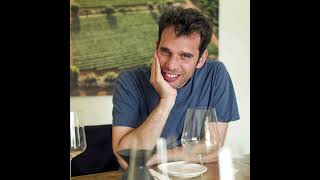
Eran Pick, Master of Wine and winemaker at Tzora Vineyards in Israel's Judean Hills, discusses how high altitude, limestone soils, and Mediterranean fog create stress that yields exceptional fruit. He took over the winery after founder Ronnie James died in 2008, and now produces about 10,000 bottles annually while recently acquiring a 100-dunam estate in France's Médoc region.
Chapters
Welcome to The Kosher Teruah. I'm Simon Jacob, your host for this episode from Jerusalem. Before we get started, I ask that wherever you are, please take a moment and pray for the safety of our soldiers and the safe return of all of our hostages. The following is an extremely interesting conversation with Eran Pick, the winemaker and general manager at Syrah Vineyards. Eran completed his BS degree in viticulture and enology with highest honors at the University of California, Davis. He was hired at Syrah by its founder, vintner, and legendary winemaker Ronnie James in 2006 for Following a few training periods at wineries in Napa, Sonoma, Barossa, and Bordeaux. Unfortunately, in early 2008, Ronnie sadly passed away, but Eran has continued his legacy, conservatively growing the team and their vineyards in Shoresh, focusing on the Judean Hills region's terroir. Last year, Eran and Sera's second winemaker, Dan Scheinman, along with Golan Flam, Flam Winery's renowned winemaker, purchased a winery in the Médoc region of Bordeaux, France. It was a true honor to spend time with Eran discussing his past and very exciting future wine plans. If you're in your car, please focus on the road ahead, and if you're relaxing at home, please grab a delicious glass of kosher wine, sit back, and enjoy. I'd like to welcome you, Aaron Pick, from Sora Winery, onto the podcast. And I have a few questions.
Okay.
Can you give me a little bit of a rundown of your personal wine history? Where did you start getting into wine? What did you do before you got into wine? You know, like—
I fell in love with wine quite late in my life. I was My first glass of wine probably was when I was 22 years old. Before that, I didn't grow up in a family that drank wine. I never saw any wine on the table. But I was lucky enough to be in the Israeli Air Force, and we were sent— when I was 22 years old, I was sent to a flight simulator. In Germany, um, in a German Air Force base that was very close to the Mosel Valley. And, um, we were training during the day, and during the afternoon we had free time, so I visited a few wineries. Um, and actually, when I— I remember there were one of the best on the Mittelmosel. One of them was Dr. Loosen, the other one was Delbach-Oster, and they welcomed me very nicely and gave me some Mosel Riesling to drink, and I was extremely surprised. First of all, from the warm welcome, from the beautiful vineyards outside of their wineries, and from Riesling. It was such a beautiful wine to experience, especially it was my first experience. So, you know, it's half dry, it's very light, very aromatic, and very easy to fall in love with. So I came back to Israel and start— that was mid-'90s, the Israeli wine industry started to be serious with very nice small wineries like Domaine du Castel, Tsorah, the first years, and very nice wine shops like Dere Chayayim in Tel Aviv, Avi Ben in Jerusalem, and they started to have a small wine culture in Israel. So I started to get interested in wine, reading books, going to small wineries, some of them don't exist anymore, but in Israel, and start to travel in France to wine regions and After I finished my duty, I decided I want to make this my profession. So I moved to New York and then California and studied winemaking in UC Davis. That's the beginning. That was the beginning.
You said that you did wine— you did the WSET.
Yeah.
Where did you do that? That was in America already?
Yeah, I was in America. I think I'm the first one to graduate with a diploma. As an Israeli. And that was in 2000. I started studying in 2001 when I lived in New York.
Yeah.
Um, in New York there's the International Wine Center, a place where they taught still today WSET courses. And I, I did first the advanced— back then it was called the advanced— then the diploma, what today they call Level 4. And I studied in New York, which is a very nice place to study because you have so many wines available very easily. In Israel, it's much tougher, but in New York it's great. So I studied, it was in Chelsea Market, and I graduated in 2003.
Very cool. And then you went into— then you decided to go to UC Davis?
Yes. So before that, actually, Way before that, I think in 2001 maybe, I decided to make it my profession. So I approached Davis and I said, I want to study winemaking. I don't have a bachelor's degree. I want to have my bachelor's degree in viticulture and enology. But I want to stay in New York as much as possible. What courses can I study 'Can I finish in New York and then transfer?' You know, all the basic, the first 2 years, it's kind of a pre-med studying. So you do all the chemistry, physics, biology, organic chemistry, and so on. So I done that in New York and transferred these courses to UC Davis, and I finished the degree in viticulture and enology in 2006 in UC Davis. Yes.
Wow. So, and then 2006 you came here?
Yeah, so I actually planned to stay in California. I done— I worked— I've done a harvest in Sonoma and I worked as a student. I worked in a laboratory in a very nice place in Napa Wine Company in Napa. And they actually, I could, my plans were to stay there, live in San Francisco maybe, and work in Napa or Sonoma. And, but I wanted to do another harvest, so I got a very nice harvest after graduating. I went to Australia to do a harvest. You know, you do it as a young winemaker, it's better to do 2 harvests a year.
Right.
North hemisphere, south hemisphere. So I went to Australia, in the Barossa Valley. And before going there, I came to Israel to visit my family. And I visited Ronnie James, who founded the Tsaraf Vineyards. And he actually, after a few minutes after he met me, he told me that he was looking for a winemaker. And he offered me the job. I was very surprised, but he took me to the vineyard in Shorish. And I knew Ronny as a wine lover in the '90s, and it just looked as a great opportunity. So I said, yes, I would love to come, but I want to go to Australia now. It was, I think, January 2006. I'll come back in July and start work in July. And he said, yes, that works great. So I came back after harvest in Australia. Start working here. As most people know, Ronnie was quite sick in 2006, and he wanted— he was looking for a winemaker for a while. He wanted— because he's done a great job in finding vineyards, and kind of, uh, he is— he was looking for someone, uh, to continue his job. And I was lucky enough to come at the right time. Very lucky.
So Ronnie passed away in 2008?
Yes.
And then you—
February 2008.
Yes. And then you, you really took over. You took over before that because he was sick anyway. So he was already passing the baton to you.
Yeah, I think I was very surprised when I came in 2006. I was— I didn't have any experience, of course, as a winemaker. I had done a couple of harvests, I knew about wine, but it's different when you're responsible. It's very, you know, it's a big— we had done a big harvest in 2006. I was surprised that Ronny, I knew he was very hands-on, it was very hard for him to pass away his duties to another person, but in 2006 I was very surprised that during the harvest he almost didn't interfere. He came to see, he was quite sick and he came, he was here, but in the winery he almost didn't. I remember I was very surprised that he almost didn't come inside the winery. And of course, as any young winemaker, I remember all the mistakes I've done, or at least some of them, but for me it was a great kind of, he threw me into the pool and I start swimming from the beginning. So 2006 was a big harvest. 2007 we decided to have a smaller harvest, but from 2008 on I was alone, yeah.
So what started the thought of getting a Master of Wine? That's a huge undertaking.
Yes.
Especially with the winery and everything else that you were doing here.
Yes, I think My personal thoughts about being a winemaker: there is the scientific knowledge which you gain through a university. You can of course do it by your own, but it's better to go and, you know, the scientific knowledge gives you the ability to open a book or open a new scientific paper and understand, or at least try to understand. It gives you the basis to understand the scientific papers. Which I think is important, but doesn't make you a good winemaker. It does not. For me, being a good winemaker, you need to have a great knowledge of the world of wine. Different styles, different grapes, different regions, different possibilities of what to do with— you grow Chardonnay, that's good. You know how to ferment, that's good. You know that a wine needs to go through malolactic if it's red, but do you have any vision where the wine is going? What kind of style? With this question— these questions for me are much more important than the scientific knowledge. So I really think that the WSET is a good basis of the world of wine knowledge. Is a good basis, but the Master of Wine gives you a lot of, let's say, a lot of practice and experience, maybe a lot of asking questions, very difficult questions, trying to answer these questions, knowing that there isn't, you know, as you go deeper into any knowledge, you start to understanding which questions you can ask You understand that each question has many possibilities. There isn't any only one possibility. So for me, it was not very easy because I was working here full-time. I had 3 small children, and you need to work, you need to study during the evenings until very late, but It gives me a great instrument, first of all, to practice my palate. Second of all, to understand wine as a wider object. It's something that is not just grape juice that is fermented correctly and put into the bottle. It's much more deeper than that and with a lot of possibilities. And I'm very lucky and happy that I took this route.
Very cool. This is your 18th or 19th harvest?
Probably 19th, uh, 2004. Yeah, so you were here. Okay, yeah, 2024 is my 19th harvest.
Okay, I know you're very into the terroir, especially in Chaurèche. Yeah, the question— Chaurèche is the Is the vineyard— this is the sole vineyard that you use for wine?
Today we have 200 dunams in Shoresh with 7 or 8 different varieties for 20+ plots, which give us a wide range of possibilities in the blending process. As you know, all the wines of Tsoura Vineyards are blended and blended from different plots and different varieties. And for me, the Judaean Hills is a very interesting terroir. I like the soil, I like the different aspects. It's very beautiful, of course. The high altitude helps with cooler climate. Of course, we're speaking now during a day that is very hot. This is a super— I was already 7:30 in the morning in the vineyard, and it was quite hot during this morning. But this is, I wouldn't say rare, we have a warm summer, but it's not— it's quite convenient summer, not extremely hot. I think what—
it's about 700 meters?
About 700, yeah. The average is 650, the lowest point is about 580 or 560, the highest is 700 meters. It's on the north aspect northwest aspect, and it's quite windy all the time. Breeze that comes from the Mediterranean. And I think it's great. I'm not saying it's the only excellent terroir in Israel, I think. But I think we are understanding that finding very good terroirs in Israel is extremely important. It's something that probably 30 years ago wasn't that important. And today, people who— I mean, winemakers or wineries that are looking to plant something interesting first look at the terroir, at the vineyard potential, and it's a good way to go.
Yeah, you really have to take into account the country. And exactly where you are, because so many people look in Europe, there are parts that look for south-facing vineyards, and here it's ideal to have, you know, a northern-facing vineyard.
Yeah, so of course we also, as you know, since last year we also grow wine in Bordeaux in a very nice plot in the Médoc region.
I was going to ask you about that.
Yeah, and it's a totally different terroir. You know, it's funny, someone, a winemaker there told me, ah, we're the highest elevation in the Médoc. And I asked him how much, he said 42 meters. So here, so there it's, you know, 40—
what a difference.
Yeah, 45th latitude. And it's, uh, they don't need, of course, the high, um, for Cabernet Merlot to, to ripen, they're very close to the ocean, they don't need high altitudes. Uh, and the soil is very, very different. It's a deeper soil, it's more sandy soil, it's gravel soil. But it's all, as you said, it's— you need to take into account everything. Although we grow the same varieties, for us it's— we have a cooler— sorry, a warmer winter. We have a warmer season. We have a shorter season. And we need, in order to get good ripeness in Israel, to go higher in altitude. And of course, look for the fenouil aspect to get away from the sun. Until the '80s or '90s, Bordeaux were looking for a lot of sun as well. And I think it will, because of the climate change, I'm quite sure that they'll move into a more shaded viticulture because they see today that they have warmer vintages as well.
What, what's the impact of having such shallow soil with the limestone underneath it, immediately underneath it? I know, um, when I went to Castel, it's amazing that you could even create a vineyard in, in some of these places because there's so much limestone.
It's almost on a rock, right? You're growing very, very shallow soil. For us, sometimes 10 centimeters deep. Sometimes 40 centimeters deep. A lot of the vineyard is around 30 centimeters deep. What does that do to the— what does that do to the vines? That the vines are quite small. They're, um, they're, uh, they can't bear a lot of fruit. They can only ripen very small amount of fruit. There's a huge difference between growing here around Sora let's say Cabernet Sauvignon, that you can put a lot of fruit on the vine because it has much deeper soil, much deeper vigor, much bigger vigor, strength, a lot of strength, a lot of reserves. In the mountains, they have— in the hills, they have very shallow soil, not a lot of reserves. The vines are very weak, so they can ripen not a lot of fruit. And it means that on most of the places we must irrigate. Here in the deeper soil, you can find places where you don't have to irrigate. Also in Shoresh, we have a couple of plots on a deeper soil near a water table that they don't need any irrigation. But I'm not saying good or bad, it's just the vine grows under different conditions and bears smaller fruit, sometimes more concentrated, more interesting than you grow on a deeper soil with a lot of fruit.
A lot of times people look to stress the vines in order to get more interesting fruit out of it, so I guess in a way that this, this is definitely—
it's a natural stress.
It's a natural stress.
It's, it's always on a stress.
Yeah.
Which means you're on the limit, always on the limit of ripening. And almost, uh, and it's very important to, to lower the amount of fruit.
Okay. So it's overall, it's always going to be lower yields?
Yes. Our average is about 700 kilograms per Dunam.
Okay.
And here you grow, usually depends on the wine of course, but if you grow 700 kilos per Dunam on a very deep soil, very wealthy, healthy soil, and you try to put the fruit down, sometimes you get big berries.
Yes.
Because It's always about balance. And finding a balance with smaller fruit on the hills, it's very easy. Finding a balance on smaller yield when the soil is very deep and a lot of, you know, not very stressed, it's very hard to find balance in lower amount of fruit. So you grow a lot of fruit and then usually you have let's say, I wouldn't say diluted, but not as complex wine from that.
Coming out of it.
Yeah, kind of coming out of it. Yeah.
The vineyard's interaction with the Mediterranean is how, is how does it interact?
It's very interesting. First of all, we see we are one of the first hilltops, uh, of the Judaean Hills. So when we stand in the vineyard, we see the Mediterranean. Yeah. The Mediterranean is very important for the Judeans. First, it brings a lot of wind from the west. We get wind from the west, which is better to get from the east and south of Israel because they are cooler, cooler winds. So it cools down— these winds, actually breezes, cool down the microclimate of the grapes. Um, in addition, we have some mists early morning because the cool air from Jerusalem and the warmer air from during the nights that come from the Mediterranean kind of inter— kind of collides together around the Judean Hills, and we see, uh, very nice, uh, fog in the morning. Which is important because it brings cooler and more shade in early mornings to the grapes.
Kind of like San Francisco.
Yeah, in Napa it's more extreme because on the Napa floor you really have cool breezes coming from the Pacific Ocean, and you see a lot of times the hills in Napa are above the fog.
Right.
It's quite the same, quite the same. I think, I don't remember the the frequency that that does happen. But, but in Napa, I think it's more often. But here you have from time to time fog, which is very nice. And that's why we call one of the wines Misty Hills. Um, and, um, and, and it's more— it's what we call a classic Mediterranean climate. Let's say in the east part of the Golan Heights, you have more continental climate, which means sometimes a warmer day, a cooler night. Here the Mediterranean moderates the climate. You have a bit warmer nights, but you have cooler days.
Are there any other additional key attributes of the terroir that express in the wine?
It's very interesting. I think Limestone is the story of this region. We have in— it's practically like we are growing on a limestone.
Yeah, on the limestone.
The Tethys Sea was here millions of years ago, and we believe millions of years ago.
Yep.
And it left a lot of micro elements, creatures that actually fell apart and all these creatures created the limestones.
I love the fossils.
Yeah, so we have many, many, many huge fossils in the vineyard. And I think limestone is very important in wine. Usually limestone brings elegance and minerality into the wines. And actually, when you look at the greatest Some of the greatest soils around the world, limestone is part of it. Famously in Saint-Émilion, right bank, you see that the best terroirs are filled with limestones. I think it moderates a bit the alcohol, it brings minerality and elegance into the wine.
Tell me a little bit about the history of the Judean Hills. Was it always covered with the vineyards like this?
No, so if we talked 40 years ago, 30 years ago, yeah, something— there weren't any vineyards on the high part of the Judean Hills. I think the first small vineyard in the Judean Hills was planted by Eli Ben Zaken, next to his house, very small, I think 2 or 3 dunams, I'm not sure about the size, but with his wines I think he planted in '88 or something like that. I think first vintage was '92. And then Ronny planted in Nevé Ilan in '96, first wine was made in '99 called Ilan. Tsuba planted after that and then in the late '90s early 2000s, a lot of people planted more and more vineyards. Before that, in Shores, we start planting in 2000. Before that, there were cherries, peaches, plums.
Yeah, I think so.
And they change to vineyards in the early 2000s, and One of the reasons actually was because of water availability. Vines need much less water, and back then, 20 years ago, water was a big, big problem. Then solved by desalination a few years later. But today, I think very close to 100% of the agriculture area on the high Judaean hills is planted with vineyards. There's still, I think, a bit, maybe bit apples, maybe in Souba and maybe in Gouche Tzion, I'm not sure, but maybe some cherries. But I think vineyards now are almost 100% of the area, which is quite fast from 0 to 100 in 20 years. It's unbelievable.
Unbelievable.
I think two things happen. One is, as I said, water availability. Maybe some of the fruit, as cherries, probably need cooler winters, and with time they just— the yield just dropped and probably became less quality fruit. So vineyards were the best solution, and it's very successful. And I think today there are so many new vineyards I think probably the biggest holder of vines is probably Barkan in the Judean Hills. And then maybe— really? I think so. They have a few hundreds of dunams. Castel is one of the biggest, probably about— I'm not sure— about 400, 500 dunams. We have 200 dunams, and there are medium-sized and small wineries that grow in the Judean Hills. This is what's It's not like in the, you know, it's quite small patches of agriculture in the Judean Hills, a lot of forests, and in Adlan. How do you say Adlan?
I don't know, I'm sorry.
Real estate.
Real estate, okay.
And then in real estate, you know, so real estate actually is the probably biggest a challenger of today, biggest competition. And some vineyards are being pulled off because of real estate. Wow. Yeah, because the city Jerusalem grows to the west, and some villages and towns are becoming bigger and bigger, and some of the vines are pulled out because of that. Yeah, but it's It's a fact in many places around the world. Yeah.
Tell me a little bit about the history of Sora.
So Sora celebrated 30 years last year. We wanted to celebrate in November 2023, but unfortunately we had to postpone it because of course the 7th of October. Ronnie James was a vineyard manager. He grew— he was a kibbutz member who grew grapes for Carmel. Carmel is the biggest co-op in Israel back then in the '80s. I don't have the figures exactly, probably about 80% or 70% went to Carmel from the Israeli vineyards. He was very interested in wine and late '80s he wanted to produce his own wine. So he start, first vintage was '93. He asked help from the most knowledgeable and famous Israeli enologist who already had his small winery, Yair Margalit.
Okay, yeah.
So in '93 Yair Margalit helped him. And actually, there is a very interesting film that Eli Ben-Zaken in '93 filmed of Rony's first harvest, day of harvest, Sauvignon Blanc in this winery. And he was— I knew him as a wine lover in the mid-'90s. He was a person that people refer to him as Dr. Tewar because he talked about about the importance of terroir in winemaking. And he knew that from practice, not from books. He knew that different plots in the vineyard produce different quality of wine and different character of wine. So that's how we started. It was a kibbutz winery, yes. And it's very hard to have to kind of establish a winery inside a kibbutz. You have too many bosses and, yeah, and you need a very long-term vision in order to succeed. And in 2006, when I came to the winery, it was the same year that Nathan Hevoni, the current owner of the winery, went and started to invest in the winery. He bought the winery from the kibbutz. And with the vision to produce excellent wine from the Judaean Hills, to have a very good, let's say, a name for the Judaean Hills in Israeli wine. And as you already mentioned, Ronnie died in 2008, unfortunately, and since then we kind of continue his vision of producing wine that tells the story of the terroir of the Judaean Hills.
Is there anything different today that you've— how have you put your mark on the winery from the time of Ronnie?
It's funny for me, I always rather other people, you know, kind of comment, comment, or interrupt, kind of think, interpret, interpret the wines and trying to comment on the wine. What's different. Of course, of course, there is, uh, differences in wine growing and technical knowledge from what we know today, uh, compared to what Ronnie knew, uh, 20 years ago. It's totally different because for a few reasons. First, the world changed, the world advanced, winemaking advanced. Second, we have more experience from the same place, which is very important. And third, we have more money to invest in knowledge and equipment, in consulting. Since 2010, we worked with Jean-Claude Berrouet, who was the winemaker of Petrus, which has brought so much knowledge into the winery of fine winemaking.
That's amazing.
Yeah, so you didn't know that about that?
No, that's amazing.
Yeah, so in 2010, I approached Jean-Claude Berrouet, the head winemaker of Pétrus. He started in Pétrus in '64 and actually retired in 2007. 64 vintages, 44 vintages in Pétrus. Wow. So I approached him and asked him to help us to produce world-class wines, and I worked with him for many years. Today is 80 3. So until COVID came to Israel and helped us grow the vineyard and think about how we can make the best wine possible, and of course with the style that we're asking to produce— elegant, interesting, complex, not too heavy wines. And for me, he brought a lot of knowledge to my own winemaking. It was after Ronnie died already, but I think when you make wine from the same place for so many years, you make it differently. And it's not something that is special for Zora. I'm sure that if you go to Victor Schoenfeld and ask him how different is the winemaking today and what you made 30 years ago, he will comment that it's quite different because he has much more knowledge.
I'm interested in Šoriš. It's amazing to me how segregated are each of the plots. What are some of the things that differentiate between the plots that are there? How did you, you know, I know you set it up with the different varietals.
Yeah.
And is Gewürz now one of the whites that you handle, or do you bring that from outside?
So, uh, we, um, We have, we had a beautiful plot until a year ago. It was planted in 2000 and we need to replant it.
Okay.
So now we don't have it, but we, what we do now, what we did is actually replant, not replant, we replanted a new plot that we had before we had their Cabernet Sauvignon, we planted it with Riesling in order to make Oar with Riesling. Hopefully we have very small quantity this year, but next year we'll have a bigger quantity because the first year you always get a very small quantity from a new plot. It was planted in 2021. 2021, yes. Right, so that's before. And The different plots, each plot has its own character. What makes it different? First of all, before I go into what makes it different, it's important to say that if someone doesn't believe in the concept of terroir, he just need, he or she need to taste the same variety from two different plots and see that they taste very differently.
From the same vineyard?
From the same vineyard, different plots, and constantly, consistently, they have the character of the plot. So we have one plot called Harouv. Harouv is the name of a plot because there is a harouv tree there, and it's, uh, it it's blended with Cabernet Sauvignon, it tastes quite differently from a plot that we call "Nuubanim," which is fossils plot, and they're only 20 meters away. How that happens, what's the reason, it's a big, big question. But we know that the vines get from two big sources, gets all the elements. First source is the sun. Through the leaves gets the energy through photosynthesis. The other one, the other big source is from the roots, minerals and water. And this, that's why the soil is very important, because the soil holds all the elements the vine needs. And it's very complex matter. It could be the physical traits of the soil, the chemical traits, The mineral— there are about 17 minerals that the vine needs. Some of them are macro elements and micro elements. Different types of elements, different quantities make big difference in the character and quality of the grape. So if we have, let's say, for— if you're very rich in nitrogen in one place, very poor in another place, it will make a big difference in the grape. And that's why wine tastes different from different plots. But it's not something that I can say, the reason Fossil plot is so special and that's why we produce Misty Hills out of it. I cannot explain exactly what's special about fossil plot. But I can say it has a north-facing aspect, is on a slope, it's very, very rocky, it's quite shallow soil, the vines are in great balance without a lot of work on them. All this I can explain, but I cannot kind of write, you know, the recipe why it's that.
I'm going to ask you a silly question, almost silly question. Is there a percentage, what's the percentage effort when you're making good wine between the vineyard practice, the fermentation, yeah, and then the actual process of blending?
Yeah, it is, it is, uh, you know, it's kind of a silly question but not really a silly question. I, I, I remember reading Ronnie James quotes on that, and he said about 95% is vineyard, 5% is winery. I'm not sure. You need very good vineyard to make an excellent wine.
Yeah, without good grapes you can't make anything.
That's true. But I tasted some very good wines from mediocre vineyards with very high skills of winemakers, very high skills, high-skilled winemakers. And wine is very important. In the winery, you don't do a lot of work to make great wine. I mean, you know, you ferment the grapes, but to know exactly when to press the grapes, not bringing the wine with too much oxygen, during the aging process, not putting too much new oak to ruin the great fruit character of the wine. It's also very, very skilled winemakers. You need very skilled winemakers in the winemaking, and the more skilled you are, you learn to go away, to go back from putting additional flavors on the wine. Additional flavors like as new oak, right? Um, but you are a very, uh, experienced wine drinker, and you know that a lot of wines that come from great vineyards are not as tasty as you expect them to be. Because, um, I would say, if I had to say, um, I, I, I, I go away from Ronnie's, uh, answer and say that a very skilled winemaker and smart winemaker and knowledgeable winemaker could make, could, will make better wine from mediocre wine than a mediocre winemaker will make from a great vineyard. So I can't say exact percentage, but I tend to go through a skilled winemaker.
You barrel age all the wines that you have?
Yeah.
So what's a typical aging period of time?
It's quite boring. It's— we are— for red winemaking, we do double sorting. We do normal fermentations on the skins about 2 to 3 weeks, and then we put in the barrel between 12 and 14 months. All of the wines, we treat the plots the same way, plus minus depends of course. Some plots can take higher percentage of new oak, some plots will not take so much new oak because they're quite fragile. And for the whites, we do fermentation in barrels in 3 size formats, the classic ones: 20, 25, 225 liters, 500 liters, and 2,000 liters, what we call foudre. And after fermentation, we leave the lees, the dead yeast, in the wine and not disturb the wine until bottling. Only a few batonnages.
So you don't do batonnage?
We do very little, one or two times, lees steering. And that's it. So the winemaking is quite— I wouldn't say it's very work-intensive in the winery. We don't move the wine a lot. We do, for the reds, we do only one rack and return. So not a lot of work in the wine.
What's your production like?
In a normal year, it's 120,000 liters. 10,000 bottles a year. We, we're going to grow to maybe 140,000 because we keep on planting. Uh, last planting was 2023, only 10 dunhams or 11 dunhams, but in 2025 we're going to plant another 20 dunhams. We planted all—
so how has this expanded from—
we have still a few plots that we We have a few plots, we can grow up to 300 dunhams easily. So we have 100 more. We're taking it quite slowly, we don't want to do everything at once. All of our growth is very conservative. We are not pushing ourselves too hard.
So the focus is obviously on quality, not quantity.
I think You know, this sentence, I think every winery in the world focuses on quality.
Quality?
I would say that, but when you grow at a certain size, you start to forget about production, and the main problem is about sales. Once the main problem is about sales, you forget about the production. So everybody wants to produce the best wine in the world in very high quality. But for me, growing too big for your ability is when you start focusing about sales. That's kind of the, for me, the key.
So you brought up before this winery in Madoc.
Yeah.
That's hugely exciting. That's an incredible reach.
Yeah, we, I like to say in Hebrew that we threw ourselves into the pool and now we're looking if there is any water in it. It's a very exciting project. It's as we like to do it. We didn't, you know, we had a chance to make a label, to be a flying winemaker, but it's not interesting to us. We start, we bought a very interesting estate in the Médoc region, 100 dunams, which is small Bidoque region, and the terroir was very interesting. I was looking for, uh, 40 or 50 different, uh, estates, and that was the most interesting terroir. And the— I tasted wine from the '70s and '80s, and they made marvelous wine back then. And, um, and it's, it's a big challenge because we, we were very fortunate that the previous owner stayed with us as the vineyard manager and is very knowledgeable is a very professional vineyard manager. So the, the vines are very healthy, the vineyard is greatly taken care of, and our job is to understand how we can make a great wine with our style— elegant wine from the Médoc— in a sustainable way. It's very, very interesting, a lot of work, much more than I thought it would be. The French are very into bureaucracy, a lot of bureaucracy. And a lot of different things we need to think about. The mildew danger is much higher there. There is a frost danger. To get into ripeness, it's not very easy. But because the climate is different, the soil is different, it's very interesting to us. To make wine in a different terroir.
What's the— are you facing any limitations being able to keep the Cru Bourgeois as a certification, as a classification?
I'll give you, how you say, scoop. Scoop.
Yes.
How do you say scoop in English? Scoop. Scoop.
Yes.
We're not going to keep the Cru Bourgeois. Okay. Because we can, we can. When I started to get into the wine business in the '90s, not the business, but loving wine, Cru Bourgeois was very important. I think today it lost a lot of its importance. We're not going to get into classification, we just want to understand the best wine possible from our terroir.
Cool.
Uh, so we don't want any limitation. Of course, we're going to grow there as now Cabernet Sauvignon and Merlot. We're not going to grow Syrah very soon, maybe one day, I don't know. But we're going to make a wine that is under the state's, uh, the château's name. And, uh, just trying to see how we can, because as anyone knows, Bordeaux is facing a lot of difficulties in selling wine. It's making too much wine, but the wine there is so great. Bordeaux wines are really, really great. And once we make a very good wine, I'm sure we're going— we can be successful. It's going to be a long journey. I don't expect it to be very easy, but I'm very optimistic. It's something that will keep us busy for the next 20 years for sure.
I love, um, Golan as well. I love his wines. Look, for me, both of you make such elegant wines. It's your—
for me, for me, it's all about the people, you know. It's, uh, Golan and Dan and the other winemaker of Zora. We just came back from Bordeaux last week. Just, just a great experience. I mean, I think wine is about people. When you're working with great people, when you're drinking with great people. Wine is just a way, you know, it's just a vehicle to get to know great people and to talk with great people and to meet great people. As my first experience in the Mosel Valley, I think I was lucky to meet during my first visit in '96 great people. They said, wow, beautiful beautiful vineyards, great people, tasty wine. Let's go, let's go into this business. So for me, making wine in Bordeaux region with people I don't like is not a possibility. It's, it's, it's the only way to enjoy the way and to make great wine is loving the people you're working with.
It's the same thing about drinking wine. Yeah, the drinking wine, especially now, um, with a group of people who have really come together from all over the world within the kosher wine segment. It's become awesome. Yeah, it's become an awesome experience. It's become an awesome experience. Is there any facts that customers should know about the winery here that, you know, that they just don't see or they just pass over?
For me, um, If people love the wine and love again the people that enjoy drinking the wine and love the people they're drinking the wine with and the people of the winery, for me is enough. I'm not too keen about too many facts and even, you know, we don't even say the exact grape percentage that we make the wine or too much winemaking facts because for me it's too boring. It's not very important. It's not about recipes. It's about hopefully believing that the team is doing everything it can to make the best wine possible each year. And in certain years it's quite, let's say, easy. Like 2022 is a very beautiful year. In some years it's quite difficult, like 2021 was too hot and very harsh.
How was 2020 for you?
2023 for me is in between.
2020.
2020 for me is a very good year, quite fruity, very balanced, not very mineral, but a lot of balance.
2023?
2023 is something between 2021 and 2022. 2022 was very light and aromatic. 2021 was very concentrated and deep. '23 is something in between. I'm not sure how it came out, the reds. The whites are already in the market, but the reds will start the blending process only in a few weeks. So I'm not sure, but I think it's going to be an okay year. It's not going to be the greatest, but that's what we do in life. I mean, we're trying to understand each vintage. The character. And our work is to make the best wine possible.
Thank you. Thank you very much for being on the, for being on the podcast. I really appreciate it.
It was a pleasure.
I really appreciate it.
Thank you for talking to me and asking. It's a great, and of course, it's, it's—
I love your whites.
Thank you.
Your 2023 whites, so I love them even more than the 2022s. I really love them.
Thank you very much.
Yeah, pleasure. Great. Shalom, bracha. This is Simon Jacob again, your host of today's episode of The Kosher Teruah. I have a personal request. No matter where you are or where you live, please take a moment to pray for our soldiers' safety, and the safe and rapid return of our hostages. Please subscribe via your podcast provider to be informed of our new episodes as they are released. If you are new to The Kosher Teruah, please check out our many past episodes. And thank you for listening to The Kosher Teruah.










