Four Cups, Shared Traditions: A Journey Through Kosher Wine
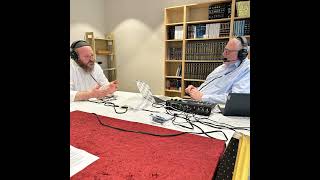
Simon Jacob, Nachum Siegel, and Rav Shlomo Katz discuss kosher wines for Passover's four cups, recommending La Forêt Blanche rosé, Flamme White Label, a light Grenache, and Yakovouria's late-harvest Gewürztraminer. Israel now has over 300 wineries, and they explore the "fifth cup" tradition in Hasidic communities.
Chapters
Welcome to The Kosher Teruah. I'm Simon Jacob, your host for this episode from Jerusalem. Before we get started, I ask that wherever you are, please take a moment and pray for the safety of our soldiers and the safe return of all of our hostages. Welcome to the Kosher Terroir. This episode was actually part of the JM in the AM episode hosted by Nachum Siegel on NSN This Week. It took place in Efrat at Rav Shlomo Katz's beautiful synagogue which celebrates its 3rd anniversary this Shabbat. We all tasted wines that were my suggestion for the 4 cups of this year's Passover seder. There was also very serious discussion between Nachum and Rav Shlomo regarding the Shvi'i Shel Pesach celebrations that occur among Hasidish communities, and the custom of the 5th cup of wine at the seder for those celebrating Hashem bringing them back home to Eretz Yisrael. I know that this could have been heard earlier as part of Nachum's morning show, but it was so meaningful to me. That I had to publish it within my podcast. So without any further introduction, welcome to the party.
All right, Simon Jacobs says that there are some recommendations he has for this year's Pesach Seder when it comes to delicious kosher wine. Simon, 20 years ago, there were only a certain number of kosher and especially Israeli wines. You know what's going on today in the wine market? You know what's happening now with Israeli wine?
There are over 300 wineries.
Gosh, what happened?
In Israel. Over 300 wines.
What happened to the people that don't drink? All of a sudden they're into wines from around the world, and especially Israel.
But that said, I want some— this is a much more important issue. The more important issue is that we're coming up on a Shabbat. And Shabbat always has, after Shacharit, a Kiddush club.
Whoa!
Even Shirat David? Let's check this out. I don't know if they have a Kiddush club here.
And one of the problems is the real people who come to the Kiddush club always need their whiskey. And the whiskey is chametz.
It's already put away.
So everything's put away. And to say that—
What a conundrum!
It is. It's a big problem. It's a big problem. So just so that you should know, the people who drink whiskey, when they started to make whiskey and also the other spirits, their goal was to create something like brandy. That was the goal. And the reason why it was a goal was because grapes weren't available all over and brandy was only in certain areas. And it's actually also only in certain seasons to be able to get great products. Okay. Where you can make, you can basically distill things any time of the year that you want to. So the issue was, how do you get something that's like brandy? Here we are on Pesach, you can actually drink brandy. Now in the past, there were very few and really not very good brandies, especially here in Eretz. I mean, there was 777, which you could use to actually cook food on. I mean, people used to pour it into a container and light it. And that was really basically the brandies that were available. We are now living at a time where not only do we have wine, we have some incredible brandies. And they're not only brandies that are coming in from France that are absolutely kosher, but we also have brandies that come from the Golan. There's one of the best brandies I've ever tasted in my life is a brandy called Julius. And you can get it easily in Israel. It's a little pricey, But it's spectacular, and I strongly recommend that on Shabbat for the Kiddush Club, it goes great with everything. Thank goodness you solved it.
Okay?
So you're solved. You're solved as far as the Kiddush Club is concerned. Thank you. Okay? So that's number 1 on the hit parade. I just want to make sure we get to the Shabbat Kiddush first.
By the way, Simon's solution is good 20 years from now also. Yes. Because that's the next time that Shabbat will be erefesah.
It's good all the time.
Let's put this in the archives, right? Yes. 20 years from now they could dig it out of their computer file and find out what did the Jews of the 2025 era do when they were faced with this problem? And they'll have an answer.
Me'echos.
Baruch Hashem.
100%.
Look at this, we're going down in history, Solly.
100%. Great. I'm ready for them to use it in 20 years. Okay. So let's talk about the 4 cups. Okay? The 4 cups for the Seder. For the Seder or Seders if you're in— if you're in what area of the world you're in, if you're in, uh, outside. So most of the mavens with regard to the Four Cups, the mavens of wine, create a, um, you know, they have a game plan, and typically they have a precise game plan as to what they want to do, especially in today's world with the wines that are out today and what have you. So they take different approaches. And last year I created a podcast where I asked people their game plans for Pesach. And there were some really interesting game plans. In fact, one that, especially for people in Hul, only for people in Hul, included doing only Israeli wines for the first seder and then doing wines from Hul because it's actually only applicable in Chutz Laaretz. Okay? So that was one, and that's a sort of thing. And some people pick a wine that they love and they drink it for all 4 cups. Some people, some enthusiasts pick bottles based on specific things that are going on in the Seder and specifically people who are, who are there. All right. And as we talked before, because there's so many wines, there's a desire to have a playlist the same way where you had all of the, you had, you You had a couple of music songs on your Walkman, as I remember, and now you've got thousands of songs and you need a playlist. You need something to be able to go to and to modify. Okay, first of all, I just want to mention that if their kids are in attendance and if you want to stay absolutely awake for the, for the, for everything, there's always grape juice and You know, my family loves Kedem, and you can actually get Kedem here, which is actually from New York grapes, which is kind of crazy. And then there's Tiros, which some of my family likes, but most of them don't. But I kind of like it. And that's the options for grape juice, but grape juice is always an option. Kabbalistically, there's a definite preference for red wines. Okay, so you've got to really drink a red wine for the Seder, for the— for the—
some will drink white and pour a little red in it.
Yes, some people do that, or some people start out with a rosé. So in the recommendations, I'm going to make it a rosé for the first wine, and I think that there's a— there's a reason for that.
So you have a very anxious crowd ready to taste some wine.
Here we go, here we go. I'm sorry, I'll be quiet.
Be here for the big wide tasting.
Okay. So, I happen to have 4 glasses here. So this is what you use for the first cup. The first cup is La Forêt, the White Forest.
La Blanche.
Blanche.
La Forêt Blanche.
It's the White Forest, and the White Forest happens to be the Beit HaMikdash. Okay? And it comes from a winery that's in Yatir, Near Yatir, it's in the Yatir Forest. And actually, that area was planted, the grapes were planted by David Amalek in order for the wine that eventually came from there to be used in the Beit HaMikdash. So that's where that came from.
You need to pour some for yourself. Everyone's about to make Elohayim.
You have to at least have a glass. Okay, okay, okay, okay.
The paparazzi is taking photos of you.
Okay, here we go. So this is the rosé from there. It's actually La Ferrette Blanche. And it's a wonderful, it's a 2024.
L'Chaim.
L'Chaim. Ruach HaTodah Nai L'Chaim. B'rei pri ageth.
Amen. L'Chaim, l'Chaim, everybody.
Okay. You have to drink it.
This reminds me of Siddhis Mashiach. Wine after wine after wine.
Okay.
Oh, do they? They don't do that, Shusha Hazem. Of course. It's not an Afrodzhe Pessach diaspora thing. Shvi shvi Pessach shabbes afternoon, they're gonna do it. I love it.
So this is a light wine. It's fun, which I really think the opening wine should be. It's low alcohol and it's perfect. And actually using a rosé at your Seder probably is going to generate questions. So it's the first question. Okay, let's get to the second.
What's this one called?
The second is Flamme White Label.
Nice.
It happens to be a rich, very robust wine. I'll pour less.
I don't— Yeah, you gotta slow this down, Simon. I know. Oh my gosh. Okay. We got people driving after this, including you, by the way.
I know. Okay, so it's a White Label by Flamme. This is a robust wine. This is what's gonna go into the meal. And it really needs to be robust and it can carry forward through the meal.
It's a rugged wine.
It's a good—
It needs to aerate, as they say.
Yes, it's a good— it's a great wine. Okay? Some other wines that you might choose are like the Grand Vin by Castel, the Vitkin Cab Franc, or Shirazim, or the Shiloh Secret Reserve or Mosaic.
It sounds like you're getting emotional. Okay, I am. Does the wine make you emotional?
It makes me incredibly emotional. So, l'chaim. We'll try this one. This is the cup 2.
I got to get back to this topic with Rav Shlomo Katz for a minute. Do you think your Buri is doing a siddur shmashiach on the 7th day of Pesach? I need to know. No, not a chance. Okay, just wanted to clear that up. Rafi is also weighing in on this. You grew up together.
Oh my.
In Fair Lawn. Holy cow. We thought we were insiders, Rav Shlomo. He really knows him.
They grew up together.
In Fair Lawn, New Jersey, it sounds like they grew up together. Together in Fairlawn. Yep. All right, there you go. Next one. My mahoutin's from Fairlawn.
Okay, we're now up to the cup 3. All right, and you've got— this is a lighter red wine. It's something, uh, that's enjoyable. Jay, I think, brought up a thing of using a Pinot Noir. Pinot Noir is— there are very few of them. I'm, I'm more interested in something like a Grenache, which is also A light, low, reasonably low alcohol wine. It's really good.
Okay, so you're pouring away, it seems.
No problem, I'm happy.
Rafi, were you ever at Rabbi Yehudan Seder or not? No? The Grenache.
This is a Grenache.
This is the benching wine.
This is made, this is a benching wine. It's made by Danny Friedenberg. Wonderful.
We'll fly through this Seder, Simon, I'll tell you. Record time, I must say. We're already at bedshik.
This is made by Danny Friedenberg, who's an incredible winemaker who works for Tepperberg. So this is a Tepperberg. Again, all of these wines are accessible in the United States or Israel. So, and I'm only doing Israeli wines because we're here. Okay. L'chaim, tovim mishalom.
That was some Seder, let me tell you.
Wait, we're not done.
First, first time the matzah is not weighing on me, frankly.
Okay.
And now the fourth cup. This would be the near tzar, actually the halal wine. This would be, this would be what we're sharing with Eliyahu Hanavi. Am I right? This would be the wine at Kotel Eliyahu's. So we got to be particular. We're not giving him no grape juice, Simon. We're not doing that.
This is a golden red wine.
For the number one prophet, Simon, we're not giving him grape juice. So no concord call for that gentleman. He's getting the real stuff.
Okay, Nachum. Okay, Nachum.
Go ahead. I'm excited to play along.
No, no. So Jay—
The number one kosher wine sommelier in the country.
Yes, Jay Buchsbaum brought up that he felt that he wanted to finish the Seder with a sweetness and a sweet taste in his mouth. So this is a sweet wine, all right, which is perfect for the end. And it really goes with the afikomen. It's excellent. It will bring back the flavor of the afikomen.
Nothing like that.
Okay, so this is made by Yakovoria. It's called G, and it's for a Gwurztraminer.
Okay, it's a— yes, it's the first wine words I ever learned from Jay about 35 years ago.
Yes, so this is a late harvest skin macerated wine, which means that it's specifically very sweet, but it's also, um, Not so sweet that it tastes like, you know, sugar. It's got a really incredible flavor. It's an extremely well-made wine. And it's made by Yakovouria.
Did you pour that one already?
No, I didn't.
Alright, it's time to pour the fourth cup. We made it to the fourth cup, everybody.
I'm not being rushed or anything.
It's okay. Well, it is radio after all.
Okay, I know.
Alright. See, the crazy thing is there are a few things I just thought of that I have to ask for Slow Mo Cats, and I'm not leaving town without asking. He's got to get back on the air today. So hopefully he can come on. Hopefully he has until 4 o'clock with us. I hope. Once I brought up Sudas Mashiach, there's too much I got to talk to him about.
Baruch Atah Adonai Eloheinu Melech HaOlam, Tov Emetiv.
Amen. I think Rabbi Ice needs an escort home. He's all kuma. Could you call somebody please?
Just wait a way, he said a Tov Emetiv on this way and not the right way.
So why a Tov Emetiv is the question.
I actually make a Tov Avmei Tiv on every wine. Okay? I make it on every wine.
So you're knowing you were doing a series, you'd put it in something.
Yes, I would. Okay?
I think that's an acceptable—
Now, this is made by Yaakovoria, but there's a whole bunch of really good, nice wines. Dalton makes a wine called Anna, which is a Solera method wine, which means it's the barrels are left out in the sun. Castel makes an M, which is a Moscato. Specifically, I brought that up for you, Nachum.
That's my wine.
And Sarah makes a wine called Or, which is also a Gewürz. So that's the lineup.
And I know where those 4 corks are going.
Yeah, they're going back in the bottles.
Simon has a cork collection in his house.
I do, I do.
1,000 corks?
I do, I do. Don't suggest that to my wife because she's been trying to get me— Yes, yes.
Is there a Pesach?
This is the time. I know, yes.
Hey, Barry Jacob, this is the time to get rid of that stuff and say you're doing it with sheid mitzvah, to clean up the Pesach.
Put this on.
Simon, thank you for everything.
No problem. What do you think of this?
My favorite one.
What? Isn't that great? Isn't that crazy? Yeah. Pesach. Yeah.
Tzudas Meshiach. I thought it was exclusive to Stutzlar or Tekan. It takes place here on the 7th day of Pesach.
Definitely in this show.
Right.
Oh yeah.
But it's not like you brought it with you from the diaspora. It's had its— in Caracabá they're doing it.
Yeah, but it used to be mainly in the Lubavitcher.
Right. Now it's all over in Brussels.
It's very big and serious.
Trust me, there are plenty of modern synagogues that have taken on the custom. You know why, Rabbi? Exactly. If there's an opportunity to have 4 cups of wine, hey, like we just did now. So that means, in all seriousness, Shalosh Shuris Tov on Shvi Yishol Pesach, because it is a Shabbos this year. Shalosh Shuris Tov on Shvi Yishol Pesach will be, in all seriousness, 4 cups of wine.
It will be.
Plenty of great singing.
Yeah. Yeah, by us it's a lot of real Dveikus and Torahs that are really about all the longing that we have for, that has come across this Chag HaGeulah.
Is there something about your Seder that I would find intriguing? And I'm sure I'd find all of it, but you got my point. Like, you know, thank God I come from a household where the Seder, Nachon, is, you know, so there are always many highlights. Is there something about the Katz home where there's a part of it that would just grab me?
The most intriguing part is the one that leads the Seder. My father.
Seriously? Yeah.
My father is Kohen.
So you're the host, but he's the leader. Your wife is the host.
My wife is the host. I sit at the side of the table and my father at the front. My Abba leads the Seher. With the Nigunim I grew up with, with the Nusach I grew up with, all those things that are really becoming my children's, my children's Gears of the Ankus. It is so special. It is such a privilege.
So I will tell you a short thing and then I will tell you what I learned over the last few years. As you get older, you learn more and more and you realize how little you know. And not in reference to you, in reference to me. First of all, what did I bring from the United States for Seder night? What did I bring? What did I bring that was not for my son, my daughter-in-law, my friend, my granddaughter, and frankly my wife, because she lands so late this week that we have to make sure to take her stuff in advance. So it's What did I bring for myself? I brought one thing. My father of blessed memories, Haggadah. Because different people in the family, obviously, were given different things to utilize. His becher, and then different things. The ka'arah, I forget whose house the ka'arah is. It actually might still be ours. But the Haggadah that he would use every year is the one that I will be using, please God, at the Seder. It is unbelievable. You talk about, thank God, having your father at your side and alive and well. I hold it, and I am at the head because my children have such tremendous respect for me, which I do not take for granted. I am at the head of the table holding his Haggadah.
Oh, so special.
It is just amazing. One of my sons, I think I may have said this to you off the air, but one of my sons said to me, did you ever think the first Seder you would ever be at, one of your children would be in Yerushalayim? Is that cool?
It is so beautiful.
So that is number 1. Number 2, I realized that there is a tremendous emphasis, anybody who is listening knows this, on Torah study the night of the Seder. And I get it. Maguid is a tremendous portion, and even families that do not generally spend time during their meals speaking a lot about Torah, are immersed completely in the Torah portion of the Haggadah. But I realize, don't let the avoda get lost. The singing, the spirit, the incredible— I mean, I can only imagine what is going on with your family— the incredible hislavus that one feels toward the One above through this experience. Chayav Adam lir'ot hatatzmo ki ilu hu yatzam mitzrayim. We are obligated to feel that we are experiencing the Exodus that night. If you could come up with the right balance of the Torah and Avoda, of what feels— Because when my father conducted the Seder, we have a special Seder Nusach, the Haggadah Nusach. This is the Nusach of the Haggadah. So it feels like davening. It feels like it. So yes, there is plenty of Torah study, and we do talk about Harei Ani Ki Ven Shivim Shana, but that is done with a Nusach. That is done in a Seder Avodah. So that is another point I wanted to make. And finally, and your friend Rabbi Yehoshua Fass would say to me now, "Do not bait me because I do not want to say something I do not want to say." But I am going to do it anyway. Harav Shlomo Katz, here in your shul, I can tell you that the story that begins with the Exodus from Egypt has only one ending. And that is V'hei Veti. That is the Jews of the Diaspora, the Jews who spent hundreds of years in Egypt, eventually getting to Eretz Yisrael, getting the Torah along the way, etc. I would hope you would join me as we get closer and closer to Pesach and remind everybody that that is the ultimate goal. As Nachum Siegel says very often, the future of the Jewish people is in the State of Israel.
You're baiting me. This is not fair.
Who are you going to go up against? The New Yorkers? The LA people? Who are you going to give musser to now? I need to know.
You know that, I don't know if Rav Judah shared with you when you were with him, he shared it here, he was here at Motzei Shabbos at a beautiful program we had for his new Agada, and he brought up the fifth kos.
He speaks a lot about it.
Fifth kos. 5th Kos, which Rav Gorian was the one to really point out. He really tried to re-establish it, and he would drink it, which of course is a—
How do you drink it?
Mechbechule. We are all holding right now by the 5th cup. There is nothing else. Everything, kulamahuvim, everyone is doing amazing things. It is about the 5th cup more than ever. The Heveti. So I give us a beracha to be tuned in to that Lushon, and I cannot agree with you more, because my father does not say the Haggadah, he davens the Haggadah. It is all Nusach. Rav Shlomo's father, he used to say, he gave over a Temiyerishkeit with the Nusach that his father used to say, "HaLachma Anya." The same way every single year. So I give us all, what you said is like the point of the whole thing. It's the night that you could give over Yiddishkeit to your children more than any other night of the year.
And I do believe, by the way, that if you do Seder night correctly, it enhances the other Yom Tovim of the rest of the year and the Shabbos table of the rest of the year. The children are more receptive to hearing more Torah and to be enlightened by more conversations about the Parsha, etc. People don't realize how important Seder night is. It's a fulcrum of the entire— You're right.
In Chassidus, they say it is called Leil Shimurim. What does it mean, Shimurim? Is that whatever happens Seder night, or it gets shimur, it gets chamur, it gets guarded, and it is basically placed throughout the rest of the year, just like you just said. We bottle it up and we save it for the rest of the year.
Right. The funny part is that I know that when people think of investment, They think of money. And we did point out, I think it was Rav Judah who said it during my conversation with him, we did point out that people spend more on Pesach than the rest of the Omer Torah combined. So let the investment for the rest of the year in the area of Torah and Avoda be the same way. Let Pesach be as intense as it is supposed to be. And hopefully as a nation we will realize, and I mean that as a nation, not just individually, all the people making Aliyah, establishing their families here, sending the kids to the army, etc., etc. Let us collectively as a nation appreciate the fact that this is where we belong. Again, not just individually and not just communities, but Am Yisroel belongs right here. With joy. Now that you are back on the air for the last 2 minutes, I am being serious, I hope there is somebody out there who wants to help you build a mikvah. I am serious. Why not?
Baruch Hashem, we have come a long, long way. There is so much programming here. I am inviting everyone. I think I should know this by heart, sirad-davieh.com or.org, I think it is.com. There is someone here that is waiting for you to partner with you in the Avoda, get the Mikvah. We have an amazing—
L'el Shabbat is like what? How would you describe L'el Shabbat here? I do not, festival?
I do not even know what to call it.
Oh, you did say festival earlier, right?
It is intense. It is real.
And that is good. That is essential.
It is the best. It is a dream. It is a dream.
So you are not into my 25-minute Kabbalah Shabbos. You are not into that.
Not in the least. But you know what? I will tell you the truth. It is also not about Dafke making it 3 hours. Because it is not 3 hours here. It is what it is. It is just about, yalla, Kabbalah, let us receive Shabbos for real. Kabbalah Shabbos. Let us receive it.
It is funny. I was in Yerushalayim yesterday, today, but meaning where I saw this, and one of the programs for Thursday night to attract youth, I saw the poster, I do not know if you have seen it, is Kabbalat Shabbat. And I said to myself, that is a good message. Because we always talk about Shabbos is coming, etc., etc., but let us start being mekabel Shabbat as early as possible and in the best way possible.
That is why Rav Shlomo would wish you a good Shabbos on a Wednesday.
Right.
That was the second half of the week. He also wished me Gemara Tov on Chanukah because he felt that the Hasidim, that they said Gemara Tov on Chanukah. Should we do the whole thing now? Should we go through every Rav Soloveitchik reference we have?
We could.
Should I tell you every story that I have at this point? It's more meaningful to me, by the way, that I have personal stories with him now that it hit me that you never met him. Because, you know, you're speaking to somebody who had the privilege, and I'm not, I'm not joking around when I say that. I had the privilege of, I'll never forget, I'll never forget, he came once to my brother's shul. So people walked from everywhere because he was davening for the Amidbar. So how often do you get an opportunity? So it's now Chazores Hashatz of Shachars. What is everybody waiting for? Nimm kongfa. Nimm kongfa. And there's a guy in the shul who tries to out-Kalbach Kalbach at his own mincha. And I'm talking about the real mincha, if you know what I mean. The early one. And I'll never forget it. By the way, that reminds me of another story I've shared with you, where Kalbach says to me that he bought a toy guitar. You remember now that I say that? He bought a toy guitar for his niece, and he was on the plane before takeoff. You know, just strumming along this little toy guitar. And an old couple walks by, and the grandfather says to the grandma, look, another one trying to be like almost great.
It's a compliment.
Not only is it a compliment, it's a story that could only happen to him. God bless you, my brother, and thank you for everything. I've had a lot of wonderful experiences in this type of share, and this has been just I'm so glad.
And first of many. First of many.
When I'm here permanently, I should visit Efrat on a more regular basis, shouldn't I?
First of many.
Yeah. Do a lot of live shows, basically. I did joke with you that if I— is there Hashkama Minyan in this building on Shabbos or not?
Is there Hashkama Minyan?
Well, we've been called traditional Hashkama Minyan.
There's Nitz every day, but Shabbos I want— there's Nitz every morning.
So you won't allow Hashkama Minyan Shabbos?
I want everyone davening together.
Oh, okay. I really have to stop looking at you, Shlomo.
Even the other nights?
Because I joked with you. I joked with you that I'll be be the one to move in to make the 90-minute Hashkama minyan, and you and I will be at odds forever after that. Anyway.
There is a Hashkama down the block. It is a nice minyan.
You see? You see? We had all the bases covered. You have everything in Efrat. I move into this beautiful apartment that a friend of ours has and has said to us, please use it for Pesach, which is such a bracha from the One above. Mariv, 5 feet in front of the front door. Shakhris downstairs in the parking lot. And a Mincha Maariv, I just found out, also 5 feet in front of the door, just much earlier than the 9 PM Maariv. Isn't it amazing? Israel has everything. My brother wants to write a compendium of every minion in the state of Israel. You know what that would take? You never see the Jewish Link with what's going on in Bergen County, right? This would be a lot more, right?
Encyclopedias, yeah.
You ever seen a davar beita?
Yeah.
That's what it would be like. Anyway, I could do this with you all day, but Simon says we got to get back to Jerusalem at some point.
65 minyanim. In Efrat.
Shuls. Shuls.
How many?
65 shuls in Efrat is what we were told.
That's unbelievable.
We were the 45th or 46th when we broke ground, and that was before Tamar, the other two mountains here, took up.
Would you like to hear the Solomon Brothers to wrap up, Jay and Ian? Always. Here they are. A big thank you to Rav Shlomo Katz, all of our special guests, and the wonderful city of Efrat for hosting us on a Wednesday pre-Pesach at JM in the AM.
This is Simon Jacob again, your host of today's episode of the Kosher Terroir. I have a personal request. No matter where you are or where you live, please take a moment to pray for our soldiers' safety and the safe and rapid return of our hostages. Please subscribe via your podcast provider to be informed of our new episodes as they are released. If you are new to The Kosher Terroir, please check out our many past episodes.










