From Saxophone to Vineyard: Jeff Morgan's Covenant Journey
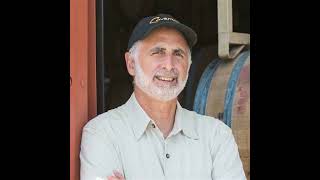
Jeff Morgan went from jazz saxophonist to co-founding Covenant, the world's most celebrated kosher wine label. He partnered with Leslie Rudd to make premium Napa wines that compete with the world's finest, pioneered rosé with Solo Rosa, and recently returned to music with the Free Run quartet while expanding into brandy and spirits.
Chapters
Welcome to The Kosher Teruah.
I'm Simon Jacob, your host for this episode from Jerusalem. Before we get started, I ask that wherever you are, please take a moment and pray for the safety of our soldiers and the safe return of all of our hostages. Today we uncork one of the most fascinating journeys in the world of wine. My guest is Jeff Morgan, a man whose life reads like a vintage novel. Jazz saxophonist in the South of France, wine editor for The Wine Spectator, author of books that helped redefine rosé, and finally, the co-founder of Covenant Winery, a label that redefined what kosher wine can be. Jeff didn't set out to make kosher wine. In fact, he didn't even grow up religious. But what started as a tasting of Napa Cabernet shared with a late friend and visionary, Leslie Rudd, became a mission to prove that kosher wine could stand tall among the world's finest. Whether you're a longtime fan of Jeff's work or just discovering the soulful side of kosher wine, this is one episode you don't want to miss. If you're driving in your car, please focus on the road ahead. If you're home, please pour yourself a glass of wonderful kosher wine and let's dive into the music, meaning, and mastery behind Covenant Wines.
Welcome to the kosher teruah.
Wait, aren't you even going to introduce me?
No. Okay, welcome Jeff Morgan from Covenant, and it's a pleasure to have you in Israel. Welcome home.
Okay, thank you, Simon. It's a pleasure to be back in Israel. Um, I've been gone too long. And I don't— I'm not going to let that happen again. Okay.
Please, God. There's wars, there's plagues, things like that. Some of the things are out of your control.
Yeah.
Okay. Yeah.
So, well, now I'm just going to have to fly El Al because it's the only airline I can count on.
Yeah.
Not to cancel my flight.
100%. I know. So does he.
But they've been, you know, El Al, to their credit, they've improved. Things because the last time I flew El Al, I said I'll never fly that airline again, but that was about 10 years ago. It was great.
They have great flights, great service. And if you're in business class, you get like 7 wines that you can select from. You had 2.
I had Chilo Chenin Blanc, which is quite good.
Chenin is good.
And then I had a— we had a Vitkin Pinot Noir that was excellent. And then I had a couple of scotches. Couple of movies, couple of sleeping pills, and I'm telling you, that was the greatest flight.
I always say if the flight's not good, you haven't drunk enough. So, yeah, it's— yeah. All right, all right. You started your career as a saxophonist touring Europe. How did that artistic path shape your journey into wine?
That's a great question.
Is it?
Yeah. So Here I was, a nice Jewish boy with no religious training whatsoever, no education. And I moved to France at the age of 19 to study music at the French National Conservatory. And I went for lunch the first day of school, and they had a— canteen where you could go for 50 cents, get 50 cents of government-subsidized lunch. And it was Friday, so it happened to be fish, because it was a Catholic country in those days, it was fish. So I went, there were all these beautiful salads. I took a salad, and I went, the fish was the fish with the head on the fish, everything, a whole fish they gave you. Remember, this is 50 cents. Then after the fish, there was a cheese course, then there was dessert. And then there was somebody at the line who I barely understood because my French wasn't very good. And he said, "Monsieur." Oh, that's me. "Red or white? It'll cost an extra franc." An extra 25 cents. And I'm thinking, red or white what? And then I realized I saw these little splits of red and white wine. And I decided to splurge. I took the white. And if you've ever heard of Dom Pérignon and the champagne Dom Pérignon, Dom Pérignon, he tried for years to get the bottles to stay in the bottle without exploding the bottles. When he finally succeeded and he made his first successful champagne and he popped the cork and he said, "I am seeing stars." I had that same experience with one sip of that white wine, one bite of my little fish, once somebody showed me how to eat it. And I saw stars, and I realized I'd been eating and drinking badly all my life with my mom, God bless her, rest her soul, who made spaghetti with ketchup and other specialties of the house that were not particularly good. We had to drink the milk with that, as a matter of fact, as I recall. So it was an epiphany for me, a culinary epiphany that I did not realize would take me closer to God and Judaism. Wow. So fast forward, I spent the next 5 years in France, um, learning how to play better music and also learning how to eat better and drink better. And ultimately I became the band leader for the Prince Rainier of Monaco. And I, you know, I lived in France for quite a few years. And, um, and one night I realized that I was more interested in what I was drinking than what I was playing, even though I had this great band, was making a lot of money. And I decided to become a winemaker. And that brought me back to New York because nobody in France would hire an American saxophone player to be a winemaker. I didn't know anything about making wine, I just loved to drink it. And I became— I got a job at a little winery in Long Island, New York, worked there for a few years learning how to make wine.
North Coast?
North of the North Fork.
North Fork.
And after a while, I was making so little money at the winery that I went back to being a full-time musician, but I started writing about wine. And I got a call, and I got into the New York Times as a writer. The miracles happen, you know, Jews, miracles. That's our, you know—
Trademark.
Trademark. And then this, the editor of the Wine Spectator magazine saw my byline in, um, in the New York Times. I had a story on Long Island wines, and he called me and he said, you know, Jeff Morgan, are you the Jeff Morgan that was making wine in Long Island, that we liked your wines that you were making recently? And I said, yeah. And they said, well, we didn't know you were also a wine writer. And I said, well, yeah, now I am, you know, I'm a wine writer now. And I was getting very excited because the Wine Spectator, my dream, you know, my dream was to write for the Wine Spectator. And they said, "We have a story for you." And I said, "What is it?" This was January of 1992. They said, "We'd like to write you to write about kosher wine for Passover." And I said, that was a little my reaction, I started laughing.
I said, "What?" Comes back to bite you.
I said, "Is this a joke?" And they said, "What do you mean?" I said, "Well, I never had a good kosher wine. I haven't had very many, and I don't even know anything about kosher wine." And they said, the editor, a guy named Tom Matthews, he says, "But you're Jewish, right?" 30 years ago, 33 years ago, they could say things like that. "You're Jewish?" I said, "Yeah, I'm Jewish." But like, no bar mitzvah, no nothing. I don't know anything about this. They said, "It's okay. You just write what you want." Last year we had a non-Jew write the story and we were accused of being antisemitic. So this year you're our ace in the hole. Say what you like and we're safe. It's your foot in the door, Morgan. You want to write for the Wine Spectator, take it or leave it. So I took it.
Yeah.
Took it. And I was completely lost. I didn't even know where to begin, but I knew that there was some company that sold a lot of kosher wine and it was called Royal Wines.
Yep.
And I picked up the phone and I called them and I didn't even know who to call. And I said, you know, my name is Jeff Morgan, I'm Jewish. Doesn't sound Jewish, but I'm Jewish.
Yeah.
Doing a story for the Wine Spectator. And they said, oh, let me pass you to Nathan Herzog. I didn't know who Nathan Herzog was. We now know that he is one of the biggest mockers at the Royal Wine Corporation. So he says, well, this is great, but let me pass you to our, our educator. Somebody, somebody you know, Simon. Mr. Jay Buchsbaum.
Yep.
He will tell you everything you need to know and more about kosher wine. And that was really the beginning of my whole thing. Kind of crazy. I never imagined that 10 years later I would be making a wine that became, has become one of the, I think, one of the premier kosher wines in the world, Covenant. But I had no idea at that time.
So that's actually a question that I have. When you're working on the West Coast for the Wine Spectator, You probably tasted thousands of wines, okay?
No, every year I tasted thousands of wines.
Yeah, that's what I mean.
But I wasn't— at that time I was still in New York, on Long Island.
Okay, alright.
They moved me in 1995 to the West Coast, but my job for the first 3 years was to travel around the world, especially to France, to taste French wines and write stories about French culture because I was one of the few guys who spoke fluent French. So they took advantage of that, and I was happy to go back to France. But, um, but what's the question?
No, so the question is, what experience, what pivotal experience made you decide that you want to make your own wines?
Well, I actually, um, so I, before I got that job at The Spectator, I was working in a winery in Long Island. So I was making not my wines, but I was a cellar rat and a vineyard, and I worked in a vineyard also. So that was a very seminal time for me to learn about winemaking and grape growing. And then when I moved to California, I lasted another 5 years, so 8 years totally with the Wine Spectator. And one day I was getting really bored of writing. Journalists start recycling their articles. I mean, kind of, you plagiarize yourself even if it's not intentional.
It's hard not to.
After a while you do. How many winemakers can you interview? You're probably starting to experience this right now, Simon, with your podcast.
Yes.
And it's like, well, I'm really bored. I'm frustrated. I don't want anybody to tell me what to write anymore. And I'm gonna go back to— I'm gonna get outta here and move up to Napa. I was living in San Francisco, so I'm moving to Napa and maybe I'll get a job. I got a job as the wine director for Dina DeLuca, which at the time had a headquarters in Napa and started making a rosé called Solo Rosa, which was made from bleed. I don't know if everybody listening to this knows what bleed is, but it was, um, why it was pink juice that nobody wanted, and I was putting it in barrels and fermenting. I was making only rosé, Solo Rosa. I was the guy, one of the guys who started the rosé revolution. If we're drinking Oda Mountain right now, pink wine, it's because Solo Rosa, which was not kosher and it was not from Israel, it was my California rosé that helped change the world of pink wine. And I can say that because then I wrote a book about it. And the French government actually came and invited me to come to France and tell them how to get Americans to buy and drink more rosé.
So the question I was going to say, your book on rosé was one of the earliest to treat the category with serious respect.
Yeah.
Why rosé and why then?
Well, remember, I was living in Nice, France, where rosé is king. So I was drinking a lot of—
I didn't know that.
Yeah, rosé is king in Provence. Nice is in Provence. So I was drinking a lot of rosé, and I knew it was good. And then I knew it, I don't know, I just figured nobody else is doing that, so I'm gonna do it. So first I tried, you know, I was the king of rosé, then I was the king of kosher. It's like my father was called Hardway Morgan, and I think his son has inherited that moniker.
So do it, because I was going to say, at that point in time— well, the question I have is, has public perception of rosé finally caught up with what you saw back then?
Well, yeah, not only did it catch up, it overwhelmed me. I mean, when I started, nobody was doing this, and then all of a sudden people realized, wait, maybe this is something we can make money at. And I started an organization called RAP, the Rosé Avengers and Producers. We had pink hats. On the East Coast, on the West Coast. And we did all sorts of fun stuff. And we started with 10 members, and then within several years we had 250 members. And everybody, you know, when you're, when you're, uh, you know, yeah, I sound a little full of myself because I say when you're a visionary, you know, the good news is you're the first one with the idea. But then once it catches on, um, then you're overcome by all the people who come after you, especially those with bigger, deeper pockets and And we just couldn't keep up with— we couldn't keep up with demand and we couldn't compete with all of the brands that came out. By 2008, Sola Rosa was over. However, in 2002, I was up in Napa. We had a Jewish tasting group. None of us were particularly religious, but we were all Jews making some of the most famous wines in Napa. Silver Oak and Harlan, all Jewish winemakers. Winemakers. And we had a little tasting group and we heard that a guy named Elie Benzacquen from Domaine du Castel was visiting Napa Valley. We invited him to come to do a tasting and he brought his, I believe it was his 1999 Castel Grand Vin, for us to taste and it was absolutely delicious. And two of us there, myself and my late partner Leslie Rudd, who had a very famous vineyard in Napa Rudd Vineyard. We looked at each other and we thought, gee, maybe we can make a great Napa Valley Cabernet like, like this, and like as good as Castel. And that was the beginning of Covenant. It was kind of on a lark. And the odd thing is that that wine wasn't kosher. The first vintage of Castel kosher was 2020— 2002.
Yeah, 2002 was half a year. —And 2003 was the first full year.
—Well, 2002 we're tasting is 1999, which was fully not kosher. But we were so clueless. We thought it was kosher because it was from Israel. Jews, Israel. So that's— so it's ironic that our— my entire kosher program and my newly found, relatively newly found connection to Israel came from a wine that I thought was kosher from Israel that wasn't kosher. Eli knows this, and I think we both get a chuckle out of it when we bring it up.
So I'm told, and I'm not positive that it's factual, that Covenant was born in 2003 from a single barrel of Napa Cabernet. False. What? False. False. See?
Yeah, who told you that?
I don't know. That's— that was the story that I heard.
No, what happened was I wanted to use Leslie's grapes because he had this very famous vineyard, fantastic Cabernet, and I said, so let's I said, "Let's start with your grapes, Les." 'Cause Les was a very wealthy man and he had this kind of an empire. And he said, "Are you kidding? What if you screw it up? It's gonna be the worst kosher wine in 5,000 years from Rudd Vineyard." And I said, "Well, what do you wanna do?" He said, "Eh, you find another vineyard. We'll buy those grapes and we'll start with that and see how you do." So that other vineyard was a very famous vineyard called Larkmead, which until the— for several years prior to 2003 had gone into the Rudd wines because Rudd had been replanting his vines. And so he had been using the Larkmead grapes, and the winemaker at Rudd at the time was a guy named David Ramey, who's a very close friend of mine and a great winemaker. And Dave told me that Larkmead was going to need to sell those grapes. Because Rudd was no longer buying them. So I did a deal with, uh, with the Larkmead, the owners of Larkmead, and that deal lasted, I think, for 10 years. I, I sourced grapes from their vineyard, from a single block there. So it wasn't a single barrel, it was a single parcel. It was a single parcel. And, um, and it happens to be when I finally bailed on that parcel, only because I hated the owner and I didn't want to deal with him anymore— it's fantastic grapes, um, they started using my parcel for their top-of-the-line wine. So, so anyway, but, um, we were very fortunate to start with some terrific grapes. So we started, I think we made, uh, actually I know exactly what we did. We did 14 tons the first year. 14 tons is a lot more than one barrel. Yes, it was, um, I, you know, you get, I don't know, maybe, um, it's, you get about 2 tons per, 2 barrels per ton. So, you know, it's about 28 to 30 30 barrels. Right. And I needed Shomer Shabbat hands. There were none at the time in Napa, so I had a meeting with Nathan Herzog of Royal Wine Corporation prior to the harvest, prior to starting the project, and I said, Nathan, I have this idea. I want to make the greatest kosher wine in 5,000 years. And we were having dinner in a restaurant in New York, and I told him this, and then I burst into tears. I started crying, really sobbing. And it surprised me. It surprised Nathan. And he goes like, "What are you, meshuggah? What's the problem, Jeff?" And I said, "I don't know, Nathan. I just, you know, I wasn't expecting to start crying. I was trying to get you to let me use your winery to make my kosher wine." And he said, "Oh, you can do that as long as you let me be your distributor in New York and New Jersey." And I said, "Great." But I think in retrospect, we look back and we know that that was the beginning, the door opening to Jeff Morgan and his family to Judaism, which I hadn't really thought much about up until that moment. Wow. It's kind of all on a dare that this started, really. It was kind of, "I don't think you can do it," you know. And I knew you could do it because I knew from writing about— I wrote about wine, kosher wine, for The Spectator for 8 years. Every year I had to write that that kosher wine for Passover. So I know you just make kosher wine like regular wine, you just don't work on Shabbat and other holy days, and you got to have Shomer Shabbat hands. But I made the— I've made Covenant the way I made any other non-kosher wines. So I knew we could do it, and we did.
So Covenant set out to elevate kosher wine to kind of world-class standards, I believe. What was the initial reaction? I mean, that's— From the kosher and non-kosher worlds.
So, I mean, in retrospect, okay, we set out to elevate kosher wine. I think that is a bit pretentious to say.
Chutzpah. A little bit of chutzpah.
That wasn't really, we just wanted to make a great kosher wine from Napa. And I think it was more about respect. You know, like, okay, I've been writing about kosher wines. Everybody denigrated them. A lot of them were not so good, but there were some really good ones too. I knew this after all those years of writing about kosher. So it was more of a quest for parody, so to speak. I mean, I had spent, by that time, I spent 20 years tasting the greatest wines in the world, from Château Petrus to DRC. I mean, I've tasted the greatest, greatest not kosher wines made anywhere in the world. And my goal was to make wines, you know, that approach that kind of quality and keep it kosher. That was the goal. And I think we've been successful because we don't succeed every vintage to the same level, but some of our wines are as good as the greatest wines I've ever had. And if we don't get 100 points from various pundits, it's only because antisemitism is still rife in the, in Even among Jewish wine writers, nobody can believe it. So they give us 96, they give us 95, they give us 94, but God forbid they should give us the 100 points we deserve for a 100-point wine. And they don't yet. And maybe they never will.
But it's okay. So, going back to your comment that you didn't grow up religious, but kosher winemaking became a major part of your life. What prompted that personal and professional shift?
Well, it was kind of that story I said, the tasting with Castel. Yep. Right there with, you know, it's like, Eli was there. He didn't know it, but I mean, I kind of, we were talking to, I'm kind of doing soto voce to Leslie Rudd. I'm going, do you think we can make something this good, you know, keep it kosher out of Napa? And it was kind of like, well, yeah, let's try to do that. And I really wanted to make Cabernet, Napa Valley Cabernet. Not kosher, just any Napa Valley Cabernet. I was living there, and Napa Cabernet is the most famous of all their varietals. And I didn't have any money. I couldn't get started. And Les had the money, and he only wanted to do it with me if we kept it kosher. So we argued for a full year. From 2022 to 2023, we argued about this. And I said, "I really don't wanna make kosher." And he said, "Yeah, yeah, we can do this." And I thought, "Okay, we're gonna do it." And so that was the pivotal, it was kinda like the only way I could get started was to keep it kosher. Oh, no, I wasn't religious at all. I'd never gone to synagogue in my life. In fact, I didn't join a synagogue until I was 60.
Was that Castel wine really good?
Yeah, it was good enough to inspire us to try to make something equally good from Napa. I've had some phenomenally good Castel over the years.
Me too. Yeah, me too. I had a— at my daughter's wedding recently, I had a magnum of 2003 Cab and it was just great, just wonderful.
And I think Castel maybe has possibly the most beautiful winery in Israel also. I'm terribly jealous. What can I say? I want that winery.
I know. You could eat off the barrel room floor, you know, it's crazy. I love it.
Yeah. So that, I mean, that's how it all happened. It was kind of Certainly not planned. And then what happened is I was, you know, I was making— I was bringing my wines, driving my grapes down in a big truck to Herzog's Winery down in Southern California, working with his very dedicated— their very dedicated team of cellar guys who were Shomer Shabbat. And, you know, there were two rules. One rule was I can't touch the wine. The other rule was they couldn't touch the wine unless I'm there. Because I want to make sure they do it my way and not whatever other way they might do it. So I spent a lot of time with them during harvest and I watched them do things I'd never heard of. Something called mincha, something called marav, something called tehillim, they were reading, I don't know, all this stuff. And I realized I really don't know anything about what it means to be Jewish. I knew nothing. And that was, I guess, the first year I realized that maybe I should learn something. I didn't know the Covenant was gonna be so well-known, but I had a feeling that if I was gonna become a kosher winemaker, I better know something about Judaism. So I started learning.
I was gonna ask, how did the Jewish tradition evolve along with your wine journey?
I think it was really inspired by the guys in the cellar at Herzog Wine Cellars originally. I mean, Jonathan Haidu was there, The Weiss brothers were there and all these guys and a guy named Josh Goodman was there. Josh is fantastic. He's not— he's still working for Royal, but he's not in the cellar there. All these guys really were inspirations to me when it comes to getting more connected to Jewish tradition. And I'm very grateful for that. Nathan Herzog, very, very instrumental in keeping me connected as well.
Have you found that you've got an increasing number of non-kosher wine consumers buying? I don't know how you'd know that.
I'd like to think we do, but you know, we don't— when we sell a bottle of wine, we don't ask, "Are you Jewish? Not Jewish?" So we have no idea. I suspect that, you know, maybe 80% of our customers are, or more, are observant. I think non-observant Jews might dispute this, but they're our worst customers because they can't believe kosher. They're the only ones who really don't believe kosher can be good are the guys, are the non-secular Jews who will spend $1,000, $2,000 on a bottle of Petrus, but God forbid they should ask, pay $200 for a bottle of Covenant. Nah, there's no way it could be that good. But they don't know. They're clueless. Whereas, you know, we're on the wine list at super famous restaurants like the French Laundry. They have just bought a case of our Syrah from the Bien Nacido Vineyard. And there are plenty of famous non-kosher restaurants. We're by the glass at some super famous restaurants in San Francisco. So it's— nobody knows that the wine's kosher in those restaurants. It's not marked. There's no billboards flashing kosher wine. Kosher, kosher. So I think people drink our wine, they don't know, which is fine with me.
Covenant once had a thriving Israeli wine operation. Looking back, what did that chapter mean to you and the winery?
Whoa, that's a big question. I know. So why did we come to Israel? In 2011, Leslie Rudd, my late partner and I, we had become, thanks to people like Robert Parker who wrote "The Covenant's the Greatest Kosher Wine on Planet Earth," we became pretty famous, at least pretty well known in secular and religious circles. Actually more in the secular world because the religious people didn't even read Robert Parker. 'Cause he's really, 99% of the wines reviewed by Robert Parker were not kosher. So, but we became pretty well known. And I don't know, around 2010, 2011, Les and I said, gee, you know, maybe we should go to Israel. Maybe we should like see what's going on over there. I came to Israel for a month when I was 19 on my way to France. I stopped in Israel. It was 1973. I got out just before the war broke out, not knowing there was going to be a war. And Les hadn't been around back for 20, 30 years either. So we came to Israel. I have family here, saw my family, and, um, looked around, went up to the Golan, went up to Galil, particularly in the Galil where there's a lot of red soils and a lot of limestone. And I was thinking, wow, this looks just like— so this looks like the Rhône Valley, and it looks like parts of Napa. I mean, this is a great place to grow grapes. And, uh, of course it's a great place to grow grapes because, like, this is where it started. I mean, here and in other areas right around here thousands of years ago. And so then I thought In my mind, I thought, you know, why are we not making wine here? We're Jews. I mean, sure, we were Americans, we live in California, but this is really our homeland. We should make wine here. So we started here in 2013 with my dear friend, the winemaker Ari Earl, who's still here. He makes wine for Batshlomo and some other wineries.
And we just had a rosé by him last night.
Makes a really nice Dubuque also. And I think that might be his own label.
Yeah, it was. It was his own label.
And anyway, so Ari had been living in Napa, and we knew each other from Napa Valley. So I knew he was here, and so we hooked up. I said, look, you want to make wine with me here? I got to make wine here. So we started in Israel. We started with 3 barrels in 2013, which we made at Batsheleva— not at Batsheleva. We made it at Jezreel. 'Cause Ari was their winemaker at the time also. And I made the first couple of vintages at Jezreel, and then I moved up to Adir, up in the Galil, where they had more space, 'cause we were growing. And I was sourcing grapes from different vineyards, most notably Tsivon, which is a biodynamic vineyard, not far from the Dalton, you know, wine group. It's near the, just north of the town of Gish. And our blocks were bombed in the last year. Yeah. But in any case, so, you know, I thought, well, I make wine in California, I can make wine here. And we did. We made wine using my methods. I was going back and forth. I was here, believe it or not, I was here like 4 months a year. But, you know, 2 weeks, 3 weeks at a time, then back to California. It was kind of exhausting, but it was very exciting. And of course, getting to know Israel from a viticultural perspective as well as a cultural perspective was for me very exciting. We became Israeli citizens 3 or 4 years ago, as Jody did. My kids— my daughter Zoe was living here. She'd gone to the University of Haifa and eventually married her Israeli boyfriend. And Zoe worked with us as long as we were operating here, and now she's working with us in our California winery. And it was, it was just awesome. And I, you know, I have so many good friends here who are winemakers and connected to the wine business. I feel, uh, and I haven't been back for 3 years, which is partly because of the war, partly because whatever we got, you know, there's COVID. And so, um, but I feel very connected to Israeli wine even though— and here's what happened, uh, basically we just had a lot of trouble Cost— the cost of making wine here is not necessarily more than it is in the States, but I don't— didn't have my own winery here, so I couldn't control my costs the way I can control them, you know, with my own space, my own, my own crew. There are just economies of scale that work really well when you control your winemaking space, and if you don't every bottle costs you a lot. We just couldn't make enough profit even though we sold a lot of our wine to the States. And then we finally, after about 6, 7 years, people started to believe me that when I said, yeah, I really, I really believe in Israeli wine. And so we were doing very well in Tel Aviv in the restaurant scene here, secular restaurant scene. But then COVID came in, killed the restaurant scene. So we had like 2 years, no income whatsoever from, you know, Israel practically. And It was a challenge selling enough wine, making and selling enough wine in America, so we, for our Israeli product, so we just, in 2021, I tearfully listened to my wife and my CFO here and we realized we're just gonna go way broker than we already are here in Israel and we had to stop. And I didn't want to, I still don't want to. And if anybody listening to this podcast, very important here, this is the most important part of the podcast. If you know anybody with sales experience, $7 to $10 million. I have a spot that's for sale. I know where it is, but I can't tell anybody. And I know where I want to build that winery that I never was able to raise enough money for here in Israel. So I'm still trying to do it. And I want to build my winery and plant my vineyard here in Israel.
So you still think there's potential for world-class kosher wine from Israel?
You're talking about potential. Okay. Come on.
I love it. No, no, I'm asking you, listen, you're—
you've been in California, you've been in wine for almost all your life, and reviewed. I made so many people rich at The Wine Spectator. I know what good wine tastes like all over the world. In fact, nobody, not one winemaker on planet Earth, has tasted and reviewed as much wine as I have. Okay, that's why the Masters of Wine— I mean, yeah, you know, they, they've also tasted a lot of wine, and I respect them for that, but I know what great wine tastes like. Sometimes we make great wine too. It has nothing to do with whether it's kosher or Israeli or whatever. It's like you get a good vineyard and you don't screw it up and you make awesome wine. So yeah, but the only thing missing from my equation here is that I just— I didn't start with enough money. You know, it's true what they say about the wine business. You make a small fortune, you start with a large fortune. Well, I didn't start with a small fortune. I started with like a bank loan. And in Israel and in America as well. And I just, we just couldn't make it work fiscally. But I haven't given up. I'm just kind of, you know, when did, let's talk about old Jews who made it late in life. Moshe, he started kind of late. And there are others who got late. Akiva, he didn't start, what, '46 when he got started? 40. 40. I don't know, 40 when I started. I know, yeah, you know, so we can do this, you know. I just need the money because I'm not gonna— I'm not coming back without having enough money. It costs a lot of money to get started.
There you go. So you've worked closely with your wife Jody. Yeah. Um, co-authoring cookbooks, 10, building confidence, 10. Wow.
Because That's what you got to do when you're not making enough money in the beginning selling the wine.
So what's the secret to that creative and marital partnership?
Ah, that's an excellent question that I will answer because Jody doesn't have a mic even though she's in the room here listening.
You could wear mine, I don't mind. I have a very—
it's a good, it's a good answer. So, you know, a lot of people say, oh, how can you work together? Well, I think What makes a great marriage is having shared vision, shared goals, and that could be your children, your family. I think that's shared vision. And I think, um, for Jodi and me, um, Jodi and I didn't always work together, but after about a year or two of trying to run Covenant by myself back in, say, 2004, 2005, I really need— Jodi was a social worker, and she— and then she was, uh She had other— she was an executive director for a food and wine organization in the States that was founded by Julia Child and Robert Mondavi. So she was very busy, but I said, honey, I need help. And she graciously agreed to, you know, stop doing her other things to help me run Covenant, which she has done, thank God, for the last almost 20 years. And it gives us a shared a shared goal in life to make it work, to make it sing, to make it successful. And so, you know, we don't come home, we don't leave the house in the morning, go off to work, and then come back and say, well, how was your day, honey? We know how our day was because we lived it together. You know, she's got the big office at the winery. I have a smaller office. And that's—
You're out in the vineyards.
I'm out in the vineyards a lot. So anyway, so it's great. I think that if you like your work, you like the vision, even though it's challenging, it's hard, I think the work has brought us closer together. And so I'm very grateful for that.
Your daughter Zoe has taken on a growing role at Covenant. What's it like to see the next generation step in?
Well, it's fantastic. I mean, Zoe is now the general manager. Wow. At Covenant. And that's very important. She kind of, you know, keeps everything moving smoothly. She has to deal with personalities and logistics and all sorts of stuff. And she does a great job at that. She grew up in the wine business. She grew up in Napa Valley. She grew up She also speaks fluent Hebrew. She's Israeli, and so she speaks, by extension, fluent Jewish. She gets our people, our customers, who come in various sizes, shapes, colors, and perspectives. And she's invaluable in terms of running Covenant, along with the other members of our team. But I hope that my kids— my other daughter is a Her sister Skye is in the restaurant business. She's the publicist for a small restaurant group called the French Laundry restaurant group, which is actually a very big restaurant group in America. So both of them are into food and wine, and I hope that they will continue to do so and maybe take Covenant to an even higher level along with our fabulous crew, which includes the famous Jonathan Haidoo, who makes— he's been making wine with me for 20 years, 21 years, and who has his own brand, as you know, Heydu Wines. And Segi Kleinler, who is our managing director, and he has his own brand now, which just became kosher, Kleinler. Really? Yeah. And he made— both of them make their wines at Covenant, so that's kind of cool. And then we have just, you know, awesome group in the cellar. Nomi Furman, who is our, who is our oenologist. Daschle, what's Daschle's last name? What is it? Ferguson. Daniel Ferguson, Daschle Ferguson, who is the master of piping the right music into the cellar to work, and also who's a terrific, he's basically the cellar master. And then of course we're losing We're losing Nelly Sagiv, who has been with us for 3 years. 3 years. 3 years. Yeah. This is Israel's gain and Covenant's loss. And anybody who needs a really great hands-on Shomer Shabbat cellar worker should not hesitate for a moment to hire Nelly Sagiv, who knows all my secrets and who will be here in July. He's moving back home to Israel. So, what else?
So you recently returned to music with your band Free Run. I love the name, by the way. How was— I love it.
My wife is just kibbitzing here. She's reminding me that all of my best ideas come from Jody, including the name Free Run, which is a reference to the The first wine that we let flow out of the tanks after fermentation, it's the best wine. It's not the press wine, it's the free-run.
Free-run. How has that reconnecting with jazz influenced your day-to-day life as a winemaker? Well, it hasn't.
What it has is influenced my day-to-day life because then I have to practice every day.
So, uh— I thought it was a way you could let off steam.
Well, it is a— you know what it is? It's kind of like covenant. What does covenant mean? Covenant is about a connection, okay? Connection to each other, or us, God, religion, our heritage. All that stuff is about connection. Well, the saxophone, I had not played for nearly 20, 25 years. I stopped playing because I got busy with wine. And during COVID when I had time on my hands, I thought maybe I should start to play again. So the horn reconnected me to something I loved and I had forgotten how much I loved. So we have incorporated some really interesting wine tastings into the, the— with the music. For example, 2 years ago, we did a concert with some of my old buddies who are super famous musicians now. And we did a concert at City Winery in New York where we did, in addition to the concert, we did 20 vintages. We poured 20 vintages, every vintage practically, of Covenant. That was really cool. And we filled the room, 200 people. I don't think they came for my saxophone playing, but it's okay, I play pretty well. But they came for the wine, and that was a lot of fun. You gonna repeat it again? Maybe. I mean, it's not so easy to get a room at the City Winery. Pretty expensive venue. We also did a concert in Paris last year that was a lot of fun at a jazz club where I think they were— we— they had some of our wines, which was good. And we have concert series at the winery where I just played one night about 2 weeks ago. I played a gig with my quartet, with the Free Run Quartet, and that was a lot of fun drinking Covenant. So Somehow we try to connect them, but I wouldn't say that the wine is— it is somewhat of a spiritual pursuit, just like the wine is, and it's an aesthetic pursuit, just like the wine is. So in that way, I would say they're related.
Okay.
Any new directions or projects exciting you? Yeah. At Covenant?
Twist my arm! Let me tell you about it.
Please, I'd love it.
So, have you heard of the Black Label?
Yes, I have actually. I've heard only great things about it. So the Black Label—
so, you know, the Black Label is, uh, for years, um, people have been asking me to make mevushal wine, and we finally succumbed to the mevushal, uh, requests. I don't know, maybe 7, 8 years ago. We were using something called Flash Détente, which which is used by a lot of wineries in California to heat the grapes before fermentation, and then you don't have to heat the wine. Okay, it's not very nice, denatures the tannins a bit in the reds, but it's good enough. But I really— but that wasn't our top-of-the-line wine. And our business partner, Jeff Rockwager, who lives in Beit Shemesh, by the way, and who took over after Leslie Rudd died and became our partner and is basically been an extraordinary support for us in the 6 or 7 years since Leslie died. So Jeff is a wine lover, obviously, and he said, you know, you really, you got to make a high-end mevushal. And I said, ah, come on, Jeff, you know, we're making Moshiach wine here. We want Moshiach, we want our best wines to be like not mevushal because that's what we're going to give to Moshiach. And Jess said, "Well, there's a market for high-end mabouchal. Do you think you can do it?" And I said, "I can't do it with this flash détente." So I went back to the drawing board with Jonathan Haidoo. And Jonathan, who's a really good tinkerer inventor, he created a new mabouchalizer for us, a new mabouchalizing machine, which is just awesome. It's very small. It's only about, I don't know, maybe 3 feet, 4 feet long, and maybe 2 feet high. We are able to push the wine through it, heat it super fast, and get it out of there, cool it down really fast. And we did an experiment with high-end Cabernet, and to my surprise, we discovered that this Mabuchalizer softens the tannins a little bit and heightens the fruit quality. So it actually makes a younger Cabernet taste pretty damn good.
You're the second winemaker who's told me that. So, yeah, that's— that—
so I was kind of surprised. And then, um, wow. So then, uh, we also make Pinot Noir. We make a Pinot Noir with our Lanzmann line, which is a club wine, which is not sold in retail shops. But, uh, but I wanted to try it with Pinot anyway, so we used some of our Pinot and we, we moussellized the Pinot. and we also noticed it was pretty good. So, um, what are you gonna— what are we gonna call it? You know, because I didn't want to— I didn't want it to have the same label as the Covenant regular, right? Regular and then babushka, and I want the same label to be confusing. So we decided we kept the logo, the Covenant logo, we kept the, the gold. But then I was thinking, what is like an immediate, um, uh, immediate eye-catcher? Eye-catcher. Immediately recognizable as quality. I'm thinking, well, there's Johnnie Walker Black Label. Oh, it's gonna be Covenant Black Label. And by the way, Covenant Black Label came out way before the Carmel Black Label. I'm sorry, I really, I already saw that. But the good news is that my Black Label costs $100 more than Carmel's Black Label. So, mm, how about that, guys? Yeah, and our Black Label is at the top of the spectrum. We have— last year I lost a Petite Syrah vineyard that was going into— most of which was going into our Red Sea blend. So I was looking around for another vineyard and I found a vineyard right next to the Matanzas Creek Winery, which came out with the first $250 Merlot in California about 20 years ago. Very famous vineyard for Merlot. And this vineyard is right next to Matanzas Creek, and they didn't have a buyer. And I said, well, I'll take those grapes. We'll see what it— you know, I didn't know what I was going to get out of it. The grapes are extraordinarily good, and we decided that they're so good that we're coming out with a Black Label Merlot. Wow. And we're gonna— we're bottling it in July. So we'll have the Black Label Pinot Noir, Black Label Merlot, and the Black Label Cabernet. And none of it is Napa anymore, but it's just awesome quality, very, very fine vineyards from Sonoma. All of them are from Sonoma, and I'm really excited about this. Now, we're still making our flagship Napa Nat Navushal Cabernet and the Solomon, which is our even more expensive, and I'm proud of those as well. But I'm really happy that The diners in kosher restaurants and also at simchas where they actually want to spend real money on real wine have our black label available. Excellent. Then we have a bubbly that's also a Baruchel and that's our— Okay. Which one? I'm getting prompts here.
So— Irrelevant. That's why she's here.
What, you think I was going to forget about this? So that's the next project. This is very exciting. By the way, we didn't talk about our brandy, which is the Double Edge Sword brandy, which we started making about 4 or 5 years ago. Okay, it's pretty expensive, but it's way better than the crappy, crappy cognac that I see a lot of people drinking that's artificially colored, not made with good grapes, and just not worthy at $350 a bottle. Thank you very much, I'll pass. But our wine, the Double-Edged Sword, very simply made, Chenin Blanc, uh, distilled, aged 2 years in covenanted barrels, tastes pretty damn good. And I, I defy anybody to tell me it's not better than your overpriced cognacs that people are buying because they think cognac is good. So the Double-Edged Sword is what, $175 in the States? And yeah, you're not going to drink a lot of it. That's a lot of money to pay.
That's my go-to during Pesach.
That's right. Listen, I drink a lot of scotch too. I drink a lot of scotch, but I'm a cognac guy. We were at a Pesach week at a resort in Cancun this year, and they just drink that stuff like it's water. It's very smooth. But anyway, the next newest exciting project is just starting to come to fruition because we spent the last 8 months trying to get the licensing for it. And it's our Woodacre Spirits program that is a joint venture with the great Jonathan Heydoux and Covenant Winery. So we're partners in this. And Jonathan is, you know, he loves distillation. He loves to distill things. And, and so it's a vermouth or something? No, he makes a vermouth, but it will probably— maybe we'll make a vermouth, a dry vermouth. He makes a sweet vermouth, which is not appropriate for this, right? But, um, so we're coming out with, um, uh, gin. Everything we'll make will be kosher l'Pesach except the whiskey that we're going to do also. So the gin and the vodka we're going to do in-house. And the gin is made with herbs and botanicals that we harvest ourselves in the hills of the town of Woodacre, which is in the mountains just before you get to the Pacific Ocean, in the village of Woodacre. And so we've decided to call this brand Woodacre, and, and it's really good. And we're going to also eventually come out with a, most likely, Kentucky bourbon that will be aging in covenanted barrels. We'll have to source it out of Kentucky. And eventually we'll get to the mezcal also. So we'll have 4 new spirits. They will not be stupid expensive, but they'll be, you know, very affordable. So, um, yeah. Wow. Yeah. So that's, that's going to happen soon.
Are there— talking along those lines, are there any varietals or styles that you've always wanted to experiment with but haven't been able to?
Well, how about the ones that I always— that I've been experimenting with, that I'm crazy about, like the Viognier that we made in Israel? And so when we came— when we left, when we stopped making wine in Israel, I thought, I gotta make Viognier. And I found a really great small Viognier vineyard in Lodi, California. And so we were— we're on our —start with— That's the Zinfandel. Yeah, well, it's near the Zinfandel. And we started with 150 cases. That sold out immediately. Then we went to 300 cases. That sold out way fast. Last year we did 450 cases. I don't know if I'm going to grow it much more, but there's a market for our barrel-fermented Viognier that I think are quite good. I also— what else do I want to— what else is unusual that we do? I love Chenin Blanc. And we made some extraordinary Chenin Blanc. One of my favorites. For our Double-Edged Sword spirits program. But the problem was it was so good that he didn't want to distill it all. So he kept some back. And we bottled it. And I couldn't sell it. Nobody wanted it. So I drank most of it myself. It was fantastic. I don't know what's wrong with it. Anyway, I'm not ready to start up with Chenin, but I love Chenin.
I love it as well. It's becoming popular here now.
Yeah, I know. I told you I had, I had, um, uh, Amichai Louri's, uh, Chenin Blanc on the plane coming over here. That was from Shiloh. It was fantastic.
I had it with him about half a week ago. Yeah. Are there any of your wines that you don't feel get enough correct attention from consumers?
That's a good question. I think that, um, Syrah is still not getting the respect it deserves, although we make 3 Syrahs and they all sell pretty well. But when confronted with an $80 Syrah and a $120 $20 Cabernet, most people will go for the Cabernet. And I look at them and I say, what's wrong with this picture? Syrah is an extraordinary grape. Some of the greatest red wines in the world are made from Syrah in Israel, which is, I think it's the superior red grape in Israel. Don't talk to me about Argaman. It's very nice, but it doesn't even come close. Just be patient.
Everything takes time. I know, I know, I know what you're saying.
It's very nice. No, no, no. I get it. Okay.
I hear you. I hear you 100%. So maybe they're right.
Wine is definitely made in the winery and not in the vineyard. Let's remember that.
That's a question I normally ask.
Yeah, well, it's totally made in the winery because you can have really great grapes come out of a vineyard and one yucky winemaker screws it up and the other does a great job with it. So where was that wine? You know, where did it achieve its potential? In the winery. No, it's very hard to make a great wine from mediocre grapes, I'll give you that, but that's obvious. Right. But it's made in the winery, and don't let anybody tell you otherwise. But it's nice to start with really good quality grapes, I'll give you that. And the Argaman, it's not that I don't think Argaman is a good grape, it's a very good grape.
No, it's— I'm not saying that.
Yeah. I just haven't had any that was—
that moved the needle at all beyond just being beautiful color.
It's kind of like Zinfandel. I like Zinfandel. No, but I don't think Zinfandel can ever achieve the same greatness as Syrah or Cabernet. We make Zinfandel. It's my go-to, least expensive wine. It's easy to drink. It's lovely. But, I don't know.
Any updated feelings about Mavuschel? Well, I— That you talked about.
Yeah, great surprises that I'm like, now are we gonna— We make 20 wines at Covenant. Wow. Yeah, 20 of them. Yeah. And 6 or 7 of them are here, are still sold here in, in Israel. I think, I think I don't have any mevushal wine here, but I think it's coming. We make a really nice, less expensive Cabernet called the Tribe. Yeah, Tribe Cabernet is very nice. And we make a Tribe Chardonnay that I think is like really fantastic. It reminds me of really good Chablis from France. Both mevushal wines, and they're, you know, $30, $30, $30, $35 wines in the States. So they are quite affordable. —But just because I think we can mevushalize successfully, my basic wine philosophy is not interventionist. So we don't add any yeast. We don't add any— anything, really. —You don't add yeast? —Why would I add yeast? —I'm asking. —No, I'm not adding yeast. Actually, that was just— I was just harassing you there. We don't add yeast because I'm not a chicken shit winemaker. Okay? It's very simple. Okay. Okay? You know, when I started, I was using yeast, commercial yeast, commercial kosher yeast, because I was terrified of like stuck ferments or whatever. And in 2008, my friend and mentor, David Ramey, who was a pioneer of indigenous yeast winemaking in California, and who taught me how to make wine, basically, said to me, "Jeff, how come you're not using native yeast? Really try it." It's a slower ferment and it gives you, I think, more complexity. You can buy yeast that's going to give you more bananas or more apples or more red fruit or more, you know, whatever. It's going to go faster, it's going to go slower because all these yeasts have been developed in laboratories to do certain things. Or you can use yeast from Hashem, which basically— native yeast comes in Either it comes in from the vineyards, it's on the skins, maybe it's overwintering in the winery. I don't know. We don't know where it comes from, but it works really well. So in 2008 I started and I haven't used the— Look back. I haven't looked back. Everything we do is native yeast.
So I want to tell you something. The comments I get from people that I hear from people about your wines are definitely showing an increase of complexity. So maybe that's Well, we ferment.
We have changed our winemaking protocols over the years. So in addition to native yeast, I've started fermenting at cooler temperatures than I used to. I used to let it go a little warmer, and then at the end I would raise the temperature in my tanks and, you know, give it a— to try to get more extraction. And then I've decided I don't like that extraction. I like something that's more elegant and perhaps more complex, and so we keep it around 78, 80 degrees Fahrenheit. So I find you get a slower ferment, you get the native yeast, and you get more levels of complexity. I don't have some menu that I follow, or I don't really know why it comes out tasting good almost all the time. I don't know why. I have, I had a, you know, I learned how to make wine from David Ramey and another guy named Michel Rolland. Okay. Yeah, slightly famous. And, you know, these guys are very generous and shared their so-called secrets with me. And no secrets really, but their techniques. And, you know, if you get good grapes and you just let it happen and you can control the temperature of your ferment, Native yeast, you can make some pretty good wine. So then, not too much oak. I don't like to have too much new oak except a few of our— like my Syrah is like 75% new oak and a Solomon can be 75% new oak, but typically it's 20 to 30% new oak, if that much. Red Sea has no new oak.
Okay. You've worn many hats: musician, author, editor, winemaker. What do you consider your greatest legacy?
Hmm. Well, I do think, and it was not necessarily intentional, but I do think that I, along with a number of my colleagues like Eli Benzacan, we have raised the bar for kosher wine and we have given our our wines more respect throughout the world, in both the Jewish world and the secular world. And that means a lot to me. I mean, you know, we invented, you know, psychology, the atomic bomb, physics, you name it. We invented everything, right? Why should we get less respect for our wines, which basically are part of our heritage and our religious practice. So, like I said, that wasn't necessarily my goal, okay? I just want to make a really great kosher wine. And but looking back, I think that's— it's a shared legacy. I share this legacy with, with many of my colleagues who have also raised the bar here.
So you mentioned a little bit, but I just want to ask you one last question. Yeah. Future dreams. What do you still hope to achieve?
Well, aside from building that winery and planting that vineyard in Israel. That's a huge dream. That's a dream. It's, you know, I'm not getting younger. So anybody with the money, let's talk. Yeah. I know what to do. I just need capital.
And you even know where. I know where.
I know how to do it. Yeah. I know this stuff. I mean, I've been doing this for a long time now. Future dreams? Well, I'd like to work a little less, or, uh, but I don't ever want to stop. So, um, I would like to manage a team, my team in California, a little less hands-on, a little more intellectually, and I would like to have time to manage a new team in Israel. Very cool.
I can't wait till you come back. I can't wait till you come back. And I'm not telling— I'm not wishing you bad by that. I'm wishing you only good. Um, I, I was so excited when we talked in the restaurant, you, Jay, and I, and you took out this bottle with the map of Israel on it, and I just like freaked out.
I think that was one of the more fun moments of my life because you were sitting there and Jay wanted to introduce us. Jay Buchbaum of, of, of, uh, Royal Wine fame, right? And we're sitting in this restaurant and Jay had been talking to me about you. This is, you know, what, uh, 12, 13, 14 years ago. And he said, you know, I want you to meet this guy Simon Jacob, but he only will drink Israeli wine. And I said, well, Jay, I got something to show him. You know this, and so we sat down and you were one of the first people to see this.
Yeah, that's the— I have a bottle of the '13 from you. It's pretty good. Yeah, it's still amazing. It's great.
I don't, you know, why do these wines last so long? I don't know. You just, you make them, you make them and you bottle them when they're stable and they've been in barrel long enough. And this is unfiltered, you know, unfiltered, unfine. What can I say?
Thank you very much for being on the Kosher Terroir and especially allowing me to take over your dining room to record. So, so, Da, I can't wait till you come back again.
Well, Sam, thank you for having me on the show, being such a great supporter of Covenant, and I love your enthusiasm for all of the wines in Israel and all of our winemaker friends. You are really— no, you're— no, we need, we need people like you to help carry this message to the public.
Please, thank you. Please, God. Thank you.
Thank you very much.
This is Simon Jacob again, your host of today's episode of the Kosher Terroir. I have a personal request. No matter where you are or where you live, please take a moment to pray for our soldiers' safety and the safe and rapid return of our hostages. Please subscribe via your podcast provider to be informed of our new episodes as they are released. If you're new to The Kosher Terroir, please check out our many past episodes.










