Gabriel Geller: Passion, Heritage, and Elevating the Kosher Wine Community
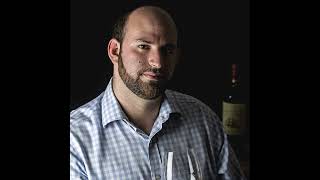
Gabriel Geller, director of PR and wine education at Royal Wine/Herzog, built his career from a teenage summer job in Switzerland through work with Israeli wineries. He runs an 8,000-member kosher wine community on Facebook and recommends specific bottles like Felstein's Dabouki and Oden Mountain's Nebbiolo. He's launching a campaign to teach Yiddish speakers about Bordeaux labels.
Chapters
Welcome to The Kosher Teruah.
I'm Simon Jacob, your host for this episode from Jerusalem. Before we get started, I ask that wherever you are, please take a moment and pray for the safety of our soldiers and the safe return of all of our hostages. The following is a conversation with my good friend Gabriel Geller. Gabriel works as the Director of Public Relations and Wine Education Manager for Royal Wines, or also commonly known as Herzog. He is a remarkable wine representative for the entire collective global kosher wine industry and is administrator over the 8,000+ Kosher Wine Sharing and Experience Facebook community, where he is always available to provide comments or help to members posting there. With his encyclopedic wine memory and his absolutely incredible palate, he has become the go-to person when researching kosher wines, their wineries, and assessing vintages from around the world. Gabriel, who is also fondly referred to by his friends as Gigi, lives with his wife Yael and their children in northern New Jersey. If you're driving, please focus your attention on the road ahead. If you're home relaxing, please open a delicious bottle of kosher wine, sit back, relax, and enjoy this informative conversation. Please excuse the static. That intermittently plagued our conversation, and I hope it doesn't distract from how incredibly open, honest, and informational this podcast was for me to record.
Simon, how you doing?
I'm great. It's great to see you. The only thing that would be better is if you were here with me in person. I don't know how many people know this, but I've observed that you, Gabriel, actually have a superpower. You have an ability to recall in detail over years things that you've tasted and compared them to things that you're tasting currently. Is that something you were born with, or is it practice that you developed over time, or—
It's, it's, it's an interesting question. Uh, I think that it's something that I was probably born with. But it's not necessarily just for wine, meaning—
I was going to ask you that too, but go ahead.
I'll give you an example. So years ago, 20 years ago, maybe less than 20 years, 15 years ago, I used to be— before I even had a driver's license, I used to be a fan of cars, and I knew basically, because I, I read about them and I had like, you know, reading materials and stuff like that, I knew nearly every single type and model of car in the world. And I could tell you, oh, this car, it costs that much, that's the MSRP, that's the type of engine that it has, how many how much horsepower does it have, and so on and so forth. Any car, you see any car, it might be a pickup truck, it might be a sports car, it didn't matter where it came from, and I could, and I remember all of those details just about cars. And now, I mean, I still like cars, but I'm absolutely not up to date on that at all. So I cannot do that anymore, but I kind of do it with wine.
It's, you know something, I, I'm also a car, car enthusiast, and I used to remember all of that and, and what have you, and I, I even remembered sounds, but the, the ability to remember so precisely taste is really awesome. It's an actually, it's an awesome, awesome situation. And it makes you such an incredible resource. Because no, it does. Because, you know, when we're tasting wines together, you can immediately, you know, you can, you can bring back a, you know, a taste that you had from from an earlier vintage. And because of that, it really is like incredibly special. So I— not many people have that, and it's like, uh, and, and I thought it, it comes with, you know, it comes with practice, and maybe it does, but, um, there's still, there's still an issue with being able to really taste some, uh, incredible differences. So, all right, um, tell me a little bit about how did you get into wine? Where did it start? What's your origin story in wine?
Okay, uh, so first of all, you know, I, I was born and grew up in Switzerland, and, uh, to, uh, I mean, Swiss father, uh, third generation, and, uh, and the French mother. She, my mother, was born and grew up in Paris, and her father was a very, while, you know, Jewish, he was very French, very traditionally French. And most of his life, he drank a glass of wine every single day, lunch and dinner. There was always wine on the table every single day. And when my grandmother passed away, I was 7 years old. My grandfather basically moved into the same apartment building we lived in next door, on the same floor. And other than for the night, he would be with us the whole time at every single meal. So it was not just on Shabbat. It was every single day, there was a bottle of wine on the table. It was not necessarily fancy wine, it was dry, good dry white or red wine. And, you know, the typical French wine culture, he didn't make a big deal out of it. He was not passionate about wine, he just liked wine, and wine was really a part of his meals. There was no meal without wine and without bread. There was bread at every single meal as well. Wow. So that was like sort of a foundation to that culture that you don't really see, you know, in many other countries. I mean, they have that to an extent, of course, in Italy or perhaps in Spain as well. But I mean, obviously the Jewish community and the cultures of those Jewish communities in those countries is not the same as French Jewry, especially French Ashkenazi Jewry. So there is that first aspect. Secondly, as a teenager, when I was 16 years old, I got a summer job with a wine importer in Zürich, in Switzerland, who was Jewish. However, 99% of his business was not kosher wine. He was importing and selling fine wine from Bordeaux, Burgundy, was like most of it, but he also had California wines. Italian wines, Spanish wines, and a few Israeli wines that he sold because he was Jewish and because he wanted to make some kosher and Israeli wine available to the Jewish community. And I went and worked for him the first time when I was 16 years old during the summer. It was good money. Switzerland, there's good wages there. And during my lunch breaks, I used to sit in the library. Yeah, the library in the office, beautiful office. From the outside, it was like a warehouse. There was nothing glamorous about it at all. But the offices were decorated like an old-fashioned French château with beautiful rugs and ancient beautiful furniture and art, and it looked like a palace really inside. There was a beautiful library full of wine books, and during my lunch breaks— and lunch break was pretty long, was, was 1 hour between noon and 1 PM— I would sit there and eat my lunch for a few minutes, and then I would grab books and read about the wines and trying to understand why this ball costs $10 and that ball was $300 and so on and so forth. And, uh, was really, uh, I was like getting really into it and, and interested. And, uh, after, uh, my, uh, summer vacation was over and I, uh, and I returned, uh, to Israel where I was living most of the time and and studying in high school, I would every Shabbat when I was at home and not in yeshiva, I would buy one or two different bottles of wine to try, try something else, discover something else. And that's how I really started understanding different wines, where they come from, the varieties, the taste and flavors, and and all that stuff. And really how I got into it, and I went to work summer jobs, and even the winter, sometimes just for 2 weeks, sometimes for 2 months with that same importer in Switzerland for several years after that. And when I was— few years later, when I was in college, I had a lot of free time. And the same importer, his name is Eli Gaza. He was born in Alexandria, Egypt. Egyptian.
He sounded like a Sephardi.
Yeah, absolutely. Absolutely. But he's very— he's Sephardi for sure, but he's very adjusted to Switzerland, very proper, gentleman businessman. And he told me, you know, those few Israeli wines that I sell, he had the Barkan Classic, he had Golan Heights Winery Gamla, Yarden Cabernet Sauvignon, he had like 4 or 5 different wines. He told me, you know, over 70% of the sales of those Israeli wines, it's not Jews, it's people who just see those wines in the catalog, and they order them and they like them and they keep, you know, buying them.
Wow.
Most of the sales are not to the kosher Jewish consumers. And I would like to extend that portfolio, find interesting, good value Israeli wines. And he knew that I had gotten into it. And he asked me, you know, you're in Israel, if you have time, maybe you can go and meet with wineries, taste wines, and find wines that, you know, I could import in Switzerland and add to my portfolio. And that's how I got into the Israeli wine industry and the wine industry as a whole on a more professional basis. I started going to all the wineries in Israel, to all the wine shows. There was already the Sommelier Expo, in Tel Aviv. There was another one that doesn't exist anymore, which was called Israeli Wine Expo, and taste as many wines as I could, meet all the Israeli wineries, and try and find suitable wines for Eli Gazar's portfolio.
At that time, about how many wineries do you think you were dealing with?
Uh, like, how many wineries did I, like, you know, visit?
Yes, how many, like, but how many were, how many were actively around at that time?
There are already a bunch. It was like in 2007, 2008.
Okay, so it's already well into the 2000s, not super long ago. Yeah, yeah.
I visited, uh, uh, for instance, Shilo and Psagot. In I think 2007. So they're barely 2 years, 3 years in business, like Pségot was started in 2003, and Shilo was starting in 2005. And I recall visiting Shilo winery the first time, and actually unfortunately, Michai was not in the winery on that day, but one of his assistants was there, still there. And that's really how I got to meet all of these people, many of whom are either with the same wineries or in the same industry.
Wow. Awesome. I was going to ask you how you ended up in Israel, so you answered. Perfect. Beautiful. How did you speak English? How did you get to speak English?
So with regards to English, well, first of all, back in those days, I mean, I was in Israel, I was dealing with Israelis, I spoke Hebrew because I've been living there for 8, 9 years and I had been in high school there, college. So I was already quite fluent in Hebrew. And to the importer in Switzerland, I spoke French. But my English wasn't bad already from studying in high school, but after high school and during college, I also went on my first trip to the USA and went to an advanced English course in New York City because I really wanted to improve my English, which really helped, obviously. And of course, that has evolved as well over the years.
What prompted you to go to Israel? Did your family immigrate or did you? Yeah.
I did. Well, I grew up in a very Zionist family. My parents in Switzerland were among the founders of the Jewish school in Lausanne, the town, the city I came from. And when they started that school, They really wanted to be a very Zionist school, which it is to this day. We had a super Zionist education. And all I wanted since I was a little kid was to live in Israel. And so did my siblings. And my brother went to Israel for high school when he was 15 years old. And he encouraged me and encouraged my parents to send me when I was 14 years old. Because that's when actually high school starts there, you know, 9th grade. And that's what I did. So I did that at 14 years old. And yeah, I wanted— I had always wanted to live there. And that's what I did for 16 years.
Wow. Okay. So currently, you're now working at Royal Wine at Herzog. You're the director of public relations, wine education manager. And tell me a little bit about your job. What's your typical day like? Who do you interact with? Customers, clients, who? Or everybody?
There's a lot of people from the outset when I first started working for Royal who were wondering actually what I was doing for Royal. And it's not— It's not that, you know, crazy. I'm in charge of, so let's say the Director of Public Relations, Advertising, and Wine Education Manager. So public relations, I think it's pretty straightforward. It's communicating with the media mostly, talking about new wines that Royal Wine releases. And carries, really keeping the media up to date because Royal is the foremost kosher wine importer and distributor, but also has a big place in the mainstream American wine industry. So there is that part, which gets the busiest around holidays like Rosh Hashanah and Passover, which are like the main wine holidays and when mainstream media and mainstream, so to speak, jewelry is most interested in wine. There is the marketing aspect and advertising. So advertising, straightforward, it's handling all the advertising campaigns, whether it's in whether it's in the radio, in podcasts, or influencers, social media, for all of the brands and wines that are carried by Royal Wine. So for instance, manage a campaign, put together a budget, and breaking down that budget between different media to promote, for instance, Shiloh Winery, Carmel Winery, Rothschild Wines, Herzog, and so on and so forth. And in that aspect, my marketing responsibilities really pertain to the brands and the products that are carried by Royal. I have one of my colleagues whose official title is Director of Marketing, David Levy. He handles mostly the trade marketing, meaning marketing Royal Wine taking care of all the needs that distributors, retailers, sales reps have to promote the different products, whether it's packaging, whether it's signage in stores, whether it's events such as KfW, for instance, and all that kind of stuff. And then there's the wine education part, finally. So the wine education part is coordinating, initiating, and managing any aspects of educating the sales force. So for instance, coordinating the WSET course for the sales reps, sending information to the reps about the different wines and wineries, all sorts of seminars like that. And of course the consumer as well. So it can be wine tastings that I run on a very regular basis, whether it's for private individuals, charities, all sorts of events where I conduct wine tastings that usually have an educational part about them. It's not just pouring wine for the sake of pouring wine. It's really talking about wines. And educating and writing articles that are published in the Jewish media online and print about new wines and educating people. What is Merlot? What is Sauvignon Blanc? Where does it come from? What does it taste like? What are the different styles, the different winemaking methods, and so on and so forth. Cool.
Since you're talking about tastings, do you remember a particularly awesome tasting that you ran or participated in? Any, any?
I have, I have one that comes to mind right now, right away.
Okay.
Uh, and that was in 2017, if I'm not mistaken. Uh, I believe in the spring of 2017, uh, together with you, David Rivenbark, You're talking about in Connecticut?
Not in Connecticut, it was in New York.
In New Rochelle.
Yeah, New Rochelle.
Yeah, that was pretty awesome. Yes, that was an amazing tasting of most of the top premium kosher wines released between the late 1990s and late 2000s. From all over the world, and that were stored in perfect professional conditions. And it was truly amazing, truly special to taste such wines that were perfectly stored in company of people who truly appreciate and understand the wines. That was really, for me, it was unprecedented and I cannot compare it to any other subsequent tasting that I've participated in.
I thought I was the only one blown away by that. It was crazy. That was a crazy tasting. That was absolutely awesome. All right. I know you've built an incredibly huge online community. Dedicated to kosher wine discussions. Um, it's, it's global and it's, uh, and it's awesome. It's an incredible community. Can you tell me a little bit about it? I mean, and who, who's actually managing it and running it and what have you? Because you've got a couple of people, 3 people, 4 people.
So, so it's actually 10 years old right now, like probably like it was a few days ago. Um, The real initiative was, I mean, it was something that I had been thinking about, and it was actually started from a technical standpoint by two gentlemen who are absolutely not involved anymore in it, and they basically gave me the keys almost right away. Benjamin Citric and Jonathan Assayag. So at that point in 2014, they were business partners. They had online kosher wine retailer based in the UK. And they started that forum on Facebook, Kosher Wine Sharing Experiences. And, uh, and right away when we started it, like, really literally right away, they came to me and to a friend of mine, uh, who you know as well, Nathan Gonjon.
Yeah.
Uh, and, uh, and offered us to, to join and, uh, and run, uh, and run the show. And, uh, so we did, and we, uh, we created the French group that's basically the same idea. It's pretty much the same name but French, which has a few thousand members/followers as well. And within just a few months, we went from a couple hundred people that, you know, we added between the two of us that we knew already on Facebook who were into wine to an extent, to 1,500 6 months later, to about 8,000 now. And about 3,000 on the French group. And became a really a bubbling and buzzing community of kosher wine enthusiasts throughout the world. Many of them of course in the USA, but also in Israel and Europe. And really became something that we did not expect. And it's a need that I had identified with the passing of Daniel Rogoff. So Daniel Rogoff, for those who are listening and not familiar with the name, There you go. Was Israel's first and foremost wine writer critic. He wrote for decades in Haaretz and the Jerusalem Post about wine. He was really the first, he is the one, he's probably the figure that put Israeli wine on the map. And I have a lot of great things to say about him, and I have things that I disagree with him or with his methods, and it's not really relevant, it doesn't matter. I think he did a really, really great service to the Israeli wine industry and to the kosher wine industry as well. And he had that forum online, which is very old-fashioned forum that I was a participant versus lurker when I did not feel that confident, uh, conversing in English with, uh, with all those folks, uh, when I first joined. And, uh, with over the years, I became much more comfortable about, uh, my, uh, my English and my wine knowledge, uh, that I became more active participant. And my participation in that forum became much more active actually after his passing. Because I and others saw that there was not much activity going on that forum after his passing, and we wanted to keep, you know, the conversation going. So I started posting reviews, I started scoring wines, and— but I saw that, you know, it was just a few, a few dozens of us perhaps on there, and I was like, well, it feels like, you know, really like a little club of a few guys and maybe a couple of gals as well. And whereas there is, there's a big world, and I think that if we were more people involved, there would be a lot more sharing of information. We would know more about new wines, about wines that we don't hear or see, if there are more people. This forum is no longer relevant really, and social media is the new thing. So again, this was 2014. Let's do something on social media. And yeah, that really took off very quickly. People like to see pictures, people like the quick interaction And that has evolved as well. You know, now there's a lot of the conversation, perhaps the majority of the conversation that goes on, uh, on WhatsApp chats. WhatsApp chats that I'm a member of but I do not, uh, run. And, uh, and, and, and it's a lot of fun. It's, uh, it's exciting. It's, uh, uh, it's entertaining for sure.
It's definitely entertaining.
Yeah, and it really created the community of people who really shared not just their opinions but their wines together. And that for me was really something that I was proud of because you know social media, there's a lot of good and bad about it, but I think that as long as you turn what's virtual into something concrete and real whenever possible, then that's when things really get interesting and meaningful. And proof of that, I mean, I did not meet you, Simon, through that group. It's the other way around. I remember when I met you at the home studios, Studio in the Lower East Side in New York City together with Jay Buchsbaum. We were promoting the event at Noble Wine and Grill for the Foundation for Jewish Broadcasting.
Yep.
Nachum Segal Foundation. And we clicked basically immediately. I told you about that Facebook group, which you immediately joined. And you became, uh, you became bigger than anyone there and met with so many people from all around the world who are members of that group and stayed in so many RCCs. And, uh, sometimes I'm always like smiling when, uh, when I see you, you went to, uh, to that RCC and that event in London with, you know, people like Richard Davidoff and David Saleh. And Paul Denby and so on and so forth. And like the interactions, the friendships that it created throughout the world, some of which I'm very active in, but unfortunately not as much in real life as virtually as I would like. And it's truly amazing. There's so many people that got together that became very close friends and more than that. Uh, and, uh, I think that's, uh, it's just, uh, incredible.
It's— I, I absolutely am so thankful. The two things that have been incredible is that, um, the Facebook chat, the, the WhatsApps definitely, um, have been adding on to it as well. That and the RCCs through Yossi Horowitz's, uh, Rosh Chodesh clubs, that has just built this group of global friends that are just incredible. And they are unbelievable people, all of them. I have not met a bad guy in all of them. A bad person. I should say person because there are men and women on the groups. But it is awesome. I really love it. Tell me a little bit about some of your favorites. Favorite wine region? Favorite style? Champagne, dry Rieslings, Bordeaux, Burgundy? What's your favorite?
So, you know, that has evolved of course over the years. Yeah. I've become, you know, much more of an old world, you know, French wines, Italian wines, Spanish wines fan than I used to be. Most of my upbringing, you know, in the in wine was through Israeli wine. So even the wines that we used to drink at home in Switzerland were mostly like Gamla, Jarden. There are a few French wines here and there sometimes, like especially Champagne, like Laurent Perrier for instance, or Koenig from Alsace. But for the most part, it was those Israeli wines. And back in Israel, of course, the vast majority of the wines that I used to buy and drink, and really educated myself on, were Israeli wines. Both because of availability and also pricing as well. And I remember that I had that appreciation that I initially had was really geared towards the style of Israeli wines. And I recall having a conversation like 15 years ago through the forums, through the Rogoff forums, about comparing wines like Yarden Katzrin for instance to Château Giscours, when I had very little to no experience with, you know, the premium Bordeaux wines. And I remember having a debate with David Draca and Josie Horowitz whether those wines could be compared. And my opinion back then was very different than my opinion today, mostly because of my relative lack of experience and education back in those days. And of course a lot of that has changed, both I have changed, but Some of the wines also have changed in the way that they are made, or climate, and other factors that came into play. And yes, my taste has changed a lot. I still drink a lot of Israeli wine. I have actually made a point since October 7th there has not been a single Shabbat and a single Tag Yom Tov without having at least, at least, at least one Israeli wine as part of my lineup. I've made a point of that.
Thank you.
I did. Yeah.
Thank you. Israel thanks you because it's a huge deal for us. It's a really, really huge deal. It's one of the one of the ways people in the United States and Europe and everywhere outside of Israel can help and contribute to Israel. It's a huge industry. It's been impacted incredibly by it. But workers are all, you know, getting pulled back into Milouim, back into the war zones. And it's really crazy. But thank you.
It is. It is. And I mean, for me, it's just a natural thing to do, and I've been pushing that both on a personal level and on a professional level through Royal Wine, really emphasizing Israeli wine, the Israeli wine industry, what they're going through, and all that is good and great about Israeli wine.
I have a question. Can you suggest to our listening audience 3 wines that, um, that are new, different, that people should— or even old— um, that people should, uh, reach out and try?
Sure. Okay, well, first of all, you know, there are some wines that might be new to some markets, right, and not so new to another market. So for instance, I'll go with Felstein Winery, you know, Felstein Winery by Avi Felstein. So Avi Felstein, for those who don't know, was for many years the head winemaker and the creator of the famous Segal Unfiltered, one of Israel's most iconic wines. And about 10 years ago, he started his own winery named after himself. And he makes really interesting wines using a lot of native and Israeli hybrid varieties. So for instance, Dabouki, Argaman. And he made the Dabouki, which is a white wine. So Dabouki is one of those indigenous varieties that, among others, Dr. Shivi Drori of Knoll Winery researched, trying to find if there are still grapes out there that were used to produce wine all the way back in the days of the, of the Beit HaMikdash. And that's one of them. And Avi Feldstein created the Buki wine. He's not the first one who has done so. However, what is special about it is that it's the first wine from indigenous variety that has actually, you know, impressed me. I've had quite a few from several wineries throughout Israel. Many, if not most of them were good, tasty, pleasant. But I was, for the most part, I was like, okay, it's nice, you know, but it's not so interesting. And this Felstien de Guppy, I think it's a 2023 vintage that I have tasted, I was like, oh wow, that's interesting. This complexity to this, there is interesting aromas and flavors, something special about it that I did not expect based on my previous experiences. Cool. That's one wine.
Okay.
That's one wine. I will go with a second Israeli wine for the next one. So again, I like when wineries go beyond, you know, what's trendy or what's mainstream. So if you take for instance Oden Mountain Winery in the Golan Heights, they are by the way one of the Israeli wineries that have suffered the most, are really on the border, their staff has been drafted for the most part in the war efforts. So they've been having a really hard time and being constantly under rockets from Hezbollah. And they produce wines from one of the top vineyards in Israel, in Ram, really on the Syrian border. And they have that Nebbiolo. So Nebbiolo is an Italian grape. It's the grape that produces Barolo and Barbaresco in Piedmont, Italy. And Golan Heights Winery produced that in the past. And Alde Mountain took that variety grown in the Golan Heights as well to the next level. And you have a wine that does not taste like Barolo, but it's distinctively the Nebbiolo variety, which is, it's very interesting because it's both kind of light and also heavy at the same time. You have the pretty strong tannin structure. At the same time, the body, the concentration are not that as obvious as, you know, the big full-bodied Cabernet Sauvignon or Bordeaux-style blend. And you have really, you know, those Mediterranean herbs notes and a medley of aromas, flavors that is different than than most of what's out there. And that's really an Israeli wine that's flying a little bit under the radar so far. And I think people should discover because it's really, it's different and it's good. That's the most important thing about it.
Very cool.
And then if I were to talk about a third wine, I can mention I would love to go and talk about Israeli wine, but no. I have that affinity with old world wines and Spanish or Italian. So Spanish wine, one of my favorite whites from Elvy Winery. By the way, it's called the Arenza White or Blanco, used to be called Vita back in the days, which is a really interesting blend, Panza Blanca and Sauvignon Blanc. And it's a lovely wine, it's got complexity, it's got aging potential, it's so refreshing, and it's really, really inexpensive.
Really inexpensive, it's amazing. It's one of my go-to wines here in Israel too. It's awesome.
Yeah, there you go.
Yep.
There you go. So I think that there is still too many people that don't know about it. There are people who have, you know, especially, you know, in the circles of people who are really into wine, there's a lot of people who think that, you know, if it's, you know, cheap, so to speak, it's probably not so interesting. It might be good, but might not be, you know, amazing or complex, or like, you know, they're like, I can't afford, you know, more expensive wine, so why should I go? And well, good for you. But yeah, it's not—
this isn't about price. I mean, it's about price. The price is awesome, but it's not great because of the price. It's great because it's great wine. It's wonderful.
Exactly. Yeah, exactly. It really is really fantastic white wine. That happens to be inexpensive because it comes from that region, it's made from those varieties, it's also produced, you know, with that using, you know, methods and aging that are costly, and get amazing results. There are wines out there that are really, really good, really excellent, and they don't have to be super expensive. And, you know, that's where, uh, that's where we, we call, uh, the super, uh, the super QPR wines, right?
Yep, they are. Um, you know, I can't think of a better person to ask this of. Um, I've noticed that in the high-end kosher wines, uh, and even in some of the lower-end kosher wines they're becoming much, much more approachable, especially the French wines that used to be— you couldn't touch them for 10 years or what have you. Now all of a sudden they've become more approachable. Um, do you find that? That's number one. And number two, do you think that they're sacrificing the futures by making these wines more approachable?
Okay, so I don't completely agree. Okay. Like in some parts, so I'll get to that. So for instance, if we talk about Bordeaux wines, well, we have a vintage like the 2021 harvest, which is like what's on the shelves right now for the most part, which was not a great vintage. It was a difficult vintage, pretty cold, rainy, and What it does quite often is make wines are lighter, both lighter in body concentration, in ripeness, and in tannins. So that makes them softer. So it makes them more approachable upon release when they're young, and at the same time, it makes them less ageable than other vintages. So it's kind of an opportunity because, I mean, some of them are really not so great, this vintage, and some of them are actually quite nice. And they are, for the most part, more approachable than they usually are, and perhaps will also not age for as long as they usually do. And it is an opportunity for people to, you know, try them and appreciate them more than either having to source, you know, an aged bottle that's very expensive or wait, which, you know, you have to have a lot of patience. As we know, there are some wines that are 20 years old and they're still quite young.
Yeah, I'm still waiting on some of them myself.
Right, exactly.
Yeah.
So yeah, it requires, like, you know, it's fun. Like, sometimes I think like, wow, like, In 10 years, I'm gonna have so much of those great wines. At the same time, in 10 years, I will be 10 years older myself.
Yep, yep, yep.
So, so yeah, that's the— that's, that's one of the fun, uh, of the fun aspects of it. Now, if you take, for instance, a discussion that's, that's been, you know, uh, discussed for a few years is Sauternes. Yeah, the, the wines, the wines from Sauternes are nowadays produced in a way on purpose so that they would be much more approachable upon release, whereas still, you know, retaining ageability potential. The question is, what is that ageability? Because if I tell you that the Sauternes wine, you know, can age 20 to 30 years, well, that sounds like a lot of time. But there are, you know, Sauternes wines from like 100 years ago that are still good. So do the Sauternes wines produced nowadays have that 100-year-old or 50-year-old even ageability? It's hard to tell. It's very hard to tell. I think that, you know, we'll just have to find out. I think it's possible, but Usually, when the wine is much more soft, means that, you know, they had to kind of manipulate the structure, dealing with the ripeness, dealing with the way that the wine is aged, the fermentation, the aging, etc., as to make the wine less aggressive on release. And you You know, I would assume that it's going to have an impact long term. And yet again, who cares? Not a lot of people.
No, no, certainly not me anymore. So I'm looking at these wines and I'm going, I should live so long. So please God, we'll see.
Yeah.
Do you have a favorite? Kosher vintage?
Yeah, I mean, you could say— I think you probably know what it is, and a lot of people do too, and because of me. And I'm not the only one, but I do take, I think, part of the responsibility in that, uh, for hyping up, so to speak, that wine, the Château Pontet-Canet 2003.
Just awesome.
Which was, for me, it was when I first tasted it, it was when I was still at the beginning of my French wine journey. It was in 2013, when I was 10 years old, and I opened it with my former business partner with whom I had a wine store in Nürsheim, and I think we opened it I don't think we opened it for Yom Ha'atzmaut. Maybe we did. I think we didn't really care about, you know, opening necessarily an Israeli wine for Yom Ha'atzmaut. We also had Israeli wines, but not exclusively. And we were expecting, you know, a great aged Bordeaux. And we opened that bottle, and we served, and I— the effect that the wine had on me was something that I had never experienced before. It was so young, so beyond, not ready. You know, I thought again, it's a 10-year-old wine, should be, you know, it should be quite approachable by now. No, it had that strong core of tannins, that concentration. It was incredibly well structured and already quite complex. The potential in it was absolutely, you know, both obvious and mind-blowing. And I was like, wow, I have never tasted like this before. To this point, this perfection, this near perfection, balance, structure, and concentration, complexity, it's something else. It's something else. And you know, you would think, you know, I've tasted many, many, many wines since then, the past 11+ years. You'd think that I would have, you know, tasted a better wine than that, and I'm not sure if I have. I have certainly tasted quite a few wines that might become contenders, and I think it's too early to tell. However, I've kind of crowned that wine in my mind as the best kosher wine ever. And I have not found one wine that I would be confident, you know, saying that it's better than the Fontékana 2003.
Me too. I can't believe it. I can't believe you— we agree on the same bottle. It's just crazy. And I have one bottle left. I have one bottle.
I think I have 2 or 3.
I have 1 left and I'm waiting for somebody to signal, hey, it's time.
So it is. It's not time in terms of like, you know, there's— you should drink it because otherwise it's going to be too late. Far from it. But, you know, I've tasted it and almost every single time you were there. Almost every year for the past decade. And the last time that I had it, you were not there, was I think this past December. And for the first time ever, the wine was open. Wow. And developed and all that, but with still a lot to go, not that big, but finally, you know, really I could confidently say, wow, now it is, it has entered finally its drinking window. And so that was like December 2023 at 20 years old. Wow. And yeah, I think that based on that tasting, I would say it has another 10 years and maybe more.
I know the 2001 vintage wasn't so great, but what about the the new stuff that you're tasting now that was from 2022 or even 2023? How are the vintages now looking to you?
Okay. So, well, 2022 in Israel, as you know, was Shmitah.
Yes, was Shmitah.
It's a pretty good vintage from the little that I've tasted and what I've heard from knowledgeable people. It was a pretty good vintage. And really there's some good stuff. Like, you know, if I was in Israel, anyone, you know, people who listen to us and have the opportunity to try those wines, if they are okay with drinking Etz HaMekhiya, the most part, some of them are Otsav Gadin, but most of them are Etz HaMekhiya. So if you hold by Etz HaMekhiya, Really, there's a lot of nice wines to try, both white and reds. And coming from Bordeaux, for instance, so 2021, as we said, was a challenging year, whereas 2022 is supposedly an excellent vintage. Some say it's the best ever and all that. Well, Yeah, let's see, you know, I've not yet really tried, maybe tried a couple wines. And so from what I've tasted actually from the Rhône Valley, it was good but not amazing. Whereas 2021, which was not great in Bordeaux, was really good in the Rhône Valley. So you know, it's something, you know, first of all we have, there is always an issue, you know, within the wine world, and the kosher world is no exception, is that people do not care enough about vintage. Vintage matters a lot. But also, some people, you know, sometimes they hear, oh well, 2021 is not a good vintage, and they think, oh well, 2021 anywhere. It doesn't work like that. Every single region has its own very particular climatic conditions, and even one country like France, you know, It's not such a small country. Bordeaux and the Rhône Valley have very different climates, and 2021 was a really good vintage there, and not so good in Bordeaux. And 2022 seems again, 2022 apparently is very good in Bordeaux and not so great in the Rhône Valley. So what I tasted from the Rhône Valley was not amazing, but what I've tasted from Bordeaux was pretty good and promising, and I'm very much looking forward to taste all the new wines. No, it's frustrating sometimes because, baruch Hashem, I have, you know, collected a respectable number of wines over the years, and there's that patience that we talked about, waiting for them to be ready, and then there's always that excitation for, you know, new wines and new vintages. And I already have so much of the other stuff from previous years that, what am I gonna put, you know, those wines that are just coming out now, those 2022 and 2023 vintage, where am I gonna put them? Where am I gonna store them? How long am I gonna have to wait for them? You know, you need to really be able You need to be able to manage your storage, manage your consumption, manage your purchasing in order that it makes sense on all accounts. People have FOMO, "Oh, wow, oh my, I must get it, I must get it." So I like to taste everything always, and I take every opportunity when I can. To taste really anything from anywhere. But I have over the years, you know, learned to pace myself and make decisions with regards to which wines do I want to buy and how many of them, this and that, so that, you know, it will make sense. And that's, you know, I mean, you know, may Hashem grant us a long enough life, blessings that this should be our problem.
Right. This should be our only problem. You're 100% right.
Exactly.
Are there any wines that you're chomping at the bit that are coming downstream that you're really looking forward to tasting? Anything that's—
Yeah, yeah, for sure. Well, something that has, baruch Hashem, changed in recent years is the availability of kosher wines from Burgundy. I'm a huge Burgundy fan, Pinot Noir fan in particular. And we went from almost nothing to a lot more over the past few years. And there is wines from Demouty. I interviewed Nathan Hill, who really initiated that, and very grateful to him for that. And there are others, there's Marchand wines, JP Marchand, which are brought in here in America by Liquid Kosher and Breskin. Royal has the wines from Philippe Léhardy, and there's a bunch of new wines coming in very soon from 2022 vintage, which again is good in Burgundy just as it is in Bordeaux according to the reports. Very excited for those. And yeah, that's— I noticed over the years that my cellar was like too much focused on certain regions, certain styles of wines, and I needed to diversify more. And I shifted to an extent the balance between Bordeaux and Burgundy. Bordeaux is definitely still, you know, the majority, of course, in terms of availability, but I've been able to to accumulate more, uh, Burgundy wines as well. And that's really like, you know, wow, there's all those great wines from Bordeaux coming in, there's also those great wines from Burgundy. Well, the Burgundy is like where I'm going to put more focus because, you know, I need to keep that, uh, to build it up. Balance. Yeah, to build it up.
Is there, is there any wines that you, uh, again globally, any wines that you wish becoming kosher that aren't? Besides Petrus, I mean, you know, like there's a few.
It's not necessarily wineries like Petrus, for instance, for screaming ego, because, you know, even if they did become kosher, perhaps I would get the opportunity at some point to taste them. Buying them is a different story, right?
Yeah, yeah.
You know, just for For people to understand, you know, both Petrus and Screaming Eagle, usually, you know, they're very limited and usually go on the raise between $2,000 and $3,000 a bottle.
A bottle.
Yes, yes. So, and that's not kosher. Now, when you are aware of the differences in prices between a kosher rum and the regular non-kosher wine, which is usually somewhere between 2 to 3 times, sometimes even more than that, it's very scary. There aren't that many people who can afford it, or even among those who can afford it, who would be willing to spend that kind of money on such wines. So is it ever going to happen? I don't know, I'm doubtful. I think that we have to wait for, for Majère to come. Yeah, exactly. One of the opinions is that, you know, once Mashiach will be here, basically all wine will be kosher, so to speak.
Amen, amen, amen. I mean, I would love that. So yeah, what—
but there are definitely varieties, and I would love more German Rieslings. I would love, you know, even more, I mean, Italian varieties. Our good friend Raph Nader has a Barolo coming. Yeah, performed miracles within just a few years, right? Uh, going from almost nothing to a lot. Uh, Barolo, Barbaresco coming, Brunello, Brunello as well, right? Amazing. It's not just, you know, it's not just, you know, back in the days we used to be happy when you know, oh wow, there is a German Riesling, exciting in its own right. But when it comes not just from those regions, but produced by, you know, top-notch wineries, it's incredible. And that's, you know, what the GFFN project has done in Germany with producers such as Nick Weis and von Hovel, what Royal Ideas and others have done in Bordeaux, and also in Burgundy. And what Raf has done in Italy with Brunello, Barolo, and many other varieties is just incredible.
If you could make one change to the kosher consumer in the kosher wine market, what would it be?
You mean in their behavior or in their— Yeah, I would tell the consumer this: you have to be open-minded. And being open-minded means, you know, you have to try something beyond cab. Get out of your comfort zone, first of all. And secondly, because you had a disappointing experience with, uh, a certain wine— so for instance, there's a lot of people say, oh, I I want a Cab, Cabernet Sauvignon, I don't like Merlot. Why you don't like Merlot really? Yeah, I had that Merlot, you know, whichever it was, and was not good at all. Like, okay, so you had one Merlot and you didn't like it, does that mean that all the Merlot at all price points from all regions in the world and all vintages are not good? And then, you know, I can very easily— that's the fun part about it. And my, you know, one of my abilities is that I can, you know, give certain examples. Uh, see, do you like this wine? I love it. You like that one? Ah, yeah, it's amazing, it's awesome. Well, this one is a myrtle, that one is 80% myrtle. Oh wow, really? Like, you know, people think that, uh, that they like this and that they don't like that, And people get fixated on certain things. And I think it's really missing out. It's like, well, I go on vacation in California every year. I love it. I don't like going anywhere else. Well, have you tried? It's beautiful. And there are many other beautiful places. I love steak, but do I have to eat steak at every meal? Of course not. And it goes on. Imagine if people did this type of behavior with everything in life. Oh, well, I love that book, so I'm going to read it over and over again and not read any other book. Right.
No, I agree. I agree with you 100%. We've gotten exposed to so many incredible wines, you just have to be a little bit open-minded to try. So I have one last request of you. Um, I asked you if you have a new— one of the new, uh, not new, but the 2019, um, Ponte Cana bottles. Do you have something nearby you? Okay, excellent. I happen to have one too. So what I really wanted to do with you was I'm going to print a picture of the two labels, and what I want you to do is, can you take me through the label, the front and back? Because a lot of people are, you know, they're scared off by the French, they're scared off by, you know, not knowing their way around the wine label. I've always wanted to do this with you, by the way.
Yeah, by the way, speaking of this, you know, we're talking about, you know, what I do at Royal and marketing and all that. So we have an upcoming advertising campaign, right, which ties advertising and wine education for the Yiddish-speaking market, you know, Hasidish communities and all that, which focuses on those aspects, you know, explaining Bordeaux wines, explaining the label of a Bordeaux bottle, and really an incredible campaign, you know, which, you know, To someone who is outside of, you know, of course that community, but also outside of that world of advertising wine in general, it might seem really a little strange, kind of, but it's actually, it's amazing, and I'm excited about it, not because of the advertising aspect and promoting the products that that campaign is focusing on, But because of the long-term impact the educational part of that campaign has on the consumers in terms of the ability of those consumers to understand, you know, wine labels and French wines and Bordeaux wines for the long term, really explaining what is Bordeaux, what is French wine. There are different regions, there are different appellations. Um, what those— the year on the label means, uh, what means Grand Cru Classé, etc.
I think you should do that in English. I'll be honest, I know there's some— I know there's, there's a bunch of places that have it for in English, a bunch of YouTube videos and stuff, but it's especially with kosher wine, I think it's, I think it's important.
Yep, maybe we will. Okay, or something, you know, derived from it. Okay, so, uh, let's go ahead.
Okay, so, all right, take me through it from top down, I guess.
No problem. From the top?
Well, you tell me where.
So you have the foil on the, on the bow, like that covers the top and the cork, where you have obviously like the the house, the château, the castle, which is the main building of Château Pont-à-Clèves, which is the name of the winery. And then it says on top of the label right here, Grand Cru Classé en 1855, which means great classed growth in 1855. So in 1855, which was under the Napoleon regime, in France, they put together a classification of the top wines of Bordeaux in terms of pricing and quality, because that always somehow went together. I mean, there is of course, you know, exceptions here and there, but for the most part, for all the wines from the Left Bank of Bordeaux, from the Médoc, region of Bordeaux. There's about 64, 65 wines in that classification, and it goes this way. So the top level is Premier Cru Classé, first-class growth. Then it's Second Cru Classé, Troisième Cru Classé, Quatrième, and Cinquième. There's 5 levels, and then all the other wines from the region. So Basically, you have 65 classed wineries from that region, which includes Pauillac, where Pontet-Canet comes from. We'll get to it. It includes Haut-Médoc, it includes Margaux, Saint-Estèphe, Saint-Julien, and Sauternes. Okay. What it means to this day, and that's one of the crazy things about that classification, is that it has basically not changed except maybe once or twice. Once was in 1973 when Château Mouton Rothschild was upgraded from second to first growth, the result of decades of lobbying. And that's really like the only— if If there was one more time, there might have been, I think, at the very, very beginning in 1855, like a few months after they originally put together the classification, I think that they added or changed something to it. I can't remember exactly what right now, but besides that, just 1973 upgraded the Mutalrothia to Phosphorophyta. That hasn't changed. It's important because, you know, that classification was about those wineries, those wines back then in 1855. A lot of stuff has happened since then, and wines that were amazing back then may not be as amazing today, and wines that were not so amazing back in those days, and not so expensive back in those days, are a lot better now, and a lot more expensive than they used to be. So a lot of people say that the classification at least partially, is not so relevant nowadays anymore. But it's a historical thing, and it's like that very close group of prestigious wineries in Bordeaux. Because like I said, it's about 65 wineries in Bordeaux. There's about 10,000 wineries. So that's the pretty crazy part. Okay, so let's go.
Grand Cru Classe is— how does that rank?
Growth. So the Ponte Canet, yeah, that's a great example, the Ponte Canet, because Ponte Canet is the 5th growth, like the lowest level, so to speak, is a 5th growth Pauillac. And there's a lot of people who say that Ponte Canet has become such an amazing winery, that they improved so much that they would deserve it if the classification was redone. They would get at least second, if not first growth. And based on my experience tasting, you know, the first growth wineries, at least most of them, I think that I would agree with that assessment.
Okay.
So Poltekanen is the name of the winery. Okay. It's a pretty big winery. So you see that there's this building, there's that whole thing, it's like a really a huge complex. And then right underneath the name of the winery is 2019. That's the vintage, the harvest. This means that the wine here, 2019, is produced from grapes harvested in the fall of 2019. And so that's what it means. So we would usually say that this one is 5 years old based on the harvest, which does not take into account how long the wine, you know, has been aged and all that kind of stuff. And then underneath the vintage, 2019, Pauillac. So Pauillac is the sub-region of Bordeaux and of the Médoc, the appellation. Pauillac in this particular case is quite significant because 3 out of the 5 first growth come from Pauillac. Château Lafitte Rothschild, Château Mouton Rothschild, and Château Latour, all three are Pauillac. And then there is Haut-Brion, Pessac-Léognan, Margaux, Château Margaux from Margaux, and then separately Château Yquem from Sauternes, which is a Premier Grand Cru Classé Superior, the only one. There's a bunch of Premier Cru in Sauternes, but the only Premier Cru classé superior is Château Yquem.
What does château mean in this? What does château mean in this? Does it have a special meaning?
The simple translation of château is castle, but no, it doesn't need to be a castle like, you know, with the towers and the whole thing from the movies and Disney, etc. It's usually like a house, usually pretty big, not necessarily, sometimes just like a regular house, not so big. And what it means usually is that the grapes, this winery produces wine from the grapes that it grows surrounding the château. The château is in the middle of the vineyard. All the wines that they produce are made from the grapes that they grow themselves on their property. And doesn't come from the neighbors, doesn't come from tens or hundreds or thousands of miles away. It comes from right there. They go out there, the vineyard is here, they harvest, they bring inside, they crush it, et cetera.
So you won't get a Ponte Cana where they grow grapes all over France and then bring them back and—
No, I don't think that they would do that, but it's It's fun because for the geek that I am, yeah, the Pontet-Cany used to produce a second wine called Les Hauts de Pontet, the Heights of Pontet it was called. And in 2012, the 2012 harvest, the council of the Pauillac appellation tasted the wine and they decided that because the wine in their opinion did not taste like the signature style of the wines from the Pauillac region, they would not allow the winery to put the Pauillac appellation on the label. And they would have to call it Vin de France, which means French wine, without the particular, you know, origin and appellation. And that made, back in those days, made a lot of noise. And I don't know if that's why they stopped making it, but perhaps it had something to do with it.
Anything on the back label that we should look for besides all the hashkafot?
In this particular case, no, not really. There's very little information here, which is very typical, by the way, with French wine, although not so much anymore than it used to be. It used to be that quite often there was no back label on French wines. When you bought a wine in France, you had the front label, there was nothing in the back. Nowadays, you know, there are of course different rules in different countries, and UPC code, and all sorts of, you know, government warning, and all sorts of things like that, the health share of course. So you usually see a back label, but you know, as opposed to many wines from other places, they don't always write, you know, what's this wine, like which varieties, how long it's aged in oak barrels, is it aged in oak barrels, which type of barrels. They don't put much information there. The idea being this is a wine from the Pauillac region, therefore you should expect it to be Cabernet Sauvignon driven. The style you should expect, a big, bold, concentrated wine driven by aromas and notes of like black fruit, I think blackberries and black currants, which are like the typical notes from Cabernet Sauvignon grown in that region. And you know that has traditionally be, you know, something that it's a given, like, oh, why are you asking, you know, which varieties are, you know, you should know that being from Pauillac, you know, it's made— well, of course that's ridiculous to expect people, even French people, to know all of that like that. And that has changed over the years. So there are still very traditional wineries like Pontet-Canet, who really, they They'll put as little information as possible. They don't need to explain more.
I'm curious, on your bottle, is the kosher one, you have a kosher one, is the back label for America or for Israel?
It's for America.
It's from America.
It's made by Royal Wine. Yeah, yeah. New York and yeah, the OU, the Rav Zech Bar Hachair, and that's it. And then it says in French, it was bottled at the château.
I didn't—
The address of the château. The alcohol level, and that's it.
I didn't even know they made a bottle that was labeled for Israel, because this one is, you know, it even has the bottle return of 30 agurot and what have you on it.
That makes sense.
Yeah, I know.
I'm sure that it's, it's Beilu.
Right.
And I'm pretty sure that the label was, was even designed here in Béyon.
I don't even know how I got To be honest, I don't know how I got an Israeli-labeled Ponte Cannaie from 1919 here, because I thought all of the Ponte Cannaies that I got were actually coming in from, came in from America. So, what do I know? Obviously, one of them snuck in, so I'm happy to have it. All right. I've taken up a huge amount of your time, Gabriel, but I really thank you incredibly much. And I thank you for being on the Kosher Terroir. It's been a super pleasure. Please send warm regards to Yael and the kids and everybody there. I miss you guys. So please, God, one of these days.
Bye, guys. And hopefully we will get to see you either here or, you know, in Israel. In Israel. I look forward.
All right. Thank you. This is Simon Jacob again, your host of today's episode of The Kosher Teruah. I have a personal request. No matter where you are or where you live, please take a moment to pray for our soldiers' safety and the safe and rapid return of our hostages. Please subscribe via your podcast provider to be informed of our new episodes as they are released. If you are new to The Kosher Teruah, please check out our many past episodes.










