Global Kosher Winemaking - A Conversation with Josh Rynderman
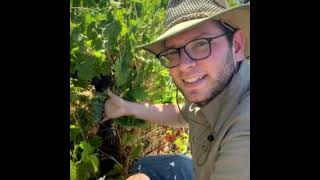
In this episode of The Kosher Terroir, host Simon Jacob interviews Josh Rynderman, the winemaker behind Kosher Shuot (produced at Four Gates Winery in Santa Cruz, California) and Essa Wine Company in Cape Town, South Africa. Rynderman recounts his path from a San Jose upbringing and a college encounter with Benjamin Cantz to becoming a full‑time winemaker, first in California and then expanding to South Africa after marrying his South‑African wife. He explains the logistical and climatic complexities of running two vineyards nearly 9,000 miles apart, detailing how the opposite seasons dictate a year‑long schedule: South African harvest begins in January/February and wraps by April, followed by a shipment window, then a California harvest in August/September. He contrasts the sunny, predictable California climate with Cape Town’s rainy harvest period, and discusses managing over ten vineyard plots across diverse South African regions. Rynderman describes his wine portfolio, including the new Altira Bordeaux‑style white (a 50/50 Semillon‑Sauvignon Blanc blend fermented in acacia barrels and French oak) and the Wilder Side orange wine, noting the experimental nature of orange wines and his current focus on other styles. He highlights the mentorship of Benjamin Cantz, especially the emphasis on blending trials, and how that philosophy guides his work in South Africa. Finally, he offers practical advice for aspiring kosher winemakers—keep detailed notebooks, write down lessons each season, and expect continual change—while expressing enthusiasm for future exports to the UK, Israel, and potential visits to Jerusalem.
Chapters
Welcome to The Kosher Terroir. I'm Simon Jacob, your host for today's episode. The following is a conversation with Josh Reinderman. Josh is the winemaker for Kosher Shuot, based out of Santa Cruz, California, in the Four Gates Winery, and Essa, based out of Cape Town, South Africa. He's a remarkable individual, and this is a, a really truly interesting conversation about the intricacies and the difficulties of making wines in two such diverse wineries that are approximately 9,000 miles apart, and the scheduling and what it involves. He's an unbelievable person, and I think you'll really enjoy this. Please sit back, grab a glass of wonderful kosher wine, and enjoy. It's a pleasure to meet you over the phone.
Likewise.
I have here David Sala, who's a real wine aficionado from England, who happens to be—
David, it's nice to hear your voice again, David.
Yes, I thought you'd be here in person, so I came to see you. You're here virtually, but it's still an honor to be in Simon's podcast HQ, like the Batcave. Yeah. Where are we, Josh? Where are we actually catching you?
Oh, well, my workday is finished. And well, yeah, I'm at home and well, I'm all yours now.
Okay. So you're home in South Africa?
Yes, in Cape Town.
Can I ask you a question, a personal question to begin with? How do you pronounce your last name? Because everybody has— people have come back and said all sorts of things. So how do you pronounce it?
Well, I've only ever heard two, um, and, uh, the correct way to pronounce it is Rhinderman. That's the way.
Let's get to kind of the really the first question. How did you get started into wine? Where, where were you brought up? Where did you, where did you grow up? How did you get into the wine business?
Uh, so, um, I was actually born in San Jose, California, and, uh, not many people really know San Jose, but, um, in terms of, uh, kosher winemaking, San Jose is actually quite a big name. Not necessarily for what it is in itself, but it's in its close proximity to a lot of, um, a lot of individuals who started kosher wine in California. So San Jose is in the Bay Area, it's also known as Silicon Valley, and that's where I was born. But it's also a place that played home to like I said, a lot of kosher winemaking careers. Some of you guys know David Rakka, who also is part of the San Jose community, Kosher Wine Musings, a kosher wine critic. You know, Four Gates Winery is actually just a stone's throw away from San Jose. It's about a 30-minute drive, and that's where kind of I had my start in kosher winemaking. But San Jose also played home to Craig Winchell. Yeah, Jeff Morgan's in the north Bay, but yeah, Covenant is in the Bay Area. Craig Wünschel with his winery was also kind of started in the Bay Area, or at least he came to the Bay Area quite a bit. But Herzog was actually also near, actually was in San Martín, which is very close to San Jose. And Napa Valley and Ernie Weir from MacGuffin is not too far But yeah, so the Bay Area, San Jose, a big start to kosher winemaking. And that's basically where I had my eye-opening experiences. So I was a college student at the time at Cal State East Bay, and I ended up sitting down next to Benjamin Cantz at a sukkot dinner within the community. And at the time, my kosher wine knowledge kind of started and ended with the all-famous blue bottle. And that was peak kosher wine for me. And it had been for quite some time. But I sat down next to Benjamin Cantz and I had a conversation with him. And I had learned at that dinner that, you know, he was the sole proprietor, sole everything when it comes to kosher winemaking at Four Gates Winery. And I offered my assistance. I said, I've got my college schedule, but I'm more than happy to come up and help you move boxes, heavy things, move things around, do whatever I can possibly do to assist. And essentially, that's how it started. And I went to work at Four Gates, just moving around heavy things, doing whatever Benjamin needed up there. But I was never paid in cash. I was always paid in old Four Gates wine, things that were not labeled, things that fell through the crack. And I had this whole world open up to me. And it was purely based on Benjamin Cantz's wine. And it really was this whole world. And I quickly started reading books, taking things out from the library, buying things that I I needed to try to make my own wine. And that I started at Four Gates at the end of 2014. And in 2015, I was starting to make my own wine in my parents' garage, as a very typical Silicon Valley startup would. And it really has snowballed from there. And in 2017, I essentially went pro. I'd worked out this agreement with Benjamin, and I was able to produce Kos Shu'os, my first brand, at Four Gates Winery in exchange for harvest work. And, uh, and, uh, yeah, that was 2017. And then in the beginning of 2018, uh, when I married, uh, my wife Hannah, uh, from Johannesburg, and we settled down in Cape Town in 2018, and we started Essa. We started Essa Wine Company. So we, uh, we had Coast to Shores in California, we had Essa in South Africa. And, um, and I haven't missed a harvest since, and it's been so much fun, and it's been, uh, a crazy ride.
That's so intrigued me. It so intrigues me because, um, you, you know, you've picked these two places that are in diverse hemispheres. They're— they are literally miles apart, crazy miles apart. Um, it's like, uh, it's like 7,000 or— I'm sorry, 9,000 miles between the two wineries, and it's at least— it's got to be 25 hours worth of flight times to get there.
You're smack on. It is exactly 25 hours from San Francisco to either Johannesburg or Cape Town, and it is a long 25 hours, let me tell you. I've done it so many times.
Wow. The thing that's also interesting to me, so interesting to me, is that you've gone, you know, now that you're we're talking about the two locations, um, you're in Cape Town, you're 33 or 34 degrees south of the equator, and in Santa Cruz you're 37 degrees above the equator. And it's like, it's like you're half a world around, uh, from each other, but they're— that equatorial difference, um, What have you noticed? I mean, you know, like, there are very few people I could ever ask a question like that to. Uh, what have you noticed? Um, what's the differences between making wine in South Africa and making wine in Santa Cruz?
Yeah, oh, that's a, it's a great question. And, and, uh, I think the, the, uh, the things that stick out to me most are, are, I, I'd probably say the negatives, but It's not necessarily to be negative. So, you know, in California, you've got so much sunshine and warmth, and during the harvest in Santa Cruz, or at least in California, you can pretty much bank on sunshine and warmth. The odd rainstorm is really, really out of the norm there. And in Cape Town, it, it, it actually rains during the harvest, and it really took me off guard because it was never something I really had to deal with during harvest season. I had to start paying attention to the rainfall and when it, when it came and how much of it and what time in the, in the growing season has it come. And as I now source from more vineyards than just the few that I would in California. I've got to be on top of the ball for a good number of places. Um, and, uh, yeah, I mean, that would be the most significant one. Um, aside from the actual culture shock, uh, from winemaking in California versus winemaking in South Africa, there certainly has been quite a number of difficulties and things that I would certainly need to have had adjusted to, to make Essa really work. But one of the things that I am quite, well, I wouldn't say let down, but I would, so one of the things that I really miss about the winemaking in California is that I would be doing it under the very watchful eye of Binyamin, my mentor. And being able to talk problems out with a very analytical and very deliberate mind is something that I unfortunately don't have here in South Africa. So those would be just a few of the differences within my personal winemaking that between the two, South Africa and Santa Cruz.
So, well, I can see that with Benio because he is— I think he's an incredible person to speak to and deal with, and he's just so straight and so, you know, straight up in, in his answers. It's, it's amazing. He's an amazing person in today's world. He's like an old-time person that's just awesome to be there. I guess, I guess the distances have also made for your ability to actually pull this off with the two harvests, because, you know, there really are two so distinct harvests on either side of the world, um, with separate— you know, it amazes me also that you're dealing with so many separate varietals in South Africa with so many different vineyards. I mean, it's like, um, that must be challenging on its own, uh, and then the fermentations and the barreling and the bottling. And, you know, how do you, how do you schedule all of that, especially with all the different varietals you're dealing with in South Africa?
Uh, yeah, uh, it's, uh, it's, it's quite a challenge actually. And, um, We are, well, essentially it's just myself and my wife. My wife does the administrative work for the business, but I do all the hands-on winemaking things and all the decisions that end up coming up in a given harvest. It certainly is quite a challenge to juggle all these moving parts, but that is essentially a small portion of what a winemaker needs to be able to do in a harvest. And I've certainly tried my very best to space out and at least predict what a harvest is going to look like, you know, depending on what I signed on for from a given harvest. You should be able to essentially predict roughly when and where things are going to come in. And that's, that's really important to do when you're dealing with so many different plots and vineyards and grapes and fermentations and random things that certainly come up during the, during the whole season.
How many, how many plots are you dealing with in South Africa? Because It seems like a huge number and they're really diverse. They're spread around.
Yeah, they really are. So I've worked with, well, just last harvest we were working with over 10 different plots from different regions. And it certainly is quite a challenge to line everything up. But if you kind of look at things with very broad strokes, you know, you could say that your whites are going to come in first, except for if they're whites from cool climate areas, in which case likely warm climate reds will come in before the cool climate whites. And then you've got your cool climate reds coming in later, and your late ripening cool climate red will be very last. And you can, you can pretty much guarantee that that's the way it's going to fall out.
So I was actually going to ask you about the varietals and how they impact the schedule, but you went straight to it. So what's your year like? What's your year schedule like? South Africa is the beginning of the year for you?
South Africa is, is the beginning of the year for me. Harvest in South Africa kind of kicks off towards the end of January, beginning of February, and that starts with, uh, your bubbly producers, and they pick their grapes quite early on, uh, prior to complete maturation of the grapes themselves. So they're picking at maybe like 18 bricks or something like that for their bubbly wines. And that's certainly before I really get to work. But I start in the beginning of February either bottling wines from the previous vintage or just getting cellar ready for the coming harvest. But towards the end of February is when things start to get really busy. Varieties start to come in, harvest really kicks off for us at Assa. And it doesn't usually go through Pesach, but it's happened twice. And this year we actually only pressed our last wine, I think it was the 17th of April, which was after Pesach.
Wow.
And that's essentially the harvest in South Africa. It usually ends up around April. I've never worked all that hard after Pesach for wrapping up the vintage, but like I said, it has happened in the past. And then from Pesach time, usually until right about now, is when I get things ready for a shipment to the United States, where we've focused our export on.
And then around August time, By the way, by the way, I'm going to interrupt you. By the way, I'm sorry, you're not supposed to ever interrupt, but I saw the post of that and I'm so excited about your new wines coming inbound. They look awesome. They look absolutely awesome.
I'm, uh, so I'm, I'm glad, uh, I'm glad you're very excited. Uh, yeah, we've got, we've got a handful of new wines coming out and, um, uh, we hope to even have, uh, possibly another shipment towards the end of the year to the United States as we've got, um, a few wines in the pipeline that I'm, I'm pretty excited about. We've got the new, the new Altira, the new Bordeaux-style white wine blend, and also a new Riesling from a very cool climate area on the Cape South Coast. But that's besides the point. That's just, uh, that's just to whet the audience's appetite, I suppose.
Very cool. So then you go into the— then you go into harvest in Santa Cruz, which is—
Yes, so August, August time, the decision is really made for when I've got to fly out, as we're— I mean, we've got a very large business to maintain here in South Africa, so I try to spend as little time on the road as possible. And that's why the decision is kind of made in August for the harvest in Santa Cruz. And I would normally fly out to California towards the end of August. By the way, things are looking at the moment Harvest seems to be about 2 weeks delayed in California with all the rain that they got in the winter, as well as all the cool weather they've been having, except for the current heat wave that they've got. But things look to be delayed about 2 weeks in Santa Cruz. So harvest might kick off middle of September in this year, 2023. So we'll see how things shape up in August. And then from August or beginning of September for about 2 months, I'll work at Four Gates. And as soon as the last wine is pressed, as soon as Benjamin's last wine is pressed, I'm basically on the next plane back to South Africa. And that's usually end of October time. And then the whole cycle kind of starts again.
So what happens with Kos Yeshivot? I call it Yeshivot. I'm sorry, I'm sorty. So I know it's Shishuas, but, uh, you have to deal with it.
So, um, it's, it's, uh, um, it's kind of been up in the air at the moment. Uh, we— I haven't focused on, uh, my California production. It's always been, uh, going to do the harvest and focusing on Benjamin's wines and the work that Benjamin needs. Um, and, uh, Essa has kind of taken center stage, has taken center stage on, uh, on, uh, on, on my winemaking career.
Okay. What I had hoped to do was to taste wines with you, but the issue is that, um, we don't really get the Essa wines here, though I've tasted them. In fact, I was at a tasting, uh, I don't know how many years ago, a couple of years ago, um, right in the middle or right before COVID because COVID has made everything kind of a blur as far as timing is a concern. But David Raka was pouring your Essa wines at one of the, uh, one of the events, and I was tasting them with him, and it was— that was just awesome.
So, um, I'm happy to hear that you enjoyed them.
Yes, I did.
Yeah, yeah.
Uh, God willing, uh, God willing, we'll focus on export to the UK as well as to Israel in the coming months. Hopefully we'll be able to share a glass of my wine at some point in the near future.
I look forward to doing that very much so. If you need any help here in Israel, I'll twist some arms, whatever you need.
Thank you, Simon.
Yeah, the question I have, what wines do you really like to produce? Like, you've gone all around, especially with the some of the wines that have come out of the United States. Um, the one I'm most intrigued about, by the way, is your, uh, Wilder Side Orange. Uh, what instigated that? How did you— how did you end up with an orange wine?
That's, uh—
oh, that's a good question.
I'm a lover of orange wines, by the way. I'm a big Yakko Warrior supporter.
So, well, orange wines confuse the heck out of me, so, uh Cool! Maybe we're polar opposites when it comes to orange wines?
No, no, they confused the daylights out of me the first time I tried them with Yaakov. I tasted him— I said this is absolutely not for me, this is like you got to be kidding, I'm not drinking this. And he said that's good, you know. And I said what do you mean it's good? And he said because um, that's a typical reaction of somebody who's drunk a lot of wines. And I said Uh, okay, so tell me how that's good. And he said, you know, he came back to me and he said, look, um, people who drink wine on a regular basis, um, their brains create boxes to put certain tastes into, and, um, and you've created all of those boxes already, and there's no room in, in your boxes for an orange wine. And I said, I took it as a challenge, and I said, now come on, I gotta try this and see what I can do. And with the right food and the right— with the right company, they're awesome. So I've become more of a lover of them, but that was an acquired taste.
Well, it's a fantastic way to explain them. Yaakov definitely does have a way with his words and his understanding of wine, and particularly orange wines, is certainly, I think, in the kosher world is actually quite unparalleled. But yeah, so my orange wines were always a side project, not necessarily born of complete and undivided attention and just a complete interest in orange wines, but more of a fun project. More of, I'm left with all these skins from white grapes, and there's still good juice in them, what am I going to do with it? Because I don't want to just waste it. So it was more along the lines of putting everything in containers and just letting the things ferment as they would and seeing what happens at the end of it all. That's essentially what it was, just to see what goes on. And to try to understand orange wine a little bit more. But I will say, since 2020, I have not experimented with orange wines, and I actually haven't had any orange wines since. But that's not to say I'm not going to try it at some point again in the future, but until I see orange wines as something that's going to kind of really catch on in the kosher world, Um, I, I certainly won't be at the forefront of it, but Yaakov certainly is.
You know, you need to have restaurants that you feed. Um, it's a very food-oriented wine, especially in a country like Israel that has spice and, uh, and like really rich flavors. Um, that's exactly the environment an orange wine is just perfect for. So At least that's my opinion.
I could definitely, I could definitely see that.
I can absolutely see that. Yeah.
So that's why it's, it's kind of important here. So the Altira is what you call the white?
Yes, uh, our Altira is our Bordeaux-style, uh, white wine. It's, it's Semillon Sauvignon Blanc, more or less 50/50 percentages. Um, but we've been playing with the way we've been making it for the last, uh, last 2 years.
Right. Yeah, so that's one of the— that's, that's really one of the wines I really want to taste. I've never tasted any of your— I haven't, I haven't tasted, uh, that white. I've only tasted your reds from, uh, South Africa. So I'm really looking forward to tasting that because I'm, I'm a white wine person.
It's a, it's a very interesting wine. Um, the, uh, if I'm not mistaken, I think it was the Gazin wine from France that released sparked my interest in Bordeaux-style white wines. And that was back in 2021 when I produced my first Altiero. And that was, like I said, about a 50/50 percentage mix of Sauvignon Blanc, Semillon. And most of that was done in neutral containers, and only a small portion was done in American oak as far as fermentation goes. But then in 2022, we wanted to change up the way we made it, and instead of kind of a quick-to-market white wine, I wanted to bring in an element of maturation and oak aging. But it wasn't just that. In 2022, we bought a 500-liter acacia barrel, and we fermented the Sauvignon Blanc portion exclusively in that acacia barrel. And it's turned into a pretty interesting wine, but I'm not going to say I was unhappy with the results, but it doesn't really stack up to the 2021, and it certainly wasn't the direction that I wanted to take the blend to. So in 2023, we, we've changed things up, so we are not doing oak aging, but we're still continuing to do our acacia fermentation. But it remains a fresher wine with a significant body due to that acacia fermentation as well as French oak fermentation. But we're trying to tweak the recipe as best as possible to create something that's very unique, but a very solid, structured, and zesty white wine. And I'm pretty sure we've hit the nail on the head for the 2023 vintage, but it has yet to be bottled. It's been sitting actually sur lie for quite a number of months, but we'll be bottling it in about 2 months' time, and hopefully it'll be hit the market in time for Purim, Pesach, but we'll see.
Have you noticed that the whites especially— you know, it's funny, I always thought whites— I grew up in a wine environment and whites were never something that aged, but I found lately, especially lately, when you're using, um, varietals like Semillon, it's— it seems to like to be bottle-aged for at least, you know, a few months to bring out some depth and some breath in some of these wines and some of these blends.
Yes, absolutely. I've noticed the same thing early on in the blend's life. They're pretty much Sauvignon Blanc heavy even though they're roughly 50/50, and then only As the wine ages, does it take on more of that Sémillon characteristic. And it's really fascinating because that Sémillon will sit in the back of the wine and not be heard, not be seen for quite some time. And then one day, you open up a bottle and then it's this completely different wine and it's waxy and it's big on the palate. It's just completely fascinating the way Sémillon behaves, at least in a Bordeaux-style white wine blend.
So that's exactly my experience as well, and it's really, it's really cool. Um, yeah, it's really special because actually you can put things away and, uh, take them out of a cellar, you know, a year later, and, um, you're expecting one thing but you get a— it's almost like a present. It's like much, much more. So it's very cool.
You bought two wines in one.
Yeah. Okay, so I have, I have just a couple more questions and I'll let you go. If you had your druthers, what, what wines would you really, really, really like to produce that you're, you know, you're trying to get to? You're trying to reach up and get to a certain level. What's, you know, do you have any goals in the future, wines that you just really love?
Oh, that's a, that's a very good question. Um, without giving stuff away, I mean, I don't want to mess you up, but no, no, well, uh, I, uh, I don't know if I could answer the question, uh, uh, perfectly, uh, but I will say this. I mean, since coming to South Africa and having kind of my freedom of, of just to do what I, whatever I wanted, I've, I've tried very much to emulate as best as I possibly can, Benjamin Kanz's wines. And that's not to say that I can produce a Santa Cruz Merlot in South Africa, but one of the things that he's really instilled in me and something that I've really tried to pay attention to are his blending, are his blends and his blending trials. They are usually week-long situations, and we would work on his Frères Robert, or any other of his red wines actually, for that matter. Just working out the exact percentages, and manipulating the wines as best as possible to create a wine that is as top-notch as possible. And so maybe it's not necessarily the wine that I'd like to produce, it doesn't really have a name, but I want to be able to take the skills that Benjamin has really taught me, whether intentionally or unintentionally, and apply those exact skills to my wines here in South Africa. And Benjamin has focused on Bordeaux, as well as Burgundy, but I would say his primary focus has been Bordeaux. And I've taken that, that same lead and have been applying myself to that here in South Africa since 2018. With that said, this year we branched out into Italian as well as German varieties, but my primary focus will continue to be using the blending lessons that Binyamin has taught me to create something similar to what Binyamin creates in, in California.
You know, I was— the next question was going to be what, what was it like to work with Binyamin, with Benyo? And, uh, I think you just answered it, uh, spectacularly.
Um, well, I'll, I'll, I'll— maybe I'll add on to that then, um, because it It is a very fascinating experience working for Benjamin, working with Benjamin on his wines. You know, there's usually a plan in a given harvest, and that plan doesn't really take shape at Four Gates. You know, I show up for work in the morning, and you've got no idea what's in store. Being an estate in the Santa Cruz Mountains, it really has its challenges, and there's so much that is out of our control being up in the mountains that really anything can happen. And so winemaking at Four Gates is not entirely just about winemaking, it's about life just in general. And with that said, doing that, doing all that with Benjamin has been an incredible experience since working for him in 2014. There has never been a dull day, and I don't think there ever will be a dull day at Four Gates. But yeah, that kind of speaks to working for Benjamin.
Wow. Okay. So last question. Any advice for young kosher winemakers from around the globe who are looking to get into wine?
Um, any advice?
Uh, what would I have liked to have told myself in 2015? Um, I, uh, I would probably just say, um, it's, it's quite a rabbit hole, you know, it's It's quite endless, and then as soon as you think you've figured something out, the next season, the next harvest is going to be completely different. So get a pen and paper and try to write down as much as possible. Anything you learn, get a pen and paper, try to write it down. My memory has failed me far more than I'd like to say, and I really do wish that I would have taken a pen and paper back to 2014 and have written everything I possibly could have learned from Benjamin or anything that I would have learned along the way in my own winemaking career. Try to get it down on paper because it's quite important. Every lesson you learn year from year, year to year, you need to be able to learn. Yeah, that's what I would say.
I found that winemakers who are really exceptional that I've met in my life have very detailed notebooks with very detailed notes over the years that they just, you know, they, they seem to go back to over and over again and, um, and nuance. So it's very cool. Josh, I really want to thank you very much for, um, for doing this. Uh, I'm really looking forward in the future to do it again but with a few bottles in front of us so that we can, uh, taste and and discuss and go over the specific wines themselves. And I also, I want to wish you, I want to make an offer for you and your family to come to Jerusalem. I'm happy to, I would love to host you here so you can see why you're doing all of this kosher Jewish wine. It's awesome. And I really wish you unbelievably continued success to you, your family, you and your wife especially, but your family. And hatslacha, hatslacha, Rabbi. It's a pleasure.
Thank you. Thank you so much, Simon. Thank you so much for having me on the podcast. And thank you very much for the offer of being our host in Yerushalayim. But it's been a pleasure to be on the podcast. And God willing, we'll share a glass someday soon.
Look forward. Shalom u'bracha.
Thank you very much.
Thank you.
Thank you.
Take care.
Be well.
Okay.
Bye-bye.
Bye-bye.










