Harvest Lessons: Part 2 Anava Vineyards' First Year
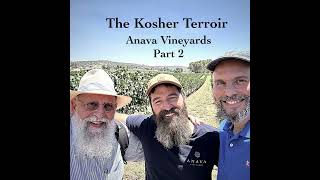
In this episode of The Kosher Teruah, host Simon Jacob interviews Nadav Jesselson, founder of Anava Vineyards, to reflect on the vineyard’s inaugural machine harvest and outline future plans. Nadav explains that the first harvest, focused on older blocks of Petit Sirah and Cabernet, yielded lower than expected (≈800 kg per dunam versus the target 1.5 t per dunam) due in part to unusually small grape clusters, possibly linked to a specific clone. He describes the logistical challenges of the first machine harvest, the intense monitoring of the tractor, and the need for careful pruning and irrigation adjustments for different varieties. The grapes were split between Yatir and Carmel; Yatir took the majority after a surprise visit, while Carmel received about 30 % of the Petit Sirah. Nadav details the collaborative winemaking process with Yatir’s Eran Goldwasser and Eyal Dori, including barrel tasting events and barter arrangements. He enumerates the current varietal portfolio (Cabernet, Petit Sirah, Shiraz, Malbec, Petit Verdot, Merlot, Chenin Blanc, Sauvignon Blanc, Chardonnay) and future plantings (Carignan, Grenache). Community involvement is highlighted through volunteer work with Golani soldiers, youth village Kfar Zoharim, and educational projects that link vineyard tasks to personal growth. Technical vineyard management practices are discussed, such as leaf‑bagging to reduce transpiration, pressure‑based stem water‑potential measurements, and variable irrigation regimes for Cabernet versus Petit Sirah. Nadav shares the long‑term vision of building a dedicated Anava winery in Nehusha, currently partnering with Zohidai due to bureaucratic delays. The conversation also touches on broader themes: wine as a vehicle for unity and spiritual connection, the impact of regional conflict on the community, and personal reflections on aliyah and family. The episode blends practical viticulture details with cultural, philosophical, and community narratives, offering listeners insight into the challenges and aspirations of a new kosher vineyard.
Chapters
Welcome to The Kosher Teruah.
I'm Simon Jacob, your host for this episode from Jerusalem. Before we get started, I ask that wherever you are, please take a moment and pray for the safety of our soldiers and the safe return of all of our hostages. Welcome back to part 2 of my conversation with Nadav Jesselson, the founder and force behind Anava Vineyards, a place where owning your own vineyard isn't just a dream, it's an invitation to become part of the winemaking journey. In this episode, where the vines meet the sweat of real labor, with reflections on last year's harvest, Nadav takes us behind the scenes, the surprises, the successes, and the moments that tested both patience and precision. And then we look ahead to the upcoming harvest, the predictions, the hopes, and how Anava is preparing its clients and vines for another chapter in the vineyard's story. But this conversation is about more than just grapes. It's about vision. How does a vineyard like Anava evolve without losing its soul? What lessons does the land continue to teach? And how does a winemaker balance consistency with the ever-shifting hand of nature? If you've ever wondered what it feels like to live and breathe wine through the rhythm of the seasons, this is your moment. If you're driving in your car, please focus on the road ahead. If you're at home relaxing, please open a bottle of wonderful kosher wine, sit back, relax, and let's dive into part 2 of our episode with Nadav Jesselson and Anava Vineyards here on the Kosher Terroir.
Okay, so how many harvests have we gone through?
One.
One.
That's all right.
Tell me a little bit, tell me a little bit about the harvest. How was the harvest last year? And what's— well, let's talk about the harvest last year. What sort of varietals did we harvest?
We were, we, we harvested our, uh, what we call the older vineyard, which is, uh, it's not old, it's just older. Uh, Petit Sirah and Cabernet. The yield was lower than what we wanted. Yeah.
But it was the whole country.
Right.
The whole country was—
Right. But we have something interesting here, which we're trying to figure out, still trying to figure out. Our clusters in the kabaneh are really small. We have a lot, baruch Hashem, but they're just smaller clusters than usual. So I don't have enough experience to say that, but Avi Noam says it. Aviram, who is, you know, he's agronomist, he's seen endless. He says the clusters here are small and I don't know what's going on. He thinks it has to do with a clone, meaning when you have a Carbone, there's different clones for Carbone. So he thinks it may do with that this specific clone gives smaller clusters. So again, this year he thinks we're going to be in a low, in the same yield as last year, which is 800 kilos per dunam. When we are aiming at a ton and a half, right, per duna. So, so, let me ask you a question, mother.
When you get that sort of thing, you also get much more concentration.
The, the, the, well, I think, I think we spoke about this. One of the main, one of the best compliments that we got here is that when we signed with Carmel, this was supposed to go to, uh, Selected, which is their medium quality, medium level. And we told them at the beginning, before we even planted, I told the guy who signed the contract with me from Carmel, I told him, if the grapes are high quality, I want you to give me a new contract to go up a level. Because I knew that if I'm doing it, I'm doing it, you know, the best Adasov. And I was sure, after a year or two, we're going to check and then we're going to say, maybe take it to a higher quality. But even before we harvested, came the agronomist from Yatir. He came here for one day. He said, I want to come to see the vineyard. And I said, okay. I thought he was just touring the vineyards. And he sat with me and he said, listen, we want to take the grapes. And I was shocked. These grapes went to Yatir. So that's for us a huge compliment. There was even, I think, a little bit competition between Carmel and Yatir, because Yatir wanted the grapes and Carmel doesn't have enough. They need the grapes. So at the end, they took, Carmel took like 30% of the Petitzira and all the rest went to Yatir. So that was the harvest of last year. We harvested machine harvest. It all went to Yatir. One with, it was two days, one, two nights. One night was the cabane. And one night was the Petite Syrah. I think the Cabernet was before the Petite Syrah. Yeah. The experience, again, it's the first time of the machine harvest is very tough because it's a huge tractor going on your baby, on your vineyard. And it's, it's, um, when I auto, it's beating him like crazy. And it's, uh, Yeah, it's yechabe', you have to calm yourself down because it's all good. It's literally giving birth now. It's taking off the grapes, the fruit. And he's driving there and I'm going behind him and I'm looking because he's not taking everything off and he missed here and he missed there. And it's a crazy night. But Baruch Hashem, at the end it went to Yatir. They're putting it in their darum. We were there already tasting our wine. We went, the Anava team with Yosef and Rachel, who works with us. We went there for a day. We sat with Eran Goldwasser, which is one of the most— have you met him? Yeah. He's one of the most amazing persons. Tzannua anav mamash, kef mamash.
All the real winemakers are all like that.
Madim.
They absolutely 100%.
So that's one of the things that I felt. I'm happy you're saying that because I felt that. When I changed careers and I moved here. So the guys I worked with in the business world were also amazing. But here I feel something very special, some connection, some— when you ask people questions, they'll always advise you and they'll give you their knowledge. And nobody is holding back and nobody feels like you're—
You get ahead of me, you're going to mess me up.
This is not—
they all feel like they're in the same boat.
Not only they feel like we're in the same boat and we have to succeed together. I had a farmer who came here, a very, you know, one of the older farmers from the area. He doesn't have vineyards. He has wheat or something like that. But he was so excited to see me, like the younger guy coming and becoming a farmer. And he sat with me, we had a coffee, and he was giving me advice, and he was so excited, he was so happy, you know. So it was amazing for me. What else about the harvest? So we had 800 kilos per dunam in the cabane, we had 1.2 tons in the petite syrah, we wanted again to get a little more. I don't know if it was 1.2 or 1.4. Yeah, we're aiming for 1.5, right? So this was 1.4. Uh, we took 3 tons, 1 from the Cabernet, 2 from the Petit Syrah for ourselves. And Eyal is making us our wine. We did a barter with Eyal. Basically, we gave him 3 tons and we're getting some amount of bottles. And then I was telling you before, we had an event not long ago where we tasted. So first we tasted the wine in Yatir. Because in Yatir, we want to take a barrel from Yatir in order to have wine of Anava. And so we sat there, only us, and we tasted the wine. And at the end, we said, we're not with enough knowledge. So we said to Eran, this is good. This is what we think. This is what— do your magic. Do whatever you want and make us a barrel. And we'll take the barrel from there and we'll have Anava wine. I don't remember what he said he's going to do, how much Cabernet and how much Petit Sirah he's going to put. Anyways, our grapes are going there to the Darom, which also he aims, this is how he said it, he aims for the Darom to be, you know, an afternoon wine, right? Meaning something more easy, not so heavy.
Lighter.
Yeah. Lighter. And with Eyal, what we had, we had an event lately, it was Again, it's the first event, I hope, of many more to come, where we sat, and we sat with Eran Gil at the beginning because he came, schedule issues, so we sat with him alone. But then we sat with the partners of AP and with Menachem and his family. And we sat in the winery in the cheder chaviyot, the bear room in Agoul. In Agoul. And we brought the wine from Yatir, and we brought the wine from Agoul. And Eyal gave us to taste. Some of the wine from the old barrels and the new barrels and from Yatir and from his and from, and we also, his shvenu, compared the wine, our wine from the, our Petite Syrah from the Petite Syrah from the mountain, 300 meters, 800 meters, and we tasted them. And we didn't get to the stage where we were starting to do blends. We did a little. Exactly. We did a little and it was, first of all, super miragish.
It is.
Because we're tasting the wine from this land now. And second of all, it was also very knowledgeable because we were, Eyal is a teacher. Eyal is, that's his thing. That's his thing. So that was an amazing series. The way I imagine it in the future, is we're going to have, we can't have 60 people because it's too much because that's our goal is for 30 in the vintage product and 30 who own a plot. So 60 is a lot, but we're going to have in the small batches in our winery, which is going to take time. Like I said, right now we're going to do it together with Zohidai. So we're going to have it there. He's building an amazing winery.
Is your plan to build a winery?
Yes. Okay. Yes. Uh, really gonna do that? Why are you asking? I don't know.
It's a lot of work.
It's a lot of work. But I think that Anava has to have a winery. Where? In Nehusha. Nehusha is where we live. It's behind—
We passed up—
Exactly. Right behind the hills there. That's my way home. I proposed the dream. When I drive here from work, from home to work, I look around and say, where am I? Am I in the Meteora? What's going on? Amazing. And I breathe in the cypress trees and the oak, not oak, also the oak. There isn't a winery in Nekousha.
There is or isn't?
There is a small one, some people doing it for themselves and something small, but not something that invites people in. We were stuck with bureaucracy issues in Nehusha because we already did measurements for a place and then it fell. So we understood we won't be able to do our winery in the near future. So doing with Hidai, actually, for me, it's me'aziat samatuk. It's perfect because he is amazing. I love his wine. So I hope we're gonna have some. What's the wine we're drinking? I hope. What question I have? It's Chardonnay, Chenin Blanc, Sauvignon Blanc. Okay. All from his vineyard. Okay. I also helped him. I also helped him in the harvest. I took his grapes to Yaakov Uria. He makes his wine in Yerucham. In Yerucham. With Yaakov. Yeah. We are planting, I didn't say that, we're planting another vineyard, uh, um, 11 dunams, uh, more to that direction, to the east. Um, and Yosef was driving me crazy. Let's do Algeman. Let's do Algeman. What do you think of the Algeman?
It's a very challenging variety, but people Now really understand how to deal with it.
I believe challenging growing or making wine, making wine for making wine for it has amazing color.
Unbelievable.
So what's the challenge?
The challenge is not that the challenge is making wine that, that is drinkable. And now there are people who are making, um, single varietal Argamans, like in Jezreel.
Mm-hmm.
Um, they make a single varietal, Argaman. Nobody would've ever thought to do something like that.
So lots have said this is, this is the next varietal. You have to do it. You have to plant it. To not, I think this is— Again, we're planting Carignan and Grenache.
Well, Carignan and Grenache are both really special.
Really? Eyal Dori and Eran Goldwasser. They both, and I asked them both separately. Yeah. It was amazing. They answered the same. Question. I told them, what should I plant? Carignan and Grenache.
Yes. Why Carignan is—
Mediterranean.
Big, bold, crazy. And Grenache, you can make it whatever you want to make it, but it's really special.
Right.
I'm, I'm—
So at the end, we're gonna have here 12 varieties.
Right. What are your 27 that you have left? Like, what are the buds that are left?
For varieties? Yeah. We have Cabernet, the private plots are Cabernet, Shiraz, Malbec, and Petit Verdot. And you pick which one you want. 2 of the Cabernet are taken out of 14. Most is Cabernet, you know, is obviously. And one of the Shiraz is taken by Menachem. Beside that, we have Cabernet Franc, Petit Syrah. And Merlot. Uh, that's, that's our reds, 7 reds. Then we have 3 whites: Chenin Blanc, Sauvignon Blanc, and Chardonnay. Um, at the end, I want, I want, I want—
tell me again, which ones?
The whites? Chenin Blanc, Sauvignon Blanc, and Chardonnay.
Chenin Blanc is going to be the—
so somebody called me now if I want more Chenin Blanc. I said I don't, more to plant. 'Cause he planted. I told him no. He said, listen, you've done very good for yourself that you planted Shinigami, because it's like, why do you say this? It's like a hype? It's what?
No, it's because it's amazing. It's amazing.
I love it. I love it. And he said that it was very hard for him. He said it was very hard for him to, he planted in the Mizraha Gush in Pnei Kedem, I think. Uh, you know, just for the fun, he planted his own vineyard and he said Chenin Blanc is, uh, hard to, hard to get.
It's gonna be, 'cause a number of wineries are trying to produce Chenin Blanc. Mm-hmm.
Amazing.
So, you know, people are going towards light, towards white wines, and it's one of the ones that's like, right, very flavorful.
Yeah. You have it here too, right? Yeah. That's where you planted it. Exactly. Chenin Blanc, 12%. Yeah. Mostly Chardonnay. He has all kinds of different ones.
He's, uh, people are going away from Chardonnay. But, but I'm a sucker for a great Chardonnay. No, you be, no, you're a sucker for a California Chardonnay, right? It's malolactic, buttery.
Oh yeah. What?
But, but that is a group of people who are in the past, unfortunately.
Yeah.
Yeah.
I happen calling you a dinosaur. No, I happen to love that. I happen to love it. I think it's gonna come back that way, but a lot of people want acid and crisp and, and what have you, and they don't want this buttery, uh, Chardonnay anymore. Um, and it, it's a pity. I, I love it, but it became such a big thing in California, the buttery Chardonnay that it blew out everything else and now it's coming back. The pendulum is swinging the other way.
Amazing.
It's not even swinging, it swung.
Listen, what we, what we wanna do is, is, uh, again, allow people to have a feeling that they're walking into like a playground. Yeah. Of varieties. And now do whatever you want. You have your own plot, but you don't have to use the grapes. So for instance, Iran. Emenachem, when he came, he immediately knew what he wanted. He wanted Shiraz. And it's perfect because he loves Shiraz. He's going to make Shiraz a year or two. But if there's a year where he says, you know what, let's make whites this year, Splat stays as Splat and he's taking the whites and we're swapping.
The swap. That's beautiful. It's a great, it's such a great idea. I'm telling you. No, it's such a great idea to be able to do that. I, you know, it's not of the economics aren't one in which you're doing this because this is the cheapest way to get a bottle of wine.
Okay.
That's not economic.
That's not what you're trying to do.
What you're trying to do here is create a legacy for your family and your kids. If you don't believe in your family and your kids, then You know, pass.
This isn't about— But your kids, all of them love wine?
No.
But a lot of them do.
This is one of those that does. There's 9 of us, so you know, you can— He's the only one left and her— but his, I told you, his son is— my eldest grandson is his son.
How many grandsons do you have in the army now? I don't know. Only one. One. He's the first. He's the first. You're the oldest starting hesrishiva.
I'm not the oldest son, but I have the oldest grandson. He has the oldest grandson. And there's a whole slew of grandsons that are right behind. That are all starting Hester Yeshiva now.
I'm happy they're going in now and not a year ago.
I know. I know. Me too.
I told my son. I told my son. My son is 14. Okay. But I told him, Eitan, I'm happy you're going into the army. For me, for me, it was quiet. I came in after Mivtzach Chomat Magen.
I don't know if you remember.
It was after, remember there was a terrible terrorist attack in Pessach. Lela Seder in Netanya. And then I think it was 2001 or something like that, because I enlisted 2002. And after that, Sharon went in with Am Yivetzach, Chumat Magen, they went into Jenin, everywhere they went in. A lot of soldiers were killed. And then we came in and it was my shiur, my gang, it was relatively quiet. Whoa. Who knows for how long? Yeah.
That's the whole game. We've taken on Iran successfully, please God.
Yeah. Should be quiet. Yeah. They have to finish with us.
Some of us. But what they were doing was to kill all of us.
That's the thing that's out of it. I had my, uh, my brother-in-law on Shabbos. He was at our house and he's, uh, he's a Kabbalist cousin. I offered maybe you should also, if you want to, he has a very small winery in Kidah. You know where Kida is?
Yeah, it's called Kida?
No, his wine is called Tu'umalka. Because it's the— Does he speak English? Yes.
Okay. I would love to do that.
So I think, do you go there? You drive there?
I drive everywhere.
Perfect. So go to Kida, sit in his winery, taste his wines.
Wait a second. I was just next to Kida. Kida is, um—
Shiloh.
It's next to Shiloh, right? No, but I went to, I went to I know exactly where Kidai is because I pass it. I passed it about 5 times. Um, because I go to, uh, what you call it?
Esh Kodesh.
I go to Esh Kodesh and I go across. And sometimes to get to Shiloh, the better way is to go past the back row.
So Eyal, I think you'll enjoy very much because he also learns, uh, he's super smart. He learns Kabbalah. He does the wine. Anyways. The podcast should cover the Kabbalah, I believe. No. Probably not, but, uh. Sometimes you do. I did.
I've done a podcast with M'kubalim on it, talking about wine.
Really?
Yeah, I did a whole podcast with the M'kubalim.
Amazing.
From, um, what you call it?
You learned in Beit El, right? Unbelievable.
I still am close to the rabbi there.
Who's the rabbi there today?
Rabbi Yisroel Avichai is, uh, the Talmud Mufkat of Rav Getz. So it's like praising, it's very special.
Wow. So my brother-in-law said that before the wars and everything, he said, Hashem dochefutanu achsham bekoach, merlamotito reru, masu elah ketzovi haloah. The endless events that we're going through, and I don't want to even imagine what's next. What's in the next season? We've been through the corona, the, the mecherei tachim almost, the reforma mishpatit, and now this war, which is not ending. And, uh, kitzel, we spoke about that on Shabbos.
My, my daughter is a meal edit. She was down in Soroka working.
Wow.
I saw the picture. Of the missile landing in Soroka. The, the violence of the shockwave coming off of it was that it was visible. It was just like this incredible shockwave that came off of this hospital. It could have killed thousands of people, literally thousands of people.
And not one.
Not one.
Unbelievable. Unbelievable.
You can't see Kadosh Baruch Hu. Then I'm sorry. You know, like if you have to, if you have to leave and go to Cyprus or leave and go someplace else, God bless you. You know, go because you can't ask for more proof than what we're seeing.
No, you can go. God bless you. And, uh, and you're getting off the train. This is the train. This is the history train. I had a friend, this again, this was in the previous season. When the reform and the endless voting, you know, endless prirot. And I spoke to a guy who was very, you know, he's high in the business world. He's high in the business world of private equity and stuff like that. And I spoke to him and he was depressed from the last results of the elections. And I told him, so what do you think of the elections? And he said, terrible. We are seriously considering to leave. And this guy, his father was high up in the defense industry. Very, very shochi, very, you know, not stam. And I was shocked. And I told him, you know that I had the courage to say, I said, but you know that if you leave, you're getting off the train. And he looks at me and he knew exactly what I meant and he said, yeah, I know. So I was, I was, you know, okay, if you want, if this, if this is too tough for you, then, then, then you could get off the train. You get off the train. That's it.
Last question. We, because we, we've actually covered all the questions that I basically had. Um, about varietals and what have you. Is there anything you've learned from the varietals that you've had so far that have come that have been, um, harvested that you're, um, might change your direction?
No, not, not, not changing my direction, but I've learned from the last harvest and from growing, you know, seeing them grow, uh, that the Cabernet is strong. Really? Gross is a tough one. Gross, he starts, he started later than the Petit Sera to wake up. But, you know, in a few days or a week or two, he grew and he outdid the Petit Sera endless. You could think it's two different trees almost. Because you see, you see how many leaves he has. Come on, it's called nuf, right? No, forget dormancy, he grows and grows. If we didn't stop him also, he would continue to grow. What I mean with stop him, I said like that, exactly pruning the top, it's called in Hebrew, kitum. You're cutting the top of the shoots of the branches that we did with volunteers from the Golani. Was amazing. In one hour they finished everything. And we also did it with, uh, we had a few groups here. Um, that's actually a nice story. One of the groups that we have here, uh, um, regularly is from Zoharim. Zoharim is Kfar Zoharim. It's a kfar noach for youth, uh, in the other side of the road. I think I told you about this, that this is Rav Grossman who established this for Haredi kids who either were kicked out of the house or not kicked out of the house, but can't find—
Extension of the, of the, what you call it.
Where?
Um, they have a— is that Migdal or?
Migdal Oz. Migdal Oz. No, Migdal Oz is the Gush. Yeah. Be Migdala Emek. What is it called? Migdal Hor, I think, maybe.
Migdal Hor is what it's called. Yes.
And they're also for Haredi girls or boys?
No, boys and girls.
It's a whole community. Ah, so, right. So they have it here. Amazing. Yosef is one of their, uh, alumni, it's called? Boger? Alumni, yeah. Yosef is one of the alumni.
Yosef is?
Yosef. And Shneil, which is another guy who worked here, and he's now in the Lotta, which is a very special unit in the army, and he comes here sometimes, and he's very connected to the place. Anyways, They have in their, one of the projects that they have in the, how do you call it, Kfar Hanor, youth village, it's called? A youth village, they have one of the projects there, it's called Beit Bagivah, meaning a few guys that either are addicted to something, doesn't matter what, or need time out from the regular schedule, they leave every time just like 6 or 8 guys, they go out of the dorm and they go to a separate house far away, not far away, it's the same compound, but just a little bit to the end. And twice a week they come to work here. And what we do with them is we go through an educational process, meaning every job they'll do here, we're connecting it to something in their life, to something that has to do with their inner growth. So that's what they did here. So for instance, when they worked here, we said sometimes you grow and it's going well, but you have to put on some brakes. You have to stop yourself because the Kabbalah is growing and growing and growing. And you're saying, okay, but don't forget the fruit because you're giving your energy to create new leaves, which is amazing. But don't forget the fruit. Don't forget the matara. The tahlit. So that's why you're cutting the tat. So that's what— so we talk to them before, and then they go work. And that's been actually a very amazing, great project for this year. Again, the miluim was— I had the first project that came here, I met them once, the second one a few times. And so because of the miluim in and out, we didn't have— but we had 3 rounds here of these guys because they come every time for 40 days only. So we had 3 rounds here. It was amazing. When I spoke to the first group, I told them, okay, give me feedback. They said to me, give us more work. That's the feedback. Meaning they were into it. So that was very, I was very happy with that. So the Petite Syrah, so first of all, you see the Cabernet, that's really strong. The Petite Syrah, she has something very gentle. That's why I love her a little, not more, but it's very, very gentle. It grows, you know, much less leaves. Grows slower. It starts earlier, but le'at, le'atuvitkadim, on one side. On the other side, it's already in bochal. It changes color. And the clusters, the difference in the clusters, it's again, that's also amazing. The Petit Sirah, it's dense. It's like, Avinu Amram said, he compares it to like, it's like a corn. Every grape is stuck to the other one, squished to the other one. And it has different shapes also. It's not the regular triangle. In the Cabernet, the grapes are more loose. They are connected to each other, but they're more loose and it's more triangles. One of the challenges with the Petit Sirah, because it's dense, right? Dense is close to each other, right? So one of the challenges is that you don't want to water it too much. Because then it bursts inside the cluster and sometimes you won't even see it, but then it starts, what? Mildew. Mildew is what? Rikavon?
Yeah, it becomes like—
It starts fermentation.
Oh.
No, that's rikavon. How do you say rikavon?
Rot.
Rot. It starts to rot.
It can be almost like a fungus that grows.
Yeah, it's a fungus, almost. So Avner Amfranz says now he saw the grapes, he said, okay, let's lower down the pace of watering, of irrigation. So I'm very, uh, one of the things that I experience here is it's hard, that's hard for me is that this place you think that it brings, it brings calmness, brings, you know, something very peaceful. People that come here say this is special energy here, there's something very calm, very, very settled.
But when I'm here, When you have to be responsible for that Dhamma, it's a different story.
Exactly. So I was saying, sing a lily. Exactly. Mamash kaha. Even when I come to Dhamma here or come to meditate, I can't. I'd rather do it at home because when I'm here, every point I look, okay, what's with that tree? Why is that like that? What's with that? Oh, right. I have to do that. I have to do that. It's hard. So anyways, I'm ikzat lachut. I'm pressured with the fact that we're not watering the, we are continuing, but much much less now for the Petite Syrah in order for the grapes not to burst. So we're going to take it down a notch. With the Cabernet, the opposite. We're taking, we're giving it more water. We're doing once a week, we're doing a measurement. It's called talachat. How would you say that in English?
Pressure.
It's— You know the thing that they do? No. Pressure. How would you call it? They take a leaf, Yes. There's a guy here, you see the car over there, that's the guy, his name is, it's funny, his name is Amit Soarek. So everything has to do with the vineyard. Soarek, right? Soarek is the vineyard. So he comes here early in the morning Sunday, he covers the leaves with a special bag. It's not so like a special bag, you could also cover it with this tin foil. Just, you know, that's what I did when I didn't have the, he has special bags, but I used to cover it with tin foil. In order for the leaves to think that they are in the dark.
Yeah.
And then they close their pioniot pores. You close the pores.
And then they aspirate.
And then, and then basically any water that they have in them, it's, that's what they have. Right. Because they're not evaporating the water. Right. And he comes back after 2 hours. That's why he's here now. He takes every leaf. He he cuts the, it's called the p'toteret, the, how is it called, givol, the thing that leads to the leaf.
Yes.
What is that called in English?
The stem.
The stem. He takes the stem, he puts it in something that does very high pressure, some atmospheres, I don't know, very, very high pressure. And then he measures when a drop of water comes out. He has a special machine here. He puts it in. And in the number where the drop of water comes out, in the number of pressure, he knows how much water the tree has. So he does like a statistic approach. He goes all over, takes a few here, a few there. That's how we measure if the vineyard is thirsty or not. So that's how we know for the Cabernet that we need to add water. So we added water. Friday was the first time we added another cube for Doona. And in the Petit Syrah, we lowered the water actually. So that's my experience with the two varieties, Petit Syrah and the Cabernet, which are actually very different. But it's going to be super interesting to see because we have one of the communal vineyard, which we have for the varieties, for the blends, for the, you know, if you're missing any grapes. So we have there, uh, uh, one vineyard, uh, split to Cabernet Franc, Petit Syrah, and Merlot. And then you're gonna start seeing the differences inside. That's gonna be very, very interesting. I think we're gonna see that.
Very cool.
Yeah.
Very, very cool. Thank you for all the time.
Thank you for coming. Thank you for the two cents. And, uh, we should talk more. Wine and unity. I don't know if we spoke about this last time, but wine is unity. That's why you weren't allowed to drink with non-Jews in the diaspora. Because you're not allowed, because if you drink wine, you can drink a whiskey, you can drink a beer with them. But if you drink wine with them, it connects. It connects you. And it connects, so that's ben adam lachaviru, mikarev. בנד לה מ נ הש ל ע meaning you're connecting to yourself also. I remember when I did a course with WSET, that's around, you know, long, maybe 2 or 3 years ago, you know, that was my first experience in understanding that there are different tastes in wine and that you have, when you drink wine, you have to be mindful. You can't just drink it. You have to, you know, Connect to yourself, to what you're feeling, to what you're tasting. So that's connecting to yourself. And then there's connecting to the land also.
Yes, that's kapanah.
Mamash.
Yes.
And achdut, achdut ben chaleven atzmicha, achdut ben chaleven chavircha, and achdut ben chaleven a'aretz. Because what you're drinking here is different from what you're drinking there. Zeh madim. Wow. Wow. Wow. Wow. You know, I told my parents, I tell them all the time. I told this in the last podcast also, I think, or the one before. It's the third time already. I said, I tell my friends, thank you so much for making Aliyah for me. Ze me met matana that they gave me.
It's a very big deal.
Okay.
It's a very big deal. All right.
Baruch Hashem. Thank you so much. Thank you so much. Wow.
I tried to surprise you.
You surprised me.
This is Simon Jacob again, your host of today's episode of the Kosher Teruah. I have a personal request. No matter where you are or where you live, please take a moment to pray for our soldiers' safety and the safe and rapid return of our hostages. Please subscribe via your podcast provider to be informed of our new episodes as they are released. If you are new to the Kosher Teruah, please check out our many past episodes.










