Heart and Soil: Creating a Vineyard in Nechusha with Nadav Jesselson
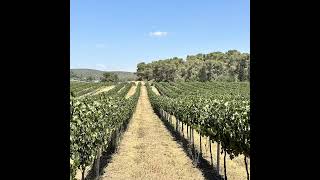
Nadav Jesselson built a vineyard in Nehusha from scratch, starting with soil testing that revealed chalky ground. He installed a galvanized steel trellis system, designed drip irrigation with 1.6 L/h emitters, and harvested 77 dunams with mechanical and hand picking. Weekly pest inspections by Avi Noam caught a thrips outbreak that required emergency spraying.
Chapters
Welcome to The Kosher Teruah.
I'm Simon Jacob, your host for this episode from Jerusalem. Before we get started, I ask that wherever you are, please take a moment and pray for the safety of our soldiers and the safe return of all of our hostages. Throughout all our past podcasts, we have discussed winemakers, distributors, and all the peripheral players within the wine industry. This episode starts to explore some of the basic elements of what is needed to actually create the base infrastructure for growing grapes here in Israel, but actually this is quite similar to most vineyards around the globe, though with notably a few exceptions. I have asked my friend Nadav Jesselson back to discuss his experiences, as he is right now involved in the first harvest of his recently planted vineyard. Recently means 4 years ago. I thank him very much for agreeing, and especially for his candor in discussing many of the nitty-gritty elements of what creates and sustains a vineyard. If you're driving in your car, please focus your attention on the road ahead. But if you are home listening, please select a delicious bottle of kosher wine, sit back, and enjoy this incredible conversation with Nadav Jesselson.
I want to ask you from a, from not an agronomist's perspective, because an agronomist is going to tell me all the details, and I am going to ask him them anyway. But I want to ask you about how you went about building the vineyard, meaning from a consumer perspective, from your perspective. I was interested in, like, how did you select the vineyard plot? The solar exposure, the temperature, the humidity, the airflow— how did you pick that space?
Somebody asked me lately I don't remember what he asked, but I remember the answer. I said, "I did not choose her, she chose me." I would say we married young, me and my wife. It was hard to decide where to live. So we lived in We started Givat Shmuel, Tel Aviv, Mitzpe Ramon, Beit Gamliel, Amatziah.
How much bought a house in Beit Gamliel?
Amazing. And we got to Nehusha at the end. In Nehusha we bought a mashik. So that's how I got to Nehusha, to Matei Yehuda. It was a journey. It was a journey. And not an easy one. When I really wanted to stay, first I wanted to stay in Beit Gamliel. Didn't work out. I wanted to stay in Amatziah. Amatziah I really wanted to stay. I loved Amatziah. I still love Amatziah. It took a while to get used to Nehusha. Anyways, that is how we got to Nehusha. I was in Haklai then. Then when we decided to do Haklouut, we sat in the olive grove, remember? The olive grove is part of our meshik. So it was, you know, So we basically got to do it there, in that wadi. There is also the issue about the fact that we have to do it in the land of Nehusha. So again, that put us in Nehusha, inside of the— I think Nehusha has like between 700 and 1,000 dunam of the moshav. So inside that, we went next to our olive grove, and that worked out perfectly because then we knew where to take the water from and we knew how to do it. Then actually, and we also measured, we did 9, that's, Carmel told me to do it. We did 9 pits to dig out some of the land to and take it to the lab to see what it contains and to see if it's good or not. When we did the second planting of Navah vineyards, the parcels, so we were thinking of doing it somewhere else. In a marsh, in a wadi that goes down from Nehusha, much, it's something more romantic about it and maybe even better because it's narrower, so the cold air goes through better. And we did also there, we checked the land together, then we were already together with Avinuam and Eyal. And there was a lot of ghir, how do you say ghir? Chalk?
Yeah.
No. Chalk is white. Right. What you read on the board. So there's a lot of chalk there. And they told me chalk is not so good. You can do it. Maybe we'd rather do the whites here. It's better for the whites. Gives a strong mineral taste to the wine. So it's not so good to do it with the chalk that's there. And then there were other reasons, sibot birokratiot, in that specific vadi that—
Bureaucracy.
Bureaucracy. So we said, so I said, next. Exactly. The Netunim aren't good. The data isn't good of the land, not good enough. And the bureaucracy stopped me. So I said, okay, that's it. We're not going to do it here. We're going to stay nearby the existing vineyard. Again, this was the second planting. And I'm so happy that we did that at the end. It was amazing. Because now we have the whole, you know, it's a whole complex. And we're going to grow, hopefully, as more and more people join. We're going to grow more. We're going to do more private parcels.
One of the things that's interesting about your location is a lot of the wineries— you brought up an interesting comment to me when I did the interview about the— how high it was in meters and that this is too low. And it is funny because all the wineries were trying to get to these high vineyards so that they could get a difference between cold and hot.
Right.
The heat and the cooling up in these very high vineyards. And recently, not so recently, but in the past 4 years, 5 years, the thought has changed totally. To try to move. If you can get a vineyard that's in one of these, um, riverbeds, streambeds, where you've got this air and water flowing down from the mountains and flowing into this area, um, whoa, yeah, that's where you want to be.
I don't know if— I don't feel that people are moving from the mountain. Mountain still has its, uh, prestige, you know. It's still considered the best quality, the best wines. But definitely you can see that they're planting like crazy in the Emek HaYela.
That's the hot new area to plant.
And it's amazing to see these last weeks. When you drive through Emek HaYela, here and there, you see a lot of cars all around the vineyards.
Because they're all—
They're all harvesting.
They're all harvesting.
It's amazing.
It is crazy. People are coming from, you know, because there is a lot of people in the world.
We had a Harvest in the beginning of the week. Did you see?
Monday. I think Monday.
Yes, but you did not see then. Are you saying LinkedIn or something?
No, I saw an invitation to come to Harvest, and I really wanted to do that. Are you doing it again?
We are having another one.
When?
It is either going to be next week, or The latest, the week after. What is happening with our Petitzira is that the bricks is not coming up. It is moving, but really slow. So as long as it is on the trees, I am walking there all the time. There is a lot of metach. Because you want to harvest or you want to be after. Because you can have hikuvonot and stuff like that all the time. Like being pregnant, you want to get over with and then see that everything is— Exactly, you want to see Shizbari. So he did harvest a little bit of the Petitzira for Yekhev Sorek. They wanted already, and we gave them, and they did not do— They crushed it together with a different vineyard in Vochoron, but he did take 3 boxes of ours and he got to 23 bricks, which is fine. We did yesterday, Yatir came and they did another check and they got to 22. And so he said, okay, either next week around Wednesday or the latest Sunday after that.
Okay.
So we are going to—
Do you mind if I come?
What does it do you mind? I would be more than happy. I would love to. Come with your kids or come with your family.
I would love to come. We would love it. It is one of my favorite things because you go very early in the morning.
Right. Actually, the thing that made me the happiest from all of this is that my parents came.
Wow.
We had twice. We had the petitzirah for Sorek, and then we had another with a kabarnet. And the kabarnet was on the same night with the botzeret. I do not know how would you call that. The tractor that does the harvest.
Harvesting.
Does it have a name, the tractor?
No. So this is what you call mechanical harvesting?
Yeah, mechanical harvesting that we had, and we had handpicking also. But at 3, the petitsia, we started at 3 or 4 at night, and my parents came and they stayed with us and they did it.
It's amazing to see sunrise come up and to be there in the middle of the vineyard. And it's also Much better to do it then, otherwise you are fighting bees.
Right, bees and the sun. It is not an easy job at the end. People think you are coming and picking and just cutting and walking around. If you are doing that for hours—
By 9 o'clock, I am toasted.
Devastating. It is hard, it is really hard. By 9 o'clock in the morning, I am toasted. It was Monday or Sunday that we did the Petite Syrah, and it was such an emotional day for me. This day they found a hirsch, you know, the guys there. While we are picking, my wife tells me, "Did you hear the news?" She tells me the news. Then there was also the pigua in Tel Qumia. It is on the road where we are. They are driving the road to Tel Qumia. Endless ambulances and then kochot habitachon going on the road next to us. When we finished the harvest, I took my son to a dorm in Mitzpe Ramon. He started kitatet there. That day for me was— I ended the day, I said, "I got to have a little pizza to calm down." We went to pizza. We bought a pizza. It was, wow, it was a— we spoke about the fact that we are living in the times that Or V'Choshach V'Yerubuvya, in the most extreme that we have ever had, I think. Ever, ever, ever. Harvesting with such happiness and at the same time, getting these news. Choshach V'Yerubuvya, mamash, choshach ve'or. So that was our first harvest. Very, very exciting.
Talk to me a little bit about land preparation. One is leveling the slopes and the considerations you had, and also infrastructure, irrigation, the drainage, roads, all the rest of it.
So we're right now, we may have another planting this year. We're waiting for someone, basically a client, to say if he wants or not. It's a special client because he's from here and it's his land. So we're going to see. But yeah, the first day we're—
I want to try an SOB.
An SOB?
Yeah.
Okay. You first.
I will.
I got to finish this. Yeah. Take your time.
I'm not rushing you.
So land preparation. Yes. Because we were going to do it now, basically we took everything we've done up until now. And with all the, how do you say, fakat lekachim.
I don't know.
That we have learned from the past.
Yes, yes.
We have brought everything that we have now. And we basically, you know, Hamash wrote it down step by step of preparing the land. So the first thing you do is you open up the land with a diskus, it is called, khalisha. Plowing?
Plowing. With what you call it, with tilling the soil, it goes.
You open up the land, and where we are, preparing the land is super easy. Again, relatively to the guys in the mountains. The guys on mountains, when they want to plant, I have a friend who planted in Negohot now. You know where that is? No. It is really the end, end of Har Hevron, to the west. Southwest, south of Rehovot to the west. And when they plant, they have to come with a congo, it's called, like a hammer to break the stone. And in some places they break the stone, they put in soil, plant in the soil.
On top of it.
On top of it. Meaning they're planting on stone. So preparing there is really hard. Really, really hard. For us, it is all soil. I would say it is all soft soil.
It is like as if she just says to us, "Come, just plant here." I was going to ask you about that, because I know there are places in the Jerusalem hills where it is like the stone is literally just on the surface or below.
Right, you are planting on the stone.
You have to They come in with, um, with not jackhammers, but the things that— yeah, like jackhammer, right?
Jackhammers.
And they, they crack the stone, then they cover it with— I don't know how much topsoil, but it's maybe 18 centimeters, right? 20 centimeters of topsoil, right? And then they plant, and it's like—
and then the roots go down, and then they'll find their way through the stone. Yeah, it's unbelievable. Unbelievable.
You gotta taste this.
You gotta taste this.
Yeah. So I had this on Shabbos, it was amazing. The 2020, I guess it was. And this is—
How did you— Who got you the bottle?
I bought it in Pinto.
Okay.
I have a friend that told you that— I don't know if you'd want to do a podcast, but it would definitely be a nice one. His name is Hidayah Fahim. He has, you know, in the Beten Tzin? Beten Tzin.
Over here?
Yeah, yeah. So there's a coffee shop there? Yeah, sure. It's his. They are special, the farm to table. They have a farm in the Arava. Meshikafayim, it's called.
I'd love to talk to him.
Anyways, I'm going to ask him.
Yes.
He died. Very, very special guy. He's a chavuta. He would load the tea. Because even though he calls him all the time, Arav, Arav. We met through the vineyards because we planted at the same time. I came to just advise with him and get his advice. Immediately he said, we hit it off and he said, "Zoh, bona trililmod." I always say that there are two things that are very difficult for a chavuta, for me. One is when, when to learn, because you can never find the time. The second is what to learn, because then you say, okay, we found the time, What are we going to learn? I have had this a few times. What are we going to learn? Okay, well, think about it. And then it never happens.
Never happens.
So with him, and that is Idai's character, he said, so you want to learn? I said, yes. Okay, 6:30, masakhtanit. Okay. That is how it was. He finished it. No dilemmas. That is it. Which is amazing.
Isn't that crazy?
Amazing. Amazing. And how did I buy the SOB? At Pinto. How did I get to Pinto? Because Yedai was also in his first harvest this year. And I came to be his mashgiach. We have to talk about the kashrut also. Anyways, I came to be his mashgiach. And what is it to be his mashgiach? Just to sign on a few papers and to come. For me, it was just to come. It was a reason to come to harvest with him. So he had 3 harvests. He had 3, he had shinim blan, so vinom blan shel donei that he harvest this year. And every time I came in the morning, I did like an hour harvest, an hour, an hour and a half. And then one day when he had much more than what he expected and he couldn't take it with his agalá.
Came with his, with the, what you call it, with the car carrier. Yeah, the carrier.
So I told him in advance, I told him, if you don't have enough, tell me, I'm coming, I'm going to take it to Pinto. And for me, it was—
That is where they took it to Pinto?
Yes.
Okay.
Iday makes it with Yaakov. Yaakov is Iday's—
He is mine as well.
I love him.
I just spoke to him this morning.
Wow.
I spoke to him this morning.
So I love Yaakov also. And so for me, it was an amazing opportunity to go down, first of all, to take grapes from the vineyard to the winery. Is kshel leatzmo, an amazing chavaya and fun zchut. And then I took it, and also the other zchut was to go and see, meet Yaakov and see the winery. And somebody there took me for a whole tour in the Ayer Kiv there.
Who?
Doron.
Doron, Ken.
Met her?
Ken, yeah, sure.
Yeah. So she took me for the tour there. And I went twice.
I have a bunch of friends who work there. Rafael.
Rafael is the Adimino of Yaakov, right? And so I told Rafael, I said, okay, I want to take a few wines. Tell me what I need to take from here to taste this winery. And one of them was SOB. And I was amazed. I was so happy for me because we just met and he just told me about it. I didn't even know that they're selling it. So it was perfect.
You should have said to Yaakov that I met Simon.
I told him.
Oh, okay.
I told him. Because he's a machno.
We're so, we're so close. He is such a special person. Such a special person. Crazy. There are certain people that are just, they kind of glow and they are just amazing people.
With Yaakov, I think he glows in a specific area and his, shlo, is, kashel hagid emet, ki z'mashu emet nishmakaze din. Avresh Yaakov mashu kaze dafka adin. You know, it is all good what is going all around, but I know what I want.
He is Yashar, but he is also so honest that he does not, you know, he is not a person who needs to impress people.
Exactly. You could see it in his wines.
Yeah, but even with his wines, like he came out, "Yafakha levana." Okay? And it is because it is pink, but it was not supposed to be. It was supposed to be a levana. It was supposed to be white.
"Yafakha levana." Amazing.
Most people would say, "Oh no, I meant it to be like this." No, not him, not Yaakov. He does not—
You know, I think in wine, that is how it is, Because you are doing your things, you are doing your things, but who knows what is going to happen at the end. I see it, I was at Eyal now, because we brought him our korban, and I see what is going on there, and I see it on his face also. Yesh b'ze'mon tahalich shekhayevet emunah ketah. You have to have a lot of faith.
You have to have a lot of faith.
And humility, I think.
It is 100%, you are true. It is humility and faith, because no matter what you say, your words, you can say anything you want, but when the wine comes out, you are stuck.
And you don't know if you did it correctly or not or this or that. I remember we were trying, I went with Hidai. Hidai helped me also to take our grapes to Eyal. And it was amazing. He gave us the taste from the barrels. What was it?
From Kessam?
No, no, it was white.
Okay.
Two different white, no, same white. Marcelan. Marcelan from Retamim, I think.
It is Marcelan.
And he gave us one that was one shemir. How do you say shemirim?
Yeast.
Yeast.
Two different yeasts.
Two different yeasts.
Yeah, not much.
What is the lees?
Lees are the residual stuff that comes, that it is what settles out of the yeast. And they let them sit.
Right.
And they, what you call, develop on the leaves.
So he gave us two different yeasts to try.
Yes.
And it was, for me—
Such a big difference.
I am standing with her. Hidai is a chef. He is super, super. And they are two— Zach Havaiah. It is the best thing for me to be a fly on the wall with these guys. Because one of the things that excites me the most is to hear people who are passionate and knowledgeable talking about the things they are passionate and knowledgeable about.
Crazy.
So that was amazing. We tasted two different, these two same varieties with two different yeasts, and it was totally different. Chaver, dargish, litom.
Okay. So let me ask you another question. When you put up the trellises, when you put up the things for the vines to grow on, did you have options, or you knew what you were going to do?
So yes, you have options, but because I was and still am really, really new to this industry, so Carmel Wineries basically told me, this is what you should take. And it zeyt imli, it was right for me because I wanted to do with the best all the time. And this is the best trellis system that there is. So that's how I got to it, to doing with that. Our trellis system has, it comes from Italy or from Germany, and it has basically it's metal that is megulvan, you know, I don't know how to say it.
Galvanized.
Galvanized. It's the same word. Exactly.
It's exactly the same.
It's galvanized. And the person who we buy it from is super, super yekke and serious as far as even the cables that hold at the end of the day, that hold the branch, the main branch. So I was going to buy it from someone somewhere else. I was contemplating, it is cheaper. Then I talked to him and he gave me a whole lecture of why his cable is measured. It has a density like this and it could hold like this. And the rest do not even measure them and they do not know what it contains and whatever. So it is super serious. So for me, it was very comforting at the end of the day to know that what I am getting is the best. That is from Oren Gevin and his brother, Dani Gevin. An amazing story of their family. They are the descendants of the original settlers from Zichron. Today they live around Zichron, not in Zichron. Amazing story, amazing people. And Dani, what was amazing for Dani is he is basically, he, who mashlim et haKavila, because Dani is the guy who comes with the tractor and puts them in the ground. So we put them every 4.5 meters, the main stems, the main trellis that hold the cable, every 4.5 meters. And we went before at night and we Basically put them, I got a few of the youth from the Chusha to come and help me. Sometimes my daughter is coming to help me. And we take them off the car and we put them every 4.5 meters approximately. Before that we already put in, when we started at the beginning, that is how we did it. We bought a lot of plastic spoons so you can really see it. And you basically just stick it in the ground. We did the plowing. I didn't say, first you do the plowing, but from the plowing, Nisharim regavim. Regavim is the ground. Yeah, has lumps. Lumps, maybe lumps of mud, not mud, of soil, but really hard. So after that you bring what's called in Hebrew an argaz mechlik. Mechlik is to, how do you say mechlik?
Level it.
Level it. Mash, level it to this. And then the ground becomes much, with much smaller elements or whatever.
Yeah, much smaller particles.
Particles.
Yeah.
And then it's easy because you stick in a spoon and you see it on top. Nothing is blocking it. You can really just see the white.
See the white.
The white circle. And then you know where to put the pole. So cool. And then you have to make it really, really straight.
Right.
So the truth is, in the first time we did it, when you come and you see the vineyard today, you stand in front of a row and that is—
And it goes.
No, that is our goal is that you stand in front and you see only one pole. Right. Because they are all right behind each other. When we did the second one, I have no idea why, in some places, some places it worked exactly, in some places it did not. Suddenly you see a pole to the right and a pole to the left and you see a few of them. It goes a little bit like this. It's not so, uh, it's not that dramatic.
No, it's not.
Yeah, but for me it was. I wanted to be, to look good also.
Perfect.
So I know you're, Danny was very methodic. Yeah, so Danny was an, again, you know, the best thing for me in this industry and this new career that I have is to meet the people. Danny was amazing, you know, he works, works, works, works, super, super serious. He cares about it, you know, more than I do almost. And then we sit and we talk and we get to know each other and it was just so much fun. So that is the telesystem. There are the cheaper ones, the old ones, the way they used to do it all the time. That is called baznatim. I do not know how you call it. It is just metal, not meghulvan, that they stick. Also with Dani, with Oren, it is the whole system. It's also, there's at the end, you have edges on the edges. Exactly. You have, I always forget the word, anchors.
Yes.
Anchors that have to hold in the ground. They have to hold. You have a 140-meter row. That's one of our rows. And imagine that you have 140 meters. You have that like almost a ton of grapes, hopefully, on that wire, the cable. Yeah, the wire. So you have to add the end, something to hold it into the ground. So with that, you bring a tractor and it digs a hole in each and every row. And then you put in the anchor, which is basically a plate. It's a plate, I'd say it's like maybe 40 centimeters on 40 centimeters, something like that. And you stick it in the ground and Oren comes and he shows you exactly how to stick it. And then the tractor has to has to cover it. So he first covers it from the behind, so it hangs on something, and then from the top, and then from here, and from there. She comes, then he tells you, and it has to be exactly in front of the row. And at the end of the day, you have outside of the ground with the anchor, you cover the anchor, and you have like a cable, and it has like a lula'a. How would you say lula'a? Like a round—
A ring.
A ring, exactly. You have a ring sticking out of the ground, and that ring with another cable From Nirosta, you connect it to the end of the trellis system, to what's called a mudrosh shura. The head row.
The head row. The first of the rows. Right. Rosh shura.
So that's the trellis system that we put up. It was really fun.
Cool.
Yeah. What about— The second time we had a different anchor, which is also interesting, because it wasn't digging. Because in our parcels for the Anava vineyards, they're smaller rows.
Right.
So you don't really need an anchor like we have in the longer rows. So what we have there is it's an anchor, an arrow anchor, because it's like an arrow. It has a small spitz on the end of it.
Yeah.
And it sticks in the ground, and then you hit it with with a hammer or with a thing called almania, almania shu holem. I don't know the word for that in English. So you stick it into the ground and then you pull it a little bit and it makes a little—
It opens up.
It opens up, exactly. And it stops. That's how we did it for the shorter rows, for the parcels, for the private parcels. What else was there in the teller system? Also, we put on white hoses on the end so you can see it exactly where the Edward ends. Where they are so you can't hit them with the tractor.
Exactly, so you don't, right. Do you harvest mostly with machine? Yeah. Okay. Wow.
At the end of the day, we have 77 dunams today. And out of that, 50 are harvest with machine. 50 minus 2, if you count the ones that we did hand picking. Hopefully next year also we're going to have, because we want to make our own wine. So Carmel, which is nice, agreed that we take 3 tons of grapes.
Of your own?
Yeah.
What is— did you have to buy special tractors that do the machine picking?
No. The machine picking is a tractor that I think you have to have a lot, a lot, a lot.
Oh, so they come in and they do that specially for you.
In order for it to be worth you to buy it.
Exactly.
There's a guy by the name of Shimon Betel. He's an amazing guy. I also talked with him at the beginning of the day of my journey. He's from Avochoron.
Wow.
And they have endless vineyards.
Yeah.
They're amazing viticulturists and they have also a company of what's called botzrot, the harvesting tractors. And I talked to him a day before, he told me, yeah, they're going to come at this and this. And then he called me while he was still harvesting. It was probably 5 or 6 because he came at 4 and we started at 5, whatever. And And he told me, Mazal tov, ve'ezekerem yafeh. And I told him, you are not here, how do you know? So he told me, Abutser Sheli, the guy who was driving on the tractor, called me to tell me how happy he is in your vineyard. So silly, so silly nachat. Yeah, if that made you happy.
He told, wow.
So that was, then that is a trailer system. So anything I did, so when he gave me that compliment, I did not do anything. All I did is call Dani. Because Dani did them so straight. And Oren brought these trailer system. So I am very happy with the trailer system. But at the end of the day, Baruch Hashem, I could afford it. It is very expensive. I had a funny story with one of the haklaim that became good friends with him. You know, he is a vatik, an old-timer of farmers in Israel. He has thousands of dunams that he does wheat and stuff like that. And he came to me and he was so amazed by this new project and he was so happy and he was really, really encouraging me. It is the best for me, these guys who appreciate it. And then that same day, Oren came. When he came, one day that he came to visit me, in the vineyard. And he said to Oren, for him it was hard, especially for the old-timers. He said, you know, I see you can't make money out of the haklaut, so you're going to make money out of the haklayim. So he was laughing at him. I was like, no, don't say that, whatever, whatever.
You can't make money out of doing it yourself, you're making money out of people who do it.
Exactly.
Right.
Exactly. Because it is, it's an issue. And I've been talking to people all the time to ask them, to old-timers and to new-timers, ask them if— How do you do this? No, what do you do? What do they think of this trellis system? And I'm getting different answers here and there. But we are very happy anyways. We're very happy because again, you feel confident with what you get. And as you know, we did buy a tractor to do the spraying and the weeding.
Yeah.
So that we have. And when you have this trellis system, you're much more secure as far as damage and stuff like that. It's not that it can't happen and it happened. When we are doing it, it hardly happens. Maybe even not at all yet, but it could. But when we bring other people to do the works in the vineyard with the tractors, so a tractor hits a pole there, hits this, so it doesn't matter if it is galvanized or not, it is going to break. It is part of it.
Watering. How big a deal was watering?
First of all, there are a few companies that give you the hoses, the tzinorot, how do you say tzinorot, hoses?
The hoses, yeah.
So the most famous one, of course, is Netafim. Then you have Rivulis and a few others, which I don't remember. And I got offers from most of them, but again, it was the First of all, difference was not so big. And at the end of the day, I was looking for the best. So I went to Nishtanu Tafim. And like I told you before, it is not only the name of it, it is the person that I am working with. So this guy, Oren Bahat, had a good connection with him, even though he is a sales guy. So you always think he is just nice to me because he wants to sell. But forget that. I enjoy his company and I enjoy talking to him and I feel that he cares. So that is the most important. So we did with Netafim.
Did you learn anything from it? Was there things that you—
Of course. For me, here, everything was new, totally new. I learned everything from scratch, hamash.
About hoses? What would you learn from that?
What do you mean? That the hoses have, the irrigation has a tiftuf.
Yes, an opening.
An opening. So it is either, it could be 1.6, liters per hour, or different ones. We have 1.6, I don't know what are the other ones, but I'm sure there are other ones. And I remember that there were, that you could have the—
Again, you could customize the hole so that it would give you—
No, you can't customize it. You buy it the way you want it.
Yeah, no, that's what I mean. You buy the hose customized so that it has exactly the flow of water that you want for the specific growing that you're going to grow.
Other than that, at the beginning, we had the dripping every 50 centimeters. In the new one, we did every 60 centimeters. So that's another one that you could change. The hoses is called Tinoreslim. I don't know if it's because it's 20 millimeters or maybe it's, then you have ones that are 16, a lot of different ones. The whole process of how to bring the water from the main faucet to your main faucet and then into the field. That was, for me, super interesting. I loved it. There's the— it starts— my first thing I did, the first thing I did when I came to the area, the first step I did to start the vineyard was to find out how do I get the hose up into the area. Because where it works is that you have the main hoses of Mekorot, which is the water supply in Israel, and it goes near the road under the vineyard, and then you have to connect to the main hose. So there is what's called a kluv mayim. It's a cage of the water that there is right in front of the vineyard. So that is what I told you also before, that the fact that we picked it there was good. Because not only that, it has to go under the road. And there was already a hose that went under the road.
To you.
To me, to my side. Historically, they used to grow there something, also vineyards, and also for years they have not, but they had something that went under the road. So I did not have to start opening up the road and So what we did, and I brought a guy again, amazing. Anyways, he has a whole infrastructure company, to give you serious, for building infrastructure for water. So he dug the old hose that was under the ground, that was made out of some sort of metal, and when we pulled it out, it totally corroded.
It was corroded.
Corrosion, right. Totally. So why am I saying that? Because people told me at the beginning, don't put in a new hose. The hoses like they used to make, you know, the saying, they never make it today like they used to make it, right? So also on the hose, they told me, it's an amazing hose, don't make a new one. And I was contemplating, and at the end I said, again, I'm starting from scratch. I'm not doing any, I'm starting new. Right. And when we pulled it out, it was like, baruch Hashem, because it was totally cracked and totally with korozia, and it basically zitporeh, just crumbled up.
Crumbles.
Crumbled up when we pulled it out.
Right.
And so we took it from the other side of the road, and the hose went under the road inside something that was there already, and we pulled it to the other side of the road. And then he dug a hole up to the middle of the olive grove where you saw, that is where we built. That is the next. So the first stage is to bring the water where you want it to be. The next stage is to build your head system.
To distribute it around.
Exactly, to distribute it to the different parcels. And then you have to build, if you want, most of the people I think do it today like that. Put up a computer. I manage my watering system through the phone, through the computer that's there. And we bought a guy by the name of Israel Mulay, not far, that knows how to do it, and he built the whole system. And then you bring a tractor that digs, a special tractor that basically digs, only digs a canal. It knows how to dig a canal. It drives and it doesn't have to move all the time, you know. And then you bring the water from the head system with what's called a mechalekim.
Something that separates it out into all the different branches.
Right, and everyone is a mechalek. He's going to give it out to that parcel and to that parcel. We made 5 different, in the words of the Haklaim, it's called taktim.
Okay.
Chamesh taktim we have. Of different, basically, faucets, of the be'er. And it goes there. Then you dig another hole, another canal besides the vineyard. And then on every row, you have another hose, which is called a shluha. Tasholeh chuto.
That sends it out.
It sends it out into the specific row. So if you have 36 rows in our parcel number 5, parcel is called Moshe. So you have there 36 different shluchot that are sending out. And the way it connects it also, you have like, it's called a rochev. So a lot of details here. It's called a rochev. The rochev is something that basically you connect it with the screws onto the mechalek, to the main hose, which is a bigger one, of course. It basically sticks on like this, and it has a small hole on the top. Then with a screw, you screw the shlucha, the end of the hose, to that mechakev. You make a hole inside. Then when you open the water, basically, it all works on pressure.
Right.
Also, the whole, the beginning of the beginning of the process, I did not say, is with Netafim. You send them the map of what you are going to do. And you tell them the pressure and they design it. They design it how it is supposed to be. That is what I brought to Israel Moolai. I told him, this is what I need. And he said, okay, you do it like this, like that, like that. And that is it. And there is a computer and beside all of the head system, there is also the fertilizer. You have a big tank for fertilizer. That is another hose that goes—
That fits onto that.
Fits onto that and connects to the main hose. To go wherever you want it to go, with another computer on it to tell exactly how much you're going to give fertilizer.
What about pests? Disease management and pests. How involved did you have to get into that?
Not too much, because I am sure it is a whole world, but I did not feel that we have it a lot, we are dealing with it a lot. The person who is in charge of it is Avi Noam. He is our, what is called, the Pakach Mezekim. It was inspector of the pests. He comes once a week and needs to go around all the time and see that we are okay. We give at the beginning of the season a certain chemical into the roots, basically through the watering system. It is called Hagma'a. Hagmi'auto. I think it is from the word in Hagmi'inina. What does Eliezer say, Torif Ka? Hagmi'inina? Anyways, we give it through the watering system. It goes into the vineyard, the vines, and it keeps the pests away. Spraying also. We've done spraying against what's called Ashishkol. Ash is like a butterfly, but the night butterflies. So what he does, he comes and he puts his eggs into the fruit.
Right.
Because then when the zachal, the worm comes out, right. So he has food.
He has something to eat.
Exactly. So we sprayed against Ashishkol. With Pesach, I had a nice, an interesting story. Last year, we saw around these times, right after we finished the harvest of the olah, of course we harvest everything to the floor, and we started seeing on one side of the vineyard that it is starting to dry out. So I was new, and I said, okay, this is weird, but I guess the vineyard is going to sleep. It is winter soon. And it is shutting down. I asked Avinu Ha'am, and I asked also Idan, they were exactly switching between them, so it also fell between the seats, I do not know if that is the word.
Between the shifts.
The shifts. Yeah. Fell between the shifts, you say in English, that is why I translated it. He said, it looks fine, he does not know what it is. Then one day, and it became worse and worse, it became more and more drying out, and I thought again, It's natural. And then one day, one of the main Mavenim, a guy by the name of Iran Al-Kabi, he was an advisor with viticulture and everything and a teacher. And he came to take something from me that actually Owen Gavin left by me and he just came to take it. And I told him, okay, you're here. Please give me your eye, give me your sense, what do you see? And he said, something here is totally wrong, this is not supposed to be the season of it that's trying to dry out. And he comes and he looks and he says to me, listen, you have here thrips. Thrips, you know what that is?
Yeah.
It's this little bug. Little, little, little bug. You can see with your eye, but it's really little and it sits on the leaf. And it eats the chlorophyll. So it basically dries it out. And at the same time, the guy from Carmel, D'Or Dotan, drove by the street there, the road there, and he was just looking at the vineyard, and he suddenly saw that half of the vineyard is dried out, and he sends me a voicemail. He says, What's going on? This isn't good. And I already understood what happened when he sent it to me. And it was really stressful, but we got ourselves together and we sprayed immediately. We went into spraying. Then I didn't have a tractor. We got someone to do it for us. And he sprayed the leaves basically with a special tractor that sprays them from both sides. Sprayed the leaves to get rid of this pest.
I have seen them before.
And it worked. It actually worked. We were scared that it would maybe even harm the vineyard, maybe even kill some of the vines. But Baruch Hashem, it only—
Thank God. Now this is a Syrah.
Syrah from the hills.
Yep.
Wow.
I am giving you a flavor for different wines. I wanted you to taste some interesting wines.
The problem is that I do not remember.
It is okay.
I remember SOB I drank, I loved. I remember I like it. This is practice.
It comes from practice. You cannot do it immediately.
I have to practice much more.
It is okay, you will.
I have to drink much more then.
Well, you have more wine, you will practice. Yeah, you will.
You will.
You will.
I love the smell of mush.
Just tell Eyal.
I am trying to get a hold of him, but Eyal, during the harvest, it is impossible to get a hold of him.
I get it.
Impossible.
I get it.
I was there now. I was there in the vineyard, in the winery, because I brought him a zechiti la shevetitso, yitok tzad. Wow.
It's not a Syrah like you've tasted a Syrah.
I wouldn't know what you just said because I don't know what a Syrah tastes like, but this is amazing. What is this called?
K-Syrah.
K-Syrah.
But you know what K is? K is kosher Syrah.
Good.
It's like, and he doesn't make any kosher wines.
Ziv. Have you met him?
No, I am looking forward to, though, because I really love this wine. Thank you so much for coming to join me.
First of all, I had no idea that you were recording. I just came to drink with you and to see your house, because when you said Yemin Moshe, it was immediately, okay, I got to come. And SOB, I had to come and taste also. And no, sorry, Kei Sera, that is the main reason, remember? You told me Kei Sera, I said I got to come.
Ayal made this. You got to taste this. I'm going to—
It is amazing.
I'm going to cork it and take it home for Shabbat. Okay.
This is Simon Jacob again, your host of today's episode of The Kosher Terroir.
I have a personal request.
No matter where you are, or where you live, please take a moment to pray for our soldiers' safety and the safe and rapid return of our hostages. Please subscribe via your podcast provider to be informed of our new episodes as they are released. If you are new to The Kosher Terroir, please check out our many past episodes. And thank you for listening to The Kosher Terroir.










