Inside Amphora’s First Premium Kosher Wines Under The Samuel Label
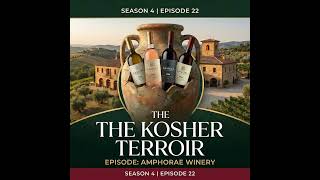
Amphora, known for ultra-premium non-kosher wines, launches its first kosher line under the Samuel label with four cuvées including the flagship Ofek, a Grenache Noir, Cabernet Franc, and Syrah blend aged 20 months. New winemaker Igor Ivanov takes over from Meir Amarell, while production happens at a service winery in Ramat HaGolan that bottles 100,000 bottles in ten days.
Chapters
Welcome to the Kosher Teruah.
I'm Simon Jacob, your host for this episode from Jerusalem. Before we get started, no matter where you are, please take a moment to pray for the safe return home of all our soldiers, If you're driving in your car, please focus on the road ahead. If you're relaxing at home, please open a delicious bottle of kosher wine and pour a glass, sit back, and relax. Welcome back to The Kosher Terroir. I'm your host, Simon Jacob, and today we are bringing you an episode that has been years in the making. If you know Israeli wine, you know the name Amphora. Nestled in a breathtaking estate, Enfora has built a fierce industry-wide reputation for its uncompromising ultra-premium winemaking standards. But for kosher wine enthusiasts, this iconic winery has always been just out of reach—until now. For the very first time, Enfora is stepping into a new era. Rolling out an exclusive and highly anticipated kosher lineup. Four extraordinary cuvées released under their brand new Samuel label. We were granted the incredible privilege of visiting the estate, walking through their beautiful facilities, and sitting down for an exclusive tasting of all four of these maiden kosher wines. When a winery with this level of pedigree makes the leap into kosher production, the expectations are sky high. But as you'll hear today, these wines clearly speak for themselves, carrying the unmistakable signature of Enfora's excellence right into the kosher world. Grab a glass, settle in, and join us as we taste history in the making at Enfora.
We are in the middle of a transition between winemakers. We had Meira Amarell, which made everything you taste here. He's been with us since 2016 until a month ago, and now Igor Ivanov stepped in. He's coming from Garage des Papas, or Vidor Levinson, if you know. Right, right. So he's just getting the bear of things, so he hasn't made wine yet. He has the next harvest ahead of him in August. Okay. And once that comes out, we'll have some Samuel wines that he actually made and was a part of. And that's a good idea for him to come to the podcast and just talk. Yeah, exactly. We are in the middle of a bottling process, so that's why he's not available today. I don't know if you've seen—
where did you park? Outside? We parked all the way back by the restaurant. We didn't know that you could come all the way down here.
We actually don't have real parking spots. That's— yeah, it's actually outside, which is good. But over here, we'll take a look after we finish. We do outside bottling because it takes a lot of time. What we did, let's say, until 3 years ago, we were bottling and labeling and packaging everything in-house. It would take us, I think, for a single wine, which is around 10,000 to 20,000 bottles, would take us a month or a month and a half. Until we label it and until we package it and put it on pallets and everything. He does it. His name is Yoel. He gives a service to most wineries in Israel.
It comes with a truck? It comes with a truck?
It comes with like a big shipping container. Yeah, shipping container which contains all the machines and everything. And he finished 100,000 bottles in I'd say 10 working days, 9 working days.
Yeah. So how many bottles do you actually produce here?
It depends on the year, but if we do an average of a 5-year plan, it's around 120 to 150. Okay. And how much kosher? Um, the kosher is— this is the first labels that came out. Okay. Uh, the Assis and the Ofek, which are the first reds we did. Were released in September, and the white and the rosé that you tasted were released January, mid-February. Wow. Yeah, just— we've been doing this process for the past 4 to 5 years, and from 2020, 2021. So it takes— where you need to— we did basically, we made some of our vineyards kosher. And we purchased new ones especially for that. And once you decide which grapes you want and until it gives fruit and until it provides any wine, it takes a couple of years. So it's been a long, planned process.
Wow. So you're really starting the kosher wines from scratch. We did, yeah. From the grapes, from the specific vineyard all the way through.
Yes. And Right now we are doing it in a— Service winery. Yeah, service winery. Thank you. Which gives us the ability to make kosher wines with a certificate and everything. Right. For us, our winery is all Jewish, but we are not able to make kosher wines. We will never be. What it would do, it would make the winemaker a lot less involved. Exactly. So that's the main reason for us all over the years to not make kosher wines. Kosher wines, but we do see the potential and the requests of actual people that really want to. And we see it right now. Once we published it, we have a lot of inquiries and we have a bunch of businesses that work with us. I think we just sent to Ramban in Jerusalem. It's a hotel or a café. It's a new business that we started. And I just sent them the first delivery today.
They're a great hotel and they've got a good They've got a great wine list. Oh, do they?
Very good. Yeah, so we just— Good pick. We're just getting implemented in their winery. Amphora is in a bunch of places that are high profile. A restaurant in Tel Aviv. In Jerusalem, we're actually not that popular because we didn't have kosher. Kosher. But right now we are proceeding with it. Yep.
Do you export your wines at all?
We do not because once we started with the kosher wines, it wasn't really the place and the time to start exporting. When I said about the amphora identity that I talked about, Israel in itself had a lot of identity of wine. When we see Israel in the past 20 years, a lot of change between winemaking and wine drinking. When you are going to any, I'd say, wine competition or wine exhibition, In the 2010s, you would only see a bottle of Merlot, bottle of Cabernet Sauvignon, and maybe a Sauvignon Blanc. But you would never see any Rosé, anything resembling Mourvèdre or Sansokounoise or Grenache Noir. Everything from the southern region of France. And that changed a lot. Not only in Amphora, but in Israel, in wine drinking itself. So— KP. When we compare, I like to speak on the winery when I compare between winemakers. Because we had before Meiram in 2016, we had Arkady Papkian. Arkady was spot-on old-school Israeli wines. It was a lot of oak and a lot of French classic wines that were Cabernet Sauvignon and— were a blend of the blend of Bordeaux, which was very familiar in Israel. And once Meiram joined, and in Israel itself, there was a change. People started noticing that they want wines that are more suitable to drink even in the summer. Which here in 40 degrees, it's a bit hard. In Israel, we started seeing more and more— I would say it's mostly French, but— more esoteric grapes, just like we have here. Cinsault, and we got— Durif was pretty common before too, but we got more Véder and Grenache Noir, which starts— you can start see them all around in Israel. Yeah. Shiluv nadir ben neshamal adamah. Yeah. That's the slogan. And the finger— the logo itself is basically a fingerprint. And the same layout when you look from aerial view of the Capsuto vineyard that we do most of the grapes from. Come from Capsuto? Conoise? Sansor and Conoise, yeah. It's both from Loire, Loire Rhône Valley of France. Is anyone else in Israel using these grapes? I think, but mostly in blends. Yeah. There would be hidden— Tourive? No, Sansor and Conoise. We have produced a bunch of Sansois and Connois. Sansois is pretty common. Connois is a more esoteric strain of grapes, but if you'd see them in Israel, I assume you'd find them in blends. Not a lot of people do it.
I've only seen them in blends.
Yeah, they're pretty common for it. And so when I talked about the whole identity of it, that there's a whole genre in Israel that wineries do make a sub-label of kosher wine. And it sometimes can be to do a kosher, to do a kosher. It's like, doesn't have the same identity of the wine. And I was worried about the same thing once before we actually released and I tasted the wine. But when I tasted it, if I did a blind tasting, I wouldn't even know the difference. Because there's a lot of an identity of our winemaking in it.
So you make this sort of blend for Amphora that's not—
We have a similar, yeah. Blend, okay. It's not the same because we do want to make stuff that are various from each other. Yeah, exactly. To make our repertoire full. But we have a whole series in Amphora that's called Terroir. Terroir is basically a locality in French. Yes, it talks about the earth itself or the sun or the temperature. I speak French.
Oh, okay, good. So, and my podcast is called The Kosher Terroir.
Yeah, okay. So, so we have a—
this is such a difference. I've never, I've never tasted anything like this before.
So it's so different. For me personally, this is the best part of our winemaking in Amphora. We do have the blend of Bordeaux, the classic wines, the Cabernet Sauvignon, the Merlot, and the Cabernet Franc.
This is the lighter one.
Yeah, it's so soft, it's so, it's so silky and cottony, it's so, it's so relaxing.
That's the Sanson Colloise for you.
There's nothing at all sharp in there, it's so pleasant, it's so relaxing.
It's meant to be. I, I just like to call it, it's more of a Beaujolais wine, but it's not because it's not the first wine of the harvest, but it resembles it a lot. The whole series, the terroir that I mentioned, the summer wine. It's a summer wine. It's an Israeli wine in my taste.
I agree. I agree. 100%. It's meant to be—
I like to drink it once I take it from the wine fridge. So it's a bit colder, but not cold, but not too cold. And we have a lot of that sort of wines in Amphora. The terroirs comes from a vineyard that produces a lot of grapes for the Samuel. That's called Capsuto. Capsuto, it's in Piki'in. It's in the, I'd say, western part of the Galilee. The vineyard itself, we did most of the work in there since 2020. It's a lovely one. And we manage the wine, the vineyard. Yeah, it is. And that's what I like about new age, I'd say, revolution of wine in Israel. Because people are starting to figure out that we don't only need the classic heavy wines. We should keep doing them and we still make them and they're Brilliant, but we have that other, that other wines in our toolset.
Would you say, let's say I keep kosher, so I'm not going to taste your other wines, what am I missing out?
The Grenache Noir. For me personally, I'm missing the Grenache Noir. Yeah, because Grenache Noir, we love in Israel the GSM, which is Grenache Noir, Syrah, and Mourvèdre. Yeah, and people love it in Israel, but they never actually took time to taste them. The Mourvèdre, we don't see a lot. The Grenache Noir, we don't, as a one-strain wine, as a single-strain wine. And that's a shame in my— because the Grenache Noir actually grows very similar to Spanish or Southern French Grenache Noir, which is brilliant. What I really like is seeing grapes that aren't on the— like when we textbooked it and They are not supposed to grow here, but they actually do have a lot of resemblance when you talk about it in Israel when they do grow. Like Grenache Blanc that we have here, that is very, very interesting. And people started to make it around 2020. Yeka Vitkin does a brilliant Grenache Blanc.
I was just going to say to you, all the things you're saying, if you want to taste them, go to Vitkin. Yeah, exactly. You want a kosher version, go to Vitkin.
Asaf does exactly the same thing. For a lot of time, and he does it brilliantly. This tastes—
this tastes to me like an Assaf Paas wine. Yeah, it is. Because it's the same. This is the same. It's— there's a focus on excellence of trying to make a wine that's just really good. It's not just making wine. It's trying to make really good wine.
Yeah. And Assaf, when I talked about the exhibitions in 2010, Asaf would be there with rosé. He was starting to break habits. Yeah. One of the first ones. And I think Meiram, our winemaker that made all of this, took a lot of inspiration. I assume. I don't know. Yeah. But it has a lot of resemblance to it. But Vitkin does a brilliant Grenache Blanc. And I think beside us, Vitkin, maybe two more that added in the past year or two. No one does Grenache Blanc, which is a shame because it grows very, very good in Israel.
No, so let's talk about the wine.
This wine is great.
Yeah, it is. That's the new age wine.
I'm proud of you. I'm happy for you. This is—
this is— wow. And this is basically our standard of winemaking. We do— it's a big thing to say because the next one we'll try would be a lot similar to old school wine. But, uh, shalom. Kol tov. What? Okay. But what we do is we Do both. And I like to— when I talk about amphora, I like to divide it into two series. Because we have the Med, the first one, the table wine, which is again a lot of Mourvèdre and Syrah and the lighter wines. And instead of Sauvignon Blanc, it would be the Med white, which is French Colombard. And like the white wine that we tasted, it's Claret and Viognier, which— Claret is a grape, right? Yeah, it is. Those would be the highest in, I would say, when in our portfolio of grapes, that would take the biggest percentage. But when we talk about our tradition, which when we can go back to the first wine we made in amphora, it would have the same name, the Riton, which is a Syrah that's based on an homage to Bordeaux. We got two blends, the blend of Bordeaux, the red version and the white version. Cabernet Sauvignon, Merlot, Cabernet Franc, and Sauvignon Blanc and Sémillon. And we will continue making them out of tradition and we'll give them our angle to it. So what led me to Amphora actually is Michel Roland. Ah, yeah. Do you want another splash? No. No, I'm good. I'm good. Michel Rolland just passed away. Yeah, no, I know.
I just did a podcast about him. Oh, did you?
Just now. Yeah, so we did the Velours with him. That's the highest profile wine that we did. And he was a lot of— inclusive. Yeah. And through 2008 to 2013, he has a lot of influence on our wines. Right. Most of them are just in the cellar and nothing left out of them. Okay. But yeah, Michel Rolland was a huge influence on the past of Amphora and a lot of influence on the future because when—
you still follow his procedures? I wouldn't say that.
I would say we take a lot of inspiration because we did a Velours 2022 without Michel Rolland, but it has to follow the Velours that Michel Rolland did. So we waited 9 years until we could actually make something that resembles in its peak or in its ability or in its, I would say, excellence to achieve the same name. Because we don't want to set it short, we don't want to ruin the name of the brand that we did, the Velours. So once we made a Velours 2022, we waited until we could, and we didn't do it in 2019 or '17 or '18, just when we could. Same goes with the Makoura. The Makoura that Michel Rolland— that's our flagship series, basically. The Makoura is after the name of the ranch that we are here right now. So he did that, plus to the Velours, he helped a lot with the Makoura. So Makoura from 2008 to 2013 served us until a year ago or 2 years ago because we hold them. So right now when we do Makouras, we do it every 3 years, every 2 years, only when we can produce a good enough wine to stand by its side. Because there's a lot of tradition, even though we change winemakers, even though we had a new owner, there's still the customer who knows the Riton and a customer who knows the Makoura and will want to to taste the new Makoura and see the resemblance. Got it. And in winemaking, you cannot follow procedures and basically copy and paste. It's impossible because of climate change. Everything is different. Everything is different. Change is so great. Yeah. But a lot of, but a lot of it changed with Mehran, in my personal view. But I'm a bit biased because I used to work for him. I was an assistant winemaker. In 2022, actually. But I see a lot of it towards, uh, towards his way of making, because I think it's a bit unfair for me to decide that because I wasn't a wine drinker in 2010. What? I'm younger, but, uh, so I, I don't have both ways to compare, but I can see from the people who come here regularly how it changes them. I have a good, a very, very good customer that comes here every month or two, and he loves, he adores the old Makoura and the Merlot Barbera and all the old vintage wines that we do and still made in the under Arkadi Papkean. And then every time he comes here, I, I just like 'taste the Grenache Noir, taste the Assis,' and you can see the light in his eyes. Yeah, no. He's actually learning something new. So I think they don't compete with each other, they just add to the repertoire.
They complement each other.
Let's taste the Ofek. Yes, please. I really want to taste it.
Thank you.
I'll leave it here in case you want to drink a bit more. Good. So this is the Ofek.
Is this the flagship of the kosher?
Yeah, I would say it's the most expensive one out of it. What's the price point on this? The Tzachat? 160 for consumer and 110 all the rest.
Oh, the white and the rosé, it's also 110?
Yeah, everything. Around the Ofek, it's interesting because I wouldn't say there's any wine that actually resembles it. It's a mix of both worlds, just like we talked about. Yeah, what is it? It's a blend of Grenache Noir, Cabernet Franc, and Syrah. Okay. Which we have nothing like in amphora. To me, it resembles like a mix between what we talked about, the terroir that is Grenache Noir, and the Riton, which is an homage to Bordeaux, which has a single strain Cabernet Franc. And it's like a mix of both worlds, which makes it a lot interesting because I got nothing to compare it to. So it gives that unique effect. Of the Ofek? I personally really like it because it has been in, I think, 20 months in oak barrels. Really? And it does not feel like it, which is good, which means it's a very balanced wine, and it serves that point. And I think for a first label, for a first try, it's a really good base point. What I was saying about the Ofek, the blend itself, it's— I actually don't know anything resembling it. Because Grenache Noir and Cabernet Franc usually don't mix. Yeah, but it does well there. Yeah, yeah, for sure. Okay, yeah, go ahead. Continue, continue. Grenache Noir, Cabernet Franc, Syrah. Yeah, I think Syrah is just for the closing taste, but I think it's mostly Grenache Noir and the Cabernet Franc that makes the impact. But it gives to anyone drinking Samwell, it gives the— when we compare the all four, it— everything I said about Amphora, about the table wine, the first series, and the terroir, and the Riton, and the Makoura, it gives them an idea of what it actually is and what the differentiates in Israeli winemaking does it. Because the Rosé, it's very crisp, as you said, a lot of minerals. And less, I would say, sweeter fruit. It's not ripened fruit. It's a lot of acidity and it's bone dry and we're not ashamed of it. It's exactly how we want it. And the white one actually has a lot of difference from Amphora because we don't actually work with either Viognier or Claret. I think this one was a test for Mehran, the winemaker that did it. To work with Viognier, which he really likes.
I love it. Yeah, I love it. And I love, I love that mix.
Yeah, I love it. It's very perfumy and flowers, and it gives it that edge when, when we actually don't do it in the winery itself. So I would say it was his attempt to, I assume, to make something a little bit different.
So if you use it as a service winery, who Which service winery do you use?
Do you use Bat Shlomo? No, we do it in the Ramat HaGolan, but we plan on the next 2 years to have our own facility.
Okay. Actually, so the first winemaker was who? Was Arkady?
Like the big part of Amphora, it was Arkady. There were a few before that, Gil Shatzberg. Really? Yeah, he was here for a few years, not even. Like, uh, 2005 Amphora was his, uh, making. And I know it just because we did a tasting from the cellars and, uh, Meiram, the old winemaker, uh, really liked it. So Gil lives here in Zichron and Meiram did as well, so he brought him the wine at the same day because he wanted to hear what he did. It was a Syrah, was meant to be like the table wine, the easier wines that are not meant to age. And he wanted to open it to show what vinegar is. And, uh, and it wasn't. It was— it proved us all wrong. It was a day old. And, uh, he wanted to hear what he did. So they drank together after we tasted it. Yeah. So it was Gil Shatzberg. But mostly the biggest years, the biggest impact because you gotta be here a few years to make an impact until you know how to work with what you got. And the facility itself and the tradition itself and bringing stuff to you, to your own liking, it takes a while. So Mehran came here and he took everything that Arkady did. And for the first few years, he did Arkady wines basically. But it took him, I'd say 2019 was the first year he released A Mouvedère, a single strain Mouvedère. So that's 3 years already after coming here. It takes a while. And the Grenache Blanc, he started making 2 years after. So it takes a while to take an impact. Got it. I'll give you the— what I say every time when we talk about— when we bring people down here to the cellar. But if you have any specific questions, do ask. Go ahead. Basically, in Israel it was hard for wineries to actually build cellars because most wineries weren't planned as a winery. And we were lucky enough for this to be planned as a winery. It only looks like a very old house that was renovated. It's been built in 2003. And it was meant to be a winery from the start, from the get-go. So this is the cellar. What we have here is basically an environment system that helps us maintain moisture and temperature. We have it on 11.8, if I'm not mistaken, for all year long. Yeah. And what we do here basically is that's the most important part of our winemaking, in my opinion, because What differentiates our white wines in Amphora, to me at least, beside the decision about the grapes, it's about winemaking, the method of winemaking. Everything over here is white. And as you can see on the top right, you can see that very long barrel, elongated. Yeah, like this. Yeah, exactly. That's called a cigar barrel. A cigar barrel is meant for a method that's called "sourlis." The cigars—
I sell cigars. It's called a torpedo.
Oh, is it? Yeah, the shape is called torpedo.
The cigars that come at the end.
Yeah, you know what a torpedo is? Yeah, the missile itself. Yeah, yeah, yeah, the submarine. Yeah. So it's called a cigar barrel and it's used to make wines that are made in Sougly, which is— Sougly? Yeah. Okay. And we do a lot of our whites in Sougly, a lot of them. So how do you— Even our most basic white wine, the Medway, the table wine, has some parts of it made in a barrel.
How do you do bottlenage on a barrel like that?
We climb up and we bottlenage.
You climb up and you do bottlenage?
Wow! That's the advantage of a non-kosher winery. Okay. Because I can get— as I grew up here as a teenager in Kerem Aral, I got released from the army and I looked for any job, and I came here to the visiting center 7 or 8 years ago. And I started working here and I was then a shift manager and then, then, and then, then. And then out of a good relationship with the winemaker, with Mehran, I was offered to join and learn a bit because I don't like textbooks. I like to know through my hands. And I did that for almost 2 years, 1 harvest. And it allowed me to actually taste and smell and touch and everything. Just like we do topping here. You climb up there with a 5-liter gallon and you just pour. And you hope you don't fall down when you climb down.
And you have some, you have some also big barrels as well.
Yeah, we got 500s. Not a lot of them. Mostly for the big blends, the Riton Rouge, the Manred. But mostly like the Riton series that we talked about. Yeah. Because it's an homage of Bordeaux, we only do it just like in Bordeaux in 225 liters. So yeah, those are magnums that are waiting to be labeled. Amazing. Yeah. And here in the, when we talk about the barrels themselves, A lot of wineries choose, okay, we work with this, we work with that. We took the opportunity and we work with around 8 to 10 different brands of, uh, manufacturers of oak barrels. And they come through different forests and different methods of making. And we can see that here. Uh, you can see we got Vicard and Suri and Hermitage and, uh, Berthoméau. Which is, you can see they all have labels and it tells us everything we need to know about the barrel itself. MT, it's the, I'd say the toastiness of the barrel, that's medium toast. And A is the forest itself. If I'm not mistaken, A means Arbatrage, Arbatrage, that's the name of the forest. I don't remember it by heart. Crush. But we can see even other ones. Let's see here. That's B. That's the name of the forest. We have 4 different forests here that provide the oak barrels, and some of them are blends even. AB, BA, BV. And forget about the grapes, the yeast, the method. Only barrels can provide so much differentiates in the wine itself. Wow. That's why you cannot copy anything from a year to a year. Even if you did that.
That's what allows you to get a good result. It allows you to go back and reverse engineer what you did exactly. You know, okay, this would work best with that grape. And you're able to reverse engineer and to repeat it and to get consistent results.
Mehran used to say it perfectly. He said, Yes, you can, but you'll never know what's— you never know what did that effect. If you tasted this barrel and you would say, okay, this is good. Maybe it's the yeast, maybe it's the barrel, maybe it's the year of the same barrel that was absolutely perfect. So it can be everything because it can be that part of the press. Even when we press the grapes, it can be the free-run, the start of it, and it could be the hard press that made it. You cannot— You can absolutely cannot translate it next year. Could be anything. Could be the amount of sun that it got. Could be the same line of the orchard, the vineyard. It could be the first line or the lower line. You cannot know everything. And that's why you said it's a lot about taste. You taste and you can see the potential and you learn from experience. And that's the— The archive. This is the archive? Yeah, let's take a look. So that's our archive. We bring every wine that we ever did between '06 to '48 and we keep them here out of two reasons. One is for the winemakers themselves. There was Igor that came here and he wants to know how Arkady did things. So he did it and tasted it. He wants to taste the old Yton Rouge. It's— he can taste it. And that's, I would say, a winemaker's archive. And beside everything, there's a lot of ask for it. And that people really want to buy stuff that are already vintage. And if they want to take the first bottle that we made, the Amphora Cabernet Sauvignon '98. Even before this building was ours. He can purchase it. It's available to him. Some of them are in very good shape and some of them are already done. And those that are done, we do not sell, of course. Wow. Yeah, that's just the tip of the iceberg of some of the wines. We got like a Medred from 2003. That's what I told you about the heritage. 23 years ago they made a Mad Red. Right now I make a Mad Red. They're not the same, but I have to keep some heritage in it to allow the customer to get used to it and to know what he likes, because he likes the Mad Red. He doesn't like the blend I did last year or this year. I cannot do a lot of change, but I can do slow changes. Yeah. That's half full because we use the coravin with it. Okay.
But that's it. Yeah. The logo changed.
Ah, that's the old logo. Yeah. Only until 2006 it was. Okay. For Vineyard it was called. And I think that pretty much sums everything up unless you got some questions.
Thank you very much, Ido. No problem.
For all that time. It's my pleasure.
I hope this episode makes the wine at your next Shabbat table taste a whole lot better. And to the rest of you listening, I want to hear from you too. The Kosher Terroir is an ongoing conversation. If there is a topic, a specific winery, or a wild wine myth you want me to unpack, reach out and let me know. If you enjoyed today's episode, please do me a favor. Just like a great bottle of wine, this podcast is meant to be shared. Send this episode to the person who usually hosts you for Friday night dinner. Text it to your wine-loving friends. And please take 30 seconds to hit that subscribe button and leave us a 5-star review on Apple Podcasts, Spotify, wherever you're listening. It is the absolute best way to help new listeners discover the show and to grow our incredible community. Join us again next week. And until then, pour yourself something beautiful and remember, wine is a living thing. Sometimes it just needs a little room to breathe. L'chaim, everyone. Have a wonderful week. This is Simon Jacob again, your host of today's episode of The Kosher Teruah. Please subscribe via your podcast provider to be informed of our new episodes as they are released. If you are new to The Kosher Teruah, please check out our many past episodes.










