Inside Vitkin Winery’s 2025 Unforgettable Harvest
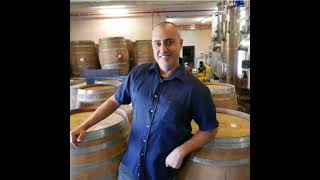
In this Kosher Teruah episode, host Simon Jacob and interviewer SPEAKER A sit down with Vitkin Winery’s winemaker Asaf Paz to dissect the 2025 harvest. Paz describes a season marked by severe drought, uneven irrigation, and a mix of low yields and surprising abundance in non‑irrigated blocks, labeling the vintage “unforgettable.” He explains Vitkin’s experimental lots—Blanc de Carignan, Grenache Blanc, Riesling, Pinot Noir, Tanat, Colombard, Chardonnay, and others—detailing how terroir, irrigation strategy, and varietal choice shape each wine’s character. The conversation weaves in the emotional backdrop of Israel’s recent conflict and the return of hostages, noting how relief and collective sadness influenced the winery’s atmosphere. Paz highlights a philosophy that balances data with sensory instinct, recounts moments of collaboration with neighboring wineries (sharing fining agents, mutual support), and reflects on wine as a cultural statement and a “message in a bottle.” He also touches on hospitality, food pairings, future plans (new high‑altitude varieties, olive trees), and his personal evolution as a winemaker after a tumultuous year.
Chapters
Welcome to the Kosher Teruah.
I'm Simon Jacob, your host for this episode from Jerusalem. Before we get started, no matter where you are, please take a moment to pray for the safe return home of all our soldiers, and the full return of all the remains of our hostages. If you're driving in your car, please focus on the road ahead. If you're relaxing at home, please open a delicious bottle of kosher wine and pour a glass, sit back and relax. From Israel's coastal plains to your glass, welcome to the kosher terroir. Today we're at Vitkin Winery with acclaimed winemaker Asaf Paz. We break down the 2025 harvest, its weather patterns, ripeness windows, and the choices shaping Vitkin's signature style. We explore what's new in the winery, from experimental lots to releases you'll want to watch for. And we take a thoughtful pause to consider the mood in Israel After the return of all our living hostages. How community, resilience, and gratitude are felt in the vineyards and the cellar. Authentic, timely, and full of craft. Let's pour and begin.
How's it selling?
The Carignan, the Blanc de Carignan? Yeah, yeah. Good. We sell it only here. We don't sell to anybody out. We don't want to sell. It's amazing because people are very open to new flavors. When we started 25 years ago as the pioneers of Carignan and all the things that people didn't believe in, we, we find it very challenging to educate people to drink things that they're different from the Fantastic Four— Cab Sauvignon, Merlot, and so on. And today it's so easy. You have a group of young people and we ask them, what do you want? They said, like, a fresh crisp white wine. And we say, we have something special, do you want to taste this? And they buy like a couple of bottles of Blanc de Carignan, which is like the first ever Blanc de Carignan that I know, for sure, for surely in Israel. And we I find it wonderful that people are open and they're willing to try and they're willing to experiment with the new flavors, and that's nice. How are you?
I'm great, I'm great. It was just— I'm gonna say L'Chaim. I know you're having a coffee, but I'm gonna have a L'Chaim.
I never make a L'Chaim with coffee. Baruch Atah Adonai Eloheinu Melech HaOlam Boreh.
This is wonderful.
This is so crisp. It's so—
it's crisp, but then it have like this something behind. I have a very good friend, he's like the olive oil master of Messick Magal, and he's very good in flavors. And he tasted this wine for the first time and he was charmed by it. And he said, I feel here green raspberries.
Green raspberries?
Yeah, I said green raspberries. He said yes. And I asked him, "I never tasted green raspberries." And he said, "Me neither. I don't know if there is green raspberries exist anywhere in the world, but this is how it feels to me." It's lovely to have you here.
Thank you. So I wanted to talk a little bit about the 2025 harvest. The harvest this year, I believe was unlike any other, filled with both uncertainty and hope. How did the emotional atmosphere in Israel affect the spirit and the rhythm of the harvest at Pitkin?
So first of all, without any regards to the emotional state that we've been in, and the threats and the alarms and the missiles and Everything that happened, the war with Iran. And, you know, if we said the war with Iran 10 years ago or even 3 years ago, everybody said, what? And we say, it's like in Hebrew, we say, Alan, Alan. It's like, yeah, every day is a thing and a very usual thing, but it's not. So even if we don't consider those aspects, this harvest was I want to call it in a word that's not too pessimist or negative. I call it unforgettable. It was unforgettable because it was unlike any other in many aspects. Some of them were very challenging. The others were very promising for the quality of the future wines. But all in all, I think this is the harvest that I will never forget so far. We had few of those through the years. Climate-wise, we had the 2006 war with the Second Lebanon War, and we have the 2024, which was affected from October 7th. But this one, the climate was completely different. So it started with an unusual, very severe drought. Drought? Drought. Drought. And so the precipitation levels were very low. So we started with a very poor humidity in the soil to begin with. But we are Israelis. We have irrigation. We have the dripping system and we're not worried. But this year showed us that nature is still stronger than all of us, and there are things that you cannot correct or modify just by opening the irrigation. And I can demonstrate it in two different vineyards. One of them is a vineyard that we irrigate regularly, and this year we give it between 50 and 70% more water, and we started earlier because the soil was much more drier to begin with because of the dry winter. And the vines looked very poor. They looked— they suffered, they struggled, even though we spoiled them with a lot of irrigation. That you can learn from that, that irrigation is not everything. Rain have a very important role in the growing season effect and, you know, influence. And from— so over there, the canopy and overall behavior of the vineyard was— it was struggling. You saw it was— it had a lot of challenges. And also the yields were lower, but also the maturity was much longer because it took the vines much longer to put all the— what we want in the grapes, to get the grapes to the right maturity. And from the other hand, we had the vineyard of a Carignan, old vine Carignan, no irrigation, Now, when I say no irrigation, that doesn't mean that we don't irrigate it. That means that we don't have any irrigation system in place whatsoever. We don't have a dripping system. We don't have any other means that we can add water besides rainfall to the vineyard. And with this vineyard, I was very worried. I went to see how it goes from the budbreak til the fruit set and the fruit ripening. Because I said to myself, here we have a real problem. If the vineyard is collapsing, I cannot do anything. I just, you know, din shama'im. Yeah. And this vineyard looks— it was the most beautiful vineyard in terms of the canopy, the growth, the vigor of the vines. It looks like nothing happened. It's just another— Harvest. Business day, you know?
Yeah.
And what proved that we are right also in the aspect that we irrigate less and less the vineyards. Of course, we cannot use the method of zero irrigation in all the vineyards, but we try to irrigate as less as possible. And it proved us right because on those vineyards, and this wasn't the only vineyard that we don't irrigate, there are other— other vineyards that we don't irrigate that also were, you know, completely normal this year. The canopy looked a little bit lower and a little bit weaker, and the yields were maybe 10% less than average, but you know, it's okay. The maturity was perfect in those vineyards. Not like the Chenin vineyard in the Golan Heights that got a lot of irrigation but still struggled a lot. But all those vineyards without irrigation showed us that we need to do as much as we can to get to those situations that we don't irrigate or irrigate as less as possible so the vineyards find a way, the vines find a way to the—
Dig deep enough.
Deep enough to bring the water, to bring the good minerals and that gives the typicity and give the character. The unique character of the terroir to the grapes. But what was unique in this vineyard, unlike in other non-irrigated vineyards, that in this vineyard, the yield went up more than 30% compared to last year. So we had more yield in a year that we have much less rain. And that really shocked me. So, you know, I always say that one of the aspects that I like in wine is that wines— wine make me humble. You know, always you get to a point that you think that you know everything or most of the things, and then the vines come and tell you, no. It's so deep, this ocean of wine, that you, you always surprised from something and you have a lot to learn. And I think that's wonderful.
Wow. I love it. As the hostages began to return home, the nation felt kind of a collective sigh of relief. Did that moment resonate with you or your team, perhaps even becoming symbolic as a turning point for the harvest?
First of all, of course. Even though that we, we talked about it very little, you, you could feel the, the smile. You can see the smile of the, on the faces, and you can feel that people are much more relaxed, much more, you know, there was like a deep sadness, you know. We, we went through very dramatic 2 years, and almost every other week was like an historical day that we will remember it forever. So many things happened in those 2 years. Yeah, it's like stories for 100 years. Okay. And but through this time, there was like a built-in sadness in every one of us. That we know that our heart won't be complete until all the hostages, at least the live hostages, will come back. And of course, all the rest, the bodies of the deceased ones, will come to their families, to Kever Yisrael. But at least the ones that are alive, we know that they are with their loved ones and are not suffering with those monsters. And when they relieve the when they released, we have this relief. Even though we already finished harvest and we already finished the press, because of the low yields, the harvest was relatively early. This is another effect of the harvest, but it still affected us because there are so many things that you do post-press, and the anticipation They also guided us in, you know, we personally cannot do anything to bring them back home, but let's do our work in the proper way so at least we do the things that need to be done so things will be more successful for everybody. So it wasn't during the harvest. It wasn't during the dramatic, hectic time of the harvest. But you can feel it with all the workers and of course our families. This was a blessing. We don't know where we're going yet with all of this. But at least we put this chapter behind us, and that's what's important.
Thank you.
We give you the single vineyard Riesling with the— it's in a German inspiration, you know, it's like German influence, but it's a Judean Hills Riesling. It's open like a beautiful flower.
And it's— it even has— wow, it has that like signature petrol.
Yeah, as well.
—It starts to show. Yeah. And this is what year? This is 2022. 2022. We have a lot of patience with the Riesling. I leave it 6 months on the lees in stainless steel tank. So it will gain back texture and structure and aromas from the lees. And then I keep it at least 1 year in the bottle, which is very un-Israeli to do. Because we wanted to— 100%. Release it fast, to show it, to sell it, you know. My bank manager don't really like those wines that they keep a long time in the cellar. But I explained that there are wines that they cannot play with. There are things that they cannot rush. Riesling needs its time. And I wait. And I think this harvest needed a little bit more than one year in the bottle. We tasted it over and over. Until we feel it's ready and only then we release it.
So every vintage tells a story. If you could capture 2025's Vitkin harvest in a single word or phrase, what would it be and why?
I think again on the word unforgettable because first of all, Unforgettable was one of the songs that was favorite of my father. Bless his soul. Nat King Cole, of course. Yeah. And so when I think about this song, I connect a little bit with him. And, you know, with wine, you need to— you learn to be patient. You learn to accept a lot of things. And I come from— I was born and raised in Tzfat. One of the tzadikim that buried in Sfat, it's Nachum Ish Gamzu. And Nachum Ish Gamzu always said, Gamzu letova, Gamzu letova. We learned that a lot of things that we see as challenge or crisis, if we take them in the right context, even though this word was used poorly in the last 2 years, we learn to benefit even from the negative things, even from the hard times. And this harvest, one word that I cannot say on this harvest or describe it is easy. It wasn't easy. It was hectic. It was challenging. It was unlike any other. If you weren't there at the vineyards, you can lose the entire vintage. Because every winery, after a certain time or, you know, 5 years, 10 years, you had this learning process that you know that you have the certain parcel of vineyards that this is the one— first one to ripe, to be picked. And the last one, and you have like the general order of what's coming when. This harvest was like big balagan. It was a big mess. The first, normally the first one is Gewürztraminer, which came last. The first harvest that we picked and we brought into the winery was the Macabeo. Wow. And normally the Macabeo needs a little bit time and it's coming like— it's one of the last white wines that we pick, white grapes that we pick. And it was the first. And we have Argaman, beautiful Argaman, low yield, clean vines up in the north in a high altitude, high altitude Argaman, wonderful Argaman. Full of freshness, but also a lot of power. And it needs time to be ready. And normally this is like the 4th or 5th red grapes that we picked. The first one is the Pinot Noir. And this year it was the one that we picked just after the Pinot Noir. So it came so early. And other other vineyards, we just waited and waited and waited. So for me as a winemaker, my presence in the vineyard is— It's crucial. Yeah, it's crucial, and I cannot skip it, you know. It's a lot of effort, it's a lot of mileage, it's a lot of time. When you have family, you want to be more with your family and less in the vineyard, but you should be in the harvest in the vineyard. Yeah. You know, One of my mentors, Jim Klein, from Navarro Vineyards in California, who was the chief winemaker before Victor Schoenfeld in Golan Heights Winery. He was the first one to make the Blanc de Blancs and the Katzrin for Golan Heights Winery. When I told him, you know, I need your help to describe the urgency of harvest to one of my CEO, in the winery. So he told me, you just use my words. When one of the CEOs of the wineries I worked in didn't understand why I'm so stressed before harvest, he was a new CEO, never worked in the wine industry before. And I told him, the baby is coming. When the harvest is coming, it's like the baby is coming. There are things that you cannot say, wait a little bit. You, you, no, no, we need some more time for renovation. No, no, the baby is coming. Either we bring it or we lose the whole thing. So you need to be there. And the ones that were in the vineyard, even though it was challenging and it was tough and it was stressful, even if you don't consider the emotional aspect of this year, you lose the harvest. And the ones that's been there got the best of it. So, uh, Unforgettable, challenging, stressful, and yet I think the big majority of the wines were amazing, delicious, and we will talk about them for the years to come because we will feel it. I imagine myself in the future making like a vertical tasting and Bringing the 2025 and then it will show. It will show. I'm sure it will show in the wines, the— this crazy character that we had.
Did any of the vineyards yield truly unexpected excellence? Perhaps a plot that quietly became a star?
We had few miracles, if that's what you mean. Yeah. Okay. Few miracles. First, the one that I talked about, the Karinyan, that even though the harvest was so tough and the water was so scarce and the yields in most of the vineyards went down, it gave much more yield. Another one was Columbar, which is a variety that I'm in love with. It's— for the last 25 years, I make amazing things from this one. How do you call something that people don't give a lot of respect but you should? Under the radar. Yeah, under the radar. That's for me is one of the stars because it gives such a delicious result in our region. So last year we had the problem with one of the vineyards. It gave very little yield. It gave something like 500-600 kilos per dunam. And of course it was delicious. This year it gave double. And I was sure that we feel like a dilution in— dilution or like more watery character because you have much more grapes, but it was even better. Wow. So you have those little miracles that you cannot believe that— it's against the books and the mathematics that you have in the vine growing and winemaking. But of course, we have those stars. I think that we should look especially in the white wines. We will see it very early. 2025, we have very interesting things coming in, but we can talk about it in like 3 months.
You're known for balancing instinct with precision. During the year of instability, did you find yourself relying more on intuition or data? And can you recall a specific decision and like a picking date or fermentation choice where your instinct led the way? That's a good question. Because your instincts are really special.
It was, it was, we always rely on data because whether we say it or not, we looked on the number, we look on the numbers and it affects us. The question is that when you get to a point when your mouth is telling you it's ready, your grapes are ready, you know, declare a harvest, call it a day, you know. Or, and the numbers shows, you know, no, you're far away, you need to wait, the sugars are so low and the, you know, acidity is very high and the flavors, you know, but not the flavors, but the numbers are way behind, but the flavors and what I call my best lab, which is my mouth and my nose and my eyes that looks on the vines, see the situation, taste the grapes, and then reflect on what do you feel and when do you— where do you see these grapes going into. All of those instincts and senses tell you It's ready. It's there. Let's pick it up. And I always trust my instincts and my senses over the numbers. So this year was, of course, another one like that. Because last year we had a better winter that we— it wasn't like an ideal winter. It was another winter with the lower than average precipitation. But it was better than this year. And we had low yields and we had very good maturities. So it was very easy. The mouth and the nose said it's ready. The numbers show it's ready. So you're very peaceful in your decision. This year we had a lot of conflicts between the senses and the experience and the number on the Excel sheet. And I went with my instincts and we nailed it each and every time. And you feel it when the wines are finishing the fermentation and you see the full potential of what you got. We have few barrels of unusual white varieties that we put in to mature in barrels because the The quality was so unique, so I wanted to separate them and see how they react to the barrel fermentation and aging. So it was that unusual. As I said, it was very challenging, but in a bizarre way, very promising as well.
Okay. There's been like a very strong sense of national unity recently, even among competing wineries. Have you felt more collaborative or more collaboration or camaraderie this year with other winemakers in the community? And was there a specific act of support or generosity between winemakers that really stood out to you?
First of all, yes. But I want to remark that we always have this this, you know, solidarity. Because as I said it just 2 weeks ago, I visited the— I visited Beniamina Winery, and they have a new winemaker, new old winemaking. They have Yotam Sharon, which is very experienced, talented winemaker that's been around for many years. He started making wines in Barkan even when I was back in my studies in Bordeaux. And now they're new winemakers, so mazel tov for both sides. And I told them that even though in the sales level and, you know, marketing level we are competing, in the production level we are standing side by side, shoulder to shoulder, especially when we see what's out there for us as Jews and Israelis. That shows that we need to be better, work better together. 100%. It sounds like kumbaya, but it's not. It's really happening because for— and it was like, you know, karma, instant karma. When we started the harvest, there was one material that we use for clarification of the juice, you know, for the Sometimes when the juice is not clear enough, we need to clear it, to clarification and fining. And there was a problem in production and we left without, and you need to start the harvest, you know. And then I called other suppliers and they didn't have it, and other wineries. And then I spoke with this particular winery and I asked them, I said, 'Let me check, no problems, we had like 2 kilos will be enough.' I said, 'Yeah, it's more than enough to start the harvest and be, you know, relaxed.' And they just, they send it to me. I didn't even ask. I told them, 'Okay, great, it works for me.' And they said, 'No problem, our winemaker is going to the center, he will drop it by your winery.' And they even brought it to me. They were so generous. And I told them, 'Okay, send me a 'Send me a receipt. Send me like a bill, invoice.' Said, 'No.' I said, 'Are you kidding me? It's like, it's nonsense.' And then in the end of the harvest, the same winery find itself without a specific material, an enzyme for the juice. And they called me and they said, I told them, 'Just let me check.' And if I have it, no problem. And I had like a whole bottle and I finished all the— I finished using it. Grenache Blanc, s'il vous plaît. And I finished using it and I said, okay, do you want me to send it? He said, yeah. I just sent what was left, exactly what they needed. And they ask you, how much does it cost? Forget about it. You know, what goes around comes around. You know, it's like So, this is how we treat each other between the wineries. And I think this is how it should be. When Recanati winery was a neighbor, they always helped me with the different things that for me was a little bit too complicated and I needed help. They always were there for me. It got to a point that one time, Kobi Arbib, the winemaker, needed like a solvent of the lab from that he, he wasn't sure that his was precise. He wanted to use mine. I said, I told him, I'm so happy that for once I can give back something to you. So of course you're more than welcome to come and pick it up. So yes, the solidarity is there, and in this year it was even stronger. This is Grenache Blanc Collector's Edition, only 4 bottles were made. 4 barrels. Barrels. I said bottles. Yeah, that's— then it's really collectible. Yeah, this is like only for the King of England. So it's containing— the blend is 90% Grenache Blanc, 10% Macabeo.
Wow, this is— I can taste the Macabeo. The Macabeo is really like—
the kick, the salinity.
Very full. It's— yeah, there's a salinity and it's just— wow! It's your whole— your whole palate participates. It's great.
This is one of the wines that I really made the research before I planted the vineyard. I was in a Grenache symposium back in 2009 in France with all the big names of Grenache producers in the world, from Alvaro Palacios in Priorat to Chester Osborne in Darmberg, Australia, to Sicily, Sardinia, North America, and so on. And it was amazing. It was like a big brainstorming. And I fell in love with all the colors of Grenache, you know, Grenache Noir, Grenache Blanc, Rosé from Grenache. And I came back to Israel and I planted Grenache vineyard, Grenache Noir. And for the Grenache Blanc, I I felt that I really need to find the right site. And I spoke with a lot of those experts and they told me it can grow anywhere. But if you want a unique fruit, you need to find a very mineral, stony soil. Don't go for too rich and deep soil. You need a lot of stone. Doesn't matter if it's— what's the source of the stone? If it's limestone, it's even better. And that's where I plant— that's exactly where I planted the vineyard. It's in a site that the local people call it the quarry. It's so, you know, unfriendly. Nothing grows over there except the Grenache Blanc. So, and we don't irrigate it a lot, only what it needs. And it's given amazing fruit. This is one of the grapes that I told you that the numbers didn't fit the feeling. So, by the— what I felt, the grapes were ready, and what the numbers showed, that you need to wait like a couple of weeks more. But I went with the— You went with the— With the instinct. The intuition. Yeah, intuition.
Have you— This is amazing.
Yeah, it's like a tabbouleh. Yeah. I will call it the Hebrew name. It's a tabbouleh of Carmel, of Chittat Carmel. Chittat Carmel is what's mentioned in the Bible. And today we call it friki. And this is what the— our ancestors did when they needed to eat something, but the wheat wasn't ready yet to harvest and to make flour from. It was still green and they took it and they dried it by burning the excess of the peel of the... Achmet al-Gebim shibbolim. This is a hard one. It's like the cluster. The cluster of the wheat. I don't know how you say shibbolim.
I don't know how you say shibbolim either. But I know what it is.
So they burned the wheat, the husks. They burned it. And it's made it a little bit drier so you can cook it. Yeah. And it gave it like a smoke taint that was very palatable, I guess. And that's what they call it, hitat karmel. So this is—
So this isn't a cheese?
So this is with the labneh.
Yeah, with labneh. And it's also with kuzbara. You know, Parsley. Parsley.
Parsley, mint. Yep. Dried cranberries.
Wow. There's some chef sitting in that kitchen. Yeah. They are—
the Elichai, our chef, is— It likes simplicity, full flavors to emphasize the raw material character. It works with all the local suppliers. Cheese, olive oil, everything is local. A lot of self-produced from cracker and focaccia and, you know, of course, all dishes that we make. I planted, I will plant an olive tree in a couple of weeks. So I planted, I will plant varieties that are good for olives, for cured olives. So in a few years we will have our olives as well. But he is very talented. He likes to use what's the best for the season. —to emphasize the raw material. We call it KISS— Keep It Simple.
You know, it's really special to be able to come to a winery and have somebody prepare such a delicacy of food. Usually, some of the wineries have cheese or they have some vegetables cut up and what have you. But this is like super gourmet. It's just delicious. It's really delicious.
It's very important for us to be able to showcase our wines in the best conditions, but also give a complete, uh, experience to the visitors that can enjoy food and wine. And we don't do a food pairing and wine pairing. We, we let people choose what they want, what we with what they like.
This is spectacular. Okay.
Good questions.
Okay. Looking back now, was there a single moment during the harvest that captured the essence of 2025 for you? Maybe something small but unforgettable.
Hehe.
We're using that name. Using that word a lot. Yeah. If you could bottle that moment as a feeling, what would the label say?
There is a proverb in German that say, 'Kleine aber meine,' which means little but mine, or small but mine. Yeah. And we have a vineyard of Tanat that you tasted already a few times, the result. We use it for blend mainly. We haven't done yet a varietal Tanat. And normally we get small quantities because yields are not very high and they're very moderate, but concentrated. This year we got like between 40% and 30% of the average. It was so small that I needed I didn't have anywhere to ferment it because my tank needs a minimum of grapes to ferment. And if you put less, it don't reach the cooling jacket. Yeah. So I took my risk and I fermented in a bin, in an open bin. Wow. So it was like the single Tanat bin. You can call it a single bin Tanat. But it was— It was so, you know, like a personal wine. Of course, we made punching down and a little bit of pumping over every day a few times, and the workers told me how it smells and how it looks, and I went to check it. And it was— because it was so small, it was like, again, a personal winemaking, like a garage— winery. But the result is so delicious. So I don't know where the line goes between the real quality of the wine and my emotional towards this wine, because we really— every wine you, you follow throughout the process from budbreak to bottling and after and beyond. But this wine was really one of the One of the wines that we followed and we looked after like a baby. It was small, limited quantity. It was like the Chéri Ta Pléta of this vineyard. And it was charming. Very cool. So we bottle this as Little But Mine.
Any new varietals that you're playing with that you can talk about?
I can tell you that there are new varieties, but I cannot talk about. We planted a few interesting things in high altitudes. We cannot talk about it, but looking forward in the next few years, we're going to have a very interesting Things going on. White Sauvignon. It's always very interesting here, but we always add— every few years we add another color, another taint to the— to our selection. This is from the restaurant? Yeah, yeah. We made a project for Cheers. Cheers. They challenged me. They said, we know that you're not making Chardonnay. We know that you don't like Chardonnay. I said, I didn't say that I don't like Chardonnay. I just said that I choose not to make it. Is that one of the—
do you consider that one of the Fantastic Four? Yeah, absolutely.
So Merlot, Cabernet Sauvignon, Chardonnay, and Sauvignon Blanc.
Sauvignon Blanc.
The ones that I never said that they are wrong and they are delicious and they got the name Fantastic Four because they are fantastic. They're giving very good results in most of the climates. Most of the situation or— But where's the challenge? Exactly. It's, and first of all, it starts to be boring. And secondly, I said that wine is not cottage cheese and it's not Coca-Cola and it's not even beer. Beer, you can transfer the raw material from continent to continent, get a good water source or filtrate it to adjust them to your needs. And you will make a wonderful beer. We have Alexander Brewery just next to us. They make every beer that they make, they nail it. I don't, I'm not a fan of all the styles because I have my own personal taste. But when I taste their IPA, it's a wonderful style IPA. They have like 2 or 3. The IPA for me, it's like something that I learned to enjoy when I worked in California. And they have wonderful small breweries that make amazing IPAs. Anyway, in wine you cannot do that. You cannot transfer the raw material. Yeah, it's very fragile. So you need to stick to your terroir and you need to tell the story of the terroir. And with those varieties, it's a little bit hard. First of all, because they're very usual and very, you know, routine varieties. And secondly, I made a lecture once about Israel terroir, that my first phrase was, there is not, there isn't such a thing as an Israeli terroir, because we are in a very small land that in the morning you can go and dive in tropical reef, coral reef in the Red Sea, and you take your car, you don't even need to fly, you take your car and in the afternoon you skiing in the Mount Hermon. Show me one country that have this amazing complexity and diversity. So you need to look on regions or sub-regions to get a notion of each terroir. But, and then I made my case that you have 2 groups of varieties, and I call them in Hebrew— it sounds better for once. For once, I call them zanim regishim leterroir, zanim adishim leterroir. So the ones that you have, the terroir-sensitive varieties, that means that they really change dramatically when you change the terroir. And there are varieties that are Indifferent?
How do you say? Indifferent.
Indifferent to the terroir. They are less— they show less dramatic change from terroir to terroir. That means that you take a Petit Sirah here and grow it in Emek Hefer, and you grow it in the Judean foothills, and you grow it in the Golan Heights, and of course the wine will be different. But the variety is so dominant So you will have much less nuance from terroir to terroir. While in varieties like Pinot Noir or Riesling or Grenache Noir or Carignan, you will have dramatic difference. So also the Fantastic Four are varieties that can be very affected by terroir, but I don't have anything new to bring to the table with those varieties. Right. Whether with my— the varieties that we showcase in Vitkin, which much more to say and to express the local terroir and to be proud of it. But this wine is like— Yair Aydu told me, Asaf, I am crazy about white wines. You're making delicious Riesling and you make amazing things with Colombard. It's like the Little Prince, draw me a sheep. Make me a Chardonnay. I want to see what you make out of Chardonnay.
So let me tell you something about the Chardonnay, at least from my perspective. There are a number of people I know who hate Chardonnay. Mhm. ABC, anything but Chardonnay. Mhm. All right, they really don't want to have anything to do with Chardonnay because it's not interesting to them. It's— this Chardonnay, the Jess that we make, yes, would would click all of the boxes of what they love. Wow. It's a Chardonnay that's just crisp and acid, and it's got— it's just beautiful. It's just a beautiful Chardonnay, and it is nothing like the Chardonnay that they despise. It's not malolactic, you know, buttery.
It's not— Maybe it's like the Gewürztraminer that I made, that I always claimed that I made it for the Gewürztraminer haters.
Right. You know?
Because I made this Chardonnay by my own book, you know? By my rules. I picked it up in a very precise timing. The vinification went through my prisma of winemaking. To reach the, the things that I want to emphasize in an excellent white wine. The use of the barrel was more dominant than what I use in other wines, but still very respecting to the fruit of this Chardonnay. Yeah. And people always ask me where this Chardonnay stand in the scale of Burgundy. And I said, I cannot say that because we're not in Burgundy. It's coming from a completely different terroir. It's coming from 1,000 meters above sea level in the Golan Heights. So a very high altitude, Mediterranean climate, basaltic soil. None of those are compatible with Burgundy conditions. So, okay. So I let other people defined it, but what I wanted to make is like my style Chardonnay.
So you can't say that it's because of the high—
the high altitude? The high altitude enables me to reach very high level of grapes with the right acidity, with the right balance, with very slow maturity because Chardonnay can can get very fast matured. But then you find yourself with a very alcoholic wine that's— most of the character comes from the fermentation aromas, like banana. It's like— it's a different interpretation of Chardonnay. I didn't make any intention malolactic fermentation. Yeah, it's not. I wanted to retain this minerality. I love the weather in this season. I love it too.
This time. Has— have the team returned from Milouim?
Yes, yes, yes. We had a mini drama when one of our employees finished his 400 days of Milouim and he needed to be back at the winery End of June, beginning of July. So they said, excellent, it's like preparing for the harvest. And then he got a call for like 20 days more, which will bring him basically to the first week of the harvest. He said, oh, bum. And then he got another one that he will be sent to extensive Miluim service and be back in October. And said, hey, no, no, no, no, no. This is, we cannot do. This is the guy that's on the forklift. So without, on the forklift. Oh. Without the forklift, you cannot move. You cannot do anything. And you cannot take the only single employee that you have to do everything on the, and when you are kosher, it's not that, okay, so I will give a hand. No, it doesn't work like that. So that was a mini drama. But we called the officer, we said, you know, he gave so much and we didn't say anything because it's wartime. And okay, we overcome, we did what needed to be done. But harvest, it's like the baby is coming. Coming. We cannot. You're taking the special doctor for deliveries. You're taking the mealedet away. A mealedet. How do you call it? The maid? No. Midwife. Midwife. The midwife.
And you know how I know that? My daughter is a midwife.
Ah, okay. So you're taking the midwife just before the labor.
My daughter's a midwife in Soroka. Wow. She was in the middle of Soroka when that missile fell. Wow. She was right in the middle of the whole thing.
Oh my God.
She couldn't hear for like 2 days. Oh my God. Because of the noise. But Baruch Hashem, that was a situation where I don't know how in the world 1,000 people didn't get killed. And instead, nothing. It was just, just an absolute mess.
We had so many cases of Ashgaha. It doesn't matter if you're, uh, if you're practicing, if you're Orthodox, if you're secular. Everybody knows that we had Ashgaha because there were things that happened that, you know, Iran sent so many missiles. I think, I think like, I don't remember if it was 18 or 20-something people that have been killed, but it could have been 20,000. It could have been in the thousands easily, you know. So yeah, we had a few miracles. So this one, this is one of your favorites. This is our non-filter, unfiltered Pinot Noir. Wow. So, look at this beautiful color. So, this one is the— like the wine that we haven't talked about for years. It was— I was— the wine that I apologize on for many years because it doesn't fit to the story, for the profile, for the philosophy of the winery. Because it's Pinot Noir. It was easier with the Riesling because I said, "Ah, it's a white wine, we play with it, I love it, people love it." German anyway. Yeah, it's German, nobody cares. But with the Pinot Noir, it's like the Holy Grail, you know? It's like, "Oh no, it's— there is Burgundy and there is the rest of the world." No, I don't agree. I know that the best Pinot Noirs are in Burgundy, but you never— come and say about Merlot that there is only like Saint-Émilion and Pomerol in the rest of the world. Some people do. Yeah, I know. And we let them live. Yes, yes. In the meantime. Yeah.
Oh no, it just means more for me. Yeah. That's as far as I'm concerned.
So I know that in Burgundy there are unique terroirs, but there is a specially unique experience of centuries. That you know exactly what to grow in which place exactly and what it gives. Because the monasteries wrote about it and documented everything. But I think that we learn a little bit more today that we can make delicious Pinot Noir in the right places around the world. And I say in the right places because in Israel, if somebody asks me what varieties to plant, Pinot Noir probably won't be in the first 20. But our Pinot Noir is coming from a unique terroir, and especially I try to make it with minimum ego. I don't want to say minimum intervention because it sounds a little bit demagogic. Yeah. But I lower my ego. I said it's a very delicate being and I want to respect it and I want to Give it exactly what it needs. It's like a beautiful woman that doesn't really need makeup, or if she wants, she just puts a line or two and that's it. So, this is how I treat it.
Is there another Pinot Noir in Israel that you feel—
It's amazing. When I tasted the cracker before— Yeah. The teff cracker— Yeah. And it have a small dose of cumin inside. And I tasted the Pinot Noir and now I'm getting the— You're getting it back. After the Pinot Noir, I'm getting the cumin.
Yeah, it is, it's true.
What was your question? Another Pinot Noir?
Is there another winery in Israel that produces a Pinot Noir that you feel is quality?
So it's strange. If you ask me this question 10 years ago, I said probably not. There is not another Pinot. And I don't say it from a, like, snobby or pretentious point of view. Just not my taste. Today, I admit that the first and foremost Golan Heights Winery, the one that made the first variety of Pinot Noir in Israel, and I remember it because it was 1999 harvest. And I bought a couple of bottles, and I regret that I didn't buy a case because I opened the first one and it was delicious, and I opened the second one and it was delicious. And then I said, okay, great, I love it so much, I'm going to buy a case. And there it was sold. Yeah, it was gone. And but then they started to make it in a more bold, expressive style that I care less about. And lately, the last few years, they went again to the more elegant and delicious. So I tasted the last couple of harvests that they released, and it's a wonderful Pinot Noir. And also Gvot Winery. Gvot Winery will make a very good Pinot Noir. I was hoping you would say that. And but also the Gvot, I maybe I connect easily to this style because they also grow the Pinot Noir on limestone. And I think it brings a lot to the Pinot Noir. They make a Bettouni that is— Pinot Noir-y?
Yes, it's so Pinot Noir-y to use that term.
I knew exactly what you're talking about.
It's like crazy. It's like, you know, people— I say that and people laugh and they go, you don't know, you haven't a clue. So take that, take it, take it, take it, take it, take it. You don't know what you're talking about. And yeah, look, you know, wine is subjective. It's based on your own taste. It's not as much as I can say, well, this and that. When people tell me how I shouldn't like this or I shouldn't like that, I look at them and I go, thank you.
Imagine that somebody goes and tells you, don't see this movie, you won't like it. Yeah. Okay, that's your opinion. Yeah. And I had the chance to vinified Bettouni, like, I think, 7 years ago. But I refused as soon as I learned that I won't be able to visit the vineyard. Right. Or as I say in a very unpolite way, yes, if I cannot piss in the vineyard, if I can't pee or piss, I won't make my wine out of it.
Wine from that. Yes.
I need to be able to go freely whenever I want to the vineyard, whenever I feel that I need to, to taste the grapes, to see the situation, to give direction. And I realize that it's in places that they practically cannot visit. Yeah. And I cannot tell to the, to the farmer what to do. So what's the point?
Yeah. No, the new Bettouni that they're growing Shivi actually has kind of cleared the clones of viruses and what have you. And he's growing his own. Now he's growing his own batoum. That's great. That's going to be amazing. And that's what I'm looking for.
I really appreciate him and his wines. Me too. Me too. Anyway, so through the years I learned that I don't need to justify or apologize on the Pinot Noir. It's just delicious as it is. It's a great Pinot Noir. And in a way it gives nice contrast, you know, another background to the other wines that I make that are more robust, you know, Mediterranean beasts. And the Pinot Noir stands like something very elegant. And it, it's— it taught me to— It taught you? It taught me. Yeah, no, no, no, it's okay.
I'm correcting you only because I know you are looking for the correct—
I am looking— I always told the people that— French students and colleagues that apologize for correcting me, I told them You know, when you correct somebody, it's a way to say that you care about him, that you don't want him to say nonsense. So keep correcting me. It's okay. Feel free to correct me.
The color of this is so— Yeah, it's very seductive. So beautiful. Yeah.
It's just crazy. It's like ruby stone.
Yeah, it's like rubies. It's like unbelievable. So pretty.
So this wine taught me how to perfect my vinification also in other varieties. I believe one of the reasons that my style of winemaking became more focused and more clear in a way— Yeah. —is because I saw it in the Pinot Noir. I saw what it made, what it gives to the Pinot Noir, this clarity. And I went with it even towards the Carignan and Petit Syrah, which can be really, you know, full-body beasts. Mediterranean beasts, I call them. And in a way, I made them more energetic, more clear, and not lighter, but much more focused and less heavier. And so in a way, the Pinot Noir Improved my other wines. Yeah. It's like when I visited— when I visited the last time I've been to Bordeaux, I went to my— my dad. I have two mentors, Jim Klein from California and Jean-Michel Combe from France, which is— he worked for more than 30 years for Château Pontet-Canet, but he left. And now he's an independent expert for biodynamics premium growth. And I— he taught me a lot of things. And I think that over there I learned how to make really high premium Bordeaux wines. And when I visited the last time, I went also for the sister— not the sister winery, but Château Pontet Canet is owned by the Tesson family, which also owns the Tesson cognac, famous cognac Tesson. And the other winery that they own is Lafont Rocher in Saint-Estèphe. Wow. Over the river, over there, there is a small, small creek. Another crazy— and Saint-Estèphe is more robust, more, you know, tight style of red wines. Less elegant than Saint-Julien. But I went to La Font-Rochère and I tasted the wines and they were amazing. And I thought to myself, wow, this is like a great value for money. You know, like Château Pontet-Canet, you should— you can buy for like €300, €400. I don't know what's the cost today. And Château Lafond-Roche was like €30. And I discovered that the winemaker used to work for DRC, for Domaine de la Romanée-Conti in Burgundy. So I said, maybe that's what changed the wines. I— This I hate. What?
Somebody's coming?
No, no, we need to call the police, I think.
Oh, there, those are my two favorite French wines, Pont-à-Canet 2003 and, and what you call it Le Fon, uh, 2000, 2010. Yeah. Are just incredible. Le Fon Rocher are just like incredibly delicious wines. They both came out, they were both, those were—
I think Potekhalev made kosher wines before.
The 2002 was the earliest kosher wine. And I— but I like the 2003. They also made in 2004, and then they stopped, and then they started making in 2019.
You know why? First of all, when I worked over there, Jean-Michel approached me and told me, you know, we have a lot of Jewish guys come and ask us for to make them kosher wines. I said, okay, great, and what do you do about it? He said, no, normally we refuse. I told him why. He said, "No, because it looks like, you know, it looks like a big headache." I said, "No, it's like, you know, it's nothing." If somebody come to approach you and he said, "I want you to make me an organic wines, those are the rules, those are the things you need to follow, and then it's organic." And he said, "I'm buying the whole production." I said, "Okay, that sounds good business plan." He said, "It's exactly like that with the kosher wine." Talk with them, and if you can follow the rules, and if you're okay with it, but you cannot decide before you talk with them. And he looked like the typical French guy, but he really loves Israel. He asked me in those strange times, he asked me to send him Israeli flags, small Israeli flags. Wow. Anyway.
I hope he still supports Israel because it's a ball of gun now.
I think that the people that really support Israel support us more today because regardless what they see happens in Israel, they see what happens in their places. Yeah. And, you know, we always told him— I told him when I studied in Bordeaux and they nagged me about Palestine, Palestine, Palestine, I told him, you know, first and foremost, they don't drink wine. How can you make peace with them? How can you make peace if you don't, if you can't open just a bottle of wine and, you know, and secondly, you don't really understand. It's not a clash between two people that fight on the same land. It's fraction between two different civilizations, or today they say civilization and barbaric, but you know, and you won't understand it until it will reach your doorstep, and it will reach you're dosed. Maybe your kids need to learn Arabic. And they laughed at me when I told them, you know, it will take 10 years or 20 years, but those big terrorist attacks will come to your doorstep of the West. And I was wrong. It took only 2 years and 9/11 came, and after all the shit after, you know, London and Paris and Madrid and so on. But they still don't get it for some reason. And I told them, we are on the fraction point. And if we lose, the fraction point will move to you. That's it.
These are wars, these are fights that are going back to the Crusades.
Trump said, I'm ending a 3,000-year conflict. First of all, I don't know if it's ending it. Or just postponed it. I don't believe it's the end. And secondly, you know, it's not 3,000 years, it's 1,400, 14 centuries, I believe. And people said, you know, also Christianity had, had, uh, their turbulent times, and you know, their So, you know, they're all making excuses. Yeah, but, but, you know, the, the founder of Christianity gave the other chick. The founder of the other religion didn't.
It didn't. He just said kill them all.
Yeah, so, you know, you, you brought a very good question this time.
Thank you.
I like it.
Thank you very much for spending the time with me. It's really a pleasure. I had one last, one last tiny, one last question. It's not so tiny. Absolutely. Personally, everything that happened, the harvest, the hostages, the long year of service and strain. What does wine mean to you now? Has your relationship to winemaking changed? Even subtly after 2025.
I remember Eli Ben-Zaken once said that when you plant a vineyard, you're here to stay. You know, it's like something that you don't uproot after 10 or 15 years if you do it right. You know, if you don't have viruses. But yeah, I visited vineyard 100 years old plus. And I think that winemaking is a beautiful expression of our terroir, but it's also a statement. It's a statement that we are making something— we're making out of this soil and this climate and the culture and the people and the history. And the know-how of the farmers, we're making something delicious that, you know, it's like a message in a bottle. Wine is a message in a bottle. And wine is a memory of everything that it's been through, from planting of the vineyard until the opening of the bottle. And when I went to study in Bordeaux, I was in a crossroad finishing my Bachelor of Science degree. My business plan, my initial plan, was to go back to pastry as a food technologist, and then you make the big money. You work for a big factory and you invent things and you cash in, right? But it looks very gray to me. And I fell in love in wine production and in vine growing. And then I decided to go to Bordeaux. And one of my motivations wasn't just to build a career in something that I like to do. It was— I said to myself, okay, I think wine is something that can express the Jewish people and the, the what we are doing here in Israel in the best way, you know. So I think that when you think about it, a bottle of wine is a statement. Yep. If you put this bottle of wine, Israeli delicious red Israeli Journey, this is the, the Special edition. This is the limited edition of the, like, the reserve of the Israeli Journey, the Black Label if you want. So I wondered what the difference was.
I saw the other label and I saw the Black Label.
So it's the Black Label, is different varieties but same spirits, same approach to bring different terroir and different varieties and to bring it in a package that it's approachable, juicy, delicious, and drinkable. But from the premium barrels, the barrels that normally goes to the premium wines, and I make it in a much more approachable price. It's also a wine that— it's a cellar door wine, basically. Sells only here and in a couple of restaurants. And when we go back to the Israeli wine, when you Take, for example, a bottle of red Israeli Journey with the orange label that nobody can forget. You put it on the table and it's a statement. It's a statement of what we are able to do from our terroir, from our agriculture, technology, history, and, you know, ancient land. And when you put it on the table, you say, many things without saying nothing, without a single word. You just pour the wine, you let the people sip it in, and you let them understand the power of wine. And when you do that, I think this is a very powerful message. So I came to the wine business because I came from the food technology side and from the agricultural side and all the things I loved in wine production, but also I had this premonition of being a kind of a great ambassador to Israel in the world through a bottle of wine.
I think you've really proved it. Thank you. Because it's—
That's one of the reasons that we choose the name Israeli Journey. This is amazing. Yeah, it's many things in one bottle.
I taste the white, I taste the Pinot, I taste, you know, I taste the—
This gives you spicy, fresh herbs, dry herbs. Very intensive fruit, a lot of mintiness, you know.
It's very intensive fruit and mintiness, but it's not heavy. No. It's light. No. It flows, it's approachable.
I call it in Hebrew that— I always say in Hebrew that my wines are "yeinot merimim," wine that lifts you up, not takes you down. So this is exactly that. It's the same spirit or the same style of the red of the Israeli Journey, that red Mediterranean wine, delicious, great with food, fruity and ready to drink. Yes. But more dense, more powerful, more complexity.
I'm done. Thank you very much for being on the Kosher Teruah. Thank you. Best of luck. Thank you.
This is Simon Jacob again, your host of today's episode of the Kosher Teruah. Please subscribe via your podcast provider to be informed of our new episodes as they are released. If you are new to the Kosher Teruah, please check out our many past episodes.










