Israel's Wine Concierge, A Conversation with Eli Freedman from Cork & Cellar
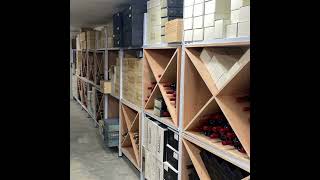
Eli Freedman started Cork & Cellar after a Shabbat-morning idea struck him in Israel. The service stores wine in a climate-controlled basement in Beit Shemesh and delivers bottles within an hour, solving the problem of tiny apartments and heat damage that plague Israeli wine collectors.
Chapters
Welcome to The Kosher Teruah. I'm Simon Jacob, your host for this episode from Jerusalem. Before we get started, I ask that wherever you are, please take a moment and pray for the safety of our soldiers and the safe return of all of our hostages. Continuing from last week's episode about wine storage, the following is a conversation with Eli Friedman from Cork and Cellar, a multi-function wine services company that provides its members with a very personal wine concierge experience, including wine storage, pickups and drop-offs, and wine selection and acquisition. Eli's company opened to wide support and has continued to accrue very positive customer acclaim. Eli's attitude towards support and enthusiasm about providing service is refreshing in the Israeli market and puts established Israelis, new immigrants, and part-time travelers at ease immediately. If you're commuting in your car, please focus on the road and enjoy. If you are home, please choose a delicious kosher wine and sit back and listen in on this interesting and informative discussion. Welcome to the Kosher Terroir.
It is great to be here.
So, I have here in the studio, Eli Friedman, who has a company called Cork and Cellar. And welcome to the Kosher Terroir.
It is amazing to be here.
I spoke, um, in one of the episodes about storage. And, uh, and I figured it's very appropriate for, um, for you to come on the podcast and talk about real storage because that's one of the things you provide to consumers. But let's talk about you to begin with, and then we'll talk about your company and the services it provides. We'll go from there.
Sure. Um, I moved to Israel about a year and a half ago from Montreal, where I lived, raised a baruch Hashem, a nice family in Montreal. But originally I am from Boston, where I went to yeshiva in America, in New York, in Rhode Island. I got married and we made our way up to Canada, and that is where we were for about 20 years. And thank G-d, in the middle of Corona, we decided to make the final move and come to the Holy Land.
Wow. Awesome. Awesome. So what led you to Canada, of all places?
My wife.
Your wife.
They are Canadian. My parents are from Boston. She is from Winnipeg. Montreal was somewhere in between, part of a, you know, what they call a pshara, an agreement.
Halfway between.
Halfway.
Very cool. But you had to learn French to do that one.
I learned French. I picked it up. I learned Hebrew when I got to Israel also. But I guess the French helped me a bit when I got into wine because I understood a lot more of the terminology that's in wine, labels, things like that. But yeah.
So how did you get into wine? What was your first experiences with wine?
Well, my first experience with wine was growing up with a Cadam Malaga wines and didn't really inspire me that much. But later on, I would say about 20 years ago, I had my first experience at a steakhouse in Manhattan, my first real proper dry wine, French wine, and it's been a great journey ever since. It really opened my eyes, my taste buds, and every day we discover more. It's really an amazing thing.
Any specific wines that you've had in life that have really been of note, that have really made you, you know, think, wow, these are crazy?
I think that nothing stands out in particular, but there's a lot of great wines from Spain, from France. Israel is, you know, there's so much going on in Israel. California has really done a lot for me, but it really depends on my mood. It depends on what you're in the mood for, what you're eating. Everyone's different. I don't like to lock myself down. I like to be very flexible when it comes to different tastes and always looking to try new things.
Very cool.
Yeah.
All right, so I saw you, I saw you, uh, at Sommelier. I was particularly, um, blown away by how many wineries I didn't know. It was just amazing to me. Um, I'm, I'm used to going in and seeing old friends and what have you. There, there are the big ones were there there.
Golan Heights, Carmel, yeah.
Yeah. So they were all present, but there were so many little wineries that it's just amazing.
It's like when it happened to the microbrewery revolution in America with all the beers. You know, we had our Bud Light and our Anheuser-Busch and Miller, and then all of a sudden the microbreweries blew out. It started with the Boston Lager Company, Samuel Adams, and then after that, you know, every single possible flavor. I think, you know, as Israel ages, The vines are aging and the potential is really bursting forth, and a lot of people are taking advantage of that. And the world of kosher wine is ever-expanding, and people are finding their niche, and it's a beautiful thing. It's a beautiful thing. I think it creates a healthy competition in the market, and it propels the quality upwards.
So let's talk a little bit about your company and what sort of services you— number one, how did you think of even starting that here?
All right, I'll tell you, but I don't think anyone's going to believe it. When we were talking about moving to Israel, I said, you know, what am I going to do in Israel? You got— yeah, you know, you have to earn a living. I'm still relatively young. And, uh, honestly, one Shabbat morning I woke up and I had the whole concept in my mind. I mean, I always loved wine in my house. We were out of my house, you know, it wasn't really my business, it was my hobby. Always buying and selling and trading and advising people and collecting and drinking. And one day I woke up, it was Shabbos morning, probably 5 AM, and I literally had the entire thing mapped out in my mind all of a sudden. I know it sounds weird, but I do weird sometimes. Uh, the concept is, is that anyone who wants to have a wine cellar, anyone who wants to learn about wine, who wants to become educated about it in Israel, I'm your man. Meaning that I provide a facility where you can store your entire collection. Uh, we have an app where you track, you see everything that you own You can order it at a click. You can visit wineries all over Israel, have whatever you want shipped. You know, you're on a tour, you're here for vacation, you're planning coming back again soon. You can order it. You just give them my address with your name on it. You ship it and we receive it. We catalog it. We put it into your private cellar. We upload it to the app. You can see it live when it's there. We also— people come a lot of times for smakhot and they, you know, particularly people aren't really storing cheaper wines, but if they're having a large crowd, you know, I'll get you any other cheaper wines that you want for your simcha. You know, we provide alcohol, obviously that comes along with the wine business, and recently we got into cigars. Seems to be a very, very popular thing, especially the Americans coming to Israel, they want to enjoy Cuban cigars that they really can't get in the United States, and cigars have really taken off also as a complement to what we do. But I also do, I do wine tastings. I'll come out to your family get-together or your simcha or Malava Malka or Shavua Brachot, and I'll come and talk to you about wine and introduce new things and educate people and raise the bar and have fun together. It's kind of a thing I do. It's all— it's a kantieshes, but it's everything you can think about wine, we'll do it for you. Obviously, I'm not doing actual tours. I'm not a tour guide. But if you want to experience all the wines in Israel and you're only here for a short time, I can pull it all together and help you experience it all, all in one shot.
Why in the world would— I could see why tourists are coming inbound to just stay for a while, might look at you, look to you to be able to provide some special wines for their Shabbat. But if people are coming on a regular basis, why would they use you?
Well, The first thing that they use me for is, as you know, my business model is obviously it's a monthly subscription. It's a— we call it a wine club or what have you. The wines are discounted. You're going to be paying less for what you're buying. My storage is impeccable, meaning that if you're buying a better wine or an aged wine, you can know for sure that there is no issues with it at all. And if there is, obviously you have someone to talk to. Service hasn't— in Israel hasn't yet come up to the American standard that people are used to, and I aim to provide that. And just in general, people want to have someone, you know, to take care of when they're here for a short time, that they don't have to think about it or worry. Everything is taken care of, there's no questions asked, and I really provide that, that upper level of service that people enjoy and appreciate because of the short time that they spend here.
So do you get people— what sort of tourism do you get? You get people who are staying in hotels?
People who stay in hotels, people who, whenever they come for Yom Tov, for Yom Tovim, they rent an apartment every year. It's somewhere else. Obviously, they would like to enjoy the benefits of owning a wine cellar, but there's nowhere to put it. There's also people who own apartments here, but obviously it has to be maintained and checked and it's temperature controlled. So it's hard to do that on a constant basis, especially if they own an apartment and they're renting out to other people. They don't want other people getting involved in touching the wines that they have there. So what we do is we provide that offsite service. We're centrally located. We're in Beit Shemesh, but you don't really have to come to us. We come to you at the drop of a hat whenever you want. You know, you can order from your app. You can send me a WhatsApp, a phone call, and we get you whatever you want, where you want it, and when you want it.
Yeah, that's, that's an amazing capability because even people who buy here buy apartments. They don't typically buy houses.
Right.
And when you're buying an apartment, space is limited. Yeah, it's really limited space, and people always have a bigger appetite for certain wines, especially good wines that you need to keep for a while, to age for a while.
Right.
A lot of these French wines are, you know, coming out now or coming out over the last couple of years, and you really need to put them away for 8 to 10 years even before trying them.
Right. If you wait, if you wait to, if you wait to buy them when they're ready, meaning that, you know, you're going to be paying— you're the— it's gonna be astronomical. Yeah, I would say quality kosher wines, whether they're from Israel or from France or whatever you have, you— I, I feel— I see the market at least 15%, uh, jump every single year. You know, some people come, they just— they have a— they have a bunch of money, they want to invest or park just for fun, or it's, you know, mostly a sport, but they park a bunch of money now, and as the years go by, they're they enjoy some of the wines, and on my platform actually they're able to trade, sell, or buy between my clients on the app that we have. They're able to literally, let's say they buy a case of a wine that they love that came out, they bought the current year, after a couple years they can drink half of them and they can flip the other half of them to something else, or they can even trade with me from my— I have a massive inventory from kosher wines from all over the world. So they can, you know, maybe I'll buy it from them and sell it to somebody else, or they can even on their own trade individually with other customers. So it's a— it's— a lot of people do it for sport, some people do it for investment, and some people do it just because they need the right wine. They're so used to having the right wine at the right time, so they use my service to make sure that they can, you know, have that whenever they want it, whenever they're here.
Yeah, I've seen a couple of times where I've actually visited you in the facility And it's really special in that it's entirely temperature controlled. It's in a basement. It's, um, it's solid. Uh, there's no issues of vibration or, um, or typical issues that you might have in an apartment building. Uh, it's not near the middle of, uh, not next to a highway or something, so you don't have cars rumbling right next door to it. It— but it's, it's accessible and, uh, available. So it's It's really kind of the best of all worlds.
Yeah, we even have plenty of free parking, which is hard to find. But yeah, it's also humidity controlled. It's under very, very tight security with 24-hour camera monitoring, cameras that are monitored, and even the temperature control is monitored live with, you know, on an app on my phone. If there's ever something that goes down, it's automatically dealt with, and, you know, people's wines are very safe. They're insured beyond their value, so no one has to worry about that.
Very cool. So part of that concierge-type service, I've seen people come in and they have a desire for a specific wine.
Yeah, I get a lot of wild requests, and whatever you can think of, I've been successful in finding and locating, getting, negotiating the best price. I actually had someone call me up and he says he needed a Jardin Yekhev Kella. Yeah, 2000. He said he wanted a 2011, 2014. And people that I called, he goes, yeah, they kind of remember that bottle. So I said, what do you need this bottle for? He goes, well, my name is Jordan and my wife's name is Kayla, and this is the— this is Yarden, that's Jordan, and Kayla is Kella. And every time we make a simcha, we like to open a bottle of this. And I, and I, I'm pretty sure I found the last— I think, I think there were— I, I put, I put the word out to all of my contacts. I I think I found 2 bottles. I bought one of them, and I think there's one bottle left. I'll tell him he can afford to have one more child if there's one bottle left, but he's going to have to hurry up.
Very, very cool. What are some of the craziest stories that you've run into, things that you've encountered? Anything?
Crazy stories?
Not really crazy, but— Interesting and different stories, I should say that.
Well, in Israel, every day is an adventure, especially with the war going on. The total change in the economy, the way the wineries are functioning. So we've had to adjust to the lack of tourism, although most people are very hopeful and excited about coming back to Israel soon. We've really focused on Americans who are living here. Who have discovered what we do, and we're enjoying that a lot.
So you keep stock yourself. So you have stock of different wines.
I have thousands of bottles from all over the world. I have more on order. I'm importing some. I'm actually importing, it's coming in in August, b'ezrat Hashem, two wines from France that have never been kosher. They're coming from châteaux that are probably 200, 300 years old. And I really think it's going to shake up the— they're very, very high-end. They compare with the upper level of what's available now in kosher and for French wines. And I think— I'm sure you know that 2022 in France was an amazing year. Amazing year. I always say that, and I've actually had this confirmed with a few people. I said, maybe I mentioned it to you, that every year when it's Shemitah in Israel, the bracha to make sure that no one's lacking anything kind of spreads out into the rest of the world. And I think that The Shmita year in Israel that we do not really commercially take part of, I think, is a tremendous opportunity in other places like France or Italy, or even California.
If a group comes in for a Bar or Bat Mitzvah, what sort of things can you do for family or for—
Well, typically I would— they typically have a party planner or a caterer that I would work with. And if these are people who want to enjoy the good thing, the good things that I can provide. So we first talk about the menu, we talk about how many meals they'll be having, what they want to serve. We talk about, you know, if there's going to be alcohol there, what they'd like to do. We discuss their budget, we discuss their tastes and their likes, and we custom design a package that fits their, their desires, their budget, and what they're looking for. And we make sure that it's a beautiful experience. And if they buy a whole bunch and, you know, they're a client of mine. If they don't finish everything, we bring it back, we put it back in their cellar, and they don't— doesn't go to waste. They don't have to give it away. It's kept properly, and the next time they come back, it's theirs to enjoy.
Very cool. But even if they're here, that's something that they could do through you. You, you'll prepare, uh, the— you'll, you'll prepare the tasting menu for them?
I can prepare the tasting menu. I can coordinate it with their caterer so they can— a menu can be prepared, and I make sure that they have based on how many people are at each meal and what they want to have. And I'll work with the caterer and explain to them, this is the bottle that you'll be serving at this point in the meal. You start with this all the way through to the dessert. And like I said before, we can even have— the guys can step outside afterwards and enjoy a Cuban cigar together. We can make sure that happens also.
Very cool. Very cool. So soup to nuts all the way across the board.
Soup to nuts.
Okay.
And if they're visiting any wineries in Israel, You know, they have my card, they go there, they can buy wines that they experience at the wineries and just say, "Listen, send a couple cases, here's the address." It's shipped to them, they don't have to think twice about it. It's there for them and it's there, you know, next month, next year, or whenever they want it.
Living in Jerusalem, I know one of the difficulties with the wine experience is even if you buy at a winery or you buy from any place, you've got to schlep that wine upstairs. In some apartment buildings, you've got an elevator, but you still have to schlep it around from a garage upstairs to an elevator, what have you.
And the worst is when you drop one. That's the worst. You have to get down on your knees, say a bracha, and start slurping.
So it's having that, being free of that worry, and especially that shlep is a big deal.
Yeah, it's a big deal. I mean, if someone has a— if they own their apartment and they have a small wine fridge, obviously the storage is not that much of an issue unless they want to really— like you, I know in your previous podcast you spoke about storage where people, you know, eventually, you know, they start enjoying it and it starts expanding. If they don't have a wine fridge and they're just keeping it on a wine rack or shelving unit, typically— of course, energy costs are very high in Israel, and when people leave their apartment for even for the day in the summertime, An apartment can get very hot. I mean, obviously it cools off very quickly because everything's made out of stone or what have you, but the changes in temperature are lethal for the long-term quality of storage of wine. And it's really important if you're going to enjoy wine and continue to enjoy it and improve your tasting, I think it's vital to make sure that you have a proper place to store it. And in Yerushalayim apartments, there's not a lot of space. I find that my customers who live in Yerushalayim typically don't want to have to worry about keeping it. And like you said, the shlep. I think another issue is a lot of the stores in Jerusalem are geared towards tourists and they don't, you know, they don't plan on long-term storage and bottles are stored upright without proper refrigeration. And, you know, spending a lot of money on a bottle that's been sitting on a shelf for a while sometimes can be quite risky.
I agree. I agree with you. It's— the small refrigerators are great for, you know, access, for quick, quick access to bottles that you want. But ideally, if you've got any wines that are of any, uh, significance, you want to keep those in, in a, in an area that is, um, consistent. Consistency is probably the biggest issue.
So the cheaper, smaller wine fridges don't really provide that too much.
If you keep very good wines that you want to age, they're not a place to store stuff for 10 years or 5 years. I mean, most of those small wine fridges don't last 5 years, right? So, um, it's, it's not a place that you want to store, uh, wines that you want to keep, but it's certainly a great place to store wines that you want to drink and use more rapidly. So ideally, you want to have a storage place someplace else, and you want somebody to stock that fridge each time you, you're in town or you're, you're around.
Yeah. And also, I also regularly, you know, a lot of, a lot of deals come across my, my desk. And what I do typically is I'll, you know, take advantage of the deal because I know what my, I know what my people like. And I'll send out an email to all my customers I'll say, "Hey guys, I have a deal on some Yatir Forest Magnums 2017. How many would you like?" So, it's kind of a first-come, first-served basis, and as they reply to me, all I do is just take the wines, put them into each individual's— I scan it, every bottle gets a little sticker on it with a barcode, it goes into their cellar, and it's uploaded onto the app. And they see what they have there. And, you know, it's not just, you know, I'm not just like a personal shopper, but I'm always looking for proper deals for people to take advantage of when something comes across. You know, there's always opportunities, and I'm always on the lookout for that, and I pass those savings on to my clients.
I'm sure there's wineries coming to, or that are looking for, uh, looking for somebody to take a bunch of wine, as an example, because of the war. Many of the restaurants were closed at the beginning.
And hotels.
And yeah, so because of that, their normal customer base, they didn't have those sales. So they were looking for people to take distribution of wine. And as your client base grows, you can become much more—
We're always looking for opportunities for our customers.
Yeah.
Yeah, definitely. I mean, the high end, the flagship wines for most wineries are— you have to— you need someone like me to advocate to get a hold of the supply because a lot of that goes very quickly. More, I would say, more of the medium to lower end wines that people have on a daily basis are— there's definitely a lot of opportunities out there to get a hold of some, you know, good pricing right now.
Very cool. So you can do that as well, and that's available to you?
It's included. It's included between the soup and the nuts.
Okay.
A lot of my customers who who, who store their wines by me, a lot of times they're looking— they, they keep, uh, you know, all different levels of quality. And they have family here, whether it's grandchildren or business associates. A lot of times they'll ask me just, you know, to take one of the bottles out of their cellar, wrap it up, mix it together with something else, put a nice card, and I'll ship it off to them. I don't actively sell those bottles. I, I actually, actually don't like selling them at all because I like to hold on to them. It's very exciting to have them. But, you know, everyone's different, and I kind of— before I take on a customer or a client, I sit with them and I seek to understand their tastes and what they're looking for. And I know my people, and I make it known to them that it's there, it's available. Obviously, you know, it's not every day that a person's gonna buy a 20-year-old bottle of wine. But we keep it in stock all the time, the full gamut of different levels of quality so that people can access it whenever they want.
So you can actually handle gifts?
I do a lot of gifts, a lot of returning soldier gifts. A lot of people are sending boxes of cigars to the soldiers coming home. They need some real downtime, some quiet alone time, just smoking a cigar to help them relax. But yeah, we do tequilas, scotches, vodkas. Bourbon, what have you, and we pack it up, we make it look nice. A lot of times we use some of the older wooden crates from the French and the Spanish wines and we use the wooden crate and we give it a nice feel, gives it a nice tam, and we package it up and we deliver it and we make sure it's there and we do the gift wrapping, the card, everything's there.
Very cool. So you can handle that. So if a person wants to send somebody a gift in Eretz Yisrael, you can handle that. A Mazal Tov for a baby, or a Mazal Tov for a wedding, or what have you.
Exactly. The amount of mishloach manot that we put together, it was actually, I had a special request. There was a big family, they were having a big family party, and the grandparents were not able to be there for Purim, and they wanted to send their own individual mishloach manot to each one of their married children. One of them was a teenager. It was a girl, and he says, I don't want to send her any alcohol. So I went out, I bought all kinds of sodas and candies and chocolates and, you know, all different kinds of tchotchkelech, and I packed it up. And even though Cork and Cellar, we know, like I say, we're wine, alcohol, and cigars, but if, you know, you want a mishloach manot, I do everything for my customers. Whatever they want, they're here, we take care of them. If you need it, we get it for you.
Very cool. Yeah, very cool. All right, um, how does somebody get a hold of you?
I have a website. Yeah, on my website there is, there's a little form to fill out. My personal, uh, phone is there, my personal phone number. You can call me 24 hours a day. If I'm sleeping, I probably won't answer, but I don't sleep a lot, so you can count on getting a very fast response. If you go to the website, it's corkandseller.net. Like I said, my WhatsApp is there. Every one of my customers has a different way of communicating. Some people are email people, some people are WhatsApp, some people are phone only. We don't do faxes anymore.
The phone number also works on WhatsApp?
The phone number works on WhatsApp.
Yeah.
Yeah. So you can, you can be rest assured you'll get a very, very fast response from our team and someone will get right back to you. And give you the individual attention, take the time, and even those last-minute additions and changes, we can handle it all.
What was the fastest turnaround that you ever gave a customer, out of curiosity?
Probably within the hour.
Okay.
Wow. Especially Aravpuram. I mean, I had cases packed up and I got a phone call, can you change this, can you change that? I said, yeah, no problem, whatever you want. Our motto is the customer is always right. I know it's old-fashioned. I try to be old-fashioned. Whatever you want, you know, if you have— even if you have a bottle of wine and you say, listen, the wine was not good, there's no questions asked. There's no questions asked. This is a— we, we provide in the soup to nuts is part of the, uh, the customer satisfaction. The customer experience is next to none. It's, uh, it's a— I don't think I've ever had a dissatisfied customer. We have a— we really, we do everything that we do, everything the way it needs to be done and the way the customer wants it to be done.
So just to be absolutely clear, not only do you service Israeli customers, certainly Americans, you speak Hebrew fluently.
I speak Hebrew and French fluently. So that's where I call it off. I can probably get by in Aramaic, but I don't think the Arameans drink much wine.
Your English is pretty good too.
Thank you.
So you can get by by all three of those major languages. So I guess you don't have many Russian customers, but—
No, but I can do, I can do a wonderful Russian accent though.
Okay, right. Um, no, but that's, that's great. So really, especially for people coming in from the US who are coming into Airbnbs, yeah, you can arrange for all of their wines. They don't have to worry about getting those wines.
Exactly. I also work in conjunction. I've, I have a business associate, a friend of mine who deals in high-end, let's call it grocery concierge. So if you want your apartment stocked with candies, chocolates, sodas, anything like that, we can even arrange that together. Even, you know, he does tour guides and things like that. His name is Nisanel Razen. He has a company called Farm to Family. He's based out of Jerusalem and he provides unbelievable services. And we do a lot together. I think a lot of our— we have a lot of synergy. Between us. And, you know, he has customers coming in for tours and we take care of their wine and, you know, vice versa.
Very cool. So anybody who's coming in, who is coming to stay for a limited period of time, people who have apartments that are here and want to come in and visit, you know, 3, 4 times a year for the hagim or what have you, you can handle those people?
They just give me a time, date, and address. If you want to give me the code to your door, I can come and set it up. I can meet you there. I can, you know, I can stock your fridge. I can even label everything for you and tell you, you know, what to drink when, in case you're not, you're nervous that, you know, you're gonna open the wrong bottle. I can bring you wine glasses if you need and, you know, make sure they're teuveld. I can bring you corkscrews. Whatever you need to make sure your experience in Israel is the best experience ever, because we want to try to encourage you to stay. We're going to make sure that everything is just, uh, Everything we do is make sure we put a smile on your face.
Very cool. Thank you very much for being on the Kosher Teruah. Pleasure, really a pleasure.
It has been an honor and a pleasure of sitting with such a fine gentleman.
No, no, it is great.
I know you are humble, but—
No, no, it is wonderful to have a service that can service so many people. I mean, so many of the people on this podcast fit into all of those categories. Even, Even hardcore enthusiasts, there isn't a hardcore enthusiast that I know that doesn't have refrigerators in their house, you know, Eurocaves and what have you. But sitting next to those Eurocaves are cases of wine that don't fit in the Eurocaves that are just sitting out in the open.
Especially the magnums, the big bottles. There's nowhere to put them. We have a lot of space. We have a massive, for Israeli standards, we have a massive facility. We probably have room to store a few hundred thousand bottles. But yeah, I guess the issue is that what I do, no one else does it in Israel, and it's getting the word out. And when people realize what I do, it's adopted pretty quickly.
So tell me the telephone number one more time.
Okay, if you're calling from the United States, you do the 972, +972 507090068. And if you just want to go to my website, corkandcellar.net, you will have all the information there. You can just put down your name and phone number and someone will get back to you almost immediately.
Pleasure. Hatslacha, rabba.
Amen.
Okay, great.
Thank you very much.
Thank you, Eli. This is Simon Jacob again, your host of today's episode of The Kosher Teruah. I have a personal request. No matter where you are or where you live, please take a moment to pray for our soldiers' safety and the safe and rapid return of our hostages. I hope you have enjoyed this episode of The Kosher Terroir. It was exciting and informational for me as well. Please subscribe via your podcast provider to be informed of our new episodes as they are released. If you are new to The Kosher Terroir, please check out our many past episodes. Again, thank you for listening to The Kosher Terroir.










