Itay Lahat: Crafting Exceptional Wines in the Western Galilee's Unique Terroir
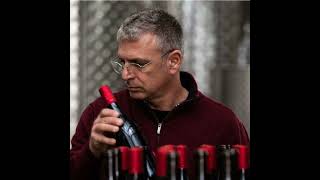
Israeli winemaker Itay Lahat grows low-alcohol, high-acidity wines in the Western Galilee near the Lebanon border, where he farms within 12 km of the frontier and faces missile damage and army blockades. He launched his label in 2012 after years consulting for other Israeli wineries, now producing Syrah-based reds and Rhône-style whites aged in large oak and Italian amphorae.
Chapters
Welcome to The Kosher Teruah.
I'm Simon Jacob, your host for this episode from Jerusalem. Before we get started, I ask that wherever you are, please take a moment and pray for the safety of our soldiers and the safe return of all of our hostages.
The following episode is a conversation with Itay Lahat, an oenologist and viticulturist with many years of experience in the wine industry. A winemaker of some well-regarded and highly sought-after wines, Itay is a resident of the western northern Galil region and focuses his efforts on making local wines using his intimate knowledge of the area. Some of his most outstanding grapes are picked locally from the well-known El Kosh Vineyard. Itai's wines have a uniquely consistent character, restrained and balanced with low alcohol, delightful acidity, and a dryness uncommon in Israeli wines. He has been behind the scenes playing a major role in the Israeli wine industry for over 20 years. Eventually becoming a consultant to many well-known Israeli brands with the purpose of helping boost their quality on par with their international competition. When he is not busy serving his numerous clients in their wineries or vineyards or making his own wine, Itay teaches winemaking at 3 different universities in Israel. If you're in your car, please focus on the road ahead. If you're home, sit back, relax, select a delicious bottle of kosher wine, and enjoy. It's my pleasure to introduce Itay Lahat.
Itay, welcome to the Kosher Terroir.
Thank you.
Okay, toda. How did you start in wine? What was the beginning, the origin? Of your interest in wines?
And it's probably the usual answer. It's the food things, it's bringing in some science, it's the creations of— I was not talented enough in making music or other things that you can create stuff on other art. So if I wasn't good enough in art, I picked craft.
Craft is good. Craft is good. You're a resident of the Western Galilee.
Since we talk about terroir, the Upper Western Galilee, or actually the Western Upper Galilee, because there is the Upper Galilee and We believe that wine-wise we should, or weather-wise also, we should divide it to east to the Méron and west to the Méron.
Okay.
Which gives you not completely, but significant enough differences in weather, in humidity, definitely in humidity, in day and night. And night temperatures. Not necessarily soils, but definitely weather.
The Mediterranean plays a part of that?
West to the Méron, so closer to the sea, you have, because of the sea, more wind, higher humidity, warmer nights and cooler days. If you refer to the cooler vineyards in the Upper Galilee, we can be 1 to 2 Celsius above during the day, but we'll get a very nice breeze earlier in the afternoon.
Yeah. You graduated with a diploma in enology and viticulture from Adelaide, Australia. What was it like to be an Israeli studying? I mean, there's a lot of Israelis in Australia, but when you went, what was it like to be there as an Israeli?
Never had a thought about it.
Okay.
First, there was another Israeli with me, Eran Goldwasser from Yatir. We did slightly different program, but at the same time. And another former Israeli that was around there that we were friends. I don't think I ever thought about it. It was just, yeah, I was a foreigner, yes. But I had in the program, we had Americans, we had Britons, we had even the New Zealanders that weren't exactly Australian. Australian. So it was a big party, not a big wine party. Not— I didn't feel anything strange.
So did you do any harvests there?
Yes, yes, I did two. One was more academic in school and one was in the— in Petaluma Winery in the Adelaide Hills.
That's an interesting winery.
Petaluma had a Kunawara first premium Merlot.
Yeah.
Their ambitions was to make the best suited grapes to each region in South Australia. So for them it was Riesling from Clare Valley, Chardonnay from the Adelaide Hills, and Cabernet Merlot from Kunawara, etc.
You also graduated with an MBA.
Yes, I did.
Wow.
From the Hebrew University.
Have you made use of it? Do you feel it has been an important part of your background?
Well, it does give me a broader look, perspective, and look at the place we are.
Your family's originally from Israel?
Both my parents were born in Israel.
Yeah.
Both at '49 and both two immigrants from Europe.
Your original name in Europe was Leichter?
Yes, Leichter.
Leichter.
Yeah, never know if it's Lichter or Leichter, then I went to the cemetery in checked out.
So is it— is that the reason? It almost seems like the signature on the bottles is like a flame.
I knew I wanted a lithography logo.
Yeah.
And then the guy, the guy name is Hen Maccabi, um, I, I let him do what he feels like. And I guess that the name Lahat make him do this kind of, draw this kind of flame.
Because it's actually, it looks like a flame, and I thought it's so close to what you'd get from a Leuchter.
It's also the meaning for lahat.
Right.
Okay.
Right.
So for him, he didn't know the Leuchter, he knew the lahat.
Okay. All right.
He could translate it for passion or for the flame. Fire and flame.
Right. You started in 1995, actually, in Israel?
When I started my bachelor degree in the agriculture faculty in Rehovot, I went to the back then Shlomo Cohen, the late Shlomo Cohen, the famous and lovable, in the wine institute in Rehovot. And asking for a job and I got it. So my first vintage was my first year in school, was my first vintage also. And I was very lucky to put my hands on each grape that was in Israel, in each region that was in Israel. Wow. At my first year in the profession.
Wow. And then in In 2000 until 2007, you were in Barkan. I think that's—
Yeah. So, okay.
So yeah, I'm not testing though.
No, I don't— Yeah, you don't necessarily remember each year, but yeah, I started it. I came back from Australia for Vintage 2000. So Vintage 2000, I had a double, one in Australia, one in Israel, and been there for 7, 4, 8 vintages so that make the calculation right.
Amazing.
First I was in charge on the vineyards.
Okay.
And then, then I was fully in charge on the whites, white and rose, and just involved with the reds. Back then there was not as many wineries as today and they were playing the oil market. From bottom up, everything.
And after 2008, you went into a consulting role of consulting to different wineries and different companies, which is very interesting. What sort of projects were you doing for, for wineries, as an example?
It depends on the wineries and all the owner requests. It could be in many cases being involved in everything, meaning from planting to growing to labeling and marketing strategy. And for others it was only, please help me with blends. Okay, so it was spread all over, depends on the wills of the wineries.
What was the biggest challenge as a viticulturist in Israel?
The biggest challenge— there wasn't really a market for the— there was a small market for the premium wines and not much of appreciation of the work you should do to get there. So convincing growers, managers to even do the market that you should do the hard work to get to the great wine. It's not just being given from God or whatever. You have to really work hard for that. And to convince growers to do the effort, that was a big challenge. And to convince managers to to pay for the effort. That was even a bigger challenge.
What sort of differences did they have to do to really work harder for their vineyards to produce better wines? What sort of things did they do?
Back then, it was mainly— not 100%, but But the conventional was getting a protocol. So you prune, you irrigate with lots of water, you know, feeding the vineyards with a protocol, not measuring what are the nutritional needs. There was a protocol and the protocol includes minimum extras like, for example, thinning. Punch thinning was very rare to convince someone that it's important.
They would just let the clusters grow, whatever clusters were there.
Whatever nature gives you. It was really hard to convince to thin. Also the green thinning before, which now it's— these days for premium wines, that's the protocol. So today, working better your soil, measuring your irrigation, measuring your fertilization if needed, Measuring even your sprays, you don't do in premium grapes, premium growing of grapes, premium vineyards. There's nothing that goes by protocol except spraying against oidium, for example. Okay, so the actual growing is by needs and not by protocols. So from pruning, you're not going to prune for 20 tons per hectare. You'll prune for the best balance you can achieve. Then you definitely do a green thinning of shoots, green shoot thinning, unless you go watch and see there's no need this time. Okay? So there's so many more practices that you do, which are obviously more effort, more costly, and the end product is you get less.
Yeah.
So the effort is higher for less yield, and you can see that at the prices of the grapes, obviously.
And I can see how people would say, wait, what are you doing? You know, we need as much yield as possible out of this area. And that's not what you're looking for. You're looking for quality, not quantity.
Yeah. So, today, again, with premium, still have in Israel, in France, and everywhere, you still have quantities, vineyards, and they are necessary. You need them too in the market, but when you have quality boutique winery, it's not part of your game. You have nothing to do with medium quality grapes.
100%. Yeah. So when did you get into making your own wine?
So I was playing in my mind with this for a long time, but the first wine was made, La Hatlavan, in 2012.
Did you use the same winery for all the grapes that you got, or did you pick the grapes from specific wineries?
Vineyards.
Vineyards, I'm sorry, not wineries, vineyards.
I've been through two stages, but in all cases there were vineyards that I was involved with the plantation and picking of the site and picking of the materials, and part of the deal was that I can get some for my myself. So first stage was Jerusalem Hills and Golan Heights, but since 2018, I'm concentrated on the Upper Galilee and mostly on the Western Upper Galilee.
So that's the Elkoš Vineyard?
Elkoš Vineyard is the main vineyard that I source fruit from.
Okay.
But I do source from other places in the Upper Galilee.
So what's that like now in the middle of— I mean, this morning my phone was pinging me every 2 seconds about another missile launch into the Upper Galilee, and that whole area has become crazy. What's it like now to be there?
Where I live is 12 kilometers from the border. So the day-to-day life is normal but very noisy, because you have it all. You have the Air Force going there. You have the Hezbollah shooting on you. You have the IDF shooting back. You see it in the sky. You hear it. So far, we're—
Baruch Hashem.
Baruch Hashem. We were not directly attacked, but hopefully it will stay like this. But my vineyards are much closer to the border. And so that's tougher. I have one vineyard that I source from in Dovrev. It's right on the border and you can go and practice is there and work there only when the army lets you do that, and it's still a big risk. I have another one that was hit by either missiles or missiles parts and was burned. So one of the vineyards that I source from important fruit is half burned and not to the ground. Probably it will recover for next vintage, but not for this one. You know, you plan for those grapes, you had your vintage plan, and now you don't have this plot. And in Elkoš, that's also tough. You have to go through an army block, then you go after the block. Are quiet, sometimes you see the army, then you see the sky is burning.
Yeah.
And sometimes you have the siren and you have to run to the next terrace. And in one case, one of my important vineyards is really, really close to the border. And when was the time to spray against downy and powdery mildew, No one would do that, so we will suffer a significant loss of grapes, of yields. And you never learn any of that at school.
And please God, you should never— this should be over this year. I hope to God it's over this year. I was up in Rekanati, and it's— and there, they're 7.64 kilometers from the border. So it's close enough to the 8 kilometers that they don't usually— they're not getting impacted by what's being sent from Lebanon.
Beside the Mehran, beside the Mehran, which is— Yeah, besides the heavily—
Right. But yeah, they're not a target like Meron is a target. But that 5 kilometers that's across the top of Israel is almost like free of anybody but the army right now. It's very hard. It's very hard. Tell me a little bit about your wines. I've tasted them and I love them, by the way. I've been drinking them for— You said you started making wine when?
2012? For this label, for the Lahat label. Yes. The Lahat label started in 2012.
2012. So I've been drinking them, I think, since 2016. And I love them.
I mean, thank you.
Yeah, I started actually drinking the reds and now I've been drinking the whites as well. So, so tell me a little bit about it. What's— what type of wine is it? What, what was your focus in making these wines?
First headline, say I call it a personal terroir, meaning combining the two most important things: the land, which makes you different wines and you need to explore your own, and that's the region we're discussing. But not only, also personal terroir, so it's my interpretation for this. and I looked at wines first as a culinary drink. Have to go with food.
Food.
Yeah, it's really nice to enjoy a glass of wine without food, but this is not my goal. This is different winemaking, different style. So that's the first thing. And as such, It has to be tasty and complex and balanced and fit many different cuisines and habits of eating. So in reds, tannins are soft, alcohol is moderate. Acidity is relatively high. And that's where the terroir comes together with my personal ideas because these specific vineyards give me very low pHs. It's really unique. It probably comes from a lack of potassium in the soil. But the outcome is that it's a very low pH wine, so it gives me the opportunity to write at the perfect stage of ripeness. Low but ripe, low sugar but ripe.
Yeah.
That's— and with a really crisp, nice acidity, much higher acidity and lower pH than average warm climate. I also decided to do in the reds varieties that are less tannic, less harsh, less green. Like Syrah is the main red variety, and in the different vineyards, in the different labels, there are two— there's one variety Syrah and two different blends, but then they're different wines, but they're main is the Syrah influence, which have almost no green character, very juicy style, and soft tannins. So the wines are very drinkable, and as you know, the best bottle of wine is an empty bottle of wine.
Yes.
And the best things I can hear from customers and the other give you credits is that was— we had many bottles on the table, that was the first one to get empty. So for me, that's the best thing I can hear. And with the white, I actually want to make— it's not a full body because again it's Low, medium alcohol, not low, but medium alcohol levels.
Approximately?
Approximately 13 will be, 13 is usually the point, could be a bit higher, a bit lower. And so it's ripe, medium alcohol, crisp acidity again, but I want to make them very complex. So to make the white like the red and the red like the white. In a way. So again, the variety I use, which you can call them Mediterranean, South of France, Rhône, you can call them Rhône varieties, are such like Roussanne, Viognier, Marsanne, all grapes that give you good or great or the best texture you can think of from the varieties that are available in Israel. Besides of being complex and balanced, they are textured. And also all the reds, but all the whites are aged for a relatively long time and with oak or modern amphoras. Most wine is in oak, but there's no part that is just stainless steel and doing nothing for for evaluating, for levage. So they're evolving in oak, big oak, usually 400-500 liters. They're evolving, they stay on lees. I'm patient with them, there's no rush, no rush to anything.
Do you do bâtonnage?
At the beginning slightly and then I leave it, then I leave it for a long time without moving the wine at all on lees. And I'm kind of laid back with those things. It's not really laid back because you're on top of everything, but it's a slow Things happen. So you crush slowly, then you feel the press. I don't do whole bunch press. I leave it on skins, but not for too long. It just— it takes long to feel the press. So this is the time you'll have the skin contact. No worry. Go have a coffee, come back. Now we're gonna get the free-run juice and maybe, maybe a light press into it. And again, the juice is going to the oak, not wine going to the oak, juice is going to the oak.
And then you ferment it inside the oak?
Yes, yes, yes. Then I can use many kinds of yeast, for example, so to get the more complexity also by that. And the varieties and the vineyards, and then leave it there till it's time to wake up and blend.
How long do you leave it on the oak for? What's the typical amount of time?
For the whites, they got in oak in August to September. The latest vineyards come in September, the earlier come mid-August, and then I bottled The 2023 was bottled just 2 weeks ago, so mid-June. So a few weeks before I get them out of oak and make them ready for bottling.
And the reds?
The reds will stay with— first I try to get them, if possible, to oak the earliest possible, even still fermenting. So separate from skins at the last grams of sugar into oak directly. Then it stays there, it finishes fermentation there, finishes malolactic there with no racking, and develops more character and even some stinkiness and earthiness a little bit, some reductiveness. Then few months later, depends on vintage, but between 3 to 6 months later, I blend them to their final blends.
So you blend in the middle? That's cool.
And so it could be January, that it will be January of— no, if it was '23, the '23 vintage, the wines were blended January '24. And then it will stay blended in oak for another year.
You know, you mentioned that you come to it from a culinary perspective. So what sort of food would you eat with the whites?
First, what I try and I think they quite succeeded that those wines fit to most of the possibilities. These days you can say that a couple going to a restaurant will drink only one bottle.
Depends what glasses they use.
Yeah, or no, people drive, people want to stay in touch touch with reality. Yeah, so, you know, this is the morning time. People don't stay for 5 hours in restaurant and having 8 dishes with 3 bottles of wine. Yeah, usually, usually that's a normal case.
Yeah.
And I really like them to have a lot of bottle of wine from the beginning to the end. So with white, it's easier because you can start with raw fish and finish almost everywhere. Maybe not a charcoal steak, but almost all the rest will fit. Even hard dishes like stews with lamb. The whites will fit it definitely. And with reds, you shift it a little bit. So the raw fish, maybe not, but from there up, from even roasted fish, or, you know, there to the end, to the heavy meats, it will be fine. So those wines are fit to that, to be with you for a full meal.
And I even actually like spicy foods with, um, with crisp whites, like Asian food with a crisp white is like very, very—
yeah, with Asian food, crisp white will go very well with the spiciness and the umami. And yes, that will fit well. But more, I don't know, let's say sophisticated food or more Mediterranean spices, then will go better with more Rauhnstein wines.
So you've made some big steps recently. There's been some announcements. Of your moving up into Barkan?
First step, right, that was exactly 1 year ago, yeah, was that we became partners.
Okay.
So they invest, invest in Lahat Winery so we can make more wine, build a new facility, new modern state-of-the-art equipment facilities which we are planning now. So the first thing is that the Lahat winery is growing up.
So that was one of my questions. Was Lahat going to grow or was it going to be— were you going to be absorbed into Barkan?
No, no, not at all. No, no, it's totally independent. I'm the winemaker, the manager, the grape grower, and partner. Okay. And the main focus is on that. If by myself I produce 20,000 bottles, the goal is to make 100,000 bottles. And if you want to do that at the best way. The effort, you need a lot of effort, also the support of a big company, a big and enthusiastic company, because you need to plant grapes, you need a facility, you need cash, and I'm happy that I have have them on those side and they're happy that their distribution can sell Lahat and they just started now to sell the— Balkan started to sell Lahat just this month. And at the moment we're all happy with that, not very happy with all the rest happening around, but this step was— looks very promising.
So do you have any plans for changes from what you're doing now, or you're just expanding what you're doing now?
No, just expanding. The portfolio will stay more or less the same, labels the same. I will introduce probably, hopefully next year, rose wine, but that's the only one. That's a thing I thought of doing for a long time, but every time my effort was in doing other things. But there's a good chance that I can introduce a rose, not the one that is the niche today, South Provence, very light wine. I want to make a wine first, a wine that is a rose and not a rose that might be a wine.
So that That's something that's more complex.
Yes, a wine, right? Something is a wine. Usually we said red, red wine, white wine, and rose. No, it should be rose wine, not rose, right? But they all will stay the same, except that on the back label, instead of Itay Lahat, it's Lahat Winery Ltd. That's it. That's the only thing, and that I'll have more wineries, more vineyards to source from. And I already bought new equipment that it should be loaded in Italy as we speak.
For the coming—
For the coming vintage. And well, in this side, I think the future is bright. As you know, when we're recording, the last is less known.
Are you doing anything? Are you going to take any responsibilities at Barkan as well?
That's a very new thing that they asked me and Avi Feldstein to be chief technical or something like that. We haven't done anything yet. It was just— we just accepted it. Very challenging project. That me and also Avi and all— and the whole company and Olivier took on us. Slowly, slowly, we'll do what we need to do.
I love that they've given you the— not only the resources, but the vineyards to be able to pick what you—
Yeah, that for the start, for the small first steps, I could pick the Rasan vineyards from the Upper Galilee. They have— the rest is the vineyards that I planted with Yoel Ben Ayoun from Elkoj, the grape grower. So I can get some help from that, but still the majority is what I had before. There were new plantations coming in, which before I didn't know if I can source them myself, and now I know that I can. So the first step is plantations, plantings that we did, and now I know that I can source from them. And another step is good vineyards that I could source from them and grow with the agronomist Ishai in the Upper Galilee. No, those that didn't burn down.
It's crazy. You know, I'm— I, I just want to tell you, there's— there are many, um, small boutique wineries that choose to go the path of not being kosher. Um, it's an easier path, certainly an easier path, and it's certainly, uh, a more hands-on path. It's very hard to put somebody else's hands in your place when you're in a winery. I honestly don't know how kosher winemakers do it. It's crazy to me, but I'm so happy that you are one of the wineries that chose to be kosher because I love your wines.
Thank you.
Thank you very much.
And you have a You have a huge following in the kosher community across from between the United States, the UK, Israel, certainly. You have a lot of fans.
Thank you.
I didn't know that. You do.
You really do.
A little bit, but I'm not following all of that. Really nice to hear.
And it's also, I love that you're clearly identifiably Israeli. It's not something that's hidden. Everything is in Hebrew, and it's done so tastefully and beautifully that I love it. So thank you.
Thank you.
There's so many examples of phenomenal wineries now, new wineries that are modern. The equipment is— the equipment now is so amazing. I mean, you can see all of your tanks or barrels on your iPhone, and you need to have hands-on all the time, but in order to monitor things you can now monitor 24 hours a day.
Yes, but this, um, when we discussed, I look at the phone and the guy that's there that I have to call him back is a guy that works with monitors. Yeah, exactly. Yeah, with sensors. Yeah, with sensors. And I was about to purchase some sensors that measure in tank, uh, the ongoing fermentation that give you online ongoing stats on the sugar levels. And there was some problem because the frequency is not allowed in Israel because the army use it. So we hired a guy in Israel to try to overcome that. And this company, the Portuguese company, they're going probably— that's what I'm working on now. We're probably going to make some better tries with me, with a frequency that fits to Israel. So I need to speak with him because that could be a very interesting thing. But mainly small wineries cannot use those— those tools. Those tools, it's mostly— yeah, there are others, but this is a remote— this is— this, these things doesn't influence the wine. It helps you in the process, it helps you to be on top of, but it doesn't really change the wine. There are some other things that are more important in terms of really the wine quality. Definitely in the receiving lines and the crushers and the destemmers that can give you cleaner berries at the end of the process. I'm gonna buy a new press that is, uh, the most up-to-date quality and technology that can give you the best juice at the end of this beginning process. Process. Yeah, those things are more important and there are lots of brilliant technologies now, but they don't fit small wineries. The huge wineries have now some opportunities that they never had before, that really, you know, be a blue ocean can really take the leftovers and recover good wine from it, for example. So to take not the best grapes but to extract the good stuff with avoiding the not as good. So those are really game changers, but they don't fit the boutique winemaking.
One last question that actually I forgot to ask you was you use amphoras.
Yes.
So tell me a little bit about the difference between the amphoras and the oak.
Yeah, oh, for sure. First, not all amphoras are the same.
Yeah.
Okay, two most important things about amphoras. Oxygen transmission, which could be from way too much to not enough, and you do need to have the exact OTR.
Okay.
And second is the quality of the material. Um, so let's, uh, assume that we're only discussing clean clay and not, uh, contaminated clay from wherever. So that's the first stage, and then is the OTR again, and the amphorae I use are from Tava in the north of Italy. They're absolutely the best. I've been trying many before I picked them. And the oxygen transmission there is about the same as new oak without having the oak flavor.
Okay.
So, for me, there could be another things like the leaves contact could be different because of the shape. But for me, the most important things when I made my first varietal, Rossanne— so we discussed the Syrah before as the main red variety of the winery and the Rossan is the main white variety of the winery. So I wanted to have the varietal expression in the best possible way I can. And for me was to give it evolution with the exact oxygen as in oak without impairing the taste. Taste of the oak. So I use it now mainly for the Rassane amphora wine.
Thank you. Thank you very much for being on the Kosher Jerewa. I really, I really appreciate it.
Thank you for inviting me.
Yeah, it's a pleasure. Really a pleasure. This is Simon Jacob again, your host of today's episode of The Kosher Teruah. I have a personal request.
No matter where you are or where you live, please take a moment to pray for our soldiers' safety and the safe and rapid return of our hostages. Please subscribe via your podcast provider to be informed of our new episodes as they are released. If you're new to The Kosher Terroir, please check out our many past episodes. And thank you for listening to The Kosher Terroir.










