Living the Dream - A Conversation with Sam Baum Family Baum Winery
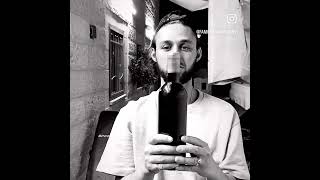
Sam Baum, a London-born Israeli winemaker, moved to Israel at 18, served in the IDF, and discovered winemaking in the Negev desert. He started at a Judean Hills winery via WhatsApp, produced his first vintage in 2021 from a garage kit, and now plans to acquire a vineyard in the Golan Heights to make terroir-driven kosher wine.
Chapters
Welcome to The Kosher Terroir.
I'm Simon Jacob, your host for this episode from Jerusalem. The following is a conversation with Sam Baum, the new young winemaker and co-owner of Family Baum Winery. Where many of us only dream of owning our own winery, Sam, a London-born young man, made Aliyah, served in the IDF, fell in love with the Land of Israel, and married his wife and winery partner Rivka. He searched out and found work in a renowned Judean Hills winery, learning from the bottom up the skills he would need to realize his dream. For the last few years, he has planted and maintained a new vineyard for his employer. But continued to dream of creating his own personal brand, planting his own vineyard to source grapes for his and Rivka's own family winery. He actually just completed production of Family Baum's second vintage from grapes they purchased until their own vineyard is built. He continues working hard towards that goal and is close to acquiring land for that vineyard's development up north in the Golan. Sam is incredibly passionate about Israel, the vines, and creating kosher wine. He has overcome many challenges and continues to be single-minded in his pursuit of his dream. Please sit back, relax with a glass of kosher wine, and listen to our discussion of pursuing one's dreams. Hey Sam, thank you.
Hi.
Thank you very much for being on, uh, the Kosher Terroir Podcast. Thank you.
Thank you very, very much for having me.
Really a pleasure. I, you know, the reason I wanted to speak to you, um, is you're pretty young, um, you have so many— there's so many wine lovers out there that have this dream of owning their own winery.
Yeah.
And so many have had this dream especially ignited by being in Eretz Yisroel. Okay, being in Israel. By touching the grapes and touching the vines and what have you, it ignites that in quite a number of people.
Yeah.
You being a young guy who seems to be living So many people's dream right now. I'm wondering, I'm wondering for you.
I'm just trying to live my own.
I know, I know, I know. But let me tell you, there are so many people who have this dream, uh, including myself initially. Um, now I'm not so sure, but not because I don't want to be involved in wine, but I'm not sure I would limit myself to one winery. But, um, But my question is this. For you, when and where did that dream start?
Okay, so a tiny bit of background on myself.
Please.
I came here when I was 18 years old. I did a year in yeshiva, in Yeshiva Hakata. And then I wanted to go into the army. And my mother said, you have to wait another year, do another year of yeshiva. I went anyways. I didn't want to stay where I was. I looked for an Israeli place and I went to a place called Bnei David in Eli, which is a mechina. And that was the first time I actually realized that I'm part of a nation who has a portion of land which belongs to it. I know that sounds weird because I grew up as a religious Jew in London, but I didn't realize how much of a gap there was between being a religious Jew in a chutzpaharetz and then to feeling the connection that I felt when I came here.
Yeah, it's in your hands. It's like being in the fishbowl.
Yeah, everything suddenly becomes very, for me anyways, this is what I experienced, very real. And I felt a very strong connection, especially to, out of the three things that we were taught, which was Am Yisrael, Eretz Yisrael, and Torah Tisrael. So I felt a very, very strong connection to Am Yisrael and to Eretz Yisrael. And the next step was going to the army and to protect the land and to protect the people, which I did for 5 years. And as I continued the journey, my plan was to work the land. That was my first— that was going to be my first step after leaving the army. And then I fell in love with vines. I was down south in the base and I saw, which I now know of as the vineyards of Nana Winery by Mitzpe Ramon.
Wow.
There were literal vines coming out of the land.
Out of the sand.
Out of the sand, literally out of the sand.
Sand, yeah.
Literally out of the sand. And that's when it all started. And I said, okay, well, if I want to work the land, this is how I'd like to work it. And then it has all the bonuses, or I'm not sure if they're bonuses, but it's also Gdusha, and it's also something that's involved in all like special ceremonies of our people. And it's something that has forever been important that we produce it and not other people produce it for ourselves. There's many, many different aspects to wine which I haven't even touched, you know, the edge of the fork of. Um, so it sort of brought a few things together for me. Which was to farm the land and for it to be wine and for it to make people happy. And when I left the army, so I looked for a job in the wine industry, or not knowing anyone in the industry, I just looked for a job.
So you had no skills?
You weren't— Zero, zero, zero, zero, zero. I knew I wanted to plant a vineyard and I knew I wanted to make wine. But I had really, I'm, and also I didn't know anyone in the industry apart from when I was in the army every weekend trying different wines or trying to every couple weekends when I left. That was it. That was it. There was, there was, yeah, there was no connection to anyone. There was no let me sort you out with a job or speak to this guy from what, zero. I went onto a WhatsApp group and I found, I was looking for wineries or vineyards actually that were willing to take people on and vineyards in the Judean Hills came up and I just, I went for an interview.
You know, I want to go back a little bit because you said you were tasting wines and what have you.
Yes.
I heard a story that maybe one of the influences was Corky's. The, um, oh my gosh, an Eviatà.
Oh my gosh. Okay. So two influences. I'm actually standing right now in my apartment opposite, which was my first ever table wine.
Yeah.
Um, which was Isaac's Ram Cabernet Sauvignon. It was probably a 2016 bottle, I'm guessing, when I started. Yeah. And to this day, it's always a go-to bottle for me. Yeah. And number 2, when I, I started, I dated my wife towards the end of my army career, and I'd say about, we were very lucky that we dated in the year that Corki was open. Wow. And I think 50% of our dates were there. Yeah. And only later on when my parents-in-law moved to Katamon and I started going to Kosha Bracha did I find out that Eviattal was the owner. And almost all the wines I buy to this day, every weekend, are from Eviattal.
He's a very special person. He's what I call my playlist person. You know when—
Yeah.
Yeah.
Well, he's more than an enthusiast. He's becoming an expert in the industry.
He's a person who, if you tell him which wines you like, He knows the tastes well enough that he can direct you in such an incredibly great way.
I never ever tell him wineries or varieties that I want. I tell him what sort of taste I'm looking for or what sort of weekend I'm having, and I'll tell him to leave them outside and I'll pick them up.
Yeah. He's a good friend. He's a wonderful person. Really special, special person.
Oh, 100%.
Okay.
I went for an interview to the winery that I work in, and they said, look, there's no place for you to work in the vineyard. There's no room. Um, come and work as one of the team to make the wine. So I said, fine, sure.
So you were in production then?
I was, yeah, I was. Well, I started in the warehouse because I started in November. 2018, which to me back then meant absolutely nothing. But now I understand November is the end of the harvest, right? So there was— I was— I folded boxes, um, organized pallets, uh, bottled wine, uh, organized the warehouse, a bit of winework in March with the first blend or second blend. And then my first real true harvest was 2019. That was a full harvest, and I really started to understand a bit more. And someone came along to the winery and basically said, if there are bad wine— I'll say it politely— he said, if there are bad grapes, there's bad wine. That was basically the only line he said when visiting the winery. And I said, right, if that's the truth, then how do I get into the vineyard? And it just so happened that after the harvest of 2019, beginning of 2020, the winery that I work in was looking to expand their vineyards from 200 dunam to almost 400 dunam. And I slotted in and I worked for 3 years 2020, I managed to do what my dream was, was to be in the vineyard for the growing season from March to August, and then to be in the winery August through to November. And then once we had already planted the 400 dunam, so 2021, I was full-time vineyard, 2022 full-time vineyard. But for the first 3 years, I was in charge of all the water all the fertilizer, all the pumps. And slowly but surely, my boss gave me more and more responsibilities as the years went on. But I'm telling you that I went into the vineyards, I didn't even know what a tooth joint was, which is how you join two pipes together, for instance. I had no idea. I'm serious. Not a clue. Not a clue. Not a clue. I, you know, I come from Hendon in London where everyone works white collar. I had not a clue.
So do you know Richard and Hannah Davidoff?
Yeah, I do know the Davidoffs. They're friendly with my brother-in-law actually, Aris Hoffa.
Oh yeah, that's your brother-in-law. Very cool. All right, so So you, you came in with no skills and you were thrown into an incredible, uh, environment, opportunity where you just got to really work on every, every little piece of the skill set.
That's it. I, I, I, I, I will forever say when, when, when the time will come and I'll be able to branch off We will be able to branch off because it's me and my wife who have this small winery for now.
Your wife's name is Rivka?
Rivka, yeah, Rivka.
And your son?
Yeah, Lavi.
Lavi, and that's a name very close to my heart because yes, I have a Lavi. I have a son Lavi. I have a— Um, what you call it, I have a, um, a son-in-law, Levi, and I also have a grandson named Levi. So, um, yes, so I'm, I have, I'm—
Levi is, is absolutely, uh, front and center in our family as, as far as it comes from my, um, he was called Levi because my grandfather who passed away, my dad's dad, yeah, was called Well, his English name was Lawrence, but his Hebrew name was Laibel.
Laibel.
Laibel, Yiddish, Hebrew. So, so yeah. Well, actually my son's name is Lavi Shabtai Merawi.
I know, I saw that Merawi is—
Yeah, Merawi is an indigenous grape to Israel.
It's actually an awesome grape. There's a number of wineries that are making wine with it.
Yeah, Recanati do. Yeah. I've had Recanati's Merawi.
Yep.
Yeah, I enjoyed it actually.
Very cool.
So yeah, so when I left, what happened was the dream was forever. When I joined the winery, although having zero knowledge, and I mean zero, it's not like I had a bit, I had zero. I had said to them I will work for 5 years, maximum 6 years, and then I'm gonna do my own thing. That was my plan. Okay. And then when the when I started working in the vineyard full-time. So I said, wait, how am I going to continue learning about wine? Because they're not letting me back in the winery because I've got too much work in the vineyard. So I said, right, I'll just— I'll make wine. I'll just make it because I haven't got time to go to school now, or I think for whatever reason That was my way of going about it.
So where did you make wine?
So in 2021, I— well, it's not luck. It's really the hand of God. That's how I see it anyways.
May Allah 100%.
So someone was selling a complete winery. I'm talking about a crusher, a separator, a press, 3 barrels, vats, gas tanks, the whole lot. An entire, what I'd call a garage winery.
Garagista. This is a garagista winery, I guess. I don't know.
A what winery?
A garagista. Is that how they call it?
Oh, garagista?
Yes.
No, I don't know. I've only ever seen a garage de papa, which basically means a garage winery.
It could be.
My father's garage.
Yep.
And if you know the winery actually in uh, Cantina Galliano.
Yeah.
So I'm— I just spoke to him yesterday actually, and he started in his grandfather's— also in his grandfather's garage.
Yeah. Um, everybody's got to start someplace.
Yeah. So I just— I bought the equipment and I didn't— I, I wasn't quite sure how I was going to go about it, but I had set myself a goal that 2021 was our first vintage. Um, And literally, as I was bringing the grapes in, I was building a keter, like a keter, a plastic shed around it. The walls were going up at the same time that I was putting the grapes into the vat. Literally.
Wow.
Literally. And people said to me, you can't, you can't, you can't do this and you can't do that and it won't work. And yeah, the first year I threw out 300 liters of wine. Because I had no temperature, almost no temperature control. And that was, and I never actually planned to sell my first wine. I had said to myself that I'll sell my first bottle when Lavi's bar mitzvah. That was the vision. And then I actually met Avi Moskowitz, who is the owner of Beer Bazaar.
Yeah, sure.
So he gave us some amazing advice. You know, his daughter, she lives here near us.
Okay.
Esther. And he said to us, if your wine is drinkable, then you should start getting your customer base. You should start growing your customer base, your family, your group. You should start because you have to start somewhere. And he had tasted our wine and he said, you know, this is nice wine, nice wine to drink. It may be not exactly what you want to grow or exactly the varieties you want to use, and you may not have grown the grape for your wine, but get it going. And I have to say, it's one of the biggest, one of the best pieces of advice that we've had because it forced us into the whole branding and the company and what our vision is. Um, and then the next year, 2022, so we built an insulated shed with air conditioning, and I did some custom pieces of stainless steel equipment to be able to separate the skins from the pulp, and then some laboratory equipment. And year on year, this year I'm going to study in a in Katrin, starting in a month, to improve my winemaking skills. And I'm currently running 400 dunam in the Judean Hills, which is, well, now my grape growing skills, which is the main thing.
There are so many winemakers that start out making wine rather than growing grapes, that I think actually you have an advantage because of your, um, your vineyard skills. You have— I, I really, I really believe you have an advantage because of that, right?
I think— yeah, I mean, I hope so. And really, I, I truly, truly believe— well, I, I never planned to increase quantities of this, the garage winery that we currently have, until I'm bringing in my own grape. Um, because that's the whole philosophy of the winery. And the reason I am producing the wine I'm making now is because, you know, the ball's rolling. And when I brought out my first vintage, so I said to Rifko, this is it. I mean, we're going to have vintages. Wow. Um, so But yeah, I am— I refuse to touch any of the grapes, uh, that I grow currently for the winery that I grow them for, not even one, because it's just in my eyes it's not right. I grow them for a certain winery and I wouldn't want to touch them, but I am learning just skills of different trellising systems, of goblets, and I mean, it will be almost Chinese for some people, but there's different types of training system that I use to take, to manipulate the grapes and the vines in certain ways. And I can never learn that anywhere apart from doing it. And I'm just extremely lucky.
Do you have any people who have been real mentors to you over time?
Yeah, yeah, yeah, yeah, yeah, yeah. I'd say first of all, I have the manager of the production team at the winery I work in, because he was the one who enabled me to make the move from the warehouse and winery and winemaking staff over to the vineyard. A guy called Chagay Blitz, and since then I've always taken advice from him. I think he's a very, very wise guy. Secondly, I'd say a person called Avinam Imbar. He was my manager for 4 years, and when he just left, I have the opportunity now for 2 years to switch him. And I say 2 years because the plan is in 2 years to move to the Golan, but we'll get there, I'm sure. So I just was actually I was with him last night asking him about my business plan, what he thinks and what changes I should make and how I can make it tighter and more exact. And of course, the families, the family who the Waheguru belongs to, I am extremely grateful to them that they've enabled me to really have a true, true, true hands-on learning experience. Um, yeah, yeah. So I'm—
so what's the truth?
I'm extremely grateful to my wife, who didn't know what she was getting herself in for, and I was 100% in, which is incredible.
You know, I do have a feel for what you— what you were saying about planting especially planting a vineyard in Eretz Yisrael. I've participated in helping to plant a vineyard up in the Shomron.
Okay.
In a small little winery called Tom.
Oh, I just saw that they won loads of, if I'm not mistaken, won loads of prizes.
Yeah, well, Baruch Hashem. So, but they're, Very, um, I, I planted some of the first whites that are just now finally coming up. Um, no, it was actually, uh, yeah, uh, 2019, 2020, 2019, 2020, 2020. Um, and they're just coming up for, uh, to, you know, for production now.
Yeah, yeah, yeah.
And it's an amazing thing to plant something and then go back and actually harvest the grapes, help in harvesting, and, and and actually then tasting the wine, I mean, the kotsim in your hands are like, it's not the easiest thing to plant grapes or plant vines, but it's, and to climb on your, I did a lot of manual work in that. It wasn't anything that was automated. So we were climbing on our hands and knees planting these things, planting these vines, but it was, incredibly fulfilling. And I can't think of any better thing to do, especially the week of Tisha B'Av, because they left things to the last minute to be able to plant so they could get it in under Tu B'Av.
Yeah. Well, I just think we, I mean, I'm sure we're not the only winery who has this as one of their main, as their main goals or their main slogans is that the wine is the sole manifestation of the vineyard. I mean, that's something that's extremely special with wine, because most fruits, once they're picked, you eat them, you may cook them, but that's it. Whereas wine, it has a whole nother life cycle, and its whole life cycle and everything that it has to express is literally what the vineyard— that's awesome. That is the most spectacular, incredible sort of emotional thing that can connect the ground to the people. And that's why our actual slogan of the winery is 'Ahavea Anva Aret'— lovers of the land and its people. And wine is something that can just— well, it can connect the two. We want to connect the two. We are obsessed with both. And I don't know of any other industry, maybe being the armed forces, but apart from that, that you're able to really, A, protect the land by being on it and look after it by planting it, and then take all of that and sell it to someone in a bottle is just— gives me the shivers. So, uh, I mean, it's a hard industry and we're set on doing both ends of it, both the vineyard growing, A, and then the winemaking, B. Um, it's a full circle. Well, it's a spiral that goes up, which is something that's even more special. Um, but yeah, it—
so you're in your first— this was your second vintage now?
Yeah, so now I'm in 2022, is our second vintage.
Okay.
And We're about to bottle, we're just waiting for the corks to come, um, and then we'll bottle. It will be a year cycle, uh, where it's been in barrels of 114 liters, but old barrels, so the effect of the wood is less, um, for about 8 months. And now all 3 barrels are bit less, are sitting together in a 400-liter tank, sort of getting to know each other. And then about 2 weeks we'll bottle, and then a month later we'll label. And my vision is for this year is for everyone to be able to get their bottle— well, we'll hand deliver by Rosh Hashanah— and then for there to be pictures of everyone's Rosh Hashanah table who bought Bar Omwine with a picture of the bottle on it. And then to create a sort of a community feel, and like something special towards the new year, and then the cycle starts again.
So this is—
hopefully, yeah.
This is called the Baum Family Winery.
Yeah, Family Baum Winery is the name of the winery.
I'm sorry, Family Baum Winery.
That's okay, that's okay. Family Baum Winery is the name of the winery, and our first wine, our first series, possibly our only series, we'll see exactly how that will develop, is called Baum. It's a red wine. For now, it's made from Cabernet Sauvignon from a single vineyard in the Jutin Hills. Unfortunately, and this hurts me to say, but I don't grow this specific grape. And yeah, harvested by hand, and everything's done by us here in our back garden in an insulated shed. And everything else is also done by us, the labeling and the wax this year and the cork and the boxing and the delivery, and a very, very, very personal or interpersonal look on, on the business. And I never ever really planned to go, to go, to go huge. I mean, that's not the vision. The eventual vision of the business is to keep it boutique so that I can— yeah, well, even less than boutique really, um, to keep it around the 50,000 bottle mark, um, so that I can do both sides. A, also grow and make the wine, and B, so that they can be a real personal touch between the customer and the winery itself.
You know, there's a winery in California, a kosher winery in California that does that.
Oh, really?
Yeah, there is a kosher winery called Four Gates.
Okay.
And Benio—
Interesting.
Benio, uh, it's in Santa Cruz, California, and Benio grows and manages the vineyard and does everything himself by hand. I mean, he's got some assistants that come in, but it's very small and it's very, um, and it's very, very good. Really special winery.
Well, I'd love to speak to him. Yeah, if you have any.
Yeah, I'll connect you. I'll connect you. He's a very interesting person. He's also very passionate about kosher wine in particular.
Oh, really? Well, I have a very interesting twist on Gudishpon. I don't know if it's a twist, really.
Go ahead.
One of the things that I think I would like to see happen, or even I'd go even further and say I'd like to make happen, And I already know there's a movement that's trying to make this happen, but I don't think it's yet there. Is the idea that a lot of kosher wine, a lot of Israeli wine, which happens to be kosher, is automatically put in the kosher sections in supermarkets and is never represented as a Middle Eastern wine. And therefore the region and what the region has to offer, although it may not be clear yet of the four— what I think of as the four main regions within Israel, wine-growing regions in Israel, uh, is, is hidden from a lot of wine consumers. And I think we have something spectacular to offer here in such a small country, four very diverse growing areas. And in my eyes, it's a very— well, it's more than a kaval. It's sort of starving the world of our creativity, of our unique ability to make wines that no one else can make physically because they don't have our weather or our ground or our soil type or our terroir. And that's something that really sits at the forefront of our family-bound winery will be eventually to take what we'll grow, make it into wine, and then sell it next to other Middle Eastern wines on a level playing field. And for people to be able to recognize Israel as a region of wine. And I think that's important also for the development of the industry here. And also because, well, I don't think it's very fair to starve the world of what we have.
I, I agree with you very, very strongly. Um, the— I think it's becoming— I think it is really moving in that direction because there are so many smaller, um, boutique wineries that aren't focused on quantity, that are really focusing on quality. It's hard not to chase the dollar It's very difficult. People are always looking to try to, you know, to grow the wineries till they're so large that there's really not a lot of control in them. So it's unusual. Some of the wineries are, you know, are superb and have incredible controls even at large quantities. But that's they're few and far between. And I think that the smaller vineyards are— the smaller wineries, especially the, the ones that are focused on controlling their vineyard and controlling their wine, have a potential to really bring product to market that's going to stand out. And, you know, that's— it, it will make a huge difference. It'll make a huge difference. It's already There are a number of—
I think it's already happening. I happened to meet, by accident really, I was giving someone a tour of the vineyard. Not mine. People sometimes get confused because not my vineyard. I was giving someone a tour of the vineyard that I work in. And I said this point and he actually said, well, I used to be the head of the CEO of Royal, of Royal in America. And he said there's something that we've been working on now for the last 15 years, and there's interest, there's interest, and there's actual— people want it to happen. So I do believe that if high-quality vineyards, wineries grouped together from the same region and represent themselves like the Quartet in the Judean Hills, I 100% take a very— a shining example from what those 4 wineries have done. I think it's brilliant. I think it's the right way to address it. And I'd very much like to do the same in the Golan Heights, where I plan— or we plan, not just me— we plan to go and settle and plant our vineyards in an area called, uh, well, the estate belongs to Sha'ar which is in the northern part of Ramatak Golan. And their fields are in an area called Skher, which is just— it's in a very unique, almost microclimate of Tewar. It's sort of what you'd call a shoulder before the hills that go up to Adam. Adam and Marongolan.
Yeah.
And it's before you drop down towards Katsurin or towards the Emek, sitting at around 870, 890, with rich soils and low humidities and deep winters and cold nights, which are all the things which, which I was looking for. Yeah, which was surrounded, not surrounded by any other vineyards really. There's a plot in the middle and yeah, sort of sits by itself. So, wow.
I was going to ask you, what drives you to the Golan? What's driving you up there?
Well, yeah, so it's the terroir. Yeah, it's the terroir. The terroir drove me. It's driving us. We're currently working very hard to make it happen, and the plan is January 25th to move to the Golan. We're currently conducting meetings in order to be able to raise, to make it happen. But either way, we're going to move because, you know, As they say, the show must go on. We hope people join us and make the road slightly less bumpy. But yeah, I just think it's spectacular, and I think the world is yet to see it, let alone Israel. I'd like to be part of that area and really create spectacular, unique, wines which just physically cannot be made anywhere else.
What challenges are you facing?
I think there's a few challenges. I think it's the ability to have someone or a few people join us, um, who are also passionate, um, about the project and can see how it will work. I can understand that this isn't a pipeline dream, but this is a vision which has the opportunity to become a legacy. And then moving and uprooting and the unknown. Even when you plant a vineyard, you've still got 3 years till it can give you any fruit. And then once it gives you fruit, that fruit's forever developing. And even if I've been in vineyards when I get there for 8 years or 9 years, you know, every plot is different, every vine or every few rows are slightly, slightly different, different characteristics. And whatever it is I'll choose to plant, there are different clones, and each clone reacts differently to the different soils. And, and I will have to, and I am, start to develop a winemaker's philosophy of What do I want? How do I want to present or represent the region that I'm in? For now, the idea is for there to be minimal interference, which is obviously easier said than done. But I really—
By interference, you mean by who? Interference by yourself? Interference by who?
So Low-level interference of winemaking really means that whatever the grape gives with almost zero, uh, modification, um, yeah, modifications, alterations to the pulp when it comes in, uh, that's what represents minimum, uh, minimum interference, including, uh, definitely a drive towards yeasts that are natural, um, because each— I mean, this is pretty diving in deep.
Yeah, no, you can go ahead, go for it.
When you use a certain yeast which has been developed, so they're not yeast that aren't found on grapes, those yeasts are found on grape skins, but they're usually indigenous to a different region or maybe even to a different variety. And when you use that yeast, it extracts certain flavors out of the grape. Um, it's used because the control of the fermentation is so vital that wineries can't take risks of a fermentation not finishing, or the wine not becoming dry, or certain sugars not being converted into alcohol. Um, so that's why they have a— there is a huge variety of different, uh, yeasts However, if you're able to use the yeast which are in the vineyard, because there are natural yeasts in the vineyard, on the skins of grapes is yeast.
Yeah.
If you take a bunch of grapes, squash them and leave them in a warm room, they will ferment 100%.
Yeah.
Um, so you, you'll really get an honest representation of the land, which is what we're trying to do. Um, People also make modifications with acidity levels in order to, you know, what the vineyard gave isn't necessarily how they wanted to develop the wine. So all these things, they may be small and the modifications may be almost irrelevant, but the minute you— it's really chemistry, so the minute you make a change the formulas and the way the wine will react and mature and then age will be different than if you left it completely. So, you know, I'm not into— or I don't believe in just, you know, let— just hope— hoping that it will be okay. I don't think that's how you can make a successful business. In the end, sustainability can only exist if the company's making money, because otherwise after a year or two it just dies. Yeah, but it has to go hand in hand. There has to be a real representation in the vineyard, starting in the vineyards— herbicides and fungicides and pesticides and almost minimum uses of all those things in order to let the land and its minerals, uh, be available to the plant.
I guess it's— I guess it's what you're trying to get out of it, which is what's key. You know, each of those things has a place, um, but it depends what you're using it to try to achieve. And I think what you're saying very clearly is that you're, you're trying to achieve the taste of exactly what would come out of that land.
So I want people to be able to eventually say whatever it will be, a Syrah from the north of the Golan Heights, because it has these characteristics. That's the goal. Because when that happens, then You are unique to the region. You can't take the land from Armatogolan and put it in the Judean Hills and vice versa.
You can't take the climate either.
The whole terroir, you can't move it. And once, if you're making a wine which is true to the region, it's an A-star.
Okay. There are people who say the technology is getting too much into the— in, you know, too much play in wineries and in, uh, specifically in vineyards, so that you are getting some variations that you normally wouldn't get because of technology's influence. Have you ever heard, for instance, um, well They're on manipulation of the vine, manipulation of vines, manipulation of watering.
Interesting.
Yep.
Because now Netafim, who are— I don't know if they're— I believe they are, they are worldwide, but if they're one of the biggest companies worldwide, but they have just been allowed after a 3-year battle to be able to take a 10-hectare area of a vineyard in Bordeaux and water it, which forever was illegal because they believe that it alters the flavors. Yeah, but so do I think that's true? I think On the one hand, you can't let your vines just die because you chose not to water them.
You're talking about vines though that are much, much older, and they're going through changes in climate. I mean, what was planted and what was experienced in climate before is not what seems to be being experienced now. I don't know whether there is climate change or whatever you want to call it going on, but it seems like there's a lot of movement towards varietals that are more hardy in warmer climates.
Well, I think there's a move, especially in Israel. I can mainly speak about the Israeli industry because that's where I've been now for 5 years and that's what I know. Um, yeah, there is, there is a big move in the last probably 6 years if you're looking at when they started to plant the varieties to the regions like the south of France or regions or the varieties of south of France or the varieties of Tuscany, um, rather than the varieties of Bordeaux. Yeah. Which, which in my eyes, which is, you know, only a few years in the industry, I mean really only a few years, um, is, is the right move. Because, you know, as we said, you not only can't you ignore the terroir, you have to work with it. And if you want to work with it, then you should really put a variety which is appropriate for drinking in that climate. When it's made into a wine and for being grown in that climate. And if you're struggling to grow something and it's taking you a lot of effort to bring it to its full potential, then maybe that means that it's not necessarily the right grape for that area.
Yeah.
So I, I mean, I don't know if that's just technology or to do with survival of the fittest and adaptation. And there's a big difference between trends and phases and an actual change in the market. I hope that in 50 years that there will be an Israeli grape, um, which will be planted as one of Israel's most popular varieties. Um, but till we get there, I think, I think personally, I think there's a long time. And it could also be like you have in South Africa, where Syrah, although it comes from the south of France, if I'm not mistaken, is also known to be represented in a very good way in South Africa. Or like Sauvignon Blanc is known to be represented in a very good way, or a different way, in New Zealand. So you can have varieties where their flavor profile changes according to the region. And then you have a completely different pronunciation of that variety, which is special to only that region. Do I know which way the Israeli industry will go? No.
I don't think they know. I don't think they know. I think they're trying everything. They're trying—
I don't think they know. I don't think— I also don't think to say Israeli is actually fair to say, because what they're growing in the desert, which And I always thought it was something fascinating is that they did a varietal check of 26 varieties and then they blind tasted all of them. And their favorite white was French Colombard, which we to this day know as something, a grape that isn't necessarily producing fantastic wines. For some reason it works there. And in the Ramat Hagolan, people are able to bring Riesling to a very, you know, to a high level, whereas it's not happening in the Judean Hills necessarily. Yeah, the Israeli industry doesn't know, and it's only 30 years old. At least this last wave is only 30 years old, and it will change, and it will change again.
So you want to focus on— I'm sorry, you want to focus on, um, reds?
Yes. So the idea is for us to focus on a red, um, a red wine which is, let's say, matured for a year and a half at home. Or in the winery. Yeah. Um, and then released, released to the market probably 2 years after it's been picked. Um, that, that's the idea. That's the, uh, that's sort of the vision. Um, the grape that I'm looking at right now is, is a certain— is a grape that's relatively popular but I want to trail it in a certain way. Trailing is when you train the vine in a certain way. I'd like to trail it in something that isn't necessarily widely used here in Israel yet, and they'll, by doing that, bring out different expression of the grape. But that will happen, please God, all being well. We're talking about planting our first 10 dunamim which is 1 hectare. Anyone who's listening who works in hectares and acres, 3 dunam is 1 acre, if I'm not mistaken.
3 or 4, somewhere between.
3 or 4, yeah. So our first 10 dunam we're hopefully planning in the summer of '25. So in a year and a half. Okay. But yeah, that's the vision, is to plant um, not necessarily a bombastic deep red, but a red with a lot of elegance, uh, and definitely deep pronunciations and manifestations of the vineyard that it was grown in. That's for sure.
You know, I'm, I'm really impressed with your, um, with where you're trying to go with this, and, uh, and that you have a passion to do. To, you know, I've heard many, uh, great winemakers working on wines and working very hard on wines to get what they want out of the grapes that they buy, or grapes that they've, um, you know, that they're dealt. But the whole idea of training a vineyard a certain way. Um, there, there are many— there were a number of really good winemakers in Israel who, who were focused on that. But it's not a, um, it, it's refreshing to hear that again. It's refreshing to hear somebody who's really focusing from the basics up.
Yeah, I mean, I really— I, I, and I'll say again, and I truly mean it, I'm not saying it to try to be humble or anything, I really am very, very few years in the industry and relatively young for the industry. But our entire mission is just to take what the vineyard is able to give, and it's not necessarily the vineyard, it's more the terroir, what it is trying to say, and make that into the wine. And that can only happen when I know that the vineyard that I'm planting will basically almost never be taken away from family Baum. Because unfortunately in Israel you have many different rules, sort of making it impossible almost to buy agricultural land. And then you have many, many, many, many wineries, if not the majority, buying in a grape. And actually, what we wrote in our business plan is that a winemaker may ask for a grape to come at the end of the day in a certain way, you know, a certain sugar, a certain density or certain brix, a certain pH level, a certain amount of grapes per dunna. But how it got, how the grape got there, the winemaker almost has no control over it.
Yeah.
And I wrote that, you know, you wouldn't really want to say to someone, you know, bring up my kid, I'd like him to turn out like this when he's 18, and not knowing how he got there. So, you know, that wouldn't sit with me so well. So that's the same way I look at sort of my kids in the vineyard, is you've got to know when they pruned and how they pruned, and you've got to know when they took shoots off, and you've got to know when it was flowering and how many leaves there were, and if you did windowing, when you did windowing, at what stage. And I mean, that's the wine. That's the wine. That's, you know, you can't take a bad cut of meat and make it into a great steak. It's not happening. Yeah, you can try and dress it up, but you know, that disappears very quickly. Yep. Um, and so that, that's why we're desperate to move to the Golan and own an estate. And from that estate, make fantastic wine, which really truly represents the vineyard. And my dream is for people to be able to say, have not, have you been to the Family Bound Winery, but have you been to the Family Bound Vineyard? And yes, from there he makes fantastic wines, but let the vineyard be at the forefront. And I know I'm not singing this tune alone, but I also know that winemakers who are the actual vintners or growers— I most certainly will not call myself a vintner— but growers of their own plots are few because of time, because of the way the industry is built, because, because of many things. But But that's something that I'm prepared to, uh, you know, that's a red line.
No, it's, it's, it, it might be a red line. It's a, if it's a difficult choice, it's a difficult, um, road. But it doesn't sound like you've been taking the easy way until this point in time.
Excuse me. Right. I mean No, no, I mean, yeah, I, I actually get stuck in.
I actually did taste your first vintage.
Um, thank you.
No, I actually did taste your first vintage and I really, uh, liked it very much. I, I especially love, by the way, your label, which is just awesome.
Thank you. That's really the brainchild of of Rivka. Okay, the idea of—
I'm not putting down the wine. The wine— the label didn't sell me, it's the wine that sold me. But the label is just so interesting and beautiful, and thank you. I, I love the fingerprints that form the tree. Yeah, um, that's brilliant.
Yeah, that was really Rivka's idea because Baum, and we've written it on our posts, but Baum is German for tree, right? And so we took mine, Rivka's, and Lavi, our son's fingerprint, and made that into— you saw, I mean, you saw the label.
Yeah.
And for me, it was extremely important for the wine name to be written in Hebrew, to be unapologetically Israeli. Because I don't see Italian wines or writing, you know, their wines in English, or I don't see— their letters are English, but other wines from other regions, I don't see them being apologetic and trying to deny the area that they've been in. And so therefore, for me, it was extremely important that the wine itself was in Hebrew letters and than biblical Hebrew letters because it's the roots that are important. And Rivkah developed the entire label and the passage from Amos 9, which is behind it, of our return. And we've added a few features to this year to the bottle to make it that much more unique and for you to be able to spot a bottle of Balm from far away. Looking forward to people seeing that and getting it. And I hope forever that people will feel a real true connection to the winery. And not because I want to make sales, because I really want there to be a true sort of family feel.
You know, one of the things I got from that label, which was so interesting, and it probably resonated with me because I am an immigrant to Israel, my family is from all over the world.
By most of the country.
What? By most of the country. This is most of the country. You know, we're returning Jews. I always felt like, hey, we're, you know, when I landed here, I said, okay, Kadosh Baruch Hu, I'm one of your witnesses now. When you go back to, when you go to Avraham Avinu and say you're going to re-bring back his people from all over the world, hey, I'm here and I'm willing to be a witness. And that label has got galut in it on one side with the name, but kedusha, especially with the scripting and everything else. That's such a cool thing.
Wow, if you got that, then our mission was, of the label was complete because that's exactly, exactly what we were trying to do. Exactly. We're trying to bring the idea of the return of the Jewish people to their homeland. To their roots. Um, a German name written in Hebrew letters with a family tree. That's— you got it. It worked. No, thank you.
It's beautiful. It's beautiful to see that, and it's beautiful to, uh, to, you know, to see it, to, to hear it. And, um, and I look forward in the future to sit down with you and to share a bottle. And, uh, and yeah, so thank you very much for your time. No, thank you. Thank you for being on the podcast, and it's a real pleasure, real pleasure to be on it with you.
I really appreciate it.
Okay, thank you. All right, thank you, thank you. Shalom u bracha.










