Nadav Jesselson: Anava Vineyards, Cultivating Community in the Judean Foothills
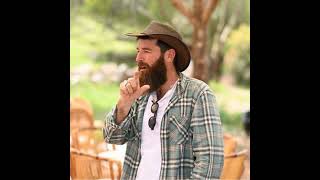
In this on‑site interview, founder Nadav Jesselson discusses the spiritual, cultural, and practical dimensions of Anava Vineyards in the Judean foothills. He links ancient prophecies about vineyards to the modern mission of creating joy (simcha) and blessing (bracha) through wine. Jesselson reflects on his family's aliyah, the love for the land, and the role of wine in Jewish life‑cycle events. He describes how the vineyard operates under the shadow of the Gaza conflict, juxtaposing the sounds of bombings with daily agricultural work, and shares his emotional struggle and resolve to keep the vines alive as a symbol of hope. The conversation covers the current stage of the vines—expert estimates place harvest in 3‑6 weeks—along with recent community events held during Pesach that bring volunteers and couples to the fields. A poignant anecdote about a rabbi’s teaching that one cannot join the army while a vineyard is untended underscores the belief that nurturing the land is itself a form of national service. Jesselson also outlines future plans for a winery and expanded educational programs, positioning the vineyard as a hub for communal resilience, cultural celebration, and agricultural education.
Chapters
Welcome to The Kosher Teruah.
I'm Simon Jacob, your host for this episode from Jerusalem. Before we get started, I ask that wherever you are, please take a moment and pray for the safety of our soldiers and the safe return of all of our hostages. Back in 2022, Nadav Jesselson co-founded along with his wife Moriah, Anava Vineyards. As part of Anava, they also put together a turnkey opportunity for individuals or groups to create and participate in their own Israeli vineyard. They have assembled a dream team of wine professionals so that every step in each vineyard's creation is curated with the highest levels of quality, thoughtful planning, and modern-day expertise. Each vineyard stakeholder can participate as little or as fully in the vineyard's processes as they wish, participating in planting, weeding, pruning, harvesting, and even blending different grape varietals to create their own personal wine expression. All while under the care and guidance of some of Israel's best industry experts. Nadav is contagiously passionate about the land and Anava's mission, which is to connect with people and bring them back to the land of Israel while providing an unforgettable personal experience. As part of their mission, Anava also hosts many tourist groups of varying ages from around the globe, inviting them to come help in their vineyards and to experience firsthand Anava's beautiful location and terroir. If you are driving in your car, please focus your attention on the road ahead. If you are home listening, please select a delicious bottle of kosher wine and sit back and enjoy this inspiring conversation with Nadav Jesselson. Welcome to the Kosher Terroir. Nadav, where are we?
We are at the foothills of the Judean, basically the Judean foothills, Matei Yehuda. Okay. And at the Gvoul of Beit HaEmekaylah.
Okay.
We are in the only appellation, considered appellation area for growing wine in Israel. We are Next to Yahr Marisha, which is a very special yahr for various reasons I could go into. Wadi Guvrin, that somebody just told me lately that he saw in an ancient map. I have to— I have to check it out. I have to check that out. That this in ancient maps is shown as Nachal Shkol.
Wow.
Nachal Eshkol is Mama's parashat of Shavua, where the meraglim took the eshkol from. Yes.
The clusters.
So I asked actually this year, because I'm dealing with grapes, I said, why Nachal Eshkol? We know Moatzai Zohit Eshkol is around Aza.
Okay.
I don't know any vineyards there. So somebody told me there used to be, there could be, there was Hakla out there. But it makes much more sense that it would be here. But again, that's a good story.
Yeah.
It's an important thing that as a tour guide, I'm also a tour guide.
Yeah.
So they say a lot of times, don't ruin a good story with the facts. So I like that story. Nachal Eshkol, I have to check the facts. But still, it's a good story. So here we're approaching Eran Gil's vineyard.
Okay.
Why don't you stand here so you could see, Mamash?
Yeah.
This square, and that we planted it on purpose like this, and I bring everybody to see Eran Gil, Eran Gil's vineyard, which he called Fortress.
Okay.
Because his father always tells him that family is a fortress. So he made a nice sign, I'll show it to you later. We have yet to put it up, we're putting it up in this coming week. But I bring everybody here because there is no other parcel behind it. So you literally see the end of it. Exactly. You literally see the square, and it starts from there to here. It's a 20-meter row VSP, 10 rows, 2.5 meters between each row, which comes to 500 square meters, a half a dunam. At the beginning, when we started, you know, thinking of what we're going to do. So had a lot of people we were discussing with and then getting it taught. Not advising, consulting, advising.
Consulting and getting some advice.
Yeah, advice, advice. And they told me, why don't do squares? Because like you see here, there's a lot of empty space between them in order to divide. So you could say this is mine and I know this isn't. And they told me, just do a row. And I said, that's not it. Because the most important thing for us is to mamash, give you the feeling, literally, that you have your own vineyard. It's like having a garden, but just in a much higher aspect of a vineyard and making your wine from your vineyard.
So these were planted when?
Last year.
Last year. Okay.
June last year.
Okay.
Because of all the war and everything, I was telling people, we planted this just this summer. And then when I said that one time, it was really hot, and I said, we just planted this this summer. And I said, wait a second, it's summer now.
Yeah.
Lost track of time because of the war.
The war has totally made everything crazy.
Much, much, much.
It's like—
Zev Rasha, no, we haven't designed the vines here like you see yet. It's very interesting because we have designed the other side. We have Show them the map and maybe we could walk. We have basically two sides to the, uh, the Anava vineyards. One is west from the olive grove and one is the Cabernet here. We have here 14 parcels of Cabernet in what we call the tongue of the woods, the Shona Yal, because it goes in. So we have 14 parcels here. We have 7 of Malbec. One of them, sorry, 7 Shiraz. One of them belongs to Menachem, who sold already one Shiraz. Then we have 5 Malbec and 4 Petit Verdot. So a total of 30 parcels to be sold.
So this is what?
So I'm going to get to this.
Okay.
Besides the private parcels, We have the communal vineyards, which we have there 5 dunam of whites, Chenin Blanc, Sauvignon Blanc, and Chardonnay, and 7 dunam of red, Cabernet Franc, Petit Syrah, and Merlot. And they are the communal ones in order to allow blends and to have a safety net if there's a low yield. So you have to take the grapes from there. So total we planted last year 27 dunam. That's what we planted last year. What we're looking at now, Kabarné, the Tzvi parcel, named after my grandfather. Each parcel, we have 5 parcels, each one named after someone. This was planted in summer 2021, right before the Shmitah.
Okay.
And this is a very, very, very, very, very special year for me because it's our netar levay, first harvest.
This is unbelievable.
It's very, very emotional for me, very miragesh. Um, I walk. One of the things Nir Shacham told in the course I'm doing, he said, uh, he started explaining, it's like, it's like giving birth. And I said, I came up to him afterwards, I said, you have no idea how I, uh, how I agree with you.
Yeah.
So I feel like, so we become, we have groups that come here, volunteers. I tell them, did you see my babies? And actually, this is the stage where we are now. It's one of the hardest ones because, you know, we finished all the handwork and now you just got to sit back and let nature, Hashem, do the job and hope that it all goes well because there's nothing to do now. I can't, you know, that's where we are anyways. It's a very interesting stage for me. Yeah, we have a lot of those here. Mamash, mamash.
We have also a piece of pottery off the ground that's a handle for, what you call it, a handle for a cud. A cud. An amphora or whatever. Right, right.
So amphora is where they put, where they made wines in, right? Yeah, where they put it. So it could, I like imagining stuff here because right behind the, how do you call them, the oak tree, not oak. Pine tree there.
Yeah.
The tall one. Right behind that there's a wine press, an ancient wine press. The groups that come here, the volunteers, if we have enough time, I take them up. We go for a little walk. What I said before about Ya'ar Maresha', what's amazing here that there's a combination here of the planting of KKL. How is it? KKL? Or JNF also, I think they're called. JNF. Which in the '50s, when there wasn't any jobs and a million Jews came into the newborn country, they gave them one of the jobs they did. They planted and they brought life back into the land. So here you see, you have the original, what's called, "Horeshyam Tichoni", Mediterranean woods. You have the olive trees and the, the, um, I always forget, it's like carrot, carob, carobs. Carobs. You got the carob, the olive, the, the elata mastik, elatlantit, um, and, and kamuvan alonim, the oaks, the oaks, the, the, the oaks that are here. And, uh, and what's amazing, so you see, you have the combination of the planting of cacao, the pine trees and the cypress trees.
Yes, cypress.
Cypress trees.
The big tall ones.
Which were planted by man. And on the other hand, you have the original trees. That's why I love this forest.
The hardwoods.
And like what I said, on the top here, there's a wine press, what's called a gatt.
Yep.
And I take the groups there and I always tell them, you gotta lower your expectations. You're not gonna see something, you know, like very beautiful because it's been 2,000 years.
Yep.
And then what I tell them with the pottery that you just picked up, I tell them that I like toying with the idea which isn't, you know, isn't out of imagination. Z'lo lo hegiuni.
Yeah, it's not out of—
That winepress was my ancestor's.
100%.
Because as we know, since we left, Popo, Shlosh Tashavuot, and since we left here, there wasn't any wine growing because most of the time since the year 600 when the Muslims conquered the land, there wasn't any grape growing here because they don't make wine.
—Yeah, the only grapes were table grapes. —Right. —Which is crazy.
And of course a wine press couldn't be Muslim. Yeah, no, no, no. It wasn't allowed by law. And there weren't any Jews here since Bal Kuchva. Right. So when I take the groups, I say, you have to understand, this is us. This is us. And now we're making grapes here also. And it wasn't surprising to find the wine press here. So it's not, again, I tell them always, lower your expectations because on every hill here. In Nehusha, where I live, there are 4 wine presses in the yeshuv itself. And on every hill here, you have between 2 to 4 wine presses. Yeah, you can almost not throw a stone without hitting a wine press. Exactly. So imagine how many vineyards were around here. Somebody had to work it. Everybody had, like, his own vineyard. It's all small vineyard on the terrace.
What was the vision here?
We already bought a meshik in Nehusha, and we had this olive grove, which looks amazing now and looked also amazing then, but it was Different, totally different. This olive grove was deserted 20 years ago, so basically every tree here looked like a huge bush because it wasn't taken care of. So what you see now, that it's open and beautiful, it's us starting to take care of it. So I started looking into olives. I spoke to people, another call, another call, anybody who's willing to give information. And, you know, it was an amazing journey, and I learned a lot. One of the things that I got to him At the end was grapes, grapes for wine. My family is one of the shareholders in Carmel Wineries, but I have a friend who his roommate is a brother of Carmel's previous agronomist, head agronomist, right? Called Druot Dutton. So I spoke to my friend and he said, why aren't you talking to Druot? So I said, could you give me his phone number? So I called Dov and we started talking. Dov was amazing. He, mamash, told me and taught me a lot. And eventually, one of our calls, I said, listen, are you guys interested in the vineyard? So it was right before their harvest. So he said, yes, let's talk after the harvest. And that's what we did. And from here to there, I was going to plant 200 dunam. My friends told me, again, I helped my friends. My friend told me, let, let. So we did 50 because Carmel doesn't look at less than 50. The varieties that were picked were picked by Carmel. We have a contract with them for 20 years, and that's how we got to it. So we have here in the older vineyard, the one that we're harvesting first time this year, we have Cabernet 20 Dunam and Petit Syrah 30 Dunam. Just one interesting, interesting thing about the Carmel is that we were very happy that at the beginning we were supposed to go, these grapes were supposed to go to the Sidrat Benayim. I don't know how you call it. You know, the middle, not the—
Middle. The middle tier.
The middle tier. Yeah. And I told them, listen, the way I do things, I knew that I'm going to do them the best and not going to, and when I see the trees, I'm not going to be cheap on them. I'm going to give them all the, everything they need and the best caring. So I told them, I want you to tell me, put in the contract, that if it's going to be high-quality grapes, you're going to up-tier me. And they said okay. And what happened is that a few, like a month ago, I got a phone call from, uh, the agronomist of Yatir. He says he wants to come see the vineyard. So I say, okay, perfect, he wants to probably do a tour. And then we sat down and he starts talking to me about taking the grapes to Yatir. So for, for us, it was, it was an amazing, amazing compliment. We haven't harvested yet, but I think that they can see that it looks good and they can see the care we're giving it. Because that's, again, that's everything, I think. It's not everything, but the main thing is when you love something, you can see it. Anyway, Ziran Goldwasser was here also last week. He came and they haven't said yes yet. They are taking it to Yatil, which is like a half an hour less drive from taking it up to Alon Tovoh. And they say, we'll see the quality, and then we'll decide where it's going. B'ezrat Hashem, it will go to Darom. And Eran told me, you will be able to come and taste your grapes because they're not going to mix it with anything else. Hazem me'od me'od me'ragish. Anyways, when we finished planting the older vineyard in 2021, I remember exactly where I was standing. Basically, the whole 50 dunam were covered in these saplings, which are in white cartons, so it is a beautiful sight. What is even more stronger is that I stood there, ve'aniktat midbayesh la'giddetzeh, but I could feel the land shaking. 11,000 saplings digging into the land. and I could feel like a heartbeat. And it was exciting and emotional, and that was the first seed of Anava, I think, because it was so amazing that I said, we have to share this. We have to— anybody will want a vineyard. That was, you know, who wouldn't want a vineyard? It's so amazing. Then I cooled down a little and I said, Ladav, you're the only crazy person in the world. People usually don't like vineyards. Today I know I'm not because I sold 3 already. And basically, like I told you before about Micha, my brother. And so he was in Argentina at a friend's birthday in a place called The Vines. And in The Vines, and I think we were at a family vacation. And I remember he sends me a picture and I see in the picture a map and the map is divided into different colors. And on the side, every color has a name of a family. And he writes to me, listen, you got to do this. Basically exactly what we're doing there. I got the courage, the courage to do it when I saw that there is such a concept in the world. The Vines even, so the Vines is in Mendoza, I think, Argentina. There is another one in Uruguay. Same concept. And the vine has also a worldwide concept. We said, okay, this does exist. And then for almost a year, we were building the concept, me and my wife together. She was originally in Moria. She was originally in UX. That's her profession, high tech. And together, we basically built the concept that we have today of a half a dunam producing a barrel. Owning, ownership. And the main thing, just one last thing, the main thing, the name. One day, Moriah, we paid someone, a very nice guy, to find us names for this concept. We had a whole discussion. And so Moriah one day woke up and she saw Anava in front of her eyes. So I tell people, it's like this project was like giving a child a name. And a child, you give him a name, You say that it symbolizes his personality or something like that. And sometimes you see it and sometimes you don't. With Anava, it's because it's a company, maybe, and not a child. It's everything we believe in. The word Anava contains everything and all of the values and the different aspects that we have in this company, starting from doing for someone his vineyard and being shluchosh adam komotoh. I'll tell you the story about that later. And ending with how we treat the land and our surroundings and our workers, akol, akol, akol, akol, not taken for granted. Basically, anava in being hamas. Ze'achichashuv liYahshem. Wow. Absolutely awesome. Absolutely awesome. And sashachav zatanu la'asot lechaim. Yes, asot lechaim.
You know, I just want to say that we're sitting here underneath the pergola because this is usual to you, but it's not usual to me. And I'd like at least to describe it to the listening audience. We're sitting under this pergola in the middle of olives on one side and grapes on the other, beautiful Judean hills. And the ho shayam tichoni. Yeah. And it's unbelievable. It's beautiful here. And we're about to taste some incredible white wine made by the the winemaker here, who's an old friend, Eyal Drori. So, Eyal, l'chaim, chagim shalom. I really wouldn't have picked another bottle than this one. So it's perfect. Wow. Wow, wow, wow. One of the questions I'm going to ask you is what about blends? Because people are growing their own vineyard, but can they do blends? And is there an opportunity to do blends? So talk to me about it. Absolutely.
And I'll tell you why. Absolutely. It's like, so I'll say it again. We have 30 parcels, total of 15 dunam, each parcel half a dunam. And those are the private parcels. In those private parcels in half a dunam, there is absolutely no sense to do two varieties. You know, maybe, but it was too much. What we did is we said, you have your own variety, your favorite variety. So we have 14 of Cabernet, like I said, 14 Cabernet, 7 Shiraz, 5 Malbec, 4 Petit Verdot, all by the way done together with the yal. I didn't say before, I came from the business world and I didn't like to drink wine until I started understanding Until wine swept me off my legs. I'm enchanted by wine today. Totally, totally, totally. And I have a whole lecture, not just whole ideas about wine. We could talk about that later because I want to get back also to the kosher because I'm very curious about that. Anyways, besides the private parcels, we planted another 3 varieties of Cabernet Franc, Petit Syrah, and Merlot. In order to do blends. And you won't only do the blends from that. You could do the blends from everything. Because if AP Partners, private equity firm, very good friends that bought a parcel, they have Cabernet. And if they want to blend their Cabernet with Menachem Shiraz, I don't know, they want to put a little bit in there. So they'll swap. Because if you take some of your grapes from the communal, vineyard from the Cabernet Franc. No, whatever's left from yours, we're going to take for something else. There's going to be— it's going to be challenging. The— our winery is going to be a very challenging, uh, and fun process because we're talking about 30 different fermentations and 30 different blends, and everyone has to— you have to calculate it. And I trust Eyal, by the way. Yeah, b'shalat Hashem, he's going to be— he's not going to be the— of course he's not going to be the, the, you know, foot on the, on the let's say, boots on the ground there, right? But he is going to be the visionary, and he's going to be the, the marade'atlah, you could call it, to teach us how and how to do it in the best way. By the way, if somebody wants a variety that we don't have, we will try to get it, to buy it from elsewhere. It's, uh, it doesn't have to be 100%. Perfect. We are mi'od mi'od oriented to what you, your vision, what you want for your wine.
Having Ayyal there and having it be in the Judean hills, you know, the foothills now, and that's actually the most desirable of the Judean plots. All of the wineries are now trying to move back into the lower Judean hills, the foothills, because that's the—
Interesting. When I went up to Nir Shacham in the course I'm doing, so I introduced myself and I said, we spoke 3 years ago, 4 years ago, because I was looking for a winery that wants to buy grapes and I'll plant a vineyard for them. And he told me, okay, what happened? I said, you said it's too low. He said, what? He was shocked. He said, that's me 4 years ago. Yeah. He told me today. He's learned a lot since. Today, it's 300, 400 meters here. He said then, he said, 300? No, you're too low. And that's it, he hanged up. And then he told me, you understand, after the lecture, one of the main things that he says at the beginning, that in wine there are no exclamation points. There are no exclamation points. That's the main thing that he said. So when I told him, you told me it's too low, he said, you understand what I think today after I just told you there are no exclamation points. Sorry.
No, this is one of the hottest one of the best growing areas in Israel. It's part of the Appalachian, and being in the lower part, it acts like a heat sink in that it allows it to be cooler, but not too cold, and allows it to be warmer, but not too warm. It mitigates both sides.
There's air going through the wadi here. That's it. All the time. From the sea up to the mountains. From the mountains down to this town. It's amazing. You could feel it. And it's actually, I have a story. I had at the beginning, before we had a tractor, somebody here, a very nice guy by the name of Yoav Hadad. He was doing our, and he worked with tractor spraying, how do you say, on the kaser, cutting the weeds. And then he comes here and he's laughing. I say, what's the story? He says, you have no idea. There used to be cotton. They used to grow cotton here. And I was doing the kablanut, I was the contractor for the cotton. And he says to me, you don't understand what happened here. One day they were spraying by airplane. And the guy, the pilot calls him and tells him, I'm not coming back. He said, what happened? He said, you have no idea. I was going on the wadi and he got into an air current and he couldn't pull up. And it took the plane where it wanted it to go. He let the spray down. He dropped everything. And he said he hit the tops of the trees in the woods. So I said, I love that story because it gives me the understanding that there is something very special here with the air going into the Wadi and going up to Hebron. When you go up to Hebron, you literally feel like you're going between two— you're going like— you're going up and the hills are growing and growing from your sides. But you were talking about the blend something.
So the reason why I was asking about the blend is because one of the most incredible experiences I ever had in my life was with, especially with wine, was SOB, the first blend in 2017. This was already 2018, 2019. We were blending it and we blended it in our— and Yakov Oria did a blending session for a bunch of us. Some people flew in from London, some people were here from America, and all of us were together, just like 20 of us. And he took us through blending, tasting each of the varietals and then putting them together into a blend. Have. We sat and we did this blend, and we, we tasted each of the varietals, and they were delicious. Each varietal was delicious. And then we mixed 50%, 50% of two of the varietals, and it was— wow, it was better. Wow. And not only was it better, you could taste things like complexity. And then we blended 3 together and tasted it, and 4 together and tasted it. And each time we blended, we added another layer. And it was just one of the most incredible experiences I've ever had in tasting wine. Until then, it was like you're tasting wine and wines are different. But this really showed me like what the difference was. What the difference was between complexity and that this tasted good by itself. But when you blended it with this and that, all of a sudden it added levels of complexity and levels of depth and flavors. And it was just amazing. It was an incredible experience. Amazing. So if there is a way for you to do something like that with the people that are here and to have, you know, have a yal, blend something together and for them to taste it, it is a different experience. It is a totally different experience.
Just a word about the beginning of the process of somebody who comes to buy a membership in a Neva'a and own a vineyard. The first discussion you have is with Eyal, you know, after you talk to us, you go to the master, and Eyal asks questions and talk about wine. And we've had this a few times already, so what I'm saying is things that happen already. And he writes down everything, trying to understand what wine you like, like what wines that you tasted that you like, and Eyal, of course, knows everything. And what we're planning on doing before the harvest 2026 and making the wine is Eyal will pick a few wines in accordance with the first discussion. Yeah. And we're going to do tasting. Yeah. We'll do tasting in order to see exactly what you just described. What you described is a different one varietal every time, then adding. That's amazing. Hopefully we'll get to that too. But even the one varietal, we could actually do comparisons. Actually, we will get to that. In the winery, we'll have everything separate. Ready. So we will, Zadok HaShem built a very beautiful winery and we'll have it all in there. We're in the process now.
So what are you doing for wineries?
We're in the process of building a winery. We're very much at the beginning. You know, at the end, it's probably, If it was up to us, it would be built next year. But in Israel, bureaucracy and building and ishuri, permits, it takes time. So we are prepared. Where are you planning to build it? So we have two options. One is in Nehusha, where I live. There is in Matei Yehuda specific areas to build that are zoned for wineries. And our preferred area is in Kfar Zoharim. I'll tell you about Kfar Zoharim because it is interesting. The Zoharim village is a youth village, kolonoa, for Haredi kids who are kicked out of their homes. Wow. It starts from guys who just had nowhere else to go. They weren't kicked out of their house and they came with their parents to there because they're going to learn there. And on the other side, you have guys who literally were picked from the streets. We have one that was working here. I'm not going to say his name. I don't know if he wants to be told, but that he was living in some basement in Yerushalayim for, I think, for almost a year, living off of whatever he could get his hands on when he was 13. Crazy story. And today he has his degree, the bagrut. He's done army and he's, you know, blooming and he's amazing. So Kfar Hazorim is a place where we speak very highly of and work with. Like I told you before, our—
there's a small meshiach in Jerusalem, in a very interesting place. It's within the city limits of Jerusalem. That you could build a small winery, not a huge winery. Where? It's like, it's like two dudams.
And the winery that you have a permit to build in Matei Yehuda is 300 meters. Okay.
So what I'm telling you is it's got a place for a winery in the middle of an agricultural zone. Where is this? It's just outside of Jerusalem. It's in Jerusalem proper. It's the other side of the— I'll tell you exactly. I'll give you exactly the details. You can take a look.
Okay. It's interesting. The truth is I want it here. I know. I know. That's why I want Kfar Zoarim more than Nehusha, because Kfar Zoarim is right here. And it's also going to be together with the Kfar.
It's better to be really close to—
Exactly. And it's going to be together with them. And we, like I said before, we're— One of the things that I find a little difficult to pass on to people I talk about Anava is that one of the legs of Anava is education, really strong. One of the things that we believe in, we believe that through agriculture, through being outside, it's an opportunity to learn about yourself. And that's why we encourage groups to come. We had a lot of groups lately.
I was going to ask you about that because I saw the groups coming and I was going to say, what's the kesher? What are you doing with these groups?
We're working with them. We're letting them work. And we talked to them. So what I'm trying to say is, Anava started by, let's sell vineyards and give people the amazing experience. But it was driven into trying to have a much wider impact than just a family, which is amazing, amazing, amazing, amazing, a family owning a vineyard in Israel. Making its own wine together with the whole process with the Iyal in the winery and everything. That is amazing. But we want to have a larger impact. And we want these people, the members of Anava, to be part of it. So basically what happens is, number one, our workers are youth, only youth. You said Regavim before, so Regavim is also a school. Yes. You know it. Yeah, yeah. You know of it. So there's a new one that was opened in Gush Etzion, Kvar Etzion. For girls. We had a special team of between 10 to 15 girls. Every morning, 6 in the morning, they were here. 11, they finish, they go back to school to learn. And we had such an amazing connection with them. And we were the only farmers that had a kavua, a fixed group of girls. They knew the job, they came here, they were connected. We had a very exciting, at the end we had a very exciting speech with them and we talked with them and they are going to be here also next year. And we go through a whole process with them. So that is our regular workers. Other than that, we also work a lot with the Shomero Chadashe. They were our main workers before Regavim was here. And today they help us out here and there. Other than that, we really try to get groups of volunteers. And when I say we really try to get groups of volunteers, it's not because I need the job. The job they do is very important and it's very good.
But it's what it does for them.
But the hak, exactly. I think that a conventional, the regular farmers, Actually, I spoke to one of the oldest farmers in the area, the oldest viticulturist from Givat Hashavu in the area. He meanwhile passed away a few years, like 1 year ago, 2 years ago. And I remember he came here, it was such a kavod for me that he came and he sits there and I told him about Anava and he looks at me and he says, why do you want to deal with people? I have such a good relationship with the grapes. And he really had a relationship with the grapes. When he came up to our grapes here, you could see how he could feel them. He listens to them. It's amazing. And he said, why do you want to deal with people? So, so I think that in Anava'a, we're a bit different in that aspect because it's not just the agriculture, it's not just the growing, it's the growing of people too. When the groups come here, we just— an example, we had a group here. I'll give the example of what we do. A group comes. We had a group here, uh, Friday, last Friday. I usually don't work on Friday, and actually on Friday I had the double booking because we had, we a group of youth from a yeshiva in Kfar Etzion that came here. They slept at night. They woke up 5:00 in the morning, 5:30 in the morning, and started weeding. They were, I think, ages 12, 13, 14. And then we got a group that we have had a few of those that Massai Udi brings them together. It's a project of Taglit and Mayanot. And they come to help. We sit with the worker area, you know, over there. And when they come and I tell them, first of all, I say, thank you for coming. And I tell them, I want you to know that it isn't the work that you're going to do. The work you're going to do is very important. Very important. You're going to do weeding. It's very important. But much more than that, the fact that you came here brings energy Not only to this place, definitely to this place. So I start by telling them that why am I so excited that they are here, and why is it so meaningful that they are here? Because motzei simchat Torah, I was enlisted. I went into Miluim, I wasn't in Aza, that is the first thing I say immediately, I don't have any heroic stories. But I had the zchut of being in Miluim, we were in Ofakim for a month and a half. And then after a month and a half, at the beginning everybody was in shock, totally shocked, and then suddenly they told us, okay, you guys are going home. And it was very hard because the war just began and they didn't give us a chance to be part of it. I had a lot of friends who said, forget this, we're going in. And they found units and they went in. They went into Gaza. I came back. I had to take care of the vineyard. But when I came back, I was walking around here and I was depressed. The news was horrible. It was very, very difficult to be here. Let's have, you know, the news was terrible and I was depressed. I was walking around here depressed, doing the thing I love, but not getting any energy from it. And then groups started started coming, solidarity groups, and those groups literally lifted up my spirit. So this is Avinoam in Bav. In the middle of a harvest, no time. So we have Avinoam here, Avinoam in Bav, our viticulturist, agronomist, our morenu verabenu, maradeatra. Go ahead, tell about yourself. Give me a little passion for wine.
You're part of the team here.
I'm part of the team. So I've been working with vines for, I don't know, 12, 13 years. And, you know, Dad brought me in over here to help them out with the growing, with the aspect of the growing of the vineyards, from the part of planning the vineyards, planting the vineyards. Later on, I'm here once a week looking at the vineyards, advising them what to do, what's the irrigation that needs to be irrigated, pest management, the labor that needs to be done, different work that needs to be done on the vineyards. And the idea is to optimize the, to optimize the quality of the growing, to get the top quality of grapes that we can to make from the best wine we could do.
And also planting. We're also going to be planting next year, so Avinash is of course together with us in deciding which varieties to plant, how to plant, where we want to do different planting.
He's in us all the way. So where— you have excellent English, so where's your— what's your background from? My background? Yeah, where do you come from?
I was born here. My mother was born in the US, came here when she was 25. My father was born here.
Your English is perfect.
It's only the accent, it's not the vocabulary.
So how did you get into viticulture? How did you get into being an agronomist?
I think just starting, you know, looking what I want to do after military service, thinking what I want to go study, what I want to do. Beginning, I was thinking actually going into culinary, and then actually the whole agriculture started to— it was much more interesting for me, kind of understanding where food comes from. You know, it's not only dealing with food and culinary, but also it's growing it before and then how you could affect it. And then when— and then started to— I was introduced a little bit to the wine industry, and I understood that the wine is very, very specific, and very— there's a lot of work done on it, and you have to be very precise with, with growing, and the effect is immediate on how your wine comes out. And I think bringing both those things together, of also the aspect of the land, of the growing, the soil, everything anything that affects the grapes and then putting everything into a bottle and understanding the whole story behind it that actually brought it together and decided to go— I started working in the industry, in the wine industry, also in vineyards, also in a winery, and then went to study plant science and worked and just worked a lot through in the vineyards. So today I'm an agronomist, but I deal only with vines.
Where did you work before? What did you— are there other vineyards that you've worked in that I know of? I was 7 years—
I mean, right now today I'm 2 years on my own. I have my own company that we do is advice for vineyards, and we do a lot of work in the vineyards with workers.
And so 2,000 dunams under his eyes.
Different kind of ways. And then, so let's see, today we are harvesting in two different locations. One over here in the Allat Valley for Flamme La Winery. There's about 20, I don't know, 25 workers out there harvesting Chardonnay today. And then there's another team that's harvesting today for Castel. And so this was, this is what I've been doing the past two years. And then before that I was working, I was 7 years I was an agronomist in growing the vines for Castel Winery.
Is it right to say that the wines that we're drinking today from Castel are wines that you either planted or took care of?
Yeah, everything was under my hands. And then, and beforehand, I did a lot of, you know, also studied in university and a lot of different— it was research work that I did. I worked on grape harvesters, just a lot of different working around the grapes.
There was a young man who used to work in Castel, Sam Baum. He speaks very highly of you. He speaks very highly of you. He's a really special guy.
He worked with you?
Sam worked with me for 3 years. We worked together. He's a very, very close friend, one of the best workers I had. Yeah. I drank his wine last week.
Yeah, his wine is really special. He's moving up north. This week? Yeah. Sam makes wine? Yes, Sam makes wine. It's called Baum Family Winery. Amazing. Thank you. Pleasure to meet you. Pleasure to meet you. Okay.
Interesting member of the team. Yeah, so that's our, like I said at the beginning, we want to make the best. We want to do the best.
So if he's doing that for Castel and doing that for Flam, you've got the best.
Exactly. So we got Avinoam in the growing, and we got Eyal in the making. So that's our goal.
He's literally one of the most creative winemakers in Israel at the moment. Who's your target audience for this? Who would you ideally like to be directed towards you?
The main target is People who love Israel and love wine. It's almost as simple as that. But I think you have to really love wine because at the end of the day, you have to invest. You have to invest in it. Invest money, not the work. We're doing all the work from the beginning till the end. You do as much as you want to.
I think something else you need to add to that list. Family. This is something to come to with your kids and your grandkids and to give them a connection, I think.
No, no, no. First of all, maybe I will add to that a little. Okay. Because when people ask, what do we want to do? There's two words that come to mind that I mentioned them throughout the discussion, but I'll just put them out there now. And it's sharing and connecting. Sharing, I said that that's what I felt when we finished planting. I said, we want to share this opportunity. At the end of the day, we don't take it for granted, the fact that we can work this land and that we have access to it. And that we have the tools to do it. So we are privileged to share it with others. And the second thing, which I think is, it's almost everything at the end, is connecting. And when you said family, so I'm trying to think, why does family, what does family have to do with this? And there's two words here, there's home, Because when you buy a vineyard here, for me, when you're a member in Anava, for me, this is a home for you. This amazing nature we're sitting in, this agriculture we're surrounded by, it's yours. It's your home when you're a member in Anava. And therefore, I agree with what you said. If you have a family, you want your family to be here. Menachem, one of our first members, an owner, he's going to have his daughter's Sheva Bochot here. So for me, that's very exciting because it's the first one that's going to have a simcha of his family here. And when we say connecting, I'm thinking about when we were starting to think about Anava, what was missing for me at just selling the grapes was connecting. Connecting with people, connecting with families, connecting with their stories. Me connecting to them and they connecting to the land, to the place, and to us. And so I just want to say, I don't think it's only family. Okay. You could also have friends. Yeah. For instance, one of our second member owner, AP Partners, successful private equity, from Tel Aviv. One of the partners was my mentor in Ernst Young, and I actually came to him to advise, to get his advice on the model, on the financial model. And he told it to his partner, Eyal Chivoni, and they loved it, and they said, "We're in." I was shocked. I thought they were joking at the beginning. At the end of the day, they have a vineyard here. They came here with their families. But for them, it's still family. It's to share. It's still family. But it's also their— You could share the company. The company is their own. It's also their investors. So it's family in a much— how do you say— broader sense. Another thing that amazes me, like I said before, about connecting and why I'm so privileged and happy to be in this and this specific agriculture is because when you talk about connecting, wine is all about connecting. And when I talk to the groups about wine, tell them wine connects you to 3 things. And again, I'm thinking when I talk to other people, so it's probably a chidush for them. It's something new, but I'm talking here. No, no, but you can explain. The wine terroir. Wine has the ability to connect, and to connect mainly to 3 things. One, it connects you to yourself. And that we know from the saying of Nihan Siyain, "Yetzah sod." Wine comes in, the secrets come out. Wine peels certain masks or layers off of you and reveals your inner self. So it connects you, yourself to yourself. The other thing, wine connects you to people. So we were talking about the kosher thing about wine. And again, I want to, if we could talk about that a little bit more later, but in kosher, they told you, you can't drink with somebody who's not Jewish. And just that teaches me, you could drink whiskey with your neighbor in the despair. You could drink diaspora. You could drink whiskey with him. You could have a beer with him. You can't drink wine because wine, it's like something spiritual that it connects you to the person you're drinking with. And the third thing, of course, it connects you to the terroir. To the land. Because the Cabernet that you tasted here is different than the Cabernet you're going to taste in the Galil or in the Golan. So it brings you to the area specifically. It brings the taste. To you. So again, it's all connected. Anava wants to connect to people, and we're dealing with wine that is all about connection. So that's the story about that.
You know, when you were talking about bringing groups here, it's about them seeing the place, but also the grapes talking to them.
That is what I tell them.
The grapes talk to them. You cannot have the grapes talk to you unless you come. When you see it, then it is another story.
First of all, I think that if somebody comes here and gets his hand dirty, gets on his knees to weed, which is the hardest work, it is the most less satisfying, even though we do it a little satisfying because they work with clippers. I want it to be an experience. But I tell them, that half an hour here is much more than a whole semester of somebody who would teach you avata aritz and everything that Zionism believes in, which is not only ha'aritz, it's also people. It's tikkun olam at the end. At the end, at the end, Herzl, which his yahrzeit was two days ago, he said that we have to come here and build a chivrat mofet.
Amazing. Okay.
Amazing. Amazing. But not only amazing, we're so awesome. Amazing, mofet means, when you say mofet, you mean it outwards. Right. So people look up to you. Yes, 100%. Like Jordan Peterson, he came to Israel. I didn't know he came. So he came. There was a whole thing with Shapiro. What's his name? Dan Shapiro. Dan Shapiro. And the Rav Shirky was there also. And somebody that was there told me, actually, his yadie minosh eloyal, Hanan, have you met him?
Ken, yeah, sure. Amazing guy.
He was there in the Knesset because of Jordan Peterson. He wanted to hear him. And Jordan Peterson said, you are the city on the hill. There's an expression like that. Right, yes. He's standing there in front of the Jewish people and he's saying, you are the city on the hill. So that's Revat Mofet. So I really—
Awesome from what you cause other people. Yeah. Other people are in awe of you, not because— and I tell people, it's not, you know, in America, especially in New York, they go like, we're, you know, we're the chosen people and what have you. Hold on a second, fella. You're not chosen. Because you're hot stuff. You're chosen as far as responsibility.
That's what you're chosen for. That's what you're chosen for. That's the famous Spider-Man. With great powers come great responsibility. Hamash. That's hamashat chushashah chokhim etampah.
I don't think we have great power.
We have something very, very special here. Yes. A special energy flowing through the ground here. The history that we have here, that's another thing I tell the groups. I want to connect them to where we're standing. So I tell them two stories. First of all, I tell them about the winepress also. But that's, you know, that's by Cheni. But I go back to the Tanakh. I tell them, I ask first, you know where we are? It's usually very unique if somebody does. And I tell them, we are at the Judean foothills. We are at Matei Yehuda. Why is it called Matei Yehuda? So some know because it's the Nachalah of Yehuda. It's where Judah, the son of Jacob, when his tribe got his portion of the land, which is also the previous Parsha Tzavua. They're dividing the land to each tribe. And only this year I understood why it's so important. And it also has to do with today's times, because I believe that also today we have tribes. And it is wrong to go into the other tribe and try to change it, and try to make them look like you. Because each tribe has its uniqueness, and it has to be, to stay with its uniqueness, and from there to have Shulumbayit, and to do the Ichud. That is like the Choshen of the Kohen HaGadol. Each tribe has its own stone, its unique color, and they're all on the Kohen Hagadol's heart. Okay, that's a sign. Anyways, we're in the Matei Yehuda, and it's Judah's area where he got for his tribe. And when Jacob, when he's about to pass away in Egypt, he calls in all his sons and he gives each one a blessing. And the blessing has to do with his unique powers. And the unique geographical area where he is going to live. And what's amazing is that Yehuda gets the blessing of wine. He says to him in Parashat Vayechi, he says to him, Osri lagafen iro velasoreka beni atono, kibes bayayin suto, chachlili enayim yayin. Those are the words about wine, which I swooped out from different things he said. Another thing he said is, right, he says, "Gur aryei u'dam iteref beni alita kara, shachav kari u'chelavim yekimenu." Or that's Bilaam. Anyways, "Osri lagafen iro," you are going to tie the ayir, the donkey, to the vine, because the vine is going to be so thick, the trunk of the vine is going to be so thick, you're going to be able to tie the donkey, it was going to run away. "Vela sorekha beni atono," and the son of the donkey you're going to tie to the branch. Sorekh is the branch. Of the vine. And anybody who knows vines knows that the branches are very flexible. So we're talking about a very big tree of vine. Ki bes baya in suto, you're going to do your laundry in wine. There's going to be so much wine in the Judean area, you're going to do your laundry in wine. We have to think about that. Why are you going to do your laundry in wine? And v'chachlili enay miyayin. 'Your eyes, ha'enayim, are going to be chachlili,' is red, 'from the wine.' So much wine you could be drinking. And today, I think I look at the group's faces when I say that, and it's so strong because I say, and then look behind you. We are reliving or living or bringing to life, or we are fulfilling the blessing of Yaakov. He sees us. Yaakov, 4,000 years ago, sees us here. And when you drive around Emek HaEilat today and the Judean hills and foothills, it is unbelievable the amount of vineyards that are being planted here. And we are part of it. And that's amazing for us.
Eran Pick said to me something that really brought it all together. He said that In 1990, there were orchards in the Judean Hills. It was all orchards. What's orchards? Orchards are apples and cherries and what have you. There were no grapes, almost zero grapes. Now, 98% of the agriculture in the Judean Hills is wine. Unbelievable. 98% in 30 years. 98%. Now, the thing that's interesting is that, you know, you'd say, wow, that's amazing, you know, but all we're doing is restoring what was here.
All we're doing is fulfilling the bracha of Yaakov. 100%. It's as if we'd have no choice. That's the bracha Yaakov gave. Who's fulfilling who? Yaakov gave the bracha. It's done. He sees the history. That's where it's going.
100%.
100%. And when I say to the groups, you know, that's again, we want to connect. So I want to connect also to history. So I tell them, this is the Buchat Jacob gave and this is where we are. And then I continue to tell them the stories of the area, what happened here. So we are on Route 35, which is an ancient route Of course, almost all the main routes in Israel are ancient. We haven't invented them in '48. And this route is the route that connected Hebron to Aza. Right. And then I tell them the story about Shimshon HaGibbor, who was in Aza. And it's very, it's very, uh, aktuali. Yeah. How do you say it? Real. It's very real for today. Right. Shimshon HaGibbor, Samson the Great, was in Aza. Yeah. I always censor it. I don't say what he was doing there. But the Philistines were going on the house, gonna arrest him. And he woke up, he saw them, he beat them up, all of them, took the gates of Azza and went up to Hebron with them. So why is that, uh, important for here? Because he walked on the street here. When he took the gates of Azza, he walked on Route 35, which is right here. Maybe he walked through the vineyard. He walked here. And David HaMelech in Adullam, David HaMelech in Adullam, in Tsiklag, which is near Gath, in Gath where he was arrested. David HaMelech is walking around the vineyard here in this area all the time. So it's important for me to tell them, and now you are here, we are reliving, we are not reliving, we are the continuing experience. Continuity. Continuity of the Bible. I'm careful not to say we're not the new Bible. I don't want to hear like the New Testament. But I'm telling them, you are the feet of these people. Now it's you. It's the Bible is continuing in you. And that's one of the things I tell them about the area for the groups that come. And I really, when I say it, I really believe in it. I feel it. I believe in that. I believe in the fact. I believe in the fact that, like I said, the wine press, so that's many years after, that's by Cheny. And I say, my ancestors had a vineyard here. And, and, uh, connection to the history. You know, and sometimes when I talk, I feel like I'm crazy, but I'm fine with that.
You're crazy. You're passionate. And how can you not be?
How can you not be? There's another prophecy that I just learned in Inzayn Bitamuz. It's not one prophecy. There's a lot of prophecies about odit u kramim be'harishomon. But it's about being, Gambari u'dad is a prophecy. A lot of the prophets talked about the fact that in the future they're going to be planting vineyards. And you have to ask yourself, why vineyards? Maybe talk about wheat, talk about the basic things. But they're saying, we're not going to be only in the basics. We're going to be partying. There's going to be such a simcha. They're looking into the simcha that the wine symbolizes, the simcha. And also the bracha. They're saying, life is going to be with the simcha. Also the bracha.
You can't do anything without wine. You can't get married. You can't have a brit. You can't do anything without wine. All of our life is surrounded by it. And we're the people who do that.
So I think it is important to say also about our times, which are unbelievable, unbelievable. And I get that it is important for me also to say and to mention that everything I believe in, I think I've gotten from my parents, from their aliya. I always tell them, thank you for making aliya for me. For me. And the love for the land that they inherited in me. And my mother talks about the amazing times we are in all the time. All the time. Unbelievable, unbelievable, unbelievable. My mother, she is, az chut shel agubi ushaim and everything. It is important to mention, so for Gamachubeshlos to Shavuot, Also in the Chatunah, we always break a cup to remember. And I'm telling you, also last Yom HaTzmaut, we sat here, we were drinking wine. Tachat gafno. There's going to be tenim here we're going to plant. We have tenim actually here and there. Tachat gafno ve tachat enato, geulam hamash. But 40 kilometers from here, there's the Gehenom, Galut. It's awesome times. In the aspect of, of, of, of, oveh choshek mishamshim b'irbu v'ya. The Chazal say that in the future, in the Emot HaMashiach, the light and the darkness are going to be intertwined. And I always thought that life is complex, so that is why it is intertwined. But I think that today—
Now you are seeing it even more.
Not just see it, 40 kilometers, that is nothing. We hear the bombing in Gaza here. Yosef, our main worker, our dear worker, like us, which we love, he's there now driving a tractor and making room for the soldiers. And you hear the bombing there, here. And it's right here. And our brothers and sisters are in the deepest darkness there. And we're here in Geula. That's darkness and light. Today I somehow can hold them both, in both sides. But at the beginning of the war, like I told you before, I could not, I went crazy. I literally went crazy. I could not deal with the fact that I am sitting here drinking wine and my brothers and sisters are there in hell. So one of the things we had here in Pesach, we had here, how would you say, we had an event, an event on Pesach. It is the second year we have an event. At the end we are trying to We're going to have events every agriculture step in the way. So on Pesach, of course, the buds awaken. Right. It's a birth. Yeah. And it's a Chagah, it has a lot of Emunah in it because you see only the birth and you're celebrating already because you believe that it's going to be okay at the end. Today I see the end coming and I'm pressured.
I meant to ask him what he thinks of the grapes right now because they're really close to harvest.
Oh, avinuam. Avinuam. They're really close to harvest. So you can't know, like I told you that Eran Goldwasser was here and he said, I think 3 weeks. And then we got the, and then Sar El Monitz from Carmel was also here and he looked at the test results with certain bricks. He said, you have at least a month and a half. So actually we had a group here who came on Pesach. We did an advertisement that we're having an event and a few friends came, a few couples, which they somehow heard about it and they came. And it was amazing. And we told them, and one of the ladies there told me, because I told them how hard it is for me to continue working while I hear the bombs. And she told me, you know, there's the saying that, uh, mi asher nata kerem velochi lelo, yeshuv lebitu. You can't go to the army. So there's various reasons for that. And I think I wrote it in one of the LinkedIn. I don't remember. No, I told it to a friend who was here. She told me something amazing. She said, you know, that she heard from some rabbi that one of the reasons that you can't go into the army if you have a vineyard that you haven't taken care of yet is because you are part of the war. They are fighting so we can live. This is the other side of the coin. Yes. Planting, nourishing the land so there will be what to fight for. Otherwise, what are we fighting for? So when she told that to me, it gave me so much strength to understand that we are continuing. And I tell this to the groups also. We're telling the land, we're here, we're taking care of you. It's okay. And this is our side. That's su mirav yasatuv. All the time. That's what we're doing. It's a mod chizekoti. Amazing. Let's do a l'chaim for our soldiers. Yes. L'chaim, chers amis. Chers amis, shalom.
Amen, amen, amen, amen. End very soon in a very positive way with all of the, with all of the, um, hostages.
Amen. It's a big deal. Well, thank you, thank you, thank you for letting me be here. Thank you for coming. You know, give me the opportunity to talk about it again. Zemechaioti, hamashch.
This is Simon Jacob again, your host of today's episode of The Kosher Teruah. I have a personal request. No matter where you are, or where you live, please take a moment to pray for our soldiers' safety and the safe and rapid return of our hostages. Please subscribe via your podcast provider to be informed of our new episodes as they are released. If you are new to The Kosher Terroir, please check out our many past episodes. And thank you for listening to The Kosher Terroir.










