Neli Sagiv: From Israeli High-Tech to Crafting Kosher Wines at Covenant Winery
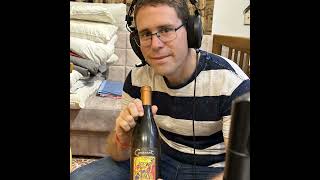
Natanal Sagiv left a decade in Israeli high-tech to become an assistant winemaker at Covenant Winery in Berkeley. He walks through the work: grape crushing, barrel management, racking, bottling. The winery holds Mahadrin kosher certification and operates Shomer Shabbat, and after October 7, it became a gathering place for the Bay Area Jewish community.
Chapters
Welcome to The Kosher Teruah. I'm Simon Jacob, your host for this episode from Jerusalem. Before we get started, I ask that wherever you are, please take a moment and pray for the safety of our soldiers and the safe return of all of our hostages. During a chance meeting at a wine tasting put together by Hillel Vogel at Jule Polonetsky's father-in-law's home here in Jerusalem, I met for the first time Natanal Sagiv, or as he likes to be called, Neely, along with his lovely wife. She is a visiting professor of law at UC Berkeley in California, and though Neely was working in high-tech in Israel, they decided to move for a few years with their wonderful children so that she could take advantage of this amazing opportunity that she was offered. As we were tasting wine and talking, Neely told me that he was currently working at Covenant Winery with Jeff Morgan. He told me his story of a chance encounter with Jeff where he became intrigued with working at the winery. He started in the winery cellar, but has enjoyed his experience in all different tasks over the last couple of harvests and is returning back to California for one more round. Please listen as Nili shares his Israeli perspective on the United States and especially Berkeley during our currently challenging period of time, not to mention his hands-on wine education at the side of Jeff Morgan. If you are listening in your car, please focus on the road ahead. If you are relaxing at home, please select a wonderful bottle of kosher wine and sit back and enjoy. I have the pleasure of welcoming into the studio, uh, Natanal, Nili Sagiv, uh, who is an assistant winemaker at Covenant Berkeley. And wow, it is a pleasure to have you here in Yerushalayim, in my studio.
Thank you.
Really a pleasure. And you actually brought some wine to taste as well, which is amazing, which is the Covenant. Which one? Tell me, which is this?
Chardonnay 23, Lavan.
Okay. So we are going to taste this in a moment. But first, You are not a typical American. No, not an American at all. I know, I am giving you a hard time. Tell me a little bit about your background. Where are you from?
I am an Israeli. I was born in here. In the past 3 years, we are in California. I was born and raised here. And because of my wife, that's— we went to California. When I was here, I was working high-tech. I was a product manager and for 10 years. And we moved to California and after a while, I— we met Jeff at school. And then they were looking for someone just for the harvest. And I went after the winery. I was sitting with Jeff and I remember two things that was in this meeting. He told me first, you're going to go to the winery for the harvest and it's going to be 3, 4 months really hard. You're going to work like you work on computers and stuff. It's going to be very intense. Either you're going to like it or you're going to hate me for the rest of your life. Here I am after 3 years and I like it and it is awesome. Before I left this meeting, Jeff was looking at me and he asked me, "What do you drink?" As an Israeli, I grew up not drinking really wine. My child memory of wine is a kiddush sweet wine, Kaumel Mizrahi, which All my friends, we had the sweet wine. And I was looking at him and I told him, "Listen, I just learned to drink wine with my mother-in-law. She was teaching me drinking wine in the past few years, but I don't know, I mostly like red." He said, "Okay, so take a white wine. So you need to start drinking white wine." I told him, "I'm not a guy for white wine." He said, "Okay, so learn." And I can say I kind of converted into whites after I drank the Chardonnay. Jeff's Chardonnay, it's the Lavan that we make at Covenant. It's amazing. And that's what also I brought here, the Lavan. So this is the story of me, how I got into the wine.
Where were you brought up in Israel? Where in Israel did you—
I grew up in Petach Tikva.
Okay.
And went to Nechalem Yeshiva.
Okay.
With Rav Bagad.
Okay.
Then I went to Mechina in Eli.
In Eli.
In Eli. And then I went to the army for 4 and a half years. And then university, you know, high tech.
Where did you go to university?
Bar-Ilan University.
In Bar-Ilan. Yeah. Cool.
Where I met my wife.
Okay. So you talked about the lavan. We have it here in front of us. So let us take a taste. Baruch atah Adonai Elohim, melech haolam, berei pri agafen.
Amen.
This is extremely fresh. I am trying to feel oak, but it is not that, it is not oaky. It's just really, really nice. It's not— it's also not a buttery Chardonnay. It's a fresh, very crisp Chardonnay, and it's got great acid. Um, awesome, and very balanced front to back palate, nicely balanced. It's really great. It's great Chardonnay.
Totally agree.
So what do you do at Covenant?
Um, so I started at the harvest. I work at the cellar.
Um, so do you work with the winemaker at all? Do you work with, um—
so we work with Jonathan. Yeah, uh, Jonathan Heidu. Uh, very tight. Uh, Everything, you know, from there getting to the grapes, crushing them, putting them into the tanks, testing them, tasting them, um, all the things in the cellar that you have to do, uh, like crushing and barreling down, taking it out, mixing, uh Taking care of the wines, you know, because you're a religious person, did they allow you to touch the wine and do what you needed? There was, uh, Jeff was asking me, okay, are you a Shomer Shabbat? That was the criteria of, uh, hiring you, hiring me, because I said I have no clue in wine industry. As I told you, as childhood, I was drinking, uh, sweet wine and, um Growing up as a Shomer Shabbat was, yeah, that's obvious. That's how I grew up my kids. I sent my kids to the Hebrew day school. I was partly working there at the beginning, and that's all I need to do just to work at the winery. I asked him, he said, yep. Okay, that's amazing. It's a win-win.
They can teach you all the rest of the stuff. Yeah.
It was just like, just Shabbat Shabbat, ve'edah zilgmo, that's, he's going to, and yeah, that's about it.
So how do you feel over the years? I mean, now it's been how long you've been there? 3 years?
3 years. That's, I'm going to start now the third harvest. On the third harvest. Just going to land the day after. I'm going to go into bottling. No mercy of jet lag.
Okay, but this is last year's harvest that you're bottling?
Last year's harvest, and also this is 2022 reds. Yeah, that's—
yeah, and the 23 whites.
And the 23 whites, uh, we have some— we have some Moscato, I think, on this bottling, and, uh, some Sauvignon Blanc we're gonna bottle also.
The question I have is, now that you have gotten into wines, especially in California, when you came back to Israel, you have come back a couple of times to Israel, have you tasted any of the wines here? Anything that was interesting?
So, we just had a couple of weeks ago, we tasted with you when I met you, The Agour wine.
The Agour.
That was something that it was a Syrah blend with something. Yeah, that was something different. Like, I was growing up in the wine, learning how to drink Covenant and also Haiti wines. That's the wines that I usually—
you have access to.
I have access to. Yeah.
And Do you taste any of the Shiraz wines? Shiraz Brothers?
Once at the winery we had Shiraz Brothers wine, we tasted it. But the impression, the ago wine, it was something different that I— It's kind of awesome. Yeah, never tried it before. Also with my wife, we said, oh wow.
It's an unusual winery. It's an unusual winery. There's a lot of little wineries here now that are just making some exceptional wines. Some of these winemakers are really hitting it out of the park. They're really delicious. I'm enjoying it very much. There's so many new wineries here in Israel. So, but I miss I really, really miss Covenant. And especially because some of the wines, when they were getting released initially out of Israel, people were drinking very young. And the responses, or the— they always got good overall comments. But some of the responses were drinking these wines long before they should have been drinking them. And now they're coming of age. And I'm seeing like, literally, a whole bunch of people online commenting positively about Covenant. And it's really, really nice to see. It's really nice to see. I just wish they were back here in Israel again, because I miss them. But Besides that, that is me being, you know, I can be jealous. But they are making fantastic wines now. This is delicious. This is amazing.
I know. I hope when I come back in a year or so, or might convince Jeff to come back here. I am going to try.
From your mouth to God's, Jeff's ears and God's ears. So tell me about what is the What were some of the hardest things when you first started becoming a cellar rat or all the things that you needed to do to— what were some of the hardest things?
Learning how to use your mouth and your nose. It's a new thing to me. I never used to smell the wine before I drink it. Just, okay, we are having a glass of wine, b'rapa gafen l'chaim, and enjoy the wine. But one of the things that I am learning a lot with Jeff, with Segi, who is the managing director in Covenant.
You want to know something? Even more than missing Jeff and Jodi, I miss Zoe and her husband.
She's awesome. She, you know, she had a baby.
Yeah, yeah, I do, I do. So, but I, I really miss them. They're really— they were awesome. She used to handle, um, you know, customer service for, you know, VIP customers and what have you, and she was always super responsive, really nice, really great.
All the Morgan family are amazing.
Yeah.
Uh, so One of the things that I'm learning, like, before you drink it, smell it, try to feel it, try to feel what, what does it make, uh, and, uh, what does it make you think, what does it make you feel, uh. And I remember, remember one of the, uh, first, uh, grapes that we had was, I think it was, uh, Auvillonnier or I think it was Viognier.
Yeah.
And we were just crushing it, and I'm smelling the— putting it after when we put it into the barrels, and I was smelling it. I said, that's not a wine smell, that smells like an apricot juice. And the year— last year I was smelling it, it smells like a grape— not a grape juice, it smells like apple juice.
Yeah.
And it's the same Viognier from the same vineyard. And how does it end to be the smell and the aroma that we feel now? And I remember as when my mother-in-law was teaching me how to drink wine, at the beginning I was looking at the back of the wine and it says some smells of fresh apples, fresh apricot, whatever. And it was a shocking moment at the winery that I'm smelling and say, Yeah. Voilà.
Now you can smell it.
I can smell it. Now I understand. And after the wine was ready, aged, and then we bottled it and we put it into a cup after a few weeks and we're smelling it. So it has this smell. It's not so strong and it's not so juicy like you smell it at the beginning of apricots or pomegranates or whatever. But now you can smell it, and gentle, and it comes into, uh, into the taste. It makes— and then you taste the wine and you put all the senses that I was never using them. And, uh, and that's, that's, that's a muscle that I'm training now. And, uh, I have a great guidance in Covenant, uh, Yeah, Jeff is good at that.
Jeff is very good at teaching it. He's, he, um, he's run many classes and he's, he's an educator from that perspective for years and years. But the whole thing with getting that sense of smell and picking up nuances in the sense, in, in, in the, um, in what you're smelling and what you're tasting And also the texture of the wine in your mouth, across your palate, across your— on the sides of your mouth and surrounding your mouth. And having it, you know, having the front of your palate taste something and then have it continue through mid-palate and then finally in the back of your palate and then having also this, um, like this, this has a nice long finish. I'm still tasting it. So it's not like it hits the back of your palate and it goes gone, nothing. And there's like this whole— it's funny because there are many wines, unfortunately, that you can taste that have holes. Where there's like no mid-palate, or there's no— the, the wine ends and, uh, and, and it just dies. There's no additional flavor coming off of it. Here, I though I tasted it a few, you know, a minute or so ago, I'm still tasting on the back of my palate this wine. Uh, it's lovely and it's still full full-bodied in my mouth. It's great, it's wonderful.
He's—
he's— they're definitely making fantastic wines, and Jonathan has become really, uh, wonderful as well as, you know, as well as Jeff. But, um, yeah, these— they're all growing in their really developing and the wine is really showing it. So what are the things that were difficult for you?
Besides the physical work that I've—
What sort of physical work? I thought winemakers just drink wine, they don't do anything physical.
Yeah, but that's what we do. When I'm telling to my friends, "Yeah, I'm just climbing up some barrels and checking, taking some samples." You drink from the barrel? Yeah, because it comes into, you know, you take with a siphon hose. So putting the, let's say, when the whites are coming and you're putting into the press, like, you need to push it right into, fill the press as much as you can, because otherwise you're going to stay there till midnight, right? You use the most of the press when you're putting it. So it's really hot sitting on top of the press and putting the grapes into the place. And with all the bees around you and the yellow jacket and all the flies that comes because it's a great— It's sweet. It's sweet, yeah.
The grapes are sweet, yeah.
And you're getting stuck because of the juice, you're stuck into like—
It covers you.
It covers you. You're sticky at the end of the day. But it is a great feeling. It is the first time in my life I enjoy, I do not know how to say it in English, mimaseya deha.
Physical labor with your hands.
Yeah, it is like, it does not translate good.
No, it does not. It is creation with your hands.
Yes, creation.
It is more than just physical effort. It is creation.
And you know, you are putting your effort in and you wait. For the end result and it's a feeling that I never had before in high tech. Okay, you may program and after a day, week, whatever, you have, okay, we did it, let's move to the next. The other thing that teach me, patience.
Yeah, it's not instant gratification by any means. If you want to go into instant gratification, make beer. Don't make wine.
As an Israeli, it's really hard to wait. You know, okay, wait. Now you put it into the barrels. Now you have to wait. You have to check it. You have to mix it. You have to rack and return.
Um, so you do racking? You have to rack it?
We have to wrap.
So how do you rack? What do you do? Um, some people don't know what that means.
So, so you, you take— you lay down the barrels, uh, that you're gonna rack. Let's say, uh, we'll take Syrah, for example, and you wanna How do you say, lashvot, to make even all the barrels? Because every barrel, that was also, side note, a shocking thing for me. This is the same grape. We crushed them at the same time. We put them at the same time in the barrels. How come?
They're different.
They're different. The difference between two barrels, and it's the same cooperage and the same year that was made, and it's different. And I was asking Jeff once, uh, why it's so different. Like, it's not like you could feel the difference between two barrels. And he was saying, you know, this one was 5 high stack, it's, uh, 0.1 degree, uh, hot. And this is 0.1 degree. And, and, uh, if we use— if you don't use the new oak, uh, it might have of different wine in the past, and it has— although you clean it and you clean it really well, it leaves some, something in it.
Yeah, leave some residue. Yeah, but also the, the different— as much as they're even the same vineyard that you're taking the wine out of, the grapes out of, they're different, they're different nuances in the plots. And some of them hit different minerals underneath the ground, and some of them get more sun, and some of them have more shade.
Yeah.
And, um, and because of that, every— there's so many little nuances to making these. That's why blending is such an important thing, because you're taking these barrels and you're not just bottling it, you're basically blending the barrels to get what you want.
Yeah. And you're reminding me that what you just said, that I think— I'm talking a lot about Jeff because as I told you before, he's my rabbi of wine. I think when I did something wrong and he came over and he's whispering in my ear, "Everything matters." 'Everything you do, think of it. Everything makes a difference. Everything matters.' And then he's keeping repeating it every time, every time. And so, and as you said, I get to know, wow, everything really matters. You know, if you forgot to top one barrel, it changes everything. Okay, now we need to take it aside, see what we are going to do with this barrel. And hopefully it is not going to—
You know, it is funny, when you are doing Safrut, when you are doing Safrut, and you are writing a sefer Torah or tefillin or what have you, every time you put your hand on something, you have to say, L'shem K'tushat sefer Torah, or L'shem K'tushat tefillin, or what have you. And this is the same thing. You know, everything you do matters. And that's exactly what that means. You know, L'Shem Kedusha. It's, you have to have, you have to be cognizant of every step that you're making because it matters. It just really matters. So it's, it's, that's an interesting thing. I'd never heard him say that. You're the first person to tell me. But, but I've, I've never been under the gun with him standing behind me going, you know, like, get this done. But that is exactly the same attitude that people have when they are doing something with kedusha, and wine is. Wine is special because of that. So, wow.
Like you are saying, I am also learning a lot of halachot that I, okay, I will learn it sometime, or you never learned it because you never make wine by yourself. You just look for the kosher sign at the supermarket and that is it. Well, in Israel you don't even do that because all the wine— almost, almost all the wines. But yeah, but, um, and, uh, my friend Dashiell, he's, he's like, he was teaching me Cospagum. Okay, we tasted, we take, uh, composite of all the barrels that we have, and it's quite, uh, like, it ends up like almost 2 bottles if you have a lot of, uh, bottles. And I said, okay, we tasted it now, let's put it back. He said, no, this is a kosher wine. And I said, okay, that shall teach me what is kosher wine. And he said, you can do kiddush on this one because if you drink it, you can do kiddush. And I said, but I didn't really touch the wine. He just poured it in and said, no, this is the mahadrin. Don't. And that's the thing I never knew before. And That's also in my personal perspective or for my inner self, it's fun to come and also not learning only winemaking, but learning also Yahadut that I—
Yeah, the halachot that may— That comes comes, that surrounds it. Because you can even learn it before, you know, you learn things in the Gemara and you hear it and you hear the stories, but it's nothing like now this applies to me, it applies to exactly what I'm going to do now. And yeah, it's very different.
It's very different. Every time we're talking and then Dasha is coming with, okay, the Chay Adam says this, and Rashi was talking about, making wine. I just— wow, they were talking in 1,000 years, almost 1,000 years ago, or a few hundred years ago, and they knew how to make wine, or they didn't know. I don't know.
No, they did. They know how to make wine.
Yeah, in France.
So yeah, but it wasn't only in France, it was in Israel. I mean, if you go around, uh, you know, I've been frequenting the wineries in the Judean hills. And the Judean hills are covered with gaths, covered with wine presses. Covered. I mean, it is almost like you can, if you throw a stone in the air, it is going to land on a gath. That is how crazy it is. That is how many thousands of them there are. But then, if you think about it, all of Bnei Yisrael was here. We were all surrounding, close to Jerusalem or around it. And we all needed wine because otherwise you couldn't do anything. So there was a reason we needed the wine, and there was a reason we made wine, and it was all ritual. Um, and it's funny because a lot of the wines now, there's a few, uh, there's one specific professor, winemaker, Shivi Drori, who's up at, um, in Ariel University. He also works in— he also is the winemaker for Gvot. He's been researching all the old, all the old varietals. And actually, the vast majority of varietals were light reds and whites that were among, you know, what Jews drank. And And it's amazing. It's, you know, it's amazing to see those. And, and they're trying to revive some of them now, which are just like— they have one called the Batuni, which is just like a Pinot Noir. Oh, um, it's like, it's a native Israeli grape, and it's, and it's light and just wonderful.
You probably heard this story that Jeff was telling us a lot of time about Chardonnay, where is the name, where it's named from. Yeah, that was, uh, was really nice, you know.
Yeah, it's a— there's a grape called, um, Macabeo that comes from Spain, but with a name like Macabeo, where do you think it came from? You know, like, yeah, where do you think the origins of that? It wasn't some, uh, you know Christian, whatever. It's interesting. It's interesting. Our generations were surrounded by our religion and our people were surrounded by wine. Just absolutely surrounded by wine in every way, mean, shape, or form. That's why it's so important and so many halachot that are focused on wine. Yeah. Tell me a little bit more about kind of some of the, any stories about fun things that happen, not fun, not fun things that happen.
Not fun things.
Yeah.
So let's go back also to the racking. You lay down the barrels and now you need to take them out, take the wine. You put the hoses, you put the walkshower pump, put it into the huge tank and then the thing, the easy thing is take it out from the barrels and put it back. Although you need to make sure if you want it super clean, You need to make sure you don't take all the schmutz from there.
That's in the bottom.
The bottom, the lees. But we call it schmutz.
It is schmutz.
It's Yiddish. So the easy part is to take it out into the tank, but the trickiest thing is to put it back into the barrels.
So you clean the barrels between every—
You take out the wine, you take off the schmutz. It depends what Jonathan and Jeff are planning, uh, with this, with this wine, it's gonna, gonna rack and return again. I don't know. But basically you put it into the tank, then you clean the barrels, uh, and really good. Um, also depends. Sometimes you, you want to leave them, you want to leave on the lees. It really depends. But let's say the white, the Chardonnay, you want to put the lees out. You want to put it as much as clean as you, because you don't want to filter it at the end. Um, and then putting it back into the barrels, that's the tricky part because you have to, uh, you don't want to suck the stuff at the bottom. You don't want to set the stuff at the bottom, but you don't want also because you, you're controlling the pump. You have this little, uh, tiny, um, remote control valve. You have the valve and you have a remote control about the speed. And you're trying to look between the hose that goes into the tiny hole of the barrel, and you have a little gap to see the wine level. And you're trying with your flashlight to see inside, and then when you miss it, you got a whole flash. And it happens from time to time. We try not to. You try to be aware, and everything matters, we said.
You have to It just wastes all the wine that comes pouring over the top of the barrel.
Yeah, and it's, uh, and it's not fun at all to, uh, be soaked with wine for the rest of the day, uh, because, uh, when you go out, all the yellowjackets come back at you. Yeah, but, uh, this is one of the trickiest things that I don't like to do. When it happens, it happens.
We're tasting this Chardonnay, but I also, um, I brought a bottle of Israeli Covenant up for us to taste as well. And it's the Syrah from 2014. It has a great label on the front of it. It has a map of Eretz Yisrael. It was an inspiration that Jeff had to put this map on the front of the bottle. He got some pushback from some of our left-wing brethren, but that was an incredible, it's an incredible bottle. And though I showed Nili some, a bottle of the 2013, which I'm saving for Jeff when he comes back to Israel, we're going to taste the 2014. Tell me a little bit more. Any other interesting stories over 2.5 years? What about the harvest? Do you actually— do people— do you go out and pick in the vineyards or you just get— you get— not just— you get the grapes brought in?
We get the grapes brought in. Geoff and Jonathan are really in close touch with the growers when to do the picking. Yeah, uh, we go up to the vineyards, uh, very often. Jeff usually— and Jeff and Jonathan are going up to taste the grapes. He took me once. It's a nice field trip for a cellar rat, as you do.
Yeah.
And, um, so we get the grapes, uh, we're not picking them, uh, usually they are being picked early morning.
Yeah.
And We get them as soon as it gets traffic.
How far away are the vineyards from you?
You have vineyards in—
They're all over the map.
All over California. You have Napa, you have Sonoma, you have Lodi, you have Lake County, but you have also from South California, Benecio, I think it's also— It's almost 6 hours driving from us.
Wow.
One of the great Syrah we make, it's from Venecido. I think Jonathan is making also wines from grapes, not last year, the year before he got grapes from Washington also. It was quite a schlep. Up north.
Up north, yeah. What about later on, actually the bottling process? Do they hand— they don't hand bottle? Do they have people come in with machines and do bottling?
We have people on machine do bottling. A few special orders that we hand bottling, but usually we do bottling. There's a— my kids love it. It's amazing. It's a huge machine, huge truck that comes into the winery and park there for a week. And it's like the Charlie Chaplin movie, like the huge machine that you put something at the beginning and it comes out.
At the end. It's amazing to watch all of the different— and it does, it flips the bottles.
Flips and it takes and checking it and every now and then, because we need to be there inside the machine and press the buttons and touch the bottles if it's not corked yet. If there's a malfunction in the machine, so you have to take out the bottles and make sure that no one touches it because We are the only one where just Naomi, Dasha, and me, or Jonathan, in the bottling line. And usually it's boring. You're just watching on— you press the button and you're just watching on the bottles that goes, and thousands of bottles a day. It's, it's, uh, like watching a machine that do the same, but It's the one of the fun things that when you change wines between, between, that's the most funky and fun bottles that you have. You take a case or two aside because you clean the machine, but you don't clean the machine between reds, let's say. But you do want— you empty the machine as much as you can And then you put the new wines, but you want to take out the rest of the wine that was little drops in the hole. So you put the first case or the second, the first cases aside. And this is the special wines that you taste because that's the wine that we got, we're getting at the end of the day, you know, just stay home because he's not going to sell it. It has Cabernet with Syrah, whatever. And it's, uh, it's like a machine blend. Yeah, it's a machine blend. It's an interesting taste that every bottle is a little bit different than the other one. Yeah, it's really nice. That's the fun part in the bottling. But usually bottling, it's like getting there very early in the morning, open the, the winery, and just make sure that they clean everything, the machine. And it's actually cashering the machine every day. They're putting hot water with pressure and then it's like— there used to be an Israeli commercial for Pregat. We just put the oranges in the machine, we don't touch them. So you just hook the hose into the machine and you just press the button and we don't touch the wine. It's fun. As we said before, That's the Masei Adecha, that's the end of the process that you see it. And every time I don't know if it's me imagining or, you know, or not. It's like when you see Jeff and Jodi walking around and you see them like they're happy. You know, that's a big A big step. Now it's gonna go and wait in the storage in Bassan.
And it sits for a while.
It sits for a while, and then until they're gonna sell it. And then you see, uh, uh, Segi was in charge of the sales. Okay, what we're gonna do?
But it's, uh, it's amazing. It's amazing. It's such a long process that when you finally get to that and the bottles are actually coming out of the machine and and they're going into boxes and they're getting packaged, it's like, wow, there's so many things that could have happened to mess it up until you get to those bottles. And that you actually accomplished it and got the bottles out is huge. It's a huge deal.
It's a story that we— it's happened not to us, but a guy that we know that he was sending it was a pallet with, I think, 2, 3, 3 high stack of cases. And it took a turn not in a slow pace. It was driving too fast and all the pallet on the road, bottles were broken. And it was— we saw pictures. Yeah, yeah.
So much, leave the money that the winemaker lost, but it was kevlev, you see, it's the pain in your heart that you get from watching something that so much effort went into and you're so close. It's, you know, right now in Israel, up north, they're experiencing the same thing. They've got these vineyards that they're right next to almost ready to harvest. We're probably 30 days away from harvest for a number of the wineries up north, a little more for some, but 30 for some of them. And then all of a sudden, a piece of shrapnel lands in the vineyard, and they get burnt. They burn up. And it's like, all of that work, all of that effort, all of that time waiting for the grapes to— waiting for the the vines to mature enough that you could actually use them for grapes for wine. And then just watching these things burn up is heartbreaking. It's so sad. It's crazy. People don't understand how— it's not something that you can just say, "Okay, yeah, well, we'll replant them," and wait 3.5 years, 4 years to start the whole process again and then go through all of the efforts and work. And it's really crazy. So, this is a Syrah, a 2014 Syrah. I believe that this was from Telfares, was the vineyards that the Syrah grapes came from. This is beautiful and dark. There's a little funk that's got to blow off of it.
It starts very smooth at the beginning and then—
He made some fantastic wines here. Just some crazy wines. He meaning Jeff. I think the winemaker here was Ari Earl. The 2013 was the first wine I tasted of the Syrah, but the first white was a Viognier, and the Viognier was just like over the top. I mean, it was just crazy, especially when it's hot here and you just want something that's crisp and delicious. And like this Chardonnay that you brought is also— it shows so much, not only patience, but it's nurturing the art involved in making good wine. It's just great. It's a wonderful, wonderful wine. Got the acid that, that people want, and it's got— it's not sweet, it's not buttery. It's, uh, it's a really lovely Chardonnay. Lovely Chardonnay. So very cool. Again, this Syrah is balanced, still has some tannins, but they're integrated, and it's just Lovely. And it also has this long finish. Very nice. So, berkeshem. Okay. What's the difference between living in Berkeley and living in Shoham?
Oh. Wow. So living in Shoham is family. And it's a great place, was good to us. Living in Berkeley, the first thing that comes into my mind comparing Berkeley and Charm, it's traffic. Like, I can walk to work and I'll be there in 30 minutes, or drive, it's less than 10 minutes to work. In Shom, it's like everywhere you want to go, you're going to traffic. If you want to go to Tel Aviv or Sheolayim, you're going to stand in traffic, no matter what time of the day you're going to go, unless you're going to go after midnight.
That's so funny, because I thought for sure you were talking about Berkeley having traffic and Shom not having traffic.
Oh no. It's exactly the opposite. The minute you go out from Shom, you get into traffic. Nowhere, if you're going to Tel Aviv or Sheolayim, and we go into kvish number 1, number 1, and that's it. You're standing. But—
Shoam is located where in Eretz Israel?
Right next to Ben Gurion Airport.
Okay.
5 minutes from the airport.
So that's a hot place because it's in the Shvila, it's in the lower basin that goes out to the Mediterranean. And it has a tendency, it's an agriculture, well, it used to be an agricultural place. It still has some agriculture, but it's also high-tech. There's a lot of new little high-tech parks that are growing on there. But, okay.
In climate aspect, you have the heat and humid from the misholcho, from the beach. And you have the sun and the heat from the desert, the Judaean Desert, and you're just sitting in them when they meet. So it's a sauna. But other than that, it's a great place. It's like living in a sauna all day long, night and day. But if I'm talking about Berkeley, you have the I think that's one of the best climate places on Earth. You have the, the great, um, cool air that comes from the ocean through the bay. You don't have the super, uh, super winds that you have in San Francisco. It's milder and it's much more, uh, tolerable. And it's not so cold because you have, when you get 20, 30 minutes east from Berkeley, it's getting, it's like getting into the desert, like getting into Shoham.
Yeah.
But it's getting there, it's like air condition you have on Berkeley. It's a great place. I was reading something, history that they used to back then before San Francisco was what it is today. They used to make the— they used to bring the grapes from all over the place and the wineries themselves were in San Francisco because you don't need to have air conditioning. It's always cold. So it's a great place for winery. On an aspect of Jewish life in Berkeley, It's not related to wine, but Jewish life, especially since October 7th, and also a little bit before, it's complex. We have a great— we're living in a great community over there, Bet Yisrael, Congregation Bet Yisrael, with Rabbi Yonatan and Freida. They're amazing. Amazing kehillah. We live there.
Where do kids go to school?
They go to Oakland Hebrew Day School. It is actually the kehillah school. All the kids from Oakland and Berkeley are going over there. Berkeley is very unique. As much as I learned about America as an Israeli who comes to see America, Jewish life in America, that the Orthodox— we're going to the Orthodox shul over there, CBI we call it, Congregation Beit Israel, which is, as I said, they're amazing. But the relationship between the Orthodox and the Conservative and the Reform community, also before October 7th, is so inspiring. They're They go to each other's bar mitzvah. When I, a friend of my daughter was having a bar mitzvah at a conservative shul, we came for the kiddush and then you see the rabbi of the Orthodox shul goes and blessing the kid and in the kiddush and he is coming over. We all use the same catering because there is only two guys who make catering and kosher catering in the Bay Area. The area. And that's very inspiring to see that Jewish life, no matter how you practice your Judaism, it's respectful and tolerant for each other. People are tolerant. And you see even Jeff, He comes to shul every Shabbat, but he is not a Shomer Shabbat. He is not touching the wine. Every time, that was mind-blowing for me. He wanted to taste the wine. He said, okay, Nelly, can you bring me a cup of this tank or this whatever? Because he said, I cannot touch the wine. This is his wine, his grapes, and it is mind-blowing for me.
He is a special person because a lot of the winemakers go really crazy about that. I mean, they just go absolutely nuts about it because winemaking is something that's very hands-on.
Yeah.
And many of those people are, you know, like super passionate about what they're doing, and, and it's so hands-on. And then to tell them, well, you can't touch the wine, you actually have to ask that person to do it for you, it's like using somebody else's hands to do to do something that is very important and that requires touch. It is really crazy.
That is something that I was looking at at the beginning. But you are a Jew. We are all Jews here. But he said, no, that is the rules. I respect the rules. I do not follow all the rules, he says. But I say, these are the rules, this is what Rabbi Nathanson said, that's what I'm going to do. No questions. That's it. And that's part of the— I think that's, for me, it's part of the uniqueness of this community in Berkeley also. That everybody has, as an Israeli, doesn't have patience because we Israelis, we don't have patience for everything. We need to chop, chop, chop, do everything fast. Come down, think, and listen. That's the thing that I'm learning in Berkeley. Also through the wine, as we said before, this is for the extreme. You have to have patience. And also in day-to-day life. I wanted to add also that, especially in those times, these times, the community, the kehillah, is super important. As an Israeli, I never felt it before because we grew up in Israel. Everything is safe here.
You grew up in the fishbowl. I always think of, you grew up in the fishbowl of kedusha, and now you are outside that fishbowl. And it is not like it is all there. You have to make a life for yourself, so it is a little harder.
If you want to be part of the Jewish community, if you want to practice Judaism, you have to be part of something, you have to choose it. It is not like it is surrounding you. I am lucky to work at a kosher winery, so the calendar is a Jewish calendar, but Friends who are working in different places. My wife works at the university. The calendar is not a Jewish calendar. She has to cancel lessons because of Yom Kippur, because of Rosh Hashanah, whatever. It is quite an experience. I will go back to the winery. One of the things that I am also a community. There was a lot of Jewish students around. Berkeley. And we saw them once, they met at the winery. They came and Jody came up to them for their event and she was saying to them, listen, this is a, this is a Jewish place, this is a safe place for you. Every time you need to come and get away from all the madness and the craziness in Berkeley, because you probably saw in the news what happens in the university. This is a safe place that you can come over, come over to Covenant and just sit in the yard and have a great wine and relax because you can be whatever you without afraid of what's going outside. That's part of Covenant, I think.
They're really special people. Jody is like mom to the world in that instance. She's just really special. Unbelievable. This has really become— you know, you should take a little more. It's become really lovely. The air has gotten to it and it's coming. It's become a lot more— Textured. Open, and the texture is there, and it's really lovely. That's nice.
And the smell.
Yep. Oh, yep. Wow. So when do you go back? When are you going back to, uh, uh, cool. When do you go back to Berkeley?
Berkeley, uh, in almost 2 and a half weeks we're gonna go back.
Okay.
Straight, as I said, straight into bottling.
Right.
And then we're gonna start harvest because August is harvest.
Yep.
Yeah, and it's gonna be, uh, there was a good winter in California, so a lot of water, a lot of water. Um, so I hope it's gonna be good harvest. I believe it's gonna be a good, good harvest and a fun harvest. And we're gonna do much more wine this year, I hope.
Okay.
That's the plan. And, uh, it's gonna be much more fun, much more learning also.
Thank you. Thank you very much for taking the time to be here on the Kosher Terroir. Thank you for having me. Yeah, it's a super pleasure, and I'm so happy that we met by chance at the tasting, uh, at Jules' house in Kfar David, his father-in-law's house in Kfar David, Nat Lewin. And when I heard you were from Covenant, I said, great, wow, let's get together, let's do a podcast. So thank you. Thank you.
Thank you for having me.
And I hope this promotes Jeff into coming onto the podcast. We will see, with God's help. He is such a doll. I love him. So with God's help. Thank you. Amen. Shalom u'baruch haShem. This is Simon Jacob again, your host of today's episode of The Kosher Teruah. I have a personal request. No matter where you are, or where you live, please take a moment to pray for our soldiers' safety and the safe and rapid return of our hostages. Please subscribe via your podcast provider to be informed of our new episodes as they are released. If you are new to The Kosher Terroir, please check out our many past episodes. And thank you for listening to The Kosher Terroir.










