Post Passover Hametz Exploration: A Conversation with Ephraim Greenblatt from Hatch Brewery
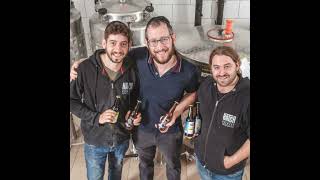
Ephraim Greenblatt from Hatch Brewery talks pastry stouts, barrel aging, and beer pairing. His brewery makes batches of 500 to 1,000 liters and ages beer in wine, whiskey, and gin barrels from Milk & Honey Distillery. He explains how bitterness and acidity cut through sweetness in food pairing, and why brewers know more about fermentation than winemakers do.
Chapters
Welcome to The Kosher Teruah.
I'm Simon Jacob, your host for this episode from Jerusalem. Before we get started, I ask that wherever you are, please take a moment and pray for the safety of our soldiers and the safe return of all of our hostages. So Pesach, Passover, is over. And we've spent these last long weeks tasting wines during the 4 kosot, the 4 cups. But we've also been missing chameitz, bread, or more generally, all the leavened products we are so used to consuming on a daily basis. So in order to celebrate our being reunited with chameitz, This episode is focused on the other alcoholic yeast-based libation, beer. The following is a conversation with Efraim Greenblatt from the famous Israeli Hatch Brewery. So, on to some hardcore chameitz conversation and tastings. If you're driving in your car, please pay attention to the road. If you're home relaxing, please open a great craft beer, sit back, and enjoy this very special journey. Welcome to the Kosher Terroir.
Happy to be here. What a treat.
This is a first for me because normally we are very, very wine-centric, though I think you'll hear some wine-centric discussion as well. In our discussions going on. But I have here with me Ephraim Greenblatt from Hatch.
Hatch Brewery.
Hatch Brewery. They make some very exciting and incredible beers. And since Pesach is over, I figured let's get directly back into the chametz.
Gotta jump right back in.
You gotta jump right back in.
So that's what we're doing.
So that's the goal here. So, What are we drinking?
Okay, so we are drinking a beer called Local Time, uh, which is a relatively new beer of ours in our core range. We produce 6 beers that we call our core range, so those are beers we have all the time, and this is our newest addition to it. The other 5 are ales, and this is a proper lager. It's a Helles-style lager, so you're looking at a very, very light beer. You're looking for a bit of a bready malt character. A very low bitterness. Uh, you might get sulfuric notes from a lager, but this is a classic sessionable, take this to the beach, but have some complexity, but not a lot of complexity.
So I'm not a person who likes normal Abbey ales or things like that. This is a lot more, um, complex and a lot more— it's not a very complex beer, but it's got a lot more complexity than a typical Abbey ale, for me at least.
I think you're going to be looking at very different types of flavors. So an Abbeale is going to be very driven by different types of fruity esters. Um, so you'll get, uh, berry or raisin. They'll be a bit malt forward. You know, the Abbeales have a really wide range. Just in Trappist beers, you'll have 4 different ones: Single, Double, Triple, Quadruple. So you have a really wide range, but you're going to have very noticeable esters. Here you're going to have much, much less flavor overall. The bit of notes you'll be getting Really light. This should be very light. This should be really light. L'chaim.
Let's take a sip of that.
Amen. Hearing that shachakel from a wine drinker was heartbreaking.
I don't even do that at Havdalah. I mean, I do everything on wine. But I do like beer. I like Abbey ales. I don't like pale ales. I don't like the you know, the pale ale things. I like Abbey ales, the Belgian strong Belgian ales.
Belgium is an amazing country for beer, really is. There are 13 unique styles of beer that are unique to Belgium.
Mm-hmm.
13 different styles, the most of any country in the world. And they just— but a lot of them are, you know, beer is really 4 ingredients. It's water, it's malt, which is just barley that's sprouted usually sometimes another grain. It's yeast and it's hops. And I know that's a bit obvious. Um, but it's important to remember that because it kind of determines which, which one of those four is being focused will determine the character of the beer. A lot of Belgian beers are yeast-forward beers. The yeast that they're, uh, that you'd brew a Belgian beer with is being expressive and is giving a lot of the flavors. It's not necessarily coming from the hops at all. It's, I mean, depending on the styles, not from the malt, not from the water. It's the yeast is what you're tasting in a lot of Belgian beers. The same is true for German wheat beers, like a Hefeweizen. A beer like this, you're having a very light contribution from the yeast. Just a bit of fruity esters, just a bit of sulfur notes, maybe some, um, DMS, but most of the flavor here you're getting from just a bit of bready malt character, et cetera. But, uh, that's like, um, Now once you move around, once you know that Belgians are, let's say, yeast-driven, IPAs are hoppy beers, right? So those are really hop-driven, right? That's hop. Then you move over to like stouts or darker beers, and those are barley-driven. So different styles of beer will highlight different ones with ingredients, and then some of them will actually start to create a mixture of the two. An American amber ale is saying, hey, can hops shine and can barley shine? Usually they mute each other. Is there a way to make them shine together? We do brew one, one of our core ranges is an American amber, and we call the name of the beer Balance because it's a struggle. Can you have two dominant features in a beer?
So I never knew that I was, my preference was towards yeast. Definitely towards yeast.
Towards yeast, but there are a lot of different yeasts. It's very important to remember. Beer is actually the world where yeast was first isolated. All bread yeast that we know of came from the Carlsberg lab when they discovered an isolated Saccharomyces for beer production. But there are still a wide, wide, wide amount of yeast, and we can do different things to get more or less flavor from these. I'll give you an example. Another one of our core range beers is our German wheat beer. It's called a Billo. It's a German Hefeweizen. And German wheat beers will have natural flavors of clove and banana, and both of those are byproducts of yeast. And what we do is we don't pitch enough yeast on purpose. We, we called— we scaled back our pitch rate. And what that does is it creates a little bit of a stressed environment for the yeast as they're trying to replicate in order to handle the amount of sugar or maltose that they're being, uh, uh, fed. And what happens there is the yeast gets stressed and produces excess amounts of these chemicals that don't get reintegrated, and that's where you get more banana and more clove. And we wanted a more expressive beer, so we actually like create a bad environment in a sense for the yeast in order to get these flavors. But those are not the flavors you're gonna get in a German yeast. That's a very different, a different set of flavors.
Okay, so but before we go absolutely crazed, um, sometimes I get too nervous. I love it.
It's a pattern.
I love it.
I've done it once and I do it all the time.
I totally love it. I totally love it, and I think our listeners are going to love it too because people are listening in to learn. So they're— I've learned a lot even in this few moments. I didn't realize that the breakout of the different types of beers were so clearly differentiated. So tell me a little bit about yourself. Sure. Where do you come from? Where— how did you get on this path?
Hmm.
You're originally from where?
I grew up in a small state called New York. I don't know if you've heard of it.
It's sometimes—
it's near Connecticut. Yeah, it's near Connecticut, Long Island. I'm Long Island, Five Towns. Okay, I'm born and raised, and, um, I would say one of 9 kids, went to some pretty intense yeshivas over there over a lot of years. Um, but where this all started, I would say, is most certainly LEGO. I was— and, and for me, like, I have kids that are still obsessed with LEGO, but for me, LEGO was the love of creating things. It was the potential, it was the power, it was the joy of there wasn't something and now there is something. And that, that drives me incredibly. Like, I have two restaurants here in Jerusalem, one called Hatch, one called Schmalz. And even what drives me in them is the creation of something. This is— we can create these experiences, we create this place, we can create this food, we can create this energy. So for me, that always has been and is a very, very strong driver for me. Um, so that's where it started. Um, my first love was really winemaking, uh, wine growing. I decided I wanted to be a wine grower.
Um, I, uh, how does a kid from New York even dream about making, you know, growing wine?
I wanted to make everything. I just wanted to make, and I still, I still love making. I, it, I went through a pretty recently, uh, a cheese making phase where I just, I needed to make cheese. But obviously I'm gonna make cheese, I had to make the most difficult style of cheese. So instead of making pasteurized milk cheeses, I found this illegal Haredi dealer that would come with a trench coat and basically sell me illegal unpasteurized milk. And I wanted to pull out the natural expression of mold and yeast and bacteria from these cheeses. And then I bought a wine fridge and converted it to a humidifier situation to be a cheese cave. I have to say, I made some very, very bad cheese. I have to say, I made some horrendous cheeses, a few good cheeses, but it's a love of making. I learned how to weld so I can build my own whiskey still at home. And I had a— I was moonshining. And at that point, I was still in Kolo. I was learning yeshiva at one point, and I had rigged my giant whiskey still that I had welded in my kitchen. We were living in a tiny apartment, and I plugged it into the sinks, and I had hoses going everywhere. And I told my wife, honey, I'm leaving to yeshiva. Just keep an eye on it. It's on. It's dripping out liquor. You just keep an eye on it. It should be okay. And then I get a video. Of the entire thing rocking back and forth. I'm always saying, "Honey, is this okay?" It's not okay at all. Get out of the house. Just get out of the house, love. It's not okay at all. So I love to make. That's really what it is. And for me, beer— I'll start with wine for a moment just because of your audience. Decided winemaking was important. I come from a family named Lipschitz who were some of the early winemakers of kosher wines in New York, and they had wine stores.
I remember there was a Lipschitz wine. Yes, I totally remember.
Okay. When I made shmallz, actually, I was sitting with an architect, uh, interior design company that was a secular hipster, Chiloni, you know, Tel Aviv branding company. I was trying to teach them about Shmuelka Bernstein, so I wanted to give them some context about, uh, so we had this slideshow and they pulled up a picture of Shmuelka Bernstein. And just coincidentally, like right next to it was the Lipschitz wine store. And just in the picture, I'm like, okay, that's the family wine store and that's the Shmuelka Bernstein. So that was my family. But winemaking was my first love. And I remember I even, I sent like 400 emails to every winery in New York, just looking for a summer internship. And one of my rabbeim yeshiva was really scared of me going to a non-kosher winery to spend a summer. So he connected me with a fellow who was a tree, a logger, I guess, a wood tree cutter. Yeah. A, uh, it's probably a more sophisticated name for it in Santa Cruz, who was good friends with Benjamin Kants of Four Gates. So we went to spend the summer with, uh, Richard, who was Benjamin's friend, just so we could be near, uh, Benjamin in his orbit and spend a little bit of time in his fields and which was an amazing experience. Ultimately, there were some things about the wine world that were a little hard for me. We were just talking about it a little bit tonight. We were at a wine festival and just talking about the customer experience of it and the barriers of approaching it knowledgeably. And that really threw me off a bit and actually went back to yeshiva afterwards. Went back to kollel. Um, and then one day I just— I need— these hands needed to do something. Like, my hands have to be doing things. And I just felt this. So I called them, uh, Denny. Denny Kahn. Denny Kahn was the owner of Buster's Cider, and he had a homebrew shop then. Uh, at that point it was in Mevaseret, and my Hebrew was pretty bad at that point. And I called him and I said, you know, shalom, uh, And Danny, who's I think from Texas, went, "What's that?" I was like, "Perfect, perfect, that's what I want." So I started brewing, and then it was a very, very obsessive, I have a tendency to go far and intense with some things that I start. So I brewed my first beer, it was a stout, and then we started, when I started scaling up, building equipment, and then I just wanted to brew.
I wanted to brew beer. Wait a second, but Danny, does Danny make, he has Buster's.
So Danny had Buster's at that point, coming out of his homebrew shop, in Emmevasera. Then they moved to Nocham. And that's when he was, he was always distilling, he loved distilling, he was always distilling, but that's when it was sold to Oak and Ash. Now you have Asher and Levi that are the owners of Oak and Ash, which owns the Buster's brand. We saw them tonight at the—
Right. So you, but how did you get to beer? 'Cause that's distilling still.
Distilling is, is it at this point it was not distilling at all. Distilling is, is making, you know, whiskey or, or anything where we're concentrating alcohols. It was not that at all. It was just basic beer baking.
Okay.
Um, and I just, I needed to do, I needed to make something and, and beer was always on my mind. And, you know, how would I say the gashmiyas is strong with this one?
Yeah, no, it is because it's, it's not like I'm waiting 3 years before I can put something on the shelf for a customer or what have you. It's, it's faster. It's, it's very similar in a lot of different ways to making wine. I always wonder why people who are really into making wine don't make beer, because it's, it's just— you get things, you can iterate faster with beer.
You really can. You really can. What, what blew me away, I went through a phase, uh, not a phase, I'm still in that phase, but I love cocktail making. And when I made, we should be drinking more, brother.
Yeah, come on.
We definitely should be drinking.
What's the next one?
Next one's also a lager. It's a Vienna lager. So it's similar to the last beer, but a bit darker, a bit more malt character. Actually an interesting story about how this was produced. I'll tell you about it in a second. But when I made my first, when I got into cocktail making, obviously, so for me it's like, you know, buy 30 books on cocktail making and all the equipment and just go head over heels. But what blew me away was the immediacy of it. Right? It was like, so you learn a ratio when you're making a margarita, whatever it is, and it's a 1:1:1/2, and you, you make it and you're like, hmm, ratio is not working for me. Let's try 1:1/4. And then it's just, it's again, it's just there. Like we were talking tonight about the joy of blending wines.
Mm-hmm.
And blending wines to me was a similar experience to mixology where the creative energy and the result were immediate. There was a challenge. Hmm. This beer, I like the, yeah, this wine. I like this character, but I feel like it needs a lower note. Hmm, what about that? What about that wine? Let's pair them. Yeah, that works nice. That's there. That's on the spot. There's no waiting for that.
Yeah, but it's— except with blending wines, truthfully, if you're blending good wines, you're gonna have to wait for the result anyway. You could— you're setting down the— you're setting down the basics, but you're still tasting the wines prematurely. I mean, they could be, they could be very accessible when they're fresh, but they develop so— they integrate and develop so much more over a period of time.
Cool. I believe that to be true. And that there's— so I made wine a couple times at home, like, as my mom, you know, as a very much as an amateur. Yeah. But there's, there's a whole world that I know little to nothing about. But, but just the immediacy of that blending though, for me, and that was just so Compare it to whiskey making.
Well, yeah, no, well, so both of them are crazy. Whiskey is out to lunch totally. I mean, you know, I love whiskey. Whiskey is a lifetime— whiskey is a lifetime endeavor.
Um, the culture of whiskey, of learning about whiskey making, is so fascinating. Do you know about this?
No.
That there are forums in the United States, you know, whiskey making is illegal in most of the world on a home level without a license. Um, two notable exceptions are New Zealand and potentially Israel. It's not even clear whether home distilling is legal in Israel or not. I remember once sitting in the Knesset in the session talking about this, um, where, uh, the— it was the Anti-Alcohol Abuse Society community, whatever, and they were discussing how to help craft breweries develop because they felt that craft culinary appreciation of beer is an antidote to the abuse of beer as an alcoholic, just for the alcohol. It was a really, really interesting meeting, but at some point the person that was— it was like a chaver knesset, a chavira knesset that was running it— the local workers that were always part of this got very upset. They said, how can we be promoting breweries? We're the anti-alcohol people. It's a psychoactive substance that creates abuse, right? They got really, really upset. And it might even be illegal because it's just not clear about what the laws say. And I'll never forget this, like, my Hebrew was not great at that point, but in Hebrew she said, um, like, like this, like the famous Israeli saying, if it ain't broke, don't fix it. No one cares if it might be illegal. Shut up, go home. Um, but it, but it might be illegal. Um, but that being said, in America it's certainly illegal. So therefore the entire culture of craft distilling and is an illegal subculture. So it's developed on the internet to be this really interesting space. It's, um, it's what they call it, it's a Wild West of really, really, um, I don't know the politically correct way to say this, but like a Southern hick way of talking. And you'll even find that, um, there's a way of speaking on the forums. These are very advanced forums, right? This is intense science that people are pursuing. You have to talk and type in certain ways. So it's common you'd start like this, these boys reckon, okay, and then advanced science with the formulas and all your calculations and your hypothesis and how you came to it. And then you end with, so I'm told, T-O-L-E, so I'm told. And that's just the culture of whiskey making on the forums. Okay, it's really, really fascinating.
I find that's amazing.
Do you know why? Excuse me, I just if this is not relevant, but do you know why it's a mountain culture? Why it's a, like, it's a hick culture to make whiskey in the United States? Do you know why it's the mountain people? I'll tell you why. I think it's really fascinating. And it's actually the Whiskey Rebellion. Do you know about the Whiskey Rebellion in the United States? The world's least successful revolution.
Revolution.
Revolution. So that came from the following fact. You had growers living in the colonies, right? That lived near the ports. They grew whatever they wanted and they shipped them, right? But if you live deep in the sticks in your, in your, in your cabin and you grew a field of beautiful corn, what do you do with the corn? You can't ship it to port because by the time it gets to the port, it was not worth the shipping cost. Wasn't worth it.
Yeah.
So what you did was you said, how can I take 7 barrels of corn and turn it into 1 barrel to transport? And that's where distillation came in. We turn, you know, turn the sugars into alcohol, the alcohol into condensed alcohol. So the people that were making the liquor were all the people that were living deep into the mountains in these frontier homestead places, which is why when they taxed liquor, they said, you're not taxing a commodity that everyone makes, you're only taxing the mountain people.
Right.
And that's what was the source of that conflict. This is extremely not relevant to what we're discussing, but I find it fascinating.
It is, it's interesting, it's very cool, it's very cool. Wow.
I'm gonna tell you about this beer that we're drinking right now for a moment. So this is called Tchippergol, which is a beer that we produced. Two funny things about this beer. This beer is a one-off beer that was actually made by accident. It was, uh, it was meant to be a different lager and it was a mix-up in the recipe with an Israeli worker and American worker, and they just made this interesting beer that was not what was intended. So we kind of had this beer that we made during the war. We weren't sure what to do with it.
Wait, this war now since October?
Yeah.
Okay.
This is a one-off. This beer is, is, this beer is a one-off beer. This is not a, not part of our core range.
Yep.
And, uh, for the first 4 months from October till a month ago, um, my brewery manager who's been with me for 6 years is my, is my right hand, was in a tank in, you know, in Gaza. And the brewery workers wanted to make a beer to honor him, and it wasn't meant to be released to the public. It was just like a, to make him a few cases. And send it to him to, uh, to, uh, to drink with his friends. So I don't even understand all the references on the label. Like, if you look at the label, it's, it's just artillery references. Like, all of these different things are things that only artillery people understand, and it was just meant for him. Um, but once we sent it for him, like, some pictures got leaked onto the internet about it, and we've just been inundated with artillery soldiers sending us messages. How can we get a few? How can we get a few? How can we get a few? This is so important to me. We're like, we got a message, a fellow said, "I've been in the hospital for 2 months since I got injured. I heard about the beer. How can I buy a few?" And Yisroel, who was a tank driver, drove down to Be'er Sheva to the hospital to bring him these beers. And it was just like such an organic expression of, like, you know, we're in the business of craft, of bringing joy to people. And we were really lost during the war at a point. Like, what do we do? Like, is this even appropriate what we're making? But when this beer came out, and not in a commercial way, we didn't tell anyone even that we made it. It just spread on the internets and we were getting these requests for like, can you bring us joy in this way? It was such a way of highlighting how this kind of heartful creativity and heartful craftsmanship can bring even in real, even in places where it really doesn't seem appropriate. Like there are hostages still in Gaza, right?
I agree with you 100%. You know, I, I— the first week of the war, I didn't put out a podcast because how can I put out such something so mundane as a podcast about wine? It's ridiculous. You know, like, I'm— and I, and I basically shut down. And, uh, and that first Thursday, uh, after, I suddenly got messages like, "Where's the podcast?" So I thought, you know, I said, "Come on, you know, like, you know what's going on, right?" And then I got an email from one of the listeners who was in Gaza. That was about a week later, because they didn't go into Gaza immediately. But he was one of the earliest people into Gaza. And, um, and he had the wherewithal enough to have an email, and he said, where's the podcast? So I said, um, well, you know, you above all know what's going on, right? I— is this an appropriate time to do podcasts? Because we're not fighting. We didn't leave our families and leave our work and and, you know, fighting in order for everybody to be home, huddled around, you know, worrying. We're fighting for Israel to be the way it has to be. I want the podcast. Get off your butt. You know, like, get going.
We're fighting so you could live, not so you can sit there dying.
And worry. Yeah. Stop, stop, you know, just go back to life and let us worry about what we're doing in Gaza and you get the podcast done. So after that, I've put out a podcast every week and I got it.
I'll never forget the first week or two when I, like, I wasn't sure whether to open my restaurants. And I remember just making this choice to like open a little bit kind of casually and watching people just come with so much anxiety and so much fear and just having a moment to just like be safe and have some food some comfort. And it was really interesting to watch the people that came to, let's say, Hashem, we reopened a couple days later, came the next day and the next day and the next day because they just had a safe space to be. They were hurting and they had like— they just needed that. And I was just so— it's really—
it's something normal.
It was really striking. Yeah, it wasn't obvious at the time in the beginning, but it became more and more obvious over time.
Well, yep. Schmalz is where?
Schmalz is in Ramada Shkol.
Okay.
Schmalz is inspired by New York-style delis and in the culture of Eastern European Jewish food. It's a lot of fun, schmaltz. Schmaltz is inspired by my grandmother who was a great Hungarian cook, or Austrian cook depending on the day, or depending what you asked her, depending who asked her. Let's drink another beer, yeah?
Yeah, come on. So we started?
We started with Local Time, which was a core range lager. And then we had the Chipper Golden, which is a lager that's not part of our core range. And now we're drinking a beer that we just released called Schnappi. Okay. And this is actually pretty cool. So we make, like I said, 6 core range beers.
Hmm.
And then every month we attempt to make 3 brand new beers, either brand new or we made them once a year ago, but like really push ourselves to create in bottles with labels and everything, new beers all the time. And that for us is very, very important for the just pushing ourselves creatively as a craftsman and just coming up with new things and things that we're curious about or that we're excited about or that we're driven by. So the beer that you're drinking now, Schnappy, is a New England IPA. It's a beer that we made once about 6 months ago and it was really, really, really popular. And we've just had nonstop messages and emails about why you're not brewing more of these. So we just re-released it last week. It'll be sold out the next day or two. A beer like this is not going to be on the shelves for very long.
What is that underlying— is it underlying fruit or—
That's hops.
That's hops?
That is hops. You're smelling so much hops now. You're smelling— so hops is chemically Cannabis homulus lupulus. It's a cousin of marijuana with no THC. And we put it in beer as a bittering agent, as an antibacterial agent, and more and more now as a flavoring agent. Okay, so when the flavors break into different categories, but here you're getting a lot of the tropical notes, uh, tropical notes and, uh, what we call dank notes, which are actually closer to the marijuana style of flavors. A New England IPA is less bitter than a usual IPA. Um, it's not— it's hazy. Do you see that? Yeah, you see how it's not clear? So these are called hazy beers, or people that are into them are called Haze Boys. These are hazy IPAs, and they're hazy because of the sheer volume of hops, A, and they're traditionally brewed with a bit of oats or something that's going to create some of this kind of creamy, hazy, uh, uh, approach. So it's, it's— IPAs are usually more bitter, and New England IPAs are less bitter and more hop-forward and hazy.
Alcohol level on something like this?
I will tell you when I read it on the bottle. 6.1. Okay, this is 6.1.
Um, these are all around 5.
Around 5, 6, 4.5 to 5 is considered usual. 6 is, uh, 6 is starting. IPAs are a little higher alcohol as a style, but this is pretty standard for, for an alcohol. Yeah, 5, the difference actually between 5 and 6 is actually an important percent point. And if you know this, because your body can process about 1.5%, depending on the size body, but about 1.5% beer per hour, right? So when you drink a 6% beer That 1% of alcohol is the only alcohol you'll feel over that hour, which is why a lot of people say, "I get really messed up from craft beer," because those extra percent or 2 or 3 is what your body's not processing out in that hour.
So that's why triples—
Well, triples are 9, 10%. I don't think it's—
The first time I ever had a triple was New Belgium. Was in Colorado. I was actually in Colorado, um, up in Estes Park, and that's at about, I don't know, 12,000 feet. So, um, I'm up at 12,000 feet, we were barbecuing, and I, and I had this little, little bottle of, uh, triple, and I was totally looped. And I said, how in the world How could I get so looped from this one little bottle? And it was because it was a triple, but it was also because of the altitude.
Oh, wow.
And the high altitude just totally accentuates any alcohol that you're drinking. It's really crazy.
Fascinating. I wonder why that is. High altitude is lower pressure, which means you're getting less oxygen, right? Yeah, um, but cool, fascinating.
Yeah, if you ever want to get really smashed, drink something heavy duty.
Triple in Denver.
In Denver, you know. Well, this was— this is almost 5,000 feet higher than Denver, but my goodness, my goodness.
So this is a style that's fun to drink. I like this.
Delicious. This is really delicious. I could see— I could get into being a Haze boy, you know, like, because this is really, um I, I like things that have more flavor and that are, you know, uh, a little crazier, a little hazier.
This, this is fun. This is a fun, approachable beer. Um, actually, this is a more bitter, uh, New England IPA than many, which I like. Some of them— New England IPAs have gotten— they're really popular right now, and some of them are really just hard to drink. And I think what makes this very drinkable is the bitterness carrying the creaminess.
Yeah, the creaminess carries it.
It's carried. And sometimes they step the bitterness so far back and it's just flat-set and just a soup.
I always wondered why they had both malt and hops. I, it, I always thought, well, you got hops, so you just ferment them, you know, you create this.
So there are no fermentables actually in hops. It's interesting. So let's talk about what malt is for a second. Malt is a confusing term, um, that people— everyone knows to use the word, but it's a bit of a confusing term about what it is.
So, okay.
Again, it's, it's, it is sugar as a source of sugar. It is. And again, if I get too nerdy, you just slow me down.
No, go, go for it.
But ultimately you have starches, right? Starches are 26 molecules of sugar attached to each other. And in nature, energy is stored that way, but it's not sweet. If you eat a cracker, if you eat flour, if you eat bread, it's not inherently sweet. Those are starches, which is 26 molecules of sugar. And the reason why it's not sweet in nature is because if it was sweet, birds and bugs would eat everything. There'd be no way to store energy. So this is a way to store energy. That sugar is energy, but it's not sweet. But these plants, let's say, um, barley, which is what most of beer malt is, really barley or wheat malt. What it does is, is our natural enzymes that are ready to chop itself into pieces, and once it starts shaving off those sugar molecules, then they become sweet. So those molecules need to be chopped up by enzymes. But when does it happen? It happens when they grow, when the plant needs the energy to grow, so it starts activating those enzymes. So what malt means is you take a barley, then you get it wet and you let it hang, and it will grow an actual tail. Like, we call it an aquaspire. We don't do this, the maltsters do this. We buy it already malted. What a maltster does, it takes barley and lets the tail grow, and the barley gets into a phase where, hey guys, we're growing now, let's release the enzymes we need to chop up our energy. And as soon as those enzymes become available, they dry it, the tail falls off, and that's now called malt. So when we as brewers take this malted barley— now we're calling malt, it's now enzyme active or enzyme ready— and we grind that and put that in warm water, those enzymes go crazy, they start chopping it up. We manipulate exactly a lot of variables to what enzymes we want to do what, but we take barley, which is not sweet, we put it into our mash tun at a certain temperature with water, and it comes out sweet. So we're actually getting that enzymatic breakdown. So what malt is— malt is going to be the source of all of your sugars. And all alcohol that you've ever drank in your life was sugar. Sugar is alcohol, alcohol is sugar, right?
Like 100%.
Those are coming together. Now hops though is not going to provide any sugar or anything fermentable to the process. It's gonna provide bacteria, antibacterial properties, which are important so that only yeast are working here, not souring agents. It's gonna provide bitterness, which is a flavor, uh, balancer. And it's gonna provide all these different flavors where in this beer you're getting a really exaggerated sense of the different kind of flavors they could bring. Those flavors come in different categories. There's citrus flavors, which are pretty common— grapefruit or orange.
Uh, is that okay? So now I'm going to get back into the, um— I always love to compare things, right? So when you have things, when you have, you know, a couple of glasses, you compare wines. That's the only way for me to really explore. So what gives those hops their special flavors? Is it the terroir where they're grown, those hops? There's no added flavors that are put into them, is there?
Um, there, there are beers brewed with added flavors, but certainly not hops themselves. Um, I don't know so much about, about hop growing. I've never grown hops. But here's a few things that I do know. So first of all, there are varietals, right? So there are just like, you have hundreds of varietals of wine that Each one would have its own set of flavors, which would certainly be affected by terroir.
Grapes. Yeah.
Uh, excuse me, grapes. Yeah. Um, the, uh, would certainly be affected by the terroir, but different grapes have different personality, different personalities, different types of flavors.
Mm-hmm.
There are constant ongoing breeding programs going on in universities and, and laboratories all over the world where they're tasting these different varietals of hops and trying to find which ones are the most expressive and then isolating those. Hops. So there's a lot of genetic selection happening for that. Now, that being said, it does— the, the environment does affect a lot that— for example, I have made beers with Israeli-grown hops, um, but Israel is a very, very bad country to grow hops in because our winters are not cold enough. So when your winters are not cold, it flower— even though it flowers in the summer, it doesn't flower well. A hops is a vine. It's a perennial vine.
So if they grew it up on the hormone It could grow.
It grew around my house. I brewed beer. I had a neighbor who was a home brewer and a friend of mine, a secular guy. We were good friends. We'd drink beer together. Me with my tzitzis and my white shirt and my black cowboy hat. We'd sit and he was secular and we brewed tons of beers. We had tons of fun. And he would grow hops. So he had a very poor yield, but enough for our home brews. So it's not a great country for that.
But if you moved up into the mountains—
It can be done.
You'd probably get— you know, better, a better, um, what you call it, variation of temperatures and what have you.
You just need cold winters. Cold winters is what you need. And I'm sure, I'm sure in the mountains that, that it is doable. I don't know how much demand there is for it, but there is a, there is a, there is definitely a, uh, a lot. It definitely can be grown here, uh, if it's cold. But that is hops. Hops is, uh, it's an amazing world. It's, it's changing year to year. Often the new varietals that we brew with are just numbers. Because they, they're not even named yet, like the varietals. We're just dealing with experimental, uh, products. Now there's a lot of, um, a new world of hop products where they'll actually isolate the flavor compounds from the hops and give it to you in a powder form or in an oil form or liquid form. I think there's some overlap with the dispensary marijuana community, but it's creating really interesting hop products because at some point you hit upward limits of how much hops you can add to a product before it gets too grassy. Too astringent, too tannic, absorbing too much of your beer to, to keep going. Craft brewers— I love craft brewing. I love the world of craft brewing. I love the culture of craft brewing. And there are a few features of that culture. One of them is sharing and being open. Like, craft brewers are amazing. Like, they will— one of the best beers in America was Russian River Brewery's made a heady top— I made— excuse me, made Pliny the Elder. And I remember people would send the brewer emails, hey, your beer's won the best award, the best beer in America, how do I make it? And he would say, here's my recipe, take it, enjoy it. So it's a really, really transparent culture, and it's also a culture of pushing the limits of like how far can we go. And we've— they've hit the upper limit of how much hops you can put, so they had to keep going. And now there's this new world of hop extracts and hop products. It's a really, really fascinating world. I love how far they go with this stuff, and they're going— they're No restraint. Okay, no restraint.
Okay, so what are we having next?
So the next beer we're going to produce— we're going to produce— I'm in a producing mindset. The next beer that we're going to drink is a chai masala beer. So it's a—
wow, India!
It's a— yeah, it's a brown ale spiced with chai masala. It's actually a collaborative brew that we made with a brewery out of Tel Aviv called Schnitt. Schnitt is a really cool brewery that also has a very, very high rate of creating, uh, interesting and unique beers. And one of the— like we talked before about the culture of craft brewing, and one of the really special parts of it is just this energy of helping each other, working with each other, being inspired by each other. And I think they are a very special brewer. And for me, it was so important to like say, hey guys, let's make a beer together. So this is a beer that my brewer sat with their brewers and they tasted the spices and they worked through what beer do we want to make it, how, what level spices they thought There was a big fight about how intense to make it. Should it be an over-the-top spice beer or should it be a subtle spice beer? A lot of fighting, a lot of discussion, but ultimately they made this product together, which is a cool expression of craftsmen working together. Let's take a sip.
So my family's Indian background.
Really?
Yeah. My father was born in Calcutta. And so I'm not— Indian spices are not foreign to me and I can taste them coming through. Really coming through.
There's this in— We talked before about Belgian beers, and spices are sometimes used in Belgian beers, but there's this monk line that monks say, which is, if you can identify the spice that I put in, then I put in too much, right? It should just tickle. It should just— so this is, um, this isn't, uh, not a very aggressively spiced beer, but it is a fairly spiced beer. But the goal is to have the different spices come together in a way.
Yeah, no, this isn't overpoweringly spiced or something. It doesn't taste like I'm I'm having curry beer, but I can taste that undertone of spices.
Yeah, and it's on a pretty gentle base. It's not too bitter, it's not too sweet, it's not too intense, it's not too malty. It's a pretty gentle base that's carrying this kind of cohesive.
So you mentioned your brewers and their brewers got together. How many people are involved in this? How many people are in your, uh, organization?
So my brewery is 4 workers. I'm the owner. I have a brewery manager and a brewer, a brewmaster, and then he has a worker that helps him on the production floor, and then a sales manager. So that's 4 of them. Um, but me, my brewery manager, and my brewmaster are all beer judges. We're all beer geeks. We're, we're the ones that sit in competitions and rate beers and give feedback. And it's a very intense culture in the brewery of like a beer craftsmanship. So even though I technically only have one brewmaster But there's at least 3 of you. There's a lot of us with— there's a, you know, 3 brewers, 6 opinions. I don't know how it works. We had 2 Jews, 3 opinions. It's that kind of situation. Uh, a lot of dialogue. A lot, a lot of dialogue. There's a topic that I thought is an interesting topic that relates to the name of your, uh, podcast, right? So Terroir, right? Terroir is not an easy topic to talk about in wine, but it's a very relevant topic in wine, right, is the expression of place and the expression in a wine. What about beer, right, is a question we discuss a lot and we think about a lot in the context of beer. Now, I produce my malt, there's no malt coming out of Israel, right, so I'm dealing with English malt, German malt, Belgian malt. Hops, as we said, it's mostly not coming from— there's almost none in Israel, so it's coming from New Zealand or the Pacific Northwest or Europe. Yeast, my yeast is made in France. And even my water, I'm a freak about water because Jerusalem has 5 aquifers. So when you turn on your tap, you don't know which one of the 5 sources of water is giving you water. And when beer is a water-based product, that's magic.
That's incredible. That's crazy.
So what we do is we have a reverse osmosis system that works throughout the night to fill up this, a water tank of stripped water that has no mineral content whatsoever. And then when we write a recipe for a beer, we also write a recipe for what water profile we would like for a beer to highlight those flavors. And then we use different minerals and salts to rebuild the water the way we would want. That's how to create a consistency for for a beer. So my water is not an expression of space, place. I strip it and make it from someplace else. So does beer have a terroir? Is there a beer of its place? And what would be the parameters? And what would that, you know, how would that look? It's a really fascinating question, especially because we're in a pursuit of a soulful experience and we want a beer of here. I want to be a beer that makes sense for now and for here to express here yet all of my ingredients are coming from— are, are either stripped away or being imported. So what makes a beer from this place? An important question for us. We talk about it a lot. Be curious to hear how that question sits with you.
As you discussed before, at least I believe that, um, there is, there is so much variation in how you put those pieces together that you guys sitting here in Jerusalem, uh, making this beer, that imparts a certain terroir to what you're doing. Um, I don't know where in the wine industry they get all the different variations of yeast, because yeast is incredibly important within the wine industry. I mean, it's kind of funny, people always say, oh no, we, we use natural yeast, you know, we just use the yeast in the air and that's what we do. No, no, nobody does that. Nobody does that in a production environment, because as soon as you introduce any yeast to your winery, the winery is—
is inundated.
Yeah, totally inundated with that yeast. So you have to basically, if you want to change the yeast that you're using, you can't just sit back and not introduce a yeast. You have to overpower whatever yeast is, is functioning in the winery at the moment. So that was— that's the only way you can really control the yeasts.
Um, do you know what lambic is? Spontaneous fermentations in, in, uh, beer making?
No.
This is a wild thing. Um, we discussed that there are 13 styles of Belgian beers. Trappist beers, or abbayales as we call them, are some of them. There's another style called lambic, and lambic is produced in a wild, wild way. It's produced only in January, okay? And the beer, when it's hot wort, when it's hot boiled sterile liquid, is dumped outdoors usually into a copper bathtub the size of a room. It's called a coolship. And it will cool overnight in this tank. And what happens is the bacteria from the air will actually settle in it. And after that night, they'll move it to wooden barrels and they'll age them for 1 year, 2 years, and 3 years and generally blend them for a classic Goas Lambic. And what you're getting is an expression of place from that night's bacterial um, profile. Now you are right, it's also taking from the brewery, from the brewery itself, so much so that when a lambic brewery will move, they are scared that they're going to lose their house culture. And what they'll do is they take their beers and they spray the walls and the ceilings and the floors of the new facility to let the bacteria just get hold in there so that to keep their character consistent. But that is, is definitely, uh, something that would fall into the category of an expression of, of space. Um, yeah, it's a really fascinating question.
Well, you know, I think over time it will develop because you'll start getting hops from here. I mean, they're— the climate in Israel is one of the most remarkable climates in the entire world. We have within such a small footprint.
So many climates.
It's unbelievable. I had an aunt who—
Even today I went to Airport City and I was like, what's going on? Coat on, coat off, coat on. It's freezing, it's raining, it's hot, it's cold. What is going on?
Well, it really shows in, I had an aunt who worked for the botanical garden and she was from Cornell. She was a She was a botanist in Cornell. She came here and she said, we're in a— you know, I always, I love flowers. If you look at my Facebook posts, I'm always posting flowers. I have within a block of here of my house apples, pomegranates, lemons, oranges, loquats, kumquats.
I mean, like, I have all those in my backyard where I live right now.
I don't grow mangoes here, but if you're in, uh, if you're a little further, a little further west, you can have, um, people grow mangoes. Uh, this is all within a state that's the size of New Jersey. So that diversity of climate and, and little, um, microclimates is just incredible. So I'm not sure that in the future you won't be able to develop a real terroir-based beer.
I actually, I would go a different direction entirely, and I would suggest that the agricultural expression of terroir, or the most— whoa, whoa, you can't—
you just poured me a different and a new beer, and this thing is like, you got to be kidding, this is fruit.
This is fruit. So this is a, um, okay, this is, this is a mouthful.
Yeah, this didn't come from hops.
No, no, no, no, no, this is not from hops. So this is a, um Moreno cherry and licorice pastry sour smoothie. So that's a mouthful. We could, we could break that down a bit, but so it's a sour beer. Yeah, you're getting a lot of sourness. Um, you're not going to get bitterness in a beer like this. We're going to use sour character instead of bitter character, which will bring it much more into the wine balance. Um, it's sweet.
This is not really sweet. It's sweet, but it's not like over the top Super sweet.
No, it's not cloying in a wine— not wine cloying, but this is— this is beer sweet. Yeah, this is definitely sweet for—
for a beer.
I mean, it's a smoothie, so you'll actually get pieces of fruit. Like, don't expect— don't be surprised if you—
it's also got— it's— it's creamy, super creamy.
Yep, yep, that's there. And there's moreno cherries and actual black licorice candies.
Yeah, I can taste the black licorice too.
And that's actually one of the fun things in brewing is just like my, my brewers were like sitting like, I think cherry would be cool in this. And one of my, another brewer said, but it needs some complexity. You add another layer. And they just, I had two guys spend two hours peeling candies. Like that's what they did to make this beer. And it's so irreverent in a wine world. You know, wine world is so respectful of what we're growing and what we're making. And here it's just like, let's play. This is playful. This is absolutely playful. But going back to the terroir question for a second, I think that— let's see if I could word this well.
How would you want it to go?
So I don't know how I'd want it to go, but here's how I observe it going, and I'm cool with it. Okay, you know, terroir is French for dirt, right? Is it? It's a bit— land.
What does it mean? It, it involves the soil and the stones, the irrigation.
Cool.
It involves all of the growths around it, like all the plantings around it, the trees. So in the wine world, it also involves altitude, climate. So it depends on which side of the hill you are, your sun exposure, your sun exposure, and all the rest of that stuff. So go ahead.
I would say that in the wine world, terroir is looked at through a very agricultural lens. It's what we're growing, an expression of identity through what we grew, right?
But just let me— I'll key into one last thing before I let you go, and I'm sorry, I'm being an extremely bad host because what a host is supposed to do is listen. But there is one other side to terroir that was involved, was discussed but typically it gets lost in the, in the process these days. It's part of it is in the process of making the wine. Okay, so as an example, in, um, in Spain, in Madeira, they take the barrels and they expose them to the sun in order to get this sun-baked barrel with the, with the wine inside it. And, um, and it imparts a certain Madeira flavor to, uh, to the wines that come from there. So your process is also part of the terroir, and I think in that instance it might play more to where you're— I think you're trying to go with this, but go ahead.
So yeah, so I'm actually going to go actually really even a different direction than process. You know, we make 3 new beers a month. New beers, which means we're in a constant dialogue with our customers about what they want to drink. That's what, you know, what they have, what excites them. What— it's a constant, you know, um, process. And I suspect that Terwan Beer made sense in the— through the lens of what are the economics of brewing this product and what do the people want to drink. And what the people in a given place want to drink and what is economical to produce is what produced, is what created the stouts of Dublin and the IPAs of England. And the different, different areas that the different beers were created were reflections of what people wanted, what made sense for them. When did they drink it? What part of the day did they drink it? What was the way that they culturally held this drink? Beer is held in hundreds of different ways. Is it, is it in In Holland, where children are given 2% beers in school because that's just part of the culture, or is it? I think that's true. I don't know if that's true. Someone from Holland could correct me on that. But there's so many different diverse cultural ways to hold the product, and that dictates what makes sense for this place. Ultimately, when you're in this dialogue and you're reflecting what makes sense economically to brew and what makes sense culturally to brew, you end up tightening and refining what is the beer of this place.
That's a cool idea. It's an incredibly cool idea. It kind of reverses the whole thought of what terroir is, because what it is, is what you're saying is that it's the consumer that's driving the terroir rather than the area, but it's the consumer from that area that's driving the terroir. And I think that that's, um That's probably extremely true. I mean, you know, it's very perceptive of you to even think of it that way. And it's— I always like to have my mind opened a little bit, or a lot. So that's really perceptive.
It's a fascinating process.
Turns it on its head.
What is it to me? Because it's so important to us. Like, whenever I travel anywhere, I want the food from that place. I want the drink from that place. Place. I want what is here. I want— give me expression of you. And in beer, that's not a— it's not as natural. In winemaking, it's so natural to be an expression of here.
So what's interesting is, I wonder if that really impacts wine too, because, I mean, you have all of these German Rieslings and you have all, all different things, um, all different wines being made. We always say that it's from the, from the, um, the terroir, meaning the environment. But the truth is, people produce what they want to drink. So if they get something special and everybody agrees, it's really the customers that are pushing the terroir, the choice. So that's, you know, yes, that's very cool.
Even in, um, even in, um, I have a son who's, um, a clever boy, and we like to talk about utopian societies and dystopian societies. We're talking about communism and why it failed.
How old is he?
He's 9 now. I think it was a couple years ago though.
Cool.
And, um, so we were discussing how communism failed. I was Googling why did communism fail, and one of the things I Googled and was reading to him was that price is a method of communication between the producer and the consumer, where, where if I made something that the producer makes, and that the consumer wants, he can charge a price for it. If the consumer doesn't want it, he won't pay a price for it. And that informs the producer: this is not valuable to me. And in communist society, that breaks down because the factories just are told, make a billion shoes, but they don't need to actually sell those shoes. They just transfer those shoes. So you're missing that element of price. I think that relates a little bit to what we're talking here. When there's this dialogue of what people would but willing to buy, they're telling the consumers, the consumers are telling the producers, where is the value for us? What makes sense for us? What do we want? And that dialogue is a two-way dialogue because you can't produce what doesn't make sense for this space, but no one will buy what they don't want to drink. And it's a bilateral communication.
So I think the money is definitely there, but it's also your preference.
Ready for our last beer?
Yeah. Well, last sounds ominous, but.
Not the penultimate beer, but the ultimate beer.
Okay. I don't care what this is, it's not going to shock me as much as the last beer we tasted.
If I tell you that I dumped trays of rugelach into it—
I can taste this, I can smell it already. This is crazy.
So this is a pastry stout. A pastry stout is a style that's evolved over the last couple of years. I'll tell you a little bit about pastry stouts. Have you heard that phrase before?
Never.
Never. So I'll tell you a bit about pastry. So, no, so pastry stouts is a style that's really, really interesting, and I'll take you a little bit through the journey to get there. Um, stouts. So stouts is a beer like Guinness, or you might notice they have flavors of coffee and chocolate, right? And what's interesting about those flavors is they're coming from the barley. How does barley taste like chocolate or coffee? It's because it's roasted, and it's roasted in the same way that chocolate beans and coffee beans are roasted, where a lot of the flavor of chocolate and coffee is coming from the roasting of the chocolate and coffee, which you can get similar or exactly the same flavors from the roasting of barley or wheat. Okay, so you have this style of stout where it's, uh, getting these coffee and chocolate flavors, and then there were these styles that it developed called Russian Imperial stouts. Which were high alcohol stouts, and by definition they left a residual amount of sweetness in them. So these were sweeter, high intensity, very chocolate, very coffee stouts.
How high alcohol?
9, 10, 11, 12. Okay, okay. So that's— that these styles were starting to be brewed, and people realized that, hey, the flavors here are coffee, chocolate. What would happen if I just threw some extra actual coffee into it, or some actual extra chocolate into it? And once people started throwing these additives into it, they realized, hey, we're basically just making dessert. It's sweet, it's intense in flavor, it's got coffee, it's got chocolate. What about a little bit of crackers? Like, what about a little bit of something crusty to go into it? And ultimately, people just started—
yep.
Ultimately, people just started making these dessert beers, and eventually came a point where people said, okay, well, can I make a doughnut beer? Can I make a croissant beer? Can I make a Boston cream pie dessert? And at some point they started actually just putting those actual ingredients in there as well. So they designed the beer to taste like a certain dessert and then throw the dessert in as well.
So when you throw the dessert in, how does it impart the flavor? I mean, just because you take a chocolate chip cookie and put it into the beer?
So in a vacuum alone, it wouldn't. A chocolate chip cookie in a beer wouldn't necessarily leave a beer that tastes like chocolate chip cookie. But if you developed all the characteristics of your chocolate chip cookie to be in this beer— you wanted vanilla, you wanted that saltiness, you wanted— you'd separately isolated the different flavors and figured out how can I add those at different points in my, in my malt profile, and my, you know, exactly how to design it for that. So then throwing in the thing itself either can add or can just be a gimmick. Like, let's, let's be, let's be frank. Like, I don't think that every time someone dumps something in there, but this beer was a beer designed to taste like Rogalach and to be influenced by Rogalach. Um, we actually had a lot of fun with it. We, uh, what we're tasting is the base beer. We released it, 3 of them, and we aged the other 2, one in a Cabernet Sauvignon barrel and one in a whiskey barrel from Milk and Honey.
So we set it up as a whiskey and Rogalach It's like, when do you use this? Shabbat kiddush?
I wanted to bring you that one. We sold out— we sell out these beers pretty fast, so they were all sold out. So I just grabbed the last— I think this might be the last bottle.
Wow.
That we haven't sold. It's just found in the corner of a fridge.
How many bottles do you make when you do something like this?
Um, so it depends. It depends on how wacky of a project it is. Um, our usual production size is about 1,000 liters, 500 to 1,000 liters per production.
So how many barrels is that? Is that multiple barrels, or is that one gigantic barrel?
Um, we use barrels that we get from wineries and from whiskey places that are about 300 liters each. That's general. We have a great relationship actually with the mix— with the Milk and Honey Distillery because they make whiskeys that are ex-beer barrel. So they're very happy for us. So we— we—
you give them the beer bottles and they give you back the No, it's the opposite.
They start, they get wine barrels, they put whiskey in it, they then they pass it to us and we put beer in it and we pass it back to them and they put whiskey in it a second time. Okay. They even shared with us once one of their gin barrels, which is actually pretty cool because gin is not a barrel-aged product.
Yeah.
Right.
But I was gonna say, wait, wait, what?
It doesn't mean, so Milk and Honey has made a few, made two runs of, uh, one smoky, one wine of barrel-aged gins. and then we made sour beers aged in these really funky, funky barrels.
I don't know whether to say, uh, yeah, yeah, this is—
you got a bench after this. This is— you're gonna bench after this one. This is a fuller, deeper, richer—
man, you know, I've had people tell me that they taste chocolate in, in cabs and Cabernets and what have you. Not like this. This is, uh, this is not, uh You know, this is not like a hint of chocolate or a hint of, um, easily.
When I trained to become a beer judge, so part of the process is blind tasting 6 beers and you have to know all the styles of beer by heart, and then you have to write a full review of the beer and giving feedback, and then you compare it to a professional judge's opinion. So my tongue was really important at that point, and I had to— I like, I do like cigars. I don't smoke cigarettes, but I like cigars very much. I don't like spicy food very much, and I had to keep off of those for a few months prior to like kind of polish that— smoking cigars is not great for your tongue, from what I understand.
I, I would imagine that it would absolutely kill— I know people who drink wine who smoke cigarettes even, and cigars for sure. I, I don't know how, how you can do that and, um, and taste wines at any sort of level, but I, I've never smoked anything in my life.
Really?
Ever.
Anything?
Anything?
Anything? Anything?
No.
No joints when you were in college?
I have never, ever, ever smoked anything in my life because the first experience I had where somebody tried to give me something to smoke, I almost coughed my brains out and I said I don't care what this stuff is. I, I don't, I don't ever want to experience this again. My body just totally rejected it. And I was lucky enough that when I was in college, when people passed me, um, joints and things like that, I would just say, no, I, I can't smoke. And instead of being ridiculed for that, the general impression from my friends was more for us. Great, goodbye, no problem. You know, you can sit there and not smoke, great. Um, and it was just— that was it. So I, I was lucky enough that I never, I never was exposed to any of that. And smoking cigars, like, it's not pipes. Cigars are not unpleasant to me, but they don't enhance what I'm trying to eat or drink or what have you at all.
Yeah, as a pairing, it's important. We talked earlier about different kinds of food pairings and the way that work, which it's like an area that excites me a lot, especially in beer pairings, because there's such a— you know, wine pairings that everyone talks about, beer pairings is a whole world, right? It's a whole world that no one— there's just not enough people talking about.
I don't know, I— you know, it's, it's funny to me because I guess I'm involved with some restaurants that are trying to push the envelope, and in, in many instances, um, beer is the natural go-to, uh, so we talked about one relationship between beer and food which is the most classic, which is a classic, um, uh, element of general food creation, which is a cutting.
Right. Where it's, it's, you have a cutter and what needs to be cut so that what needs to be cut is often fat, but sometimes it's sweetness. Right. It's that heaviness that comes from a sweetness. Sometimes it's fat. And then you have things that can cut. I know about 4 or 5 things that could cut. Usually it's, uh, in beer is usually bitterness. Sometimes it's acidity. It can also be like a spiciness, like a heat can cut through. Um, sometimes, uh, like, um, herbaceousness can cut even without, without a bitterness. Um, I'm blanking on my fifth one, but, but that's a, that's a classic, that's a classic, um, what I would call almost a chemical response, right? And there are others, um, but there's so much sophistication, sophisticated sophistication in this world, um, where we talk about train wrecks and complements in other, uh, in other chemicals. I'll give you an example of another chemical reaction. Um, dessert wines with dessert, right? Or dessert beers with dessert, right? So we know that when you eat something sweet, you become muted. Like, sweet becomes mute to you, right? A classic example of that: eat a candy and then drink orange juice, right? It's horrible drinking orange juice after a candy. Is a terrible experience because you became numb to sweetness, and then you drink the orange juice and the balance now just got changed. And what you expected, the sour of the orange and the sweet of orange to balance, no longer balances, right?
Right. That's the same with that vermouth that I talked about. If you have something sweet before you have that vermouth, it's awful because only the, only the bittering agent, only the flavor, it gets left.
Exactly. But in a dessert, sometimes the— when you take a very sweet chocolate dessert and you pair it with a very sweet drink, or dessert wine or beer, what you'll do is you'll tone down the sweetness of that dessert and allow the flavors of the dessert to shine, right? If it's something that's inherently balanced, like orange juice, where you have acidity and sweetness in a balance, right? So then you take the sweetness out, you've misbalanced it. Or like in that vermouth, if you take a chocolate mousse and you now suddenly you've toned down the level of sweetness, now the chocolate, the nuttiness might shine, the chocolatey-ness might shine. That's an example of another chemical reaction that's not just that cutting that we discussed. So there are other chemical ones, but then you get really subtle with the bridges— the notes of caramel in this bringing out the caramel in that, right? And then you have pairings. This is a little bit peanutty, and there's a little bit of jam in there. This is a little bit of a fruity, and that's a little bit like, um, almost the crust, right? So there's so much of these kind of pairings. And there are the train wrecks, we call them, like the things that just don't work.
I like—
so this is mean, you will actually debate about because you mentioned that you did like this pairing, but I think it's a train wreck— is, um, sour and spicy. For me, extremely sour beers, I've tried it with spice.
No, no, no, I wouldn't say sour. Acid with spicy. I'm not talking about sour, I'm talking about acid with spicy.
Sour is acid to me. To me, that's the same word.
Uh, not necessarily.
Sour is not the amount of acidity.
Could be. Yeah, maybe.
I mean, I look at as a science nerd that the, the, I group those things, but whatever it is, for me, acidity cuts heavy, but when it's spiciness, it basically just makes it more abrasive on your tongue. Um, we've been, I've been working for a while. I wanted Hatch at my restaurant in the Shook to like develop a little, a small tasting workshop where you can watch, like, you know, have a spicy wing. Have a malt-forward thing and watch that work and kind of set a balance in your tongue. And then have something really sour and watch it crash. And the opposite, take something really heavy and fatty, a fried wing that's crispy and fat, and watch an IPA do its thing on there. And watch something much lighter just not cut— what acidity, what, uh, bitterness does is it refreshes your tongue to the next sip and the next bite of fat. Otherwise, the fat just lingers.
Right. No, I get that. I get that.
I'll tell you, there's an area here that's actually really exciting and maybe very relevant to the dialogue. I'm on a wine podcast right now and we're talking about beer, but that conversation of being a beer guy on a wine podcast really is something that I talk about all the time, which is wine people develop certain things that they know better than anyone in the world. But that's also true about whiskey people. Whiskey people care about certain things that wine people don't even know about or care about. And the whiskey world went their own direction with that, and beer went their own direction with it, and mead went their own direction. And I get really, really excited about the overlap between these two worlds.
Yeah, because there's a ton of overlap, but, but people— and but people won't even talk about the overlap. I get it. I know, I know.
So much to do because Even tonight we talked about— we were drinking a wine together and it was pretty acidic and I was just laughing about how the acidity is just fully— right before they bottle it, they just tweak the acidity. And that's pretty standard. A lot, a lot, a lot of winemakers are doing it, if I'm not mistaken. In beer, no one does it.
No, I wouldn't say a lot of winemakers, but there are some people who, who, especially in today's world where there's a demand for acidity, um, can go about tweaking, tweaking things at the last minute. But that's— I—
do you look down on that?
Yes, it depends. No, no, no, it depends. Just depends who's doing it. Um, wine people don't go anywhere close to this level of manipulation. This level meaning this— what did we call it? This beer that we just drank?
The pastry stout.
The pastry stout.
The Rugelach pastry stout.
This is like real Rugelach, a real chocolate. I mean, I can taste— it's called Rugelach. I can taste the Rugelach. I mean, it's like unbelievable.
But I'll give you another example of, let's say, where the wine world— where the wine world— or the whiskey world, I like whiskey— sits to benefit from the beer world. Beer is served naked. We make our product, we ferment it, and we drink— and you drink it.
This isn't naked.
This is not naked.
This is wearing a Purim costume, fella.
But the local time that we started, the Helles Lager that we started with—
I get what you're saying, but I'm just laughing when I'm drinking this.
This is comically not naked.
Okay, yes, but go ahead.
The Helles Lager that we started with, it sits what it is, what it is, right? Distillers cared much less about fermentation because all of their product went through such a radical change in distillation, to the point where even Laphroaig used to brag that they would ferment all of their wash with bread yeast. They didn't care. They didn't have what to say. Like, I read a lot of these forums about whiskey making, and there's just absurd, absurd information about how to distill, how to ferment. Beer makers know the most in the world about fermentation because this is what they do all day, every day, trying to manipulate fermentation. Right. Um, especially, yeah. Um, wine, wine people have it a little easier because wine is such a great format to ferment. It ferments itself. You just have to keep the, you know, you have to, you have other variables, but put aside, putting aside, put aside the beer and wine.
I'm listening.
I didn't know that. I think I triggered something here. But I think that specifically in comparing whiskey to beer, you have so much to learn. And in reverse, the wine world and the whiskey world have so much to offer the beer world in what you can do with a barrel. Right? What do you do with a barrel? Barrels have so much to give and so much to learn, and microoxidation and 100 other chemical reactions between the vanillins and the wood. And what's happening in the bonding. And it's just exciting for me. The crossroads between the different areas are really, really exciting to me.
Yeah, it's so amazing, the variations that come about through this when you— when you— in blending flavors in blending wines, you have the ability to take all of these different varieties, varietals, and put them in a barrel, or put them in a, in a tank first and ferment them, and then put them in a barrel and age them. Or you can do it separately. Yakovoria, his latest which we just drank the other night. Um, I drank with him 18 different fermentations. He took the same varietal, it's the same grapes from the same vineyard, and he made 18 different variations. Okay, 18.
Okay, I love that so much. Me too, nerd. I love that so much.
And then he blended them to, to create this final wine. And it's like, I— it is so rich and full.
A person that makes 18 different fermentations from the same base product is a learner. He wants to know. He is hunting to understand. Teach me what happens when I do this variable.
And he documents everything to know. Yes. 100%.
That's what makes him the winemaker that he is.
It's unbelievable.
That is a— that is teach me. Everything is to learn. Everything is more. I need to know more. I need to master this. Teach what is— what will this variable do?
How do I get everything I want out of this grape? Everything I want that's possible to get out of this grape. So I mean, it's like, it's unbelievable, but It's so crazy. It's a, it's a, it's crazy. Initially he had a thing called Yaakov's Playground, and that was 12, very 13 variations. Now you can't—
13 is not enough. You can't— 13 variations, it's just, you can't— what are you gonna do with 13? You need 17 plus. If it's not more than 17, I don't even want to talk.
I just want you to know there isn't a winemaker alive 5 that I know of, at least, that does anything like that. I mean, they'll blend, you know, 4 different varietals together, but these are all the same variety from the same vineyard. There might be one that's covered and one that's not. He, he takes different variations of what's going on— early harvest, later harvest, um, skin macerated, non-skin macerated. Different yeasts that are, are blended in. And in the end, he then blends it together to get something that is just like— and, and actually, what's kind of funny, we had a discussion about this, but I didn't discuss on our podcast.
It's kind of anti-terroir, because what you're doing is you're basically showing how much power you have over the land.
You're You're totally taking the terroir out of the picture because now what you're doing is you're, you're making it to be exactly what you want. So I'm not sure it falls into the kosher terroir landscape, but it's, it's definitely—
I think terroir is going to always exist in this dialogue. No, so always a part of this process, control and yes, and control and, and what is 100%, you know.
So in that sense of terroir. It really is good.
It's genes and nurture. It's, it's who we are and what we want to be. It's this constant yin and yang of— it's always going to be. I think terroir without the, the, the terroir without the influence of the winemaker is a forest.
Yeah, it's, it's—
yeah, it's just wild growth.
Yeah, it's—
all forests are perfect terroir of being a forest, right? Right? It's only when a winemaker steps in and says, now where does that meet me? Where does that meet what I hold, or what I think, or what I want to do? That you get this dialogue and you have an expression of place that's turned into a beautiful thing.
So I, I almost call it the Aurea Terroir. It's, it's like gone beyond the, the land and what have you. I have this now, that's—
I've been waiting to this moment to— I want to pitch you this idea. I have this idea. I want to make a wine where I use 20 different varietals.
I know exactly who to speak to. I know exactly—
he's not my guy. No, no, I'm much more committed.
Exactly.
I'm much more committed. I want to do 20. That's my idea.
No, you want to do a beer with 20 different varietals.
Yeah. When I started brewing, so the first 200, 300 recipes that I made of beers that I brewed, I never made the same beer again because every beer was a question and an answer. I wanted to learn about a style. I wanted to learn about an ingredient. I wanted to learn about a hop usage. I wanted to learn about a technique. It was a constant hunt for, for, um, for learning more about this. Ultimately, one of the things I learned was that without iterative brewing, bring the same thing over and over again, which is something that wine brewers get to do, that winemakers might get to do less, you don't get iterative growth, learning from your mistakes on a given beer and then correcting them and watching that change.
Well, you might also assume that something does something where it really didn't. It was a mistake.
It's an incredible point. Like, yeah, you know, we always joke that Budweiser, which is maybe not the most exciting beer that you've ever drank, hires some of the most skilled brewers in the world because they have to make the same product day after day using grains that come from two different countries, right? Yeah, using hops. It's an organic product that comes with three different areas. That's a level of to be able to create repeatability as a brewer is, is on that scale is just mind-blowing.
So that was the biggest thing with whiskeys, that the best whiskeys were all the blends because they got consistent flavors. And it was only after people said, you know, they tasted a single malt and they go, wow, I like that, this is exciting, it's not the same taste as everything that I've been drinking up to now, how can I get more of this? And all of a sudden the world went over to single malts But the truth is that the skills of these incredible whiskey makers are really accentuated in the, um, in the, in the blends. That's where you— and, and it's the same thing with, with wines. The blends are, are being able to get a consistent blend and a consistency.
There's so much skill in that.
It's just unbelievable.
So ultimately I found balance because my brewery manager has been right really for a long time, is a perfect opposite to me. I want the exciting, I want the new, I want to light everything on fire and start again. Like, that's just my personality. And he's consistency. He's how do we run a factory well. He's how do we get things done the way we said that. Like, he's just the perfect opposite of me in a really great way. Obviously we conflict all the time, but in the most amazing way. So he was like, 'Ephraim, you can't be producing new beers all the time because you're never dialing in your technique. You're just going someplace else.' He was right. So we actually shifted for a while to producing these consistent beers, and now we're in this really, really— like, I think we're in a sweet spot where we have these 6 beers that we always have, and we're always brewing them, we're always perfecting them, we're always learning, we're always tasting and correcting. And then every month we're, we're producing cherry, moreno cherry licorice pastry sour smoothie beers, and chai masala cola beers, and, and wow, okay, amazing.
Hey, look, I gotta let you go home at one of these hours because you've got a wife and kids.
I gotta find out if I'm still married.
Well, that's true.
I'll go check.
So thank you for being on the Kosher Terroir. It's been a real pleasure.
This was so fun.
Thank you. It was for me, too.
Are we doing this again next week? How does this work?
I'm ready.
I'm ready.
I'm ready to— after this, I'm ready to start a beer channel. Let's do it. So, take care.
Amazing.
Shalom, bracha.
Shalom.
This is Simon Jacob again, your host of today's episode of The Kosher Terroir. I have a personal request. No matter where you are or where you live, please take a moment to pray for our soldiers' safety and the safe and rapid return of our hostages. I hope you have enjoyed this episode of The Kosher Teruah. It was really interesting for me as well. Please subscribe via your podcast provider to be informed of our new episodes as they are released. If you are new to The Kosher Terroir, please check out our many past episodes. And thank you for listening to The Kosher Terroir.










