Rabbi Yaakov Shepherd: Unveiling the Spiritual Depths of Kosher Wine
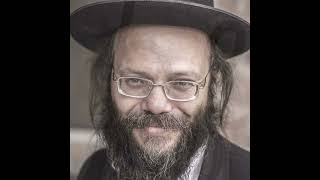
In this Jerusalem‑based interview, host Simon Jacob invites Rabbi Yaakov Shepherd to explain why wine is omnipresent in ancient Israel and central to Jewish life. The conversation begins with a prayer for soldiers and hostages, then moves to the observable abundance of stone wine presses across the land. Rabbi Shepherd outlines the everyday ritual uses of wine—Kiddush, Havdalah, Birkat Hamazon, Brit Milah, Chuppah—framed as the "Koshel Bracha" (cup of blessing) that sanctifies key moments. He then shifts to a Kabbalistic perspective, introducing the concept of tikkun (spiritual rectification) and arguing that wine, like all creation, offers a vehicle for repair. He describes three hierarchical categories of wine: yayin ha‑meshaker (intoxicating), yayin ha‑mesameach (joyful), and yayin ha‑meshumar (the kept, sacred wine created at the beginning of creation and destined for the future spiritual feast). Rabbi Shepherd explains how meditative practices can elevate a cup from the lowest to the highest level, linking this process to the Sefirot: oil (Chesed/right pillar), wine (Gevurah/left pillar), and water (balance). He discusses the role of yeast as a symbol of negative forces, the concept of Klipat Noga (intermediate shell) that mediates between holiness and impurity, and how intentional, grateful consumption transforms wine into a conduit for divine intimacy. Throughout, he emphasizes that conscious intention during drinking creates personal and cosmic tikkun, offering a reward of heightened connection with Hashem rather than material benefit.
Chapters
Welcome to The Kosher Teruah.
I'm Simon Jacob, your host for this episode from Jerusalem. Before we get started, I ask that wherever you are, please take a moment and pray for the safety of our soldiers and the safe return of all of our hostages. The history of wine in ancient Israel is rich and deeply intertwined with the region's religious, cultural, and agricultural heritage. While traveling around Israel, and especially as you visit wineries, you can't help but notice that each winery seems to host a rebirth of wine growing and wine making in that specific region. Even smaller areas throughout Israel seem covered with ancient wine infrastructure. What gives? Were our ancestors all drunks? Why so much focus and interest in wine? I have again asked my teacher and rabbi, Rabbi Yaakov Shephard, to join me for a conversation probing these questions. If you are in your car, please focus on the road ahead. If you are resting at home, please select a wonderful bottle of kosher wine, sit back, and enjoy this truly enlightening conversation. Rabbi Shephard, welcome back to The Kosher Taboah.
Baruch Hashem, mesimcha rabba.
Baruch Hashem. I have been traveling around Israel and visiting all sorts of different wineries. What is interesting about it is that there are gats everywhere, these stone wine presses for making wine, literally everywhere. If you go up to the Judean hills, everywhere you walk, you can actually almost throw a stone and it's close to impossible to miss hitting a gat, a wine press, a stone wine press. It's crazy. They're everywhere. The truth is that there's so many wine presses here, it really brings to mind, like, why? Why are there so many wine presses? Why are there— why was this such a focus in ancient Israel on wine? I think it's all about being a Jew. There's such an impact on Judaism from wine, and God has put such a focus on wine within Judaism. It's amazing to me. So I wanted to talk to you a little bit about it. There's almost no way for you to live as a Jew without wine. There just is almost no way to do that. So, that's what I wanted to talk to you about.
Maybe I'll start with, like, explaining a little bit, like, where I'm coming from for people that don't know me. For me, like, my focus in my life for the last more than 20 years is Kabbalah, Kabbalistic meditation specifically. And I'm teaching people training for how to connect whatever it is that they do in their daily routine, whatever, Shabbat, Hagim, whatever it is, to give it the Kabbalistic meaning, the Kabbalistic insight. So they have the understanding to be able to connect to those things in a deeper way. Okay, so let's start before, like, we're getting into, like, the deeper, like, of the insight, just like a more kind of surface look on where do we see, like, a regular Jew using wine. Okay, so the most obvious and famous and known is Kiddush, right? Like many, many people, even though they are not religious, they have this thing of doing Kiddush Shabbat night and to have like a Friday night and Friday night and Shabbat lunch, right? And Shabbat lunch is like, is another step that are more like familiar. But I'm saying like even people that are very far like, and they're not keeping anything, they might still do like a kiddush on Friday night. And that's kind of a role model for the usage of wine, like that we see in other places all over. But so basically every time we have the whole thing of taking a cup of wine, a full cup of wine, and saying blessings over the wine, to symbolize something that is precious, that is important, that we want to emphasize, that we want to make it significant. So in the words of Chazal, the sages are calling that Koshel Bracha, a cup of blessing. So, and we have this concept of the Koshel Bracha, cup of blessing, which is a full cup of wine that the sages are using for all kinds of different things. So we do the kiddush on Koshel Bracha and we do the Havdalah on Koshel Bracha and we have like many, many occasions like Brit Milah or Chuppah, etc., that we are using Koshel Bracha.
A circumcision is a Brit Milah and a Chuppah is a wedding.
Right.
It's almost in every single thing that we do. I mean, there isn't a holiday that we don't have a kosher beracha. There's almost no events that we have in life that don't have kosher beracha associated with them, or multiple kosot. I mean, in a wedding, you go through, not only do you go through, you go through at least 3 kosot.
Right. Right. So the third cup that you are referring to is really the cup of Birkat Hamazon. Koshibrocha of Birkat Hamazon. And the truth is, according to the sages, that we should do like Koshibrocha on every meal. Every time we say Birkat Hamazon.
Yeah, every time we have a meal. Or say grace after meals.
There is a reason to say the Birkat Hamazon al Koshibrocha. And there's a very, very clear source in the Gemara that is saying that someone that is specifically making a special effort to say every Birkat Hamazon with kosher balcha is promised to have like a special blessing for that. So we see that it's definitely something that is very, very important. And whenever the sages wanted us to feel something, that something is significant, We have a certain event that is taking place and we want to make it that it will be honorable. So we do it with kosher bracha. That's basically the conclusion from all of that. So why is it? Why is it? So the last time that I was a guest in your podcast and we had the wonderful Tubishvat Seder, that we come close also this year, that was last year, almost a year ago. So I think that we discussed it a little bit in the introduction of my book of Seder Tubishvat. I spoke about it, that it all starts really with the sin of Adam HaRishon, that The strong opinion, there's a few opinions in the Gemara of what was the fruit of the Tree of Knowledge. But one of the strong opinions is that it was wine. The sages are saying that, yain mevi'el ala, like there's a kind of a cry out that comes from the wine. So all of the results that happened from the, from the Sinabad Amarishon, it seems that it's like similar to results sometimes from wine, that if like people getting drunk and they're doing wrong things.
So, but that would make you want to not do it.
Exactly.
Exactly. So as far as Jewish religion is concerned, we should become like Islam. We shouldn't, we should never use intoxicating drugs, especially not wine.
Exactly. Exactly. So now, after all of this introduction, so now I got to the Kabbalah insight to explain why it's not so, why we don't prohibit wine and why we make wine to be so centered and important in our life. So there is a concept that is a very wide concept in the Kabbalah that we call Tikun. To fix, to rectify something. And usually people know it from, because everybody have all kinds of different wrong things that they did in their past and they want to do tikkun for that. So that's usually the usage of that in the, of the term in the Kabbalah. Some people that they come to me, they come for that. But What I want to explain is that really the Tikun concept is not only for a person. It's also for different parts of the creation. In other words, part of the job of a Jew in the world is to create, to generate, to be part of a process of Tikun. And that's, that, that is a very, very wide statement and concept that goes very, very far with many, many different things, and the wine subject is one of them.
So, just to be clear with that, as an example, in Buddhism, it teaches that you are supposed to go through life and not even leave footprints. You don't touch anything, you don't do anything, anything that you touch is almost, you know, is negative. So ideally, when you go through life, you're supposed to, um, just not touch or do anything. In Judaism, it's exactly 180 degrees from that. You're supposed to go through life and you're supposed to elevate or fix everything, right? So if you go through life without even leaving footprints or just leaving footprints, then you've wasted your life as far as Judaism is concerned. You had this opportunity, G-d gave you an opportunity to be on earth and to use your thoughts and your inclinations to do good things. And, you know, some of your inclinations might lead you to bad things, and then you do tikkun for those things that you did bad, but ideally there's a desire to do good things.
Right. Yeah. So, so going back to the, to the concept of the tikkun, and I 100% agree with what you said, that like, and to explain it a little bit further, like what is the, what is the kind of footprint that we want to leave?
Yes.
Right. So there's many people, not necessarily Jewish, that they are doing tremendous effort to make a huge footprint on the, on, on Earth before they leave, like, this world. And not necessarily a positive footprint. Many times it's like negative, negative influence. So we want to leave a footprint, but it's not like just to leave it as a footprint concept is not enough to explain it because the add value of the concept of tikkun is that there is something that got broken and we need to fix it. And it really goes back even before the sin of Adam HaRishon. It really goes back before the creation that there's a whole concept in the Kabbalah of the shattering of the vessels, Shirat HaKalim, that like we're doing tikkun for that. And it goes like, it goes very far. I cannot really explain all of that in this podcast.
In a short podcast.
But, B'ezrat Hashem, whoever is interested, there are plenty of classes that I explain it on my channel. But the point is that there is a huge necessity for tikkun, and the wine is an opportunity for us. That if we take this opportunity and we're using wine the right manner for the mitzvot, for kedusha, for things that are holy and special, and dedicate that to amplify our connection with Hashem, this is a way for us to create tikkun for all of the negativity that came out of wine.
For the whole world. It's not just for ourselves.
For the whole world. It starts, like I said, by Adam HaRishon, and also Noah that got drunk. The first thing that he did when he went out of the ark is to plant a vineyard and to make wine, and he got drunk and all of that. And the Zohar actually speaks about it. The Zohar in the Kabbalah explains that the negative side of the wine is something that escorts humanity from day one. From the beginning of humanity, we have the negative influence of wine, and Am Yisrael are commanded to work very hard to do tikkun, to fix that negative influence, and to bring the wine back to its holy place where it's supposed to be.
So my drinking wine is doing it for humanity, not just for myself.
Well, in your case, I would say yes, because you're a very special person. But most of the people that they drink wine, they just like to drink wine. Right. So really it depends. But she's elevated. It depends in like also in the circumstances, how like when you drink it. But most important, it's about how you drink it. What is the intention behind the drinking? If you, like I said before, if you have in the back of your mind, I'm drinking now to give myself an opportunity to connect to Hashem, to elevate, and to, I want to use the wine to get to a higher state of mind that will help me to open up to the light of Hashem and to feel my Neshamah and to break the barriers, whatever it is that is holding me back from feeling connected. So, you know, that's the direction of things, of how to think about it in a way of holiness.
So, I know that you have to reach a certain level to feel that, um, that potential to want to be connected to God and to want to use the wine to facilitate that. But at least if you can start with, when you drink the wine, to make a blessing, to appreciate especially, you know, the fruits of God's labors in having this wine and having this opportunity, and drink it from a perspective of thankfulness to God, rather than it being just an intoxicant that I'm drinking to just get smashed or, you know, or to forget the world. It's really to remember. The world and to remember God. So, I can see that. The way you actually do tikkun is to be exposed to the same thing that you sinned at and not to sin this time. To take it to a different level, to take it to something that is positive rather than negative. So, with this, to actually use wine, to go out of your way to use wine, and to make a blessing over it, and to have God in mind while you're drinking it, and also thankfulness for how wonderful it is, then I guess it's, um, it's the ultimate tikkun for that sin.
Um, I would say it's definitely a good start for tikkun. I wouldn't say it's the ultimate tikkun, but it is definitely a good start.
It might be the ultimate tikkun for some people.
There's ultimate and then there's the ultimate of the ultimate. Let's put it this way. There's always another level.
Higher goal. Right.
So I want to present 3 concepts that are that are found in the Kabbalah that are like wine. There are 3 levels of wine according to the Kabbalah. The lowest level of wine is called yayin ha'meshaker. That like shikor.
That makes you intoxicated.
So the wine that people are drinking to get drunk, that's called yayin ha'meshaker. That's the lowest level of wine. Okay, then there is an intermediate level that is obviously much, much higher that is called Yayin HaMesameach, the wine that brings joy, the joyful wine. Okay, and that's kind of like the level that you're talking about. And then the top level, the ultimate level is called Yayin HaMeshumal. Yayin haMashumar literally means the kept wine.
Yeah, it's wine that's been, mashumar means to be watched or kept.
Right. But really—
Cellared wine, basically. It's kind of funny, but that's, yeah, go ahead.
Exactly, exactly. But the concept of yayin haMashumar in the sages, even like before the Kabbalah, just in the simple understanding of the words of the sages, There's a Midrash that says that there is wine that Hashem created. Hashem created that wine before Adam HaRishon. Wine from the 6 days of creation. Yayin haMishumar misheshitema bereshit. And that wine that is kept from the beginning of the creation is the wine that the righteous people will be able to enjoy in the feast in the end of the creation, in the end of time. There is a feast that Hashem prepared for the righteous people that will make it to the end line of whatever is the story of the creation. That is a long story, as we know.
Are we talking about the world to come?
We are talking about— Yeah, it is part of the world to come. The world to come is a very wide concept. And within the world to come, there's many, many different stations and levels. But within that, somewhere within the process of the redemption, somewhere along the end of it, not the literal end, because there's no end, like we're talking about eternity. But after the end of the world as we know it, there is a continuation that we don't really know much about. But one of the things that we do know, that there will be a feast for the righteous people. And obviously, we're not talking about a physical feast because it will not be with the physical body. It's talking about some kind of spiritual, some kind of a spiritual feast with spiritual wine. And that wine is called Yayin HaMashumar, the kept wine from the 6 days of the creation, that is before the creation of the physical world, that is something, a very, very precious special spiritual abundance that Hashem created, and He kept it within the time of the creation to the end time, to that feast.
So God has His own wine cellar. Yes, you know. And that's the cellar we want to get into.
Exactly.
Wow.
Exactly. Wow.
Wow. Unbelievable.
Baruch Hashem. Baruch Hashem. And then, and the big thing that they want to to say is that there is meditations while we're drinking wine to elevate the wine from the Yayin HaMashaker to the wine of HaMesamer to the wine of HaMeshumar. Okay. And that's like the highest level, how, like what you can reach with the meditations over the wine when you're saying, like when you have the Kosher Baruch Ha, Kiddush, or any other event. So the idea is to use that wine and to elevate it from the lowest level all the way up to the highest level. And whoever is managing to do that, so that's the Tikun. That's that he took that wine and he brought it to its Tikun, to the point that it can be fixed.
Wow.
So that's one of the many missions that we have in the creation, Am Yisrael, is that is to do this Tikun for the wine. And obviously there's much more to speak about and to explain about wine, but I think that even if like to take that understanding and to have that in mind without any further like explanations of meditation and to use that as a meditation whenever it is that you're holding kosher Baraka, I think that's an amazing achievement and it's something huge. It means a lot. When someone, that's a big thing about the meditation that I'm teaching. It's not, like, you don't have to change whatever it is that you do. There is things that needs to be changed, but it's not about that. Whatever it is that you already do.
It's about having a conscious thought. While you are doing it, that you are doing it for a positive reason, rather than just doing it.
Right, right, right.
To do it thoughtfully.
Exactly, exactly. When you understand the potential of your everyday routine, or weekly routine, or life events, and while you are doing something, you have that meaning in mind, you are conscious about it, so it becomes to be meaningful. It changes one's life.
Changes the whole perspective of it.
Right? For me, that's a lot of what life is about. To live life in a more conscious way. To learn to train ourselves to be conscious on whatever it is that we are doing. So wine is a very big thing within it. The first rabbi that I had for Kabbalah, his name was Rav Itamar Perlman, zatzal. Passed away about a year ago. He was a student of Rabbi Uchshalom Ashlag, the son of the author of the Sulam, Explanation to the Zohar. I heard from him a very interesting point that is related with what we are speaking about, that it's much easier to have Hashem in mind and to have the right intention When you are doing something that is considered to be spiritual act, like for example, praying, learning, saying Kiyatchma, obviously, also those things are not obvious. Most of the people that are doing that, unfortunately, they're doing it without so much conscious and thought and connecting to Hashem. But it's easier to connect to Hashem in those things. But when someone is involved with something that is like eating, drinking, sleeping, the physical activities of the body, the natural activities of the body, it's much more challenging to remember Hashem within that. Drinking wine is definitely one of those things. So to remember Hashem when a person drinks wine, it's a bigger challenge than doing the meditations when someone is praying, for example. Because it's not so obvious when you're praying. So even though most of the people, they don't so much connect to Hashem, but you know that that's what you're supposed to do. Like in the back of your mind, if somebody will ask you, why are you praying? So, okay, that's like, I'm praying because I want to connect with Hashem. I want to please Hashem. I want to do the right thing with my relationship with Hashem. But eating or drinking, specifically drinking wine, so that's not so obvious, even for people that are knowledgeable and more conscious. So because it's less obvious and bigger challenge, obviously it means also that the reward is bigger. And I'm not talking about the reward in the world to come. That's Hashem's Hashem is doing that calculation of like who deserves what.
That is interesting. And what are you talking about?
I am talking about the— In this world? Yeah, in this world.
Okay.
Like what I mean to say is that the reward is really the consciousness and feeling of intimacy with Hashem. When I am talking about something that has a big reward, it means it has a big potential for the person to feel the unity with Hashem.
To feel more unity with God.
Right. Right. And that's, I think that that's really what everybody is looking for. Even though, like, most of the people, they're not aware of that's what they're looking for. But really, that's what's behind everything that people do. That people want to feel Hashem, they want to feel connected to Hashem, just don't know how. The knowledge that comes from the Kabbalistic meditations is the knowledge of Hashem's intimacy, to be connected with God, like you said. So we see that within wine there is this special potential. That if we learn how to use it, if we learn how to take advantage of this potential, whenever it is that we have the opportunity to do it right, and we remember that in the right time, in the right place, and we do it in the right manner, with the right intention, so all of a sudden something opens up. It becomes to be different. It becomes to be a different experience. It becomes to be a different kind of a moment. Instead of another Kiddush, it becomes to be a moment of intimacy that the person can feel connected with Hashem.
Even, it does not, instead of it being another beverage that you are just drinking, it ends up becoming an opportunity to be to feel special. I mean, there are many times when, um, ideally people are trying to feel special all the time, but that's really, really difficult to do. There are times in life though that you do feel special, that you've done something for a loved one or you've done something with a loved one where you just feel complete. You feel like It's a much more satisfying experience. When you see a wedding that's particularly moving, or when you see a family event and you see them just so happy, they're bursting with joy and crying and what have you, the feelings that you get that are just incredible, they're indescribable. And I guess that's what you're talking about, the benefits of it. It's when suddenly that connection to God shines through and it just moves our, you know, it moves us inside. But if you're focused on trying to be conscious of everything, and grateful for everything as well. If you can feel, if you focus on that, the wine really gives you an opportunity to feel that way. It is interesting. I never thought about it that way myself.
All of the things that you said is about when a person is going out of himself, It's not about me, it's about something like someone else, something bigger.
Um, and it can also be about you making somebody else feel that way. When you see that, it takes you out of where you are and takes you into what another person is feeling, what another person is, uh, experiencing because of you. I think that's— yeah. It's amazing situation, amazing opportunity.
So I want to present another concept, like to give us a deeper understanding of the meaning of wine in the Kabbalah, Kabbalistic view. There is three liquids that are very, very significant, water, oil, and wine. Okay. Specifically olive oil in Judaism. Generally, those three liquids are connected to the concept of the three pillars that the ten Sefirot are arranged by. So we have the right pillar, which is the pillar of kindness, Chesed, that is starting with Chochmah, the wisdom, that is connected with the oil, the olive oil. It's coming closer to Hanukkah, so it's also connected with the— Meditations of the oil of the candles of Hanukkah. We have the wine that we spoke about, that is connected with the left pillar, the pillar of judgment, that starts from Binah, which is the understanding, more analytical mindset. And the water is the middle pillar, which is the balance between the right and the left. That is called the Pillar of Mercy, or Chamin. The left pillar that is connected with the wine, that is starting with Binah, and then comes Gvurah, I think they translate as strength, mightiness, and it ends with Hod, which is, there's all kinds of translation, some people they say beauty, or humility. There's like different translations, but it's very hard to translate the concept of Hod. But the point is that lower than the Hod, lower than that structure, there is like the negative side that is getting nourishment from the leftovers of the left pillar. So in the process of making wine, the major thing that creates the wine to be wine is yeast.
Yeah.
Right? Shmarim. Shmarim. And in the Kabbalah, they use a lot, a lot the concept of the shmarim, of the wine, the yeast, to to speak about the negative forces of the creation. Okay, and that, like, when you have that understanding, that opens up a door to a very, like, many, many concepts that the Kabbalah is speaking about. And it makes that tikkun that we spoke about before much more significant. In other words, the result of the Yayin HaMashaker, to drink wine just to get drunk, the result is that it falls down from the left pillar to the negative side. And that is the understanding of why people, some people, they're getting so negative from alcohol. Wine or liquors, whatever. In our days today, it's not so much about wine. It's like people are taking much more like stronger things than wine. But anyhow, the potential is there. The alcohol is there. So the connection between the left pillar to the negative side is something very real. In the history of humanity. And we see that all the time. And the process of the elevation that we spoke about before is elevation from the Hod, Yainam HaSheker, to the Yainam HaSamer, that is connected with Vurah, strength, and to bring it to the Binah, that is Yainam HaShumar, that is the understanding. Okay? That's the process of the elevation.
So it actually elevates it through the Sefirot.
Exactly. So there is the realm of the Kedusha, of the holiness, and there is the domain of the negative side that Hashem created. I want to, I always make the point clear, there's some people that it's not clear for them that Hashem is not a part of that system of Kedusha or impurity. The purity or the impurity, both are created by Hashem, and Hashem is above that. It's not that the negativity is challenging Hashem, like they say in other religions. But it does challenge us. Hashem created the negative side as a challenge for us. So, So there is the realm of Kedusha and the side of the impurity. And in between them, there is something that the Kabbalah is calling, calls Klipat Noga. Klipat Noga have negative and positive sides within it, mixture of positive and negative. And that's also connected to the Tree of Knowledge that I said that the sin of the wine is starting from the sin of Adam HaRishon, the Tree of Knowledge. So that's really the Kabbalistic understanding of what it presents is Klipat Noga.
So Klipat is like the shell, but it's like the grape skins from grapes or the shell from the casing from eating a nut or what have you. That's what they consider Klipat.
Right. Right. So there is like the Klipat Me'ot, like the impurity, the total negativity. That's not what we're talking about here. And there is something that is intermediate between the holiness and the impurity. That is the Klipat Noga. And there, there's a realm of mixture of good and evil. And when we are using the Klipat Noga for things of Kedushat, we connect that to the Kedushat. And then we have the potential to elevate it. So, in other words, the result of using the wine the right way is much bigger than—
Not touching it.
Also not touching it, but also it's much bigger than what I can gain right now with this cup of wine. It affects a huge system of spiritual powers that we don't really understand how it works, but Hashem created it and He gave us the user manual of what will be the right time, the right place, the right manner to do different things. Right now we're speaking about wine, but really it's about everything. Anything that that have the potential to be positive or negative. When it's positive, it's the highest level of holiness. And when it's negative, it becomes to be very, very negative. So wine is a good example for us. But I'm sure that people can think about other things that are in the same kind of potential of positive or negative.
Right, right. Again, it's something that is, um, that at the right time, in the right conscious, you know, consciousness of it, um, it can be incredibly positive. That's why we have, we have times. It's not about drinking wine all the time. We have, it's, we have all of these opportunities to drink wine which are, you know, special, which actually give us an ability to elevate it, being able to focus at the specific times.
Right, right. When we learn, like the Kabbalistic meditations, we learn like how to use every moment basically in a way that it will help us in our spiritual growth. And to be more connected to Hashem and to be more of, to give more positive impact on the world and to bring the whole world to its tikkun. B'ezrat Hashem.
Amazing. Thank you. Thank you.
B'ezrat Hashem.
Rabbi Sheppard, I learned a lot.
Well, thank you.
I really learned an enormous amount.
Well, thank you.
This is Simon Jacob again, your host of today's episode of The Kosher Teruah. I have a personal request. No matter where you are or where you live, please take a moment to pray for our soldiers' safety and the safe and rapid return of our hostages. Please subscribe via your podcast provider to be informed of of our new episodes as they are released. If you are new to the Kosher Terroir, please check out our many past episodes.










