Savoring the Flavors of Yatir Winery with Eti Edri and Ya'acov Ben Dor
In this live‑recorded episode of the Kosher Terroir podcast, host Simon Jacob leads a small, international tasting group through the Yatir Winery in the Negev desert. The conversation, featuring Yatir’s export manager Eti Edri and general manager Ya’acov Ben‑Dor, weaves together wine tasting notes, production stories, and deep historical context. The participants sample a range of Yatir wines – a 30‑year‑old Sauvignon Blanc, a younger Péramon Sauvignon Blanc, the Massat Viognier, a single‑varietal Petit Verdot, the Amasar (Atyr Forest) blend, and the Rhum (a younger climate‑adapted wine). They discuss the winery’s terroir (arid climate, limestone soils, limited rainfall), innovative blending and aging techniques (including a 16‑year fortified “Yitro” experiment), branding decisions (Darroms, Daron, wine club), market challenges (export timing, US rosé demand), and the cultural narrative of reviving a 2,500‑year‑old Jewish wine tradition. Anecdotes about early settlers, Bedouin conflicts, and personal philosophies of the founders illustrate the intertwining of history, identity, and viticulture. The episode ends with reflections on the future of Yatir, visitor experiences, and the philosophical side of winemaking.
Chapters
Welcome to The Kosher Terroir.
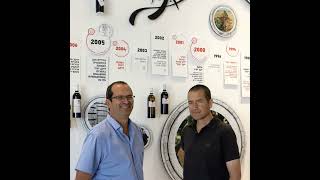
I'm Simon Jacob, your host for this episode from Jerusalem. A small group of us arranged a visit to the Yatir Winery located in Tell Arad in the Negev desert wine region of Israel. Yatir was founded in 2000 and established its vineyards at the historical original location of vineyards from 2,500 years ago. This is going to be a bit different from my regular podcasts, as this was recorded live as we explored the wines produced by Yatir Winery from its vineyards. Come along as we taste wines with Eti Edry, the export manager, and Yaakov Ben-Dor, the general manager of Yatir, as they talk us through their exceptional wines, describing their history while pointing out interesting elements of each wine. Both Etti and Yaakov are passionate about the winery, its location, and the historical relevancy and implications of rebuilding a Jewish wine industry where it existed 2,500 years ago. Our group's exuberance was in great part attributable to its extraordinarily acquisitive members, who were: Paul Denby from London, England; Adam Miller from New York City; Yakov Shakatovitz from Los Angeles, California; my son and daughter-in-law Ovadia and Leila Jacob from Bergenfield, New Jersey; and my wife, Barry, and myself from Jerusalem, Israel. Because of its length, I published this wine tasting as a separate Part 2 podcast. If you haven't yet, please listen to Part 1 to explore the remarkable desert and mountain forest terroir surrounding the Atir Winery and its vineyards. Special thanks to Eti and Yaakov for their incredible hospitality during our visit. Now, Please sit back, grab a glass of wonderful kosher wine, and enjoy.
Ah, you are— you see this? This bottle, it's a story also. In 2005, Eran tried to make fortified wine. 2 barrels, we release a long time. It's finished very fast. The last bottles. Yossi always buy. And—
Told you.
Huh?
No, Yossi shared a bottle with me years ago.
And then this another barrel continue to stay in barrel. It was in barrel 16 years. And then every harvest, Eran add a little bit more juice. Or what, you know, the angel share. He add to the wine and then we tried what to do with the wine. Okay. After 60 minutes, let's bottle it. Not to throw it, yeah? We not want to continue with that. And then we try to find the name. And I say Yitro. So why Yitro?
Yatir.
It's close to Yatir. But the story, the real story, that it's written that Yitro, the Bnei Yitro, "garim be'irat marim," and they divided. Part go to the north, "Yael chever ha'keini," and the story with Sisera, and the other go to Negev Arad. It's written that they live "irat marim," Jericho, and go to Negev Arad. Negev Arad is this area. So they live here, the sons of Ito. So for me, it's something that connected me.
Yeah.
So, eti. Welcome back.
Hello.
So this wine we sell just in the winery in Peppergum. This is one old vineyard, more than 30 years, Sauvignon Blanc from here. And the other one is younger from its Péramon. For us, when we speak about the brand of Darroms, it's very important to say that it's not the younger or the— literally a tier.
No.
It's totally different state of mind when you make the wine on the area. And this, it's— when we begin with that, we think that it will help us with the problem that we don't have enough wine in Yatir. But now we have double problem that we have no wine in Yatir and no wine in in Hebdarom also. So I don't know if we are so smart.
I know, right? We got ourselves an additional problem. This wine, you know, it took a while because people did not like— what? Why are you becoming so merchant? Why are you doing this? We said, this is, you know, there's a demand and the demand needs to be accurate. So we focused on different audience, and when we did that, we didn't realize that that audience is going to be so well connected to the wine.
Yeah.
I get mellowness.
Melon.
Melon. Freshness.
Fresh.
Very, very fresh. So what grapes are in this one?
Sauvignon Blanc. Sauvignon Blanc.
It's a blend of Sauvignon Blanc.
From different— yeah. It's very, very fresh. Very refreshing. It's very nice.
It's very cool.
It's like if you want to drink something—
Personally, I like—
You get more of the aromatics as it warms.
It does, but I prefer when it's colder.
I agree. I agree. It's too cold. No, I like—
I like it cold, especially with your heart.
Yeah, but it's good to get the nose. I get it.
It's very fresh. Very lovely. It's really nice. Is that in the UK? Yes, sir.
Oh.
It is. Refined wine club, white. Actually, the white and rosé that you tasted, they're wrong.
Yeah, yeah.
So it's my favorite to do, even though the red, like, on a daily basis, I'm not going to open Amasa every day. It's just, for me, it's a bit, you know, high-range price. So if my friends come over and they want to drink something and I want to still be with the making of Yatir, I choose the Rhum because it's just a perfect wine, also for the weather and also for the price.
I can see myself sitting by the swimming pool sipping that.
Let's try Melon de Chouette de Hermèsat.
Okay, now it's important just to put a barricade. Okay, we tasted the Rhum, which is our daily, our younger, more affiliated with the climate wines. Now we are going back to Yatir where the grapes grow only at Yatir. That's what we were walking through, and it would also, I think, be felt on the palate and of course to your judgment.
I think also that— I think that we all the time develop also in the rhum, because the rhum, it's new way for us to understand the really what you want to make here. And here is different. And I'm sure that, and trust Evan, that he will take the rhum some step. One of them you can see today that you see that the fermentation of the Zinfandel, the fermentation of Zinfandel was in food there and not in standstill.
So has Daron been a commercial success for Yassir?
They said they sold out of everything.
Huh?
Sold out.
You sold out?
Which one?
Of what?
The Daron, you sold out?
Yeah.
They're very commercially successful. In Israel, in England, you have—
you always have my wines. What's next?
You feel Greek white.
This wine, it's Vionnier 41, Roussanne certified, Grenache Blanc 17, and Clairette Blanche 7. So With the rolls.
Okay. So, a Massat is actually when we produce a Viognier first, we just get your Viognier. As I explained before, Viognier is okay. Everybody makes Viognier. Or what's so special about you? But then when you affiliate the Viognier to the area where the grapes grow, you call it a Massat White, that changes the whole picture because people start to acknowledge the area where the grapes grow. Terroir. And you've seen, it's very hard to explain while you are drinking behind the table or I'm explaining to you, but when you come and you see and you connect, that I think, maybe, we're not looking that people would, you know, tell us, "Oh, you're making great wines." No, it's just to understand and appreciate So he managed to accomplish his mission because we were talking all the time about the story of Yotir. Such an important story you're able to convey to the world.
Look, I want to take you, I want to take you 100 years ago, okay? In this area, the English soldiers 100 years ago, after the First World War, 19—
it's okay, it's okay.
The Jewish soldiers that was in the army of England, after the war, they go to out of the army, retire, and Yitzhak Bent the second president, was the manager of the Free Soldiers. Okay, I'm sorry about your English. Okay, and then he go to Herbert Samuel, the first Moshe, okay, of the English Mandate in Israel, and ask this area because this area It was belong to the Sultan.
Why?
Because some decade before, it's have here a big fight between the Bedouins, the Arabs, and 60 people, 60 people died in one day about the land. So the Turkish have very good way. If we are fight, the land belong to the government, to the Sultan. Very easy, you know. Easy to judge. Side effect of the justice. Okay. And this, all this area belong to the Sultan, and then they ask him to rent it for the soldier. So they came and live here close to the Citadel, and they try to find water. They think that they find— they dig to 40 meters, they didn't find water because the water here is more than— you need more than 10 times to find water. And they leave and they go to Yagur, Kibbutz Yagur, and close to the Carmel Mountain, a checkpost, you know, close to Necher, what begin here in 1921. So they leave it. After that, in this area, Engedi want to have a land to grow something. They begin here and they leave the area, they give up. And we came And we make a lot of— all the mistakes, all the mistakes.
The late '80s.
We make all the mistakes that we can make.
All mistakes possible you made, huh?
Yeah. We try to bring cactus with no name from Mexico, flowers from South Africa, from the desert, you know, to grow here. We try to In the end of the— what we find, because you know when you are younger you can't hear your father. The old fathers, you hear about that? Something about? I hear about that all the time. Oh, oh, oh, okay, okay. So what happened today? What we grow here? Wheat, vineyard, almond. Tell me what's new.
Africa.
2,000 years. Go back 2,000 years and this is what succeeded. We tried pistachio until the government take tax-free because they want to help to the Shah to bring free from import. It's very good.
It's very good.
Okay, I tell you to keep this wine And I will— Iran not release it, and like year in bottle. This half year at least in the bottle, in the bottle. And I think that this wine continue 10 years at least.
Yeah, of course.
You know, I'm not, I'm not trying to convince people to put the white wine for 10 years, you know, but you You feel that it developed petrol and, you know, another—
something more.
Especially more for in the States, the problem with the rosé. We not release the rosé until July, and they say, if you not send me rosé until May or till March, I will not buy. Don't buy. We not change the wine.
Okay, I think this is a really great wine. I do. I really— yeah, it's a great summer wine to enjoy, you know, when the weather's hot. Amazing. Totally agree.
I couldn't agree more, actually.
Okay. This is the fun one.
Yeah, that's the playful.
Yeah, this is fun to experiment and play with. It's great, it's absolutely great.
All right, when we built this 16 years— I mean, it was a 16-year dream.
It's amazing.
And every time I would say, you know, next year, he would come to me Yakov would say, it was just him and me. I would cut the cheese, he would go out to the forest, I would wet the reservoir with the wa— you know, it's really the beginning of things. And we thought that the backyard of us is just the best thing to host people and tell them the story and all that and tastings and for them to remember us and want to come back again. And when we built this center, I was already an export It wasn't— I fulfilled the dream, but I said, look, because it's so much in my heart, that if it's possible that I would, you know, choose all the glasses and choose all the chairs and put my print on the wall and, you know, make sure I'll be a part. He said, we cannot continue doing that if you won't bring the past with you. It had to be owned by you. So that's what we have done. It's brilliant.
It's really nice.
Do you see that there's a greater interest of people wanting to learn about the wines, not just the purchase, but the history behind it? Oh, well, actually Jewish people, which is my main consumers, they first want to hear the story. Here, the Derele Tisrael is that, you know, it's being taken care of. And from the outside, you know, you hear the news, you hear the things. It's not all about that. It's about not letting nothing interrupt us on the way and continue to explore.
Yes, of course.
And I think it's the same. All the rest, I think, will happen organically.
Wow, that's a lot.
Wow, it's a lot of percentage.
Let's get this one again.
Sometimes I think, what the hell did at night?
Thank you, sir.
I love what you say. I love what you dream.
Incredible.
Because, you know, only to blend it and to try it and try again and to add 2%, no, 4%, 7%. That is crazy.
21 years. It's crazy.
When he make the blend, We know. Must marry very, very nobody.
Does he have a community? He is, yeah, but he is amazing, amazing.
I don't know what he speak with people, but it's his personality, you know. Is, is a single wolf. In the end. But he's not afraid to ask. Somebody will tell him something, you know. I know, but you know, I have a story. You know, when you go to the mountain, you see Moab Mountain. Yeah. And what we learned from that, a lot of people came to visit visit in the winery, and when they begin to speak too much, I am telling, "Dvar tov ma'bad bilam." Why? Because you know the story of Balaam? He walked on the mountain in Moab, then he walked in the way. After that, he moved to the field, and then he go to the Mishol Ben Akramim. And then, by Mishol Ben Akramim, when it's very narrow, the donkey push him to the fence and begin to open— to speak. And I say, "Look." Because people came here and after 2 minutes they drink— I think at live— 20 bottles of wine. They begin to give advice to Iran how to make the wine. So I tell them, okay, look, 4,000 years, every donkey that go to the vineyard open his mouth. Ah, it's not Vartoy. It is nothing for me, you know. You know, for me, Amasar Mountain is wine to age and more quality.
Which one?
Amasar?
Amasar.
To buy regular If you keep it 5 years, it goes to death.
Okay.
That's enough for me.
Big wines.
5 years? Enough? Yeah.
I think it's a little depressing when you buy a lot of wines that are supposed to be for longer.
I know, I know.
That's the French wine for you.
It's always unique. Always when you—
I'm not sure I can buy a Pontet-Canet 2019 because I might not be here in 2039 to enjoy it.
Now some of the French—
I love our yo-yos because we don't want to do that to our kids there. I'm a big fan of one of the wines called Ponta Cana. Ponta Cana is one of my favorites. The trouble is now when you buy 2019, 2020, I'm already almost 70. I know. What am I going to drink this? 20 years? We're going to drink it. He's going to drink it in my— No, no, no, no. Plenty of children, grandchildren to enjoy.
No, it's the opposite.
You have the opposite. You buy and you have reason to live more.
If you really like it, yes.
You know what, he's a bit of a philosopher, your Yakov, isn't he? He's a philosopher.
Yes, I think you are ready to taste the— I'm not ready to let go of this. Okay, stay with that.
Okay, please taste this out.
Look at the color on that.
Ah, you know the books of Rabbi Saloveitchik about the wine and Ashkenaz? No, no, you— I'm a Sephardi. I don't know. No, but you have wine. No, but to hear, you know, when you read books of Rabbi Soloveitchik, Chaim Soloveitchik, he's a history professor. It's amazing because he, when he want to deal with the Jewish and the problem He made, he made, he say, okay, first I want, when I want, if I want to speak about the Jewish, the wine Jewish in the Dark Age, first I want to understand what the wine in French and German. Then all the other condition, the history. And then he go to the Jewish halacha. And look, he is, you know, Soloveitchik, they are crazy. He was here, I go to Jerusalem to bring him here. You ask him a question, he say, "Okay, you don't know, eh, Rabbi Shimon." "Ma, Rabbi Shimon?" He give you answer that you need to learn the answer. No, I not understand the answer, not the question. Because he answer you so short and he's so sharp that you afraid to ask question. He's so sharp. And then I decided not to take a driver to take him home, that I will, after he was here, to take him by myself. But how much time I have ability to sit like this, go on like that? Okay. But I just go out from the winery after he taste the wine, he go and sleep. I'm telling you. How about Pateritas? Where his dreams go? What? When Nethi decided, she need to push me to go. I'm, you know, the story about the mouse of the city and mouse of the field. I'm the mouse of the desert. We didn't like people. No, no.
Where were you born?
Where were you born? In Nebrak. My family is one of the founders of Nebrak.
Okay. Smells good.
This is amazing, this petit verre.
Yeah, but they make only one time. 1,000 bottles. So don't, you know, don't, don't—
why you bring?
Because— so Petit Verdot is normally a grape you blend with other grapes.
Yeah.
So it's unusual to find a single varietal.
Yeah.
And that is delicious.
Thank you.
That is stunning. Good thing. Wow, it's a beautiful wine.
That's the whole thing. of Cabernet inside. Imagine this. For us, Iran, because this wine, we was maybe the first wine, a winery in Israel that make Petit Verdot to the high quality. And to say we are not blending, make it alone. This is the only single variety that we contain.
That's what I was going to ask me. They say, do you want to—
really lovely wine. Williamson.
2020.
Amazing.
Don't touch the cab. My American fellows love the cab. What can we do? I said, you know, remember I told you that before. And then they said, there are cabs, but this is more unique.
People promote the region, the area.
Okay, we are going to the last wine.
The last wine is the Atyr Forest. We released that in the last weeks. This is brand new. This is the brand new 2020. This is 2020? Yeah. Wow, so this is really just released.
What's so beautiful about our wines is that you can decant it. Take all their grapes.
Thank you very much.
In Israel, in one of the vineyards, they were saying that they were distracted by so many other wines. I think it was almost ripe. They were waiting for a day or two to get ripe. Oh, Patricia, not everything, but one of their vineyards down in—
what you call it—
Cabernet.
I remember the process with Iran that he begin to use Petit Verdot with their Tier 4. And then in the 4th year, say, well, I see that it's every year give good quality. Let's, let's bottle it.
Very nice.
Really nice to see this.
It's another winner. Another winner. This is excellent. It's like a picture. Oh, sorry.
With the cork.
Yeah, it's fine.
It doesn't matter.
It's a— it's a—
no, the leaves grow on the top and the— very young. You can still smell the yeast.
Yeah, it's beautiful.
We try— first thing, this is one of the problem in this area, that we not have enough rain. So it's not like in the north. Okay. The second that we try to move with less, uh, fertilizer, to spray less. So we try to—
insecticide.
So we try to keep the herbs in the winter, and then you have less in the Summit. And then, but they like became like dust and disappear. And we try to decrease the amount. We want more herbs or weeds like in there. Because the soil here is very poor. Because it's not a rain. No rain, not too much organic. Organic component in the— yeah, you have a lot, you have a lot of the limestone. Tough. Sometimes you need to add the barzel, iron, because not in the regular vineyard today, but if it's table grape You need the— turn your Wi-Fi off yourself. I forget that you're like— you know what the difference between the Ashkenazim and the Sephardim? The Ashkenazim have 20 reasons why not to bless a Tova native. The rabbi, the chief— every time the rabbi, the chief rabbi of Marseille was here every time the When you bring a bottle, he say a Tovameiti, because he just would do what written in the Gemara. "Evi lo yah inachar, mevara Tovameiti." John, John! But if I want, for me, I don't know, because I'm not success in the yeshiva, I became a follower. You understand? I'm not succeed— I try! I really try! But I was one of them, you know? Me? You know him? I'm not, I'm not believe you. Wow, you know, you know, so he was so impressive person. We know why, not zikaron or like that, the personality, the personality, the balance, the philosophy. Yeah, but he tell you the philosophy with simple word. He speak, he try to say shiur klali.
He was not Rav Kook.
No, he was— yeah, no, totally different. But I mean, he want in the beginning when he came to yeshiva, he makes shiur klali. If he didn't understand, jump to the word in Hebrew, he ask to one of the pupil, 'How you say that?' 'Go back and say that in Hebrew.' He don't want to speak with English in the shiur, clearly. And when Rav Sabbato and Rav Shilat want to choose Rav, they say, 'We are have not enough Irachamayim. We want to bring Rosh Yeshiva.' so an avodah that they decided to bring one of the older to bring more. And we asked Rav Sabbato, why you choose Rabbi Rabinovich? He say, one of the reason we saw how he go into the room of the secretary, how he knock on the door and ask. And I go and ask. The derech eretz is amazing.
Imagine me, Tunisian blood, warm-blooded, coming to a winery after living in Givat Shmuel in the center of Israel to here and meeting him. That was like, like a coke.
No, you're familiar with Lord of the Rings?
Lord of the Rings, of course.
Yeah, he gave a eulogy 6 months before he was— okay, it was a beautiful, beautiful eulogy he gave.
Amazing.
You were trained well.
Me?
I—
special.
You want me for Passover and cooking?
You know, by Yes, was his student. Ah, they said that he gave over his hesped. Yeah, wow.
Okay.
It was by mistake that I take so much time. It was my pleasure. I've been watching, I've been watching. I don't know, I want to take—
He will take the shirts off your back as well. Thank you so much, it's been lovely to see you again. Thank you so much.










